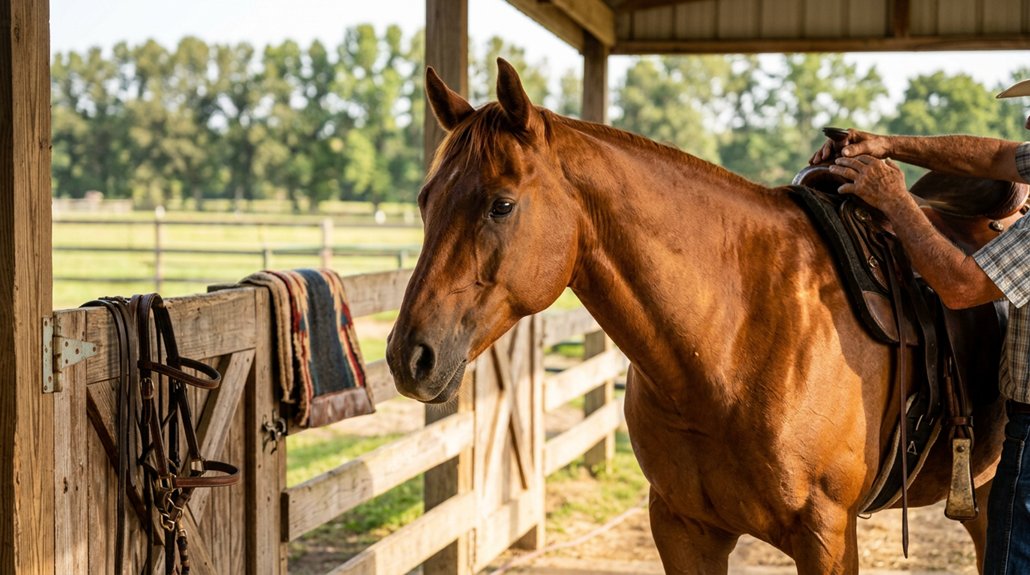
Owning a horse demands unwavering dedication to their daily care and health. You’ll need to grasp equine nutrition, manage costs from initial purchase to routine vet visits, and invest in proper gear. Begin by evaluating your riding skills and horse care knowledge—joining a local club helps. Finding the right horse involves considering size, temperament, and age. Assemble a reliable care team, prepare essential equipment, and embrace long-term responsibilities. Equip yourself with these essentials to uncover further details.
Key Takeaways
- Understand horse training, health, and nutrition as essential components of responsible horse ownership.
- Budget for initial costs, monthly expenses, insurance, and emergency veterinary care to maintain financial preparedness.
- Engage in structured riding sessions and join clubs to enhance skills and gain practical experience.
- Evaluate horse temperament, prioritize thorough veterinary checks, and seek trustworthy recommendations before purchasing.
- Utilize proper riding gear and familiarize yourself with essential grooming tools for daily horse care responsibilities.
Quick Overview: What You Need for Horse Ownership
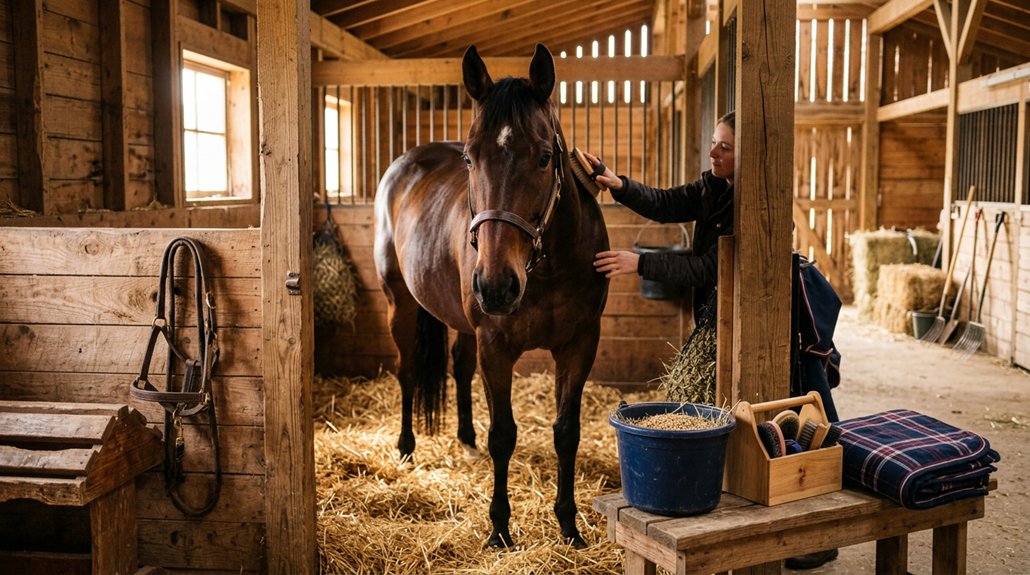
Before you leap into horse ownership, it’s crucial to ponder the nuances that come with this rewarding yet demanding responsibility. Immersing yourself in horse training and equestrian health requires dedication. You’ll need to invest in quality grooming tools, advanced feeding equipment, and a thorough equine health kit. Proper horse nutrition guarantees ideal vitality and performance, demanding careful selection of feed to align with dietary requirements. Engaging a farrier for consistent hoof care is essential, akin to maintaining car tires. Riding etiquette mandates the right gear—helmets and boots aren’t just formalities. My own journey revealed that aligning your lifestyle with these commitments is non-negotiable. Ultimately, understanding these intricacies equips you to provide a nurturing environment, elevating both horse and rider harmony.
Assess Your Horse Knowledge and Riding Skills
Before starting horse ownership, it’s essential to gauge your proficiency by engaging in structured sessions at a nearby stable, where lessons blend equine biomechanics with rider biomechanics, costing around $40 to $70. To further solidify your understanding, immerse yourself in resources like *The Complete Horse Care Manual*, ensuring you’re well-versed in horse physiology and dietary management. Joining a local riding club connects you with seasoned equestrians who can provide nuanced mentorship, equipping you with insights that transcend textbook knowledge and align with practical experience.
Evaluate Riding Experience
When it comes to evaluating your riding experience, it’s crucial to objectively assess both your horse knowledge and the riding skills you possess. Recognizing your level of fear and how you build confidence around horses is pivotal. Reflecting on your journey, consider these facets:
- Assessing fear: Identify scenarios that induce anxiety.
- Building confidence: Engage in exercises to enhance your self-assurance on the saddle.
- Skill development: Analyze your competence in mounting, dismounting, and managing various gaits.
- Learning avenues: Attend clinics or workshops for skill refinement with seasoned professionals.
- Community interaction: Join equestrian groups to compare skillsets with peers and receive encouragement.
Your riding proficiency directly influences the type of horse that suits you. Starting this insightful journey will prepare you for successful horse ownership.
Test Horse Care Knowledge
Having evaluated your riding experience, it’s now important to measure your horse care knowledge, which is a key component in becoming a well-rounded equestrian. Horse healthcare practices demand an intricate understanding of daily responsibilities such as grooming, hoof care, and feeding regimes. The table below highlights critical areas to assess your expertise:
| Key Component | Evaluation Criteria |
|---|---|
| Grooming Tools | Curry combs, hoof picks |
| Veterinary Care | Vaccinations, dental check-ups |
| Equine Nutrition Basics | Forage, supplements |
Balancing equine nutrition basics guarantees your horse isn’t just consuming calories but receiving exceptional nutrients. Reflecting back, learning to decipher equine body language fueled my bond with my horse, making healthcare practices seamless. Regular interaction prepares you for comprehending your horse’s dietary demands and behavioral cues, pivotal to mastering horse care.
Setting Your Horse Ownership Budget
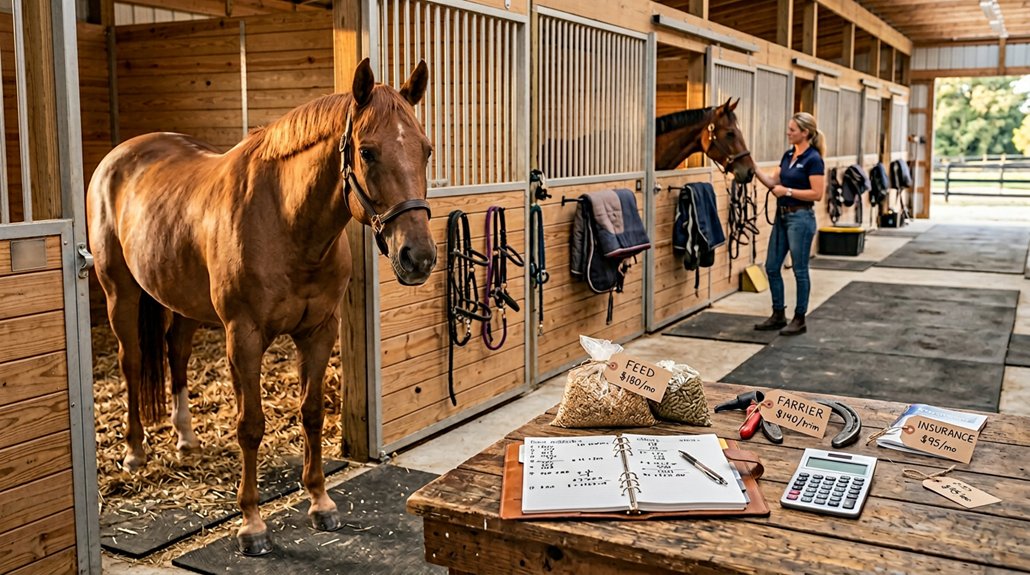
When you’re setting your horse ownership budget, start by evaluating the initial purchase cost, which can range from $500 to $10,000 depending on your choice of breed and training level. Planning for ongoing expenses is essential, with monthly outlays on boarding, feed, and healthcare soaring between $500 and $3,300, a reality that echoed my own experience when I underestimated stable fees during college. Don’t overlook insurance options; having the right policy not only mitigates unexpected veterinary costs but also provides peace of mind for those unpredictable moments inherent in equine management.
Evaluating Initial Purchase Costs
Owning a horse requires a strategic evaluation of initial purchase costs, which can vary considerably, typically ranging from $500 to $10,000 based on factors like age, breed, and training level. Calculating horse value isn’t a simple task; you must consider breeding considerations and pedigree importance, which can drive up costs remarkably. Reflect on your goals—whether you’re investing in a companion or a potential champion.
- Horse value: Assess how features impact the price.
- Purchase financing: Explore options to manage high upfront costs.
- Breeding considerations: Pedigree can heavily influence pricing.
- Trainer consultation: Seek expert opinions on suitable matches.
- Resale potential: Factor in growth and training enhancements.
I once collaborated with my trainer to navigate these variables, securing a horse with strong resale potential due to its preferred lineage.
Planning for Ongoing Expenses
Once you’ve navigated the complexities of the initial purchase, the focus naturally shifts to planning for ongoing expenses, a critical aspect of responsible horse ownership. Establishing a monthly budgeting strategy is crucial; expect costs between $300 and $1,200, accounting for board type, feed, and veterinary care. From personal experience, regular farrier visits every 6-8 weeks for hoof care range from $30 to $150. Routine veterinary check-ups, including annual wellness checks and vaccinations, average $200 and $100-$200 respectively. Emergency planning is essential; unforeseen veterinary expenses can spiral from hundreds to thousands. Factor in equipment—a formidable $1,000 for initial tack and grooming tools—and set aside funds for maintenance. An organized budget guarantees your horse thrives without financial strain.
Considering Insurance Options
Although often overlooked in the excitement of acquiring a horse, insurance is an important element of setting your horse ownership budget. With annual costs ranging from $300 to $1,500, selecting the right insurance types requires careful policy comparisons. I learned firsthand that without the shield of mortality insurance, a significant loss turned disastrous financially. Basic policies typically cover:
- Mortality, theft, and major medical costs
- Liability issues for when your horse causes damage
- Surgery insurance for unplanned operations
- Add-on options based on the horse’s competition status
- Exclusions and deductibles, which vary greatly
For performance horses, expect higher premiums, reflecting increased risk. Always review different providers to guarantee thorough protection tailored to your horse’s breed, age, and value. Remember, comparing policies is essential.
Exploring Where to Find Your Horse
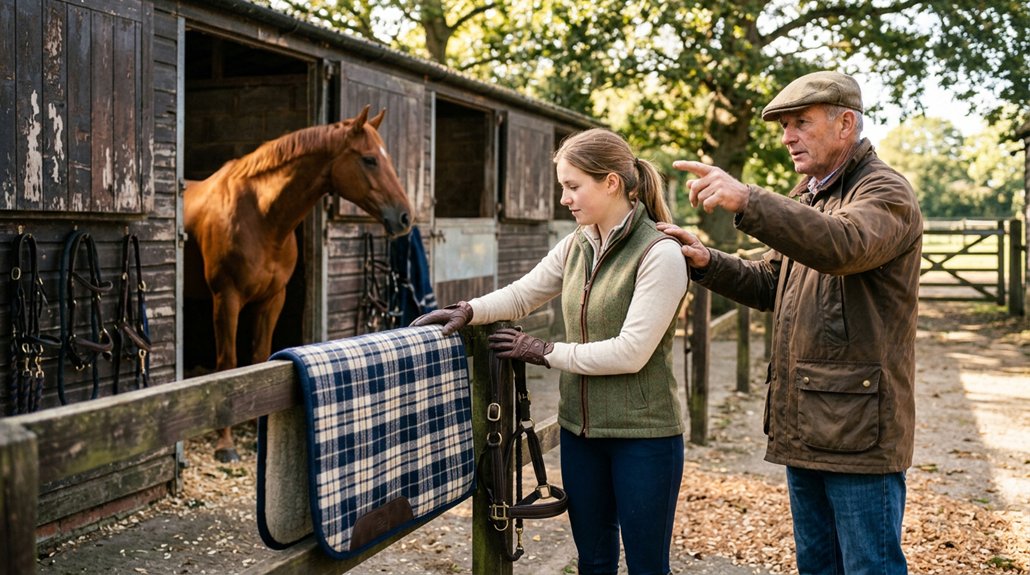
Curiously pondering where to begin your equine journey, you might find that reputable horse rescue organizations offer an excellent starting point. With their budget-friendly options, these sanctuaries provide a much-needed second chance for horses at minimal cost. Meanwhile, horse auctions provide a riveting, albeit unpredictable, atmosphere to explore potential equine companions. Personally, I recall my first auction—navigating aisles of brisk bidding and inspecting myriad breeds with seasoned equestrians.
Digital platforms have revolutionized equine acquisitions, with online directories and classified sites broadening your access. Efficient filters let you refine searches by breed, size, and price. Connecting with fellow riders and skilled equestrians can yield trustworthy recommendations, while horse shows become crucial networking hubs. Always prioritize thorough vet checks, as unsuspected health issues can loom large.
Choosing a Horse: Size, Temperament, and Age
As you initiate the journey to own a horse, you’ll want to match the horse’s size to your body for best comfort and stability; often, larger breeds such as Warmbloods are preferable if you’ve got a heavier frame. Reflecting on my own first horse, his docile temperament saved me from countless novice errors, emphasizing the importance of selecting “bomb-proof” horses for new riders seeking stability. Finally, aim for a horse aged between 5 to 16 years, as this range not only offers youthful vigor but also a solid foundation of training, ensuring that your introduction to horsemanship is as smooth as possible.
Selecting Appropriate Horse Size
Selecting the appropriate horse size isn’t just a matter of aesthetics; it vastly affects your riding experience and the well-being of the horse. Your horse height and rider weight should align for ideal balance and control. I’ve grappled with this decision firsthand, and trust me, it pays to reflect on:
- Horse height: Start with the golden range of 14.2 to 16 hands for beginners.
- Rider weight: Your horse should carry around 20% of its body weight. Balance is essential.
- Conformation: Verify proportions match your intended activity for safety and performance.
- Personal comfort: Your physical reach must align for effective riding cues.
- Versatility: A well-sized horse adapts better to different riding styles and tasks.
Choosing right enhances safety and bond!
Evaluating Horse Temperament
Understanding a horse’s temperament is essential in forging a successful owner-equine partnership. A horse’s behavior, particularly calmness and trust, directly affects beginner compatibility. Once, while test-riding a mare, I immediately noticed her innate composure even amidst bustling surroundings—a true reflection of her beginner-friendly temperament. In evaluating, observe the horse’s demeanor: do they exhibit aggression or anxiety? These are critical temperament indicators. Test-ride whenever possible to gauge their responsiveness and ease in adapting to your guidance, revealing invaluable insights often overlooked. Counterintuitively, a placid gait might mask underlying training needs. Calm and trusting equines enhance learning experiences, cementing a harmonious bond. Your observant approach guarantees selecting a well-tempered horse, paving the way for gratifying ownership.
Ideal Horse Age for Beginners
Choosing the right horse often starts with determining the ideal age, as age substantially impacts a horse’s energy and experience, essential for beginners. In my early days of horse ownership, finding a horse between 5 to 16 years old was a game changer. This age bracket strikes a perfect balance of liveliness and experience and guarantees beginner suitability with manageable energy levels. Here’s what to keep in mind:
- Under 5 years: They demand intense training.
- 5-16 years: Ideal for first-time owners.
- Over 16 years: Calm but assess health.
- Bomb-proof temperament: Critical for a hassle-free experience.
- Sound conformation: Minimizes future soundness complications.
Trust me, starting with a well-aged, seasoned horse sets the stage for an enjoyable equestrian journey.
Deciding How to House Your Horse: Home vs. Boarding
Once you’re ready to provide a stable environment for your horse, a critical decision emerges: should you house your horse at home or utilize a boarding facility? First, consider zoning considerations as some areas restrict livestock on residential properties. At-home care lets you create customized care routines, but entails relentless daily chores. You must also manage shelter and manure disposal. Practically speaking, cost comparisons reveal that boarding facilities could save labor, despite monthly fees ranging from $200 to $2,500.
During my initial horse ownership days, the allure of boarding amenities like communal riding spaces and expert staff was irresistible. These facilities offer social perks and ease the workload while you focus on bonding and riding. A boarding option could enhance both your and your horse’s experience.
Putting Together Your Horse Care Team
As you strike a balance between housing choices for your horse, it’s paramount to also establish an adept horse care team. Regular veterinary visits are non-negotiable; verify annual check-ups and tailor additional visits to specific needs. Regarding hoof care, a farrier is indispensable, requiring consultations every 6-8 weeks to maintain peak hoof health.
Reflecting on my own horse’s journey, consistency in care was key. Here’s what your team should include:
- Veterinarian: Routine care and vaccinations.
- Farrier: Essential for hoof care every 6-8 weeks.
- Equine Dentist: Regular dental check-ups.
- Health Record Keeper: Maintain medical history for efficiency.
- Optional Specialists: Nutritionist or bodyworker for tailored dietary and body maintenance.
Gathering Necessary Horse Care Equipment and Tack
Equipping yourself with the right horse care gear is indispensable to ensuring your horse’s well-being and effective management. Master the grooming techniques by procuring a curry comb, hoof pick, and a variety of brushes tailored for different body areas. A poignant memory I have involves realizing the importance of these tools after a long, muddy trail ride—cleaning even the toughest spots made my horse beam with joy. Equally essential are first aid essentials, such as bandages and antiseptics, as accidents are inevitable. Establish feeding strategies with the right equipment—think water buckets and hay nets—to optimize hydration and nutrition. Invest in tack maintenance tools; a well-fitted saddle not only enhances comfort but boosts your equine companion’s performance.
Preparing Your Horse and Yourself for Riding
To initiate a successful riding session, establishing a preparatory routine is vital. Riding psychology affirms that the horse-human relationship is symbiotic, demanding familiarity. Before mounting, allow 24-48 hours for your horse to adapt to its environment, providing essential time for stress mitigation and trust cultivation. As a rider, your role involves refining bonding techniques to create a smooth shift into riding.
Establish a preparatory routine; building trust with your horse ensures harmonious rides.
- Develop a consistent grooming and feeding schedule.
- Confirm tack, like saddles and bridles, fits impeccably for comfort and control.
- Wear appropriate riding gear—helmet, boots, gloves.
- Engage in professional riding lessons to hone skills and confidence.
- Invest in time for ground activities that reinforce mutual respect.
This foundational routine has revolutionized my equestrian endeavors, transforming anxiety into harmonious rides.
Committing to Long-Term Horse Care Responsibilities
When considering long-term horse care, it’s imperative to understand the extensive commitment embedded in equestrian ownership. You’ll explore the world of long-term planning and emergency preparedness to guarantee your horse’s health and well-being. With the daily demands of feeding, grooming, and exercising, expect to dedicate about 1-2 hours a day. Financially, brace yourself for expenditures from $200 to $2,500 monthly, covering necessities like feed, veterinary check-ups, and boarding. Anecdotally, owning my first horse taught me the importance of emergency preparedness—unexpected vet visits can strain both time and finances but having a plan eases this burden. Furthermore, providing ample space—a minimum of 1-2 acres—secures a happy, healthy horse over its 25-30 year lifespan.
Frequently Asked Questions
What Legal Requirements Are There for Owning a Horse in My Area?
You’re responsible for understanding local regulations, such as zoning laws and permits. Ownership responsibilities include registering your horse, ensuring ethical care, and equine liability insurance. Research specifics for your area, as requirements vary widely, impacting legal compliance.
How Can I Ensure the Ethical Treatment of My Horse?
Guarantee your horse’s ethical treatment begins with mastering responsible riding techniques. Explore ethical breeding; every decision impacts its welfare. You’d never guess how specialized training transforms a horse’s life! Your choices are paramount.
What Are Common Health Issues Horses Face and How Can I Prevent Them?
Horses often face colic, laminitis, and respiratory issues. You can prevent these common illnesses through regular veterinary visits, balanced nutrition, and proper hoof care. Preventive care like vaccinations and deworming is essential for maintaining your horse’s well-being.
How Do I Bond Effectively With My New Horse?
How do you bond with your new horse? By engaging in trust-building techniques like consistent grooming and leading exercises. Use bonding exercises such as liberty training, enhancing understanding. Personal connections often create lasting trust and companionship.
What Are the Best Ways to Transport a Horse Safely?
Guarantee trailer safety by conducting pre-trip inspections and maintaining equipment. Loading techniques require calm, consistent practice. I’ve found using a slant load trailer helps horses feel secure, reducing stress during travel, guaranteeing their safety and comfort.
Conclusion
Owning a horse is like orchestrating a symphony with many moving parts, each contributing to the harmony of your equestrian journey. With insights into horse care and selection, budgeting, and assembling a dedicated support team, you’re now equipped to stride confidently into this venture. Personal experiences intertwine with technical nuances, ensuring you’re ready for every gallop and canter. Embrace the rhythmic commitment required, and watch your equine partnership flourish amidst the nuances of ownership and riding.