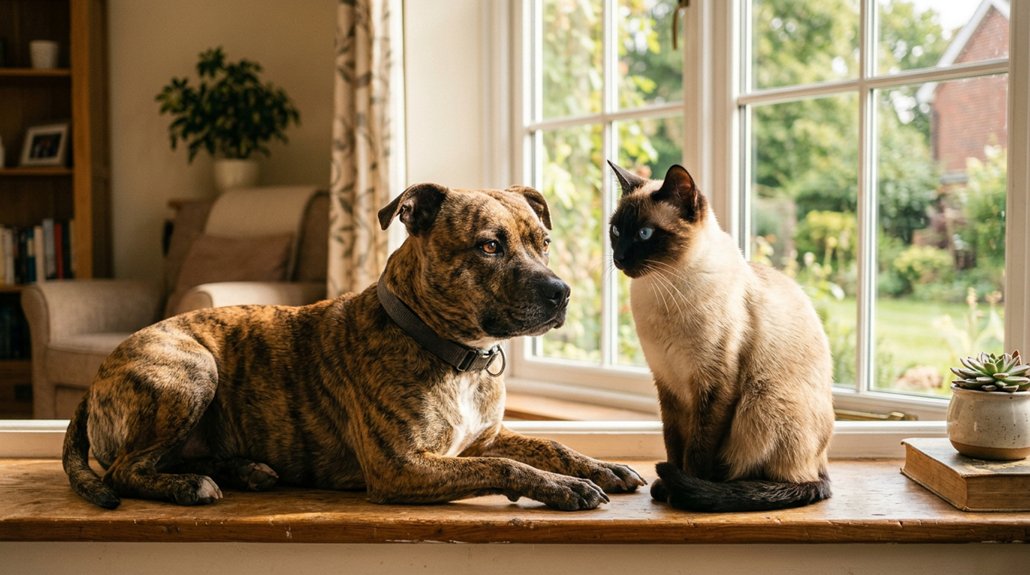
If you’re aiming for a peaceful coexistence between dogs and cats, consider breeds like Golden Retrievers and Labrador Retrievers, known for their friendly and adaptable traits. Mellow-tempered breeds such as Cavalier King Charles Spaniels and Basset Hounds blend well because of their calm nature. Evaluate each dog’s personality since individual temperament matters. Gradual introductions and positive reinforcement are key to reducing tension. Enhance your understanding of fostering harmony by exploring further insights and strategies.
Key Takeaways
- Golden Retrievers are friendly and adaptable, making them ideal for cohabitation with cats.
- Labrador Retrievers’ sociable nature fosters strong bonds with feline companions.
- Cavalier King Charles Spaniels are affectionate and promote peaceful coexistence with cats.
- Basset Hounds’ calm disposition is generally aligned with the tolerance of cats.
- Beagles display pack-oriented amiable traits, facilitating harmony with cats.
Top Dog Breeds for Cat Coexistence
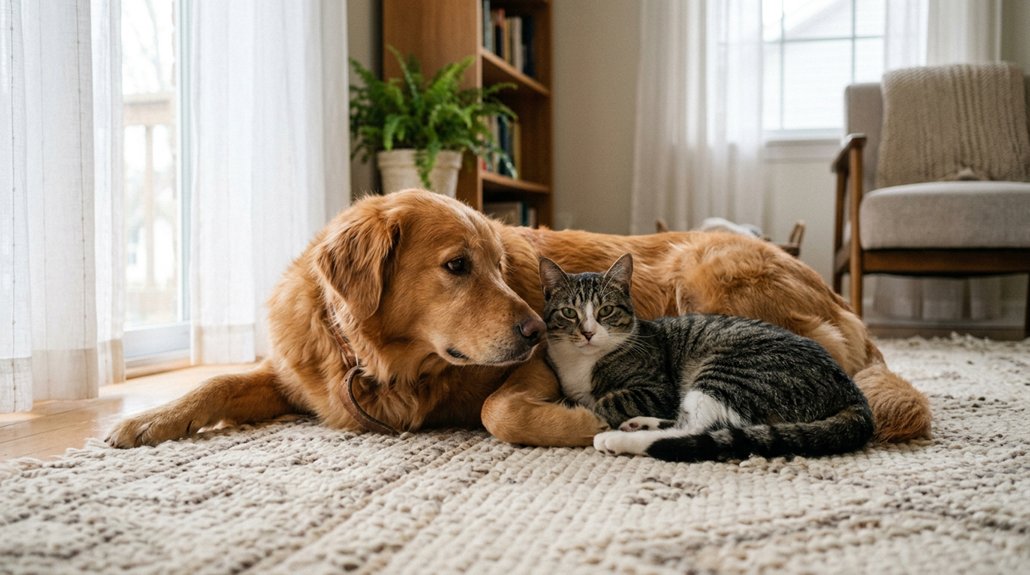
When considering a dog breed that can coexist harmoniously with cats, it’s essential to look at their temperament and social tendencies. The best dog breeds for feline friendships typically have natural adaptability and a gentle disposition. Golden and Labrador Retrievers, renowned for their friendly nature, often form lasting bonds with cats. Their welcoming demeanor makes them favorites in multi-pet households. Similarly, Cavalier King Charles Spaniels, with their affectionate and sociable nature, facilitate peaceful coexistence, nurturing positive feline interactions. Basset Hounds, though sometimes prey-driven, maintain a calm air that generally aligns with cat tolerance. Additionally, Beagles thrive due to their pack-oriented roots, displaying amiable characteristics. Small breeds like Pugs and Maltese bring playful energy, fostering delightful interspecies relationships.
Personality Traits of Cat-Compatible Dogs
Understanding the personality traits of cat-compatible dogs is vital if you’re considering a harmonious multi-pet household. Begin with a temperament evaluation highlighting essential breed characteristics. Dog breeds known for their mellow, friendly temperaments—like Golden Retrievers or Cavalier King Charles Spaniels—are ideal, fostering peaceful cohabitation with felines. Similarly, breeds such as Basset Hounds and Bulldogs feature an easygoing nature, prioritizing rest over play. Social and affectionate types, like Pugs and Bichon Frises, typically blend well due to their playful interactions and adaptability. Low prey drive, seen in Labradors and Maltese, reduces chasing behavior, ensuring safer feline interactions. Remember, individual traits are vital; evaluating a dog’s temperament can illuminate their suitability for living alongside a cat, promoting a balanced environment.
Solving Common Dog-Cat Introduction Problems
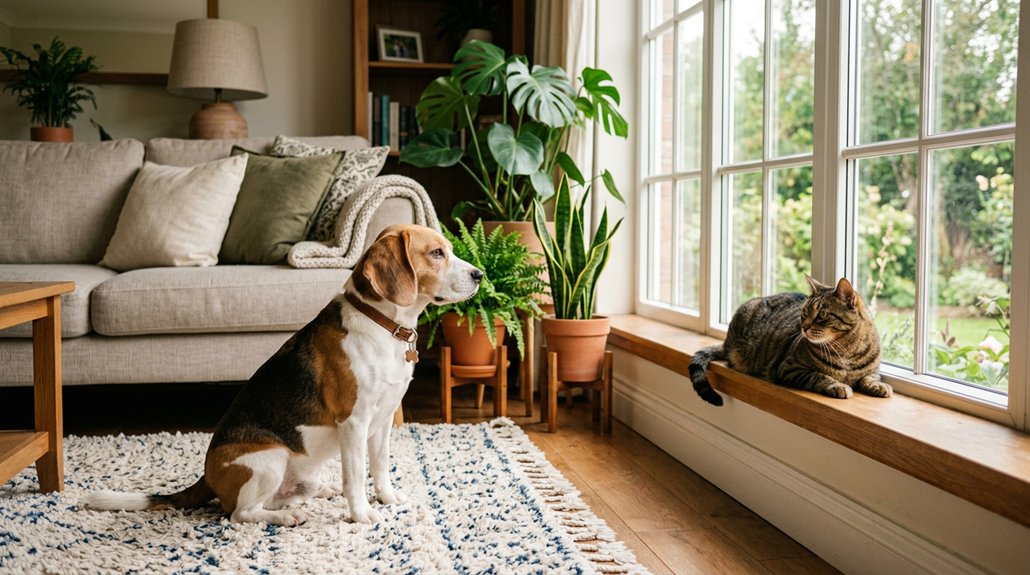
- Reward positive behavior: Use treats and praise to reinforce calm interactions.
- Monitor body language: Stay vigilant for signs of stress or aggression.
- Promote a positive environment: Maintain a joyful tone to help pets overcome fears.
This scientific approach guarantees a safe and harmonious introduction, paving the way for a lasting bond.
Step-by-Step Dog-Cat Integration Techniques
A successful dog-cat integration begins with meticulous planning and patience. Start by ensuring your cat feels secure in its new environment with a safe space equipped with essential items. Use baby gates or crates for initial meetings, allowing your dog and cat to observe each other without direct contact. This reduces stress and helps you monitor their behavioral signals. Gradual exposure is key; slowly increase shared spaces while providing the cat with high perches or hiding spots to retreat if overwhelmed. Don’t forget to take your dog for a long walk before introductions to release excess energy. Reward calm behavior with treats, reinforcing positive interactions. This method promotes mutual respect and a harmonious relationship between your dog and cat.
Setting Up Your Home for Cat-Friendly Dog Breeds
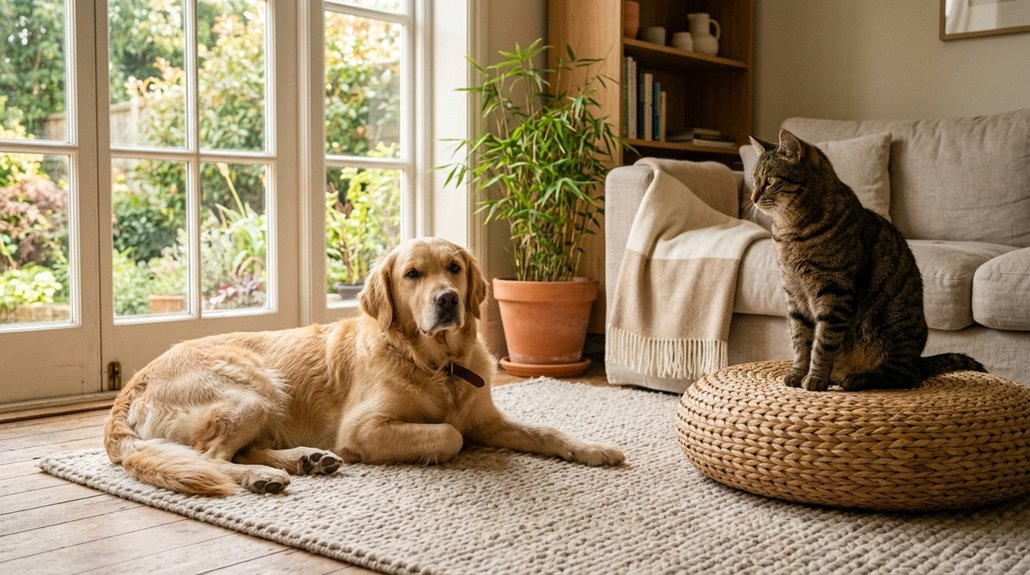
Integrating a dog and cat doesn’t end with their initial meeting but involves creating an environment that accommodates both animals’ needs. Establish separate feeding areas to guarantee peaceful dining, as distinct feeding strategies can prevent competition and stress. Creating safe zones is essential. Designate a secure space for your cat with essentials like a bed and litter box, offering a retreat when they feel overwhelmed.
Creating a stress-free home for pets involves separate feeding zones and safe retreats.
- Vertical spaces: Equip your home with high perches for your cat to observe their surroundings and feel in control.
- Gradual introductions: Use gates or crates to slowly introduce pets, giving them separate spaces to reduce anxiety.
- Calming aids: Utilize pheromone diffusers to assist both pets in relaxing around each other.
Fostering a balanced home benefits everyone.
Frequently Asked Questions
Which Dog Breeds Go Best With Cats?
You’d find that friendly dog breeds like Golden Retrievers and Pugs possess cat-friendly traits. Their adaptable, affectionate natures promote harmony in multi-pet households. Choosing breeds with sociable temperaments helps guarantee a peaceful cat-dog relationship.
What Is the 3-3-3 Rule With Cats?
The 3-3-3 rule in cats highlights their gradual acclimatization. Initially overwhelmed, they’ll retreat. By three weeks, observe more curiosity. At three months, expect bonding. Watch feline behavior cues for effective cat introduction tips and smoother integration.
How Do You Say “I Love You” in Dog Speak?
You express “I love you” in dog speak by mimicking their body language. Use soft tones to convey warmth, mirror their relaxed postures, and maintain gentle eye contact. This reinforces trust and nurtures positive canine emotions.
What Is the #1 Pet in America?
You’re curious about the top pet in America? Dogs take the lead. With top pet statistics showing 69 million households owning one, pet ownership trends consistently highlight dogs’ supremacy in providing companionship and devotion across demographics.
Conclusion
It’s a remarkable coincidence that many dog breeds known for their friendly, adaptable nature also harmonize well with cats. By understanding these breeds’ personalities and employing expert-guided integration techniques, you can foster a peaceful coexistence. Addressing common introduction challenges thoughtfully and setting up a pet-friendly environment, you’ll create a home where both pets thrive. This process isn’t just about choosing the right breed—it’s about nurturing bonds with science-backed care and a compassionate touch.