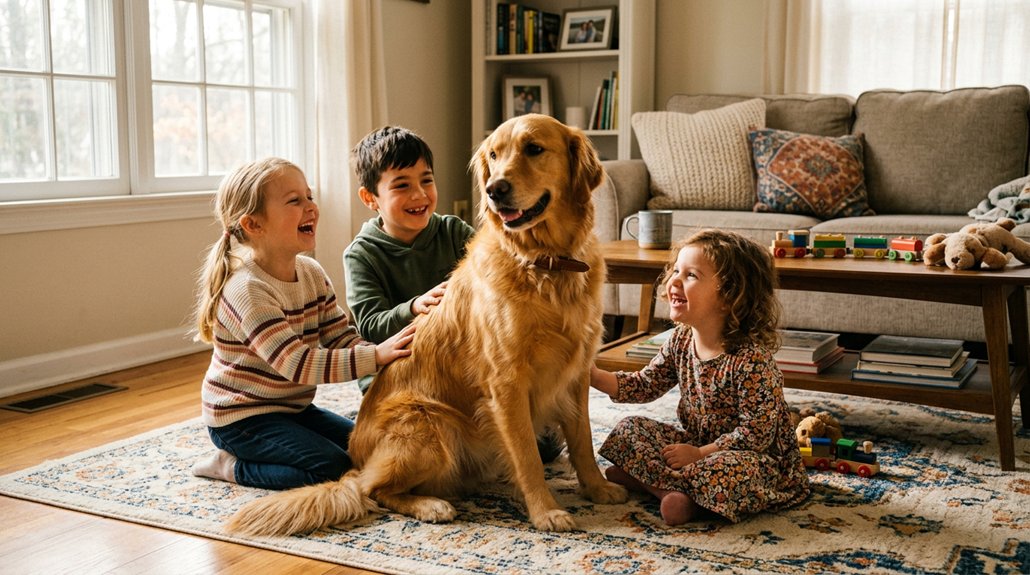
When looking for the best dog breeds for families with kids, consider stable temperaments and high child-tolerance. Labrador and Golden Retrievers are top choices due to their friendly nature and energy that matches active families. Cavalier King Charles Spaniels suit apartment living, while Beagles bring playful energy. Poodles offer hypoallergenic qualities for allergy-sensitive homes. Choosing the right breed involves matching their temperament and needs with your lifestyle. Explore further to find the ideal canine companion for your family.
Key Takeaways
- Labrador Retrievers excel in family environments with stable temperaments and high child-tolerance scores.
- Golden Retrievers are gentle, affectionate, and highly trainable, ideal for families with children.
- Beagles are energetic, friendly, and adapt well to active families with children.
- Cavalier King Charles Spaniels suit apartment living and are gentle with children.
- Poodles, in various sizes, are hypoallergenic, intelligent, and highly trainable for families.
Why Some Dogs Are Perfect for Families
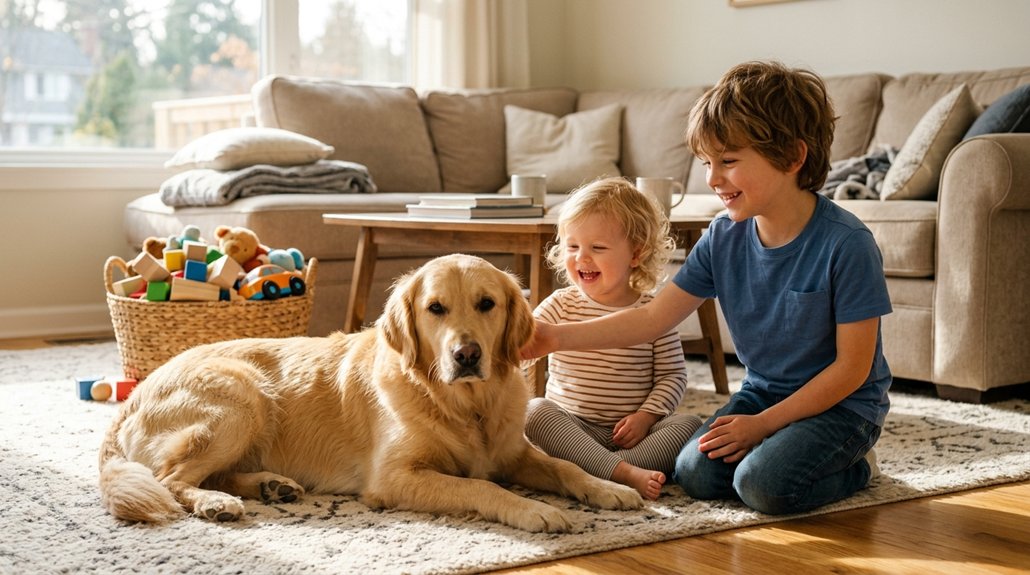
Stable temperaments make certain dogs ideal for families, as these dogs adapt well to the dynamic home environment created by young children and frequent visitors. Dog personalities characterized by high child-tolerance scores, such as those found in Labrador and Golden Retrievers, guarantee safe interactions with kids. When evaluating trainability, breeds like the Cavalier King Charles Spaniel excel. They quickly grasp commands and maintain boundaries, facilitating safer child interactions. Furthermore, dogs with cooperative natures often have histories of working alongside humans, naturally integrating family members as partners. This further enhances harmonious child interactions. Understanding these personality traits is essential, as they define how a canine companion will engage with children and adjust to the lively household atmosphere typical within family settings.
Factors to Consider for Your Family’s Perfect Dog
When selecting the ideal dog for your family, it’s important to assess lifestyle and space needs, making certain the breed aligns with your daily routine and living environment. Consider temperament and compatibility, focusing on breeds with stable temperaments and good socialization skills for harmonious interactions with children. Additionally, evaluate training and socialization needs to make sure your prospective dog can thrive in your household.
Lifestyle and Space Needs
Understanding your family’s lifestyle and space requirements is essential when choosing the perfect dog breed. Breed compatibility with your living arrangements can determine your dog’s happiness and health. For instance, high-energy breeds like Border Collies aren’t ideal for families where everyone’s out all day; they demand constant stimulation. Consider smaller breeds if you’re in an urban setting, as they adapt well to compact spaces. In contrast, larger dogs need access to ample outdoor areas for exercise. Your dog’s size also matters; larger breeds might accidentally knock over small children. Matching your family’s energy levels is vital; active families thrive with energetic breeds like Labradors, whereas relaxed households fit better with low-energy breeds like Bulldogs. Proper socialization guarantees safer family interactions.
Temperament and Compatibility
Considering your family’s lifestyle and space needs, another vital aspect of choosing the right breed is temperament and compatibility. Understanding dog behavior and family dynamics is essential. An ideal family dog possesses a stable temperament, remaining calm amidst the unpredictability of children. Larger breeds, such as Labrador Retrievers and Golden Retrievers, display tolerance towards rough play, making them suitable for families with young kids. Conversely, Cavalier King Charles Spaniels’ gentle nature aligns well with infants. It’s also important to align a dog’s energy level with your family’s activity. While Boxers suit energetic environments, English Bulldogs thrive in quieter settings. Finally, recognize the impact of size dynamics, as smaller dogs may face injuries, and larger breeds might inadvertently knock over children.
Training and Socialization
Selecting a family dog involves significant considerations regarding training and socialization, fundamental for fostering safe and harmonious interactions in a household. Training should focus on impulse control and good manners, adopting consistent positive reinforcement techniques. Enroll your new pet in puppy classes, essential in nurturing behavior adaptability and quick understanding of household rules. Early socialization helps minimize aggression, encouraging friendliness in diverse settings.
Ensure regular exposure to various people, pets, and environments. Engage children in training sessions to enhance familial bonds while instilling responsible pet interaction. Here’s a quick reference:
| Key Aspect | Benefit | Action |
|---|---|---|
| Puppy Classes | Quick rule adaptation | Enroll early |
| Socialization Tips | Reduces aggression, boosts friendliness | Regular varied exposure |
| Involvement of Kids | Strengthens bonds, teaches responsibility | Include in training sessions |
Labrador Retriever: Family-Friendly and Reliable
If you’re seeking a dog with outstanding child tolerance, Labrador Retrievers, scoring 94/100 in this aspect, are an exceptional choice. Their ability to integrate into active family life guarantees they thrive in environments where they can engage in energetic activities, making them ideal companions for outdoor adventures. Additionally, their friendly disposition and high trainability enable them to develop excellent socialization skills, facilitating harmonious interactions with both children and adults.
Outstanding Child Tolerance
The Labrador Retriever exemplifies family-friendly reliability through its remarkable child tolerance, boasting an impressive score of 94 out of 100. When it comes to child interactions, the dog behavior exhibited by Labradors is both friendly and forgiving. They’re known to form strong bonds with their families, which contributes to their stable temperament around children. This breed’s low bite risk in dogs over 50 pounds enhances their suitability for homes with young children.
| Behavior | Score | Lifespan |
|---|---|---|
| Child Tolerance | 94 | 10-12 years |
| Bite Risk | Low | |
| Speed | 12 mph in 3 sec |
Longevity of 10-12 years guarantees families enjoy the companionship of a reliable, easy-to-train, highly social pet. Labradors’ natural adaptability further cements their role as a safe, nurturing family member.
Energetic Family Activities
Having established their impressive child tolerance and adaptability, let’s explore how Labrador Retrievers enhance family experiences through their high energy and playfulness. As dynamic companions, they are perfect for families who cherish outdoor adventures. Labradors are bred to be energetic and can reach speeds of 12 mph in three seconds, making them exceptional playmates for children during playful interactions like fetch. Their ability to keep pace with active kids guarantees a unique bond, fostering engagement and joy. Their 94/100 child-tolerance score complements their forgiving temperament, allowing them to gracefully navigate the boisterous environment of active families. To thrive, Labradors require regular exercise, perfectly aligning with family outings and adventures, guaranteeing a happy, healthy pet within your household.
Friendly Socialization Skills
Renowned for their friendly disposition, Labrador Retrievers excel in socialization skills, making them ideal candidates for family integration. With a child-tolerance score of 94/100, they guarantee safe and reliable companionship for youngsters. Their sociable nature facilitates easy dog park interactions and engaging social playdates, fostering a proactive environment for family bonding. Labradors exhibit low bite risks, particularly significant for dogs over 50 lb, resulting in stress-free experiences when interacting with children. Consistent training paired with positive reinforcement further enhances their social skills. They adapt readily to various family dynamics due to their willingness to please, effectively strengthening familial bonds. Energetic families find Labradors the perfect match as their high energy levels suit active play, aligning with children’s natural vivacity.
Golden Retrievers: Gentle Guardians for Kids
When considering a family-friendly dog, Golden Retrievers often come to mind due to their gentle temperament and child-friendly traits. These dogs are renowned for their golden retriever affection and are often described as gentle guardian qualities, which make them ideal for households with children. Their high child-tolerance ratings and low bite risk assure a safe and loving environment. Highly trainable, they adapt well to family life, quickly learning commands and house rules. With a lifespan of 10 to 12 years, they offer a long-term commitment to joy and companionship. Furthermore, their historical use as therapy dogs underscores their ability to bond deeply with children. Regular exercise needs pair well with active families, encouraging outdoor activities and enriching family dynamics.
Energetic Playmates: Beagles in Family Life
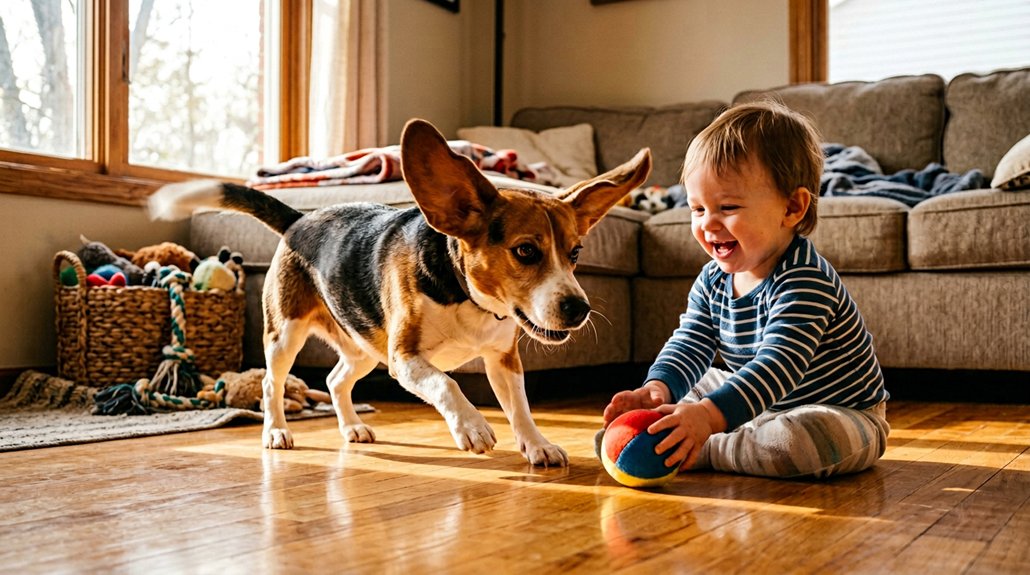
Why are Beagles often celebrated as ideal companions in family settings? These small to medium-sized dogs, weighing 20-30 pounds, possess Beagle traits that make them perfect for family bonding. Their exceptional sense of smell and friendly disposition mean they’re naturally drawn to children, making them great playmates. With a life expectancy of 10-15 years, Beagles thrive in active environments thanks to their high energy levels and playful nature. They’re gentle and tolerant of noise, easily adapting to the bustling world of children. Regular socialization and daily exercise are essential to nurture their behavior, facilitating strong bonds. Remarkably, their outgoing personalities and pack instincts promote teamwork and responsibility in children, enhancing the overall family dynamic.
Cavalier King Charles Spaniels: Apartment-Friendly Companions
As you seek an ideal canine companion for apartment living, the Cavalier King Charles Spaniel stands out for its adaptability and affectionate nature. Weighing between 13–18 pounds, this breed is perfectly sized for apartment living. Their cavalier characteristics include a gentle temperament and a strong affinity for children, making them excellent household members.
Their adaptability means they can easily thrive in various lifestyles, requiring only moderate exercise. Whether it’s playing indoors or enjoying a short outdoor walk, they’re content companions. Additionally, Cavaliers have a long history as companion animals, emphasizing their ability to form lasting social bonds. With low grooming needs and a friendly demeanor, they’re an ideal choice for families with hectic schedules, ensuring a harmonious living environment.
Poodles and Other Hypoallergenic Dog Options
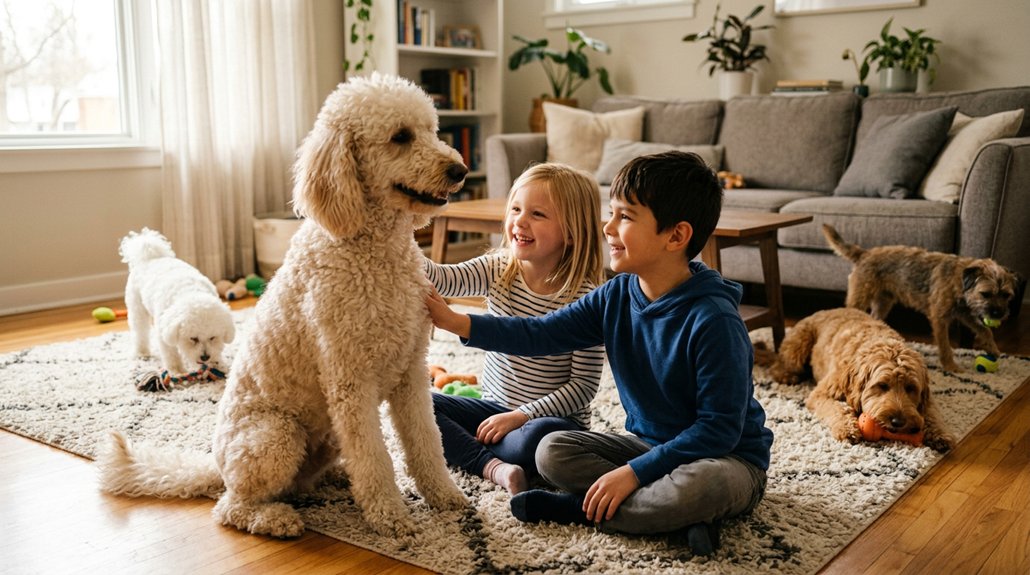
Although Poodles boast a sophisticated appearance, their practicality for families shouldn’t be understated. Available in Standard, Miniature, and Toy sizes, Poodles are adaptable to various home environments. Their intelligence and responsiveness make them ideal for families seeking a trainable pet. One standout feature is their hypoallergenic coat, which considerably reduces shedding and dander, benefitting allergy sufferers and aiding in maintaining a clean home. However, poodle grooming is essential, as regular sessions every 4-6 weeks not only manage allergens but also strengthen the human-animal bond through genuine care. Beyond Poodles, consider other hypoallergenic breeds like the Bichon Frise and Portuguese Water Dog. These breeds also offer friendly dispositions, perfect for family life, without compromising on hypoallergenic benefits.
Creating a Harmonious Home: Training Your Family Dog
Integrating a dog into your family provides both companionship and responsibility, particularly when considering hypoallergenic breeds like Poodles and Bichon Frises. Consistent interactive training is essential to establish clear boundaries and good behavior. Utilize positive reinforcement to effectively encourage desirable actions, enhancing your dog’s learning experiences. This approach makes commands more memorable and strengthens family dynamics. Regular socialization guarantees the dog adapts smoothly to varying people and situations, minimizing anxiety and promoting compatibility with your active household. Teach children proper interaction techniques, like gentle petting and reading a dog’s body language, which fosters mutual respect. Incorporate short, daily training sessions to boost mental stimulation and strengthen familial bonds with the family dog, ensuring a harmonious home environment.
Frequently Asked Questions
What Is the Most Kid Friendly Dog Breed?
When considering a kid-friendly breed, you can’t go wrong with the Labrador Retriever. Its gentle personality and high child-tolerance make it ideal. Positive reinforcement is the best training method, ensuring a harmonious family environment.
What Is the 7 7 7 Rule for Dogs?
The 7-7-7 rule explains dog aging: one dog year equals seven human years initially. Knowing this aids dog training tips and helps choose an ideal dog size for their maturity, diet, and exercise needs precisely.
What Is the Most Low Maintenance Dog for Families?
The most low-maintenance dog for families is the Greyhound. Known as low-energy breeds, they exhibit calm behaviors and require easy grooming. Their lounging nature suits busy lifestyles, making them scientifically fit for families seeking relaxed companionship.
What Are the Top 5 Best Family Dogs?
You’ll find Labrador Retrievers, Golden Retrievers, Beagles, Cavalier King Charles Spaniels, and Boxers ideal for families. Each breed’s training tips and temperament differences highlight their compatibility with kids. Choose wisely, considering lifestyle and requirements.
Conclusion
Ultimately, choosing the perfect canine companion for your family hinges on a plethora of factors, from living arrangements to the level of activity your household can provide. Whether it’s the dependable Labrador Retriever or the energetic Beagle, each breed possesses distinctive traits that can enhance family dynamics. Don’t overlook hypoallergenic options like Poodles if allergies are a concern. With dedicated training, you’ll create a synergistic home environment. Just remember, these are more than “man’s best friend”—they’re family.