
As a first-time dog owner, manage stress by establishing a consistent routine, which stabilizes your puppy’s behavior and alleviates anxiety. Engage in mindfulness and physical activities like deep breathing or gentle walks to enhance mood regulation. Prioritize self-care with adequate rest and a balanced diet to stay resilient. Leverage training strategies and support networks to strengthen your bond with your pet. Explore realistic goal setting and gradual acclimation techniques to further ease the challenges of dog ownership.
Key Takeaways
- Engage in mindfulness practices like deep breathing to promote relaxation and reduce stress levels.
- Establish consistent routines for feeding and playtime to create a stable environment and ease anxiety.
- Utilize online forums and local support groups for shared experiences and evidence-based advice on pet care.
- Set realistic expectations and anticipate time and financial commitments involved in puppy care.
- Prioritize personal self-care by ensuring adequate sleep, a balanced diet, and regular relaxation periods.
Quick Stress Relief for New Dog Owners

As a new dog owner, it’s vital to establish effective strategies for immediate stress relief, guaranteeing a smoother adjustment for you and your puppy. Mindfulness practices can be integral to managing stress. Engaging in deep breathing exercises, even for a few minutes, activates your parasympathetic nervous system, promoting relaxation. Quick exercises such as gentle stretching or a brief walk can release endorphins, enhancing mood stability. Integrating these into your day interrupts stress cycles and fosters resilience. Additionally, leveraging structured routines for your puppy, including regular feeding and playtimes, establishes predictability, decreasing anxiety for both parties. Regularly practicing self-care guarantees you’re equipped to cope with the challenges of puppy ownership, while inadvertently modeling a calm environment your pet can emulate.
Setting Realistic Expectations for Stress Reduction
As a new dog owner, it’s vital to embrace the learning curve inherent in puppy care, acknowledging that mastering this responsibility will take time and patience. Establishing a routine early on isn’t just beneficial—it’s essential for reducing stress, as consistent patterns in training, feeding, and play promote a stable environment for both you and your pet. Evidence shows this structured approach not only reduces feelings of being overwhelmed but also fosters a more harmonious adjustment period.
Embrace the Learning Curve
While the excitement of welcoming a new puppy into your home is undeniable, it’s crucial to brace yourself for the demands of puppy care. Research shows that adapting to the “puppy blues” can greatly impact your mental health. Anticipate spending dozens of hours weekly on your puppy’s needs. This time investment fosters critical puppy bonding and requires training patience. Understand that surpassing $1,000 in first-year expenses is common, emphasizing financial preparation as key to stress reduction. Acknowledge small victories and set achievable goals to cultivate a positive training environment. Embracing this learning curve allows for the development of realistic expectations, reducing frustration and promoting a compassionate self-perspective during challenges inherent in this considerable commitment.
Establish a Routine Early
A well-structured routine is arguably one of the most essential elements for stress reduction in new dog ownership. Establishing a regular feeding schedule and consistent playtime routine provides predictability and eases anxiety for both you and your puppy. Clinical evidence supports that structured environments can considerably diminish stress by facilitating smoother changes throughout your day. Realistically, training will take time—no puppy’s perfect. By setting achievable expectations and gradually introducing activities, you’ll lessen frustration and enjoy a more fulfilling relationship. Puppies require substantial care weekly, emphasizing the need for effective time management. Utilizing gates and playpens to maintain a structured setting further reduces chaos, promoting a calm household. Ultimately, a systematic approach helps you adapt to responsibilities, minimizing feelings of overwhelming stress.
Establishing a Routine to Reduce Stress
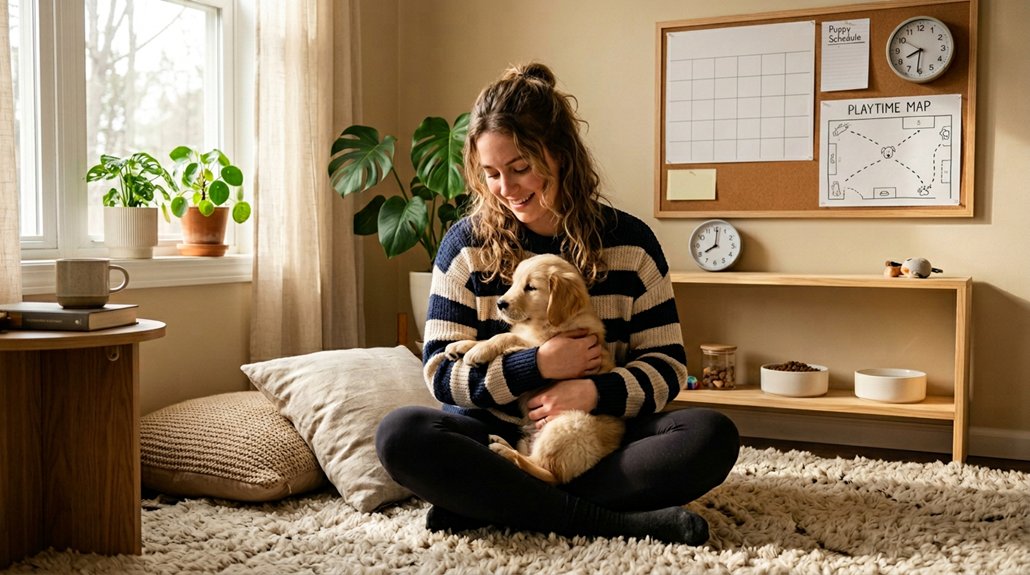
Begin by establishing a consistent routine for your new furry friend—this can greatly alleviate stress for both you and your puppy. A structured schedule, integrating puppy playtime and a feeding timetable, provides predictability, which is essential for reducing anxiety. Evidence shows that consistent routines assist puppies in adjusting to their environment, fostering neurodevelopment and behavioral stability. Incorporate regular time slots for activities such as walks, feeding, and play. This not only aids in acclimatization but also enhances training efficacy, as your dog becomes more secure and receptive. Concurrently, including self-care breaks guarantees you maintain mental well-being. Over several weeks, gradually introduce and adapt the routine, allowing you and your puppy to synchronize effectively, mitigating puppy blues and promoting a harmonious bond.
Effective Training Strategies for Better Behavior
When training your dog, maintaining consistent commands and signals is essential, as it standardizes communication and reduces confusion, thereby facilitating more effective learning. Integrating positive reinforcement techniques, such as treat-based rewards and verbal praise, has been clinically shown to enhance compliance and foster a positive emotional response. Should your dog exhibit difficulty with training, employing a systematic approach and potentially consulting a professional trainer can greatly optimize outcomes.
Consistent Commands and Signals
Although becoming a first-time dog owner can be both exhilarating and overwhelming, employing consistent commands and signals is essential for effective behavior training. Consistent cues help clarify expectations for your dog, minimizing confusion during training sessions. Simplify commands using one or two words—this enhances your dog’s ability to learn and respond effectively, especially for more stubborn breeds. Begin training in a quiet area to mitigate environmental distractions such as noises and movements that can divert your dog’s focus. Regular practice and repetition of training signals reinforce learning, promoting better long-term behavior compliance. Observing specific training challenges allows you to identify underlying issues, facilitating tailored adjustments in your training techniques, ultimately leading to improved communication and a well-behaved companion.
Positive Reinforcement Techniques
Incorporating positive reinforcement techniques into your training routine becomes the cornerstone of effective behavior modification, building on the consistency developed through commands and signals. By utilizing immediate reward timing, you guarantee that the desirable behavior is promptly recognized and encouraged, strengthening the association between action and reward. This evidence-based approach reinforces your pet’s understanding, making desired behaviors more likely to recur.
Consistency in cues and rewards, combined with engaging activities, transforms training sessions into opportunities for cognitive and physical stimulation. Introduce challenges progressively, such as rewarding your dog in quieter settings before shifting to busier environments. Engaging activities like interactive toys or agility training not only promote positive behavior but also maintain your dog’s motivation and enthusiasm. Ultimately, this strategy aids in reducing stress for you both.
Tapping Into Support Networks for Help
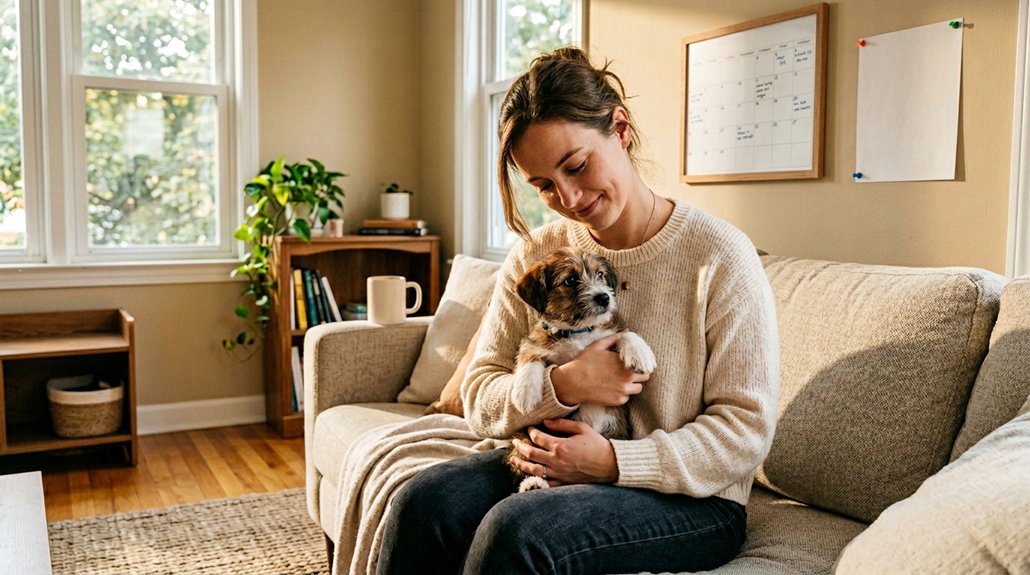
Connecting with fellow pet owners through both online forums and local support groups can greatly benefit first-time dog owners who are maneuvering the complexities of pet care. These platforms offer shared experiences and evidence-based advice that can help mitigate stress. Utilizing online forums provides access to a vast repository of training techniques and coping strategies that address common canine behavioral issues. Participation in local meet-ups fosters a sense of community and camaraderie, offering insights into effective canine management from seasoned dog owners. Engaging with experienced pet owners at meet-ups can lead to discovering innovative solutions to challenges. Additionally, professional input from local veterinarians and structured training classes bolster your understanding of your dog’s specific needs, promoting a supportive care environment.
Creating a Calm, Dog-Friendly Home Environment
When establishing a home environment that minimizes stress for your new dog, begin by crafting a dedicated space where they can retreat from the household’s hustle and bustle. Designate this area as a dog sanctuary, equipped with a soft bed and engaging toys. Implement noise reduction strategies by selecting a quiet corner away from high-traffic zones. Aim for a controlled ambience where potential stressors are mitigated.
Follow these evidence-based practices to further enhance your dog’s comfort:
- Limit visitor interaction during the initial weeks to prevent anxiety from excessive social stimulation.
- Implement behavior recommendations from the adoption agency for a smoother acclimation process.
- Gradually acclimate your dog to solitude by increasing alone time progressively, using comforting distractions like stuffed Kongs.
Take Care of Yourself While Taking Care of Your Dog
As you set up a calm, dog-friendly space, it’s equally important to focus on your own well-being while nurturing your new canine companion. Prioritize self-care habits by ensuring adequate sleep, a balanced diet, and regular relaxation periods. These strategies combat the fatigue and emotional exhaustion commonly experienced by new dog owners. Schedule regular breaks to recharge, utilizing support from family or friends for puppy care, which fosters emotional well-being and reduces stress. Set realistic expectations for training and care. Accept that puppies need time and patience to adapt; this perspective can lessen frustration and self-doubt. Engage with fellow pet owners or join support groups to mitigate isolation. Finally, maintain structured routines for stability, reducing anxiety for both you and your dog.
Frequently Asked Questions
What Is the 7 7 7 Rule for Dogs?
The 7-7-7 Rule involves dogs spending seven days adjusting with minimal stress, followed by seven weeks of gradual social exposure, then seven months of consistent training techniques. It’s designed for stress management and ideal behavioral development.
What Is the 3-3-3 Rule With Dogs?
The 3-3-3 rule’s a godsend, guiding you through puppy socialization and stress management. Initially, your puppy might seem like a tempest of anxiety. Remember, patience is key as they adapt, bond, and thrive over time.
What Is “I Love You” in Dog Language?
“I love you” in dog language is expressed through canine affection behaviors like relaxed tail wags, leaning into you, playful interactions, and gentle vocalizations. Understanding this dog communication enhances your emotional bond with your pet.
What Is the Hardest Stage of Owning a Dog?
Coincidentally, the hardest stage is when you face puppy challenges. Training difficulties arise during this phase due to high-energy levels and developmental needs. Implement structured routines and proven techniques to alleviate stress and enhance successful behavioral development.
Conclusion
As the first-time dog owner, steering through stress is like riding a rollercoaster—it’s thrilling yet intimidating. By setting realistic expectations, establishing a consistent routine, and diving into effective, evidence-based training, you’ll find a rhythm that soothes the storm. Tap into supportive networks for guidance and foster a serene, dog-friendly home environment. Remember, caring for yourself is paramount; as you nurture your well-being, you’ll better nurture your pup. Embrace this journey with confidence and a wagging tail.