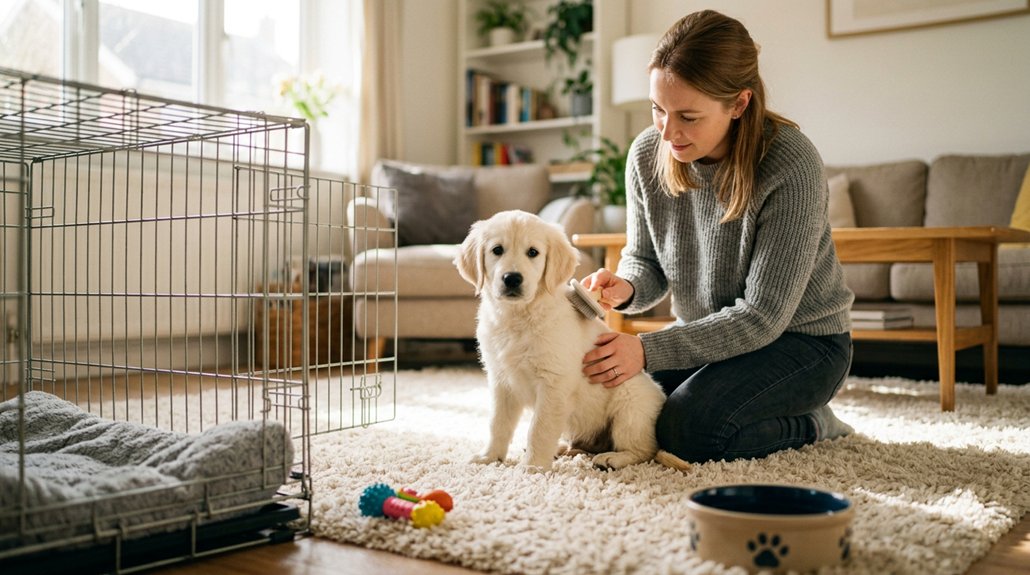
As a new dog owner, establishing a consistent routine and setting clear boundaries are essential for your puppy’s stability and well-being. Address common problems by reinforcing positive behavior and providing adequate socialization opportunities. Use relaxation techniques to manage stress and seek professional help when needed for persistent behavioral issues. It’s vital to remain patient and committed, ensuring a positive environment for both you and your puppy. Familiarize yourself with the essentials to navigate dog ownership challenges successfully.
Key Takeaways
- Establish consistent routines and clear boundaries to promote security and behavioral stability in your puppy.
- Practice mindful relaxation techniques to manage overwhelm and emotional exhaustion during the initial adjustment period.
- Socialize your puppy through controlled environments like playdates and dog daycare to develop well-rounded social skills.
- Redirect problem behaviors with positive reinforcement and consistent responses from all household members.
- Seek professional help for aggression, anxiety, or inadequate training progress to ensure safety and effective learning.
Establishing a Routine: Your Puppy’s Path to Stability
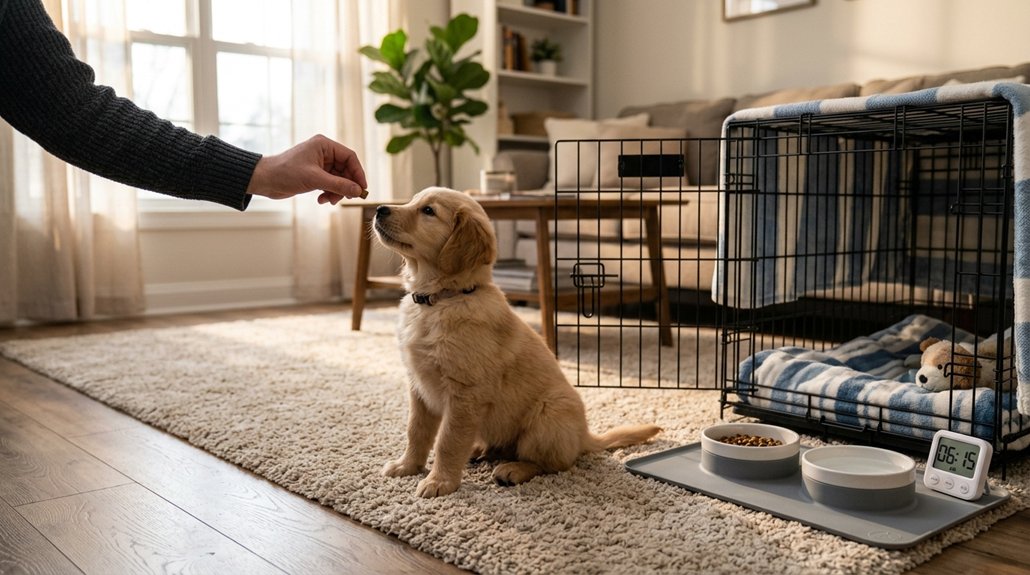
Creating a consistent routine is vital in helping your puppy adjust to their new home. Incorporating regular puppy feeding times and a daily walk into your schedule will greatly reduce anxiety and establish a sense of security for your puppy. Predictable routines not only aid in their adjustment but are fundamental in building trust between you and your new companion. Structured activities such as walks and feedings support your puppy’s physical health and behavioral stability, promoting confidence and positive development. Routine interactions streamline training by setting clear expectations, reinforcing desirable behaviors. Establishing a daily routine helps you effectively manage your puppy’s needs while balancing your other responsibilities, thereby minimizing the potential for feeling overwhelmed during this essential adjustment phase.
Coping With Puppy Blues: Understanding and Overcoming
While establishing a routine lays the groundwork for your puppy’s stability, you might still find yourself grappling with unexpected challenges and emotions. The “72-hour phenomenon” frequently leaves new puppy owners overwhelmed and frustrated, making puppy bonding feel unattainable. These feelings of doubt and emotional exhaustion are completely normal as your routine shifts dramatically. Emotional support is essential during this change. Access resources like puppy blues guides and training organizations to navigate this adjustment phase. They offer practical tips that can ease emotional fatigue even when training progresses well. Patience and consistency are key in overcoming these challenges. Although regrets and thoughts of rehoming may surface initially, relationships tend to strengthen over time, creating lasting bonds with your new companion.
Socialization Beyond the Basics: Ensuring Well-Rounded Puppies

Ensuring your puppy becomes well-rounded goes far beyond simple socialization. It’s critical to expose your puppy to a variety of environments, sounds, and controlled interactions. The key period between 12-16 weeks is the prime time for such social exposure, where positive experiences can greatly impact your puppy’s development. Puppy playdates, when structured with well-matched companions, are invaluable in honing social skills and preventing future behavioral issues. Well-organized dog daycare programs can also be instrumental, offering a controlled setting that balances social encounters and mental enrichment. Avoid chaotic or fearful interactions, as they may lead to long-term reactivity or insecurities. Each socialization session should be constructive, ensuring your puppy gains confidence and adaptability in diverse circumstances.
Set Boundaries for a Confident Pup
As a new dog owner, establishing clear routines and initially limiting your pup’s freedom are essential steps in fostering a confident and well-behaved companion. Clearly defined boundaries help your dog understand what behaviors are expected and reassure them of their place in the household. Consistency and a structured environment not only prevent confusion but also build your puppy’s confidence as they learn and master their roles within your home.
Establish Clear Routines
Creating a structured routine for your new dog is essential, as it reduces anxiety and fosters a sense of security. Routine consistency is key in helping your dog adapt to their new environment and learn household rules efficiently. By establishing regular feeding times, exercise schedules, and dedicated play periods, you reinforce positive behavior and build trust. This consistency aids in mitigating stress levels, as predictability allows your dog to feel more secure and comfortable. Clear boundaries such as designated sleeping areas or restricted access to certain parts of the home should be established early on. This structure assists in your pup’s acclimation to the household, promoting quicker adjustment and improved well-being. Consistency not only guarantees your dog’s happiness but supports effective training outcomes.
Limit Freedom Early On
While it might seem counterintuitive, limiting your puppy’s freedom early on is essential for fostering a confident and well-adjusted companion. Freedom management involves creating structure through defined spaces and routines, reducing anxiety and establishing trust. Early supervision helps prevent confusion and discourages undesirable behaviors, such as chewing on furniture, by containing your puppy in safe areas. Utilize baby gates or crates to effectively manage their environment, ensuring they learn household rules. Gradually increasing freedom as your dog demonstrates understanding is vital. This not only encourages good behavior but also builds their confidence in exploring your home. Setting clear boundaries early facilitates effective training and smoother adjustment, ultimately leading to a harmonious family life and a self-assured canine companion.
Identify and Redirect Problem Behaviors Effectively
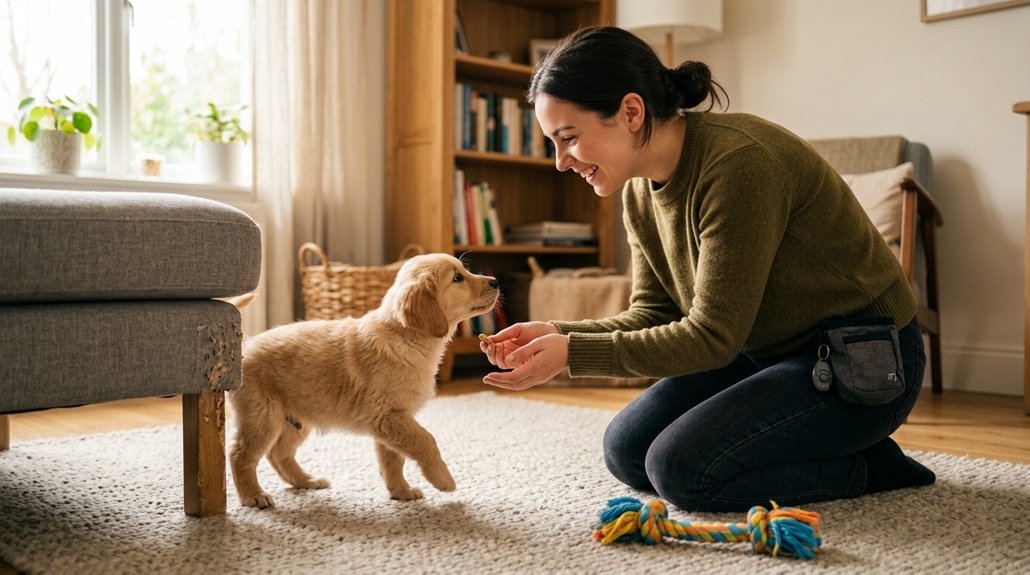
Understanding how to identify and redirect problem behaviors is essential for any new dog owner committed to fostering a harmonious environment at home. Begin by examining the dog’s reinforcement history to understand what actions are perceived as rewarding. Employ effective behavior redirection and reinforcement strategies to guide your dog towards desirable habits.
- Behavior Redirection: Replace undesirable actions with acceptable alternatives. For example, if your dog is chewing furniture, redirect to a chew toy.
- Consistency: Make sure all household members respond similarly to problem behaviors to prevent confusion. Unified rules and consequences facilitate learning.
- Positive Reinforcement: Immediate rewards for desired behaviors encourage repetition. This strengthens the bond between desired actions and positive outcomes.
Monitor and modify your dog’s environment, managing access to temptations effectively, making certain of consistent behavior modification.
Top Self-Care Strategies to Ease Dog Owner Stress
As a new dog owner, establishing a consistent daily routine can greatly reduce your stress by introducing predictability to your schedule. Engaging with supportive communities through dog training classes or support groups provides valuable opportunities to share experiences and alleviate feelings of isolation. Additionally, incorporating mindful relaxation techniques, like gentle exercise or meditation, can effectively relieve emotional fatigue and enhance your ability to manage the demands of dog ownership.
Establish a Daily Routine
Establishing a daily routine is an essential step toward easing the stress that often accompanies new dog ownership. By setting predictable patterns, you can help reduce your dog’s anxiety through consistent behavioral adjustments and schedule flexibility. This approach not only creates a secure environment for your pet but also seamlessly integrates into your daily life, enhancing your mental well-being. Here’s how to structure an effective routine:
- Consistent Scheduling: Maintain fixed times for feeding, walks, play, and rest, promoting trust in your dog’s daily expectations.
- Training Integration: Allocate specific time slots for training to reinforce positive behavior and accelerate learning.
- Adaptable Timing: Allow for minor schedule flexibility to accommodate unexpected events while maintaining essential routine elements.
This structured routine fosters a harmonious cohabitation, benefiting both you and your furry friend.
Seek Supportive Communities
Though adjusting to life as a new dog owner can be overwhelming, seeking supportive communities can greatly ease the shift. By engaging with dog owner support networks, such as local dog training groups or online forums, you’ll find shared experiences and practical advice that can alleviate isolation during the adjustment period. Organizations like 3 Lost Dogs Academy offer non-judgmental support and access to professional trainers, empowering you in your training journey. Participation in community resources, such as events or classes, fosters social connections with other dog owners, leading to valuable exchanges of knowledge and strategies in tackling common challenges. Additionally, local dog daycares or playgroups enhance your puppy’s socialization and provide you a sense of belonging among fellow pet parents.
Practice Mindful Relaxation Techniques
When starting on the journey of puppy ownership, practicing mindful relaxation techniques can be pivotal in mitigating stress and fostering a balanced lifestyle. Integrating activities like mindful breathing and guided meditation can effectively reduce anxiety and emotional fatigue. Consider the following steps to incorporate relaxation into your routine:
- Mindful Breathing: Dedicate five minutes daily to deep breathing exercises. This practice helps you reconnect with your feelings and manage initial doubts and despair.
- Guided Meditation: Use apps or online resources to engage in short guided sessions. This aids in restoring mental focus amidst the physical demands of puppy care.
- Seek Support: Join online groups for new dog owners. Sharing relaxation strategies and experiences fosters community support, easing the adjustment phase.
Recognize When to Seek Professional Help?
Why is it sometimes necessary to seek professional help for your new dog? Recognizing aggressive behaviors and anxiety signs are fundamental. If your puppy’s ferocity, like biting or growling, persists, or anxiety manifests as incessant barking, consult a professional. This guarantees safety and peace in your home. Inconsistencies in house training call for a specialist to tailor strategies for success. Fear responses, exhibited through cowering or snapping, necessitate expert desensitization techniques. Finally, if training inadequacies arise despite diligence, a professional can recalibrate your approach.
| Issue | Symptom | Professional Solution |
|---|---|---|
| Aggressive Behaviors | Biting or Growling | Safety and Behavior Assessment |
| Anxiety Signs | Persistent Barking | Behavioral Guidance |
| House Training | Lack of Progress | Tailored Strategies |
| Fear Responses | Cowering or Snapping | Desensitization Techniques |
Frequently Asked Questions
What Is the 7 7 7 Rule for Dogs?
The “7-7-7 Rule” aids dog adaptation by outlining phases: seven days for initial settling, seven weeks for routine learning, and seven months for full acclimation. It’s the owner’s responsibility to provide consistent training, socialization, and reinforcement.
Do Dogs Feel Abandoned When Rehomed?
In the shadow of lost familiarity, dogs’ emotions embody abandonment during rehoming. You’ll encounter rehoming challenges and attachment issues, with shift-related stress manifesting as behavioral changes. Bonding techniques are essential for easing the acclimation period and fostering rescue experiences.
What Is the 3-3-3 Rule for Dogs?
The 3-3-3 rule for dogs helps you understand their adjustment timeline: initial stress during three days, settling into routines over three weeks, and achieving comfort in three months. Implement consistent training techniques to aid environmental adjustment.
What Is the 10 10 10 Rule for Dogs?
The 10-10-10 rule for dogs is like unraveling world’s toughest puzzle, but with tail wags instead of tears! It requires you to evaluate puppy training and utilize socialization tips at 10 minutes, days, and months.
Conclusion
As a new dog owner, implementing these strategies can greatly ease your changeover. Notably, research shows that consistent routines reduce canine stress levels by up to 40%. By managing emotions, prioritizing socialization, establishing clear boundaries, and addressing behaviors promptly, you’ll foster a well-adjusted pet. Don’t overlook self-care to maintain your own well-being. If challenges persist, seeking professional help is a wise step. Your dedication is key to nurturing a happy, healthy companion.