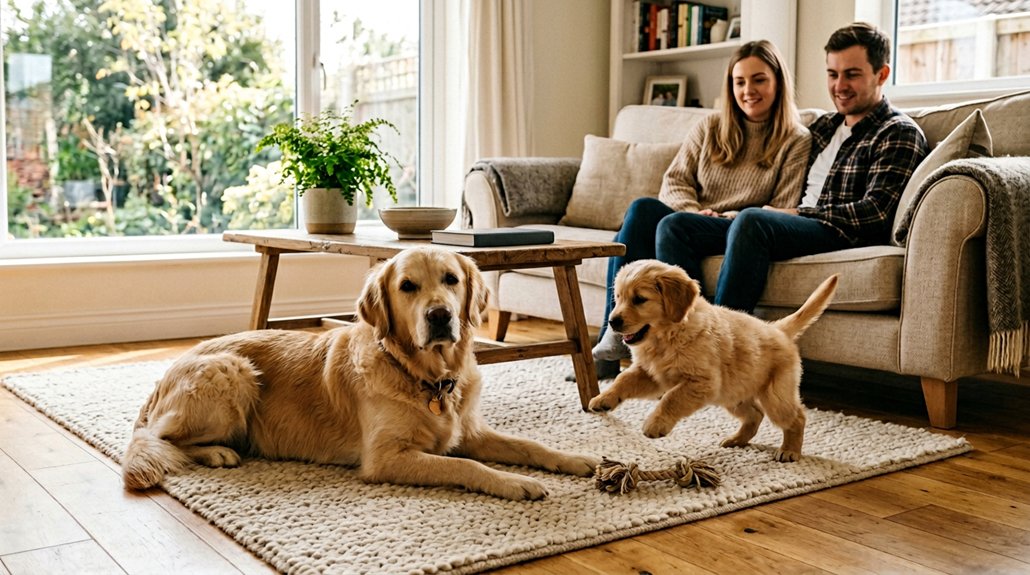
As a first-time dog owner, consider your lifestyle before choosing a puppy or an adult dog. Puppies need significant training, healthcare attention, and have high energy levels, while adult dogs offer predictable behavior and often require less immediate training. If you have the time for intensive early care, a puppy’s vibrancy might suit you. For a smoother adjustment and stability, an adult dog is ideal. Explore further insights to help make the best decision for your circumstances.
Key Takeaways
- Puppies require significant time for training, making them challenging for first-time owners with busy schedules.
- Adult dogs often come with established obedience skills, easing the training burden for inexperienced owners.
- Puppies have high energy and need frequent attention, which could overwhelm first-timers.
- Adult dogs’ predictable behavior and temperament facilitate smoother integration into a new home.
- First-time owners might prefer adult dogs for their reduced chance of behavioral issues and easier house training.
Choosing Between Puppies and Adult Dogs

Deciding between puppies and adult dogs requires a careful assessment of your lifestyle and time availability. Puppies demand significant attention for puppy training, regular health check-ups, and supervision. They possess high energy levels and need consistent training to guarantee proper manners. In contrast, adult dogs generally exhibit predictable adult behavior, often requiring less immediate training. Many adult dogs come with basic obedience skills, reducing the initial training burden. This can be beneficial if you have a hectic schedule. Furthermore, the process of house training can be more intensive with puppies than adults, who may already be accustomed to domestic living. Ultimately, consider the time and dedication you can commit to shaping or maintaining your pet’s behavior for a harmonious relationship.
Evaluating Your Lifestyle for Dog Ownership
When considering dog ownership, especially for first-time owners, it’s important to thoroughly evaluate your lifestyle to confirm it aligns with the responsibilities of caring for a new pet. Reviewing your daily schedule is critical. Do you have the time commitment required for training, exercise, and giving your dog the attention it needs? Reflect on family dynamics to verify everyone’s prepared for the tasks involved in puppy care. Evaluate your support network to handle emergencies or prolonged absences. Potential behavioral issues in puppies highlight the need for consistency in social interaction. Balancing your personal priorities with these demanding changes will help you make an informed decision.
- Plan time for training and exercise
- Confirm family involvement
- Prepare for prolonged absences
- Review support network availability
- Balance personal priorities with responsibilities
The Joys of Raising a Puppy
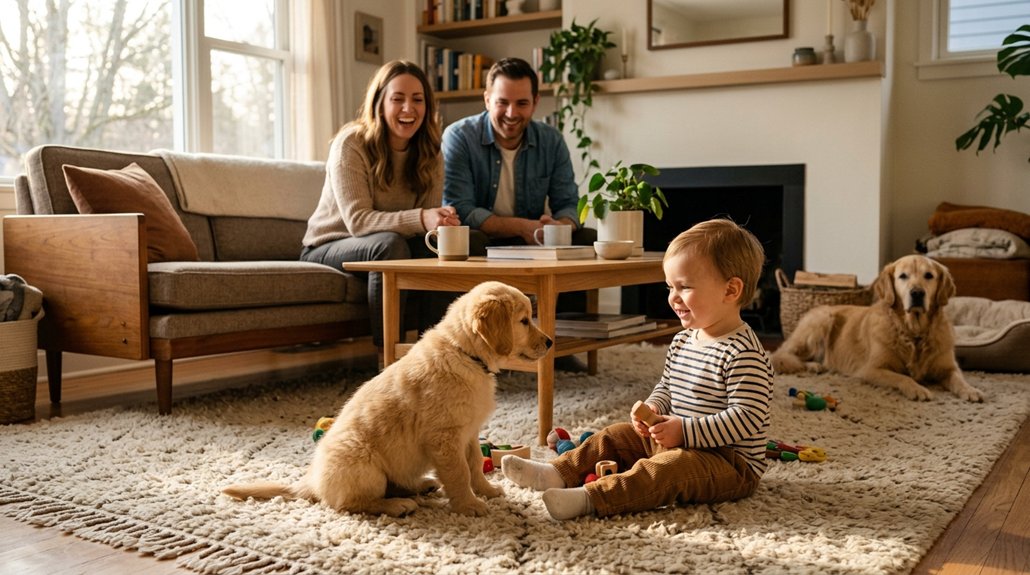
As you consider the realities of dog ownership, it’s worth exploring the rewarding experience of raising a puppy. Scientific studies highlight how the formative months of a puppy’s life are critical for behavioral conditioning, offering you the unique opportunity to shape a pup’s personality with effective training techniques. Puppies are enthusiastic learners, and their playful energy can invigorate your household, fostering active lifestyles and social interactions. Incorporating structured puppy playtime into your routine enhances not only their adaptability but also strengthens your emotional bond. Early socialization can lead to well-adjusted adult dogs capable of thriving in varied settings. This enriching journey of training and nurturing encourages personal growth, helping you to develop patience and empathy as you understand canine development’s intricacies.
The Stability of Adult Dog Adoption
Frequently, new dog owners find that adopting an adult dog provides a sense of stability that is often absent when bringing home a puppy. Adult dogs come with established temperaments and predictable energy levels, making them ideal for newcomers. With many already house-trained and equipped with basic obedience skills, adapting into your home is typically smoother. Adopting an adult dog reduces the likelihood of encountering behavioral issues, as they’ve often been socialized and trained in their previous homes. This reduces stress for you, while providing emotional stability and companionship. By choosing an adult dog, you can gain a clearer understanding of their health status and established habits, minimizing future surprises.
- Predictable adult dog temperament
- Smoother integration into your lifestyle
- Lower chance of behavioral issues
- Faster bond formation
- Clearer health insights
What to Expect With Puppies vs. Adult Dogs
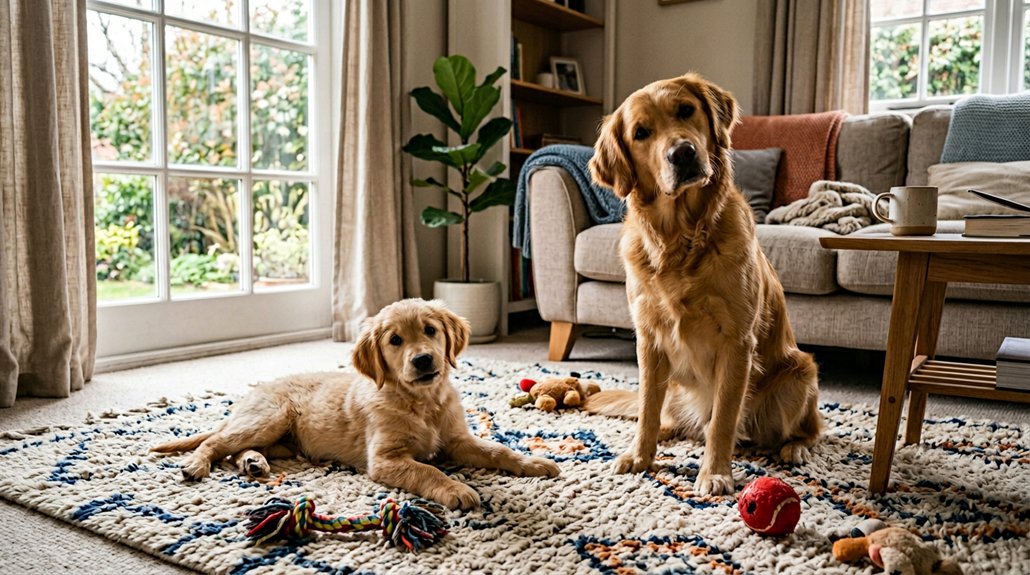
Opting for a puppy or adult dog introduces distinct dynamics into your home. Puppies demand considerable investment in puppy training, fostering social skills, and managing their energetic needs. This commitment involves frequent outdoor trips for potty training and close monitoring to prevent unwelcome antics. On the other hand, adult dogs generally exhibit established adult behavior, including house-training capabilities and calmer energy levels.
Here’s a comparison:
| Aspect | Puppies | Adult Dogs |
|---|---|---|
| Training Needs | High commitment required for puppy training | Often lower as many adults come with basic skills |
| Energy Levels | High, requiring substantial owner engagement | More predictable, usually lower, suits a calmer lifestyle |
| Health Care | Intensive initial care due to vaccinations and vet visits | Established history, likely fewer immediate medical needs |
Understanding these factors will help you make a well-informed decision.
Frequently Asked Questions
What Is the 3-3-3 Rule for Adopting a Dog?
The 3-3-3 rule reflects a dog’s changing phases during adoption: initial shock in the first three days, behavior adjustment in three weeks, and full acclimatization in three months, requiring patience and consistent support for peak health.
What Is the 7 7 7 Rule for Puppies?
The 7-7-7 Rule is essential. Ninety percent of a puppy’s social skills form early. Focus on socialization tips the first 7 weeks, puppy training next, then bond deeply. Early stages impact lifelong health and behavior.
Is It Better to Get a Puppy or an Adult Dog?
It’s generally better to get an adult dog, given their reduced training requirements and established temperaments. This often guarantees smoother lifestyle compatibility, minimizing stress for first-time owners and promoting better overall health outcomes for both.
What Is the 10-10-10 Rule for Puppies?
Imagine a bridge symbolizing stages in a puppy’s life: The 10-10-10 rule helps you plan training timelines and socialization strategies, evaluating how your decisions affect immediate excitement, intermediate development, and long-term health in puppy ownership.
Conclusion
Imagine the pitter-patter of tiny paws racing across your floor or the comforting gaze of wise, mature eyes as you relax on your couch. Whether wrapped up in puppy mischief or basking in the calm of an adult dog’s presence, your choice should align with your lifestyle and wellness. Puppies demand energy akin to a high-intensity workout, while adult dogs offer the stability of a restorative yoga session. Choose wisely, prioritizing your health and happiness in this lifelong companionship.