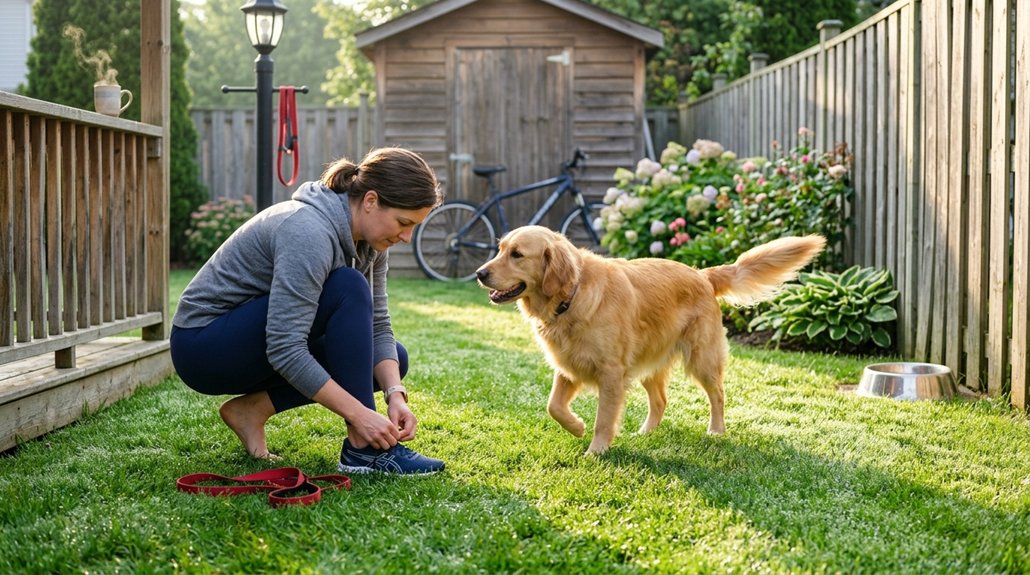
As a dog owner, your day starts with a morning routine, including feeding, walking, and playtime to cater to your dog’s health and psychological needs. Midday breaks might involve hiring a dog walker for exercise and bathroom relief. Evenings are for bonding through extended walks and interactive play, promoting mental enrichment and security. Finally, wind down with a structured bedtime ritual for relaxation. Discover how these routines enhance your dog’s well-being and your shared connection.
Key Takeaways
- Establish a consistent morning routine with walks for exercise and bathroom needs to enhance the dog’s psychological security.
- Implement structured feeding schedules and regular exercise to ensure a healthy lifestyle and well-being for the dog.
- Dedicate time for training and interactive play to boost bonding and cognitive development with the dog.
- Ensure evening routines include outdoor activities and meal planning tailored to the dog’s health and seasonal conditions.
- Utilize home safety measures like baby gates and engaging toys to create a secure environment and prevent boredom.
Creating an Effective Morning Routine for Your Dog
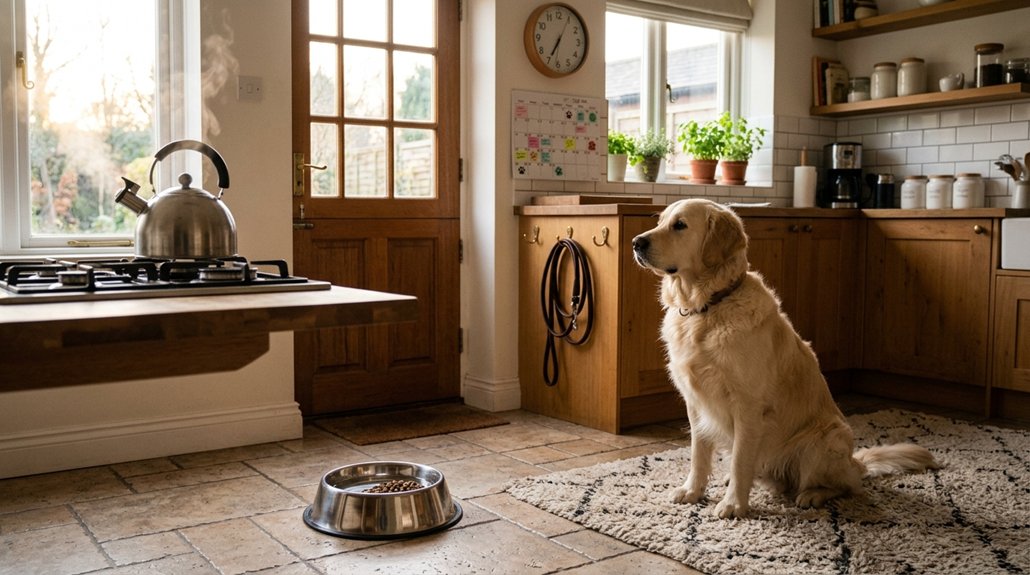
An effective morning routine for your dog begins with making sure they stretch their legs and attend to their bathroom needs. A brief 20-30 minute walk is essential, offering both bathroom relief and the significant morning exercise benefits that contribute to overall well-being. Exercise not only energizes your dog but also mentally engages them, reducing anxiety and promoting better behavior throughout the day.
Equally important is maintaining your dog’s hydration. Offer fresh water as soon as they wake. This dog hydration importance guarantees they stay healthy, particularly before their first meal around 7:30 AM. By establishing a structured morning routine, including hydration and exercise, you help enhance their psychological security and physical health, setting the stage for a balanced, happier daily life.
Securing Your Home for Dogs While You’re Away
To guarantee your home is safe when you’re away, start by using baby gates to block off areas like the kitchen, preventing access to countertops and garbage. It’s crucial to select engaging toys or treat-dispensing puzzles that keep your dog mentally stimulated, reducing the chance of boredom-induced behaviors. By organizing your home environment effectively, you can minimize risks and guarantee your dog’s well-being in your absence.
Baby Gates for Safety
For many dog owners, baby gates serve as an indispensable tool in maintaining a secure home environment while you’re away. Effective baby gate installation is vital for pet safety, offering peace of mind as it restricts access to potentially dangerous areas like kitchens or stairways. Installing these gates can prevent common hazards like counter surfing and garbage picking, reducing injury risks and undesirable behavior. By confining your dog to a designated safe space, you provide a sense of security and help establish a predictable routine that mitigates stress.
| Feature | Benefit |
|---|---|
| Adjustable Sizes | Fits various home layouts |
| Durable Materials | Guarantees long-lasting use |
| Easy Installation | Simplifies set-up process |
| Portable Options | Allows flexible use around home |
| Stress Reduction | Promotes a calm environment |
Engaging Toys for Entertainment
A variety of engaging toys is critical for keeping your dog entertained and mentally stimulated while you’re away. These toys not only enrich your dog’s environment but also enhance their independence and emotional well-being. Utilize a mix of treat dispensing puzzles and interactive toys to guarantee your dog’s peak engagement throughout the day. Here are some effective options for enhancing your dog’s solo playtime:
- Treat Dispensing Puzzles: These require problem-solving skills, keeping your dog intellectually challenged while rewarding them with treats.
- Interactive Toys: Designed to mimic play with a human or another animal, providing companionship.
- Toy Rotation: Regularly changing toys keeps them novel and exciting, stimulating mental engagement.
- Comfort Zone: Create a cozy, secure space for added emotional support and relaxation.
Optimizing Midday Breaks With Dog Walkers
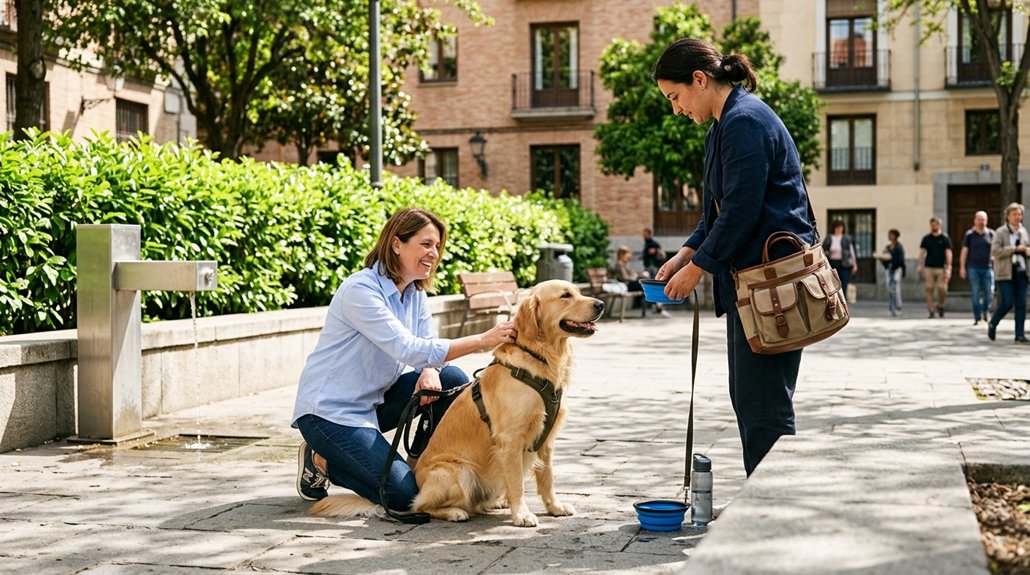
While optimizing your midday breaks with a dog walker, consider how this choice can markedly benefit both you and your pet. Hiring a dog walker guarantees essential midday movement for your furry friend, which is vital in preventing adverse dog behavior caused by excess energy or boredom. You’ll find peace of mind as structured walks and engaging activities maintain your dog’s physical and mental health. Flexible scheduling allows customization to better suit your dog’s energy levels.
Here’s how dog walking services can benefit your day:
| Benefit | Dog Walker Service | Result |
|---|---|---|
| Bathroom breaks | Regular stops | Fewer accidents |
| Exercise | Structured walks | Improved health |
| Socialization opportunities | Group walks | Better dog behavior |
| Flexible scheduling | Customized timing | Reduced owner stress |
Investing in midday dog walks enhances your daily routine and strengthens the owner-pet bond.
Evening Transitions: Switch From Work to Dog Time
Switching gears from the benefits of hiring a dog walker during midday, it’s important to reflect on how you can effectively shift your focus from work to spending quality time with your dog in the evening. Prioritize resetting your dog’s energy levels and enhancing their well-being by following these steps:
- Immediate Outdoor Time: Take your dog outside as soon as you get home. Fresh air and bathroom relief are essential after a long day.
- Play for Change: Engage in interactive games or training tips. This helps reduce your stress and prepares your dog for future dog park adventures.
- Structured Routine: Consistency in evening meals and playtime provides predictability and security for your dog.
- Seasonal Walk Adjustments: Tailor evening walks according to the weather for best comfort and enjoyment.
Maximizing Evening Exercise and Walks Together
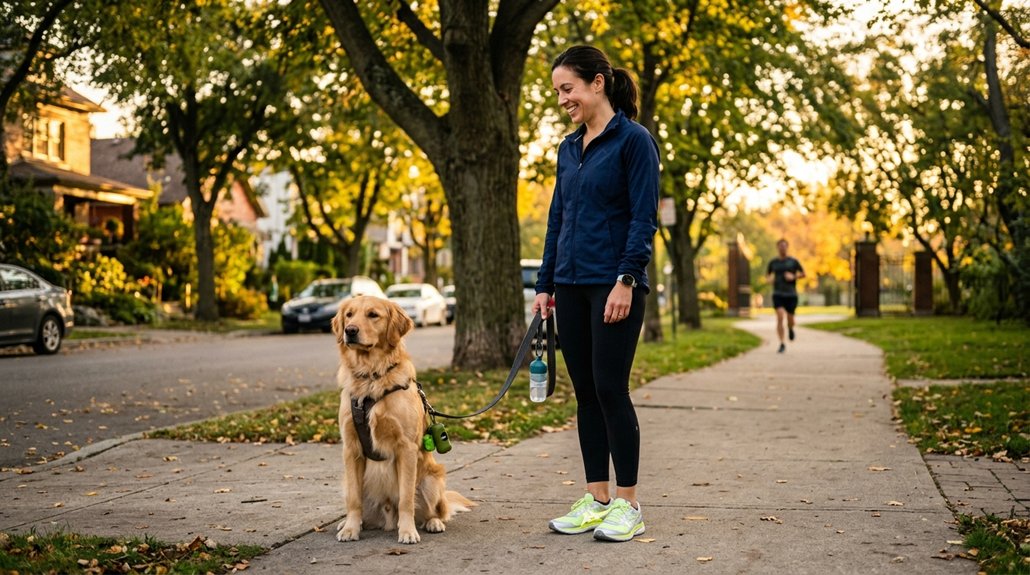
As you shift into your evening routine, maximizing the potential of exercise and walks with your dog can greatly enhance their health and contribute to their happiness. Ideally, these walks should last between 30 to 45 minutes. Not only does this timeframe accommodate exercise, but it also addresses your dog’s bathroom needs. Choose a walk route that prioritizes nighttime safety—well-lit areas reduce risk and increase visibility for both you and your dog. Engage in physical activities such as frisbee or fetch, fostering both your dog’s physical health and your mutual bond. Cooler evenings, especially in summer, offer a comfortable temperature for extended activity. Establishing this structured routine reduces stress, minimizes behavioral issues, and provides socialization opportunities with fellow pet owners.
Effective Meal Planning for Your Dog’s Health
For ideal canine health, establishing an effective meal plan is essential. Here’s how you can address your dog’s nutritional needs through precise planning:
- Vet Recommendations: Always consult a vet for personalized feeding guidelines to meet your dog’s specific nutritional needs.
- Meal Portions: Monitor meal portions carefully; adult diets typically require two meals a day, while puppy feeding should be three to four smaller meals to support growth.
- Treat Limits: Treats should never exceed 10% of your dog’s daily caloric intake, aiding in weight management while ensuring treats don’t disrupt balanced nutrition.
- Weight Management: Adjust food quantities based on your dog’s weight, activity level, and life stage, ensuring peak health and preventing obesity.
These strategies foster a healthy routine and long-term wellness.
Interactive Evening Play for Bonding and Fun
Evening playtime is integral for strengthening the bond between you and your dog, offering structured interactions through engaging games like fetch or hide and seek with treats. These activities not only provide necessary mental stimulation and physical exercise but also help shift your pet from the day’s excitement to a more relaxed state, making bedtime smoother. Integrating problem-solving toys and treat-dispensing puzzles can further enhance this bonding experience by engaging your dog’s mind and reinforcing training commands.
Engaging Games for Dogs
While engaging games and interactive play are essential for a dog’s well-being, incorporating these activities into your dog’s evening routine can considerably boost bonding and promote cognitive development. To enhance mental enrichment and physical exercise, consider these activities:
- Dog agility courses: Set up obstacles in your backyard for your furry friend to navigate, boosting coordination and focus.
- Scent games: Hide treats around your home to engage their natural sniffing abilities, enhancing problem-solving skills.
- Fetch variations: Try different fetch forms like Frisbee or balls with unpredictable bounces to maintain enthusiasm.
- Puzzle challenges: Use treat-dispensing puzzles to prolong playtime and stimulate cognitive growth.
Additionally, incorporating training tricks and tug of war during outdoor adventures will further enrich their evening, concluding with satisfying playtime rewards.
Strengthening Owner-Dog Bond
Incorporating interactive evening play into your routine not only provides essential mental and physical stimulation but also serves as a powerful tool for strengthening the bond between you and your dog. By participating in bonding activities like fetch or hide and seek with treats, your dog engages in exercise that fosters trust and enhances communication. Incorporating training exercises during playtime reinforces obedience, further deepening this connection. Establishing a structured routine that includes playtime benefits your dog’s sense of security and companionship. Regularly sharing activities such as baking homemade treats or introducing interactive toys enriches your dog’s daily experiences, promoting overall happiness. Consistent evening play allows your dog to decompress after a day, creating shared joyful moments that strengthen your emotional bond.
Evening Playtime Benefits
As the sun sets, dedicating time to interactive evening play can greatly enhance the well-being of both you and your dog. Evening playtime routines like fetch or tug-of-war allow your dog to decompress and use energy productively, especially vital for active breeds. This helps in reducing restlessness, leading to evening relaxation. Interactive games also offer essential cognitive challenges, boosting your dog’s focus and obedience. This mental stimulation aligns with your dog’s natural rhythms for better sleep quality and reduced anxiety. Additionally, consistent play strengthens your companionship, making evenings a time of mutual enjoyment. Here’s how evening play benefits you both:
- Energy Expenditure: Reduces hyperactivity.
- Cognitive Stimulation: Enhances learning.
- Bonding Time: Strengthens relationships.
- Improves Sleep: Promotes relaxation.
Wind Down: Time for Bed With Your Dog
Winding down the day with your dog requires thoughtful planning to guarantee a tranquil change to nighttime. Establishing bedtime rituals enhances their sleep environment and offers nighttime comforts. Consistent shift cues—like dimming lights or playing soft music—signal that it’s time to relax. Integrate relaxation techniques such as gentle petting or calming activities to soothe your dog’s mind and prepare them for sleep.
| Bedtime Rituals | Benefits |
|---|---|
| Final bathroom break | Comfort during the night |
| Short evening walk | Enhanced sleep quality |
| Quiet, cozy sleep area | Deeper rest |
Understanding sleep patterns is essential, as dogs may require up to 16 hours of sleep daily. A well-structured wind-down routine promotes overall well-being and a peaceful change to slumber.
Customize Your Routine for Your Dog’s Unique Needs
To effectively customize your dog’s daily routine, consider factors such as age, breed, and energy level as these are essential to meeting their specific needs. Prioritize puppy training to address frequent potty breaks and shorter walks needed for young dogs. Breed differences also play a key role; high-energy breeds often demand extended exercise and playtime, while others may be content with more relaxed activities.
Here’s how to tailor the routine:
- Observe and Adjust: Continuously monitor your dog’s behavior to tweak exercise and playtime.
- Timed Feeding: Align meals with activity levels for ideal digestion and consistency.
- Mental Stimulation: Incorporate puzzles and interactive toys to prevent boredom.
- Bathroom Breaks: Schedule them according to your dog’s age and specific requirements.
Each dog is unique, so adjust as needed.
Connecting With Other Dog Owners for Insights
Connecting with other dog owners can greatly enhance your knowledge about effective daily routines by providing shared experiences and proven strategies. By participating in online forums or local meet-ups, you can exchange tips on engaging playtime and efficient pet care that address breed-specific needs. These interactions not only improve your practices but also foster a supportive community, enriching your commitment as a dog owner.
Sharing Daily Routines
Engaging with fellow dog owners is invaluable for gaining practical insights into daily routines that enhance pet care. By discussing daily challenges and routine adjustments, you can refine how you manage your dog’s schedule. Dog owners often learn to tailor routines based on breed-specific needs, energy levels, and age, ensuring the best care. Engaging on online platforms or within local communities offers fantastic opportunities to exchange tips for managing dog care during hectic workdays. Consider these four key areas when connecting with others:
- Morning and evening structure – Stable schedules with regular bathroom breaks, meals, and playtime.
- Breed-specific routine adjustments – Tailor activities to suit different energy levels.
- Mental and physical stimulation – Incorporate exercises and structured play.
- Community support – Join forums for real-world advice.
Tips for Engaging Playtime
A fulfilling playtime regimen for your dog can be substantially enriched by leveraging interactions with fellow dog owners. Engaging in outdoor activities is essential for reaping playtime benefits such as exercise and mental stimulation. Trips to the dog park foster social connections, both human and canine. Interactive training, like dog-friendly games of hide and seek, promotes creative bonding and enriches mental agility. Organizing group walks or playdates with other owners enhances your dog’s socialization and strengthens community engagement. Exploring dog owner blogs or social media provides insights into innovative playtime strategies. Additionally, participating in dog-friendly classes or training sessions fosters skill development and links you with like-minded individuals. By harnessing this support network, your dog’s playtime becomes more holistic and rewarding.
Discussing Pet Care Strategies
For many dog owners seeking to optimize their pet care routine, exchanging insights with fellow owners can be a game-changer. Engaging with online communities or social media groups allows you to benefit from collective knowledge. Consider these strategies:
- Diet Adjustments and Meal Planning: Share and compare feeding schedules to guarantee nutritional needs are met based on age, weight, and activity levels.
- Grooming Tips and Health Monitoring: Learn new practices for maintaining your dog’s coat and general health.
- Training Techniques and Socialization Practices: Discover successful methods to improve behavior and social adaptability with different dogs or environments.
- Exercise Variety and Emergency Planning: Explore innovative ideas for engaging activities and readiness for unforeseen events.
Connecting with others enhances your understanding, makes travel preparation less intimidating, and provides thorough pet care.
Frequently Asked Questions
What Is the 7 7 7 Rule for Dogs?
The 7 7 7 Rule for dogs instructs you to balance exercise duration with 7 hours each of sleep, play, and rest daily. Coupled with a consistent feeding schedule, it guarantees a canine’s ideal health and behavior.
What Should a Typical Day Look Like for a Dog?
A dog’s day should include a balanced morning routine with feeding and a walk. Guarantee 12-14 hours of sleep, regular potty breaks, and structured evening playtime for mental stimulation, promoting healthy growth and a strong bond.
What Is the 3-3-3 Rule for Dogs?
Imagine adopting a shy dog like Max; understanding the 3-3-3 Rule’s essential. Initially, expect anxiety, but consistent training and patience reveal his true personality, improving dog behavior with time. Adapting training tips guarantees smoother adjustment.
What Annoys Dogs the Most?
Dogs get annoyed by unpredictable routines, loud noises, and being left alone too long. These disrupt canine comfort and can deteriorate dog behavior. Maintaining consistency, gradual socialization, and positive interactions improve their sense of security and well-being.
Conclusion
In optimizing your daily routine with your dog, remember that 60% of dog owners report improved mental well-being from regular interaction with their pets. By structuring your day thoughtfully, from morning routines to interactive evening play, you’re not only enhancing your dog’s life but also enriching your own. Tailoring activities to your dog’s unique needs and engaging with other dog owners can provide insights, ensuring a harmonious and fulfilling relationship for both you and your furry companion.