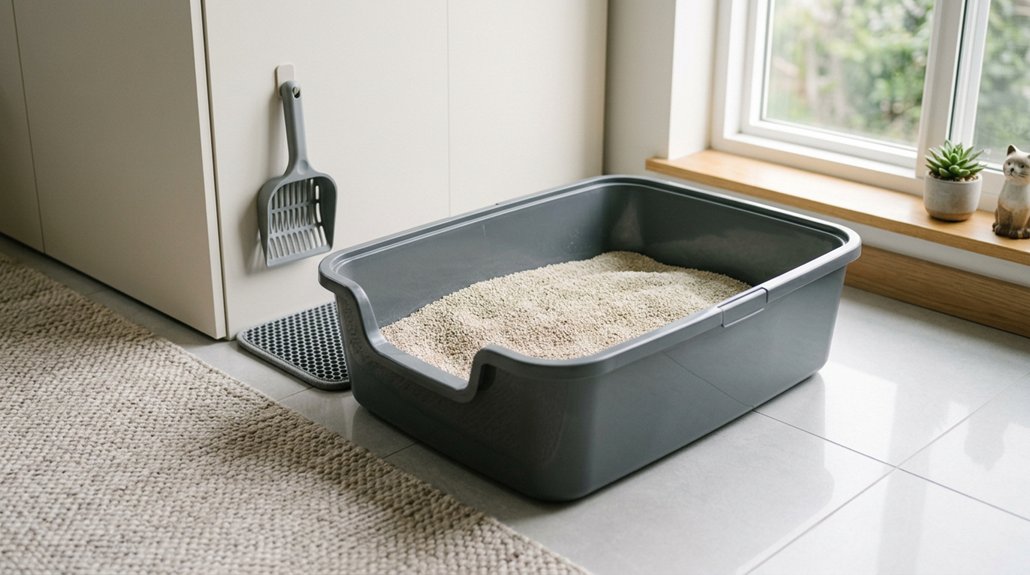
To set up a litter box correctly, guarantee it’s 1.5 times your cat’s body length, opting for low sides for easier entry. Use unscented, scoopable litter to favor compliance, and position the box in quiet, low-traffic areas, away from noisy appliances and feeding zones. Cleanliness is vital; scoop daily and replace litter biweekly. Monitor your cat’s behavior for signs of discomfort or stress. By understanding these principles, you’ll discover further expertise.
Key Takeaways
- Choose a litter box 1.5 times the cat’s body length for comfort and accessibility.
- Place the box in a quiet, low-traffic area away from noisy appliances.
- Use unscented, scoopable litter and maintain daily scooping to ensure hygiene.
- Avoid hooded boxes and liners which can trap odors and create discomfort.
- In multi-cat households, provide multiple boxes on different floors to reduce disputes.
Select the Right Litter Box Size and Type
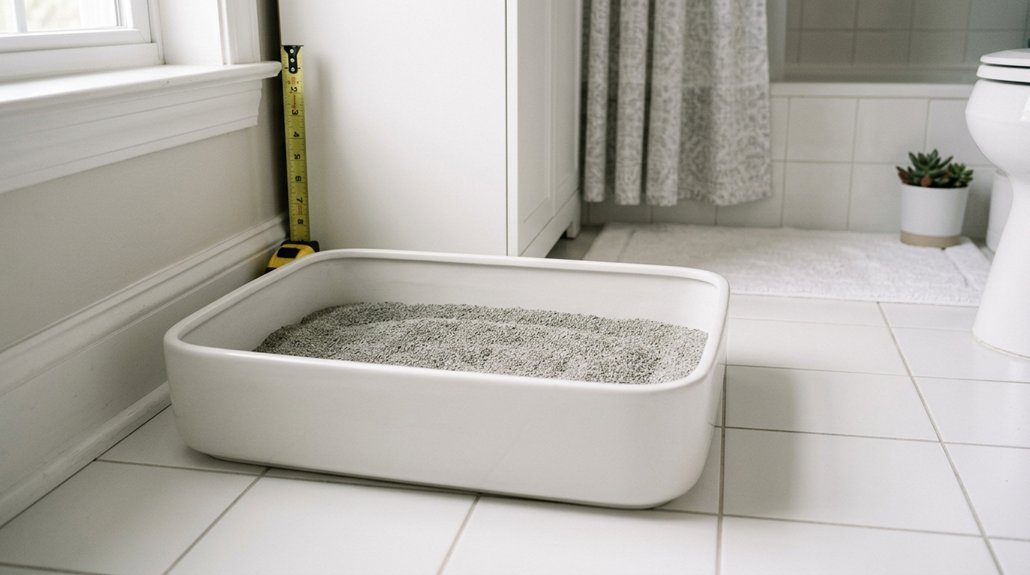
Selecting the right litter box size and type is essential to promoting ideal feline behavioral health. Proper litter box dimensions guarantee your cat can turn and squat with ease. Aim for a box that’s at least 1.5 times the cat’s body length. If your cat’s average-sized, standard boxes often lack adequate space—consider using larger plastic storage bins. Pay attention to side height; higher sides help for cats who urinate high, while shallow ones are vital for seniors or kittens. Multiple entry points, preferably in uncovered designs, offer a secure environment, allowing cats to escape if threatened. Litter box liners should be avoided, as they can deter your cat due to undesirable textures and odors.
Evaluate Litter Options Based on Your Cat’s Preferences
To determine the ideal litter type for your cat, it’s recommended to assess their response to various substrates like clay, pine, or corn, noting texture preferences that can affect their litter box usage. Cats demonstrate distinct affinities for certain materials, and experimentation can enhance compliance, minimizing stress behavior such as avoidance. For scientific accuracy, observe any signs of discomfort or deviation from normal behavior, and consult with a veterinarian if choosing one type repeatedly leads to aversion.
Experiment With Litter Types
Although each cat exhibits distinct preferences that may impact their litter choices, it’s crucial to scientifically evaluate various litter options to accommodate feline tendencies. Initiate litter trials by experimenting with diverse material combinations such as clay, pine, corn, and recycled paper. To determine your cat’s best litter, consider these steps:
- Material Trials: Conduct experiments using different litter types to identify your cat’s preferred substrate.
- Odor Sensitivity: Utilize unscented, scoopable litter to minimize olfactory aversion, a common deterrent for feline usage.
- Behavior Observation: Scrutinize your cat’s elimination behavior after changing litter types; reluctance may signify dissatisfaction.
- Depth Testing: Maintain litter depth at approximately 2 inches, adjusting based on your cat’s comfort with digging and covering behavior.
These meticulous observations help create a litter setup tailored to your cat’s preferences.
Consider Texture Preferences
Investigating litter texture preferences can greatly enhance your cat’s comfort and compliance in using the litter box. Analyze multiple options, such as clay, pine, corn, or recycled paper, to identify what aligns with your cat’s unique tactile preference. Fine-grained substrates often offer maximum cat comfort, yet some felines may prefer coarser textures. Importantly, maintain unscented, scoopable litters to avoid deterring your cat with strong odors. Fill the litter box to a minimum depth of 2 inches; this guarantees a satisfactory digging and elimination experience. Observing your cat’s behavior can reveal subtle cues pointing to its favored substrate. A strategic approach in evaluating litter textures fosters an understanding of individual proclivities, aiding in ideal litter box setup, enhancing your pet’s comfort and welfare.
Decide the Ideal Location for Your Litter Box
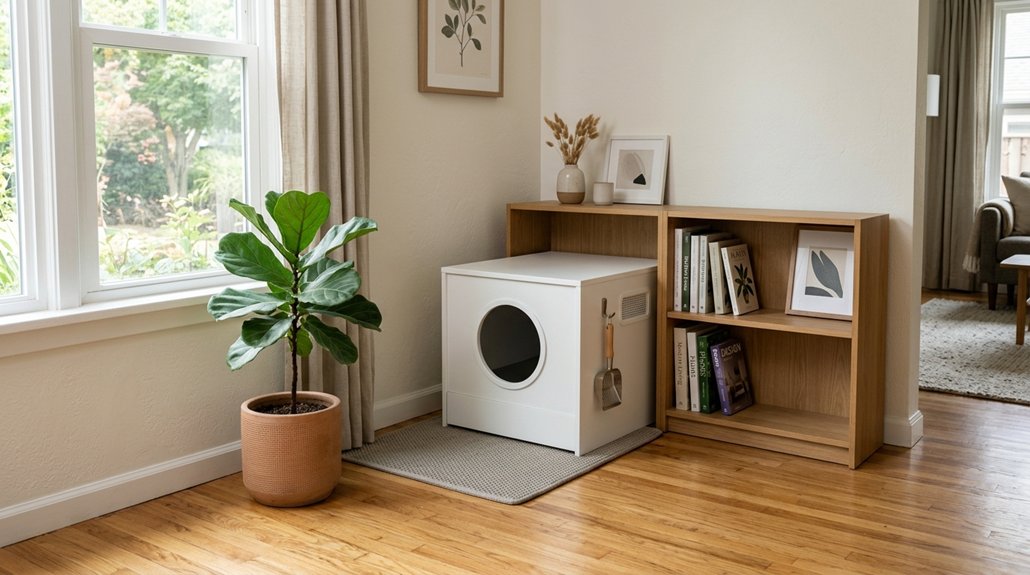
When selecting the ideal location for your cat’s litter box, prioritize quiet, low-traffic areas to cater to their behavioral need for privacy during elimination. Avoid placement near noisy appliances, which can trigger a stress response and discourage consistent use of the litter box. Additionally, maintain a considerable distance from feeding zones to uphold sanitary conditions and encourage appropriate litter habits.
Optimal Placement Strategies
Selecting the ideal location for a litter box involves understanding feline behavioral patterns and needs. Proper placement impacts both litter box hygiene and feline stress levels. Here are best placement strategies:
- Quiet, Low-Traffic Zones: Position the litter box in calm areas away from food and water to enhance security, a key component in reducing stress-induced urinary issues.
- Multiple Locations: In multi-cat households, distribute litter boxes separately to mitigate territorial disputes, ensuring each cat experiences reduced competition.
- Accessible Escape Routes: Avoid cornering. Place boxes away from walls, enabling quick exits and minimizing anxiety over entrapment.
- Consistency: Maintain stable locations. Frequent relocation of litter boxes can be disruptive, compromising a cat’s comfort and causing behavioral errors.
Apply these strategies to promote a stress-free, hygienic environment for your feline companions.
Avoid Noisy Locations
Although it may seem trivial, the placement of a litter box in a noisy location can substantially affect a cat’s willingness to use it. Cats possess heightened noise sensitivity, and unexpected sounds from appliances or high-traffic areas may induce stress or fear. This behavior, rooted in their natural instincts for safety and privacy, demands strategic litter box placement. To alleviate anxiety, choose a quiet, accessible spot away from disruptive stimuli. Avoid dark corners or environments where your feline might feel ensnared, which can deter utilization. Frequently inspect the vicinity for emerging noise triggers, making necessary adjustments to sustain tranquility. Proper anatomical positioning guarantees comfort, enabling your cat to feel secure while eliminating, promoting ideal litter box use devoid of interruption.
Make Your Litter Box Accessible and Comfortable
Creating an accessible and comfortable litter box environment is essential to cater to the natural behaviors of felines. Understanding cat accessibility begins with selecting appropriate litter box dimensions. It should be at least 1.5 times the length of your cat, allowing ample space for essential turning and squatting behavior. Here are four key considerations:
- Litter Box Dimensions: Verify it’s big enough for your cat’s ease of movement, minimizing stress.
- Access for Cats: Choose a box with low sides if you have older cats or kittens; higher sides for felines that pee high.
- Location: Situate the box in a quiet, non-carpeted area away from food and water.
- Box Type: Opt for open boxes, avoiding hoods or liners for unobstructed entry and exit.
Maintain a Clean and Odor-Free Environment
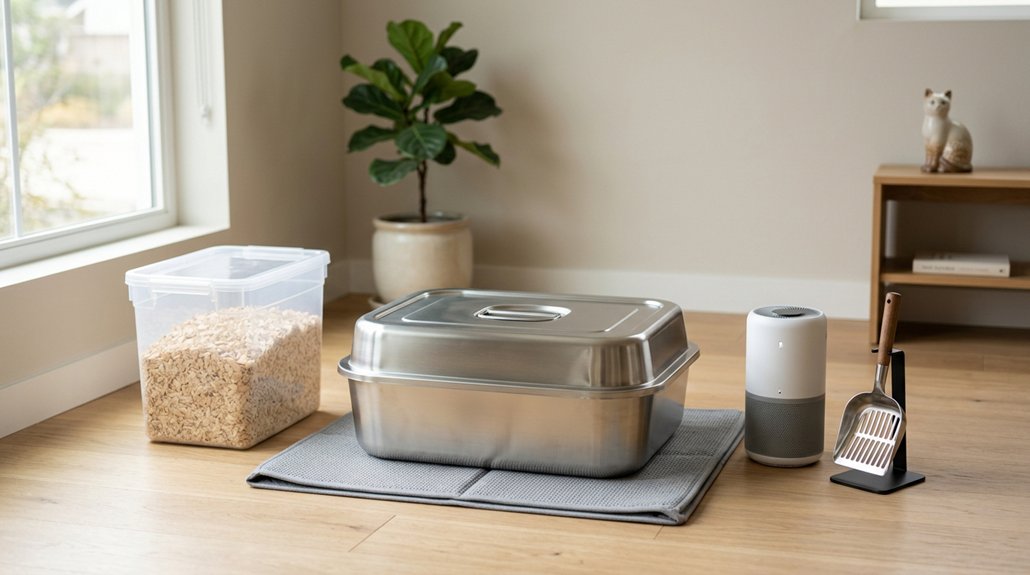
Proper hygiene is vital for maintaining a clean and odor-free environment around your cat’s litter box. Implement these litter maintenance tips to optimize cleanliness and olfactory conditions in your home. Scoop the litter box daily to mitigate ammonia accumulation, a primary olfactory irritant. Completing a full cleaning biweekly, involving litter replacement and dish soap sanitation, is essential for disrupting microbial proliferation that contributes to malodor. Opt for unscented, scoopable litter, preventing sensory overstimulation that can deter feline usage. Additionally, employ a litter mat to intercept granular displacement, effectively reducing particulate transference to adjacent surfaces. Periodic monitoring of the litter receptacle’s integrity is critical; replace it every 6-12 months to avert polymer-based odor absorption and maintain sustained hygiene standards.
Strategically Place Multiple Litter Boxes
A minimum of one litter box per cat plus an additional one guarantees strategic placement and accessibility, promoting feline well-being. Structuring an effective litter box layout addresses territoriality concerns, encouraging harmonious feline interactions. Consider these guidelines:
- Distribution: Position boxes on different floors for easy access, reducing cats’ stress when nature calls.
- Environment: Place them away from noisy, high-traffic zones to maintain a serene area, as cats require low-stress conditions for elimination.
- Spacing: Maintain at least 12 inches of separation from walls and other boxes to prevent territorial disputes and guarantee comfortable usage.
- Safety: Avoid dim, enclosed corners. Cats need to feel secure, and escape routes are critical to their safety in shared environments.
Identify and Prevent Litter Box Setup Mistakes
While setting up a litter box may seem straightforward, improperly executed arrangements can lead to behavioral problems and stress in cats. Make sure you furnish one litter box per cat, plus an additional one, to mitigate territorial disputes. Spatial competition can trigger stress markers and result in inappropriate elimination behaviors. Choose appropriately sized boxes, at least 1.5 times your cat’s length, with low sides for accessible entry, especially for the elderly or kittens. Avoid hooded boxes and liners, as these can trap litter box odors, leading to olfactory aversion due to heightened feline scent perception. Position boxes in quiet, accessible zones—avoid placing them near heavy foot traffic or near loud appliances. Regular cleaning, including daily scooping and bi-weekly sanitization, is essential for maintaining hygienic conditions.
Observe Litter Box Habits for Signs of Cat Health
Beyond ensuring an ideal setup, it is important to vigilantly monitor your cat’s litter box habits for signs of health concerns. Regular litter box monitoring can reveal changes in your cat’s elimination behavior, indicating potential medical issues. Look for:
Monitor your cat’s litter box habits closely for any signs indicating potential health concerns.
- Frequency and Usage Patterns: Monitor how often your cat uses the box. Increased frequency or avoidance can signal urinary tract infections or stress.
- Behavioral Signs During Elimination: Notice any straining or discomfort, suggestive of gastrointestinal problems.
- Output Characteristics: Inspect consistency and color changes, which may indicate dietary or metabolic disorders.
- Documentation: Keep a precise record of your cat’s litter box habits. This data can be vital for your veterinarian when diagnosing health issues.
Such vigilance aids in early detection of underlying conditions, ensuring timely intervention.
Overcome Common Litter Box Usage Problems
Several strategies can help overcome common litter box usage problems, ensuring your feline’s comfort and compliance. To mitigate litter box anxiety, maintain one box per cat plus an extra to circumvent territorial disputes. Opt for unscented, scoopable litter to reinforce positive litter box enforcement, ensuring daily maintenance for olfactory appeal. Position boxes in tranquil, accessible locations, away from food and noisy appliances, to minimize behavioral triggers. Prioritize open designs over covered boxes, preventing feelings of entrapment which can deter usage. Observe for stress indicators or avoidance behaviors, as persistent issues may imply medical concerns necessitating veterinary consultation. By adhering to these guidelines, you can enhance your cat’s elimination comfort and foster harmonious litter box engagement.
Frequently Asked Questions
How to Set up a Litter Box for the First Time?
Select a litter box size 1.5 times your cat’s length and position it in a quiet, low-traffic area. This enhances feline spatial awareness and safety, aligning with ethological principles. Maintain a consistent cleaning regime for ideal hygiene.
What Is the Best Litter for Cats With Asthma?
The bee’s knees for asthma-prone cats are unscented, dust-free litters. Opt for clumping alternatives like corn, wheat, or recycled paper. Silica-based litters are exceptional due to their low dust levels and ideal respiratory compatibility.
Can Chihuahuas Use a Litter Box?
Yes, you can train Chihuahuas to use a litter box. This alternative potty option offers litter training benefits, aligning with animal behavior principles. Confirm appropriate litter type and size for best results, facilitating convenient waste management indoors.
Should There Be a Litter Box on Each Floor?
Absolutely, in multi-cat households, optimize litter box locations by placing boxes on each floor. This reduces interspecific competition and enhances spatial availability, promoting natural feline elimination behavior and mitigating stress-related urination issues within the home environment.
Conclusion
Setting up a litter box isn’t just about tossing litter into a box—it’s a symphony of science and intuition that guarantees harmony between your feline friend and their environment. Like a meticulous scientist with a keen eye for animal behavior, you’ll craft a sanctuary where your cat feels secure and their instincts are respected. By mastering the art of litter box arrangement, you’re not just enhancing hygiene; you’re nurturing your pet’s well-being and strengthening your interspecies bond.