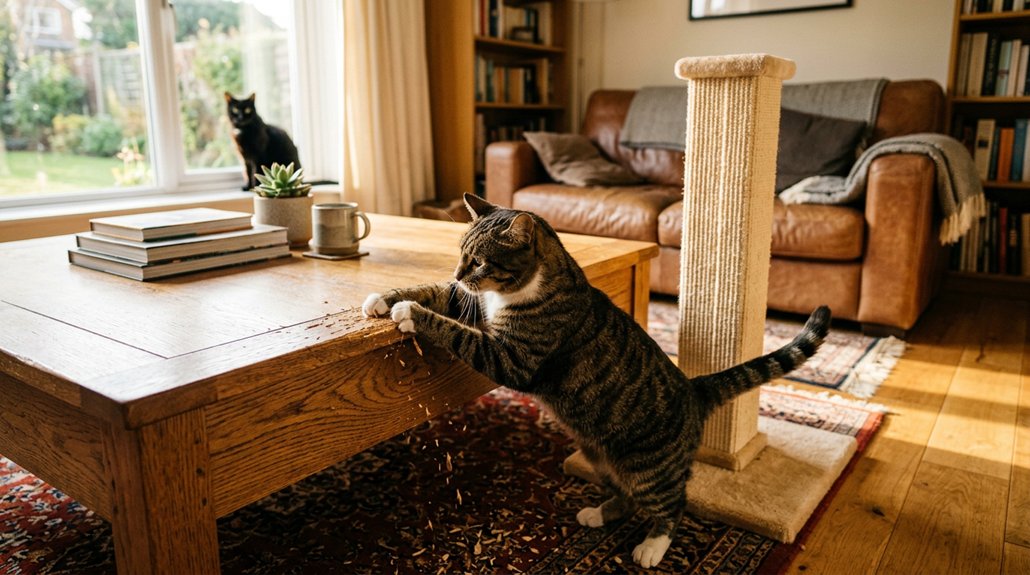
Cats scratch furniture to maintain their claws, mark territory, and alleviate stress or boredom. To prevent damage, you should provide tall, varied scratching posts near their favorite spots, enhancing attractiveness with catnip. Protect furniture with barriers and deterrents like double-sided tape. Encourage appropriate behavior using positive reinforcement and interactive play. A harmonious environment reduces stress and promotes well-being. Exploring further will give you insights on managing this natural feline behavior more effectively.
Key Takeaways
- Cats scratch furniture to maintain claws, mark territory, and express stress or boredom.
- Provide tall, durable scratching posts near frequented areas to redirect scratching behavior.
- Use positive reinforcement to encourage use of scratching posts and engage in interactive play sessions.
- Protect furniture with barriers like double-sided tape or tight-fitting covers to deter unwanted scratching.
- A harmonious environment with safe spaces and interactive play reduces stress and scratching incidents.
Recognize Why Cats Scratch Furniture
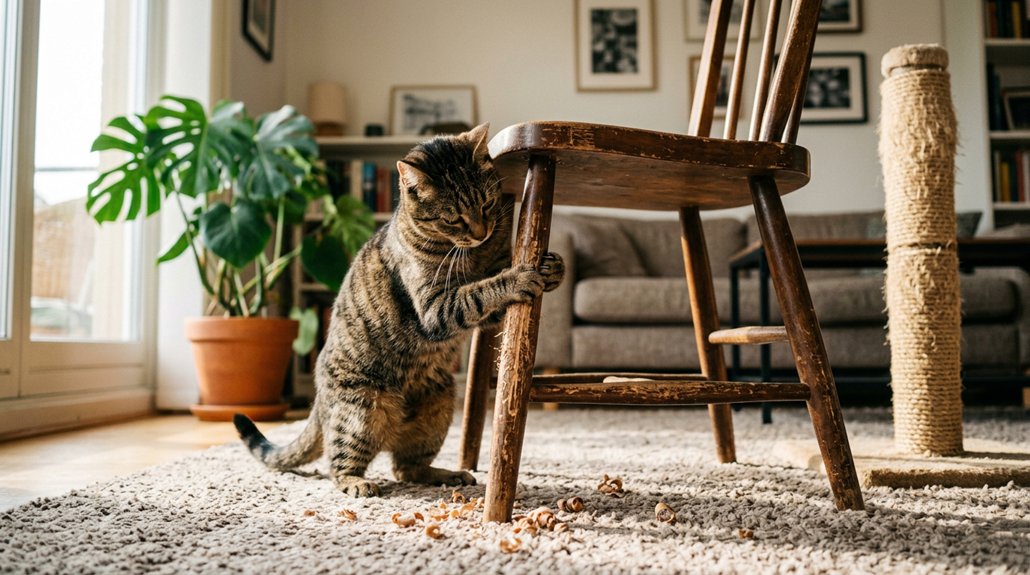
While it might be frustrating to find your cat scratching up the furniture, understanding why this behavior occurs can help you manage it more effectively. Your cat’s scratching is an instinctual behavior, serving several purposes that are crucial to their health and comfort. It’s not just about sharpening claws; it’s a form of exercise, claw maintenance, and an essential activity for territorial marking. Cats release scent markers through glands in their paws, establishing their presence within their environment. Environmental stressors like noise or changes can amplify this behavior, as a stressed cat seeks reassurance by marking territory. Furthermore, if your cat’s bored or understimulated, scratching offers them the mental and physical engagement they crave, often targeting favorite vertical surfaces.
Set Up Ideal Scratching Stations Early
Creating an ideal scratching environment for your feline friend can drastically reduce furniture damage and satisfy their natural instincts. Cater to your cat’s scratching preferences by providing vertical and horizontal posts, at least 32 inches tall, made from materials like sisal rope. Effective post placement involves strategic positioning near areas where your cat already scratches. This placement helps redirect their behavior in a natural and attractive manner.
| Tip | Material | Placement |
|---|---|---|
| Provide Variety | Sisal, Cardboard | Near existing scratch sites |
| Guarantee Adequate Size | 32-inch height | Close to favorite resting or playing spots |
| Encourage Use | Add Catnip | Regularly reassess and adjust as needed |
Maintain engaging scratching stations to appeal continually to your cat’s preferences, promoting healthy scratching habits.
How Scratching Affects Your Home
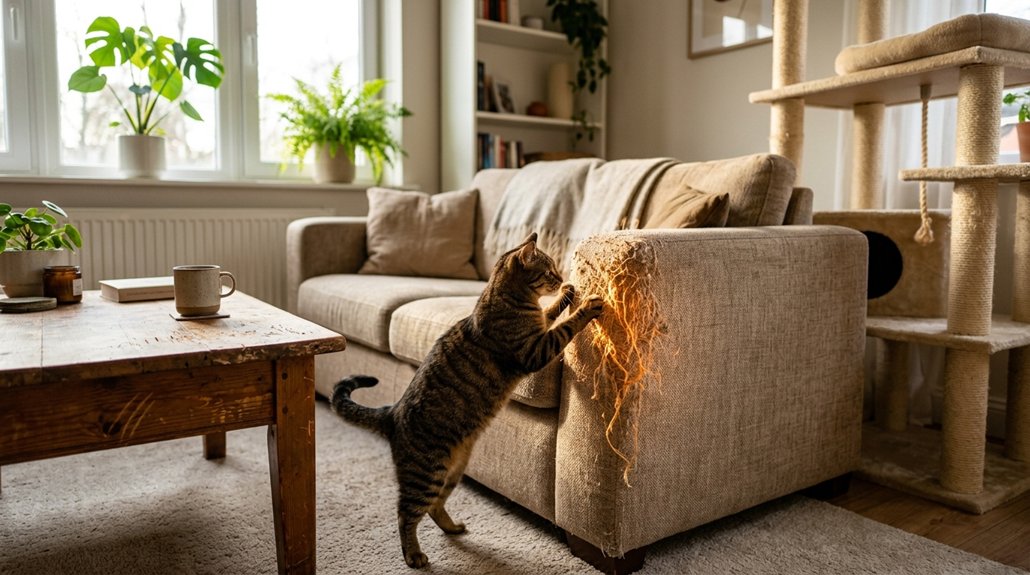
Scratching is more than just a quirky habit; it’s a natural behavior that can lead to noticeable damage to your furniture and cherished items. Understanding why your cat scratches is essential to managing this behavior and minimizing wear and tear throughout your home. By addressing the root causes, such as boredom or lack of stimulation, you can take proactive steps to preserve your belongings without stifling your cat’s instinctual needs.
Damage To Household Items
Cats, though beloved companions, can be notorious for inadvertently damaging household items with their scratching habits. This natural feline behavior poses challenges for furniture maintenance and upholstery care. Fraying, tearing, or punctures in fabrics are common, leading to costly repairs or replacements. Those little claws of theirs can also leave permanent marks on wood or leather, diminishing your furniture’s aesthetic appeal over time.
Moreover, carpeting isn’t spared either. Unsightly bald patches can appear where your cat’s indulged in their scratching instincts, reducing your carpet’s lifespan considerably. While it’s frustrating to watch your household items degrade, understanding that cats are merely following instinct helps. Investing in solutions like designated scratching posts can mitigate the damage while respecting your cat’s natural urges.
Managing Scratching Behavior
To effectively manage a cat’s scratching behavior, it is essential to acknowledge that this natural feline activity is integral to their well-being. By understanding that scratching maintains claw health and marks territory, you can focus on providing scratching alternatives to preserve your home. Strategically place scratching posts where your cat tends to scratch and reinforce their use with praise and treats. Interactive toys are wonderful for alleviating boredom and stress, reducing the likelihood of furniture being used as a scratching surface. Consider using deterrents like double-sided sticky tape to make inappropriate areas less appealing. By addressing both the physical and emotional needs of your cat through these methods, you promote a healthier and happier environment for both of you.
Prevent Scratches With Careful Furniture Protection
To effectively protect your furniture from cat scratches, consider implementing both physical barriers and deterrent measures. Tight-fitting covers can make surfaces less appealing, while using double-sided sticky tape or sandpaper can create uninviting textures for your feline friend. Coupled with these protective covers, carefully placed deterrents will not only preserve your furniture but also gently guide your cat towards acceptable scratching alternatives.
Protective Covers And Barriers
Leather couches or fabric-covered chairs are often prime targets for your feline friend’s scratching instincts. Understanding the appeal of specific furniture materials can help you protect them. Cats seek surfaces that offer resistance and satisfying feedback to their claws. Using tight-fitting protective covers can change these surface textures, making them less enticing. Employ slick barriers like plastic sheeting as these provide an ungrippable surface, effectively deterring your cat. During initial training, temporary covers serve to shield vulnerable areas while reinforcing usage of scratching posts. Additionally, cleaning scratched spots to eliminate scent markers reduces the likelihood of repeated scratching. Protecting your furniture with covers and barriers shows empathy for your pet’s natural instincts, while preserving your household aesthetics.
Deterrent Tapes And Textures
Few things can challenge the spirit of a cat owner like finding their beloved furniture turned into a scratching post. Fortunately, tape application and texture variety can save the day. Cats generally loathe sticky surfaces, and double-sided tape creates an unpleasant texture on furniture that deters scratching. Here’s a strategic approach:
- Tape Application: Cover affected areas with double-sided sticky tape to discourage paw contact.
- Texture Variety: Use sandpaper or textured fabric to make surfaces less appealing, nudging them toward scratching posts.
- Smooth Sheets: Slick, tight-fitting sheets can eliminate their scratching interests on particular furniture.
- Consistency and Alternatives: Regularly offer different scratching posts; remove deterrents once positive habits are established.
With persistence and care, you’ll foster a harmonious living environment.
Rewarding Cats for Appropriate Scratching Behavior
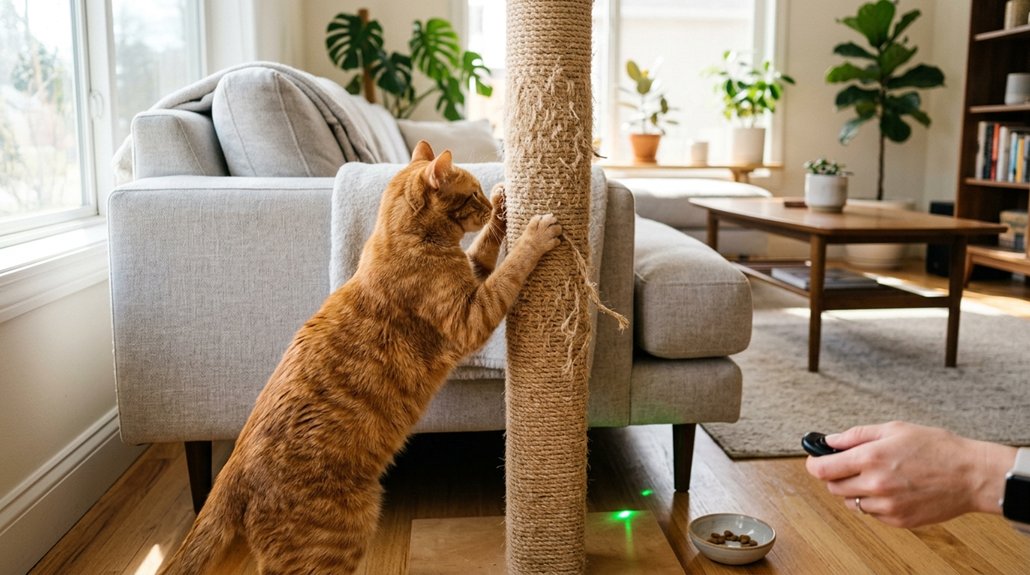
While nurturing your cat’s scratching behavior might feel like a challenging task, rewarding them for using the appropriate surfaces can transform this into a positive experience. By employing positive reinforcement through scratching rewards like treats or verbal praise, you’ll help them associate scratching posts with favorable outcomes. This encourages a habit of using these posts over your furniture. Consistency is essential; reward every time your cat chooses the post, reinforcing good behavior. Consider integrating interactive playtime around the post to make it more enticing, further promoting this healthy habit. Over time, this methodical approach helps develop healthier scratching behaviors, markedly reducing the chance of unwanted damage to your furniture, creating a harmonious living environment for both you and your feline friend.
Reduce Environmental Stress That Leads to Scratching
When you understand how stressors in the environment influence your cat’s scratching behavior, you begin to see the importance of creating a calm and secure home. Consider these measures for stress relief and establishing safe spaces:
- Identify Stressors: Recognize loud noises, busy children, or sudden changes that might unsettle your cat and trigger scratching.
- Create Safe Spaces: Offer sheltered spots like pillow caves or cozy cat beds where your cat can hide and feel secure, reducing the need for displacement scratching.
- Provide Scratching Posts: Place several posts around the home to divert attention from furniture and allow stress relief through healthy scratching.
- Engage with Play: Dedicate time to interactive play, easing boredom and frustration, thereby preventing destructive behaviors.
These steps create a harmonious environment for both you and your cat.
Frequently Asked Questions
How Do I Stop My Cat From Clawing My Furniture?
To stop scratching, offer your cat alternative outlets like sturdy posts with varied textures. Engage them with toys and use deterrents on furniture. Regular trimming and creating a stress-free environment will enhance scratching prevention while protecting your furniture.
Is Furniture Scratching a Behavioral Issue?
Scratching is more like a feline’s dance of nature than a behavioral issue. It’s their way of painting borders with territorial marking and nurturing their instincts. Understand them, offer alternatives, and see your world blend with theirs.
What Smell Stops Cats From Scratching Furniture?
You can deter cats from scratching furniture using citrus scents, lavender, or vinegar. These cat repellent scents serve as effective deterrents. Remember, always choose non-toxic options and consult a vet if you’re considering essential oils.
What Natural Remedy Stops Cats From Scratching Furniture?
To naturally deter furniture scratching, explore using citrus scents as they’re often effective due to cat behavior rooted in scent aversion. Additionally, provide scratching alternatives like cat trees to satisfy their instinctual needs more appropriately.
Conclusion
Understanding why your cat scratches furniture is key to maintaining harmony in your home. By setting up ideal scratching stations, you’ll nip the problem in the bud and save your precious furniture. It’s like a dance—when both partners understand the steps, everything falls into place. Protect your furniture proactively, reward good behavior, and reduce environmental stressors. With a bit of effort, you’ll foster an environment where your feline friend feels secure and your home remains pristine.