
To recognize an emergency in dogs, watch for sudden behavioral changes like aggression, withdrawal, or uncharacteristic vocalization. Look for signs of distress such as seizures, collapse, or difficulty breathing. Gastrointestinal symptoms like severe vomiting, diarrhea, or abdominal distension also signal emergencies. If you suspect toxin exposure, act quickly and contact your vet. Keeping medical records handy aids timely response. Acting swiftly can save your dog’s life and there’s much more to uncover.
Key Takeaways
- Sudden seizures or collapse in dogs require immediate veterinary intervention.
- Difficulty breathing or bluish gums are critical signs of respiratory or heart distress.
- Severe gastrointestinal symptoms like bloody diarrhea or repeated vomiting are urgent emergencies.
- Unusual lethargy or drastic behavior changes could indicate serious health issues.
- Rapid contact with a vet is essential if poisoning symptoms appear, like drooling or seizures.
Spotting Dog Emergencies: Key Signs to Watch For

Recognizing an emergency in your dog can save its life, so don’t ignore signs like excessive vomiting or diarrhea, particularly if there’s blood present, as these symptoms often indicate gastrointestinal distress needing immediate veterinary care. Additionally, monitor for reactions after vaccinations like swelling or hives, which signal serious vaccine reactions requiring prompt medical intervention. Be vigilant for poisoning symptoms, such as drooling, tremors, or seizures, which necessitate immediate professional attention. Sudden lethargy or a noticeable shift in energy levels may also point towards critical illness. Unexplained behavioral changes, whether it’s increased aggression or withdrawal, can be indicative of underlying health issues. Always secure immediate veterinary assistance if your dog exhibits any of these alarming signs, ensuring their well-being through diligent observation and action.
Dog Breathing & Heart Issues: Critical Red Flags
When your dog experiences sudden difficulty or rapid breathing, it’s essential to recognize these as potential indicators of serious conditions like respiratory distress or heart failure. You should watch for labored breathing or open-mouth breathing, which might be accompanied by signs such as lethargy or bluish-tinged gums that signal underlying cardiac or pulmonary issues requiring immediate veterinary attention. Identifying abnormal heart rhythms or collapsed episodes, where the dog appears unresponsive, is imperative for ensuring prompt intervention and treatment.
Recognizing Labored Breathing
Labored breathing in dogs serves as an urgent signal that shouldn’t be ignored, often indicative of serious conditions like respiratory distress or heart failure. To determine if your dog’s breathing patterns signify emergency breathing, observe these essential signs:
- Open-mouth Breathing: Your dog may struggle to catch its breath, resorting to breathing through an open mouth, which deviates from normal breathing patterns.
- Wheezing or Rapid Respiration: Listen closely for any wheezing noises, and monitor for a rate that’s noticeably faster than usual, both suggesting emergency breathing issues.
- Bluish-tinted Gums: This discoloration appears with severe oxygen deprivation and demands immediate veterinary attention.
Prompt assessment is vital as delayed intervention could escalate the situation, potentially leading to fatal consequences. Quick action guarantees the best outcome for a struggling pet.
Identifying Heart Failure Signs
Observing your dog’s breathing patterns can reveal essential insights into their overall health, especially when heart-related issues manifest. Heart failure often presents emergency signals like persistent coughing at night, difficulty breathing, and increased fatigue post-exercise. These symptoms merit immediate attention. If you notice cyanosis, or a bluish discoloration of the gums, it indicates inadequate oxygenation—an urgent red flag for heart issues. Rapid breathing or panting at rest suggests considerable distress, potentially linked to severe heart complications. Dogs with heart failure may also display decreased activity tolerance, appearing excessively tired after minimal exertion. Vigilance in recognizing these signs is vital. Promptly consulting a veterinarian can greatly improve your dog’s prognosis and outcome in heart health management.
Neurological Signs and Seizures: What You Need to Know
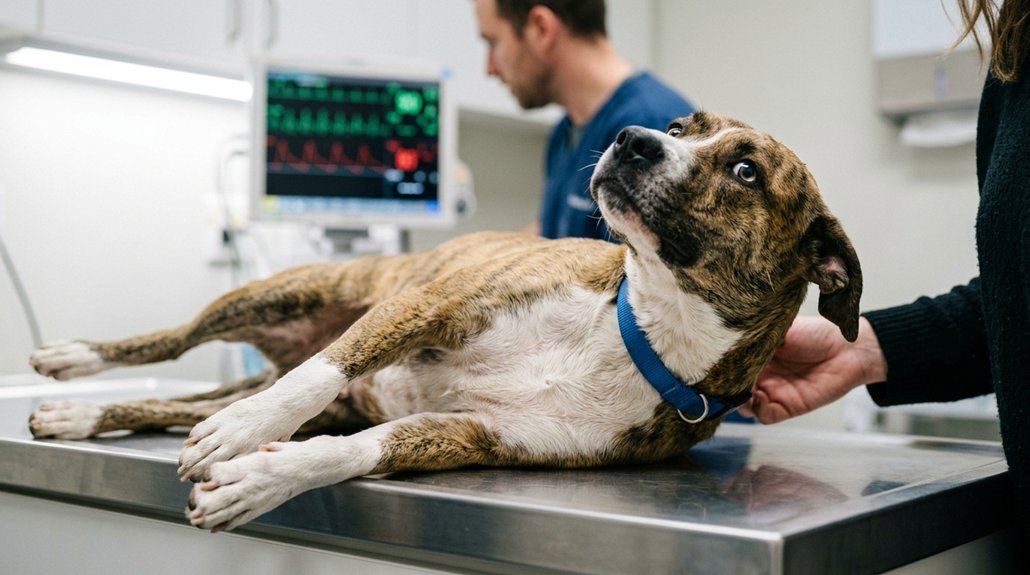
Understanding neurological signs and seizures in dogs requires a keen awareness of certain behavioral changes, as these can indicate severe health issues needing immediate veterinary attention. Sudden disorientation, uncoordinated movements, or twitching are red flags to watch closely. Effective seizure management is vital; if seizures continue over five minutes or happen back-to-back, immediate action is necessary. During an episode:
Watch closely for disorientation, uncoordinated movements, or twitching; these can signal severe health issues in dogs.
- Avoidance: Clear surrounding objects to prevent injury and don’t attempt restraint.
- Duration Monitoring: Keep track of seizure duration, as prolonged seizures are emergencies.
- Postictal Awareness: Watch for confusion or lethargy post-seizure, indicating recovery status.
Common triggers include epilepsy, poisoning, low blood sugar, or infections. Quick recognition and response safeguard the well-being of your canine companion.
Severe Gastrointestinal Symptoms: Recognize and Respond Quickly
When it comes to severe gastrointestinal symptoms in dogs, a timely response can be life-saving. Persistent vomiting and bloody diarrhea necessitate urgent veterinary attention to avert dehydration and complications. Acute Hemorrhagic Diarrhea Syndrome, marked by severe bloody diarrhea and vomiting, requires immediate intervention to enhance recovery. Abdominal distension, a bloated and tense belly, might suggest gastric dilatation and volvulus (bloat), a critical condition needing prompt care. If gastrointestinal issues persist beyond 6-12 hours, it could indicate poisoning, obstruction, or infection. It’s essential to seek veterinary guidance immediately. Small dogs are prone to rapid dehydration, so don’t delay in contacting a veterinarian. Avoid administering human medications or food without professional advice, as it can exacerbate the condition.
How to Identify Trauma in Your Dog

How do you know if your dog is suffering from trauma? Trauma identification and injury assessment are essential. Look for these signs:
- Physical Indicators: Limping, whining, or reluctance to move often signify pain from an injury. Examine your dog for visible wounds, swelling, or bruising; these require immediate veterinary evaluation.
- Respiratory and Lethargy Symptoms: If your dog shows signs like difficulty breathing or severe lethargy following an incident like an accident, fall, or fight, these symptoms can indicate significant underlying trauma needing urgent care.
- Behavioral Clues: Although behavioral changes should be discussed separately, any sudden aggression or withdrawal you observe suggests distress which may be related to physical trauma.
Prompt action can prevent worsening conditions and guarantee necessary treatment for your dog.
Behavioral Changes Pointing to Canine Health Crises
When your dog suddenly exhibits behavioral changes such as aggression, withdrawal, or unusual vocalizations, it’s essential to take into account these signs of potential pain or distress requiring immediate veterinary evaluation. Keep a close watch for severe lethargy or unexplained pacing, as these may indicate a significant health issue or discomfort that needs prompt attention. Additionally, don’t dismiss changes in appetite or bathroom habits, as they can signify underlying medical conditions necessitating urgent care.
Sudden Behavior Alterations
Sudden behavioral alterations in dogs can be alarming and may indicate underlying health emergencies that require immediate attention from a veterinarian. Recognizing these changes early can be essential. If your dog shows sudden aggression, it might be due to pain or illness. Immediate evaluation is imperative to identify the root cause. Similarly, unexplained lethargy—a noticeable drop in energy levels—can signal serious conditions like infections or organ dysfunction. Prompt action is vital.
Here are signs to watch for:
- Loss or change in appetite: Potential gastrointestinal issues or other pressing health crises.
- Increased vocalizations: Whining or howling could denote discomfort or distress.
- Drastic behavioral changes with physical symptoms: Such as shaking or difficulty standing, warrant immediate veterinary attention.
Signs of Distress
Canine distress often manifests through distinct behavioral changes that require immediate attention. Recognizing these signs is vital for timely intervention. Sudden aggression, withdrawal, or confusion can be pain indicators or stress signals, hinting at neurological or physical ailments. If your dog exhibits excessive vocalization—such as whining or crying—it’s likely encountering severe pain or distress, necessitating immediate veterinary evaluation. Monitor for unusual lethargy or reluctance to move, as these deviating behaviors might suggest serious health issues. Additionally, drastic shifts in urination or defecation, like straining or frequent accidents, denote possible infections or blockages. Importantly, seizures or sudden collapse are critical emergencies potentially tied to epilepsy or cardiac problems, urging swift veterinary action for necessary medical treatment.
Reacting to Unusual Behavior
While observing your dog, it’s important to pay attention to any unusual behaviors, as these can indicate potential health crises. Recognizing behavioral triggers and emotional signals early can make a significant difference. Here are some key indicators:
- Sudden Aggression or Withdrawal: These may signal pain, neurological disturbances, or distress. They require immediate veterinary assessment to prevent escalation.
- Uncharacteristic Vocalizations: Excessive whining or sudden loudness can suggest discomfort or fear, possibly linked to serious health concerns demanding urgent attention.
- Drastic Behavioral Changes: Symptoms like lethargy, refusal to eat, or altered play routines often point to infections or digestive disorders, necessitating prompt veterinary evaluation.
Quick Actions After Toxic Exposure in Dogs
Identifying toxin exposure quickly in dogs is essential for effective intervention. Vital toxin symptoms include excessive drooling, vomiting, diarrhea, seizures, and difficulty breathing. Recognize these signs promptly and contact your veterinarian or emergency contacts without delay for guidance. Avoid inducing vomiting unless instructed, as some toxins can cause more harm when expelled. Always seek professional advice first.
Act swiftly; time is vital to improve recovery chances. If possible, bring a sample of the suspected toxin or detailed information about what was ingested when seeking veterinary assistance. This information greatly aids in applying targeted treatment. Your quick response can save your dog’s life. Remember, direct communication with professionals and precise detail delivery are essential in handling toxic emergencies effectively.
Preparing for Your Dog’s Emergency Veterinary Visit
Once you’ve recognized signs of toxin exposure in your dog, one’s preparation for an emergency veterinary visit is pivotal. Confirming you’re ready for such situations involves careful emergency preparedness and transportation safety. Follow these steps for a seamless process:
- Essential Information: Keep your dog’s medical history, vaccination records, and medications accessible to facilitate quick reference and communication with the vet.
- Symptom Documentation: Prepare a list of symptoms and behavioral changes to provide concise details upon arrival, confirming accurate diagnosis and treatment.
- Transport Strategy: Familiarize yourself with the route to the nearest emergency vet clinic and develop a safe transportation plan. Use a sturdy carrier or makeshift stretcher to guarantee your dog’s comfort and safety.
Implementing these measures will streamline your emergency efforts.
Frequently Asked Questions
What Is the 10 Minute Rule for Dogs?
The 10 Minute Rule helps you identify emergency signs in dog behavior. If symptoms like vomiting, lethargy, or difficulty breathing last over 10 minutes, it’s essential to seek immediate veterinary care to address potential medical emergencies.
What Is “I Love You” in Dog Language?
“I love you” in dog language includes enthusiastic tail wagging and playful barking. Look for relaxed body posture, frequent affectionate licking, and a tendency to maintain eye contact. Dogs will also follow you or playfully bow to express love.
What Is a Silent Killer in Dogs?
A silent killer in dogs includes chronic conditions like bloat and heart disease, which display only subtle signs such as fatigue or discomfort. Regular check-ups are essential, as these ailments can rapidly become emergencies without early detection.
Is a Hematoma in a Dog an Emergency?
A dog’s ear hematoma may not always be an emergency, but if it’s large, painful, or restricts movement, seek veterinary care promptly. Unaddressed hematomas could lead to infection or signal underlying conditions like a dog injury.
Conclusion
When your beloved canine suddenly falters, it’s like storm clouds rolling in on a sunny day. You must act swiftly. Picture their shallow breaths, the frantic pace of their heartbeat, or the glazed look of seizure. These vivid signals, akin to nature’s warning signs, demand your attention. Be the vigilant guardian they need—recognize trauma, distress, or toxin exposure. Equipped with your newfound understanding, prepare for that vital, life-saving veterinary visit, ensuring their safety under your watchful eye.