
Heartworm disease in dogs, caused by *Dirofilaria immitis*, is transmitted via mosquito bites. Early symptoms include a persistent cough, fatigue, decreased appetite, and weight loss. Prevent heartworm with monthly medications starting at 8 weeks. Annual testing is vital for dogs over 7 months. If diagnosed, treatment involves Melarsomine under veterinary care with strict rest. Keeping your dog mosquito-free and adhering to prevention steps are essential for health. Discover more about symptom management and prevention strategies.
Key Takeaways
- Heartworm disease is caused by *Dirofilaria immitis* and transmitted through mosquito bites, affecting dogs’ hearts and lungs.
- Symptoms include fatigue, persistent cough, weight loss, and in severe cases, difficulty breathing and abdominal fluid accumulation.
- Prevent heartworm with monthly medications and start treatments as early as 8 weeks old.
- Annual heartworm testing is crucial for dogs over 7 months, especially if doses are missed or inconsistent.
- Treatment of heartworm requires veterinary-administered Melarsomine and strict exercise restrictions during recovery.
What Is Heartworm Disease in Dogs?
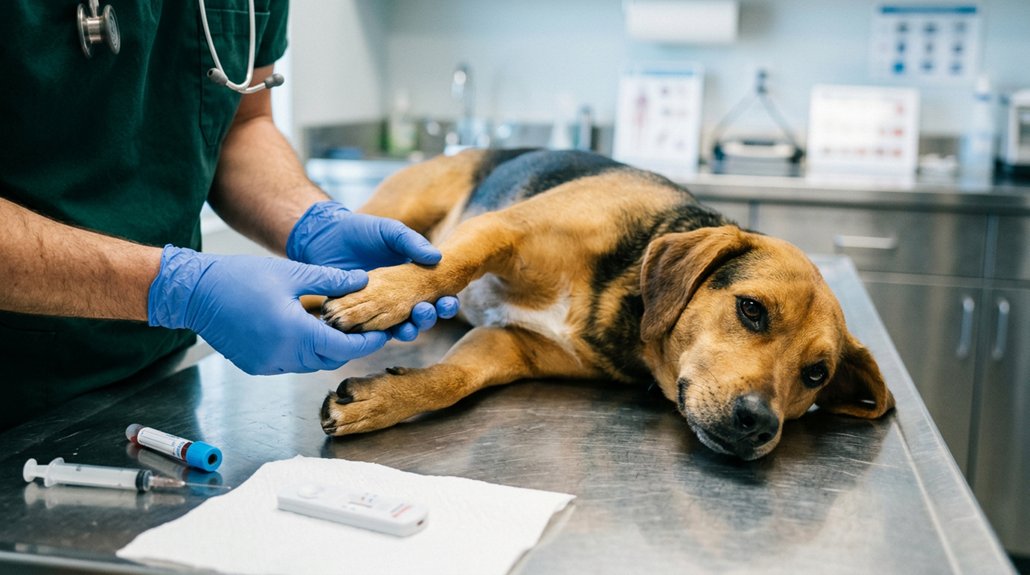
Heartworm disease in dogs is a serious parasitic condition caused by *Dirofilaria immitis*, which mosquitoes transmit through bites. These worms can grow between 5 to 12 inches long and reside in a dog’s heart and lungs for up to 7 years. During this time, they cause significant health issues, such as fatigue, weight loss, and possibly heart failure. Raising heartworm awareness is essential since symptoms might initially be a mere cough, escalating over time to more severe signs. Heartworm prevention is key; monthly preventives are effective at eliminating immature larvae, protecting your pet from this potentially fatal disease. Begin preventive measures at 8 weeks of age, coupled with annual testing to detect any infections early and avoid complications.
How Are Heartworms Transmitted?
Although often overlooked, understanding how heartworms are transmitted is crucial for safeguarding your pet’s health. Heartworms are transmitted solely through the bites of infected mosquitoes residing in mosquito habitats—areas abundant in moisture and warmth. Environmental conditions such as stagnant water and warm temperatures create ideal breeding grounds for mosquitoes, facilitating the spread of microscopic larvae called microfilariae. When these mosquitoes bite your dog, they introduce larvae into the bloodstream. Over 6-7 months, these larvae mature into adult heartworms within your pet’s heart and lungs. The cycle perpetuates as adult heartworms produce new microfilariae, which mosquitoes can uptake and transmit to other animals. It’s essential to prevent mosquito bites with year-round medications, as all dogs and cats are susceptible to infection.
Understanding Heartworm Lifecycle
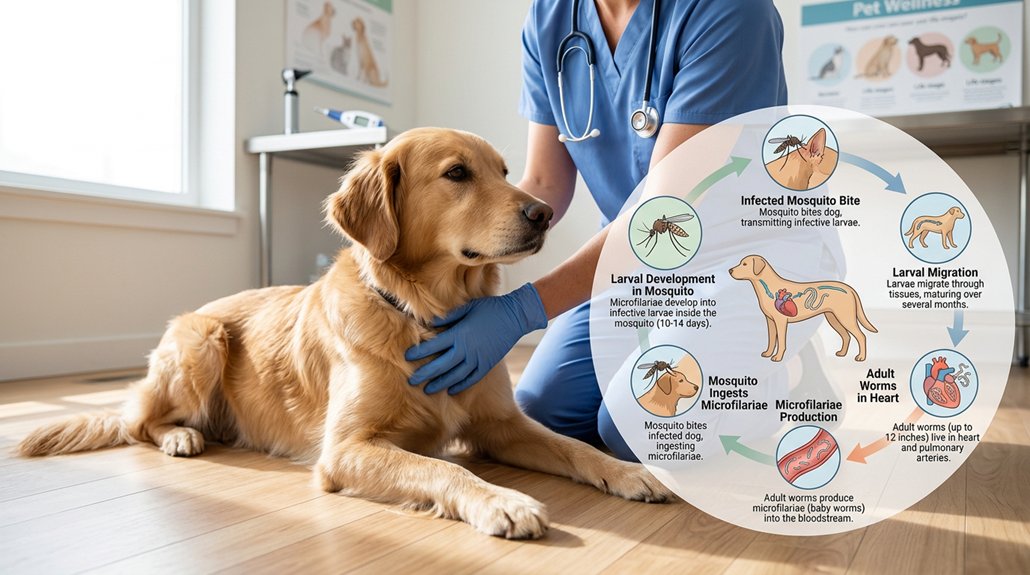
To understand the heartworm lifecycle, it’s vital to take into account the mosquito-borne transmission cycle, as mosquitoes are essential for transferring larvae to dogs. After entering your dog’s bloodstream via a mosquito bite, these larvae progress into adult heartworms over approximately 6 to 7 months. During this time, they interact with their host, growing up to 12 inches and eventually producing microfilariae detectable in blood tests, perpetuating the lifecycle.
Mosquito-Borne Transmission Cycle
In the intricate lifecycle of heartworms, a significant phase occurs when mosquitoes act as vectors, facilitating transmission between hosts. Mosquito behavior plays an essential role, where environmental factors like temperature and humidity influence their activity and breeding patterns. An infected mosquito acquires microfilariae by biting an infected dog. These develop into infective larvae over 10 to 14 days within the mosquito. When the mosquito bites another dog, larvae enter the dog’s bloodstream, eventually reaching the heart and lungs.
Adult heartworms, measuring 5 to 12 inches, reside in pulmonary arteries, causing lung disease and heart failure. Female heartworms release microfilariae into the bloodstream, ready to be picked up by another mosquito, perpetuating the heartworm cycle efficiently and effectively.
Heartworm Development Timeline
Understanding the heartworm lifecycle is essential for proper prevention and treatment. Heartworms, known scientifically as *Dirofilaria immitis*, progress through distinct stages in their life cycle. Infection begins when a mosquito bite delivers larvae into a dog’s bloodstream. Over a period of 6-7 months, these larvae mature into adult heartworms, capable of growing 5-12 inches long. Once matured, adult female heartworms release microfilariae, which circulate in the bloodstream. Mosquitoes may then ingest these microfilariae, perpetuating the cycle. The entire lifecycle, from infection to adult maturity, typically spans 6-9 months. Effective treatment options target both larvae prevention and adult heartworm elimination. Given that untreated adult heartworms can live up to 7 years, early detection is critical for minimizing health risks.
Host-Parasite Interaction
Once mature, adult heartworms elicit an immune response from the dog, often insufficient to eradicate the parasites. Female heartworms, living 5-7 years, produce microfilariae, continuing the cycle. This persistence underscores the sophisticated adaptation of *D. immitis*, facilitating its survival and propagation.
Early Symptoms of Heartworm in Dogs

You should be aware that early symptoms of heartworm disease in dogs, such as a mild persistent cough or reluctance to exercise, can be easily overlooked. Monitoring your dog’s health changes, including appetite fluctuations, is vital for early detection, which greatly improves the chances for effective treatment. It’s important to consult a veterinarian as soon as you notice these signs, even if your dog seems asymptomatic.
Recognizing Initial Signs
Detecting early signs of heartworm in dogs is essential for effective treatment and preventing severe health complications. You might notice subtle cough symptoms, a mild, persistent cough often mistaken during regular activities. Fatigue indicators are another concern; your dog may show reluctance to exercise, appearing unusually tired after activities. Additionally, pay attention to decreased appetite and consequent weight loss, which can signal early infection.
| Symptom | Indicator | Significance |
|---|---|---|
| Cough Symptoms | Mild, persistent cough | Early heartworm indication |
| Fatigue Indicators | Reluctance to exercise, unusual tiredness | Reduced physical tolerance |
| Appetite Change | Decreased appetite, weight loss | Possible heartworm warning |
Early recognition of these signs guarantees that your pet receives timely intervention, safeguarding their health.
Importance of Early Detection
While often elusive, the early detection of heartworm in dogs is crucial for preventing long-term health issues. Early symptoms, such as occasional coughing and mild lethargy, can be subtle and easy to overlook. However, these symptoms serve as critical indicators for deploying effective detection methods. Regular blood testing for heartworm-specific proteins is essential for identifying the disease in its early stages, particularly in dogs older than 7 months. Without annual testing, heartworm infection can remain asymptomatic for months, only to manifest when the adult worms have matured. By recognizing these early signs and ensuring regular veterinary check-ups, you’re enabling early intervention. This timely action greatly improves treatment outcomes, mitigating severe complications before they develop into more serious health problems.
Monitoring Health Changes
Even though initial signs of heartworm infection in dogs can be subtle, close monitoring of your pet’s health is essential for early detection. Symptom tracking involves paying attention to indicators such as a mild, persistent cough that might easily be overlooked. Health monitoring should also include observing any reluctance to exercise or signs of fatigue following moderate activity, which can indicate heart and lung problems. Keep an eye on your dog’s appetite and weight, as a decrease in these areas might suggest progression of the disease. In more advanced cases, watch for fluid accumulation in the abdomen, known as a swollen belly. Difficulty breathing—either labored or rapid—requires immediate veterinary intervention, given its implication in severe heartworm complications.
Identifying Severe Heartworm Disease
How does one recognize severe heartworm disease in dogs? Symptoms include persistent coughing, lethargy, and a reluctance to engage in physical activities due to compromised lung and heart function. As the disease progresses, dogs might exhibit weight loss, decreased appetite, and abdominal swelling, indicating heart failure. Advanced heartworm disease is often accompanied by labored breathing and rapid respiration, signaling severe cardiovascular distress. In critical cases, caval syndrome may develop, a life-threatening blockage of blood flow, evident by pale gums and dark urine. While early detection through blood tests is crucial, diagnosis challenges remain prevalent. Treatment options depend extensively on disease severity, highlighting the importance of veterinary intervention before reaching advanced stages for improved treatment outcomes.
The Importance of Preventative Measures
Recognizing the severe consequences of heartworm disease underscores the necessity for strong preventative strategies. You should know that heartworm disease is nearly 100% preventable with consistent year-round strategies. Initiate monthly heartworm medications as early as 8 weeks old to tackle immature worms early. Whether using Ivermectin, Milbemycin, or Moxidectin, combined options offer thorough protection. Regular veterinary visits for annual heartworm testing are essential, especially for dogs over 7 months, to fine-tune preventive measures as required.
It’s important to stay informed; missed doses for over two months require immediate consultation and re-testing. Effective owner education equips you with the knowledge to protect against geographic variances, understanding that heartworm risks persist across all states, ensuring your dog’s long-term health.
Testing for Heartworms in Dogs
When should you test for heartworms in dogs? Annual heartworm testing is recommended for dogs over 7 months to guarantee early detection. The primary testing technique involves an antigen test, which identifies proteins released by adult female heartworms. For enhanced diagnostic accuracy, combining the antigen test with a microfilariae examination is advisable. Microfilariae presence, detectable six months after infection, indicates active infection. This combination improves the chances of identifying heartworms early, essential for improving treatment outcomes. Early detection through these testing techniques is important, as it helps prevent complications from advanced heartworm disease. Regular testing confirms accurate diagnosis, making it easier to start timely interventions and avoid severe health issues. Safeguard your dog’s well-being through consistent testing practices.
Addressing a Positive Heartworm Diagnosis
- Administer Melarsomineunder veterinary supervision for thorough heartworm eradication.
- Enforce strict rest and limited physical activity during recovery.
- Regularly monitor for complications that may arise from treatment side effects.
How to Fully Recover and Prevent Future Infections
After successfully treating heartworm disease, ensuring your dog’s full recovery and preventing future infections necessitates a multifaceted approach. Adhere to any prescribed exercise restrictions for several weeks to allow time for the dog’s body to heal. Follow-up veterinary visits are critical in the recovery timeline, including re-testing for heartworms a few months post-treatment. Administer monthly heartworm prevention consistently throughout the year. Mosquito-proof environments by using screens and repellents to mitigate future risks. Educate yourself about the importance of annual heartworm testing to catch any reinfections early, fostering a healthier long-term prognosis.
| Essential Step | Description |
|---|---|
| Exercise Restrictions | Limit activity to prevent complications. |
| Monthly Preventative Medication | Start early and continue year-round. |
| Follow-up Visits | Monitor health with re-testing. |
| Mosquito Control | Use screens and repellents. |
| Annual Heartworm Testing | Early detection enhances recovery chances. |
Frequently Asked Questions
Is It Better to Prevent Heartworm Than Treat It?
Absolutely, it’s better to prevent heartworm than treat it. Treatment costs are high, plus enduring heartworm myths can lead to costly delays. Regular prevention minimizes expenses and protects your dog’s health from potentially severe damage.
How Do Dogs Get Heartworm Disease and How Is It Prevented?
Approximately 100% of heartworm cases are linked to mosquito bites. Dogs get heartworm from infected mosquitoes’ transmission. Prevent it through monthly medication targeting the mosquito lifecycle, halting larvae development. Stay vigilant to protect your pet.
How Long Can a Dog Live With Heartworms Without Treatment?
Without treatment, a dog might live several years as heartworm progression varies with factors like worm load and health. Treatment options are essential since delayed intervention increases the risk of heart failure or caval syndrome, eventually being fatal.
What Is the Best Heartworm Preventative for Dogs?
For top heartworm preventatives, you’ll want FDA-regulated options like Ivermectin, Milbemycin, or ProHeart injectables. While natural heartworm remedies exist, they’re not proven effective. Consult your vet to verify the best choice for your dog’s health.
Conclusion
In wrapping up, understanding heartworm disease is key to maintaining your dog’s well-being. You’ve learned they’re transmitted by mosquitoes, with symptoms ranging from mild to significant discomfort. Thankfully, there’s a bright side; preventive measures and timely testing are your dog’s best friends in sidestepping this pesky hitchhiker. In the event of a positive diagnosis, don’t fret. With diligent care and expert guidance, your furry companion can waltz back to health, avoiding future heart-shaped hurdles.