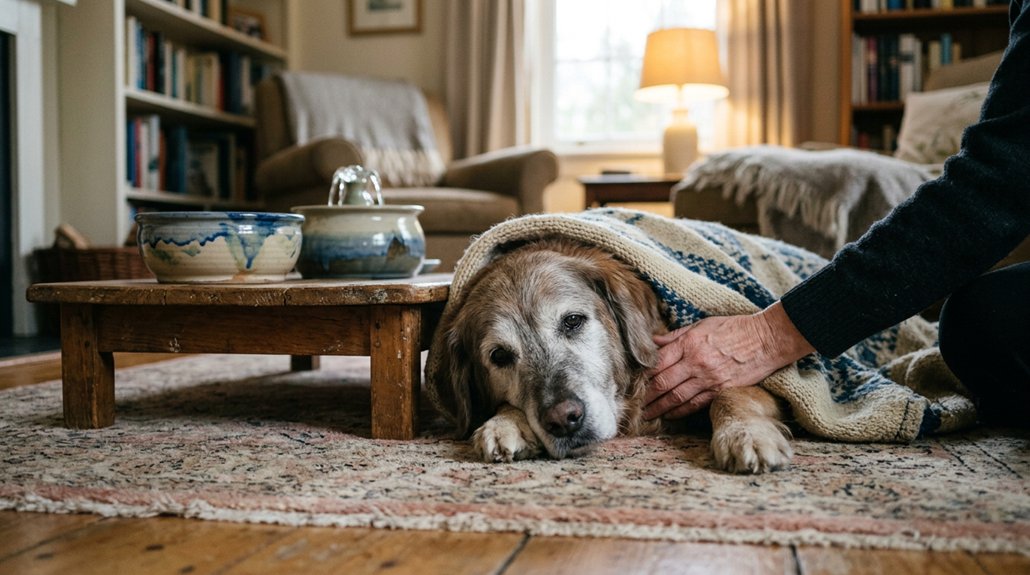
To care for a senior dog at home, adjust their diet to senior-specific nutrition around age 7, ensuring gradual changes to avoid digestive issues. Keep exercise low-impact and frequent, like walks or swimming. Regular vet visits, at least bi-annually, are essential for early detection of health issues. Modify your home with ramps and non-slip rugs to enhance comfort and safety. Maintain grooming and monitor behavior for changes. To discover extensive strategies and insights, simply proceed further.
Key Takeaways
- Adjust your dog’s diet to senior nutrition and consult a veterinarian before making any dietary changes.
- Ensure your senior dog engages in low-impact exercises, like walking and swimming, to maintain mobility and mental health.
- Schedule regular veterinary visits and monitor your dog’s weight and behavior for early detection of health issues.
- Modify your home with non-slip rugs and ramps to provide safer navigation and access for your senior dog.
- Use elevated bowls and cozy beds to reduce joint strain and provide comfort for your senior dog’s aching joints.
Identifying When Your Dog Becomes a Senior
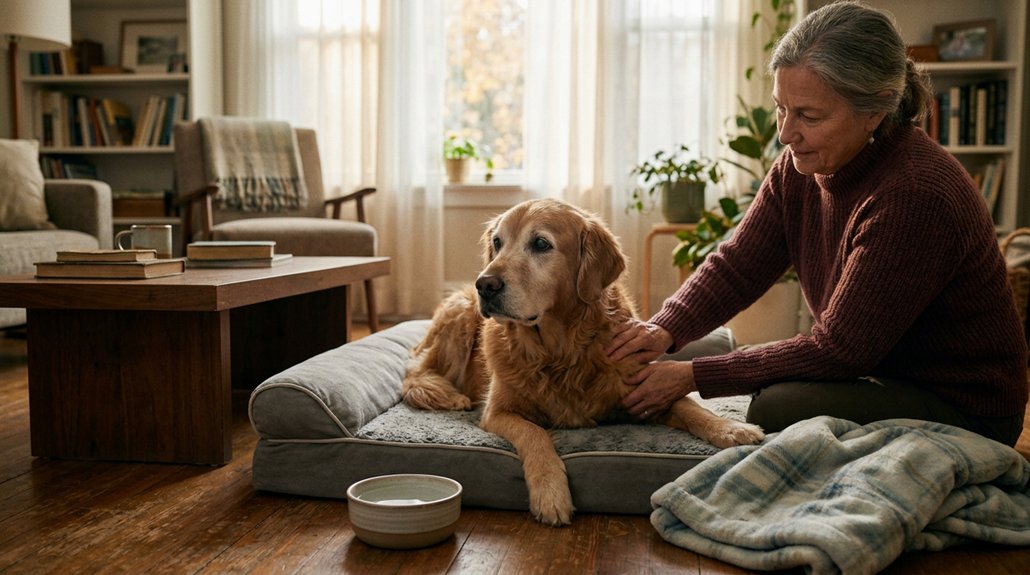
Understanding when your dog becomes a senior is essential for optimizing their care and quality of life. Senior signs often appear when small breeds reach age 7 to 9, whereas larger breeds may show signs around 5 to 7 years. Age factors such as genetics, health, and breed-specific characteristics greatly impact this timeline. Each breed ages differently, so it’s important to monitor for senior signs like mobility issues, sensory changes, and altered behavior. Catching these early can help you maintain their well-being. Regular veterinary check-ups are necessary to identify potential age-related problems promptly. They enable you to adapt care based on your dog’s individual needs and optimize their senior years’ comfort and health effectively.
Feeding Your Senior Dog Right
When your dog enters their senior years, their dietary needs shift, requiring thoughtful considerations to maintain ideal health. Shift to a senior nutrition-focused diet around age seven, making sure it provides essential nutrients tailored to their changing metabolism and health requirements. It’s important to consult with a veterinarian before implementing diet adjustments, making changes gradually to prevent digestive distress. Close monitoring of their eating and drinking habits is essential; report any changes to your veterinarian promptly, as they may signal underlying health issues. Make certain fresh, clean water is accessible at all times by placing it on every home level to encourage proper hydration. In multi-dog households, manage feeding routines to guarantee senior dogs eat undisturbed, minimizing potential food-related competition.
Promote Exercise for Your Senior Dog’s Body and Mind
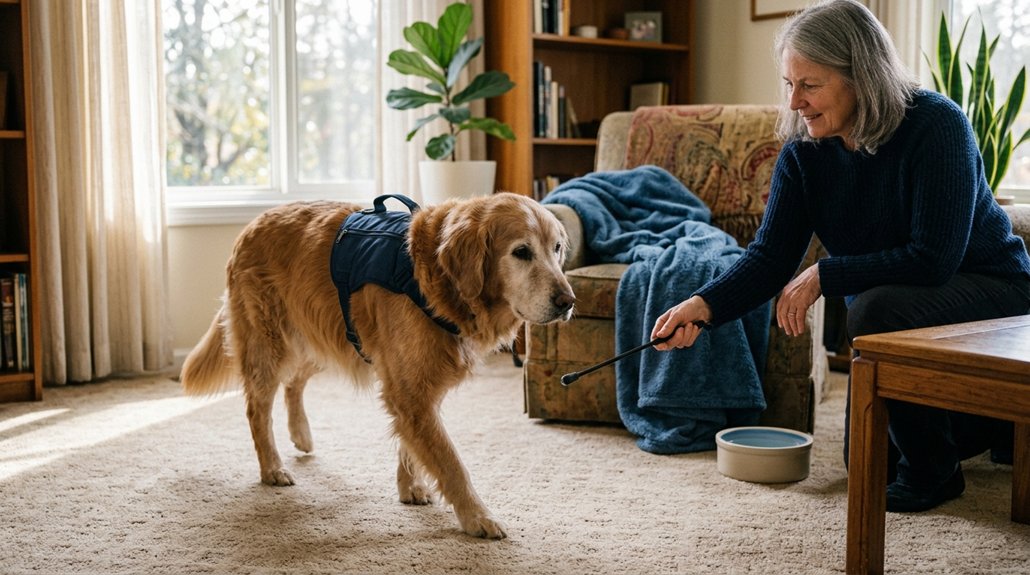
After optimizing your senior dog’s diet, focusing on their physical and mental exercise is equally important to guarantee holistic health management. Regularly engaging your dog in low impact exercises like walking or swimming maintains mobility and prevents weight gain. Tailor their routine to short, frequent sessions to avoid overexertion. Mental stimulation through activities such as puzzle toys helps in sustaining cognitive sharpness, delaying cognitive decline. Ensuring safe exercise environments by using non-slip rugs can reduce injury risks.
| Activity Type | Benefits |
|---|---|
| Low Impact Walks | Maintains joint mobility |
| Swimming | Supports cardiovascular health |
| Puzzle Toys | Enhances mental stimulation |
| Socialization | Boosts emotional well-being |
| Safe Environment | Minimizes risk of falls or injuries |
Incorporate calm social interactions to mitigate isolation, enhancing your dog’s emotional health.
Regular Vet Visits and Health Monitoring
While ensuring your senior dog’s well-being, regular veterinary visits and health monitoring become essential components of their care routine. Preventive care through bi-annual vet visits for geriatric dogs offers early detection of health changes, greatly impacting longevity and quality of life. Annual blood and urine tests function as important health screenings, identifying chronic diseases like kidney or liver issues early. Keeping vaccinations up to date guards against preventable diseases, with most vaccines administered every three years, though some require annual boosters. Monitoring your dog’s weight bi-monthly can reveal sudden changes, indicative of health problems needing immediate attention. Observing behavioral shifts, such as increased sleep or decreased activity, provides additional data for timely intervention and maintaining your pet’s liveliness.
Enhancing Comfort With Home Mods and Grooming
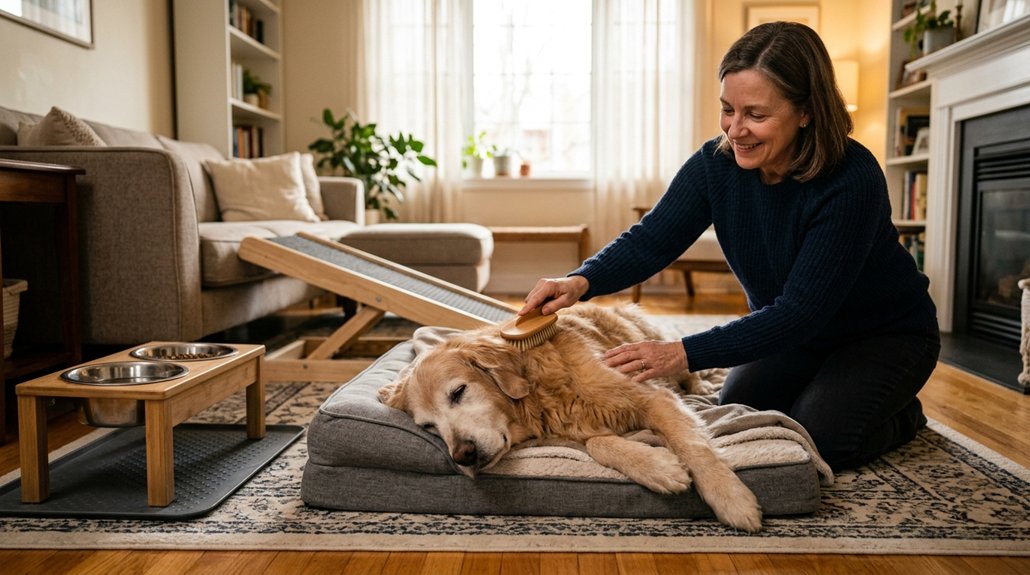
In addition to regular vet visits and health monitoring, optimizing comfort for your senior dog through specific home modifications and grooming practices can remarkably enhance their quality of life. Start with elevated bowls to minimize joint strain during meals. Invest in cozy beds to support aching joints, offering warmth and relief. Ramps or steps enable safe access to furniture, preventing potential injuries from jumping. Implementing non-slip rugs guarantees safer navigation across slippery floors, mitigating fall risks. Regular grooming, such as brushing and toenail clipping, is essential to avoid painful matting and overgrown nails. By focusing on these modifications, you’ll effectively address common issues faced by aging dogs, guaranteeing a safer and more comfortable home environment tailored to their specific needs.
Frequently Asked Questions
What Not to Do With a Senior Dog?
Don’t change a senior dog’s nutrition abruptly; consult a vet first. Avoid strenuous activities affecting elder dog activity, focusing instead on low-impact exercises. Never disregard behavioral changes or exposure to extreme temperatures, risking health complications.
What Is the 3-3-3 Rule for Dogs?
The 3-3-3 rule guides you on your dog’s adjustment: three days to decompress, three weeks to establish routines, and three months to acclimate. Guarantee senior nutrition and provide mobility support for smooth changes.
What Is the 7 7 7 Rule for Dogs?
The 7 7 7 rule juxtaposes age progression by suggesting dogs age seven years for every human year. As they age, prioritize senior nutrition and use mobility aids to maintain vigor. Regular vet check-ups are essential.
What Age Is Considered Very Old for a Dog?
A dog is typically considered very old at 10 years; however, for senior breeds, smaller ones like Chihuahuas might be 12-14, while larger ones such as Great Danes are 8-10. Aging increases health risks considerably for old dogs.
Conclusion
Caring for your senior dog requires diligence in recognizing age-related changes, attention in providing a tailored diet, commitment in encouraging both physical and mental exercise, vigilance in scheduling regular vet visits and health checks, and creativity in enhancing their comfort through home modifications and grooming. By embracing these parallel strategies, you’ll guarantee a dignified, healthy, and comfortable life for your aging companion, nurturing their well-being as they shift through their golden years.