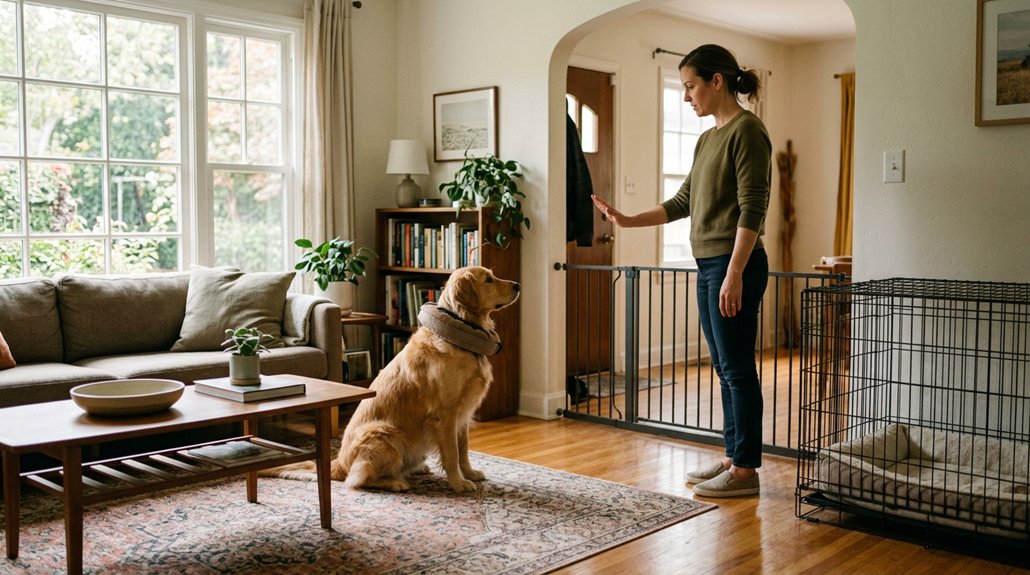
Setting boundaries with your dog at home is essential for a harmonious household. Start by using baby gates to restrict access and designate a spot with a cue word like “place.” Strengthen training with consistent positive reinforcement, using treats and marker words to communicate effectively. Tailor boundaries to specific rooms with commands like “leave it” for kitchen safety. Implement these steps confidently, and you’ll foster a safe environment where your dog thrives. Discover more by exploring the strategies further.
Key Takeaways
- Utilize baby gates to restrict access to off-limit areas and promote safety.
- Designate specific spots for rest and reward with treats to build positive associations.
- Employ a leash for initial control and to guide your dog’s behavior.
- Consistently use marker words or clickers for clear communication during training.
- Gradually introduce distractions and reward compliance to reinforce boundary training.
Understand the Importance of Setting Boundaries
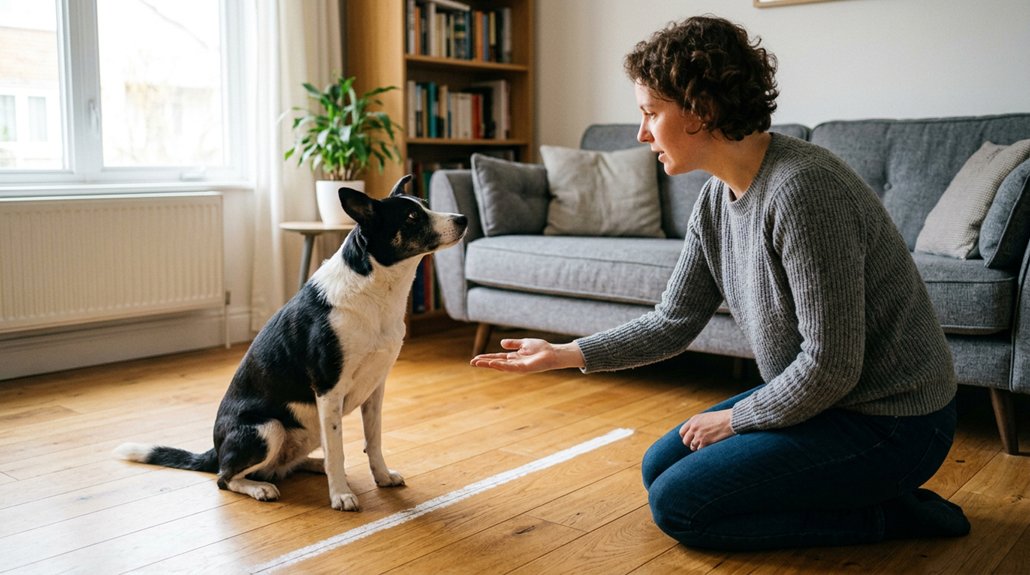
Establishing boundaries is essential in the human-dog dynamic, providing a foundation of stability and mutual understanding. You’re creating an environment where expectations are clear, ensuring both safety and predictability. When your dog comprehends their limits, anxiety diminishes, reducing the likelihood of unwanted behaviors. This clarity promotes effective communication methods, enhancing the bond between you and your pet. Understanding boundary benefits enables your dog to respect limits, fostering a harmonious household. Structured boundary-setting fulfills both your needs and those of your dog, creating an environment where mutual respect thrives. Consistency in boundary enforcement helps your dog reinforce learned behaviors, encouraging responsible decision-making. As a result, recognizing the importance of boundaries will lead to a well-adjusted pet and a peaceful household dynamic.
Gather Your Tools for Successful Boundary Training
To effectively implement the boundaries you’ve identified, gathering the right tools is key to successful training. Start with essential items like baby gates to prevent access to restricted areas, clearly conveying where your dog can and can’t go. A training mat or dog bed should be placed in your designated area, signaling a spot where your dog is encouraged to rest when instructed. High-value treats are important for rewarding positive behavior, making them invaluable during teaching sessions. Use a leash initially to control your dog and redirect them if they venture away. Finally, a marker word or clicker is essential for signaling when your dog successfully follows commands, reinforcing their learning and promoting consistent boundary respect.
Establish Designated Spots for Your Dog
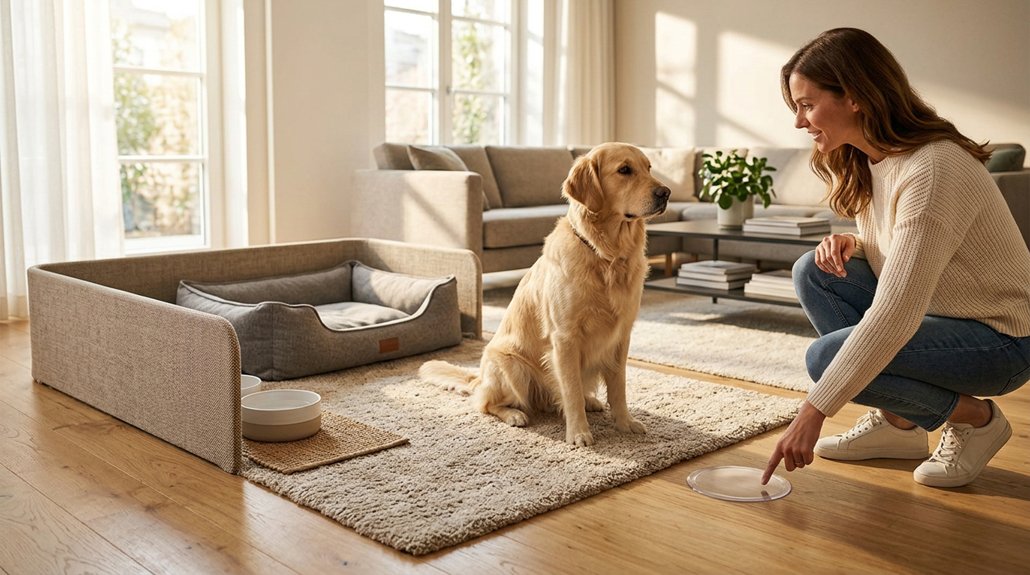
A designated spot for your dog isn’t just a convenience—it’s a fundamental boundary-setting technique that fosters security and discipline. Spot selection should focus on an area like a mat or dog bed, offering your pup a clear retreat. Use boundary signs such as a cue word like “spot” or “place” to reinforce the location’s significance. Begin by tossing treats onto the chosen area, rewarding your dog when they step on it. This practice builds positive associations with the space. Gradually increase your distance while rewarding your dog for staying put, encouraging them to remain even without your immediate presence. Consistent practice is key, helping your dog understand and embrace their designated spot as an essential boundary within your home.
Tailor Boundary Training to Each Room
While setting a designated spot helps your dog understand their place within your home, refining these boundaries to suit each room’s distinct purpose is equally important. For kitchen safety, make certain your dog knows the “leave it” cue to keep them away from hazardous areas. In the living room, establish a clear “off” command for sofa boundaries to maintain a space for relaxation. Use physical barriers like baby gates to reinforce these boundaries effectively.
Here are three key tips to remember:
- Kitchen Safety: Use specific cues like “leave it” to prevent accidents while cooking.
- Living Room Relaxation: Teach commands like “off” to establish peaceful zones for unwinding.
- Reinforce Boundaries: Introduce gradual distractions and reward compliance with treats or praise to strengthen training.
Ensure Consistency With Positive Reinforcement Techniques
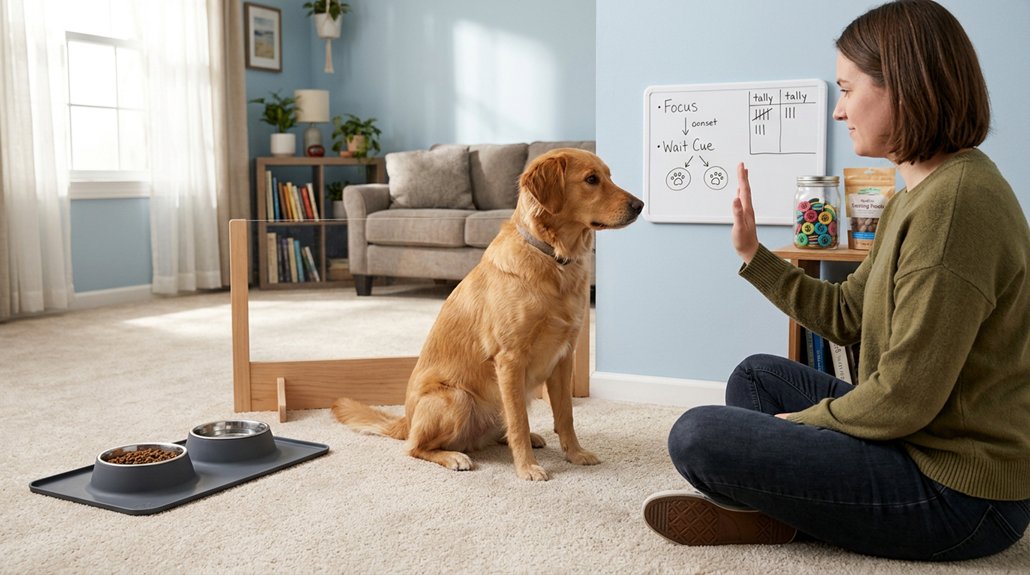
Consistency is key when setting boundaries with your dog. Inconsistent reinforcement can leave your furry friend confused about what’s expected. By consistently applying positive reinforcement strategies, you guarantee clarity and promote understanding. Reward desired behaviors with treats or praise; this helps your dog associate compliance with positive experiences, reinforcing their understanding. Incorporate a marker word during training sessions to clearly signal when they’ve met boundary expectations. This reinforcement strategy provides consistency benefits, as your dog learns where they stand. Structure sessions around calm and confident leadership to promote security, helping your dog internalize boundaries. Regularly assess and adjust rules, guaranteeing they remain relevant. With consistent, positive reinforcement, you’ll achieve long-term adherence to boundaries, creating harmony at home.
Frequently Asked Questions
What Is the 3-3-3 Rule With Dogs?
The 3-3-3 rule is a guideline for dog acclimatization: first three days of stress, three weeks developing canine communication and bonding, and three months achieving stability. This helps manage expectations and fosters a trusting relationship.
What Are the 4 Signs Your Dog Thinks of You as a Parent?
Your pooch’s snug attachment, protective instincts, guidance-seeking behavior, and joyful reunions reveal their parental view of you. Dogs exhibit these habits due to intrinsic dog behavior and innate parental instincts that mirror childlike trust and reliance.
Which Breed of Dog Is the Most Clingy?
Labrador Retrievers are often seen as the most clingy breed due to their strong attachment and need for companionship. You’ll notice their clingy nature particularly when dealing with dog separation anxiety, highlighting their affectionate, people-oriented personality.
What Smell Do Dogs Absolutely Hate?
Dogs dislike certain scents, commonly citrus fruits, vinegar, eucalyptus, and peppermint. These common repellent smells can be effective due to dogs’ scent aversions. Use them cautiously to prevent stress or anxiety in your furry friend.
Conclusion
In setting boundaries with your dog, you’re not just creating order; you’re fostering a harmonious home where your canine companion knows they’re loved but also understands limits. Remember, consistency’s your magic wand—wield it with patience and positive reinforcement. As each room becomes a domain of expectation and respect, you’ll find your pet’s behavior more predictable and delightful. Why let chaos reign when you can nurture peace with simple, structured guidance? Your home, your rules, their happiness.