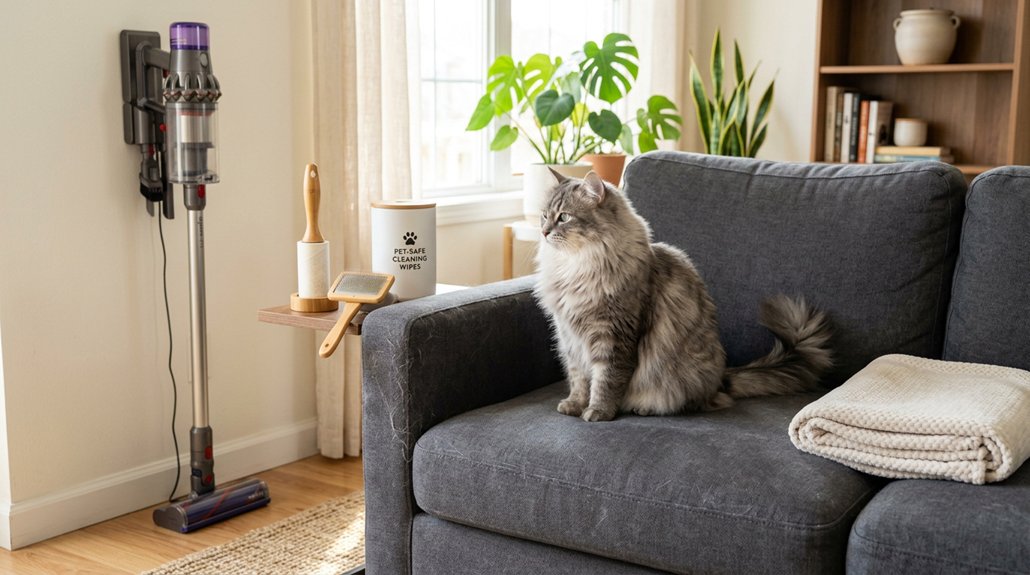
To manage cat hair and shedding, start with regular grooming and invest in a vacuum designed for pet hair. Consult a vet to guarantee diet adjustments enhance coat health with fatty acids. Create a stress-free environment with toys and pheromone diffusers. Use washable covers and designate easy-to-clean areas for your cat. Establish a cleaning routine with frequent vacuuming and laundering. Discover tailored techniques and solutions to efficiently control shedding and its impacts at home.
Key Takeaways
- Invest in a pet-specific vacuum with powered brush bars to effectively remove deeply embedded cat hair.
- Brush your cat weekly to minimize loose hair and manage shedding efficiently.
- Provide a high-quality diet rich in Omega-3 and Omega-6 for optimal skin and coat health.
- Use lint rollers or rubber gloves to efficiently remove hair from furniture surfaces.
- Maintain a consistent cleaning schedule, vacuuming multiple times a week, and using air purifiers with HEPA filters.
Start With Practical Steps to Control Hair
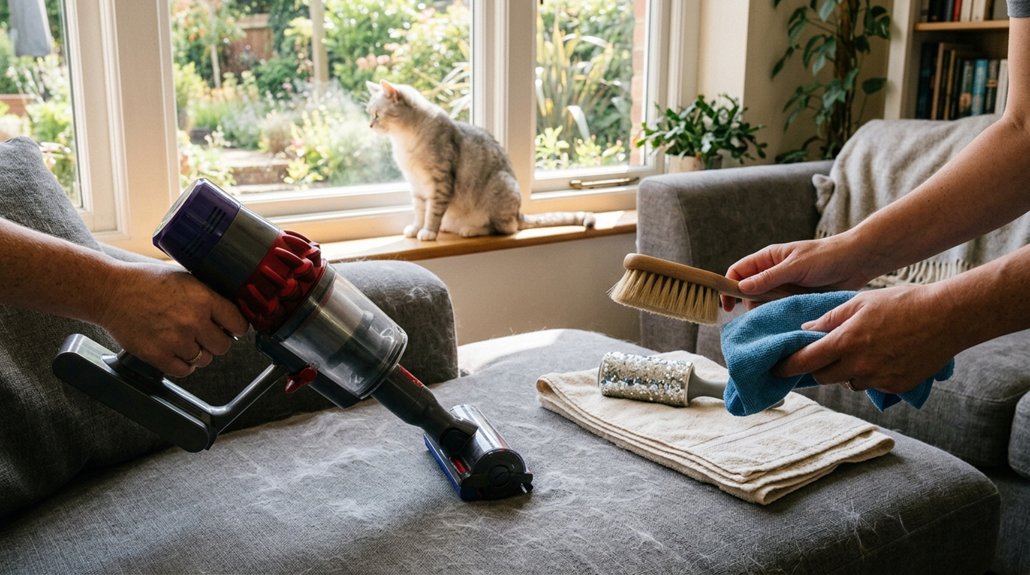
To effectively manage cat hair and shedding, begin by focusing on a series of practical steps designed to minimize fur buildup in your home. Implement shedding management by investing in a high-quality vacuum designed for pet hair. Choose a model with powered brush bars for deep cleaning that captures stray fur. Regular grooming is essential—brush your cat weekly to remove loose hair, particularly during peak shedding seasons. For furniture protection, use lint rollers or rubber gloves to leverage static electricity and swiftly remove hair. Guarantee cleanliness by washing cat bedding weekly, reducing accumulated hair and dander. Maintain a cleaning routine by vacuuming multiple times a week and using air purifiers with HEPA filters to manage airborne allergens effectively.
Seek Veterinary Guidance for Health and Grooming Changes
Before making any adjustments to your cat’s diet or grooming routine, it’s crucial to consult your veterinarian to guarantee these changes are safe and suitable for your cat’s unique health profile. Regular veterinary check-ups not only help detect potential health issues contributing to excessive shedding, like allergies or parasites, but also enable you to establish a health baseline, facilitating easier monitoring over time. Your veterinarian will also provide guidance on grooming techniques and nutritional options tailored to your cat’s specific needs, promoting a healthier skin and coat.
Consult Veterinarian First
When considering changes to your cat’s grooming routine or diet, consulting with a veterinarian is your safest first step. They offer expert insights tailored to your pet’s breed, age, and specific health needs, ensuring any adjustments are beneficial. A veterinary consultation can identify underlying health issues contributing to shedding and guide you in selecting the right grooming tools and dietary supplements. Tools such as brush types are chosen according to coat length, while dietary supplements might include omega fatty acids to improve skin health. Regular check-ups foster communication with your vet, allowing for the adaptation of strategies to minimize shedding. Over time, this informed approach helps maintain a healthy coat, reducing pet hair in your home efficiently.
Establish Health Baseline
Establishing a health baseline for your cat is foundational in managing shedding effectively. Seek veterinary guidance to guarantee any changes to diet or grooming are safe and appropriate. Regular health assessments through vet consultations are essential. They help pinpoint underlying issues affecting shedding patterns, allowing for timely interventions. Nutritional deficiencies can notably impact coat health, so your vet might recommend high-quality, balanced food options. These foods are specifically tailored to improve skin and coat integrity. During dietary changes, monitor your cat’s weight and health closely. Veterinary advice guarantees that any impact on shedding is managed efficiently. Understanding your cat’s unique health needs allows you to maintain optimal coat condition and reduce unnecessary shedding at home.
Feed Your Cat Right for Less Shedding

Feeding your cat a high-quality, nutritionally complete diet is vital for managing shedding and maintaining a healthy skin and coat. Focus on providing high-quality food that’s rich in essential fatty acids, like Omega-3 and Omega-6, which support skin health and lead to a shiny coat. These nutrients play a significant role in minimizing hair loss. Including wet food in their diet helps maintain hydration, important for skin elasticity, further reducing shedding. Regular veterinary consultations guarantee your cat’s diet is appropriately tailored to their needs, helping you identify any potential nutrient deficiencies. Keep track of your cat’s weight and overall health, as obesity can exacerbate skin issues and shedding, making dietary vigilance essential for superior care.
Create a Stress-Free Environment for Your Cat
A balanced diet keeps your cat’s coat healthy, but addressing environmental factors is equally important in managing shedding. Creating a calm environment can considerably reduce stress-induced shedding. Consider incorporating hiding spots and vertical spaces like cat trees or shelves for your cat’s security and comfort. Engage your cat in interactive play using toys to alleviate anxiety and keep them entertained, which helps reduce shedding over time. Maintaining a consistent daily routine for feeding and activities provides stability, minimizing stress. Use pheromone diffusers to create a soothing atmosphere, further reducing stress and shedding. Regular grooming removes loose hair and serves as a bonding activity, promoting relaxation and enhancing well-being to effectively manage shedding.
Invest in Pet Hair Removal Tools
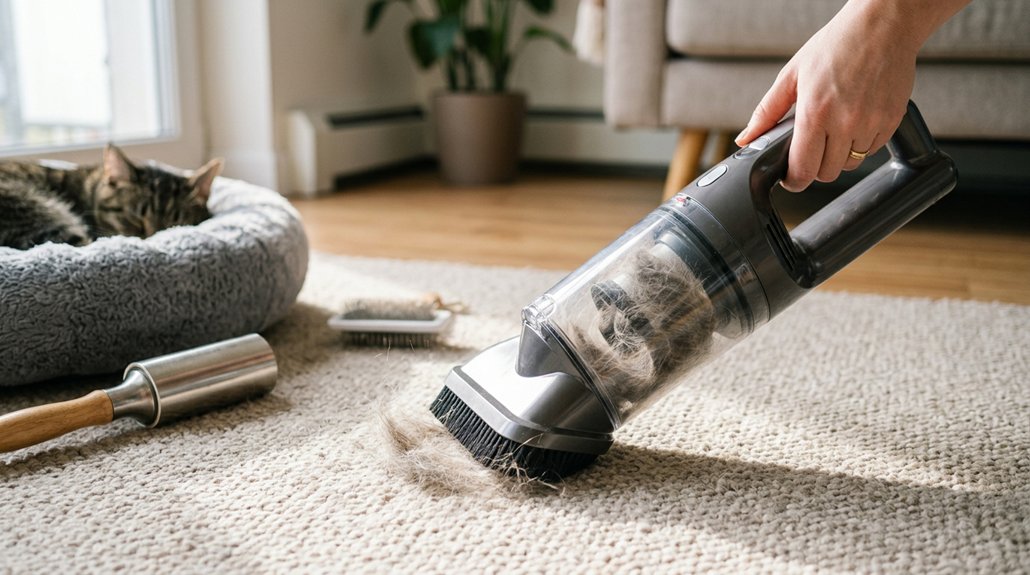
To efficiently manage cat hair and shedding, investing in essential grooming accessories like the FURminator Long Hair Dog Deshedding Tool is critical for reducing loose hair. Effective cleaning innovations, such as high-quality vacuums designed for pet hair, greatly enhance suction power and prevent hair dispersion throughout your home. Incorporating tools like rubber gloves for quick cleanups and lint rollers for clothing and furniture can guarantee a tidy and fur-free environment.
Essential Grooming Accessories
Managing cat hair and shedding requires investing in effective grooming accessories that simplify the cleaning process and minimize fur accumulation. Integrating tools like a FURminator deshedding tool into your routine provides essential shedding tips and effectively removes loose undercoat hair during peak shedding seasons, reducing fur dispersion throughout your home. A high-quality vacuum specifically designed for pet hair, featuring powerful suctions and motorized brush bars, is invaluable for tackling clumped hair on carpets and upholstery. Complementing these with everyday grooming tools, like lint rollers for quick clean-ups on clothing and furniture, will guarantee fur remains manageable. Consider incorporating a pet hair sponge for versatile surface coverage and rubber gloves to utilize static electricity for efficient fur pickup from fabric surfaces.
Effective Cleaning Innovations
Why invest in specialized pet hair removal tools? These innovative tools are designed with advanced cleaning technology to combat stubborn cat hair. Consider a vacuum with a motorized brush bar for superior suction—perfect for removing clumped hair from upholstery. Pet hair sponges or rubber gloves use static and scrubbing to clean surfaces efficiently.
Here’s a helpful comparison of effective tools:
| Tool | Feature | Benefit |
|---|---|---|
| Vacuum with Brush Bar | Enhanced suction | Removes hair from carpets |
| FURminator Deshedding Tool | Loose undercoat removal | Minimizes seasonal shedding |
| Robot Vacuum for Pet Hair | Automated cleaning schedule | Maintains a fur-free home |
Keep lint rollers handy for quick clothing fixes. Embracing these tools guarantees a cleaner, hair-free environment effortlessly.
Use Washable Covers and Fabrics
When dealing with the challenge of cat hair and shedding, opting for washable covers and fabrics can be a practical solution to maintain cleanliness. Consider using cover materials like microfiber or canvas, which are excellent fabric options less prone to attracting cat hair. These materials make it easier to manage shedding, allowing you to preserve the aesthetics and hygiene of your furniture. Washable covers on couches and chairs enable removal and regular laundering, efficiently eliminating accumulated hair. Incorporating a cleaning routine that involves washing these fabrics weekly keeps pet hair and dander under control, enhancing your home’s health. By choosing machine-washable covers, you streamline cleanup, saving time and effort, reducing the need for constant vacuuming, and keeping your living spaces fur-free.
Designate Easy-to-Clean Areas for Your Cat
Creating easy-to-clean areas for your cat involves a strategic approach to minimize the spread of hair and simplify maintenance. Start by designating specific areas in your home lined with washable blankets or covers. This not only limits hair spread but also provides comfort. Implementing cleaning strategies such as using furniture made from easy-to-clean materials like leather or microfiber can notably reduce hair accumulation. Slipcovers on sofas and chairs, which can be removed and washed regularly, guarantee added cleanliness. Encourage your cat to spend time on dedicated cat spaces, like cat trees or shelves, diverting them from general furniture. Additionally, minimize clutter in these designated areas, which simplifies cleaning tasks by reducing potential hair-catching surfaces.
Establish a Routine for Consistent Maintenance
To keep your home neat and comfortable, it’s important to adopt a routine for consistent maintenance that tackles cat hair shedding. Begin with daily vacuuming, targeting high-traffic areas like the living room and kitchen to greatly reduce hair accumulation. Complement this with scheduled grooming by brushing your cat at least once a week to manage shedding at its root. Additionally, employ a thorough cleaning strategy to keep surfaces hair-free.
- Mop hard surfaces biweekly to capture stray hairs.
- Use lint rollers for quick touch-ups on furniture and clothing.
- Wash pet bedding and your cat’s blankets weekly.
- Schedule monthly deep cleaning, incorporating thorough vacuuming, surface dusting, and air filter replacements.
These practices, consistently executed, will greatly diminish cat hair in your home.
Frequently Asked Questions
How Do I Stop My Cat From Shedding so Bad in the House?
To reduce your cat’s shedding, focus on regular grooming techniques with suitable tools and making diet adjustments to include omega fatty acids. It’s best to follow your veterinarian’s advice for high-quality food and necessary supplements.
What Is the 3-3-3 Rule for Cats?
The 3-3-3 rule is essential for understanding cat behavior. Initially, it’s touch and go as they adapt for three days, settle after three weeks, and feel at home in three months. Feline grooming helps with acclimation.
What Is “I Love You” in Cat Language?
In cat language, “I love you” is expressed through body language and behaviors. Slow blinking exhibits trust, purring shows contentment, while kneading, tail position, and grooming are essential aspects of feline affection and cat communication.
Are Cats Happier if They Sleep With You?
Cats can be happier sleeping with you as it enhances their comfort levels and aligns with natural sleep patterns. Co-sleeping can improve relaxation, reduce anxiety, and strengthen bonds, but individual preferences vary based on temperament.
Conclusion
Managing cat hair and shedding at home involves more than just regular cleaning—it’s a thorough approach that includes diet, environment, and grooming. While many believe that breed solely dictates shedding, it’s often diet and stress that play significant roles. By improving your cat’s nutrition and ensuring a low-stress environment, you may notice a decline in shedding. Employing washable covers and specialized hair removal tools alongside a consistent routine can further mitigate hair woes, making your home more pleasant.