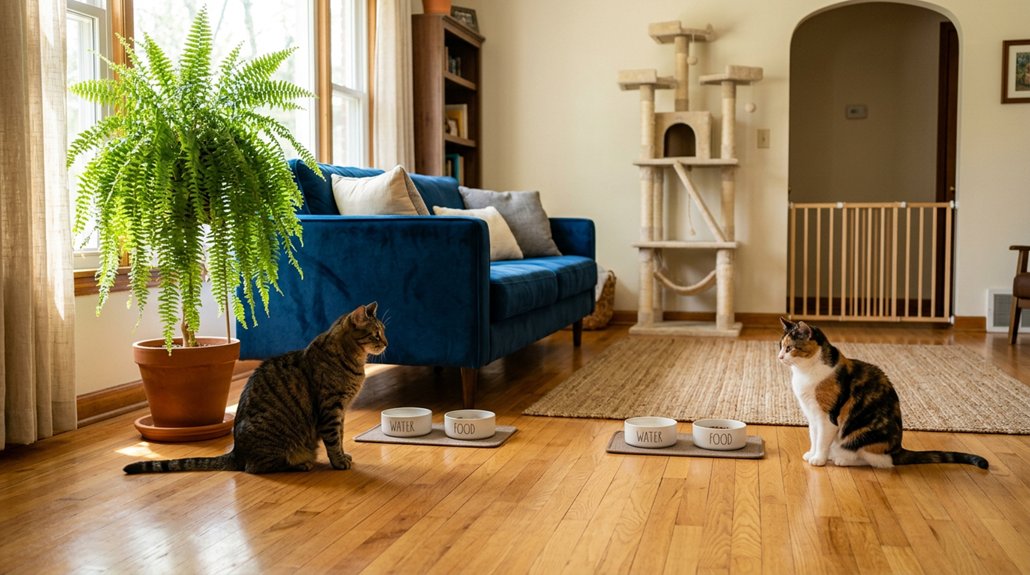
Preventing cat conflicts involves understanding feline behavior, maintaining separate resources, and minimizing stress. Make certain each cat has its own litter box, feeding station, and vertical space to reduce territorial disputes and competition. Use pheromone diffusers and calming products, and provide structured play to manage energy levels. Gradually introduce new cats and monitor body language for stress indicators. For persistent issues, professional behaviorists can offer tailored advice. Discover more strategies to enhance your multi-cat household’s harmony.
Key Takeaways
- Provide separate resources like litter boxes and feeding stations to prevent competition among cats.
- Create vertical spaces and individual safe zones to allow cats to retreat and feel secure.
- Use pheromone therapy and calming products to maintain a peaceful atmosphere.
- Introduce new cats gradually with supervised meetings and scent acclimation to reduce tension.
- Regularly engage in interactive play sessions to strengthen social bonds and reduce stress.
Why Cats Fight and How to Help Them
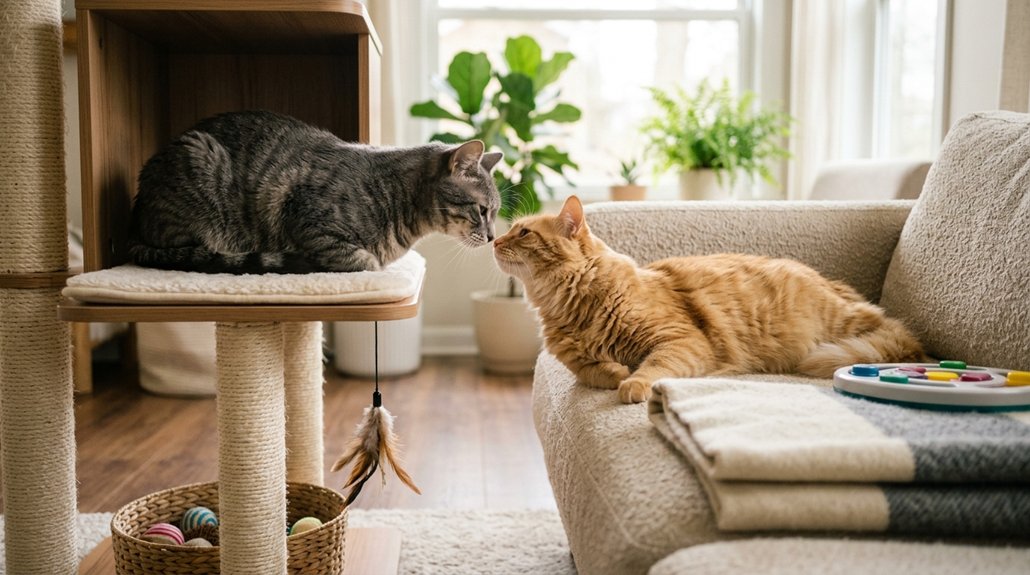
When addressing feline conflict, it’s important to understand the underlying reasons cats might engage in aggressive behavior. Territorial disputes are a primary factor, often arising when cats feel their domain is encroached upon. Competition for resources such as food, water, and resting areas can further exacerbate tensions. Personality clashes, particularly among unrelated cats, may evoke aggression, as distinct temperaments do not always harmonize. Undersocialized cats might perceive unfamiliar peers as threats, leading to fear-based aggression. Additionally, maternal aggression warrants consideration, as protective instincts drive a mother cat’s hostility towards perceived threats to her kittens. To mitigate these conflicts, provide the abundance of resources to minimize competition and the likelihood of aggression stemming from territorial behavior and personality differences.
Create a Stress-Free, Cat-Friendly Home
To create a stress-free, cat-friendly environment, guarantee you provide separate resources such as litter boxes, feeding stations, and water bowls, which reduce inter-cat competition and territorial disputes. Encouraging positive interactions can be achieved through structured playtime and environmental enrichment, fostering cooperative behavior and decreasing the likelihood of aggression. Implement calming techniques, including the use of pheromone diffusers, to modulate the feline stress response and promote a harmonious household atmosphere.
Provide Separate Resources
A harmonious multi-cat household hinges on providing each feline with individualized resources to alleviate potential tensions. Begin with strategic litter box placement; make certain there’s at least one box per cat, plus one extra. This distribution mitigates territorial disputes by offering ample elimination options, reducing feline stress. Likewise, a thoughtfully devised feeding station arrangement, with multiple locations, thwarts food-related aggression. Cats can dine unperturbed, decreasing competitive interactions. In parallel, furnish your environment with various scratching posts and perches, promoting individual territory. This approach guarantees access to personal space, negating conflicts over resting zones. Finally, evenly distribute toys, facilitating personal play time and circumventing resource guarding. Analyze these adaptations meticulously to cultivate a serene, conflict-free environment for your cats.
Encourage Positive Interactions
Ensuring cats engage in positive interactions involves creating an environment that minimizes stressors and enhances their sense of security. Prioritize playful engagement and social bonding by methodically optimizing your home. Here’s how:
- Separate Resources: Make sure each cat has dedicated food bowls, litter boxes, and resting areas. This reduces competition and promotes harmonious coexistence.
- Vertical Spaces: Introduce cat trees and shelves. These provide opportunities for solitary exploration, establishing territories, and a safe retreat, reducing potential conflict triggers.
- Positive Reinforcement: Encourage calm, cooperative behaviors using treats and praise, reinforcing positive associations during each social interaction.
Regularly observe your cats’ body language for signs of stress or discomfort, allowing for immediate interventions to prevent any escalation into conflict, thereby cultivating a trusting, conflict-free environment.
Implement Calming Techniques
While creating a tranquil environment for your feline companions, harnessing calming techniques is paramount to preventing stress-induced conflicts. Pheromone therapy, such as synthetic diffusers or sprays, actively reduces anxiety, promoting a serene atmosphere. Scientifically, these mimic natural feline communicators, signaling safety and comfort. Additionally, providing vertical spaces like cat trees allows cats to retreat, mitigating confrontational scenarios. Incorporate relaxation techniques using calming products—collars or treats—as they biochemically soothe tension. Limiting excessive noise and chaotic stimuli is critical, since such disturbances amplify stress in sensitive cats. Regular interactive play sessions stand as another pivotal technique, ensuring your cats channel energy appropriately, preventing aggression from boredom. Collectively, these methods cultivate a harmonious and stress-free, cat-friendly home.
How to Introduce New Cats Gradually to Existing Cats
To foster a peaceful integration of a new feline companion into a household with existing cats, it is crucial to employ a structured and gradual introduction process. Start by isolating the newcomer in a separate room for about two weeks to aid scent acclimation without physical contact. Implement scent swapping by exchanging bedding or grooming tools to facilitate mutual olfactory recognition.
During controlled meetings, follow these steps:
- Supervised Meetings: Begin with 5-10 minute sessions in a neutral space, gradually increasing the time if tensions remain minimal.
- Monitor Body Language: Observe for stress indicators like hissing or flattened ears, and separate if aggression arises.
- Reinforce Positives: Use treats and praise to associate encounters with positive experiences, thereby promoting tranquility and cooperation.
Manage Resources to Minimize Competition
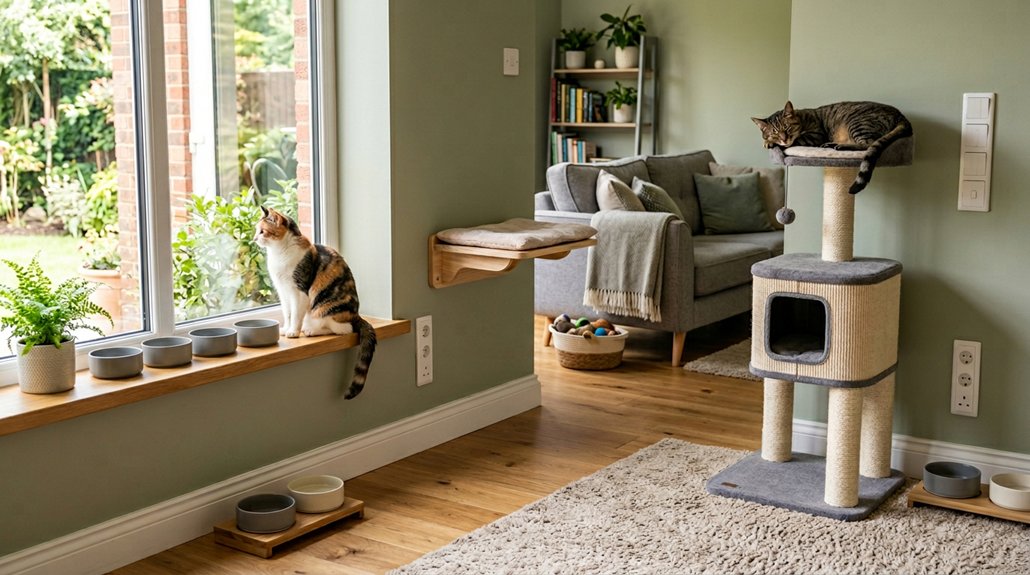
Integrating a new cat into your home involves more than just initial introductions; ongoing resource management plays a significant role in guaranteeing harmony among your feline companions. Proper food distribution is vital; provide each cat with its own bowl plus an extra to minimize competition during meals. This allows even the most submissive cats can eat without anxiety. Equally important is strategic litter box placement. Aim for at least one box per cat, plus an additional one, placing them in separate, accessible locations. This approach prevents territorial disputes and urinary issues. Diversifying zones with scratching posts, resting areas, and toys allows cats to express natural behaviors individually, thereby reducing inter-cat tensions. Providing designated safe zones also bolsters feline well-being and social cohesion.
Calm Stress and Manage Aggression in Cats
Ensuring a stress-free environment for your cats is essential, as stress often leads to aggression in multi-cat households. By minimizing chaotic stimuli, you create a serene atmosphere, vital for reducing feline tension. Here’s how you can manage stress and aggression effectively:
- Behavior Observation: Vigilantly monitor body language to detect stress signals early. This involves noticing subtle cues such as flattened ears or flicking tails.
- Play Enrichment: Engage in active play sessions to channel excess energy. Interactive toys and climbing structures help release tension, decreasing potential aggression.
- Environmental Modification: Use synthetic pheromones like Feliway, which can biochemically calm your cats, promoting tranquility and lowering anxiety-induced aggression.
Implement these strategies to harmonize multi-cat dynamics, ensuring a peaceful cohabitation without resorting to professional intervention prematurely.
When to Get Professional Help
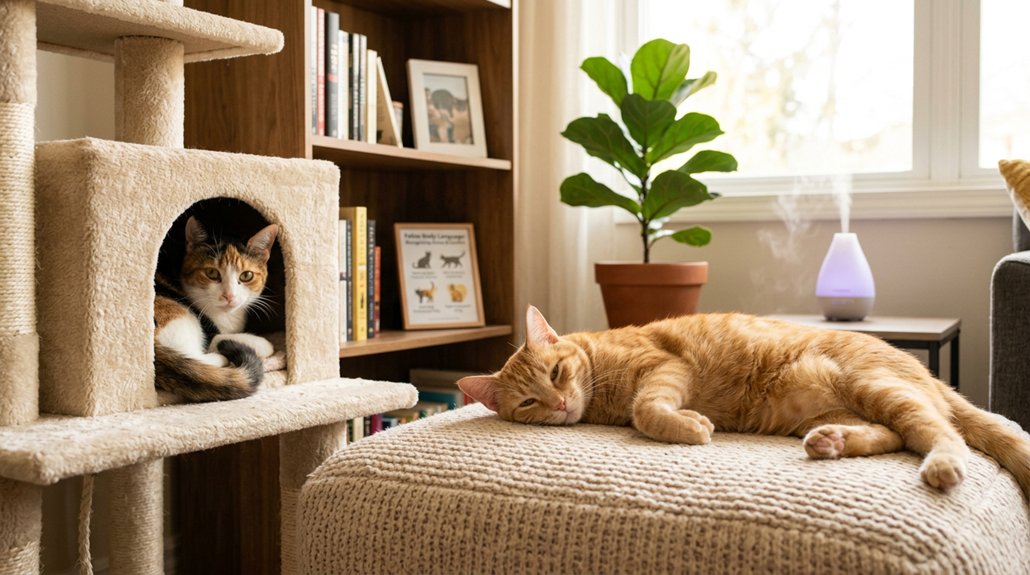
When should you seek professional help for your cats? If there’s a pattern of frequent fights, persistent hissing, or serious injuries, it’s important to consult a feline behaviorist for a targeted professional assessment. Unaddressed behavioral triggers can escalate, disrupting harmony. Professional intervention is critical if behavioral triggers persist despite separation and reintroduction efforts over several weeks. It’s important to involve a veterinarian if aggression coincides with signs of illness, like altered eating or litter habits, which could exacerbate stress. Additionally, if environmental enrichments and resource management fail to mitigate tension, tailored solutions from a behaviorist are essential. Severe marking behaviors that pose sanitation issues may necessitate expert training to guarantee your cats coexist peacefully and maintain a healthy household environment.
Frequently Asked Questions
How to Keep Cats From Fighting Each Other in the House?
Guarantee cats’ territories are defined by strategically placed feeding areas and litter boxes. Implement gradual introductions with scent markers and monitor their behaviors for aggression. Provide vertical spaces to decrease stress. Reward relaxed behavior with treats or praise.
What Is the 3-3-3 Rule for Cats?
Think of the 3-3-3 rule as a timeline for cat adaptation: three days for initial stress, three weeks for acclimation, and three months for full integration. It supports ideal feline behavior during cat introduction through gradual adjustment.
What Is “I Love You” in Cat Language?
In cat communication, “I love you” translates to feline affection through slow blinking, head-butting, purring, grooming, and soft vocalizations like meows or trills. These behaviors scientifically indicate trust, bonding, and contentment among cats.
Will Two Cats That Fight Ever Get Along?
Yes, with a scientific approach and understanding of cat personality types, two cats can get along through gradual introduction strategies. Positive reinforcement, recognizing stress signals, and creating a stable environment will gradually mitigate aggression and promote harmony.
Conclusion
Steering feline harmony can feel like a delicate dance. You’ve addressed the root causes of feline friction by providing enriched environments and managing resources wisely, thereby reducing stress-induced aggression. Gradual introductions of new feline family members guarantee smoother integrations. Yet, when tensions rise beyond your expertise, know it’s wise to seek a veterinarian or feline behaviorist’s guidance. Your cats deserve tranquility, and with informed interventions, you’re their best ally in achieving it. Remember, harmony isn’t just a hope—it’s achievable.