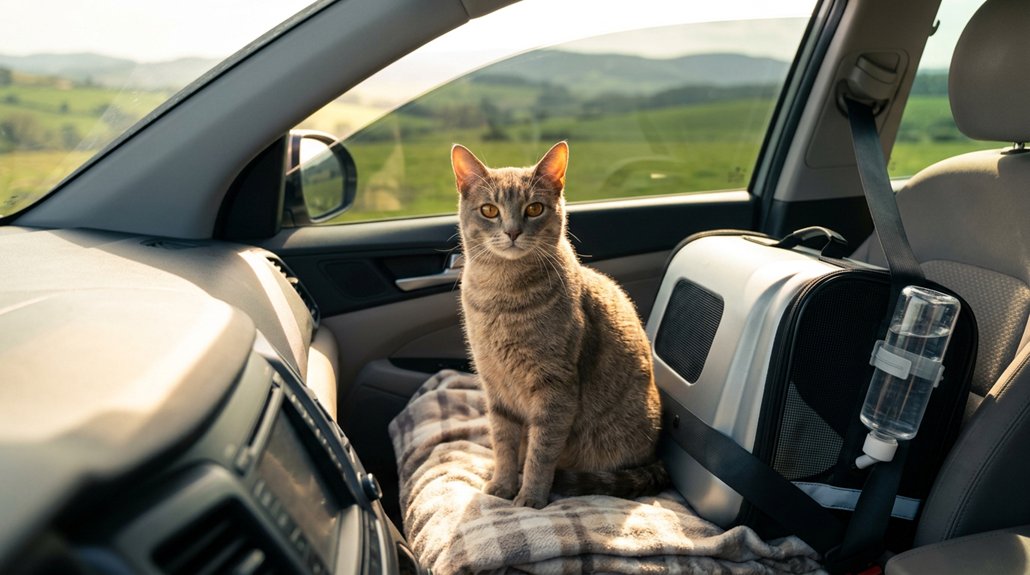
To guarantee smooth road trips with your cat, start with gradual car acclimation to reduce anxiety. Create a cozy travel space using a spacious, ventilated carrier lined with familiar items and secure it in the car. Maintain your cat’s usual feeding and litter routines for consistency. For safety, update ID tags and consider a tracking device. Monitor for motion sickness signs and create a calm environment. Additional detailed tips are available for fostering a stress-free journey.
Key Takeaways
- Gradually acclimate your cat to car travel by starting with short rides and increasing the duration over time.
- Ensure your cat’s travel crate is spacious, secure, and filled with familiar items for comfort.
- Monitor signs of anxiety and use calming aids like soft music or over-the-counter treats if necessary.
- Maintain your cat’s usual feeding and litter box routine to prevent stress and gastrointestinal issues.
- Secure your cat in a pet-friendly carrier with updated ID tags and consider a tracking device for added safety.
Preparing Your Cat for Road Trips
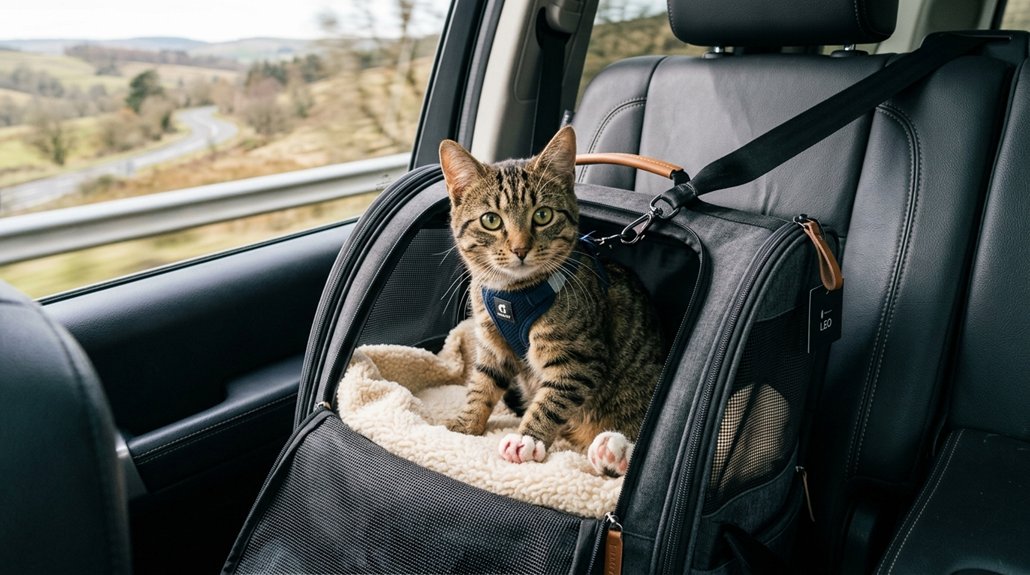
When preparing your cat for road trips, it’s essential to prioritize gradual acclimation to the car, since abrupt changes can heighten anxiety. Introduce your pet to carrier comfort using crate training techniques with positive reinforcement, ensuring it views the carrier as a safe space. Start with short car rides, gradually increasing the duration, to help your cat adjust to the motion and sounds of travel. This method aids in travel acclimation, minimizing stress. Additionally, a veterinary check-up before departure confirms your cat is healthy and current on vaccinations. Discuss any travel anxiety concerns during this visit. Confirm pet-friendly accommodations and pack essentials like medical documents and familiar items, sustaining your cat’s routine. These steps promote a comfortable, stress-free journey for your feline friend.
Set Up a Cozy Travel Space in Your Car
Creating a cozy travel space for your cat in the car is crucial for a stress-free journey. Start with careful carrier selection—opt for a spacious, secure, and well-ventilated model to allow your cat ample room and comfort. Bedding options play an important role; use familiar blankets inside the carrier to provide security and reduce anxiety.
Arrange the travel area in a quieter part of your car. This minimizes exposure to loud noises, encouraging relaxation. Improving ease with three essential steps guarantees a calmer experience:
- Hydration Accessibility: Place a deep dish with ice water inside the carrier to keep your cat hydrated without spillage.
- Portable Litter Box: Keep this within reach for long trips to maintain bathroom dignity.
- Quiet Quarters: Position the carrier away from distractions for enhanced comfort.
Essential Cat Packing List for Car Travel
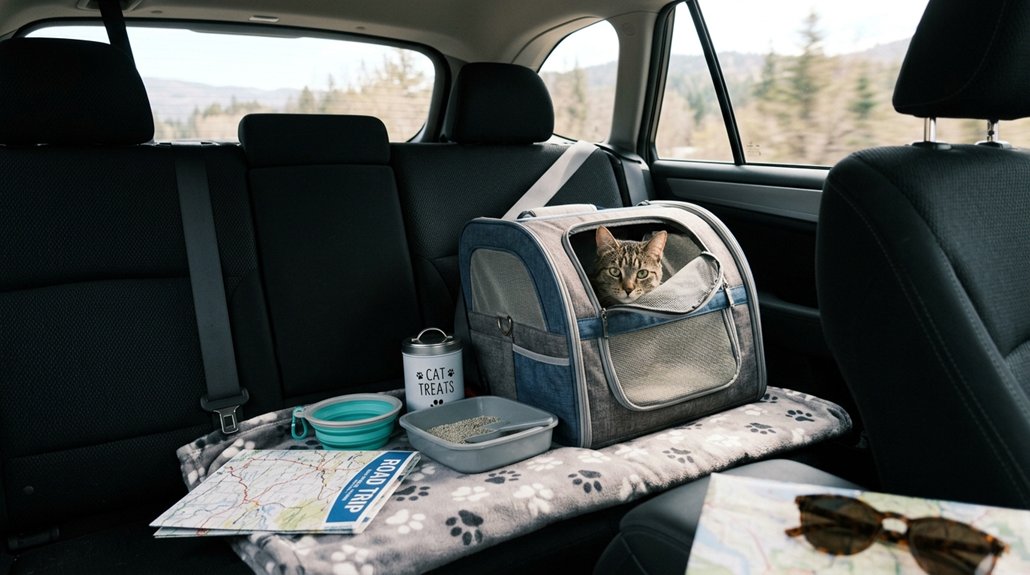
When preparing for a road trip with your cat, ensuring you’ve packed essential travel supplies is vital for both comfort and safety. Always include medical documents, familiar items to reduce anxiety, necessary food supplies, and a portable litter box to address bathroom needs. An updated ID tag on your cat’s collar also enhances their safety during the trip.
Essential Travel Supplies
Packing for a road trip with your cat requires attention to detail to guarantee their comfort and safety throughout the journey. To guarantee a smooth trip, consider these essential travel supplies. First, secure your cat with a safety harness, offering both protection and peace of mind during car rides. Second, keep your feline engaged with stimulating travel toys; they’ll provide entertainment, reducing stress and boredom. Also, it’s vital to include absorbent potty pads for the carrier to manage any unexpected accidents. Don’t forget to pack your cat’s medical documents, including vaccination certificates and any necessary medications, for their health and safety. Here’s a quick checklist:
- Safety harnesses
- Travel toys
- Absorbent potty pads
These items will help make your journey pleasant and worry-free.
Litter Box Solutions
As you prepare for a road trip with your feline companion, integrating a litter box solution into your plans is a practical step for maintaining your cat’s comfort. Choosing the right litter box type is essential. A portable option, like the Porta Pawty Travel Litter Box, is ideal for travel. Fill it with familiar litter from home, which aids in stress reduction by providing a sense of familiarity for your cat. Secure the box in a stable car position to prevent spillage and guarantee easy access at rest stops. Placing absorbent potty pads underneath manages messes and keeps the area clean. Proactively monitor and offer the litter box regularly to address your cat’s bathroom needs and prevent any in-car incidents.
How to Prevent Motion Sickness and Reduce Cat Anxiety
Even seasoned pet owners find it challenging to prevent motion sickness and reduce anxiety in their cats during road trips. To help guarantee a smooth journey, consider these evidence-based strategies:
- Motion sickness remedies: Withhold food the night before your trip. Keeping your cat’s stomach empty can mitigate nausea, providing a more comfortable experience.
- Gradual acclimatization: Gradually introduce your cat to car travel. Start with short rides and incrementally extend the duration. This helps your cat adjust to motion and reduces stress.
- Anxiety relief: Create a soothing environment by lining the carrier with familiar toys and blankets. Over-the-counter anxiety treats might also help, or consult your vet for specific anti-anxiety medications. Additionally, maintaining a calm car environment with soft music can further alleviate anxiety.
Keep Your Cat Safe on the Road
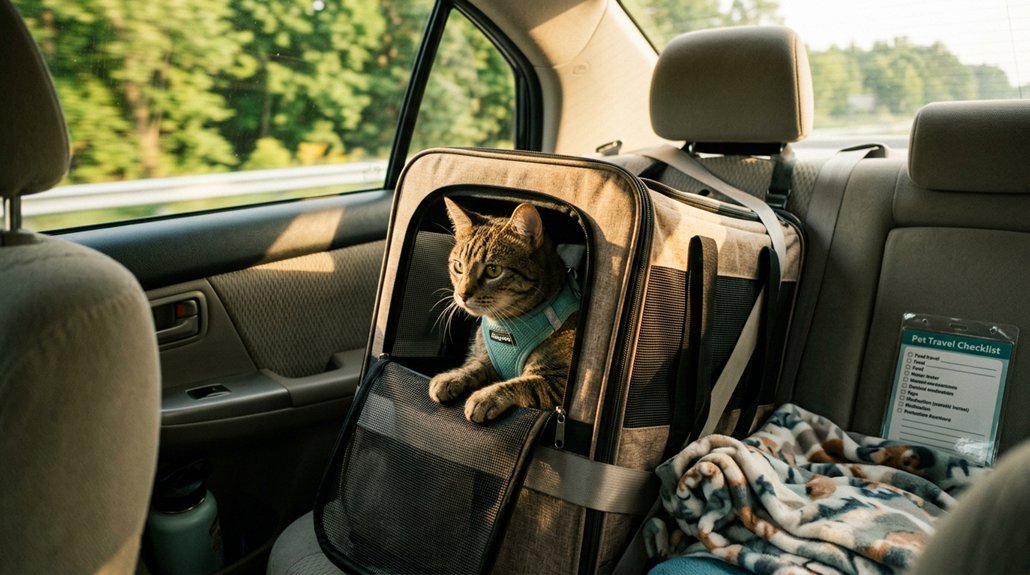
When commencing a road trip with your cat, ensuring their safety should be a top priority. Secure them in a pet-friendly carrier to uphold cat carrier safety, reducing distractions and protecting them during sudden stops. Attach a collar with an ID tag and consider a tracking device, especially useful at rest stops. Fix the carrier securely within the car, avoiding placement in the trunk due to poor ventilation. Regularly check your cat’s travel behavior signs; adjustments may be needed to alleviate discomfort.
| Safety Measure | Why It’s Important | Action Steps |
|---|---|---|
| Cat Carrier Safety | Prevents distractions | Secure and fix carrier in place |
| ID Tag and Tracker | Aids recovery if lost | Attach to collar, use at stops |
| Monitor Behavior | Identifies distress early | Make timely adjustments |
| First Aid and Documents | Preparedness for emergencies | Keep kit and health docs on hand |
Manage Hydration and Bathroom Breaks
After guaranteeing your cat’s safety on the road, maintaining their comfort with proper hydration and bathroom facilities is essential. Adequate cat hydration prevents stress; therefore, use a deep or spill-proof bowl with cool water during the drive. Bathroom timing is vital; monitor for cues as cats might not vocalize their needs when scared. Here are steps to guarantee an easy journey:
Ensure your cat’s comfort with hydration and attentive bathroom care during road trips.
- Portable Litter Box: Set up a litter box in a secure vehicle area, using familiar items like your cat’s usual litter to ease anxiety.
- Regular Stops: Plan breaks every couple of hours to allow stretching and bathroom visits.
- Avoid Pre-trip Feeding: To prevent motion sickness, don’t feed your cat right before hitting the road, yet keep snacks accessible.
Let Your Cat Unwind and Explore Post-Arrival
Once you’ve reached your destination, it’s essential to allow your cat some time to adjust by setting up a familiar space with their favorite items. Encourage them to explore at their own pace while keeping the carrier accessible as a safe haven. Pay attention to any signs of stress and offer calming interactions or treats, alongside making sure their essentials like food, water, and a litter area are easily accessible.
Post-Arrival Exploration Tips
Even if the journey has come to an end, setting a tranquil and familiar space for your cat right away upon arrival will ease the adjustment to new surroundings. This step supports positive cat behavior and provides essential environmental enrichment in a new setting. Here are some tips to guarantee a smooth exploration process:
- Create a Familiar Zone: Arrange your cat’s bedding and toys in a quiet corner. This familiar setup helps them feel secure and comfortable.
- Allow Independent Exploration: Let your cat wander at their own pace, but monitor closely for any anxiety signs like excessive hiding.
- Maintain Consistency: Stick to your cat’s usual feeding and litter box routines, which enhances their sense of stability in unfamiliar territories.
Encouraging Relaxation Techniques
Although arriving in a new environment can be overwhelming for your cat, taking deliberate steps to encourage relaxation will help them adjust more smoothly. Start by creating a quiet, designated resting area with familiar items like their favorite blanket or toy. These calming techniques can greatly aid stress reduction.
Use the table below as a quick reference:
| Step | Purpose |
|---|---|
| Quiet resting area | Security and settling |
| Familiar items | Comfort during adjustments |
| Explore at own pace | Reduce anxiety and build confidence |
| Soothing music/pheromones | Create a relaxing ambiance |
| Monitor and encourage | Reinforce relaxed behavior |
Allow your cat to explore at their own pace and consider playing soothing music or using calming pheromone sprays. Monitor their behavior and use gentle encouragement or treats to reinforce their comfort and promote a relaxed state.
Frequently Asked Questions
What Is the 3-3-3 Rule for Cats?
The 3-3-3 rule aids in cat travel safety and feline anxiety management. In the first three days, expect stress; three weeks for gradual adjustment; in around three months, your cat should be fully settled and comfortable.
How Long Can a Cat Go on a Road Trip?
Cats can go on road trips up to 10-12 hours with adequate feline comfort tips like breaks every 2-3 hours. Prioritize monitoring behavior for signs of distress and use familiar items and portable litter boxes for extended travel duration.
What Is the 3-3-3 Rule for Road Trips?
The 3-3-3 Rule for road trips helps your cat adjust like Odysseus finding home. Offer cat travel essentials and focus on feline safety tips, providing three familiar items, challenges, and days for smooth acclimatization and comfort.
Is It Okay to Take a Cat on a Road Trip?
Yes, it’s okay to take a cat on a road trip with proper preparation. Make certain you pack cat travel essentials like a secure carrier and a portable litter box. Use feline comfort tips such as familiar blankets and toys.
Conclusion
By following these road trip tips, you’ll transform your journey into a symphony of purrs and peaceful travels. Creating a cozy, familiar space and packing the essentials like a pro anticipates each of your cat’s needs, turning potential bumps in the road into smooth sailing. Safeguard against motion sickness and anxiety with expert techniques, and your feline companion will embrace the adventure. With careful planning, your road trip will be the cat’s whiskers of enjoyable experiences.