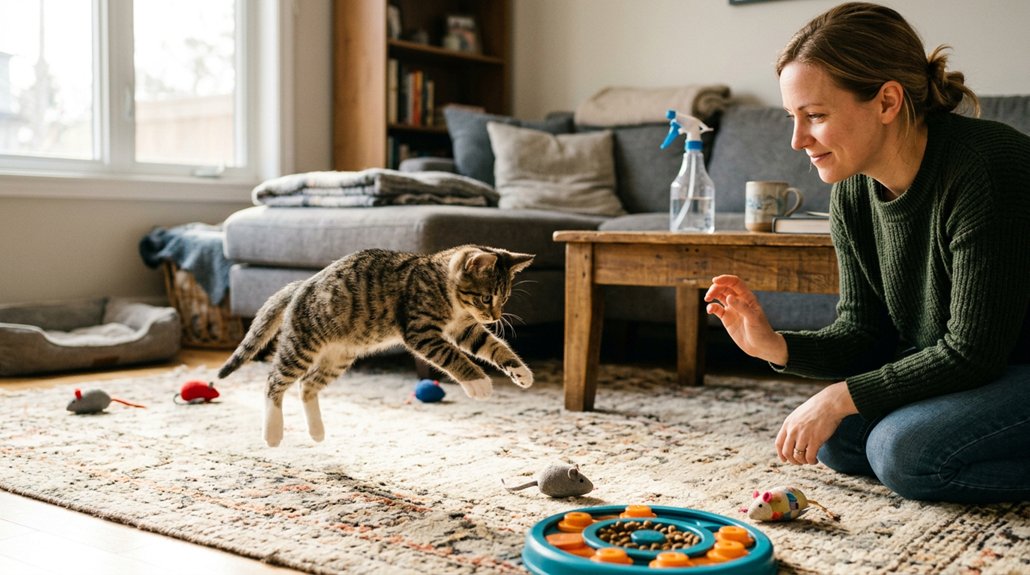
Your kitten’s misbehavior is a normal part of their growth process. It’s essential to understand the underlying causes, like lack of stimulation or stress. Redirect unwanted actions with toys or scratching posts and reward desired behaviors with treats. Establish clear boundaries and maintain a consistent structure to minimize confusion. Manage hyperactivity with evening play and a calming environment. Track progress, and consider professional help if issues persist. Explore effective strategies to guide your kitten’s development further.
Key Takeaways
- Redirect your kitten’s unwanted behaviors with playful distractions and offer rewards for desirable actions.
- Set clear boundaries and consistently maintain rules to ensure the kitten understands acceptable behavior.
- Create a calming environment with designated play areas and a consistent evening routine to manage hyperactivity.
- Use positive reinforcement techniques to encourage desired behaviors, like using a scratching post instead of furniture.
- Track the kitten’s behavior patterns, setting specific goals, and consult professionals if issues persist.
Recognize Why Your Kitten Misbehaves
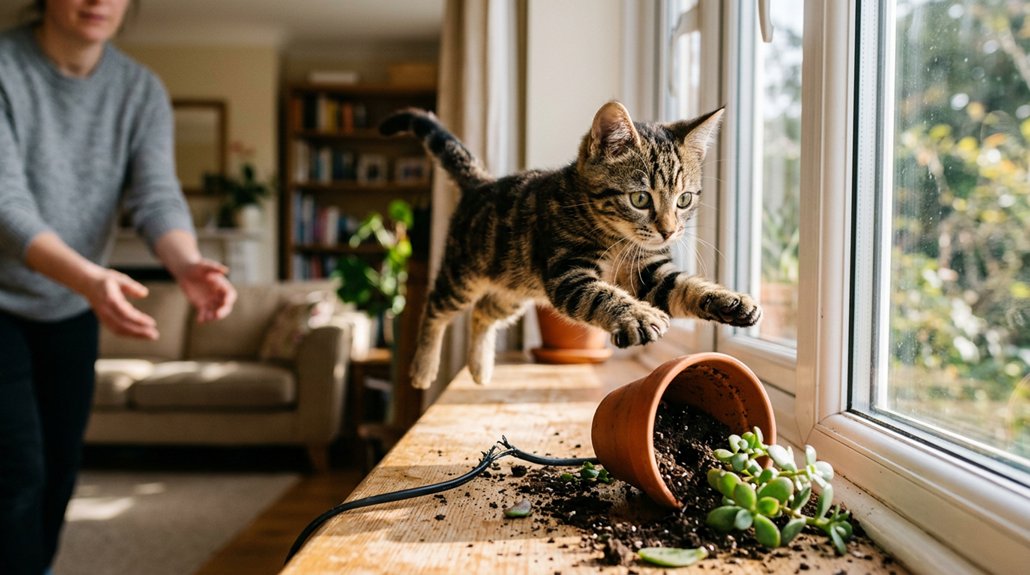
Why do kittens often misbehave? It’s part of their exploration and learning process. Kittens act out often due to insufficient playtime, essential for development. Without it, they might not learn limits, resulting in play aggression such as biting and scratching. Also, consider environmental enrichment. A stimulating environment helps prevent misbehavior like litter box avoidance or improper scratching, which can stem from stress or lack of stimulation. Consistent guidance and observation are important; watch for specific causes of inappropriate behavior. Remember, kittens aren’t being intentionally defiant—it’s part of their learning. By understanding these factors, you can help your kitten adjust to acceptable behaviors, aiding in their growth and reducing instances of acting out.
Redirect Unwanted Actions Promptly
Understanding why your kitten misbehaves lays the foundation for managing these behaviors effectively. Redirect unwanted actions swiftly by introducing playful distractions. If your kitten scratches furniture, immediately offer a scratching post to provide a suitable alternative. Use positive redirection by rewarding desired actions; for instance, when they use the correct object, immediately offer a treat or affection to reinforce this behavior.
Additionally, a water spray bottle can serve as a deterrent for inappropriate actions, like jumping onto prohibited surfaces. If your kitten engages in play biting, calmly stop the interaction and leave the area. This non-punitive measure communicates consequences clearly. By consistently applying these techniques, you’ll foster a positive environment where your kitten recognizes and repeats appropriate behaviors.
Set Clear Rules and Boundaries
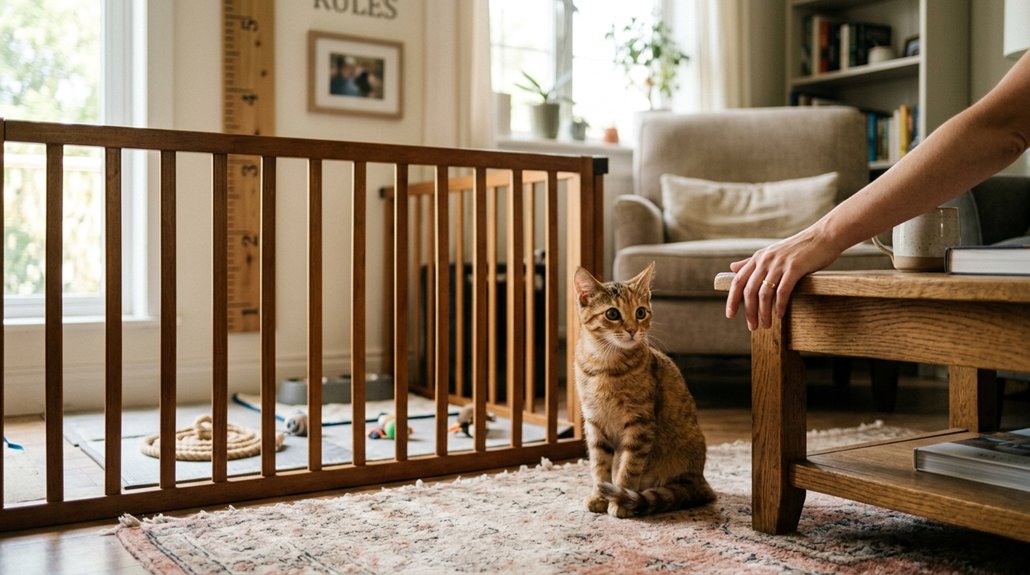
To guarantee your kitten understands consistent behavioral expectations, set clear boundaries and designate safe play areas. Define actions that are unacceptable, such as jumping on certain surfaces or biting during play, to reduce confusion and prevent misbehavior. Regular assessment and adjustment of these rules will maintain effective guidance that aligns with your kitten’s development.
Consistent Behavioral Expectations
When establishing a harmonious environment for your kitten, setting clear rules and boundaries is fundamental. Behavioral consistency in kitten training helps them comprehend limits, making it easier to instill acceptable behaviors. Implement specific rules like redirecting scratching from furniture to designated posts, reinforcing appropriate actions effectively. Consistent reinforcement through verbal praise and treats strengthens the association between good behavior and rewards. This pattern assists in managing your kitten’s understanding of rules, promoting the learning process.
Moreover, provide designated play areas and toys to guarantee an engaging outlet for your kitten’s energy. Regular monitoring and timely adjustments to behavior expectations, aligned with developmental milestones, are vital. These updates help maintain effective boundaries, facilitating smooth behavioral changes as your kitten matures.
Establish Safe Play Areas
Creating distinct play zones for your kitten is essential to maintaining a structured environment. Properly designing kitten habitats involves designating specific areas for play, guaranteeing that your feline friend understands where it’s safe to romp and explore. Incorporating barriers like baby gates helps restrict access to inappropriate areas, preventing potential misbehavior and property damage. Make certain these kitten habitats include engaging toys and scratching posts to support a healthy playtime structure. Consistent supervision during playtime is vital; intervene gently to guide your kitten towards expected behaviors. Positive reinforcement, such as rewarding your kitten with treats or praise when they adhere to established boundaries, proves effective in reinforcing safe play habits, promoting an enriched environment for your pet’s developmental needs.
Define Unacceptable Actions
As you establish play zones for your kitten, it’s equally important to define unacceptable actions to maintain harmony within your home. Scratching furniture and inappropriate biting during play must be addressed by setting clear boundaries. Use deterrents like water sprays or unpleasant-tasting solutions to discourage these behaviors effectively. Providing alternatives, such as scratching posts or chewable toys, supports your kitten’s natural instincts while reinforcing positive behaviors.
| Unacceptable Action | Appropriate Deterrent |
|---|---|
| Scratching furniture | Water spray |
| Inappropriate biting | Bitter-tasting solution |
| Unwanted climbing | Redirect to cat tree |
| Excessive aggression | Gentle correction |
Consistent redirection and praise create understanding, promoting a balanced relationship. Encouragement through praise, alongside gentle corrections, fosters a clear behavioral framework for your kitten.
Reinforce Good Behavior Positively
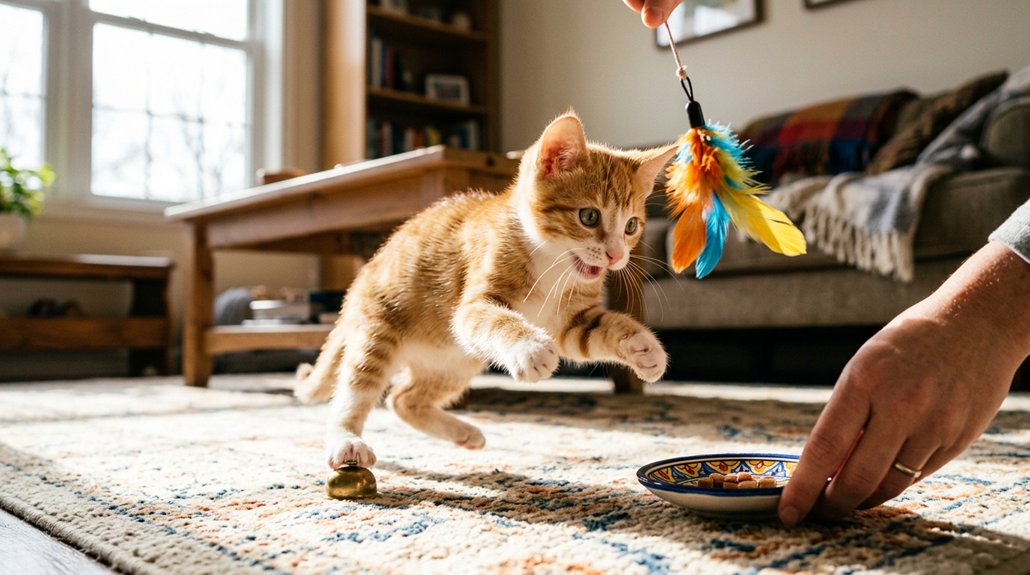
Implementing positive reinforcement techniques is vital in shaping a kitten’s behavior. Establishing reward systems can greatly impact your kitten by encouraging repeated desirable actions. Reward desirable behaviors, like utilizing the scratching post, through immediate treats or praise. Doing so strengthens behavioral associations and fosters positive learning. Behavior tracking is invaluable, allowing you to monitor and adjust your approach for consistency in reinforcement.
Consistent positive experiences, such as gentle petting or kind words, are essential. It enhances healthy interactions and increases the likelihood of continued desirable actions. By focusing on recognizing good behavior, such as proper litter box use, you create a balanced environment conducive to behavior modification. Prioritizing rewarding good actions over punishing misbehavior fosters an effective training paradigm for your kitten.
Manage Nighttime Hyperactivity
To address nighttime hyperactivity, it’s essential to establish a consistent evening play routine, ideally lasting 15-30 minutes before bedtime, which helps expend your kitten’s energy. Limiting nocturnal stimulation by reducing ambient noise and light can further promote a calm environment conducive to sleep. Providing toys that encourage independent play can redirect excess energy when you’re unable to actively engage with your kitten.
Establish Evening Play Routine
When your kitten displays nighttime hyperactivity, an effective strategy is to establish an evening play routine designed to tire them out before bedtime. Incorporate interactive toys such as feather wands or laser pointers into these sessions. This controlled form of play efficiently directs their energy, promoting calmness and preparing them for sleep. Consistency is key; a regular evening routine provides a sense of security, leading to improved sleep habits over time. Consider feeding your kitten right before bedtime, as a full belly can further enhance restfulness by promoting digestion and relaxation. Monitoring excess energy and channeling it through structured play can alleviate nighttime misbehavior, contributing to your kitten’s comfort and overall well-being.
| Interactive Toys | Evening Routines | Benefits |
|---|---|---|
| Feather Wand | Consistent Timing | Reduced Anxiety |
| Laser Pointer | Calm Environment | Enhanced Sleep |
| Toy Mouse | Routine Feeding | Comfort |
Limit Nocturnal Stimulation
Although kittens are naturally more active at night, it’s essential to limit nocturnal stimulation to manage nighttime hyperactivity effectively. Engage your kitten in active play sessions during the evening to expend energy and reduce the drive for nocturnal activities. Feeding your kitten right before bedtime can serve as a calming technique to signal it’s time to unwind. Consistent routines are key; they aid in establishing healthier sleeping habits. During the day, provide ample mental and physical stimulation to further decrease nighttime restlessness. Make sure your kitten’s sleeping area is quiet and free from distractions or loud noises. If hyperactive behavior persists, gradually adjust their schedule. By implementing these strategies, you can foster restful nights for your kitten and yourself.
Track Progress and Adjust Strategies
While addressing your kitten’s behavioral issues, it’s essential to systematically track progress and adapt strategies over time. Progress tracking involves regularly observing and documenting your kitten’s behaviors, identifying patterns and potential triggers. Set specific goals and create a timeline to evaluate improvements, gauging the effectiveness of your strategy adjustments. If a method isn’t working, introduce new techniques such as different toys or positive reinforcement. Incorporate guidance from professional sources to enhance your training regime, ensuring alignment with your kitten’s unique challenges. Consistent interaction and training methods are important; frequent shifts may confuse your kitten and slow progress. By continuously monitoring and fine-tuning your approach, you’ll effectively guide your kitten towards more desirable behaviors.
When to Seek Veterinary or Behavioral Help
Invariably, as much as you invest time in training your kitten, there might be situations where seeking external help becomes necessary. Consulting veterinarians is essential if your kitten shows persistent aggression or inappropriate elimination, as these behaviors might signal underlying health issues. Recognize excessive fear, aggression towards humans or animals, or abrupt behavioral changes as red flags that might require engaging behaviorists for professional intervention. When usual training methods fail, consistent misbehavior, despite positive reinforcement, indicates a need for expert guidance. If your kitten continues destructive behavior or biting without improvement, expert advice on behavior management techniques can be beneficial. Early recognition of these issues is vital to prevent escalation, ensuring your kitten develops into a well-adjusted companion.
Frequently Asked Questions
What Is the 3-3-3 Rule for Kittens?
The 3-3-3 rule outlines the kitten adjustment period, detailing behavioral expectations: three days to acclimate initially, three weeks for socialization, and three months for full home adaptation, emphasizing patience and consistent care.
What to Do With a Misbehaving Kitten?
Got a misbehaving kitten? It’s essential to provide training tips like consistent guidance, and a variety of toys to modify kitten behavior effectively—turning chaos into harmony through establishing boundaries and ensuring proper mental stimulation.
What Age Are Kittens Naughtiest?
You’re most likely to notice a kitten’s playful antics at their peak between 3 to 6 months old. During this phase, kitten behavior is characterized by exploratory and naughty tendencies as they test boundaries and develop instincts.
What Is “I Love You” in Cat Language?
In cat language, “I love you” involves feline affection through purring, slow blinking, showing their belly, bringing gifts, or vocalizations. These communication methods reflect or express their trust, comfort, and desire for interaction with you.
Conclusion
Understanding your kitten’s behavior is like tuning an instrument—it takes patience and precision. By identifying triggers, redirecting actions, and setting boundaries, you create a harmonious environment where good behavior thrives. Reinforce positive behavior and manage those nightly escapades with structured playtime. Keep track of their progress, adjusting strategies as needed. If challenges persist, don’t hesitate to seek professional help. With the right approach, you and your kitten will find balance and harmony.