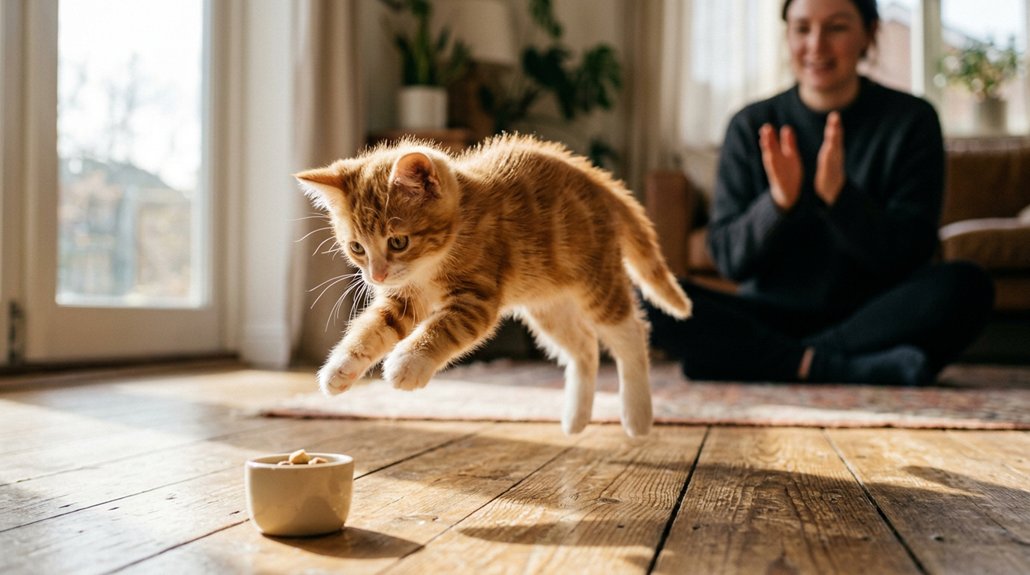
To keep a kitten focused during training, choose a quiet, distraction-free space and use soothing tones. Keep sessions brief, under 15 minutes, and focus on one command at a time. Use high-value treats and engaging toys as motivation, rotating them to maintain interest. Clear, consistent commands with visual cues help reinforce learning. Involve all household members to guarantee a unified approach. Gradually introduce new challenges to foster growth and engagement. Discover more strategies to optimize training sessions.
Key Takeaways
- Choose a distraction-free, quiet environment to maintain the kitten’s focus on training cues and commands.
- Keep training sessions brief and focused on one command, using favorite treats and toys to sustain interest.
- Use clear and consistent commands, incorporating both verbal and visual cues to minimize confusion.
- Implement a routine with regular training times and repeated cues to boost mental engagement.
- Gradually increase task difficulty to challenge the kitten without overwhelming it, rewarding successful attempts promptly.
Establishing Focus in Kitten Training
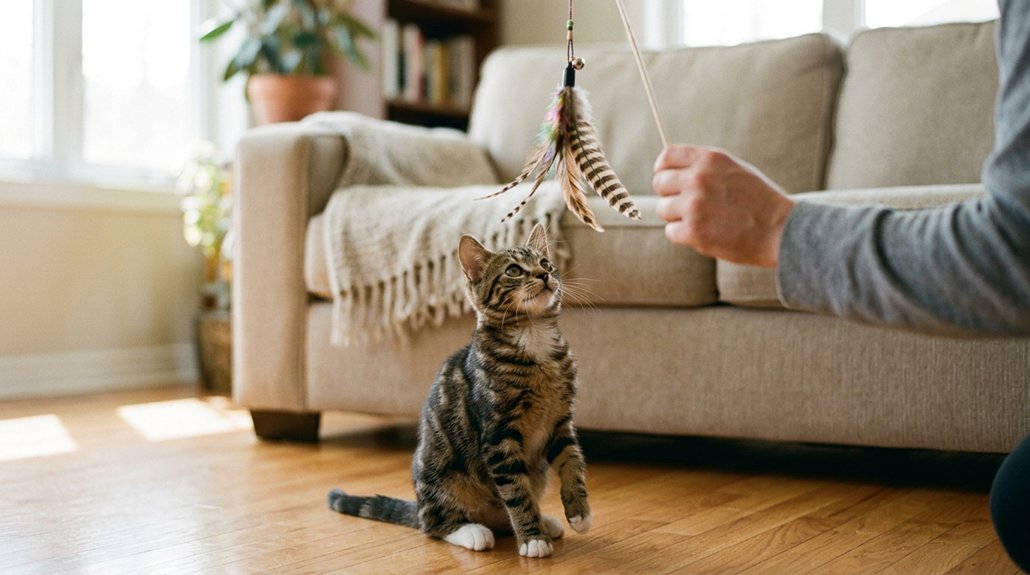
When it comes to establishing focus in kitten training, choosing the right environment plays an essential role. Implementing effective focus techniques involves selecting a quiet setting, devoid of distractions, which can notably enhance your kitten’s ability to concentrate. Short, 15-minute sessions are ideal, aligning with their natural attention span and preventing overwhelm. Motivation strategies, such as using high-value treats like Meaty Tender Sticks from SHEBA®, will hold their interest and keep them engaged. Integrate play to maintain enthusiasm and encourage active participation. Consistency in verbal cues and signals is vital to help your kitten associate specific commands with actions, thereby strengthening focus. These methods together create a structured framework for successful, focused training sessions.
Create a Distraction-Free Zone
To effectively train your kitten, establish a distraction-free zone by selecting a quiet room away from household noise and activity. Remove unnecessary items such as toys and food bowls to minimize visual stimuli and close doors to limit auditory distractions from other pets or family members. By ensuring a calm environment, you’ll help your kitten maintain focus during short training sessions, optimizing their learning experience.
Prepare Quiet Environment
Although kittens are naturally curious and easily distracted, establishing a quiet environment is vital for effective training sessions. Understanding kitten behavior is important when selecting the right training tools and creating an atmosphere that encourages focus. A quiet, distraction-free zone helps reduce potential stressors, allowing your kitten to concentrate on your cues and commands.
Minimizing noise and activity guarantees that your kitten can engage fully with you and the tasks at hand. Set up a dedicated training area away from common household distractions, like televisions or the presence of other pets. This fosters a focused learning atmosphere that supports successful behavior acquisition. Make sure the space is calm and free from interruptions, increasing the likelihood of positive training outcomes.
Minimize Visual Stimuli
Building upon the foundations of a quiet environment, minimizing visual stimuli is equally significant for promoting kitten focus during training sessions. Create a distraction-free zone by removing all visual distractions that might divert your kitten’s attention. This includes shiny objects, moving reflections, or toys that aren’t part of your primary training gear.
To keep sessions effective, utilize a simple setup:
| Visual Distraction | Solution |
|---|---|
| Shiny objects | Remove or cover them |
| Clutter | Tidy your training area |
| Multiple toys | Use only specific training gear (clicker, treats) |
Stick to consistent training times when your kitten is naturally alert, often post-meal. As they master commands in this controlled space, you can gradually introduce varied settings. By doing so, your kitten learns to focus, connecting cues to behaviors anywhere.
Limit Auditory Distractions
Creating a quiet environment is essential for effective kitten training, as kittens are easily distracted by noises around them. Their sound sensitivity means even minor auditory distractions can interfere with their focus on training tasks. To limit these distractions, select a dedicated training area away from loud noises, televisions, or active household areas. Consistently eliminate background sounds like ringing phones or music, which can overpower the subtle auditory cues you’re using. Conduct sessions during calm household times, reducing interruptions from people or other pets. When communicating during training, speak in soft, soothing tones to maintain your kitten’s attention and reduce anxiety. This focused approach aids in creating a suitable learning atmosphere, allowing your kitten to absorb training more effectively.
Maintain Interest With Short Sessions
To keep your kitten engaged and focused, it’s crucial to structure training sessions that are brief, ideally under 15 minutes, preventing them from losing interest or becoming overwhelmed. Rotate through diverse activities during each session to sustain their curiosity and enthusiasm, ensuring each new skill captivates them. Before meal times is an excellent opportunity for training, as their hunger will naturally heighten their motivation and attention.
Leverage Brief Training Times
Although it might be tempting to extend training sessions when your kitten seems engaged, maintaining brief times is essential for preventing fatigue and keeping focus sharp. Keep sessions under 15 minutes and schedule them when your kitten is most motivated, like before meals. This is when they’re likely to respond well to positive reinforcement, maximizing the effectiveness of training games.
| Key Elements | Recommendations |
|---|---|
| Training Duration | Max 15 minutes |
| Ideal Timing | Before meal times |
| Focus Area | One skill/command per session |
| Rewards | Favorite treats/toys |
Limit each session to one specific skill to avoid overwhelming your kitten. Use their favorite treats or toys to keep rewards engaging. Master the basics first before introducing more complex behaviors in future sessions. This strategy keeps your kitten interested and growing confidently.
Rotate Engaging Activities
Building on the importance of brief, focused training sessions, it’s beneficial to incorporate a mix of activities to keep your kitten engaged. Utilizing activity rotation guarantees that your training sessions are lively and diverse, preventing any onset of boredom. By incorporating engaging variations, such as alternating between commands and play, you stimulate your kitten’s curiosity and enthusiasm for learning. Integrate toys and interactive play to capture their attention, making the training both fun and educational. Vary your rewards, switching between treats and praise, to maintain high motivation levels. After mastering commands, practice in varied locations to encourage the kitten to generalize their skills, keeping them attentive. A dynamic approach guarantees your kitten stays interested and progresses through training effectively.
Use High-Value Rewards for Motivation
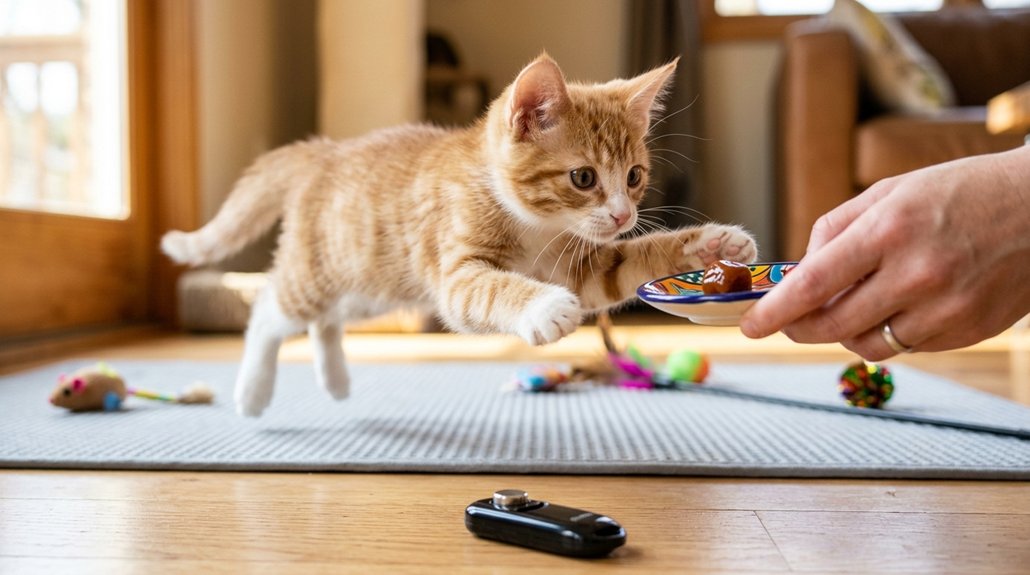
Nothing piques a kitten’s interest like a high-value reward, which can be pivotal in maintaining its focus during training. Favorite treats and engaging toys, such as catnip-infused playthings, are excellent motivators that enhance your kitten’s excitement and attentiveness. Introduce these incentives strategically, especially before meal times, when your kitten’s hunger peaks, for ideal engagement.
Rotate your treat selections to keep them enticing; varying flavors and textures prevent monotony, ensuring your kitten remains enthusiastic to participate. Remember, positive reinforcement through these rewards not only fosters desired behaviors but also deepens your bond with your kitten, making each session more rewarding. Choose treats that are small and easy to chew—they offer quick rewards that sustain training momentum and concentration seamlessly.
Simplify Commands for Clearer Communication
Clear communication is essential when training a kitten, and using simplified commands can greatly enhance this process. Focus on clear commands by using single words or short phrases, as this prevents overwhelming your kitten. This approach fosters effective communication, enabling your kitten to make connections between words and actions. Consistently use the same command for the same action, such as “sit” or “come,” to build recognition and understanding over time.
In addition to verbal commands, incorporate visual cues like hand signals. This dual approach aids your kitten in associating actions with words more efficiently. Focus on one command at a time to maintain your kitten’s attention and prevent confusion. As they master each command, gradually introduce new ones, ensuring continuous progress and a stronger bond.
Consistency in Kitten Training Is Key
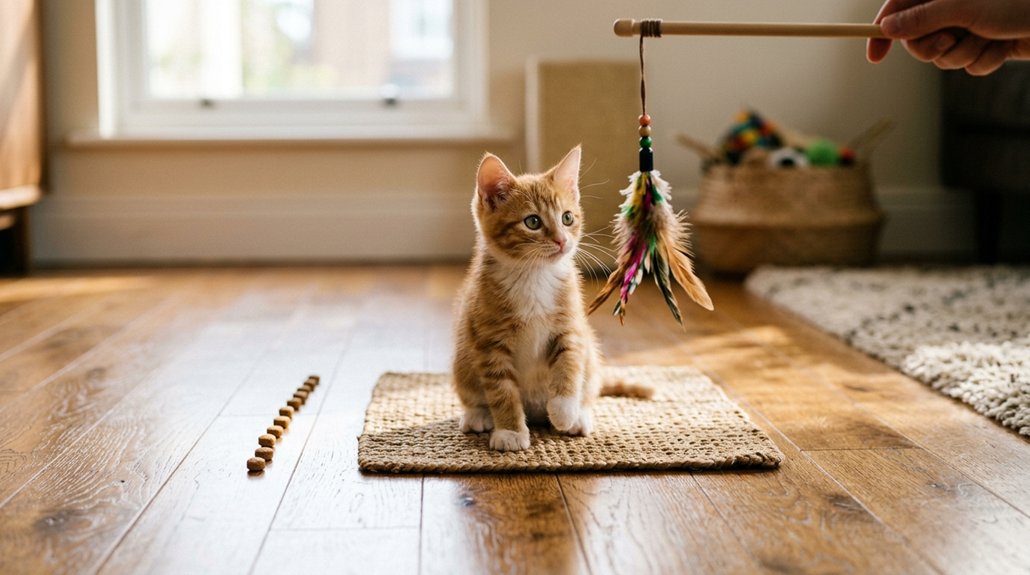
When you’re training a kitten, consistency is essential for ensuring they understand what you expect of them. By sticking to uniform training methods and clear commands, you’re greatly enhancing their learning outcomes. Repetition through consistent cue words strengthens their ability to recognize and respond properly to behaviors reinforced by praise or treats. Establish a regular routine to mentally engage them at the same time each day, reinforcing focus with consistent reinforcement techniques.
| Strategy | Benefit |
|---|---|
| Consistent Commands | Enhances recognition and response |
| Regular Routine | Increases mental engagement |
| Unified Household | Reduces confusion, boosting focus |
| Consistent Rewards | Strengthens motivation |
| Same Cue Words | Aids behavioral reinforcement |
Involving all household members in your training approach helps deliver a unified message, ensuring your kitten stays focused and vibrant in its learning journey.
Encourage Fun Exploration
While cultivating a focused mind in your kitten through training is essential, don’t overlook the benefits of encouraging exploration as part of their learning process. Introducing exploratory games within stimulating environments keeps your kitten curious and engaged, enhancing receptivity to new behaviors. Rotate through varied training locations, from different rooms to safe outdoor spaces, ensuring each session is lively and fresh. Integrating toys and interactive play not only reinforces desired behaviors but also transforms learning into a fun game. Incorporate new challenges or puzzles, stimulating your kitten’s mind and increasing their focus. Remember, positive reinforcement like treats or praise immediately following successful explorations solidifies the link between exploring and rewards, encouraging ongoing curiosity and participation in training.
Ramp Up the Challenge Gradually
- Start simple: Use tasks your kitten can easily master, slowly increasing difficulty as they succeed.
- Vary environments: Incorporate different locations to enhance adaptability and focus amidst various stimuli.
- Immediate rewards: Reinforce successful completion of tasks with immediate rewards for stronger positive associations.
These strategies will foster a steady progression in their training, effectively challenging your kitten without overwhelming them.
Frequently Asked Questions
What Is the 3-3-3 Rule for Kittens?
The 3-3-3 rule helps settle kittens: three days to adjust, three weeks to feel more at ease, and three months to become confident. Understanding this impacts kitten attention and offers valuable training tips for behavioral development.
What Is “I Love You” in Cat Language?
Did you know that 70% of cats communicate affection through feline gestures? To say “I love you” in cat language, observe their slow blinks, purring, bunting, kneading, and vocalizations—these affectionate gestures show your cat’s deep bond with you.
What Is the Hardest Age for a Kitten?
The hardest age for a kitten is 3 to 6 months. During these kitten developmental stages, you’ll face training timing challenges due to their heightened energy, curiosity, and independence. Consistent, patient training with positive reinforcement will help.
What Is a Red Flag Behavior in Cats?
Imagine your cat transforming into a mini lion overnight! Sudden aggression signs and anxiety indicators like unprovoked meowing or over-grooming are red flags. It’s vital to identify these behaviors for a happy, healthy feline friend.
Conclusion
Training a kitten is much like planting a delicate seed in a busy meadow. You’ve got to coax its growth with just the right touch. Cultivate focus by creating a quiet space, and let the curiosity bloom with short, engaging sessions. Nurture motivation using tempting rewards, and communicate with simple, clear commands. Consistency is your watering can, and as the seedling strengthens, gradually introduce new challenges. Foster exploration, and watch your kitten flourish into a well-trained companion.