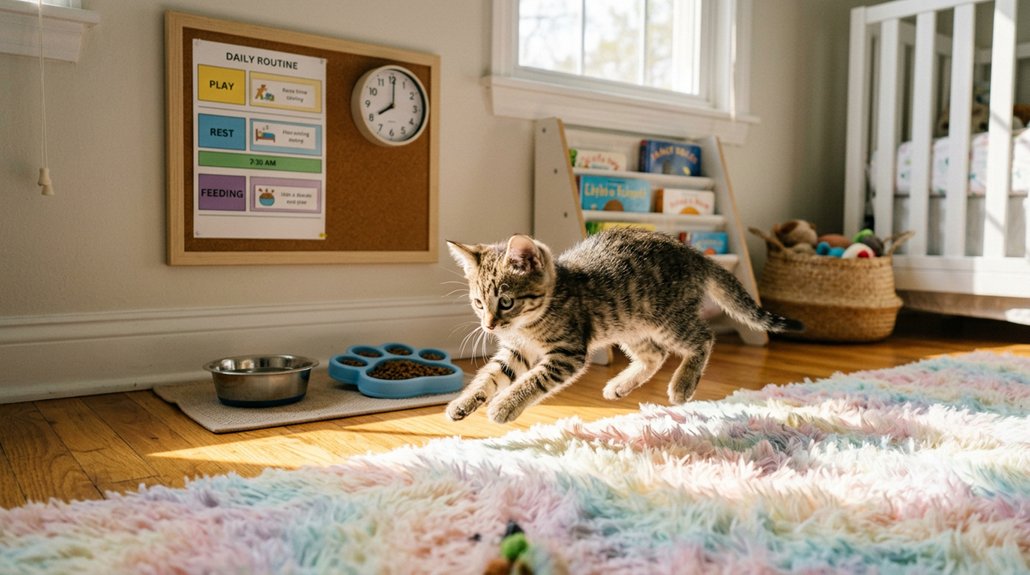
To build a daily routine for your kitten, establish consistency with feeding, play, and nap schedules. Start mornings with high-quality food and engage in active play to tap into their natural instincts. Create safe nap zones and quiet spots for rest and relaxation. Evening routines should include grooming and calming activities to guarantee a restful sleep. Regular health monitoring is key for well-being. Follow a structured approach to discover further tips and techniques that enhance your kitten’s daily life.
Key Takeaways
- Establish regular feeding times to promote digestive health and predictability.
- Engage in scheduled play sessions to stimulate natural hunting instincts and release energy.
- Ensure kittens have up to 20 hours of structured rest daily.
- Create safe and cozy designated nap areas in quiet, low-traffic zones.
- Incorporate grooming and gradual socialization to build trust and comfort.
Why Your Kitten Needs a Routine
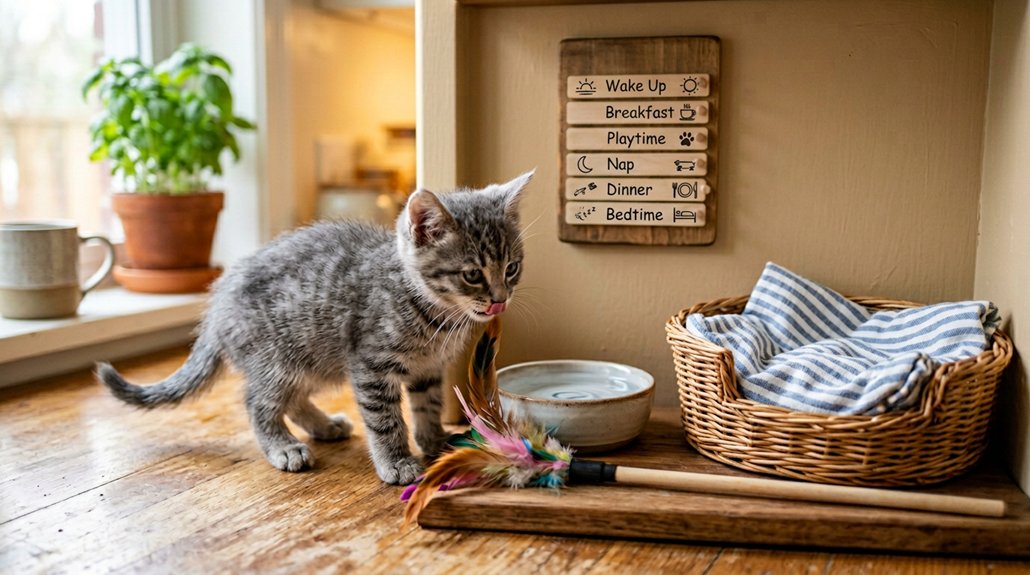
Although kittens are naturally adaptable creatures, establishing a daily routine is crucial for their development and well-being. Predictability in their environment plays a critical role in reducing kitten anxiety, as consistent schedules provide a sense of security. Introduce regular feeding times to enhance digestive health and stabilize behavioral patterns. Moreover, scheduled play sessions stimulate natural hunting instincts, mitigating boredom, which is essential for mental and physical health. In addition, a structured schedule for rest and naps supports crucial growth and development; kittens need up to 20 hours of sleep daily. Incorporating grooming and socialization early on fosters trust, strengthening the bond between you and your kitten. A well-structured routine is pivotal in ensuring your kitten becomes well-adjusted, minimizing stress and fostering growth.
Getting Ready: Kitten-Proofing Your Home
To prepare your home effectively for a new kitten, start by executing a thorough safety measures checklist that addresses potential hazards. Remove any toxic plants, secure loose wires, and limit access to risky areas to establish hazard-free spaces. Equip your home with essential supplies like scratching posts and climbing structures to support safe, exploratory behaviors.
Safety Measures Checklist
Kitten-proofing is paramount to ensuring the safety and well-being of your new furry friend. Exercising feline safety and hazard awareness requires a systematic approach. Use a safety measures checklist to methodically address potential risks:
- Toxicity Management: Secure all toxic plants (such as lilies and azaleas), chemicals, and small objects that pose ingestion hazards. Install safety latches on cabinets housing cleaning supplies and medications.
- Physical Safety: Block off areas like small spaces behind appliances or gaps in furniture to prevent entrapment. Tie up or cover electrical cords to deter chewing, which can cause electrical shock.
- Comfort Zone: Establish a safe, cozy area with suitable bedding, toys, and a litter box away from high-traffic zones, enhancing comfort and security. Implement these protocols to maintain a secure home environment.
Hazard-Free Spaces
Having established a foundation of safety protocols, it’s now time to assure a hazard-free space for your kitten’s new home. Focus on hazard prevention by inspecting your environment for potential risks—remove choking hazards, toxic plants, and sharp objects. Install baby gates and door closures to secure unsafe areas like stairways and kitchens. Keep electrical cords, small items, and household chemicals out of reach to assure safe exploration. Secure windows and balconies to prevent falls, using screens or netting. Additionally, create a designated safe haven with cozy bedding and toys to enhance comfort and security. Here’s how to set up your space:
| Action | Details | Benefit |
|---|---|---|
| Remove hazards | Toxic plants, sharp objects | Prevent injuries |
| Limit access | Use gates, door closures | Controlled movement |
| Secure environment | Seal windows, use netting | Safe exploration |
| Store dangerous items | Chemicals out of reach | Prevent ingestion |
| Create safe haven | Cozy bedding, toys | Comfort, security |
Essential Supplies Setup
Equipping your home with essential supplies is pivotal in kitten-proofing and ensuring the comfort and well-being of your new feline companion. Start by securing a designated safe area that provides all the fundamental kitten supplies your pet needs:
- Comfort Zone: Position a cozy bed in a quiet location. This area should also house the litter box, ensuring privacy and accessibility.
- Feeding Station: Opt for durable, tip-resistant food and water dishes. Place them away from the litter area to maintain hygiene.
- Play and Enrichment: Supply safe toys that can’t be swallowed or pose choking hazards. This satisfies their playful instincts.
Ensure all hazardous substances like chemicals and medications are inaccessible. By addressing these essentials, you’re laying the groundwork for a healthy, playful, and safe environment.
Morning Kick-Off: Feeding and Play Essentials
While mornings can be a hectic time, establishing a structured routine for feeding and play is fundamental for your kitten’s growth and well-being. Initiate with a high-quality kitten food complying with AAFCO’s nutritional guidelines to guarantee balanced growth. Implement feeding techniques by providing the first of 3-4 small meals within an hour of waking, fostering regularity and security. Adhere to hydration needs by offering fresh water daily, roughly half a cup per 5 pounds of body weight. Engage in 10-15 minutes of focused playtime activities, essential for releasing energy and curbing destructive behaviors, aiding social and behavioral development. Consistent handling and feeding patterns cultivate a predictable environment, critical for nurturing a kitten’s sense of security and overall well-being.
Midday Fun: Stimulate With Play and Socialization
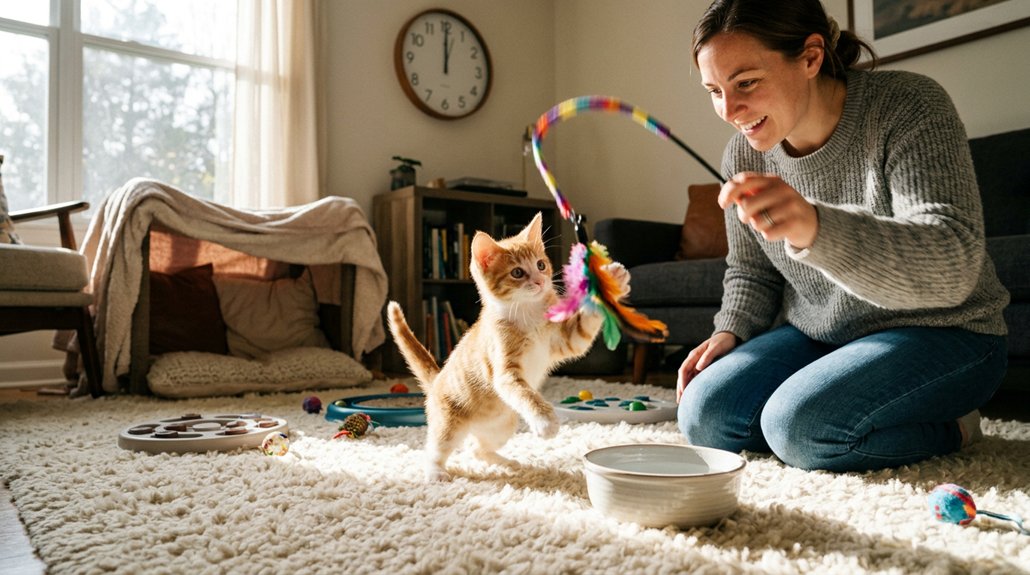
Engage your kitten in midday play and socialization to harness their natural instincts and lay a foundation for healthy development. Provide 5-10 minutes of focused activities designed to stimulate and reinforce positive behaviors. Employ interactive toys that mimic prey, enhancing your kitten’s hunting skills and mental acuity. This approach satisfies their innate curiosity while diminishing the likelihood of destructive behaviors.
Employ a structured routine:
- Interactive Toys: Utilize toys that mimic natural prey to elevate their playtime.
- Gentle Handling: Reinforce comfort with gentle touches, promoting positive associations with human interaction.
- Positive Reinforcement: Reward calm behavior with praise or treats, reinforcing good manners and a harmonious atmosphere.
Regular playful interaction also aids in energy regulation, maintaining a balance essential for your kitten’s behavioral health.
Cozy Nap Spots: Creating Afternoon Rest Zones
Creating cozy nap spots involves selecting safe sleep areas that offer comfort and security for your kitten. Design these resting corners with soft materials and avoid high-traffic zones to maintain a quiet environment conducive to uninterrupted rest. Regular cleaning of these nap zones guarantees they remain inviting as part of your kitten’s daily routine.
Choose Safe Sleep Areas
To guarantee your kitten has a safe sleep area, start by designating a quiet corner of your home that’s free from commotion. This maintains ideal conditions for kitten sleep without disturbances. Equip this area with cozy bedding, using soft materials like blankets or cushions to create an inviting space. Maintain an ideal temperature by ensuring the spot is warm, protecting your kitten from the chill that can disrupt rest. Avoid high-traffic zones where noise and interruptions may occur.
- Clean Regularly: Frequent cleaning prevents allergens and respiratory issues.
- Temperature Control: Ensure warmth to avoid cold-induced discomfort.
- Noise Reduction: Shield from daily activity for undisturbed relaxation.
Implementing these steps provides a conducive environment for restful kitten sleep.
Design Cozy Resting Corners
After establishing a secure sleep area for your kitten, it’s important to also design cozy resting corners for their naps. Begin by designating quiet, low-traffic areas in your home as secure hideaways. Opt for soft bedding materials like cushions or blankets to guarantee comfort. Kittens thrive better in cozy corners that provide relaxation and a sense of security. Introduce options such as cat beds, boxes, or basket hideaways with soft linings. Position these cozy nap spots near windows, allowing your kitten to observe the outdoors. This enhances their environment during rest. Regularly maintain these areas to keep them clean and dry, supporting healthy habits and preventing odors. These measures establish ideal environments for restful and unattended kitten naps.
Maintain a Quiet Environment
While fostering your kitten’s growth and development, ensuring a quiet environment for cozy nap spots is essential. It fosters calmness and enhances comfort during critical rest periods. To create an ideal nap zone, follow these guidelines:
- Location: Choose quiet areas away from high-traffic zones to minimize disturbances, allowing your kitten uninterrupted naptime critical for growth.
- Atmosphere: Maintain dim or low-lit settings to signal rest periods that promote better sleep quality. Introducing familiar scents—like a blanket carrying your kitten’s mother’s scent—can ease anxiety.
- Maintenance: Regularly inspect and clean nap spots to maintain a healthy environment. Cleanliness supports your kitten’s well-being and prevents potential health issues. Use soft bedding, such as cushions or blankets, to boost comfort during rest.
Implement these strategies to expertly cultivate a serene resting site.
Evening Meals and Play Sessions
Establishing evening meals and play sessions for your kitten is critical for their development and happiness. Schedule the fourth meal for young kittens at a time that fits your routine, ensuring ideal nutritional intake. Post-dinner activities involve 15-20 minutes of purposeful engagement in playful interactions. Utilize interactive toys that stimulate natural hunting behaviors like chasing and pouncing—it’s not only entertaining but key in preventing boredom and destructive tendencies. Build trust and evening bonding through grooming, including brushing and health checks, fostering comfort and connection. Simultaneously, clean the litter box post-dinner to encourage usage. This routine supports both physical health and emotional well-being, creating an enriched environment where your kitten’s playful instincts and bonding needs are thoroughly met.
Wind Down: Pre-Bedtime Calm for a Good Night
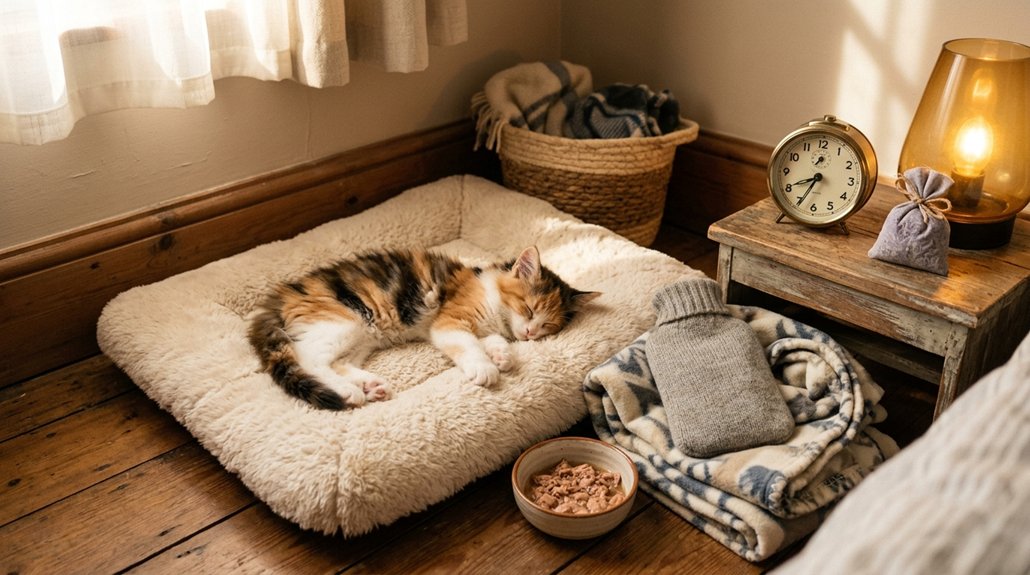
Creating a serene pre-bedtime routine for your kitten not only signals it’s time to wind down but also enhances their security and sleep readiness. By establishing specific nighttime habits, your kitten will begin to recognize sleep signals that tell them it’s time to rest. Begin by:
- Gentle Play: In the hour leading up to sleep, engage in low-key play to help burn excess energy without unwanted stimulation.
- Quiet Activities: Utilize brushing or soft petting to foster bonding and diminish anxiety as bedtime approaches.
- Cozy Environment: Guarantee a comfortable bed in a dimly lit, quiet area to promote superior sleep quality and overall health.
These consistent steps at bedtime will set a predictable pattern, encouraging relaxation and helping your kitten feel secure in their routine.
Routine Check-Ups: Monitoring Health and Well-Being
Monitoring your kitten’s health is essential, and recognizing early symptoms allows for prompt intervention. Schedule routine exams with veterinary professionals who’ll conduct thorough health assessments, including vaccinations and deworming. At home, you’ll want to consistently evaluate any changes in behavior or eating patterns to effectively address potential health concerns.
Recognizing Early Symptoms
While it might seem overwhelming at first, keeping an eye on your kitten’s health is an essential aspect of pet care that shouldn’t be overlooked. Monitoring your kitten’s health involves vigilant observation to catch early warning signs that might indicate underlying issues. Here are vital aspects to keep in mind:
- Check Waste: Regularly inspect your kitten’s urine and feces. Changes in appearance can signpost potential problems in kitten health.
- Behavioral Changes: Be alert to shifts like decreased appetite or lethargy, which require immediate veterinary consultation.
- Routine Observations: Integrate health checks into your daily routine by observing eating and grooming habits, enabling prompt detection of unusual symptoms.
This proactive approach helps guarantee your kitten remains healthy and happy.
Understanding Routine Exams
Establishing routine veterinary exams is essential for a kitten’s health and well-being. Scheduling check-ups between 6-10 weeks of life is critical to initiate vaccine timelines and health screenings. Early visits guarantee your kitten receives necessary vaccinations and develops immunity against common feline diseases. Consistent vet appointments create a robust schedule for ongoing booster shots and parasite control, forming a foundational routine for your kitten’s development. During these examinations, veterinarians conduct thorough health screenings to detect any emerging health problems. Addressing spay/neuter procedures with your vet during routine visits can aid in strategic planning of your kitten’s future health management. Maintaining an annual health assessment schedule allows for continuous observation, guaranteeing your kitten’s long-term growth and well-being are proficiently managed.
Assessing Behavioral Changes
Detecting early behavioral changes in your kitten is an integral component of maintaining their health. Regular behavioral observations embedded into your daily interactions are essential wellness indicators. Here’s how to conduct effective monitoring:
- Feeding Habits: Provide meals consistently twice a day to track any deviations in appetite or eating behavior, which may signal health issues.
- Health Checks: Establish a routine for examining your kitten’s ears, coat, and eyes. Early identification of abnormalities can lead to timely interventions.
- Litter Box Analysis: Observe your kitten’s litter box habits, evaluating stool appearance and frequency. Changes may indicate digestive health concerns.
Consistent engagement through grooming and scheduling regular vet check-ups will reinforce trust and further contribute to your kitten’s overall well-being.
Preventing Routine Disruptions
To effectively prevent routine disruptions for your kitten, it’s vital to introduce any changes to their environment or daily schedule gradually. Implementing stress management techniques such as maintaining consistent meal times and feeding schedules helps stabilize their digestion and emotional state. Gradual modifications to their surroundings are important, as abrupt changes can trigger anxiety. Employ anxiety relief strategies by monitoring their health and behavior closely; alterations in eating, play, or litter box habits can indicate stress. Make sure all family members participate in routine maintenance, providing uniform care to avoid disruption from varied interactions. Anticipate household changes like guest arrivals by preparing your kitten through slow introductions. This approach minimizes anxiety and maintains routine stability, promoting a secure, stress-free environment.
Integrating New Experiences: Gradual Changes for Growth
When introducing new experiences to your kitten, gradual exposure is essential to prevent overwhelming them and guarantee healthy adaptation. Implement effective socialization strategies by ensuring interactions are positive and controlled. Start small by using treats or praise for new sounds, people, or environments, fostering positive associations.
Gradual exposure helps prevent overwhelming kittens, ensuring positive and controlled adaptation to new experiences.
Consider these steps for integrating new experiences:
- Environment Exploration: Let your kitten explore one room at a time. This avoids anxiety and helps them adjust comfortably.
- Pet Socialization: Conduct scent swaps before direct encounters with other vaccinated pets. This promotes familiarity and reduces stress.
- Routine Monitoring: Observe for stress indicators and modify exposure levels if necessary. React swiftly to anxiety signs to keep the experience enjoyable.
These carefully planned introductions secure robust socialization and progressive growth.
Frequently Asked Questions
What Should a Kitten’s Daily Routine Be?
Your kitten’s routine should include small, consistent feeding times, a structured playtime schedule for energy release, and ample napping. Balance these with socialization and gentle handling throughout the day to encourage security and confidence.
What Is the 3-3-3 Rule for Kittens?
The 3-3-3 rule for kittens is a guideline: expect a 3-day acclimation, 3-week adaptation involving socialization techniques, and 3-month personality development emphasizing playtime importance. This fosters gradual comfort and trusted bonding with your kitten.
What Is the One Meat to Never Feed a Cat?
Don’t open a can of worms by feeding your cat raw or undercooked pork. It’s bad for kitten nutrition due to harmful foods like poultry. Stick to safe meat choices to avoid potential digestive and health issues.
What Is “I Love You” in Cat Language?
“I love you” in cat language can be conveyed through purring sounds, tail position held high, or slow blinks. Notice when your cat rubs its head against you or kneads, these gestures also signify affection and trust.
Conclusion
Establishing a consistent daily routine for your kitten isn’t just beneficial—it’s essential for their development. Imagine a kitten like Luna, initially anxious and withdrawn, thriving after a month of structured routine with play, rest, and care. Regular schedules promote mental well-being, help manage behavioral issues, and create a harmonious environment. As you guide your kitten through gradual changes and monitor their health, you’ll see them grow into a well-adjusted, happy cat.