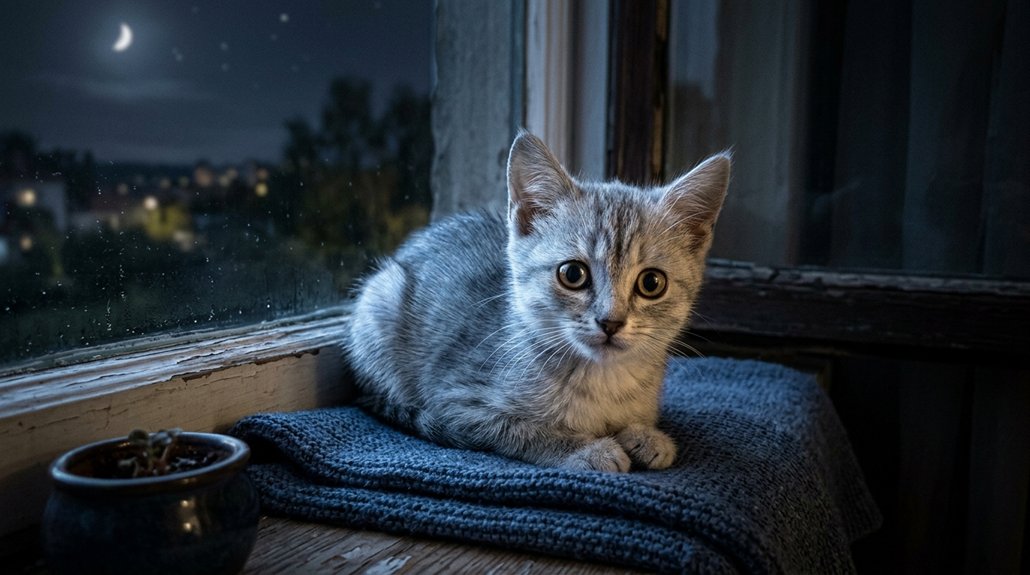
Your kitten cries at night mainly due to adjustment and social needs. Make certain of their comfort with a cozy bed, consistent feeding schedule, and a calm atmosphere. Playtime is essential for expending energy and reducing meowing. Recognize persistent cries as potential signals of distress and explore reasons beyond basic needs, like loneliness. Following these steps can enhance their nighttime experience and soothe their cries. Discover strategies to make certain your kitten’s peaceful nights and well-being.
Key Takeaways
- Kittens cry at night due to loneliness and the need for companionship or security in a new environment.
- Establish a consistent feeding and play routine to prevent hunger-driven cries and manage excess energy.
- Provide a cozy, secure bed with familiar items to enhance safety and comfort, reducing nighttime anxiety.
- Engage in pre-bedtime interactive play to tire the kitten out and minimize boredom-induced vocalizations.
- Ignore persistent meowing to avoid reinforcing attention-seeking behavior and establish a peaceful nightly routine.
Why Do Kittens Cry at Night?
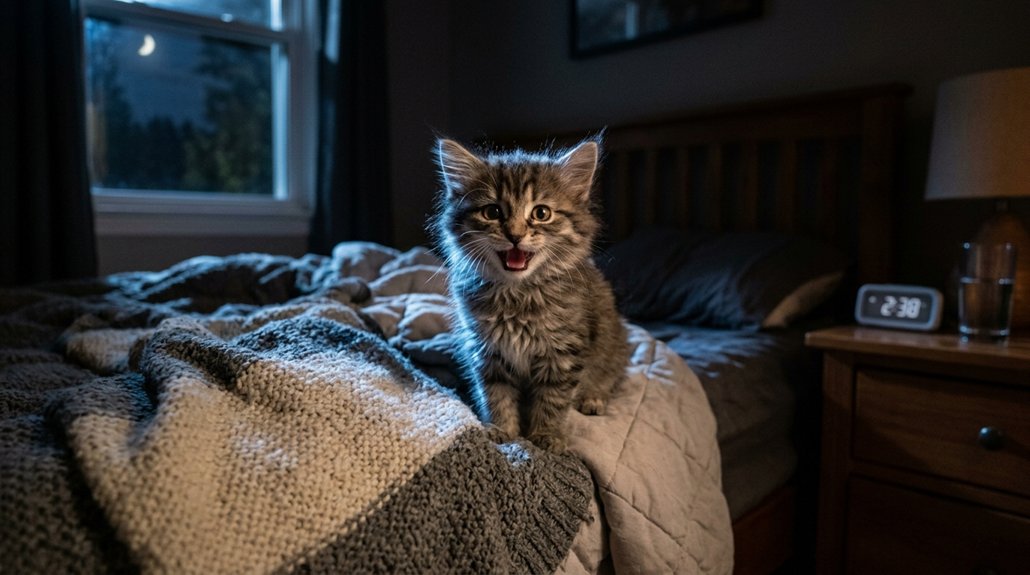
Although it might be distressing to hear your kitten crying at night, it’s often a natural response to their new environment. As they adjust, nighttime behavior can stem from missing littermates and familiar surroundings. This vocalization often signifies their social needs for companionship and interaction, essential for emotional development. Kittens’ instinctual communication might increase during nighttime hours, expressing feelings of loneliness or distress. Their cries can also be a reaction to external noises or unfamiliar settings, seeking reassurance in such moments. To address these behaviors, make sure your kitten has a cozy bed and safe spaces, enhancing their sense of security. Daytime engagement with play and social activities could alleviate nighttime stress, aligning their behavior with their inherent social instincts.
Addressing Hunger, Thirst, and Comfort Needs
When shifting into discussing a kitten’s hunger, thirst, and comfort needs, understanding these essentials can greatly reduce nighttime crying. Scientific evidence suggests that proper feeding techniques are crucial. Ascertain your kitten has enough food before bedtime to prevent hunger-driven cries. A consistent routine will calm their little stomachs and minds. Alongside, consider hydration tips; always provide fresh, clean water, as a neglected drinking bowl can become a source of nocturnal distress.
Comfort plays an important role. Although details will follow later, know that a snug bed in a quiet space can work wonders. Reduce anxiety and enhance security by establishing regular feeding and play routines. Understanding and addressing these needs with compassion will help soothe your kitten, letting both of you rest easier.
Craft a Cozy Environment for Your Kitten
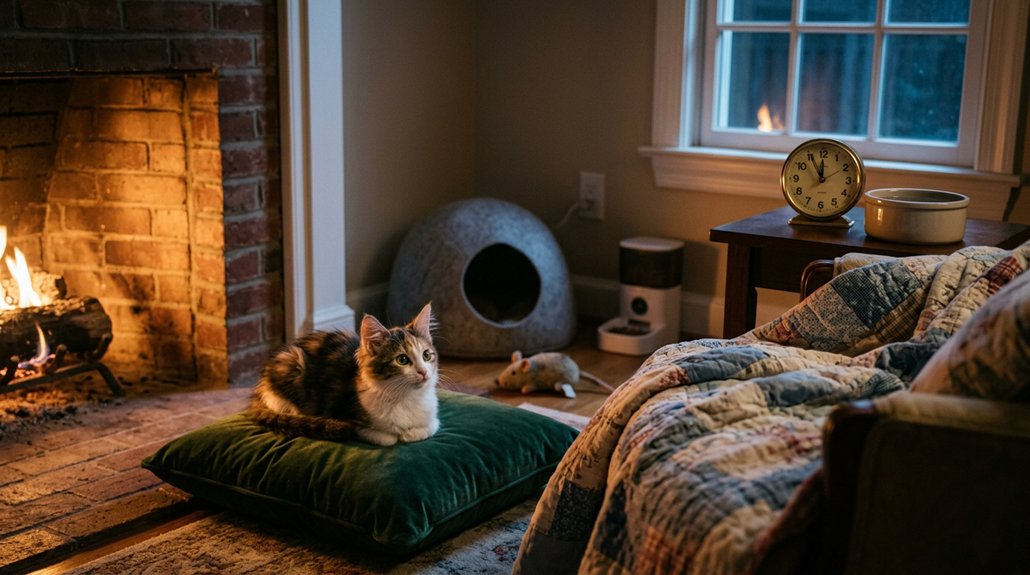
To help your kitten sleep soundly, it’s essential to create a safe, cozy space where they feel protected and at ease. A small bed tucked in a quiet, draft-free corner can greatly enhance their comfort, promoting restful sleep. Adding soft blankets or toys with familiar scents can soothe your kitten’s loneliness, helping them relax and reducing nighttime cries.
Create a Safe Space
One of the best ways to ease your kitten’s nighttime crying is by creating a safe and cozy environment specifically tailored to their needs. Establishing this safe space guarantees nighttime tranquility, reducing distress and loneliness. Here’s how you can craft such an environment:
- Safe Bedding: Provide a small, enclosed bed or nest. This gives your kitten a secure retreat essential for alleviating anxiety.
- Comforting Elements: Include familiar items like a soft blanket or a beloved toy, making the space more inviting.
- Environment Control: Maintain a quiet sleeping area, free from disturbances, and confirm the temperature is comfortable for restful sleep.
- Gradual Exploration: Let them explore your home gradually, heightening their sense of security and reducing crying episodes.
Enhance Comfort With Bedding
Creating a cozy resting area greatly enhances your kitten’s nighttime comfort, making their sleeping environment conducive to peace and relaxation. A small, enclosed bed or nest helps alleviate anxiety by creating a secure space. Use soft, warm bedding materials to promote comfort, encouraging peaceful sleep. Position this bed in a quiet, low-traffic area, minimizing disturbances. Regularly clean the bedding to maintain a fresh sleep environment, enhancing your kitten’s willingness to rest. A distinct, cozy sleeping zone separate from play areas helps establish a regular sleep routine.
| Bedding Feature | Benefit | Tip |
|---|---|---|
| Soft Materials | Promotes comfort | Choose plush fabrics |
| Enclosed Design | Creates security | Opt for a cave-style bed |
| Quiet Location | Minimizes disturbances | Place in low-traffic areas |
Playtime to Prevent Nighttime Meowing
Engage your kitten in interactive play sessions each evening to address nighttime meowing effectively. This approach harnesses their natural hunting instincts and helps expend excess energy.
- Interactive Toys: Use toys like feathers on a string or laser pointers to mimic prey. This stimulates your kitten’s instincts and keeps them physically active.
- Regular Routine: Establish a consistent playtime routine for 30 minutes before bedtime. This predictability offers mental stimulation and security.
- Physical and Mental Stimulation: Regular activity prevents boredom and reduces nighttime vocalizations by tiring your kitten out.
- Puzzle Toys: Incorporate treat-dispensing puzzles to challenge your kitten mentally, offering alternative engagement when you’re unavailable.
Together, these strategies help guarantee your kitten feels content and ready for restful nights.
Recognizing When Nighttime Cries Indicate Concern
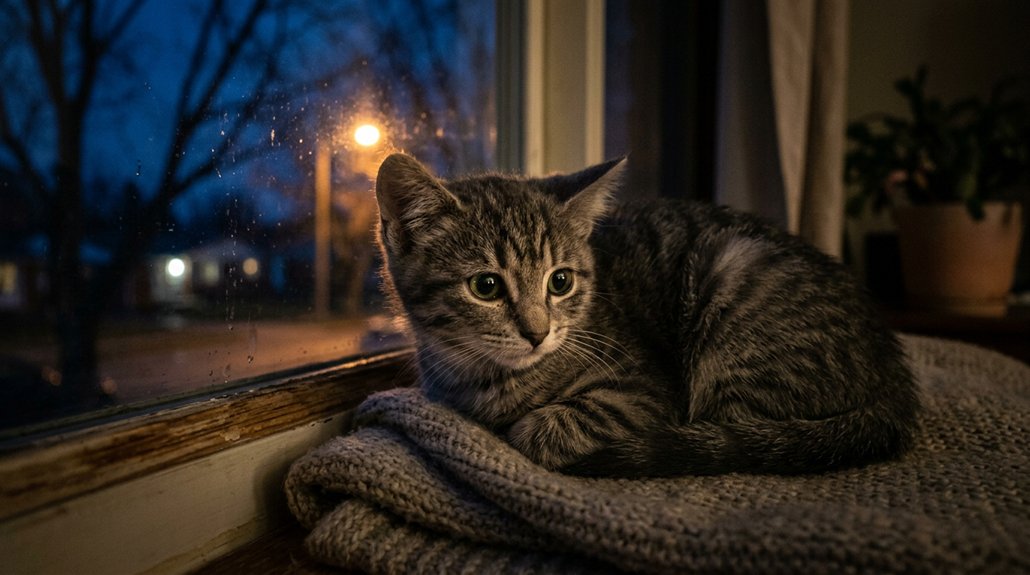
Although the cheerful curiosity of kittens can fill your home with joy, their nighttime cries may sometimes indicate underlying concerns that need attention. When your kitten’s meows consistently escalate or alter in tone, it might be signaling behavioral signals such as loneliness or anxiety. These cries could also be health indicators pointing to potential issues like hunger or discomfort. If crying persists despite fulfilling basic needs—such as providing food and ensuring a clean litter box—it’s essential to explore deeper causes like stress or possible illness. Regularly monitor your kitten’s vocal patterns and contextual behaviors to distinguish between temporary adjustment cries and those warranting concern. When needed, consulting a veterinarian is a key step in ensuring your kitten’s well-being.
Help Your Kitten Adjust to Your Routine
To help your kitten comfortably adjust to your routine, begin by establishing a consistent sleep schedule, which provides them the structure they need for better rest. Incorporate engaging play sessions during the day to tire them out, making nighttime less stressful and reducing their chance of crying. By doing so, you’re not only attending to their physical needs but also creating an emotionally supportive environment that enhances their overall well-being.
Establish Consistent Sleep Schedule
Understanding and establishing a consistent sleep schedule for your kitten can greatly reduce nighttime crying and help them adjust to your routine. Kittens thrive on routine, which brings them a sense of security. Here’s how you can implement effective nighttime rituals:
- Sleep Cues: Introduce calming activities like gentle petting or quiet play before bedtime to signal that it’s time to wind down.
- Regular Feeding: Align feeding times with your household schedule to regulate your kitten’s energy levels.
- Gradual Adjustments: Shift bedtime and wake-up times steadily to help them adapt without stress.
- Cozy Sleeping Area: Provide a soft, confined sleeping space to encourage settling down and accepting designated sleep times.
Introduce Daytime Play Sessions
Ensuring your kitten has sufficient daytime play sessions is essential for helping them adjust to your routine and minimizing nighttime disturbances. Engaging in interactive daytime activities allows for effective energy release, reducing nighttime crying from pent-up excitement or boredom. Aim for two play sessions of 15-30 minutes each, involving feather wands and balls to stimulate physical activity and mental engagement. Consistent daytime play not only tires your kitten but also fosters a sense of security, promoting a calmer evening environment. By incorporating regular play into your schedule, you’re gradually aligning their natural crepuscular instincts with your routine.
| Daytime Activity | Result |
|---|---|
| Feather Wand Play | Physical Activity |
| Ball Chase | Mental Engagement |
| Two Sessions | Energy Release |
Embrace these interventions to enhance your kitten’s routine and tranquility.
Prevent Attention-Seeking Meowing
Although it might be tempting to comfort a kitten when it meows at night, it’s important to recognize that responding to these cries can unintentionally reinforce attention-seeking behavior. Understanding attention dynamics and vocalization triggers is vital to curbing this habit. Here’s how you can address it:
- Stay Consistent: Ignore persistent meowing at night to teach your kitten it won’t gain attention through noise.
- Daytime Stimulation: Offer engaging toys to divert attention-seeking tendencies and keep your kitten mentally stimulated during the day.
- Establish a Routine: Create a nightly routine with playtime and affection to tire them out and reduce meowing.
- Comfortable Environment: Make sure your pet’s space is secure and calming to ease night-time distress, reducing vocalizations.
Implement these strategies to cultivate a peaceful nighttime atmosphere.
Frequently Asked Questions
How to Stop a Kitten Crying at Night?
Create a cozy space for your kitten to guarantee nighttime comfort. Engage in playful distractions before bedtime to tire them out. Don’t respond to cries at night, teaching them meowing won’t earn attention or reinforcement.
What Is the 3-3-3 Rule for Kittens?
The 3-3-3 rule helps you understand kitten adjustment: 76% of kittens cry at night during the first three days due to their new environment. Provide comfort and patience as they acclimate over three weeks, becoming confident in three months.
How Long Will a Kitten Cry at Night?
Kitten communication during nighttime behavior may last from a few weeks to months. It depends on age, temperament, and socialization. Compassionate routines and comforting spaces encourage quicker adjustments to new surroundings, reducing crying gradually.
Should You Ignore a Meowing Kitten at Night?
Picture yourself in a silent film. Yes, you can ignore a meowing kitten at night, as this helps adjust kitten behavior, but guarantee their nighttime routine includes play, food, and comfort so it’s primarily self-soothing.
Conclusion
Remember, you’re not alone in dealing with nighttime cries—studies show that 60% of new kitten owners experience this. By addressing their basic needs, ensuring they’re comfortable, and engaging them in play before bed, you can greatly reduce those plaintive meows. Crafting a routine that aligns with both your lifestyle and your kitten’s natural instincts will work wonders. Be patient and attentive, and soon enough, you’ll both be enjoying peaceful nights together.