
You’re ready for cat ownership if you understand the need for a consistent routine involving feeding, grooming, and playtime to guarantee your cat’s well-being. Budgeting for vet bills, quality food, and toys is essential, as is creating a safe, enriching environment. Consider the lifelong commitment and evaluate your emotional readiness along with family consensus. If allergies are a concern, hypoallergenic breeds and meticulous cleaning can help. Discover further insights into enhancing your potential feline companionship.
Key Takeaways
- You have researched and budgeted for the financial commitment of food, vet bills, and emergencies.
- Your lifestyle allows for a routine that includes feeding, grooming, and daily playtime with your cat.
- You’ve prepared your home to be safe and enriching, removing hazards and providing play spaces.
- Allergy testing confirms that you or family members can comfortably live with a cat.
- You are emotionally ready to form a long-term bond with a pet for the next 15-20 years.
Daily Routine: Feeding, Grooming, and Playtime
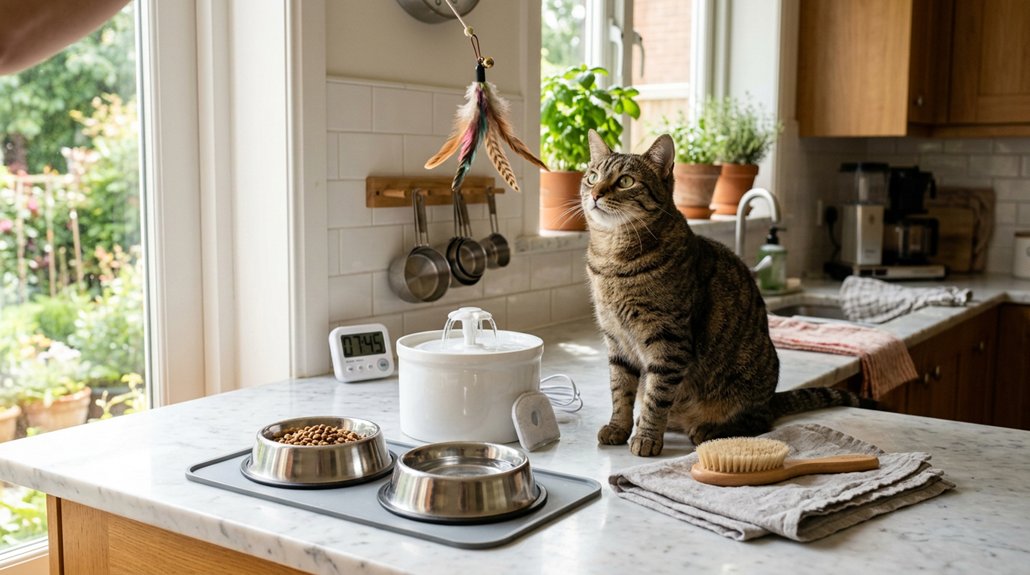
Two core components play an essential role in establishing an effective daily routine for your cat: proper nutrition and grooming. A consistent feeding schedule guarantees your cat receives high-quality food suitable for their age and dietary requirements. Offer meals once or twice daily or allow free choice based on their eating habits. Grooming needs hinge on breed; long-haired cats demand regular brushing, while short-haired breeds might require less frequent care. Playtime activities are critical for your cat’s well-being. Incorporate two 20-minute sessions each day to encourage mental and physical exercise. Use interactive toys like feather wands or laser pointers to stimulate their natural hunting instincts. This structured approach aids in keeping your cat healthy and content.
Budgeting for Vet Bills, Food, and Toys
Maintaining your cat’s well-being isn’t just about routines but also guaranteeing financial readiness to cover their needs. When planning for vet budgeting, allocate $500 to $1,200 annually for regular check-ups, vaccinations, and preventative care. Keep in mind that unexpected veterinary costs can arise, making pet insurance a prudent option.
For daily needs, anticipate spending $30 to $60 monthly on quality cat food, based on your cat’s dietary requirements. Litter will also be a recurring expense, typically costing $10 to $20 each month. Don’t overlook toy expenses, which are essential for mental and physical stimulation, budgeting roughly $50 to $100 annually for toys and enrichment items. Preparing financially guarantees you’re ready for responsible cat ownership.
Creating a Safe and Enriching Environment for Cats
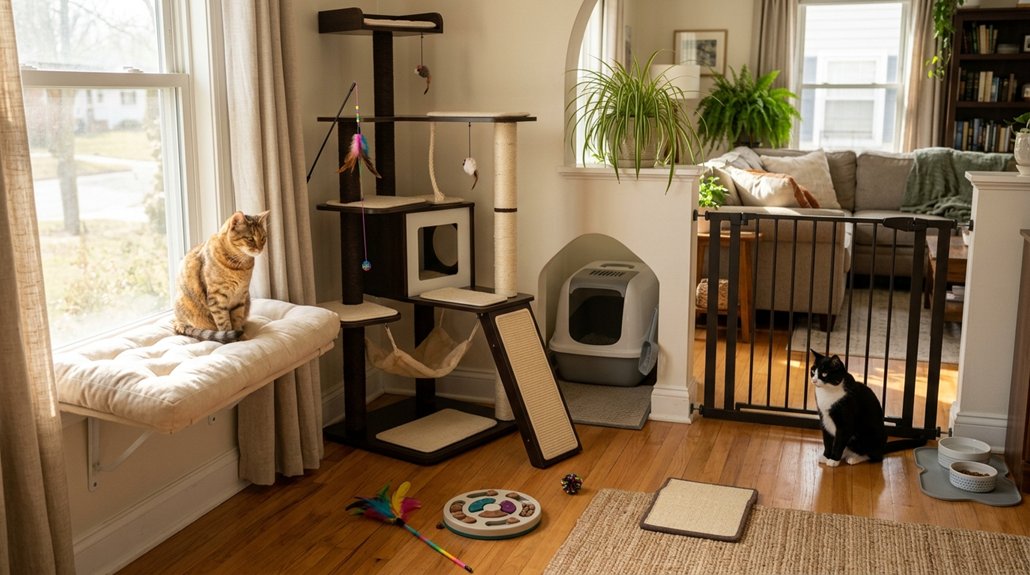
Creating a safe and enriching environment for your cat involves careful planning and thoughtful adjustments to your home. You’ll need to eliminate hazards by securing cables, removing toxic plants, and keeping small objects out of reach. Additionally, providing spaces for play and exploration, including climbing structures and interactive toys, enhances their physical and mental well-being.
Hazard-Free Home Setup
When starting on the journey of cat ownership, ensuring your home is a safe and enriching environment is paramount. Begin by removing toxic plants which can harm your feline friend. Common plants like lilies and poinsettias should be kept out of reach or replaced with non-toxic alternatives. Identify indoor hazards, such as electrical cords and small objects that can be swallowed. Secure these items or relocate them to prevent curious paws from causing harm. Verify that window screens are sturdy and doors remain shut to prevent any daring escapes. Examine your living space for compatibility with other pets, facilitating a harmonious setting. By proactively addressing these issues, you’ll create a secure home that nurtures your cat’s well-being and happiness.
Play and Exploration Spaces
To cultivate a fulfilling environment for your cat, prioritize the creation of play and exploration spaces within your home. Adequate space for roaming is essential, combined with designated areas featuring cat trees and boxes to support climbing and hiding instincts. A scratching post or cat tree enables natural scratching behaviors while offering vertical space for observation and stretching. Enhance mental stimulation and physical activity by integrating interactive toys like feather wands or laser pointers, aiming for daily play sessions to engage your cat effectively. Confirm your environment is free from toxic plants and swallowable objects, safeguarding their exploration. Additionally, allocate quiet areas where your cat can retreat and feel secure, promoting their well-being and aiding in the adjustment to your home.
Pet-Friendly Adjustments
While adjusting your home to accommodate a cat, it’s essential to remove potential hazards such as toxic plants, small objects, and unsecured electrical cords. Establishing a cat-friendly environment involves strategic furniture placement to guarantee pathways free of obstructions. Prioritize vertical spaces, as cats cherish the opportunity to climb and perch in high vantage points. Secure shelves or install cat trees, creating an environment conducive to their natural instincts. Providing designated play and relaxation areas, such as scratching posts and cozy hiding spots, enriches their living experience. Secure windows and balconies with screens or guards to prevent accidental falls. Additionally, integrate interactive toys and food-dispensing puzzles to stimulate mental activity and encourage exercise, supporting both physical and cognitive health.
Are You Ready for a Lifelong Commitment?
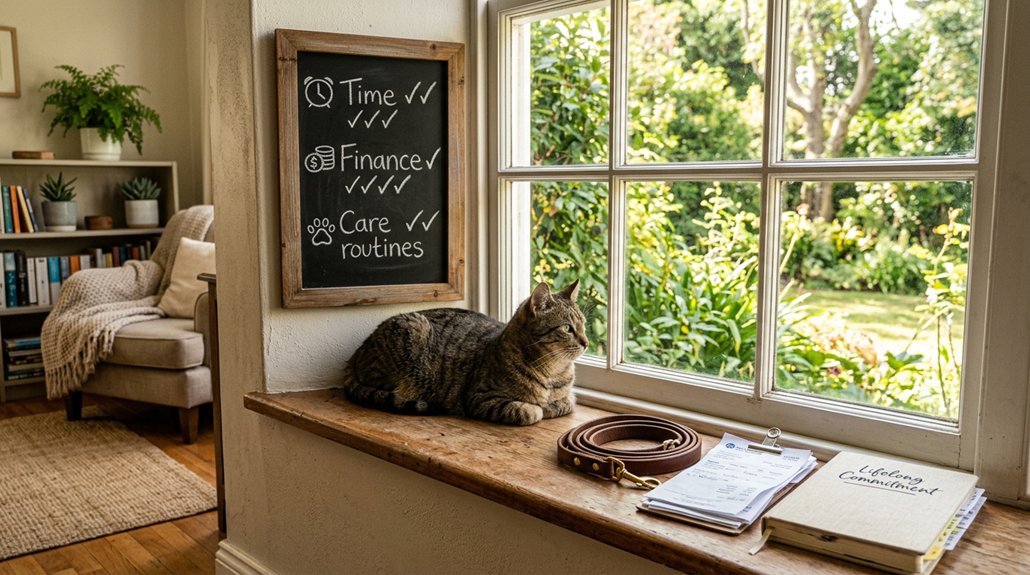
If you’re considering cat ownership, it’s vital to evaluate whether you’re prepared for a lifelong commitment. Cats can live up to 20 years, demanding consistent care and attention through life changes. You must be emotionally ready to form a bond that enriches both your life and the cat’s. Financially, consider budgeting for food, litter, routine vet check-ups, and potential emergencies. Your daily schedule should accommodate your cat’s needs despite any upcoming changes. Discussing the decision with all household members guarantees collective support for the cat’s care.
| Aspect | Considerations |
|---|---|
| Lifespan | Cats can live 15-20 years |
| Financial Commitment | Budget for food, vet, emergencies |
| Lifestyle Adjustments | Guarantee schedule flexibility and consistency |
| Emotional Bond | Prepare for a relationship enriching your life and theirs |
Managing Allergy Concerns for Cat Ownership
Managing allergy concerns is essential for prospective cat owners as nearly one-third of the U.S. population is affected by cat-related allergies. Before welcoming a feline into your home, conducting allergy testing is vital, especially if you’ve experienced respiratory issues or sensitivities. Opt for hypoallergenic breeds like Siberians or Balinese, which may produce fewer allergens, offering a viable solution for allergy sufferers. Additionally, incorporate these strategies into your lifestyle to manage allergens effectively:
Nearly one-third of Americans have cat allergies; hypoallergenic breeds like Siberians can help manage symptoms.
- Regular grooming: Frequently groom your cat to reduce dander and hair accumulation.
- Routine cleaning: Implement a strict cleaning routine, including daily litter box maintenance and frequent vacuuming.
- Air purification: Use air purifiers to filter allergens from your living space.
- Designated zones: Establish cat-free zones to minimize exposure to allergens.
Why Cat Companionship Improves Your Quality of Life
Cat companionship enhances quality of life through numerous proven benefits. Interacting with a cat can considerably contribute to stress relief by releasing oxytocin, a hormone that induces calm and relaxation. These interactions promote emotional well-being, creating a sense of belonging and countering loneliness, especially in individuals who live alone. Furthermore, the companionship benefits extend to encouraging lifestyle changes. Regular play sessions with a cat can make you more active, supporting overall health. Owning a cat also introduces routine, with structured schedules for feeding and grooming positively impacting mental health. Additionally, research underscores that pet ownership, including cats, can lower blood pressure and cholesterol, contributing to heart health and longevity. A cat’s presence might transform your daily life remarkably.
Frequently Asked Questions
What Is the 3-3-3 Rule of Cats?
The 3-3-3 rule outlines cat behavior post-adoption, suggesting three stages: overwhelmed in the first three days, adjustment within three weeks, and full settling by three months. Paying heed to this provides essential adoption tips for smoother integration.
What Is “I Love You” in Cat Language?
“I love you” in cat language involves feline communication through behaviors like slow blinking, rubbing against you, purring, kneading, and bringing gifts. These actions demonstrate affection and familiarity, marking you as a trusted companion in their world.
How Do I Know I Am Ready for a Cat?
Like a well-tuned symphony, if you can harmonize cat care with your lifestyle and consistently meet feline needs, you know you’re ready for a cat. Dedication, emotional readiness, and financial stability guarantee a seamless adoption journey.
What Color Cat Is Least Desired?
In feline adoption trends, black cats are the least desired due to prevalent stereotypes. Understanding cat color preferences shows how these biases lead to longer shelter stays. It’s crucial to address these misconceptions to improve their adoption rates.
Conclusion
Starting on cat ownership requires careful consideration of your routine, finances, and environment. Are you prepared for the lifelong commitment to your feline companion’s well-being and happiness? Review your readiness against potential allergy concerns and the ability to enrich your pet’s life daily. Ultimately, the companionship offered by cats can enhance your quality of life tremendously. By evaluating these factors, you’ll confidently decide if you’re ready to welcome a new furry friend into your home.