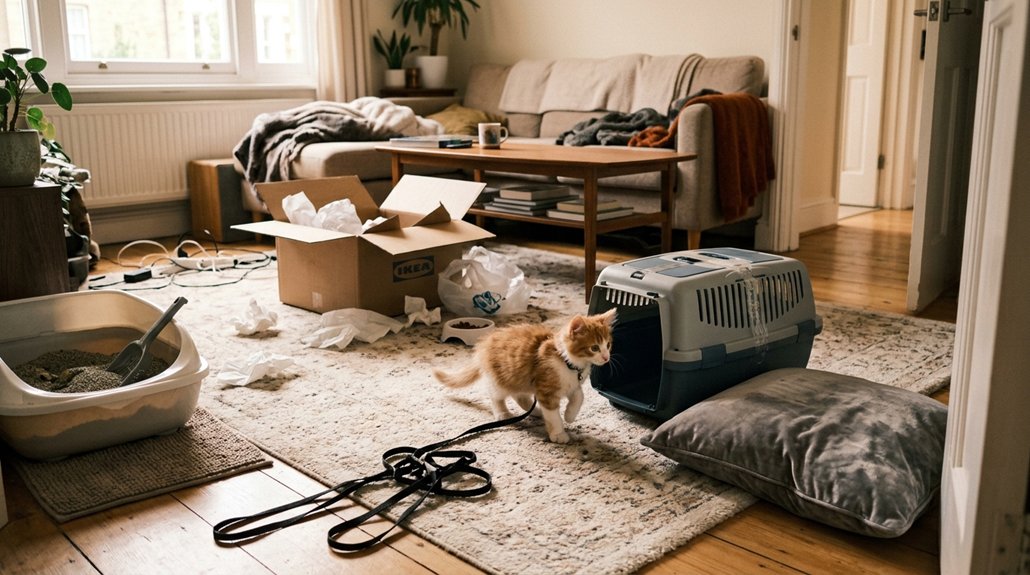
When bringing a new cat home, don’t neglect creating a cat-friendly space with climbing structures and secluded retreats. Avoid rushing introductions; let your cat explore gradually to reduce stress. Overlooking routine vet visits is a common mistake; early check-ups are critical for health monitoring. Proper litter box setup is often missed, impacting cleanliness and comfort. Remember, providing stimulation prevents boredom and behavioral issues. Continue for more insights on fostering a happy, healthy cat environment.
Key Takeaways
- Failing to create a safe and cat-friendly space can lead to stress and anxiety in your new pet.
- Ignoring gradual exploration may overwhelm a cat, hindering its adaptation to the new environment.
- Skipping a wellness check within the first week can delay early detection of health issues.
- Neglecting to assess household allergies can result in health problems for sensitive family members.
- Underestimating the ongoing financial commitment may lead to inadequate care and support for the cat.
Essential Steps to Welcome a New Cat
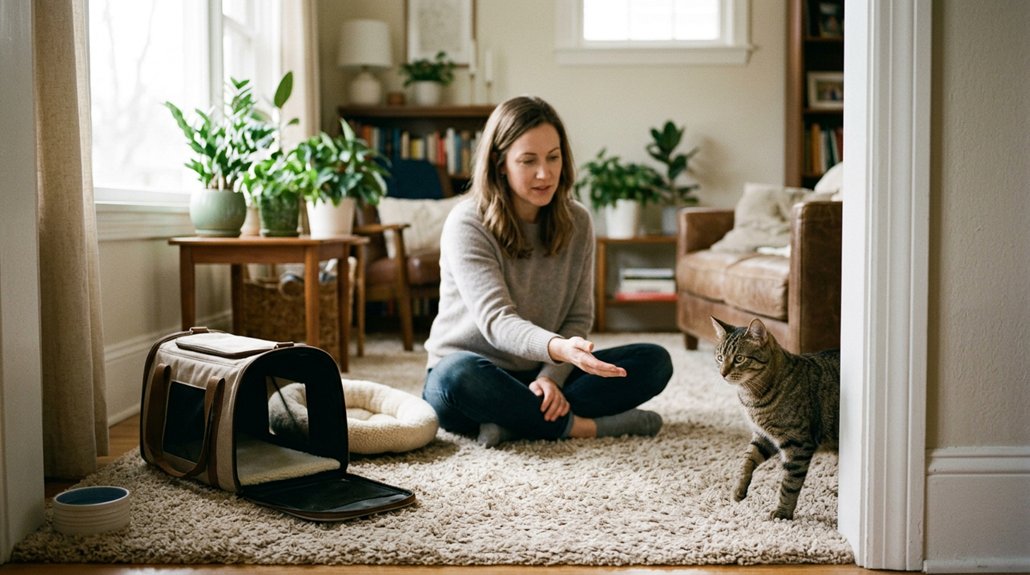
Bringing a new cat into your home is an exciting journey, yet guaranteeing a smooth change requires a few essential steps. Start by creating a safe space equipped with cat-friendly furniture, food, water, a litter box, and comfortable resting areas. This setup helps your cat feel secure during the adjustment period. When introducing new pets, gradually let your cat explore, reducing stress and fear. Scheduling a wellness check within the first week is vital, as it affirms your cat’s health and helps establish a care routine. Provide mental and physical stimulation with engaging toys and playtime to foster healthy behavior. Make certain everyone in the household respects your cat’s space and comfort level to ease the shift.
Finding Your Perfect Cat Match for a Happy Home
When looking to bring a cat home, it’s vital to assess your family dynamics and lifestyle to guarantee the cat’s needs align with your own, particularly if you have allergies or young children. Consider the financial commitment, as owning a cat can cost between $4,521 to $18,322 over their lifetime, covering essentials like adoption fees and veterinary care. Researching different breed traits is important since some cats require specific care and environments, and decide whether a kitten or adult cat would integrate better with your household’s rhythm.
Assessing Compatibility Factors
Before you welcome a cat into your home, it’s important to confirm compatibility by thoroughly evaluating several key factors. Start by discussing with all household members to achieve a family agreement on adopting a cat, making sure everyone understands the responsibilities involved. This step is significant as it prevents disagreements and guarantees a shared commitment. Next, conduct an allergy assessment to identify any potential sensitivities, as undetected allergies could lead to health issues and a heartbreaking return to the shelter.
Consider your lifestyle, comparing the time you can dedicate to a kitten’s training and supervision versus the predictable nature of adult cats. Additionally, research breed-specific characteristics and health issues to align with your home environment, assuring you provide a nurturing setting for your new companion.
Balancing Needs and Lifestyle
While choosing the right feline companion can seem challenging, it’s crucial to align a cat’s needs with your lifestyle for a successful integration. Start by evaluating your family dynamics. Confirm everyone is on board and consider potential allergies. Opting for an adult cat may provide a better fit, given established personalities.
Be conscious of the financial commitment, which ranges from $4,521 to $18,322 over a cat’s lifespan for food, vet bills, and supplies. Pet-proof your home in advance, creating a safe, welcoming space.
| Consideration | Details | Action Required |
|---|---|---|
| Family Dynamics | Assess member compatibility | Check for allergies, agreements |
| Cat Age | Adult cats suit established routines | Research shelters for adult cats |
| Financial Commitment | Up to $18,322 over lifespan | Budget for long-term care |
| Home Preparation | Confirm pet-proofed, welcoming area | Set up food, water bowls, litter boxes |
| Health Considerations | Research potential breed health issues | Match breed to home environment resources |
Understanding Breed Traits
Selecting the right cat breed can greatly influence the success of integrating your new feline into your home, given that each breed has distinct personality traits and care requirements. Understanding breed compatibility is essential for a harmonious environment.
- Consider Personality Traits: Breeds like Ragdolls are affectionate and family-oriented, whereas some may prefer solitude, affecting household dynamics.
- Evaluate Health Needs: Popular breeds might have specific health challenges; for instance, Persian cats often have respiratory issues due to their flat faces.
- Assess Grooming Requirements: Long-haired breeds such as Maine Coons need frequent grooming, impacting your grooming commitment.
- Match Activity Levels: Active breeds like Bengals require an engaging environment, essential for matching your energy lifestyle.
Time and Attention: Investing in Your Cat Relationship
Although many people assume that cats are independent creatures requiring minimal attention, the reality is quite different when you aim to create a harmonious relationship. Cats need regular interaction to form strong bonds, and neglecting this can lead to behavioral issues such as boredom and separation anxiety. Incorporating interactive games into your daily routine not only provides mental stimulation but also offers important exercise, reducing anxiety when a cat is left alone. Consistency is essential; establishing a routine helps cats thrive and feel secure. Remember, investing time in social and play activities is crucial for your cat’s overall well-being and your relationship. The financial and emotional commitments to caring for a cat highlight the importance of proper engagement and attention.
Routine Vet Visits: A Health Must-Do
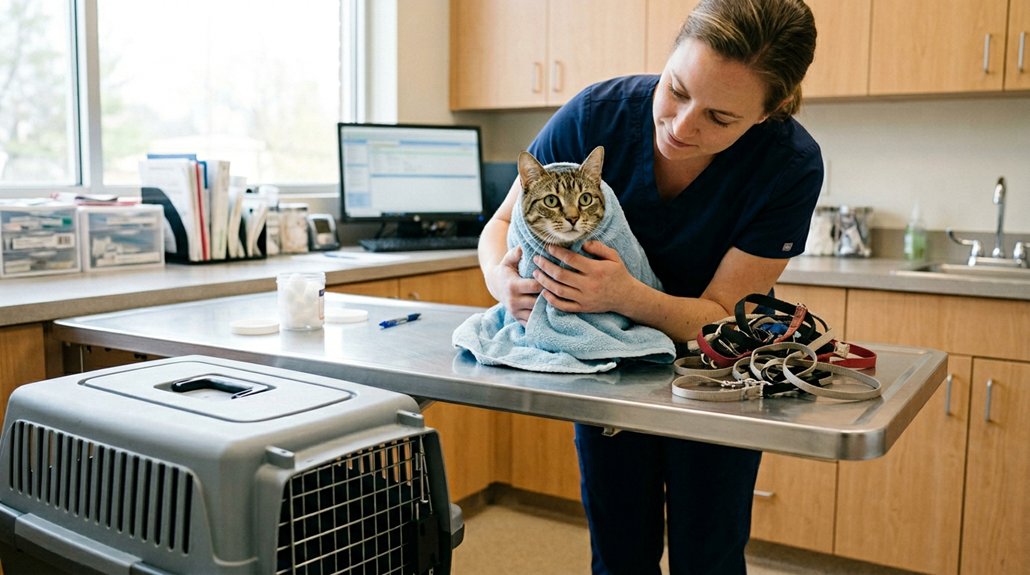
Even if your cat seems healthy, regular veterinary visits are vital for maintaining their well-being. Routine check-ups are essential for cat wellness, allowing for early detection of potential health issues that might silently escalate. Additionally, vet communication nurtures a personalized relationship, guaranteeing your pet’s care is tailored to their specific needs. Remember these important points:
- Budget for Healthcare: Expect lifelong costs ranging from $4,521 to $18,322, which include essential vet visits.
- Annual Health Exams: Even indoor cats need yearly exams and vaccinations to stay in top health.
- Early Detection: Cats often don’t show illness until it’s advanced; early vet visits can prevent severe complications.
- Tailored Care: A strong vet relationship guarantees consistent, personalized care across your cat’s life stages.
Spaying and Neutering: Vital Health Benefits
When considering the multifaceted approach to maintaining a cat’s health, spaying and neutering emerge as non-negotiable elements. They’re pivotal in curbing overpopulation since millions of unwanted cats enter shelters annually. Beyond that, the health impact is significant; spaying benefits include lowered risks of mammary tumors in females, while neutering advantages include the prevention of testicular cancer in males. Behaviorally, neutered males show decreased territorial aggression and urine marking, fostering a harmonious home, whereas spayed females avoid yowling and roaming, enhancing household calm.
| Procedure | Health Impact | Behavioral Improvement |
|---|---|---|
| Spaying | Lowers mammary tumor risk | Reduces yowling and roaming |
| Neutering | Prevents testicular cancer | Decreases aggression and marking |
Low-cost programs often make these life-changing procedures accessible to everyone.
Enhancing Indoor Environment and Safety
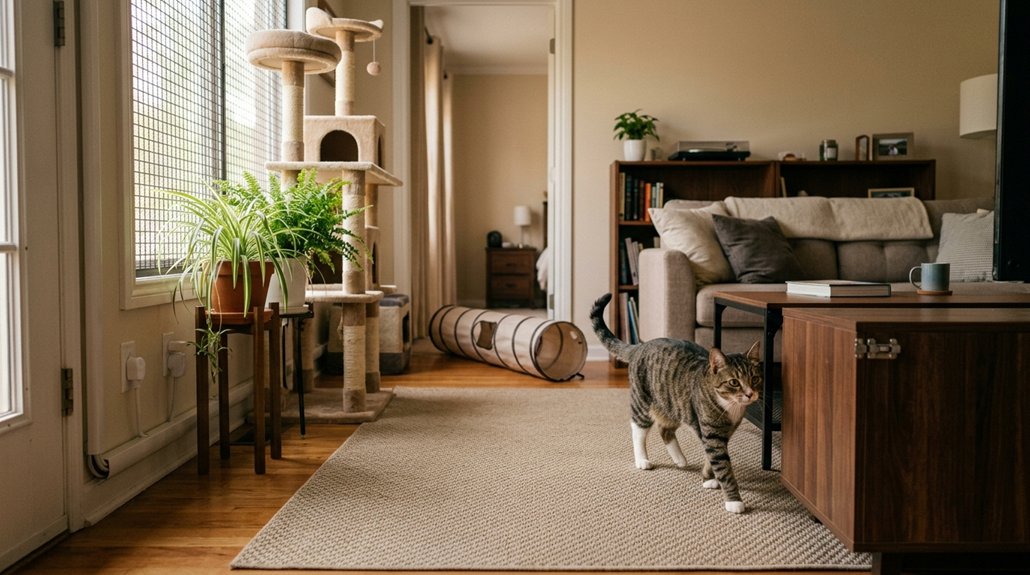
Creating a safe indoor environment for your new cat requires careful attention to potential hazards, such as securing cords and removing toxic plants, ensuring that every detail is examined from your cat’s viewpoint. By providing climbing structures like cat trees, you’ll fulfill your cat’s instinctual need to explore vertically, helping to alleviate stress and prevent destructive behavior. Additionally, designating quiet retreats for your cat, away from high-traffic areas, offers a crucial sanctuary for rest and promotes a sense of security in their new surroundings.
Secure Hazardous Items
To guarantee your home is a secure haven for a new feline companion, thoroughly evaluate potential hazards from a cat’s perspective. Cats’ curiosity often leads them to explore unsafe items, which poses risks. Prioritize preventing poisoning by ensuring medications, cleaning supplies, and toxic plants are in safe storage locations, out of reach. Consider these precautions as crucial steps:
- Store small objects like rubber bands and paper clips in closed containers to prevent ingestion and choking accidents.
- Secure cords, including electrical and blind cords, to avert chewing, which may cause electric shock or strangulation.
- Anchor heavy items such as books and vases to prevent tipping and injury from accidental knockovers.
- Inspect common household items—for example, candles, or oven mitts—as potential unsupervised dangers.
Provide Climbing Structures
Incorporating climbing structures into your home is essential for maintaining a cat’s physical health and mental stimulation. Cats are natural climbers, craving vertical space to explore and exercise. Cat climbing is more than an activity; it’s a window into their instinctual behaviors, reducing stress and preventing boredom-related issues. By providing elevated platforms like cat trees and shelves, you enable them to feel confident in their territory. Choose sturdy, tall structures to enhance safety by accommodating their jumps and agile play. Regularly inspect these structures to verify they’re free of hazards. This supports safe exploration and play.
| Climbing Feature | Benefit | Safety Tip |
|---|---|---|
| Cat Trees | Confidence & Activity | Inspect for defects |
| Shelving | Reduced Stress | Avoid fragile items |
| Scratching Posts | Behavior Enrichment | Confirm stability |
Designate Quiet Retreats
When settling your cat into a new home, giving them a quiet retreat can be essential for their comfort and security. Designating safe hiding spots enhances stress management and facilitates acclimation. Create small enclosed spaces equipped with necessities—food, water, and a litter box—to offer reassurance.
Consider these essentials:
- Observation Opportunities: Make sure the retreat allows them to survey their surroundings, appeasing territorial instincts.
- Cleanliness Oversight: Regularly check cleanliness and accessibility to encourage use, reducing litter box aversion.
- Slow Exploration: Allowing gradual exploration at their pace builds confidence, easing changes smoothly.
- Comfort Inclusion: Include bedding or familiar items for added security.
Monitoring these elements fosters an inviting environment, permitting your cat to manage stress as they adjust to their new home.
Why ID Tags Matter for Your Cat’s Safety
Although ID tags might seem like a small accessory for your cat, they’re crucial for guaranteeing its safety. ID tags greatly improve the chances of recovering your lost pet, as they provide important details quickly. Microchip benefits are undeniable, with a 38% higher return rate, but a visible ID tag works in conjunction with microchips, providing immediate, easily readable information. For ideal collar safety, verify your cat’s collar has a breakaway feature to avoid choking hazards. It’s important that ID tags include your cat’s name, your contact number, and any health conditions. Regularly update this information, especially after moving or changing phone numbers. These steps are essential in safeguarding your cat and facilitating a quick reunion in case of an unexpected adventure.
Essential Cat Training Tips
Training a cat can present unique challenges, yet mastering essential techniques greatly enhances both your and your feline’s experience. Effective training techniques involve clear communication and patience. Here’s how you can succeed:
- Behavior Rewards: Use positive reinforcement by offering treats or affection to encourage desired behaviors, reinforcing repetition.
- Environmental Enrichment: Introduce interactive toys to enrich their environment, focusing their natural predatory instincts during play interactions.
- Consistent Sessions: Keep training sessions short, about 5-10 minutes daily, to sustain attention and enthusiasm without overwhelming your cat.
- Understanding Body Language: Be attentive to your cat’s signals of stress or discomfort to adjust your approach and guarantee a positive training ambiance.
These strategies will build trust and foster a rewarding companionship.
Master Litter Box Upkeep
Even if managing a litter box seems straightforward, adopting effective strategies guarantees a comfortable environment for your cat while preventing potential behavioral issues. Prioritize litter box maintenance by scooping waste daily to encourage consistent use and mitigate aversion. Opt for a large, uncovered box filled with 1 to 2 inches of an appropriate litter type for maximum comfort. Litter box placement is vital; make sure the box is in a quiet, private area to enhance usage. Implement odor control techniques to keep unpleasant smells at bay. Utilize efficient waste disposal methods to maintain cleanliness and monitor for signs of neglect, as a dirty box may lead to inappropriate elimination. Having one box per cat plus one extra reduces territorial disputes.
Boosting Your Cat’s Indoor Environment
- Create vertical spaces: Install cat trees or shelves for your cat to climb and enjoy elevated views, reducing boredom and fulfilling exploratory instincts.
- Engage with toys: Introduce interactive toys and puzzles to encourage mental and physical activity, essential for stress reduction.
- Offer cozy retreats: Place boxes or covered beds for secure and comfortable hideaways, easing your cat’s adjustment.
- Promote healthy scratching: Position scratching posts near inviting surfaces to encourage natural scratching habits and protect furniture.
These steps create a safe and engaging home environment for your cat.
Frequently Asked Questions
What Is the 3-3-3 Rule for Cats?
The 3-3-3 rule describes a cat adjustment period: three days hiding, showing anxious feline behavior signs; three weeks exploring and interacting; three months settling, forming bonds, and relaxing. Patience with this timeline guarantees a positive change.
What Is the One Meat to Never Feed a Cat?
You shouldn’t feed your cat raw or undercooked chicken due to harmful bacteria. Always consider cat dietary restrictions and prioritize safe meat options like cooked poultry or fish to guarantee your cat’s health and well-being.
What Is “I Love You” in Cat Language?
In cat language, “I love you” is expressed through feline communication such as purring signals, slow blinking, kneading, marking you with their scent, or grooming behaviors, each indicating affection, trust, and establishing a close emotional bond.
Where Should a Cat Sleep on Its First Night?
Think of the room as the cat’s sanctuary, providing essential sleeping arrangements for first night comfort. Make certain it has bedding, food, water, and a litter box. This calm refuge helps your cat adjust and feel secure.
Conclusion
Welcoming a new cat into your home is like opening a purring treasure chest filled with joy and responsibility. Commit to understanding your feline’s needs through proper vet care, training, and environment enrichment. Remember the importance of spaying or neutering for health benefits, and why a simple ID tag can be a lifesaver. Invest time and affection to build a lasting relationship. By prioritizing these essentials, you guarantee a harmonious and loving life for your furry companion.