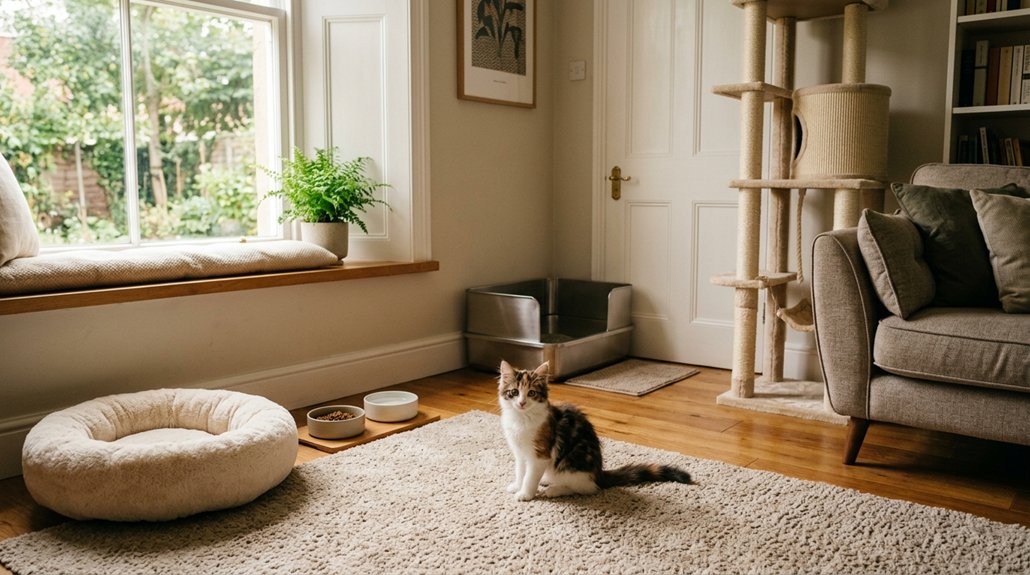
To prepare your home for a new cat, set up a sanctuary room with essentials like a litter box, water, food, and toys. Cat-proof your space by securing windows and removing hazards like toxic plants. Offer multiple hiding spots and vertical spaces to help manage stress. Use interactive toys and hand-feed treats for positive interaction. Monitor your cat’s behavior and adjust your approach as needed. With these steps, you’ll discover key insights into creating a cat-friendly environment.
Key Takeaways
- Create a sanctuary room equipped with essentials like a litter box, water, food, and toys for stress management.
- Cat-proof your home by securing hazards like toxic plants, small objects, and tying cords to baseboards.
- Provide secure windows and balcony screens to prevent falls and ensure safety.
- Set up multiple hiding spots and vertical spaces like cat trees for exploration and comfort.
- Observe the cat’s behavior and eating habits to assess stress and comfort levels.
Understanding a Cat’s Initial Needs

When welcoming a new cat into your home, it’s essential to understand their initial needs to secure a smooth changeover. Creating a sanctuary room is significant for stress management. Equip it with essentials like a litter box, water, food, bedding, and toys. Predict initial hiding behavior; allow your cat to emerge on their own terms. This process may take several days to a week. To promote comfort, incorporate multiple hiding spots and vertical spaces like scratching posts or cat trees. Monitoring your cat’s eating and behavior is also important, as stress can lead to decreased appetite and anxiety signs. Follow the guideline of providing one litter box per cat, plus one extra, to prevent territorial disputes and guarantee accessibility.
Cat-Proofing Your Home for Safety
Before bringing your cat home, it’s vital to transform your living space into a safe environment, guaranteeing their health and well-being. Start with hazard identification by surveying each room. Look for toxic plants, dangling cords, and small objects. Implement cord management by tying cords to baseboards to prevent chewing. Next, toxic removal is important—store cleaning products and medications securely. Practice fall prevention by securing windows and balconies with sturdy screens to thwart your feline’s curiosity-driven explorations. Clutter clearing helps minimize risk of entrapment or injury. Pay attention to vents and crawl spaces.
| Hazard | Solution | Purpose |
|---|---|---|
| Dangling Cords | Tie to baseboards | Prevent chewing |
| Toxic Plants | Removal | Guarantee safety |
| Windows | Secure screens | Prevent falls |
| Clutter Areas | Clear space | Avoid entrapment |
Creating a Sanctuary for Stress-Free Adjustment

Having secured your home against potential hazards, it’s time to focus on creating a serene sanctuary where your new cat can adapt with minimal stress. Select a small, quiet room—like a laundry nook or guest bedroom—to act as your cat’s haven, ensuring a calm environment. Equip this space with necessities: an unscented litter box, fresh water, cozy bedding, toys, and strategic hiding spots. Allow your cat to acclimate at their own pace, watching their behavior observations for cues of comfort. Sit quietly in the room, connecting through gentle interaction or hand-fed treats. Normal hiding behavior might persist for several days, but patience is essential for their smooth adjustment. Remember, your goal is a tranquil, stress-free adjustment period.
Must-Have Supplies for Your New Cat
To guarantee a smooth change and a healthy environment for your new feline friend, gathering essential setup items is vital. Start with a durable pet carrier, a spacious litter box like the Frisco High Sided Cat Litter Box, and stainless steel food and water bowls to promote hygiene and comfort. Don’t forget to include a cozy bed, scratching post, and enrichment toys to support your cat’s physical and mental well-being.
Essential Setup Items
Equipping your home with essential supplies is the first step to ensuring a seamless changeover for your new feline companion. Behavioral enrichment is key to a happy, healthy cat, and incorporating interactive toys like feather wands can stimulate physical and mental activity. This interaction not only fulfills play instincts but also strengthens your bond.
A comfortable bed contributes greatly to your cat’s emotional comfort. Consider a high-sided or enclosed bed style for a cozy retreat. Scratching posts are crucial to satisfy scratching urges and keep furnishings intact while promoting healthy claws.
Invest in durable bowls for water and high-protein food, an ID-tagged collar for safety, and unscented clumping litter for a sanitary environment. Always maintain one litter box per cat, plus an extra for ideal hygiene.
Feeding and Care Tools
Providing your new cat with the right feeding and care tools sets the foundation for their overall well-being. A high-quality setup not only enhances feeding routines but also promotes meal enrichment. Start by selecting premium food bowls, like PetFusion Premium Brushed Stainless Steel, to guarantee hygiene and durability. By incorporating feeding enrichment tools such as food-dispensing toys, you stimulate natural hunting instincts, thereby keeping your cat mentally engaged. Choose a Frisco High Sided Cat Litter Box for comfort and easy access. Opt for Dr. Elsey’s Ultra Unscented clumping litter for easier cleaning and less mess. Finally, maintain a pristine environment with Clorox Free & Clear Multi-Surface Spray Cleaner, steering clear of citrus scents that may irritate your cat.
- High-quality stainless steel bowls
- Feeding enrichment toys
- Frisco High Sided Litter Box
- Dr. Elsey’s Ultra Unscented litter
- Clorox Free & Clear Spray Cleaner
Helping Your Cat Settle In
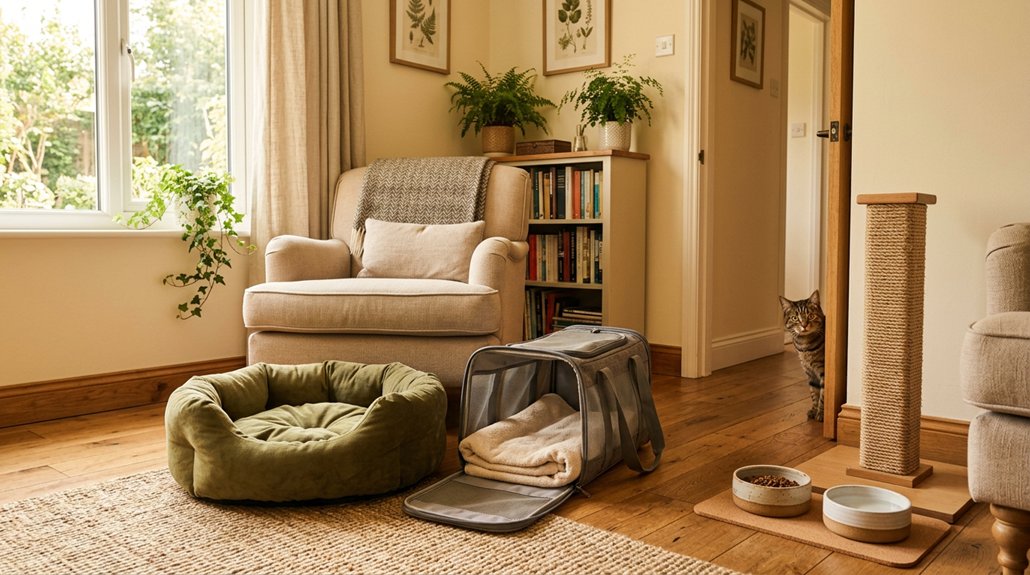
When you welcome a new cat into your home, it’s essential to create an environment that minimizes stress and promotes a smooth changeover. Start by setting up a sanctuary room equipped with necessities like a litter box, water, bedding, and toys. Handling hiding should be done with patience; let them adjust at their own pace. Hiding might last from a few days to a week—don’t push them. Instead, encourage exploration by gradually opening new areas of your home as they become more comfortable. Spend time quietly in the sanctuary room; observe their behavior and hand-feed treats to build familiarity. If you notice signs of stress, like a decreased appetite, remain patient and allow time for comfort to grow.
Building Trust and Encouraging Good Habits
Although it’s tempting to rush the process, building trust with your new cat is best achieved at their pace. Utilize effective trust building techniques to foster a positive relationship. Begin by allowing your cat to approach you naturally, as forcing interactions may increase anxiety. Hand feeding treats is a wonderful way to create positive interactions, reinforcing your bond. Introduce playtime gradually, using toys that promote natural behaviors while facilitating interaction.
Monitor for stress signals such as hiding or appetite loss—these may indicate a requirement for a gentler approach. Ascertain your home is calm and offer a safe space to boost their confidence and exploration.
- Let the cat approach you willingly.
- Offer treats by hand.
- Incorporate engaging toys.
- Observe stress indicators.
- Maintain a peaceful environment.
Frequently Asked Questions
What Is the 3-3-3 Rule With Cats?
The 3-3-3 rule helps you understand the cat adjustment period: first three days hiding, three weeks gaining confidence, and three months showing true feline behavior. Patience and care align with these behavior expectations for a healthy adjustment.
Where Should My Cat Sleep the First Night?
Think of your cat as a traveler seeking the perfect oasis. For their first night, create a safe space in a quiet room. Provide comfort elements like a cozy bed, ensuring they feel secure in this new sanctuary.
What Is the One Meat to Never Feed a Cat?
Never feed your cat raw pork. It can carry harmful parasites and cause trichinosis. Stick to commercially prepared cat food, ensuring all meat is cooked thoroughly. Always consult your vet before adding new meats to their diet.
What Is “I Love You” in Cat Language?
In the whimsical world of feline communication, your cat’s slow blinks, gentle purring, or persistent shadowing are like neon signs screaming, “I love you!” Understanding purrs and bunting reveals a universe of trust and affection.
Conclusion
Welcoming a new cat into your home is no small feat, but with these steps, you’re well on your way to creating a loving environment. Think of it as laying a solid foundation before building a house; a secure and nurturing space helps reduce stress and promotes health. Cat-proofing, creating a sanctuary, stocking up on essentials, and fostering trust will guarantee your new feline friend quickly feels right at home. Your preparation makes all the difference.