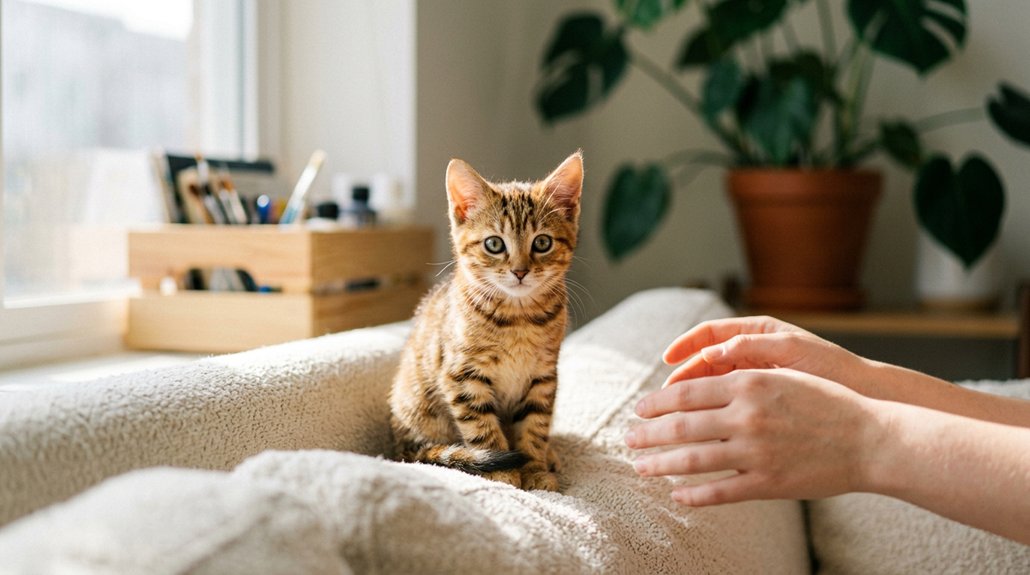
When adopting a cat for the first time, you should be prepared for both logistical and emotional commitments. Gather essential supplies and cat-proof your home to create a safe environment. Slowly introduce your new cat to its surroundings, starting with a designated space to reduce stress. Establishing a consistent routine for feeding and play is vital for a smooth changeover. Understanding the financial commitment for care and emergencies guarantees you’re prepared. Discover more about creating a welcoming home for your new feline friend.
Key Takeaways
- Prepare essential supplies like food, litter box, and a cat bed before the cat arrives.
- Create a safe, stress-free space with hiding spots and a designated room for initial acclimation.
- Follow a consistent feeding routine and monitor appetite to ensure healthy diet and stress management.
- Budget for initial and ongoing expenses, including vet care, food, and supplies.
- Dedicate daily time for play and interaction to promote bonding and well-being.
Preparing to Welcome Your New Cat: What You Need to Know
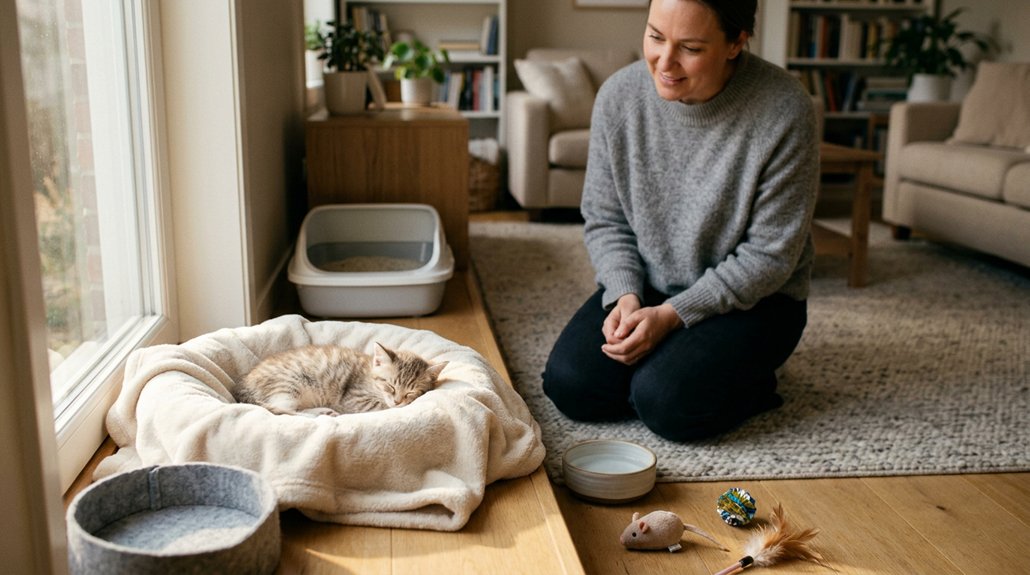
Bringing a cat into your home for the first time is an exciting experience, yet it requires thoughtful preparation to guarantee a smooth changeover for both you and the cat. Start by gathering essential supplies: food and water bowls, cat food, treats, a litter box, and a comfortable cat bed. Before arrival, cat proof your home by removing hazards like exposed wires and toxic plants to ensure safety. Have a sturdy cat carrier ready for transport and introduce your cat directly to their designated room. This approach reduces stress and prevents accidents. Familiarize yourself with signs of feline stress—like hiding or decreased appetite—to monitor their acclimation. Finally, schedule a wellness visit with a veterinarian promptly.
Create a Safe and Comfortable Space for Your Cat
Having prepared your home for your new cat’s arrival, it’s time to focus on creating a safe and comfortable space for them. Establishing a secure cat territory is essential. Start with a designated area equipped with necessities like a clean litter box, separate food and water bowls, and a cozy bed. Include various safe spaces, such as cardboard boxes with holes, for your cat’s retreat. Maintain their comfort by spacing apart litter areas and food to reduce stress from odors.
Create a secure cat territory with essentials and safe retreats to ensure comfort and minimize stress.
- Designate a specific area for your cat’s essentials.
- Provide multiple hiding spots throughout your home.
- Ensure food, water, and litter are set apart efficiently.
- Expand the cat’s territory gradually for ideal acclimation.
- Create a calming atmosphere by minimizing noise and disruptions.
Initiate a Smooth Adjustment Period for Your New Cat
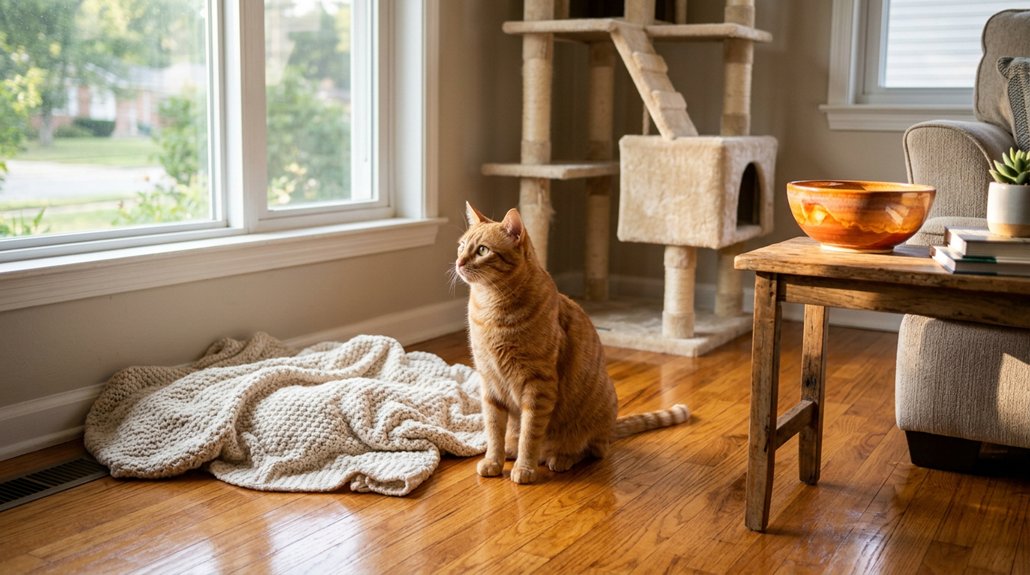
To initiate a smooth adjustment period for your new cat, it’s essential that you provide a controlled environment, initially confining them to a small, quiet room with necessary supplies such as a litter box, food, and water. This setting helps them acclimate without becoming overwhelmed. Gradual exposure is key—expand their environment slowly, recognizing cat behavior as they encounter new spaces. Be vigilant for stress signals like decreased appetite or excessive hiding. Offer a safe retreat with ample hiding spots to comfort them when anxious. Establish a structured routine for play, which supports comfort zones and reduces anxiety. Utilize environmental enrichment and positive reinforcement to encourage exploration and adaptation. Allow at least two weeks for adjustment before introducing other pets or family members.
Adapt New Feeding Routines for Adopted Cats
While welcoming a new feline friend into your home, adapting their feeding routines is essential for a smooth shift. Begin with the food they’re used to from the previous owner or shelter to accommodate feeding preferences and minimize stress. Gradually introduce dietary adjustments: mix 25-75% of the new diet initially, progress to a 50-50 combination, and fully replace by day seven. Implement a consistent feeding schedule—be it once, twice daily, or free choice—tailored to your cat’s health needs. Observe their eating habits closely; a drop in appetite might signal new environment stress. A serene dining setting can help maintain consistent intake.
Adapting feeding routines ensures a smooth transition for your new feline friend, minimizing stress and supporting healthy eating habits.
- Begin with familiar food
- Gradually introduce new food
- Establish a feeding schedule
- Monitor appetite for stress signals
- Consider food-dispensing toys later
Engage Your Cat With Stress-Reducing Activities
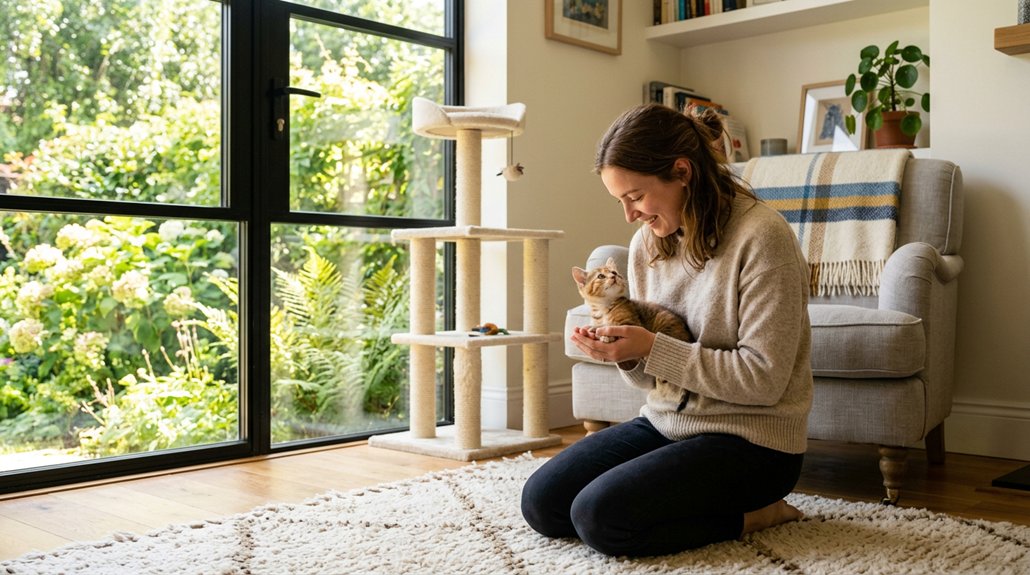
To help your newly adopted cat adapt more smoothly, it’s essential to engage them with stress-reducing activities. Incorporate regular playtime sessions using a variety of interactive toys to satisfy their natural hunting instincts and diminish anxiety. Additionally, creating a calming environment with soothing audio, pheromone diffusers, and accessible hiding spots can greatly enhance your cat’s well-being and fortify your bond.
Playtime for Stress Relief
Engaging your cat in playtime is essential for stress relief, as it taps into their natural hunting instincts and encourages physical activity, which is important for overall well-being. Regular interactive bonding sessions reduce stress-related behaviors and foster a strong relationship. Aim for 15-30 minutes of play twice daily, utilizing toys that match your cat’s preferences. Noting if they favor chasing, pouncing, or scratching can guide your choices.
To enhance stress relief:
- Vary toys: Use feather wands or laser pointers.
- Enable problem-solving: Introduce food-dispensing toys after initial weeks.
- Encourage exploration: Rotate different toys for novelty.
- Promote movement: Adjust activities to boost exercise.
- Observe and adapt: Tailor play to your cat’s unique needs.
This structure guarantees your furry friend remains happy and stress-free.
Interactive Toys and Games
Effective play is essential in maintaining your cat’s well-being, greatly alleviating stress. Engaging your feline with interactive cat toys, like feather wands and laser pointers, can stimulate their hunting instincts, offering both physical and mental benefits. Such play activities help minimize anxiety and deter boredom. Puzzle feeders present a problem-solving challenge during treat time, fostering mental stimulation and healthy eating habits. Regular engagement with toys that mimic prey behavior, such as plush mice or battery-operated devices, can enhance bonding with your pet. Offering a variety of toys, from balls to crinkly options, satisfies differing play preferences and keeps your cat’s environment enriching. Daily interactive play sessions of at least 15 minutes are vital for a content, well-adjusted cat.
Calming Environment Tips
In addition to interactive play, fostering a calming environment is instrumental in ensuring your cat’s well-being and reducing stress. Implement stress relief strategies like providing a quiet, cozy space with familiar items such as a bed or blanket. Engage in environmental enrichment by setting up hiding spots, including cardboard boxes or tunnels, offering your cat safe retreats. Utilize calming pheromone diffusers or sprays specifically designed for feline relaxation, reducing stress signs. Consistency is key; maintain a steady routine for feeding and playtime, promoting predictability and security. Here’s how you can further enhance your cat’s environment:
- Create quiet, cozy spaces with familiar items.
- Incorporate interactive play sessions.
- Set up hiding spots with boxes or tunnels.
- Use calming pheromone products.
- Establish a consistent daily routine.
Introducing Your Cat to Family Pets
While welcoming a new cat into your home can be an exciting endeavor, it’s important to carefully manage the introduction to your existing family pets. Begin by keeping the new cat separate during the initial adjustment period, usually around two weeks. This controlled separation helps reduce stress and potential conflicts. When conducting cat introductions, choose a neutral location and supervise interactions closely. Observe behavioral cues like hissing, growling, or hiding—signals indicating discomfort or fear. Scent swapping is a beneficial technique; exchange bedding or use a shared towel to familiarize them with each other’s scents before direct interaction. Prioritize the comfort and safety of all animals involved, allowing them to set the pace for their interactions to foster positive relationships.
Make Playtime, Feeding, and Vet Visits a Routine
After successfully introducing your new cat to your family pets, establishing a consistent daily routine is a vital step in helping them feel secure. Consistency in feeding times can markedly impact digestion and health. It’s important to introduce new foods gradually to prevent stomach upset. Utilizing structured playtime techniques, such as interactive toys, enhances cat communication and promotes mental stimulation, contributing to their overall well-being. Additionally, scheduling regular vet visits guarantees timely vaccinations and health check-ups.
- Consistent mealtime: Supports stable digestion and averts eating issues.
- Interactive play: Strengthens bonds through effective cat communication.
- Incremental food introductions: Avert digestive disruptions.
- Routine vet appointments: Critical for preventive health care.
- Structured environment: Ensures safety and comfort in your cat’s new surroundings.
Plan for Long-Term Cat Adoption Costs and Commitment
Adopting a cat requires you to balance financial considerations and caregiving commitments over its potential 15-year lifespan. You should budget for costs such as the average annual expenditure of $634, initial outlays up to $1,000, and routine veterinary care, while safeguarding against unexpected health issues with pet insurance. Beyond financial aspects, confirm you’re ready to invest the necessary time and attention, as awareness of this lifelong responsibility is essential for both your and your cat’s well-being.
Budgeting for Cat Expenses
Successfully budgeting for cat expenses is essential to guarantee you’re prepared for the financial commitment of adopting a pet. To establish a sound budget breakdown, consider the following categories:
- Initial Costs: Adoption fees ($50-$150) and spaying/neutering ($200-$500) are necessary.
- Routine Care: Average annual expenses around $634 include food, litter, and toys.
- Unexpected Expenses: Veterinary emergencies require financial preparation; consider future-proofing your budget.
- Pet Insurance: With plans ranging from $25 to $50 monthly, insurance helps mitigate unexpected veterinary costs.
- Long-Term Planning: Cats can live up to 15 years, making long-term budgeting important.
Time and Attention Needs
Planning for the financial aspect of cat ownership sets the stage for a commitment that goes beyond numbers. Cats typically live around 15 years, so long-term commitment is essential. Consistent care, affection, and social interaction are vital for their well-being. Dedicate time each day for bonding and play to satisfy their daily playtime needs. Here’s a breakdown of cat ownership expenses:
| Expense Type | Cost Range |
|---|---|
| Adoption Fee | $50 – $150 |
| Spaying/Neutering | $200 – $500 |
| Annual Care Cost | ~$634 |
| Monthly Insurance | $25 – $50 |
These costs don’t cover all aspects of cat care. Litter, toys, and other supplies require thoughtful budgeting. Planning enables you to meet your cat’s emotional and physical needs throughout its life.
Lifelong Responsibility Awareness
Understanding the lifelong responsibility of adopting a cat is essential for ensuring a successful and fulfilling relationship with your feline companion. Cats typically live about 15 years, making them a significant long-term commitment. Preparing for this includes planning for costs like the $634 average annual expenditure on essentials such as food, litter, and veterinary care. Initial adoption fees range from $50 to $150, with spaying or neutering costs between $200 to $500. Utilize shelter support and community resources to help manage these expenses effectively.
- Budget for monthly expenses, including potential pet insurance.
- Consider the initial $100+ for essential supplies like toys and scratching posts.
- Anticipate the time, love, and attention your cat requires.
- Prepare for unforeseen medical costs.
- Explore financial assistance programs through local shelters.
Frequently Asked Questions
What Is the 3 3 3 Rule for Adopting Cats?
The 3 3 3 Rule helps manage cat anxiety through introduction strategies. Expect initial hiding for three days, exploration for three weeks, and full adjustment in three months. Your patience during these phases supports successful acclimation.
Where Should a Cat Sleep on Its First Night?
Make certain your cat’s first night is stress-free by choosing ideal sleeping spots away from high-traffic areas. Tips include providing a quiet, cozy space with a soft bed and familiar items to create a secure environment.
What Color Cat Is Least Desired?
Black cats often face the toughest adoption rates due to pervasive superstitions influencing shelter adoption preferences. Despite being as healthy and lovable, cat coloration trends consistently show that lighter-colored cats attract more adopters, needing targeted educational campaigns.
What Breed of Cat Is the Most Clingy?
Oh, you’ve stumbled upon the riveting spectacle of breeds comparison. For maximum clinginess, meet the Ragdoll. Their affectionate behavior will truly make you question personal space, challenging you to re-evaluate your life choices—all while being adorably irresistible.
Conclusion
Welcoming a new cat into your home is a rewarding journey that requires patience and preparation. Remember, “Rome wasn’t built in a day,” and the same goes for developing a nurturing relationship with your feline friend. By providing a safe space, establishing routines, and engaging in stress-reducing activities, you’ll help your cat adjust seamlessly. Be prepared for ongoing commitment and costs, ensuring your adopted cat thrives in a loving, well-structured environment. Your dedication will make all the difference.