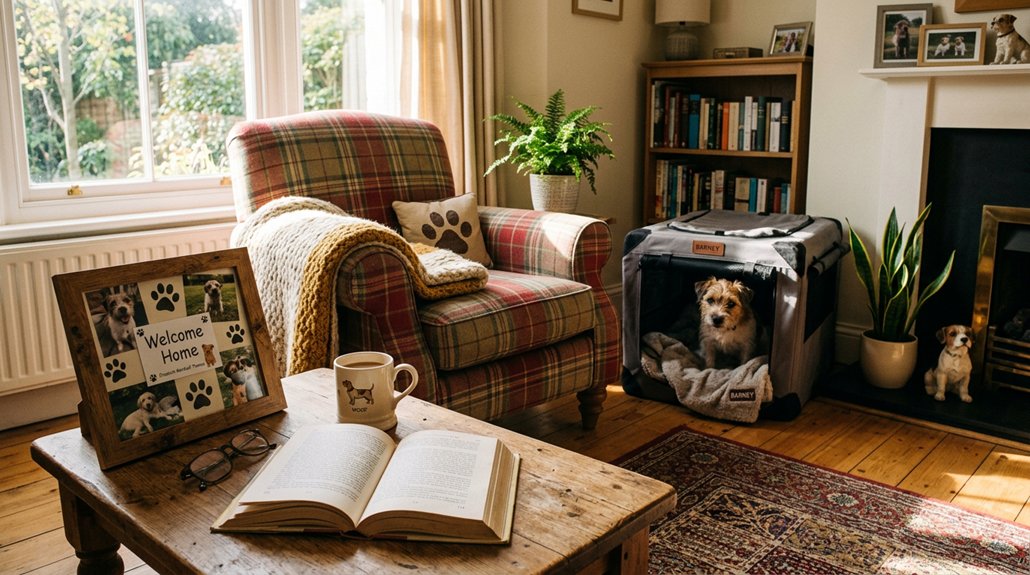
While you’re waiting to adopt your dog, start by researching breeds to find your perfect match. Dog-proof your home, secure hazards, and set up a welcoming safe space. Assemble essentials like a bed, collar, and toys. Learn positive reinforcement techniques to ease the change. Involve your family with pet care plans and get everyone excited with pre-adoption activities. Begin the journey of a lifetime by preparing for your dog’s arrival and discover more about ensuring a seamless change.
Key Takeaways
- Research various dog breeds to find one that matches your lifestyle and home environment.
- Visit shelters to understand different dog personalities and identify suitable adoption options.
- Dog-proof your home by securing hazards and designating safe spaces for your new pet.
- Prepare essentials such as a bed, food, leash, and toys for the dog’s arrival day.
- Plan for family involvement and establish a consistent routine for feeding, walking, and training.
Finding Your Perfect Dog Match

When you’re ready to find your perfect dog match, it’s important to begin with thorough research into various breeds and their traits, even though most shelter dogs are mixed breeds with a range of characteristics. Understanding dog personality and lifestyle compatibility is key. Ask yourself about your daily routine, the space you have, and energy levels required. Online platforms like Adopt A Pet or Petfinder help explore options across thousands of animal shelters and rescues. Engaging with adoption counselors is essential—they’re familiar with each dog’s temperament and history. Visiting local shelters allows you to assess a potential companion’s behavior and personality in a comfortable setting. This holistic approach guarantees you find a furry friend that complements your family environment beautifully.
Dog-Proofing Your Home for Safety
As you’re preparing to welcome a new dog into your home, ensuring their safety should be a priority, transforming your space into a haven free from potential hazards. Start by removing or securing hazardous substances like cleaning supplies, chemicals, and medications to prevent accidental ingestion. Baby gates can keep curious paws away from unsafe areas, such as stairs and kitchens. Choking hazards, including plastic bags, ribbons, and other small objects, should be stored out of reach. Remember to close toilet lids to avoid drowning risks and unplug electrical cords to prevent accidents. Also, check for toxic houseplants like sago palms, lilies, and azaleas—these need relocating or securing to keep your soon-to-be furry friend safe and healthy.
Essentials Checklist for Arrival Day
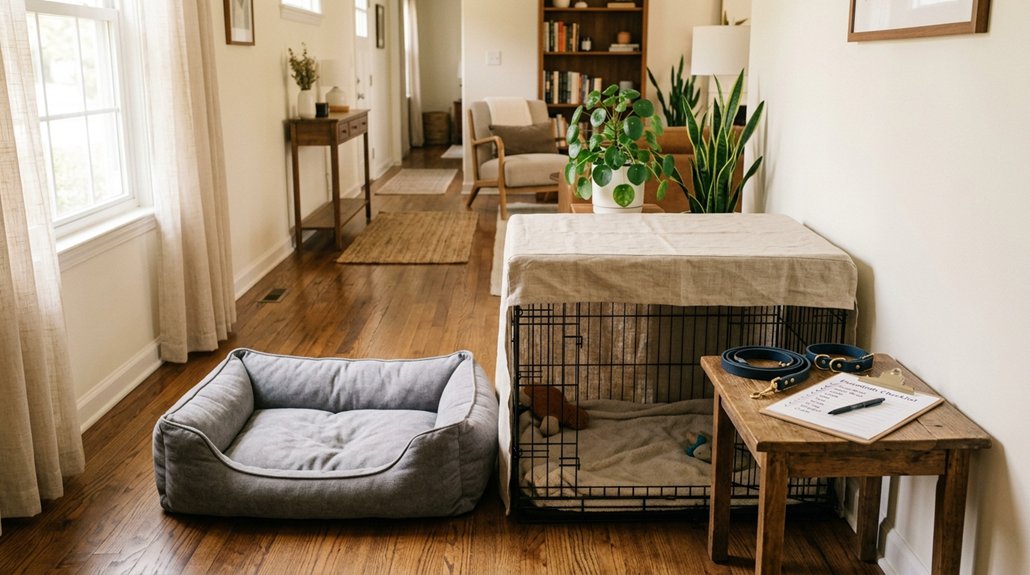
Welcoming a new dog into your home is both exciting and a bit challenging, so careful preparation will make the change smoother for everyone involved. Start by preparing a designated arrival area. Choose a quiet space with easy access to supply essentials like a comfortable bed, collar, leash, and food and water bowls. A crate can aid in training and provide a safe haven. Don’t forget age-appropriate toys to ease the adjustment.
Stock up on high-quality puppy food and treats. Establish a toileting routine and make a distraction-free outdoor area available to encourage quick acclimatization. Finally, gather important documents, including adoption paperwork, ID tags, and microchip info, so everything’s in place when your new canine friend arrives.
Mastering Positive Reinforcement Techniques
With your home prepared to greet its newest member, it’s time to focus on teaching and training using positive reinforcement techniques. Embracing clicker training and behavior shaping will help you foster an obedient and trusting bond with your future dog. Positive reinforcement encourages desired behaviors by offering immediate rewards like treats, praise, or toys, helping your pup form a clear, positive association. Consistent cues or commands further guide them in understanding what’s expected, without stress or fear. This humane approach, proven effective in studies, guarantees your pet’s well-being by reducing anxiety and enhancing trust. As you practice these techniques, you’ll be building a happy foundation for learning and cooperation, ready for when your dog arrives home full of excitement and potential.
Engage Your Family for Smooth Adoption
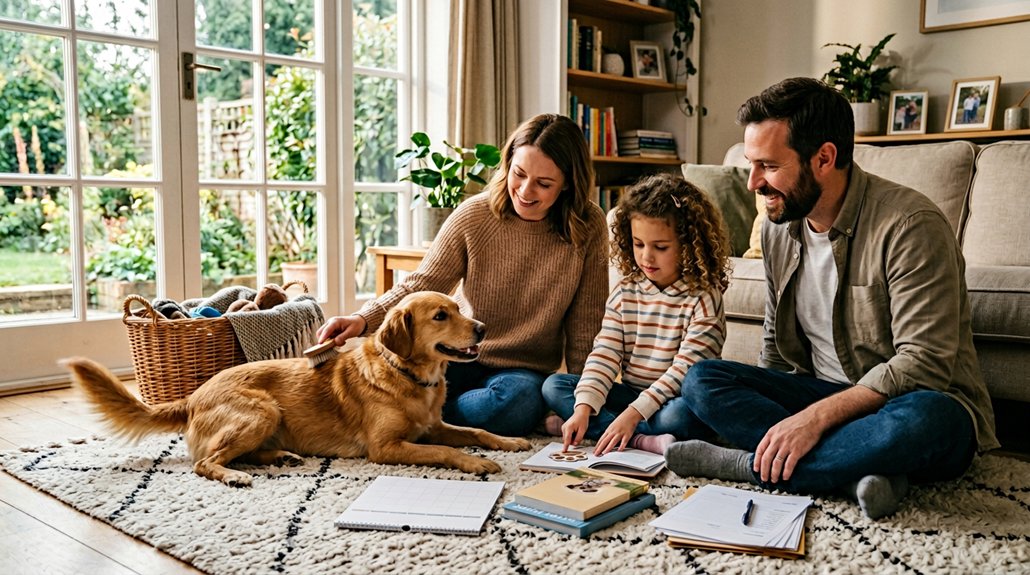
When you’re considering adopting a dog, it’s essential to foster open communication with your family to address everyone’s hopes and concerns. Establish clear household guidelines that everyone agrees on, ensuring your new pet can adapt smoothly from the start. Encourage family involvement by delegating pet responsibilities that suit each member’s age and abilities, which not only lightens the load but also builds excitement for your dog’s arrival.
Foster Positive Family Communication
Adopting a dog is an exciting journey, but it’s crucial to foster positive communication within your family to guarantee the process runs smoothly. Each family member should contribute to discussing family roles and shared responsibilities in caring for the new pet. Scheduling regular family meetings can help everyone stay informed and express their enthusiasm, building unity. Engage each person in researching dog breeds, preparing and deciding on supplies, and organizing the dog’s space. Encourage involvement, especially among children, to nurture their sense of responsibility. Establishing a family training plan that includes teaching commands collaboratively will foster consistency and bond the family to your new furry friend.
| Family Task | Participation |
|---|---|
| Family Meetings | All members |
| Research Breeds | Joint research |
| Choose Supplies | Kids’ involvement encouraged |
| Create Dog Space | Collaborative effort |
| Training Plan | Everyone participates |
Set Household Pet Guidelines
Establishing clear household pet guidelines is vital for a successful dog adoption process. It’s significant you discuss house rules, care responsibilities, and behavior expectations with your family. This guarantees consistency and makes your home more welcoming for the new furry addition. Start by setting up a family meeting to introduce these ideas. Here’s a helpful list:
- Define house rules: Address areas where the dog is permitted or what furniture they can use.
- Care responsibilities: Assign roles like feeding, walking, or training to encourage teamwork.
- Discuss lifestyle impacts: Talk about any allergies or time commitments openly to align expectations.
- Family schedule: Create routines with designated times for feeding, exercise, and play, aiding the dog’s adjustment.
Engaging your family in open discussions will build a supportive environment.
Delegate Pet Responsibilities
After setting household pet guidelines, involving each family member in the delegation of pet responsibilities becomes important for a seamless adoption experience. Task delegation not only promotes family cooperation but also guarantees every member understands their role in the dog’s care. Assign duties like feeding, walking, and grooming to different individuals, encouraging teamwork and accountability. It’s helpful to create a shared schedule for pet care, establishing a routine that eases the shift for the dog and family alike. Educate everyone about dog behavior and training techniques to foster consistent interactions with the new pet. Consider appointing a “puppy committee” or point person to research supplies and veterinary care, making sure your home is prepared for the newest furry family member.
Get Excited: Fun Pre-Adoption Activities
While you’re waiting to adopt, take the time to research various dog breeds to guarantee the perfect match for your lifestyle and family dynamics. Start gathering essential supplies like a collar, leash, and cozy bed, so you’re ready to welcome your new furry friend home in style. Preparing these things in advance not only builds excitement but also secures a smooth changeover for your future pet.
Explore Breed Compatibility
How can you guarantee that your future furry companion will fit seamlessly into your life? Start by exploring the breed characteristics to confirm a perfect lifestyle match. Immerse yourself in understanding the energy levels, grooming needs, and temperament traits of different breeds. Here’s how you can get started:
- Research Online: Utilize resources like the American Kennel Club (AKC) and breed-specific forums for valuable insights into breed compatibility.
- Attend Events: Visit dog shows or local breed meet-ups to observe and interact with breeds, learning about day-to-day care.
- Visit Shelters: Check out shelters or rescues for specific breeds to discover unique personalities first-hand.
- Make a List: Compile breeds that pique your interest and align their traits with your home environment and routines.
This will aid your informed decision when adopting.
Gather Essential Supplies
You’ve got an exciting journey ahead as you prepare to welcome a new dog into your life, and gathering essential supplies is a crucial step. Start by choosing the right collar types, considering styles that prioritize comfort and a secure fit. Finding appropriate leash materials is equally important; options range from durable nylon to practical leather, providing flexibility and control during walks. Don’t forget sturdy food and water bowls, a cozy bed, and engaging toys to create a welcoming environment. Puppy-specific food guarantees proper nutrition and eases diet change. Preparing your home by securing cords and removing hazards will keep your new furry friend safe. Immerse yourself in fun pre-adoption activities like volunteering and fostering to enrich your understanding of dog care.
Prepare for the Early Transition
Getting ready for your new dog’s early change requires attention to detail and preparation to guarantee a smooth start. Understanding dog behavior is key; anticipate anxiety as they adjust. Shift tips can help ease this period. Here’s a list to guide you:
- Create a Safe Space: Make certain your home is free from hazards like exposed wires, setting up a quiet, hazard-free area for your dog.
- Establish a Routine: Consistent feeding, walking, and play schedules provide comfort and predictability, fostering a sense of security.
- Learn Training Techniques: Use positive reinforcement to communicate effectively and start building a strong bond from the start.
- Plan Time Off: Consider adjusting your work schedule to be present during your dog’s critical first days, offering essential support and supervision.
Frequently Asked Questions
What Is the 3-3-3 Rule When Adopting a Dog?
The 3-3-3 rule in dog adoption helps guide you through the acclimation process: 3 days for adjustment, 3 weeks for routine establishment, and 3 months for personality reveal. Adoption preparation is key for a smooth changeover.
What Is the 7 7 7 Rule for Dogs?
Isn’t it fascinating? The 7-7-7 rule helps evaluate dog behavior, offering structured training strategies over time. You’ll focus first on settling in, then bonding and training, followed by socialization, ensuring a compassionate change.
Can People With Autism Adopt?
Yes, people with autism can adopt. Consider inclusion strategies and therapy benefits, ensuring autism awareness. Dog training is essential for creating a supportive bond, improving social skills, and providing companionship with a pet that complements individual needs.
Is It Okay if I Leave My Dog Home Alone for 8 Hours and 5 Days a Week?
If you leave your dog alone for 8 hours consistently, like in Max’s case, they might develop separation anxiety. Consider training preparation methods, such as alone time practice, to help mitigate stress and promote comfort.
Conclusion
While waiting to adopt your new furry friend, blend excitement with preparation to make the change seamless. Dog-proof your home, yet keep it welcoming. Gather essentials to avoid last-minute rushes, and master positive reinforcement to encourage good behavior. Involve your family, mixing anticipation with readiness. Also, engage in fun activities to build excitement. Pre-adoption efforts lead to smooth early changes, turning the moment you meet your new dog into an unforgettable beginning. You’ve got this!