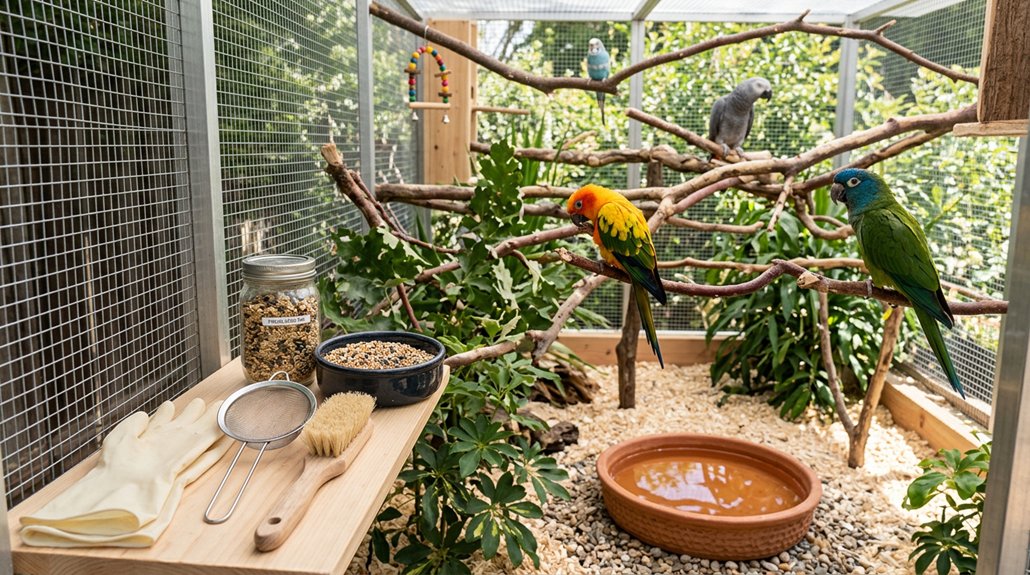
You maintain a clean, healthy bird environment by keeping feeders, baths, and water sources on a routine schedule, even in summer. Clean feeders and baths every two weeks, or sooner if they look dirty, and replace bath water daily in hot weather. Remove spilled seed, moldy food, and droppings right away. Use a 1:9 bleach solution, rinse well, and dry everything fully. Good station design and native plants can do the rest, and there’s more to optimize.
Key Takeaways
- Clean feeders and birdbaths every two weeks, or sooner in warm, wet, or heavily used conditions.
- Wash with hot soapy water, disinfect with a 1:9 bleach solution, rinse well, and dry completely.
- Remove spilled seed, droppings, and moldy food daily to limit disease, pests, and contamination.
- Store seed in airtight, rodent-proof containers and keep feeding areas well drained with gravel or mulch.
- Provide clean water, native plants, and spaced houses to reduce crowding, stress, and feeder dependence.
Why Keep Bird Feeders Up in Summer
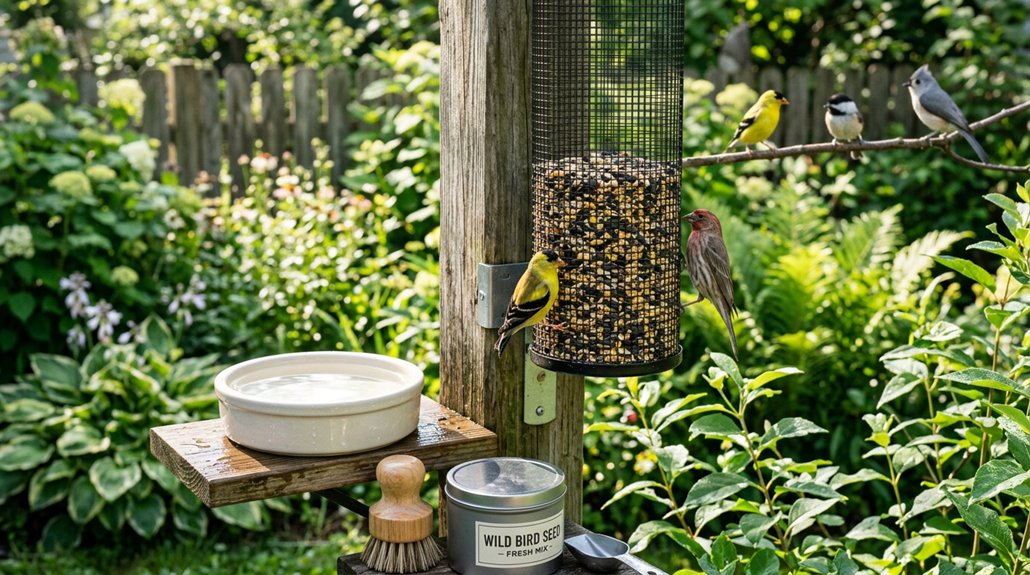
Keeping bird feeders up in summer provides a consistent supplemental food source for many backyard species, even when insects are abundant. You’ll support urban species that continue to feed regularly, and you may help birds during local droughts when natural water and food are limited. Summer feeders can stabilize body condition and hydration, especially when migratory timing shifts local demand. Observations show birds still use feeders and birdbaths in warm months, so leaving feeders up preserves year-round activity and watching opportunities. Clean, full feeders can also attract a broader mix of species and support local avian diversity when natural food availability fluctuates. When properly maintained, feeders remain well-used and less prone to spoilage than neglected ones, making them a practical, evidence-based resource.
Clean Bird Feeders Every Two Weeks
You should clean bird feeders every two weeks because accumulated seed debris, mold, and droppings can spread Salmonella, fungi, and other pathogens. Wash all parts with hot, soapy water, scrub perches and seed ports, disinfect with a 1:9 bleach-to-water solution, and rinse thoroughly so no toxic residue remains. During cleaning, remove spilled or moldy seed in sealed bags, and increase the frequency in warm, wet weather or if sick birds appear.
Why Regular Cleaning Matters
Regular cleaning is essential because bird feeders can quickly accumulate debris, mold, and contaminated residue that harbor pathogens. You should clean feeders at least every two weeks to reduce exposure to Salmonella, Trichomoniasis, and Mycoplasma. This routine also helps protect the avian microbiome, which can be destabilized by contaminated food and seasonal stressors. When feeders stay neglected, spilled seed and droppings below them become reservoirs for infection and attract rodents. By maintaining a clean feeding site, you limit environmental contamination and support healthier foraging conditions. Birds are more likely to use well-kept feeders, and you’ll often see greater species diversity. Regular maintenance isn’t cosmetic; it’s a clinical control measure that supports overall avian health and lowers disease transmission risk.
Safe Two-Week Cleaning Steps
Every two weeks, wash bird feeders with hot, soapy water to remove debris and mold before disinfecting them. Use proper tool selection so you can reach seams, ports, and trays without damaging surfaces. During cleaning, discard any moldy or clumped seed, and sweep spilled seed beneath the feeder to limit rodent attraction. Next, disinfect with a 1:9 bleach-to-water solution, soak for 10 minutes, then rinse thoroughly to prevent bleach toxicity. Dry feeders completely before refilling; moisture left behind can promote bacterial and fungal growth that may sicken birds. Keep this schedule consistently, and adjust seasonal timing by checking feeders more often during warm, wet, or high-usage periods, when pathogens spread faster and sanitation fails sooner.
Keep Bird Baths Clean and Full
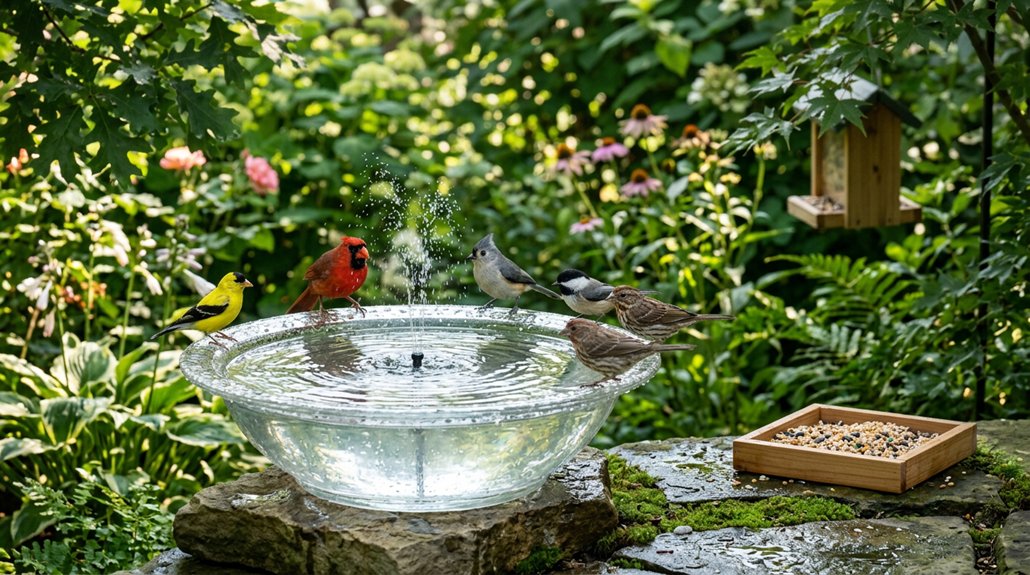
You should keep bird baths full and refill them daily in hot weather or drought so birds always have safe drinking and bathing water. Clean them every two weeks with hot, soapy water, then disinfect with a 1:9 bleach-to-water solution and rinse thoroughly to prevent toxicity. If you see droppings, biofilm, mold, or signs of illness in visiting birds, replace the water at once and remove the bath for disinfection.
Regular Bath Refills
Twice a month, rinse birdbath basins and replace the water to limit algae growth and reduce pathogen risk; in hot weather, do this more often. Use frequent refills to keep the supply potable, and add light water aeration if stagnation develops. Keep multiple baths active so birds can access clean water during drought or heavy use.
| Action | Effect |
|---|---|
| Refill regularly | Limits buildup |
| Stagger baths | Maintains access |
| Replace contaminated water | Reduces disease spread |
| Monitor runoff | Prevents recontamination |
If you notice droppings, moldy material, or sick birds, remove the water immediately. Maintain drainage and clean nearby ground so spilled seed and droppings don’t contaminate the basin. Consistent refilling supports hygienic, reliable hydration.
Safe Bath Cleaning
To keep bird baths safe, clean them every two weeks—or more often in hot weather—using hot, soapy water to remove algae and debris, then disinfect with a 1:9 bleach-to-water solution and rinse thoroughly to avoid avian toxicity. Use bird safe detergents for seasonal sanitization, and scrub crevices, drain holes, and rough surfaces to remove biofilm where pathogens persist.
- Refill daily to limit stagnant water.
- Place baths on a stable, elevated base.
- Make certain drainage reduces runoff and contamination.
- Inspect for cloudiness, odor, or droppings.
If you spot contamination, empty the bath immediately, clean it again, disinfect, rinse, and refill. This routine reduces Salmonella, Trichomonas, and Mycoplasma exposure while keeping water fresh and biologically safer for visiting birds.
Prevent Mold and Seed Buildup
Prevent mold and seed buildup by removing spilled seed and hulls from beneath feeders and inside cages every day, since leftover debris can quickly develop mold and attract rodents and insects. You should inspect seed for clumps or dampness during moisture monitoring, and discard any compromised feed at once. Use airtight, ventilated storage in a cool, dry area, and follow regular seed rotation so older stock doesn’t remain unused for months. Clean feeders and birdbaths every two weeks with hot, soapy water, then disinfect with a 1:9 bleach solution and rinse thoroughly. Improve surface drainage with gravel or mulch under feeding areas, and sweep up fallen seed routinely. This reduces mycotoxin risk, limits spore buildup, and keeps feeding sites hygienic for birds.
Keep Mice, Squirrels, and Bears Away
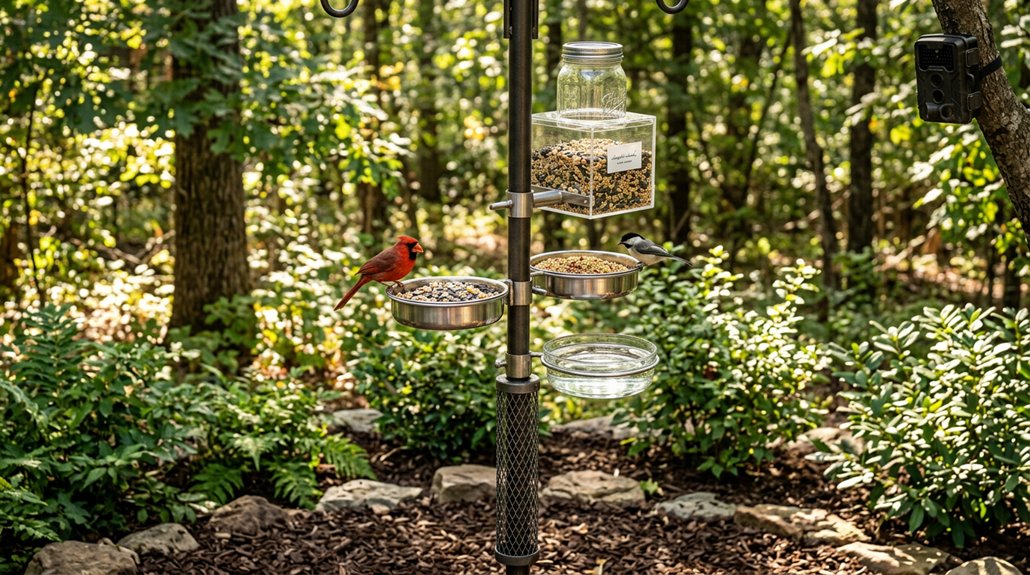
Remove spilled seed and hulls every day, and sweep ground waste promptly, because accumulated food attracts mice, rats, squirrels, and raccoons, which can in turn draw bears if your yard offers a reliable calorie source. You should store seed and suet in sealed, rodent-proof containers, and use habitat modification to reduce cover and access.
- Install squirrel-proof feeders and baffles on poles 6–8 feet from launch points.
- Inspect hardware regularly; determined squirrels can still defeat weak designs.
- Replace bare soil with gravel or mulch, remove moldy seed, and use sealed trash bins.
- In bear country, take feeders down during active seasons and avoid relying on scent deterrents alone.
Use Birdhouses and Baths as Alternatives
While feeders can support birds, you can also reduce pressure on them by providing clean birdhouses and bird baths as alternative resources. Place birdhouses in sheltered sites 6–20 feet apart and 5–15 feet above ground, depending on species, so you’re offering secure nesting options. Add predator deterrents where needed to improve safety. Install multiple shallow baths, with basins 1–2 inches deep for small songbirds, and include a dripper or small fountain to encourage use and limit mosquito breeding. Change water every two weeks, or sooner in hot weather. Scrub baths and entrances with hot, soapy water, then disinfect with a 1:9 bleach solution and rinse thoroughly. Use gravel or mulch below these features for drainage and easier cleanup. Native plantings can further support reliable habitat.
Build a Cleaner, Healthier Bird Yard
To keep birds healthy, your yard needs routine cleanup and sanitation, not just feeders and birdbaths. Scrub feeders and baths every two weeks with hot, soapy water, then disinfect with a 1:9 bleach:water solution and rinse well. Remove droppings, spilled seed, and moldy seed daily, sealing waste in bags.
- Use gravel or mulch under feeding stations for drainage and easier cleanup.
- Check for pests, contamination, and damaged feeder parts frequently.
- Keep multiple clean water sources available, changing water often.
- Plant native plants and use visual barriers to reduce crowding and stress.
This approach lowers Salmonella, Trichomoniasis, and Mycoplasma risk while discouraging mice, rats, and squirrels.
Frequently Asked Questions
What Is the 3 3 3 Rule for Birds?
The 3-3-3 rule means you clean your bird’s dishes daily, spot-clean the cage three times weekly, and deep-clean it every three months. It supports avian enrichment and molting care by reducing pathogens.
How to Keep Your Bird Healthy?
You’ll keep your bird healthier than a fortress by providing a balanced diet, clean water, and daily hygiene. Schedule regular vetting, monitor droppings and behavior, and avoid smoke, fumes, and overcrowding to reduce disease risks.
What Is the 5 7 9 Rule for Bird Feeders?
You should clean bird feeders every 5 to 9 days, usually weekly, to reduce pathogens. Use hot soapy water, disinfect, rinse, dry, and manage seed placement and feeder rotation to limit contamination.
What Is the 60/40 Rule for Birds?
The 60/40 rule for birds is a tiny engineering marvel: you’ll dedicate 60% of the cage to perches and furniture, leaving 40% open for flight, exercise, cage ventilation, and better diet balance.
Conclusion
By keeping feeders fresh, baths filled, and houses handy, you create a cleaner, calmer, healthier habitat for birds. Clean routinely, control clutter, and curb contamination to reduce disease risk and discourage pests. Summer support can still stay safe when you remove moldy seed, manage moisture, and monitor mice, squirrels, and bears. With consistent care, you’ll foster a feather-friendly, sanitary sanctuary that helps birds thrive all season long.