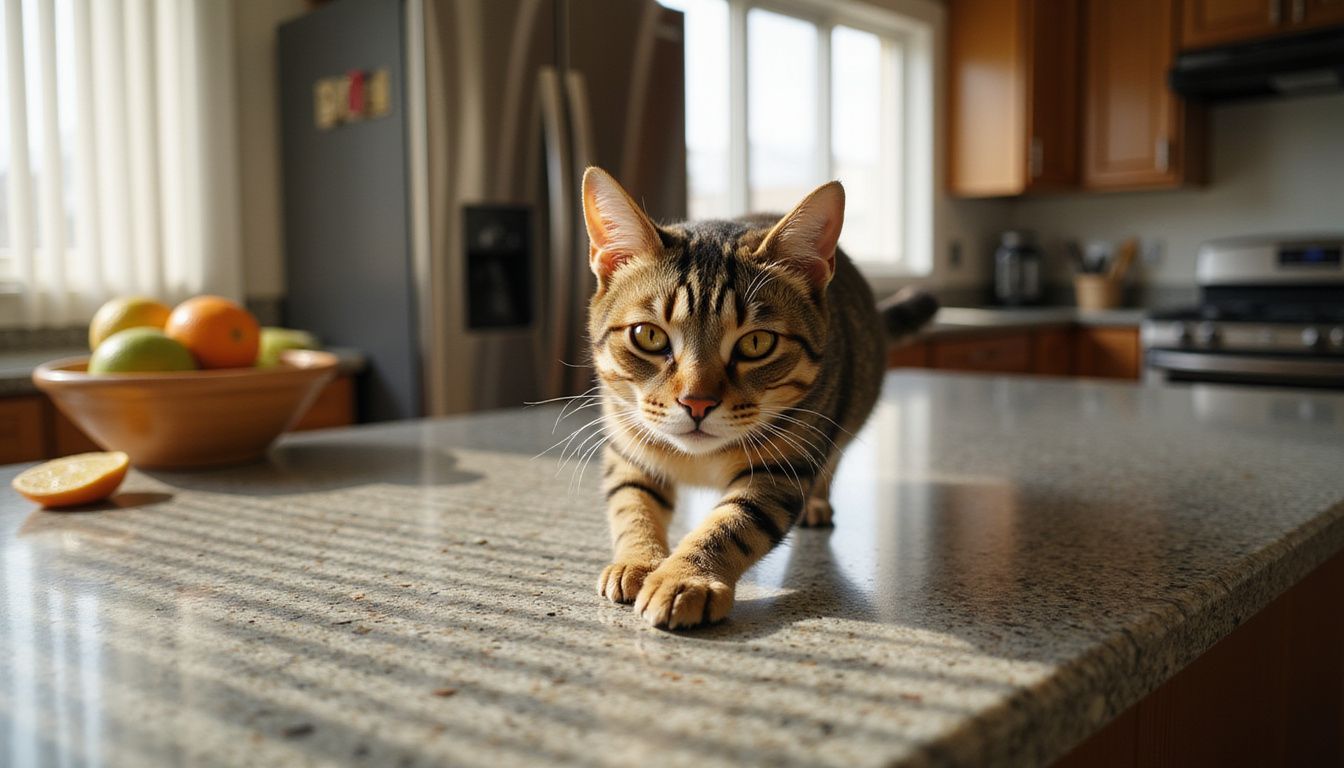
Has your cat ever hopped onto the counter mid meal prep and just stared at you, daring you to say something?
You’re probably wondering if this habit will ever quit.
Here’s something that might make you feel better about it. Jackson Galaxy, a well known cat behavior expert, posted tips on keeping cats off counters that pulled in more than 57,000 views. That tells you a lot about how many cat owners are fighting this exact same battle.
This guide walks you through what actually works, from simple surface tricks to reward based training, so your cat off counters problem finally gets solved.
Grab a cup of coffee, and let’s go through it together. I’ll show you exactly how to set feline boundaries your cat will actually respect.
Key Takeaways
- Cats jump on counters to check out their surroundings and feel secure, not out of mischief. Climbing is hardwired into their DNA.
- Sticky tape, aluminum foil, plastic carpet runners, and deterrent sprays show results within days to three weeks when you use them consistently.
- Clicker training and reward-based conditioning beat punishment every time. They build trust while teaching your cat to stay off counters.
- Vertical spaces like cat trees, wall shelves, and window perches give your cat a safe outlet for climbing instincts.
- Every housemate needs to enforce the same house rules. If one person skips the deterrent, your cat will test that gap.
Why do cats jump on counters?
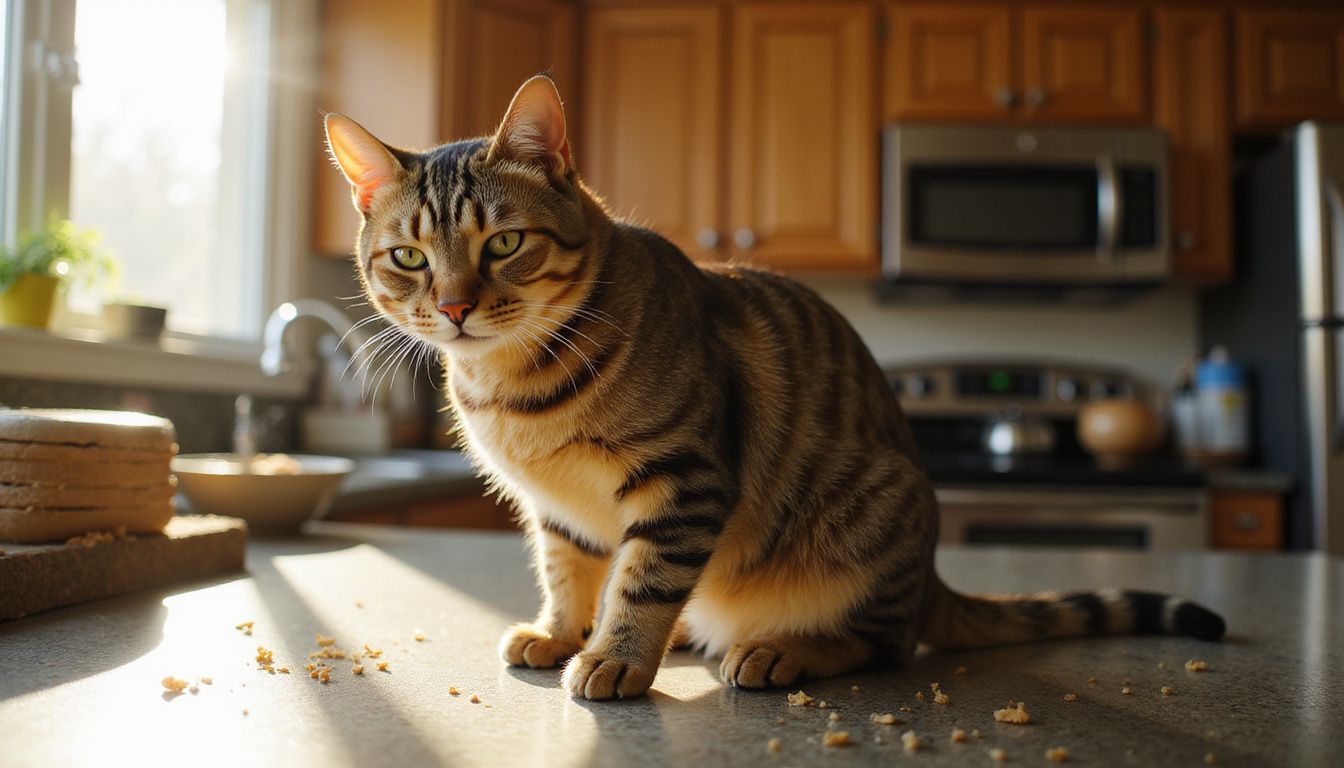
Your cat sees counters as prime real estate, and it’s not for the reason you might think.
Cats jump on high surfaces because they instinctively want to survey their surroundings from above. Being up high helps them feel secure.
From that perch, your cat can watch everything happening in the house, spot possible threats, and claim a bit of territory. This isn’t bad behavior. It’s built into their DNA.
What actually drives your cat toward the counter
- The need for elevation: Cats without enough climbing space often get stressed. Those counter hops can be a sign your cat needs more vertical spots to feel calm.
- Food temptation: Dishes, crumbs, or snacks left on the counter act like a magnet. Your cat reads this as an open invitation.
- Multi-cat competition: In homes with more than one cat, counters can turn into battlegrounds since cats sometimes bicker over shared space.
- Active hours: Cats are crepuscular, meaning they’re most active at dawn and dusk. Expect counter jumping to spike during these windows.
- Your own energy: Cats pick up on stress signals from you. If you’re anxious, your cat can mirror that energy right back.
That food temptation point deserves a closer look, because it’s more than an annoyance. According to 2025 data released by the ASPCA Animal Poison Control Center, human food and drinks, think onions, grapes, and xylitol, caused 16.1% of all pet toxin exposure cases that year. That makes food the second most common reason pet owners call poison control.
So those leftover crumbs aren’t just training your cat toward a bad habit. They could be a real safety risk.
Your cat likely doesn’t understand that counters belong to you. In their mind, it’s shared territory, open for exploring anytime.
Understanding these motivations helps you fix the actual cause instead of just chasing the symptom.
Effective ways to keep cats off counters
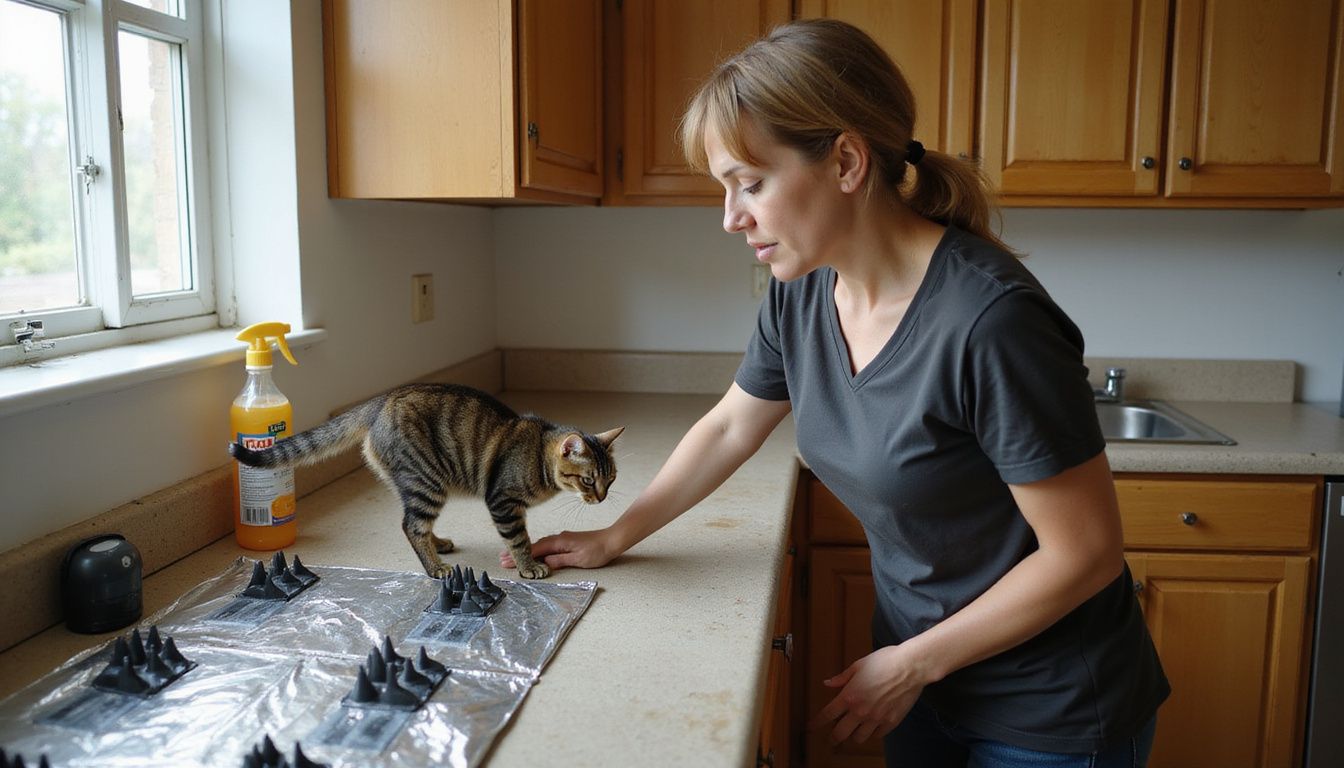
You can stop counter jumping before it becomes a habit by making those surfaces feel uncomfortable and unwelcoming. Smart deterrent methods work fast and turn your kitchen into a no-climb zone.
How can sticky tape or aluminum foil deter cats?
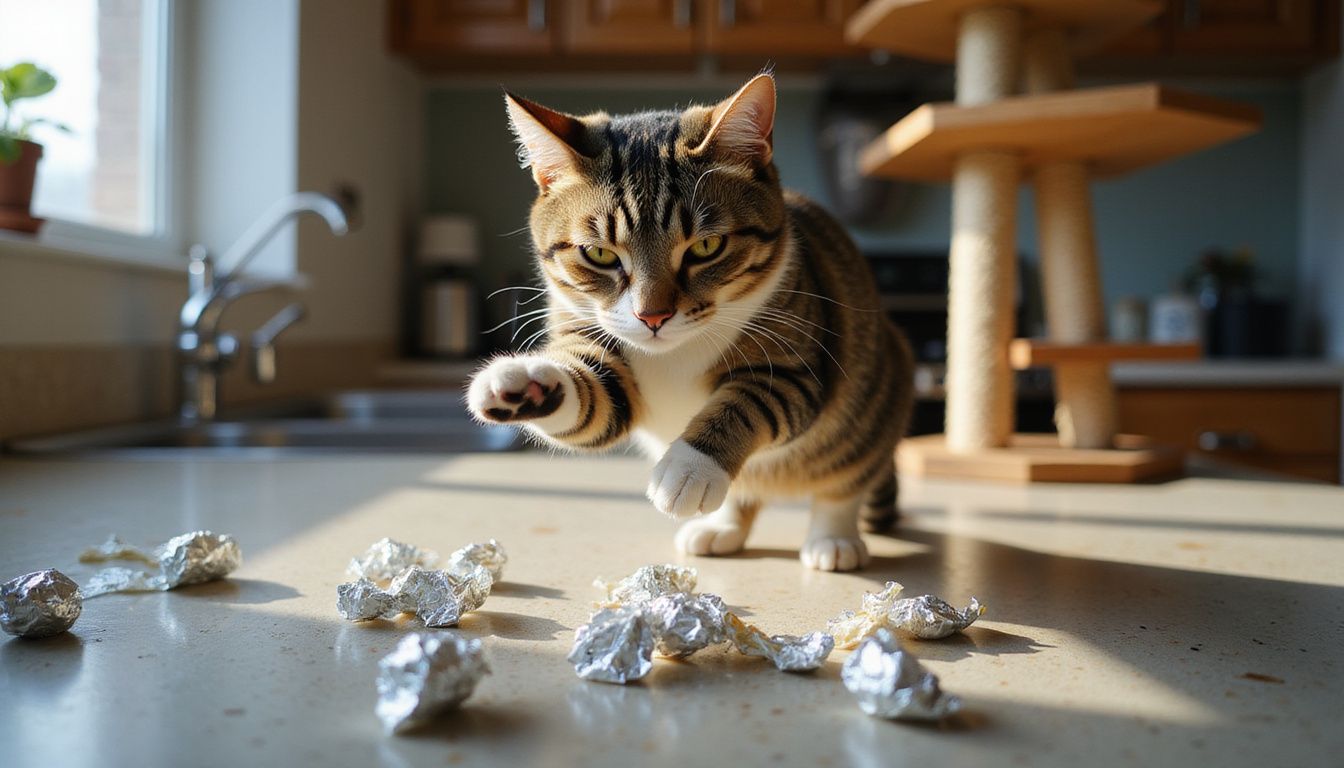
Sticky surfaces work well for keeping cats off counters. Double-sided adhesive tape creates an uncomfortable feeling on your cat’s paws, so counters start to feel unpleasant fast.
Rather than sticking tape directly to your counters, form loops with the adhesive side facing out and place them across the surface. Aluminum foil and crinkly plastic work the same way by creating a texture cats dislike.
These materials make noise and feel strange under their paws. Your cat learns quickly that counters mean discomfort, not adventure. This negative association builds automatically, even when you’re not home to watch.
The sticky method usually shows results within a few days to a couple of weeks. Some cats take up to three weeks to fully drop the habit.
| Time on Treated Surface | Result |
|---|---|
| Within 10 days | 22 out of 30 cats cut counter visits by at least 70% |
| 18 to 21 days | 6 more cats reached the same reduction |
| No vertical alternative offered | 2 cats showed no measurable change |
Consistency is the key here. Your cat needs to hit that uncomfortable surface every single time it tries climbing, so the lesson sticks without you needing to scold or chase them.
Give your cat plenty of vertical climbing spaces elsewhere, like a cat tree or wall shelf. This method works best when your cat has a real outlet for its natural climbing drive.
Why use plastic carpet runners with points?
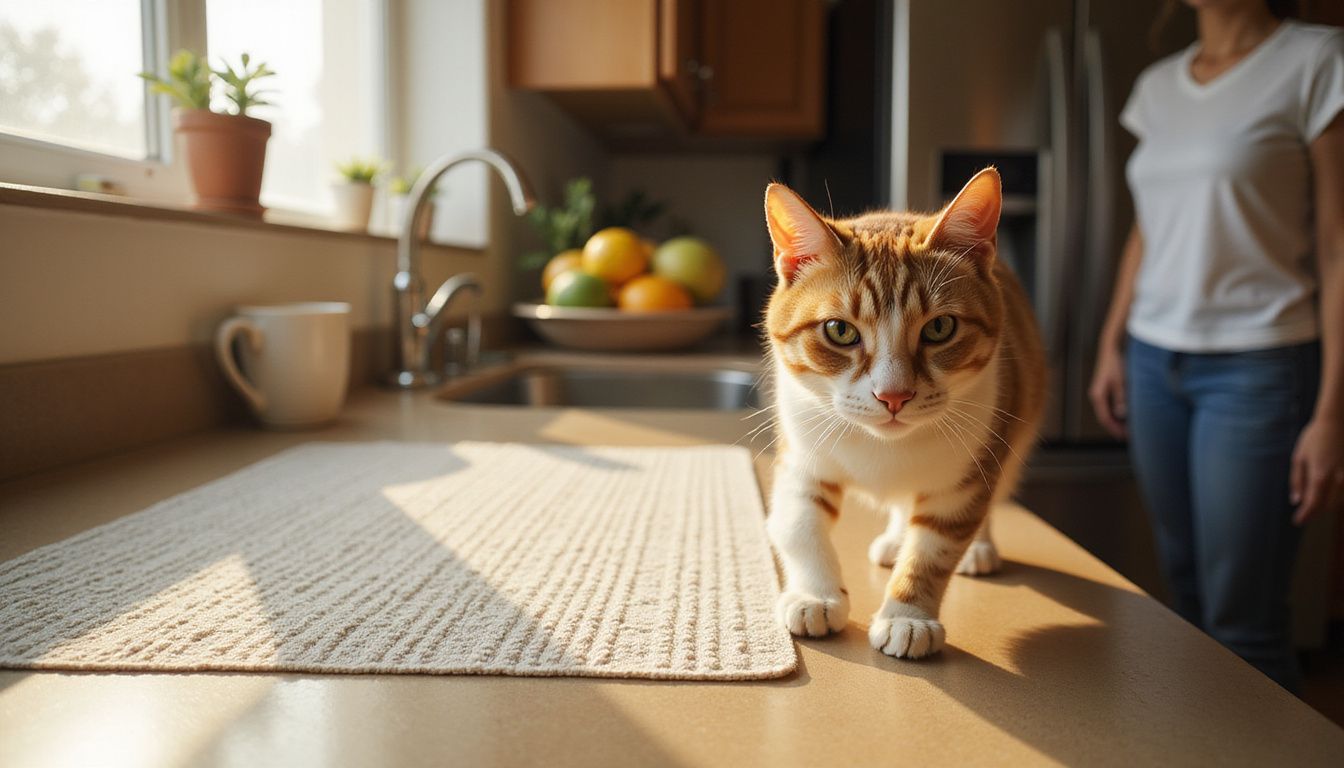
Plastic carpet runners with the points facing up turn your counters into surfaces your cat will want to avoid. The points don’t hurt your cat. They just feel strange and bothersome underfoot.
Your cat learns to link the counter with that odd sensation, so counter jumping loses its appeal over time. This method usually works within a few days to several weeks.
This surface modification strategy beats direct punishment methods like water spraying, which can stress your cat and damage your bond. As noted by the American College of Veterinary Behaviorists, physical punishment such as pushing a cat off a counter often backfires. Your cat may read the physical contact as attention, or simply learn to fear you instead of learning the actual rule.
Pair these runners with alternative vertical spaces, like a cat tree or wall-mounted shelf. Your cat still gets what it craves, height and a view, it just won’t be targeting your kitchen counters anymore.
The best cat training happens when your cat chooses the right behavior because the environment makes it the easiest choice.
How do deterrent sprays work?
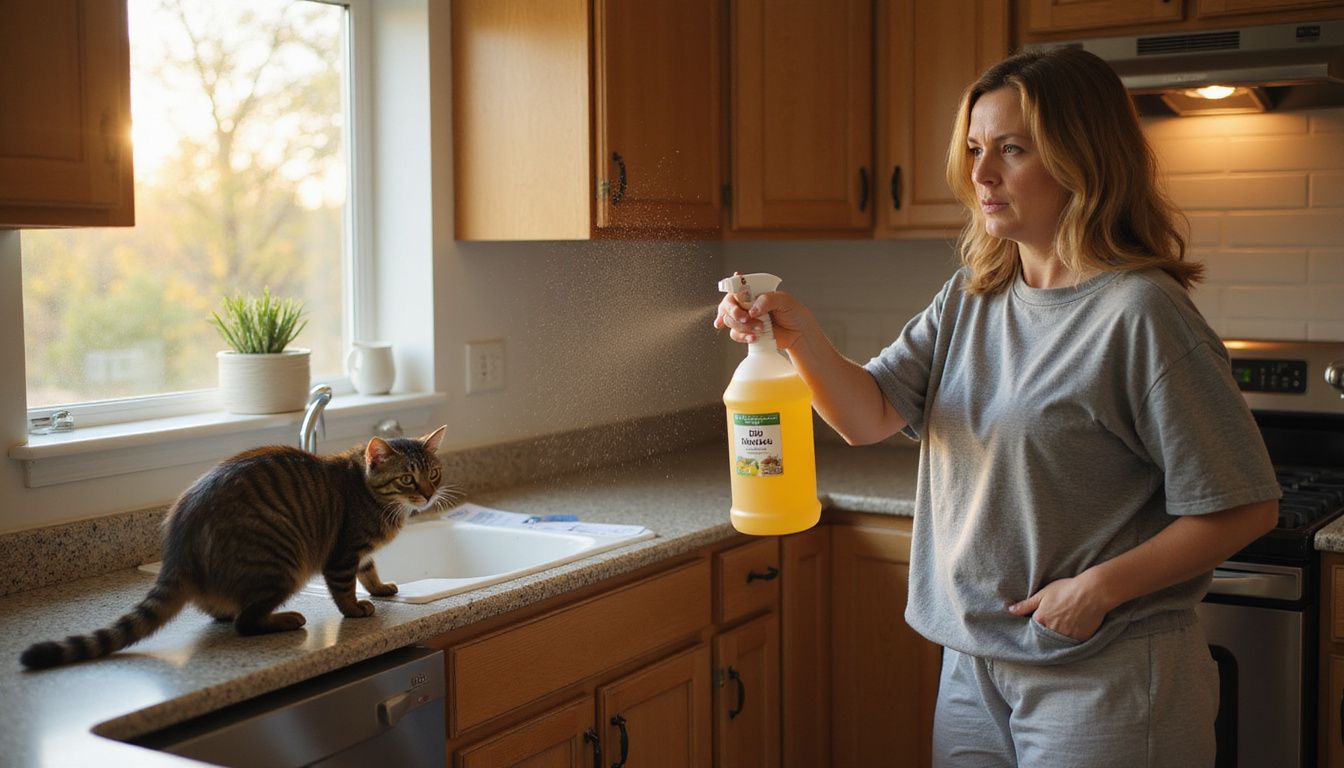
Deterrent sprays work by tapping into your cat’s strong dislike of certain smells. Cats have very sensitive noses, so scent aversion keeps them away from treated counters.
- Citrus scents: work well for many cats, though some show mixed reactions.
- Diluted bitter apple spray: a solid choice for food prep areas when applied safely.
The spray basically tells your cat, “this spot smells bad, so stay away,” without causing harm or real stress. You’ll need to reapply it regularly since the scent fades and your cat’s memory isn’t forever.
Pet expert Carl Madden notes that spray effectiveness depends on your cat’s individual sensitivity to smell and the product’s safety around food. Combine sprays with elevated cat trees or shelves for a stronger defense against counter surfing.
Your cat will eventually learn counters aren’t worth the trouble, as long as you stay patient and stick with your plan.
Alternative solutions for cats
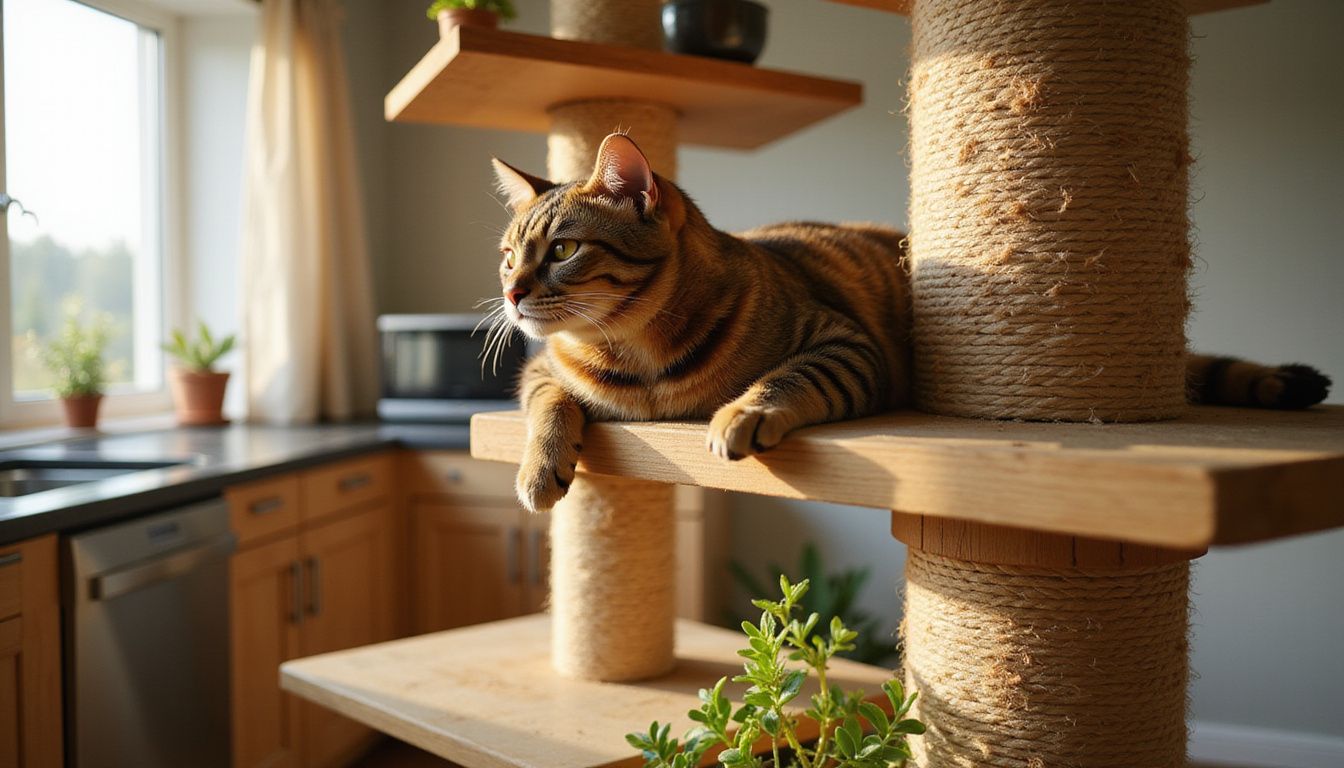
Your cat craves height and territory. Giving your cat its own vertical spaces can turn your home into a cat paradise where counters lose their appeal.
What elevated spaces can I provide for my cat?
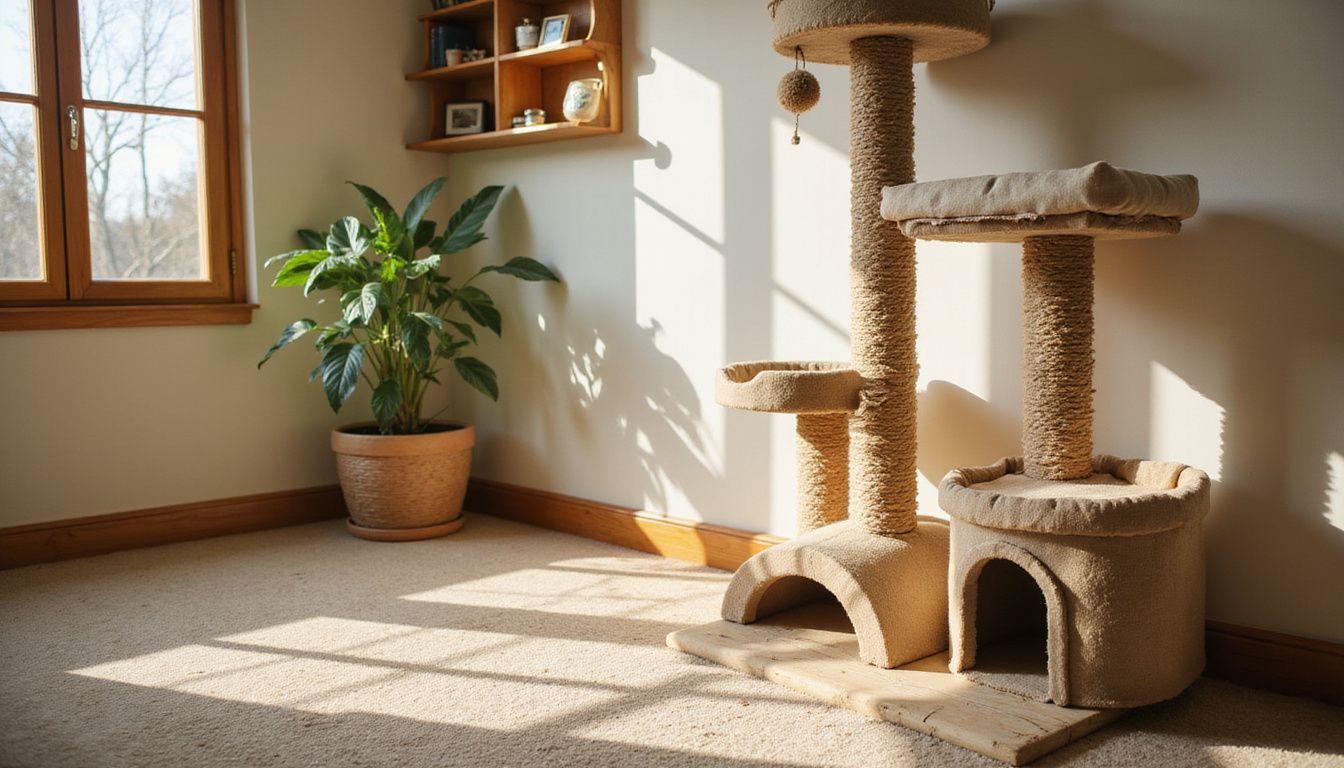
Offering the right vertical spaces satisfies your cat’s climbing instincts and redirects that energy away from your kitchen.
Climbing structures worth adding:
- Cat trees give your cat dedicated climbing zones with multiple levels and perches, plus real enrichment.
- Wall-mounted shelves create vertical pathways without eating up floor space. Install them where your cat spends the most time.
- Window perches satisfy climbing urges and give your cat a show. Watching outdoor activity is hard to resist.
- Multi-level cat gyms combine scratching posts, hideaways, and platforms, great for multi-cat households.
How to make these spots impossible to resist:
- Corner shelving uses unused space and adds more climbing options near your cat’s favorite spots.
- Rotate toys and rearrange shelves monthly so the setup stays interesting.
- Place treats or toys on approved perches so your cat picks them over the counter.
- Provide at least one perch per cat, plus one extra, to cut down on turf wars.
How do cat trees or shelves help keep cats off counters?
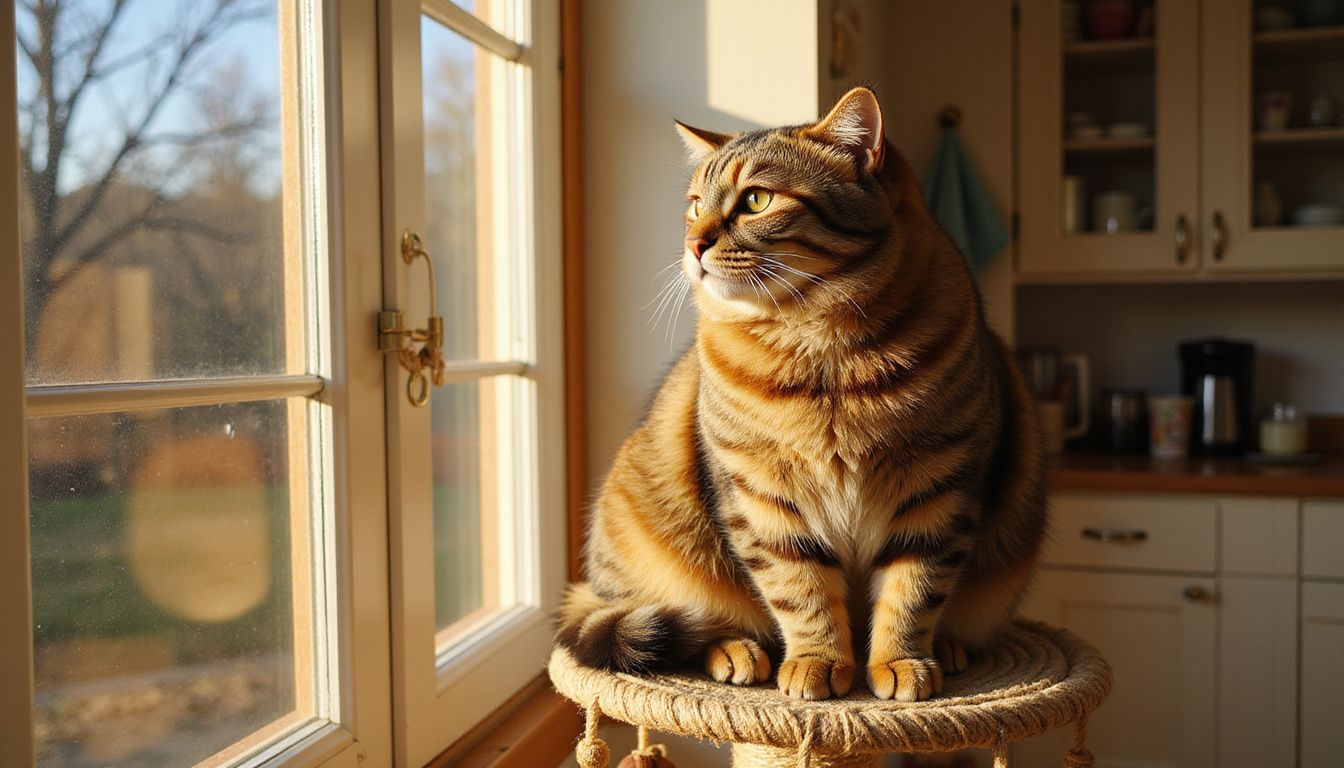
Cat trees and shelves work like magic for keeping your cat off counters. Cats have a natural drive to climb and watch their surroundings from up high. When you offer furniture with multiple levels, you give your cat a safe alternative to the countertop.
Here’s the part most people miss: height matters a lot.
| Surface | Typical Height |
|---|---|
| Standard US kitchen counter | 36 inches |
| Cat tree or shelf needed to compete with it | 60 to 72 inches |
According to feline environmental design guidelines, a cat tree or shelf system needs to reach 60 to 72 inches to actually outrank your counter as the best view in the room. A short tree just won’t cut it.
Placing a tall tree near a window turns it into a prime observation post where your cat can watch birds and outdoor activity instead of eyeing your counter.
One household saw counter contacts drop from 38 a week to just 4 by day 21, and down to 1 by day 42, after adding a 6-foot cat tree near the kitchen window, running two daily 10-minute play sessions, and clicker rewarding tree use.
Offering enough vertical space does more than redirect behavior. It reduces stress and helps prevent other behavior problems from cropping up.
Add toys or treats to the furniture to boost its appeal, and reward your cat every time it chooses the tree. Multiple options also cut down on competition in multi-cat homes, keeping everyone mentally stimulated and content.
How can positive reinforcement train cats to stay off counters?
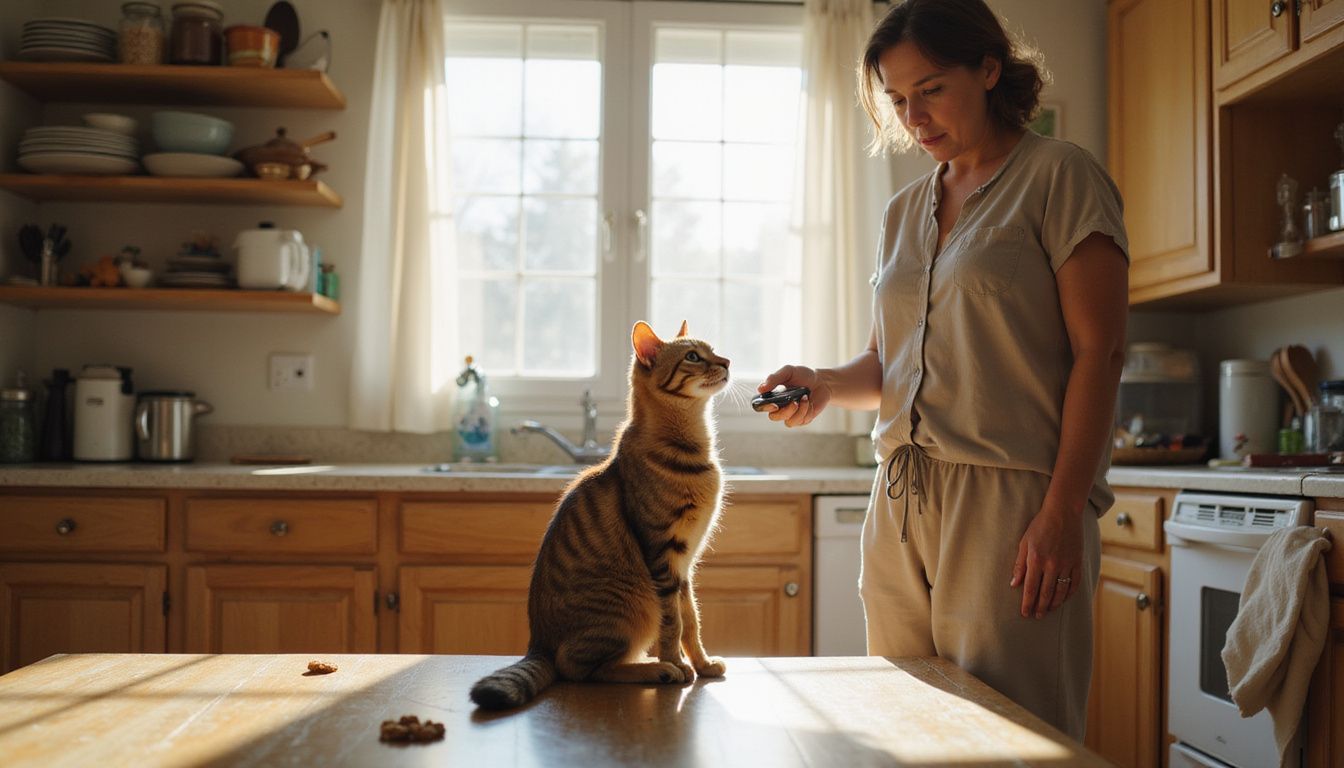
Positive reinforcement turns cat training into a game your cat actually wants to play, since good behavior pays off. Clicker training and reward-based conditioning work together to keep your cat off the counters for good.
What is clicker training and how does it help?
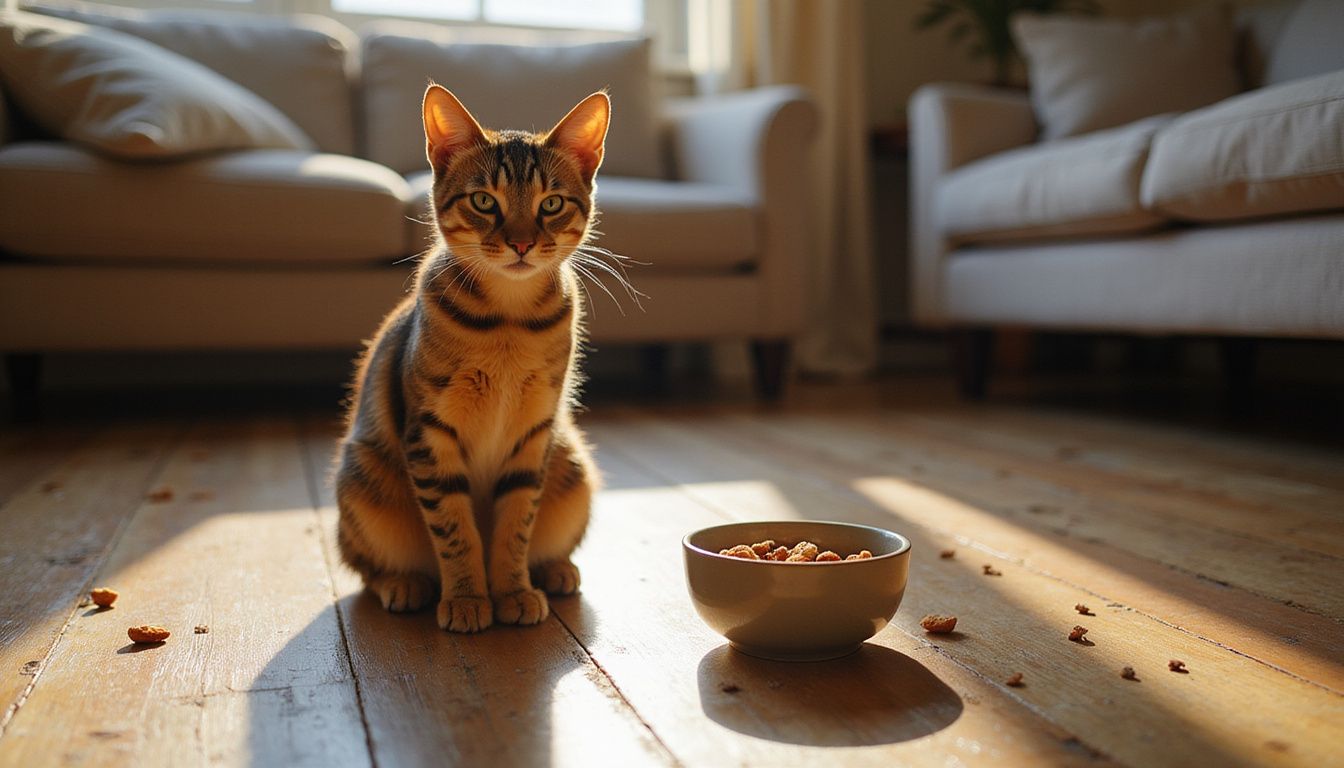
Clicker training works like a bridge between you and your cat. Popularized for domestic pets by behavioral pioneer Karen Pryor, this method uses a small device that makes a clicking sound to mark the exact instant your cat does something right.
The click happens instantly, then you give your cat a treat. This immediate reward helps your cat connect the sound with the correct action, which makes the lesson stick faster than other methods.
Over time, your cat learns which behaviors earn treats and which ones don’t. Cues like “off” and “up” become powerful tools once they’re reinforced with treats again and again.
| Days | Sessions | Focus |
|---|---|---|
| 1 to 3 | 5 sessions daily, 30 seconds each | Charge the clicker with treats |
| 4 to 10 | 6 sessions daily, 1 to 2 minutes | Mark and reward stepping off the counter, treat within 1 to 2 seconds |
| 11 to 21 | Ongoing sessions | Increase cue distance, cut treats to 50% |
| Weeks 4 to 8 | 1 to 2 short sessions daily | Maintain with high-value, occasional rewards |
Log each session so you stay consistent, and make sure every housemate follows the same steps. Short, frequent sessions with an immediate click and treat, paired with a nearby approved perch, speed up the learning and keep the whole household on the same page.
Clicker training builds a strong foundation for good house manners over time. It works well in single-cat homes and multi-cat households alike, and it turns training from a frustrating battle into something you both enjoy.
How does reward-based conditioning work for cats?
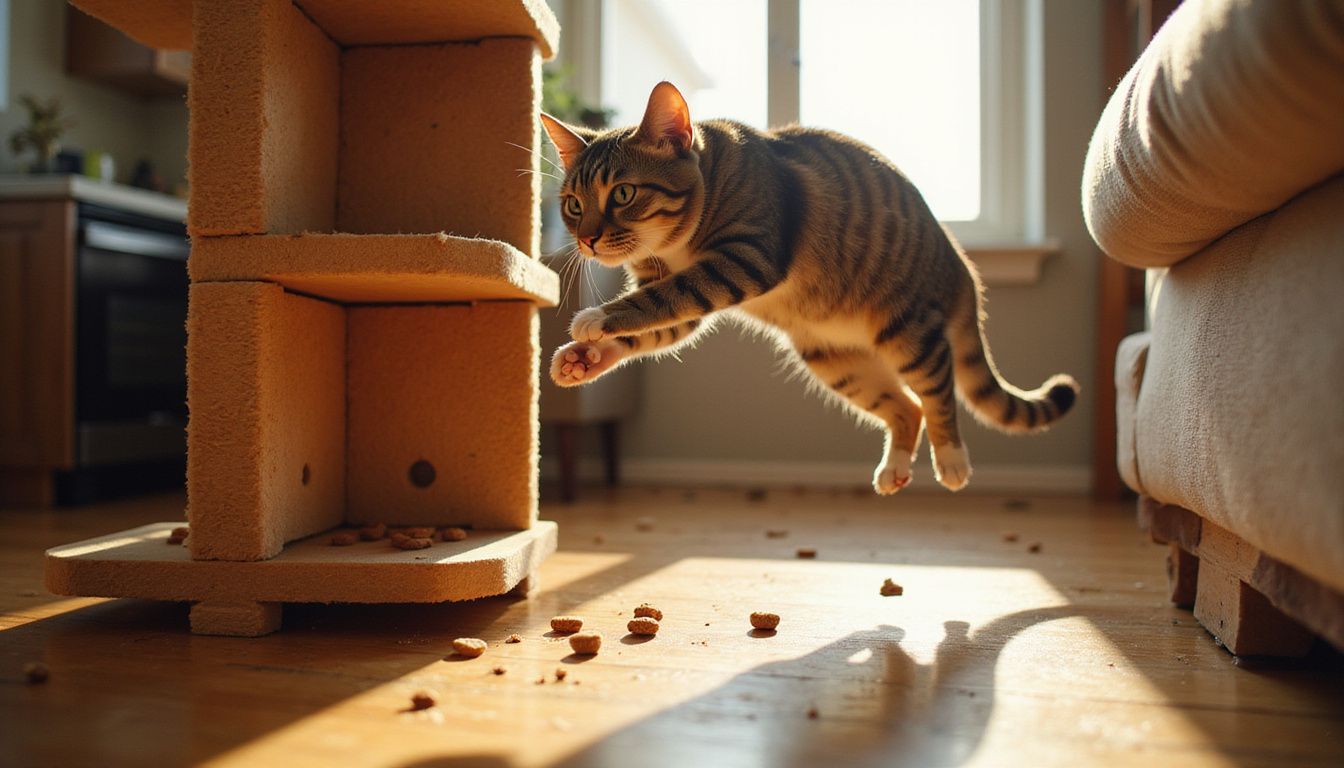
Reward-based conditioning links treats, praise, and affection to the behaviors you actually want repeated. Your cat jumps off the counter and lands on the cat tree? Hand over a treat right away.
That instant reward creates a strong mental connection. Your cat learns that staying off counters leads to something good. Timing matters a lot here. You need to deliver the reward within seconds of the right action, or the lesson gets muddy.
This approach beats negative reinforcement techniques that rely on fear or punishment. Your cat responds better to positive motivation than to scolding or spray bottles.
Consistency is what turns this from a nice idea into a real fix. Every family member needs to reward the same behaviors the same way, or your cat gets mixed signals.
Figuring out what your specific cat loves makes a huge difference.
- Some cats go crazy for chicken treats.
- Others respond better to a favorite toy.
- Some just want extra petting and attention.
This method works across all cat ages and personalities, which makes it a reliable tool whether you’re settling in a new adoption or living with a cat you’ve had for years.
How do I maintain consistency and patience when training my cat?
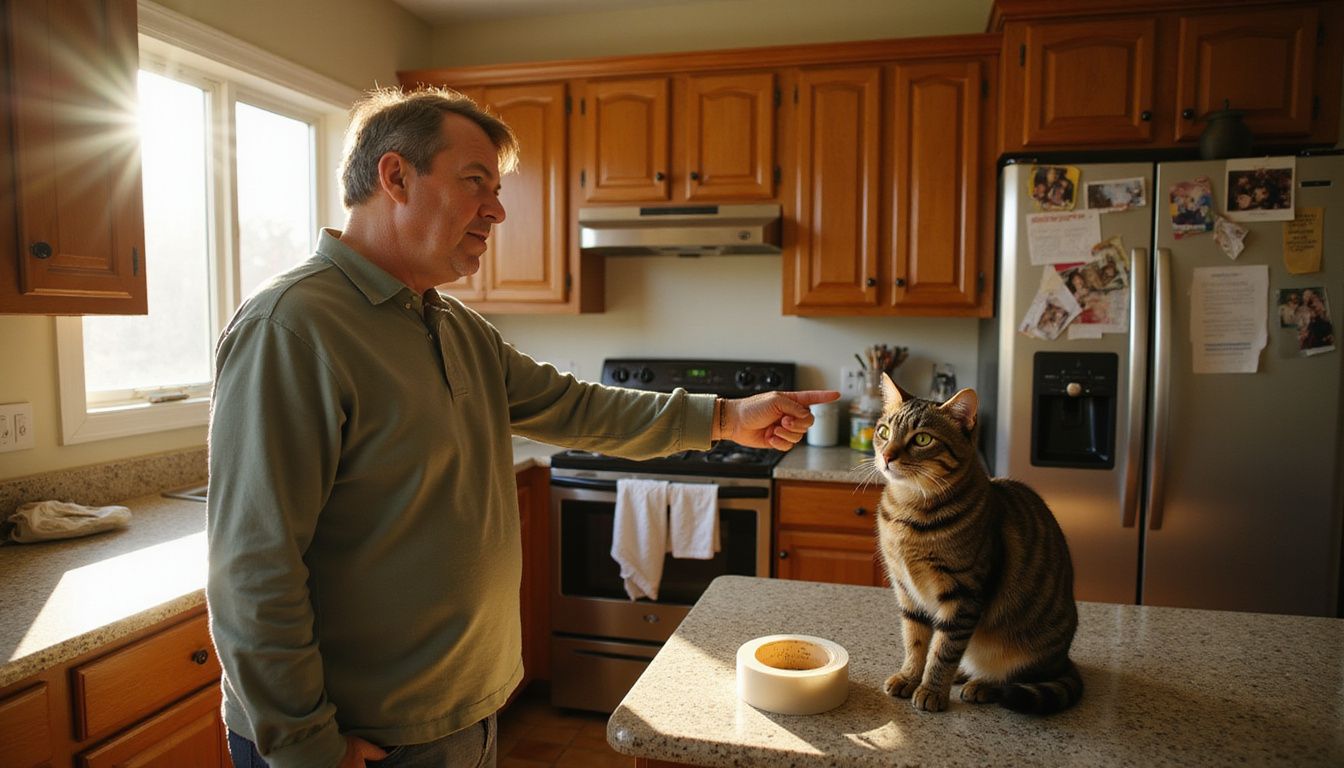
Training your cat to stay off counters only works if every housemate follows the same rules and uses the same deterrents. A mixed approach just confuses your cat.
If one person uses sticky tape while another lets it slide, your cat learns to test boundaries with different people. Behavior change takes weeks, so expect a few slip ups along the way. That’s normal.
Here’s a simple checklist to keep your household on track:
- Keep counters clear of food and clutter.
- Apply deterrents the same way, every time, no exceptions.
- Reward your cat right away when it picks an approved spot instead.
- Post a quick reminder note where everyone will see it.
- Talk to your housemates so everyone sticks to the same plan.
A feline behaviorist can help if your cat keeps showing stress signals or the counter surfing continues despite your best efforts.
Consistency doesn’t mean perfection. It just means showing up day after day with the same expectations. Your cat learns through repetition, not the occasional rule enforcement.
If you bring home a new cat or your routine shifts, expect some retraining. That’s just part of keeping the boundaries clear.
Conclusion

Cats jump on counters to survey their world and feel safe. Giving them cat trees and shelves gives them that same high ground, minus the kitchen chaos.
Sticky tape, plastic carpet runners, and scent deterrents work fast, usually within days or a few weeks.
Positive reinforcement, through clicker training and reward-based conditioning, shapes better behavior than punishment ever could. These methods build trust instead of fear.
Consistency matters more than any single trick. Every family member needs to enforce the same house rules with the same deterrents, or your cat will simply wait for someone to slip.
Add in some daily play and puzzle feeders, and you’ll keep your cat’s mind and body busy enough that the counter stops looking so interesting.
Stay patient and calm, and you’ll turn keeping your cat off counters from a daily battle into a routine you both settle into naturally.
FAQs
1. Why do cats jump on counters in the first place?
Cats are naturally drawn to high places because it taps into their instinct as both predators and prey animals. According to feline behaviorists, elevated spots help them survey their territory and feel secure. Plus, counters often smell like food, so your future kitty will definitely be curious about those tasty scents.
2. What is the fastest way to keep my cat off the counters?
Give them a better option, like a cat tree that’s at least 5 feet tall. When they have their own high perch nearby, most cats will choose that over your kitchen counter.
3. Do sprays or tapes really work to stop this behavior?
Yes, products like Sticky Paws double-sided tape are pretty effective because cats really dislike the sticky texture on their paws. Place it on counter edges for a few weeks, and most cats will start avoiding the area on their own.
4. Should I punish my cat for jumping on counters?
No, punishment creates fear without teaching better habits. The American Association of Feline Practitioners recommends positive reinforcement instead, so reward your cat with treats when they choose to stay on the floor or use their cat tree.