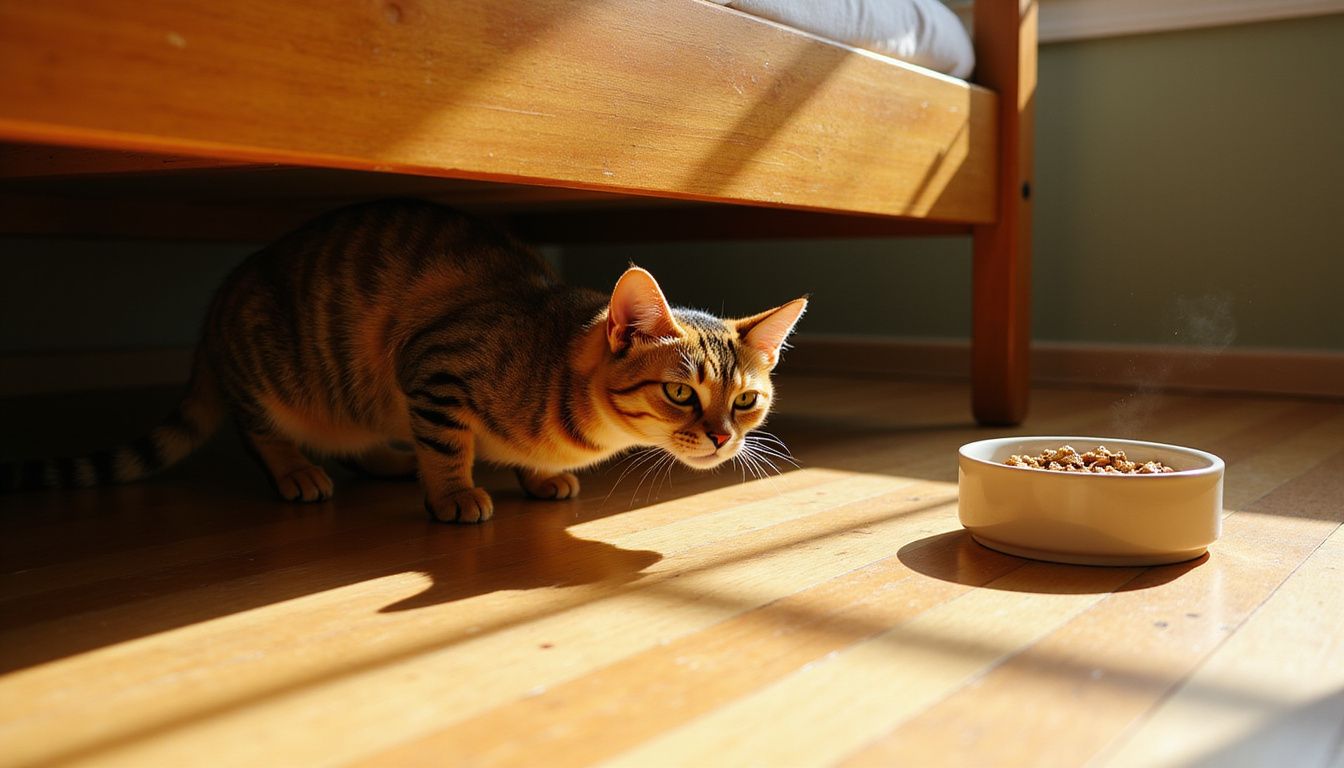
Ever catch your cat bolting under the bed the second you turn on the vacuum, or turning down dinner for no clear reason?
It’s unsettling, especially if you’re just getting to know a new cat or thinking about adopting one.
Cats are experts at hiding pain and fear. That’s an old survival trick, but it makes life tricky for you as their caregiver.
This guide breaks down the real signs of stress in cats, what causes cat anxiety in the first place, and simple steps that calm an anxious cat while building real trust between you two.
Grab a cup of coffee.
I’ll walk you through everything, from spotting the first warning signs to turning a nervous cat into a confident one.
Key Takeaways
- Stressed cats show hiding, appetite changes, excessive grooming, and litter box avoidance. These signs deserve a prompt vet visit.
- Environmental changes, new pets, unfamiliar people, and past trauma trigger cat anxiety. Kittens need socialization between weeks 7 and 14 for healthy development.
- Create safe spaces with elevated perches, separate resources, and hiding spots. Pheromone diffusers like FELIWAY can help as part of a full anxiety plan.
- Interactive play, steady routines, and positive reinforcement build trust faster than forced interactions. Patience pays off, usually within four to six months.
- Talk to your veterinarian to rule out medical causes before assuming a behavior problem. Combine calming products, environmental changes, and behavior work for the best results.
Common Signs of Stress in Cats
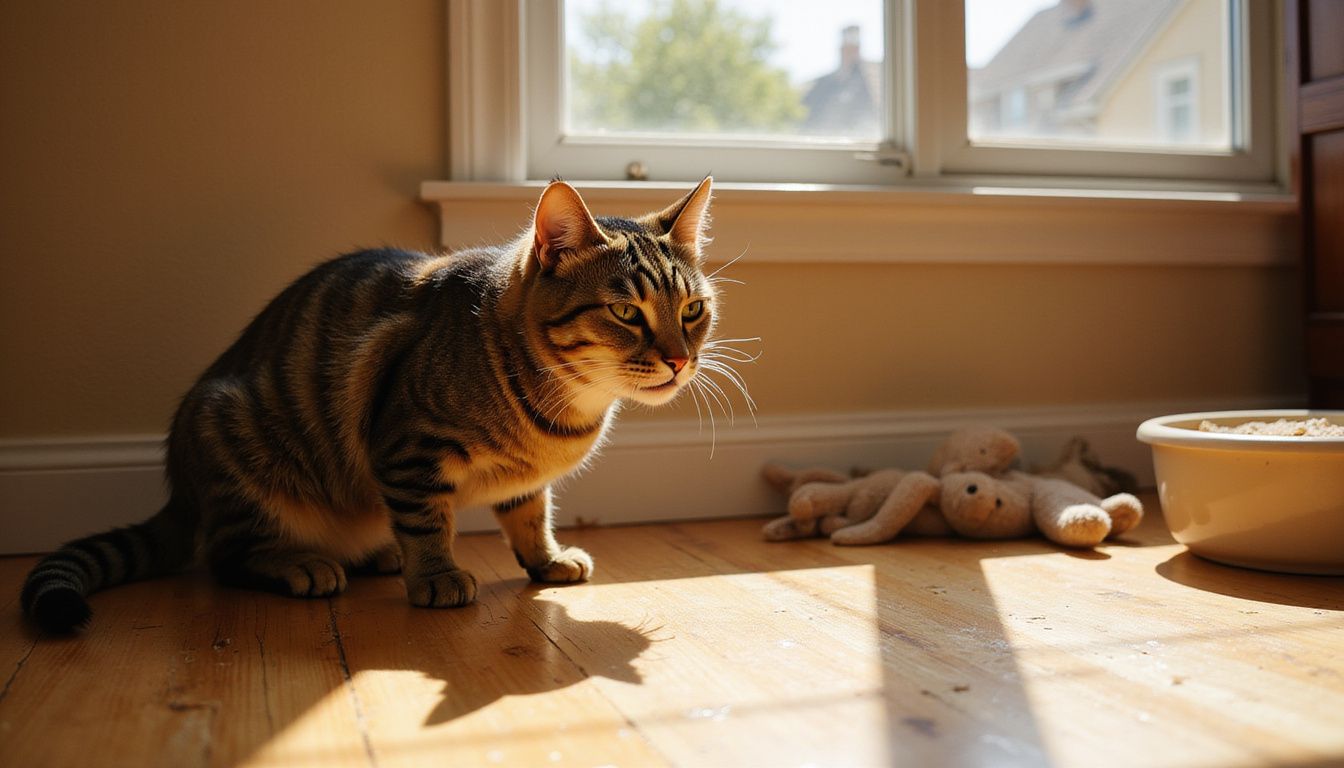
Your cat communicates stress through body language and behavior changes you can learn to spot. Stressed cats often show physical signs, mood shifts, and habit changes that tell you something is wrong.
Why does my cat hide or avoid interaction?
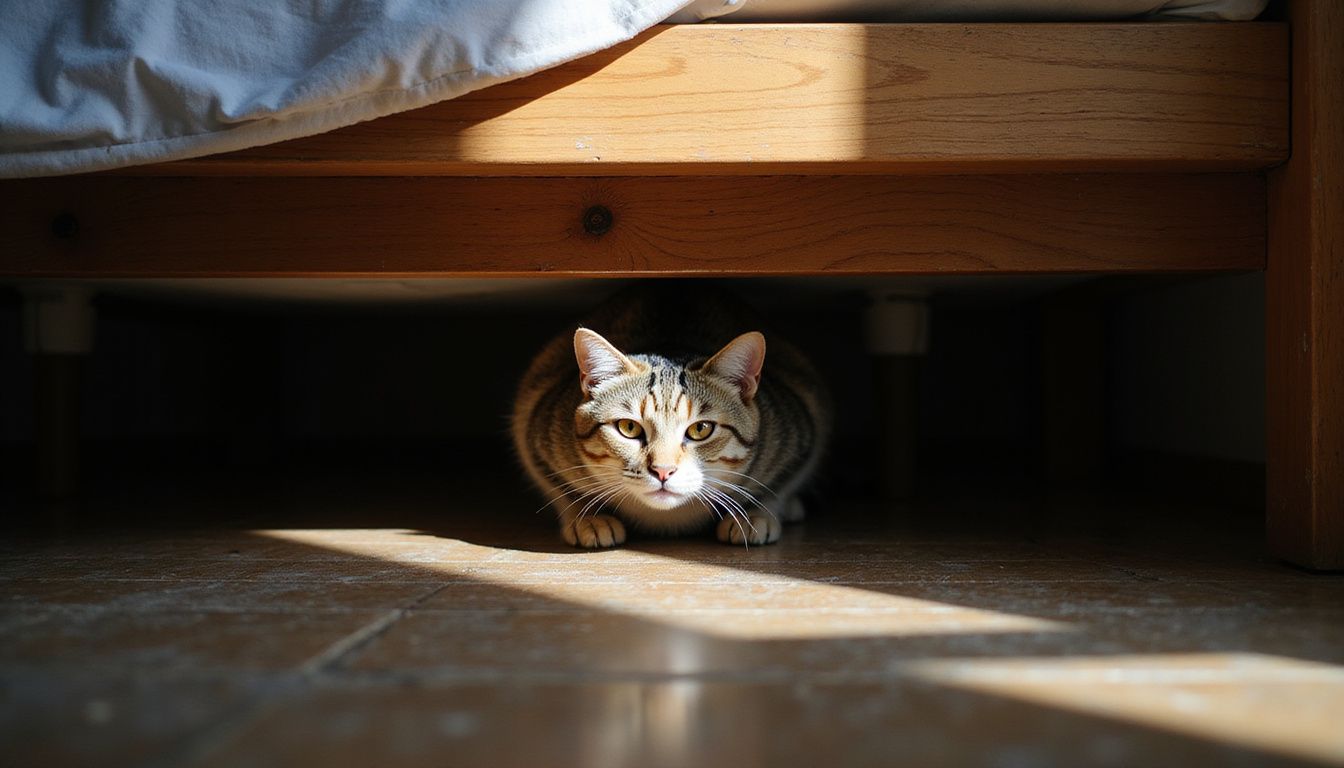
Cats hide because they feel threatened or unsafe. Hiding is a normal stress response, part of their built-in fight or flight instinct.
A scared cat might flatten her ears, hiss, or even swat if fear turns into fear aggression. Hypervigilance kicks in too, making her extra alert to any sign of danger.
She may tuck herself into closets, under beds, or behind furniture for hours.
A few common triggers behind hiding include:
- Environmental changes, like new furniture or a recent move
- New pets or unfamiliar guests in the home
- Separation anxiety when you’re away
- Tension in multi-cat households over territory
According to a 2025 survey published by DVM360, 72% of US pet caregivers worry about their pet’s stress when left alone. Separation anxiety ranks as one of the top behavioral concerns for cat guardians, and it often shows up as this kind of full withdrawal.
Past trauma or a rough start in life, especially missing out on socialization during the critical early weeks, leaves lasting marks on a cat’s behavior too.
An animal behaviourist can help you figure out what’s really driving the avoidance. Your veterinary clinic staff will tell you the same thing: hiding isn’t just shyness. It’s a physical symptom of anxiety that deserves attention.
Anxious cats often stop eating and pull away from family members. They might avoid the litter box, or start using it in odd spots. Watch her posture too: a crouched body, dilated pupils, and a tucked tail all point to distress.
Territorial aggression can also cause hiding or conflict between cats sharing a home. This kind of fear-based hiding differs from a cat who’s simply reserved, because it lingers and tends to get worse over time. Cats Protection and the Blue Cross both stress that anxious cats need patience, not punishment.
A wellness visit to your veterinarian should always come first, to rule out medical issues. Behavior modification works best when you start early, and pheromone diffusers can help by releasing calming scents that mimic natural cat signals.
“A stressed cat teaches us that safety comes before everything else.”
Your job is to create spaces where hiding feels unnecessary. Don’t punish the behavior itself. Just give her room to come around on her own time.
What causes excessive grooming or scratching in cats?
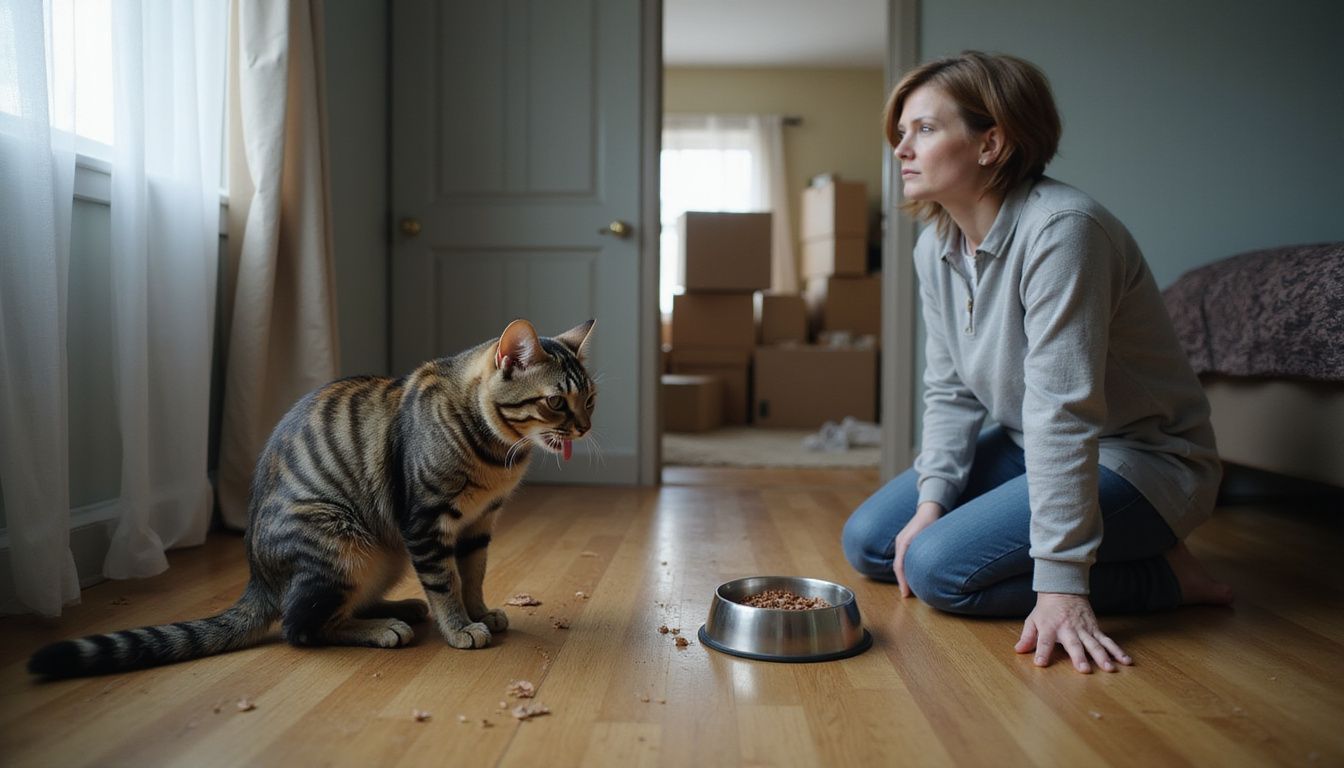
Excessive grooming or scratching often signals anxiety, frustration, or even sadness in cats. Stress can trigger grooming as what vets call a displacement activity, meaning your cat licks or scratches to cope with uncomfortable feelings.
Over-grooming ranks among the top signs of cat stress, so catching it early really matters. This kind of anxious licking is a physical symptom, not just a bad habit.
Some cats lick one spot until bald patches show up. Others scratch furniture, or even themselves, again and again. These actions are your cat’s way of self-soothing when life feels like too much.
A few common triggers behind this nervous habit include:
- Environmental changes, like new furniture or moving homes
- A new pet or baby joining the household
- Past trauma or a rough start in life
- Boredom, especially in cats stuck indoors without enough stimulation
Skin irritations or other physical health issues can also make grooming worse, so it isn’t always purely behavioral.
According to the American Animal Hospital Association, veterinary dermatologists use the term Feline Psychogenic Alopecia for stress-driven overgrooming. Here’s the catch though: this condition gets overdiagnosed. Most cats with bald patches actually do better with medical treatment for an underlying issue, like flea allergies or food sensitivities, than with anxiety treatment alone.
That’s exactly why your veterinarian should rule out medical causes with a full exam before anyone assumes it’s “just stress.” Changes in grooming habits connect directly to your cat’s emotional state, so tracking these shifts gives you real insight into how she’s doing.
If your cat suddenly grooms herself raw, talk to a professional certified through the Animal Behaviour and Training Council, or check in with your local veterinary care provider. They’ll offer cat care advice suited to your situation, and may suggest behavioral consults or counterconditioning to get at the root cause.
How do changes in appetite or litter box habits indicate stress?
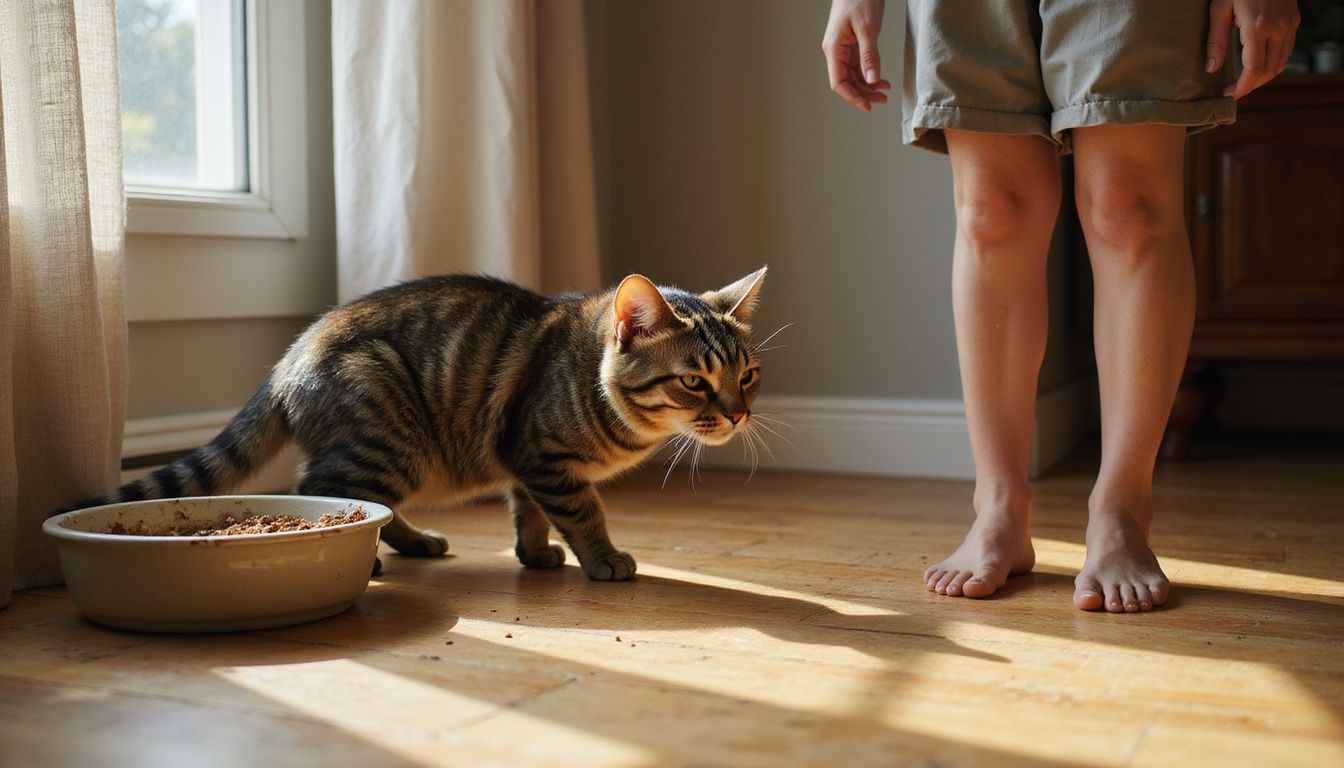
Changes in appetite are one of the clearest red flags that stress is affecting your cat. Some cats eat much less when anxious, while others overeat as a coping mechanism.
A stressed cat might skip meals entirely, and that can lead to weight loss that needs prompt veterinary attention. These shifts in eating don’t happen by accident. They signal that something in her world feels wrong.
PetMD and the American Veterinary Medical Association both stress that sudden changes in eating call for early intervention, before short-term anxiety turns into a chronic problem.
Litter box habits tell an equally important story. Watch for these stress-related warning signs:
- Peeing or pooping outside the box
- Sudden changes in how often she uses it
- Complete avoidance of the litter box
- Straining or crying while trying to go
A cat that suddenly refuses her litter box may be telling you she’s stressed, but a veterinarian should rule out medical causes first. Decreased appetite and litter box problems often show up together, so pay attention to both at once.
Town N Country Veterinary Services in Hastings, MN, once treated a rescue cat brought in for sudden litter box avoidance and weight loss. After ruling out a urinary tract infection and pain, the team moved the litter box, added a second one, and placed a pheromone diffuser near the litter area. Accidents dropped from seven in week one to just one by week four, and the cat’s weight stabilized with small appetite gains by week six.
This case shows how a medical check plus small environment tweaks can resolve stress-driven litter box problems in about a month. Recognizing these signs early, as Town N Country and other behavior specialists point out, makes a real difference in how fast your cat recovers.
Understanding these warning signs sets you up to learn calming techniques that actually work.
Causes of Stress in Cats
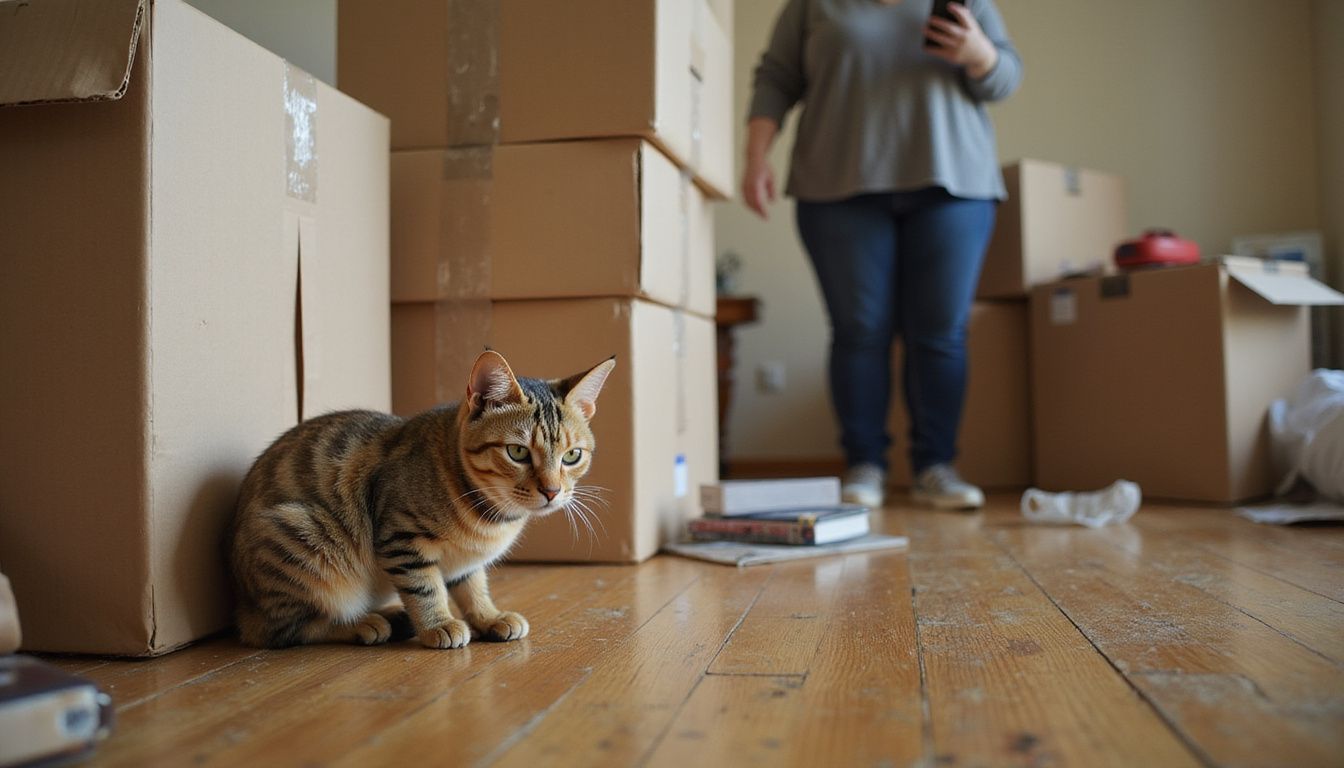
Stress in cats doesn’t come from nowhere. It stems from real triggers that shake up their world.
Your living situation, the people and pets around you, and your cat’s past all shape how anxious she becomes.
Environmental changes affecting cat stress
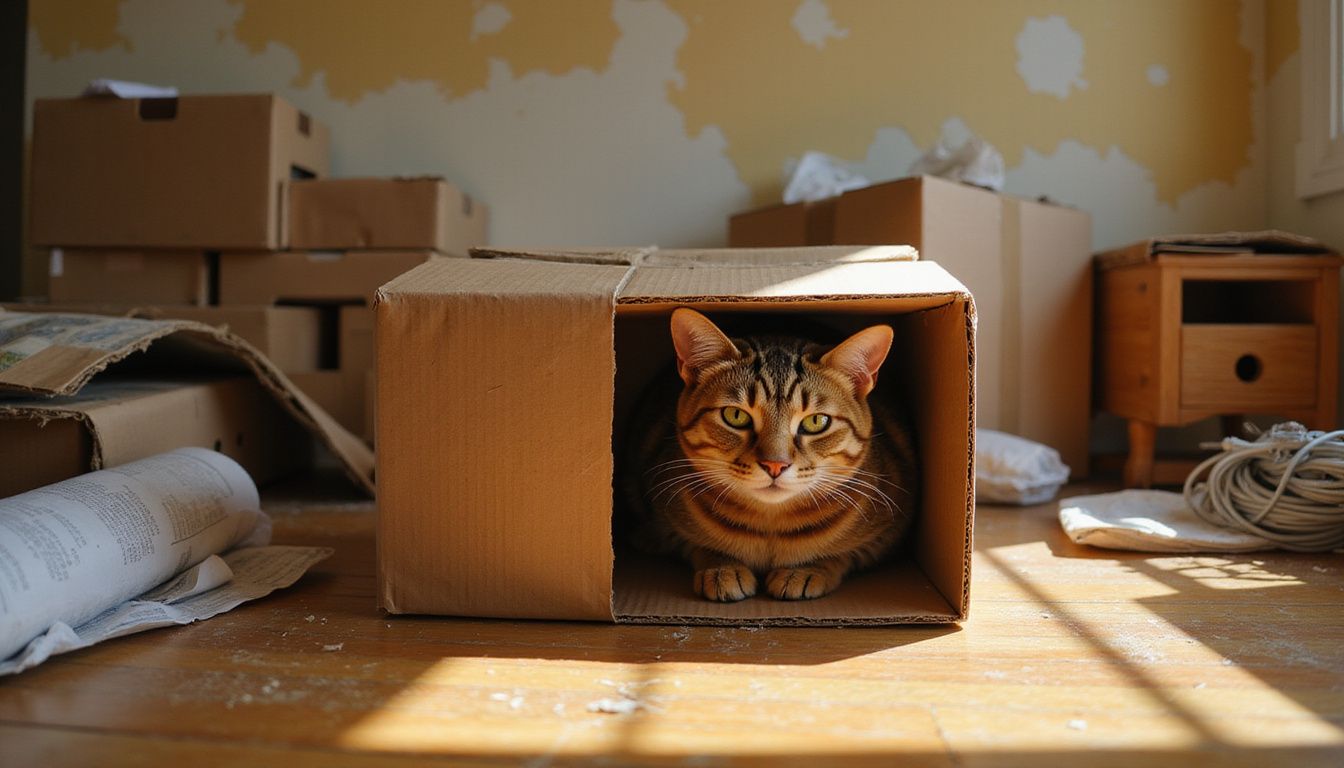
Cats thrive on routine, so moving homes, construction noise, or fireworks can shake their world like an earthquake. These disruptions trigger real anxiety that shows up fast in behavior.
Moving forces a cat to leave the surroundings where she feels safe. Construction brings noise that unsettles even the calmest feline. Fireworks bring both loud booms and bright flashes that send cats running for cover.
Each stressor is different, but they all send your cat’s nervous system the same message: danger is close. The Animal Behaviour and Training Council points out that cats are highly sensitive to any change in their living space.
Gradual adjustment to a new environment helps a lot. Planning ahead for your cat’s safety during a move matters more than rushing the process.
An unsuitable living space can quietly amplify stress in ways many cat guardians overlook. Moving her food, water, or litter box around confuses her and spikes anxiety, since cats need these essentials to stay in consistent spots.
This becomes even more important in homes with more than one cat. In their 2024 Intercat Tension Guidelines, the Feline Veterinary Medical Association notes that up to 87.7% of multi-cat households deal with some tension between cats. That chronic stress is a leading trigger for Feline Idiopathic Cystitis, a painful bladder inflammation that sends many cats to the vet.
A few quick fixes reduce this kind of chronic tension fast:
- Give each cat her own food and water bowls, in separate areas
- Provide one litter box per cat, plus one extra
- Add vertical space, like cat trees, so cats can avoid each other
- Keep resource locations and scents consistent
Environmental management is a key part of treating cat anxiety, according to veterinarians and behavior experts. Keeping things calm during any transition gives your cat room to adjust at her own pace, whether it’s noise, new scents, or a whole new house.
Introducing new pets or people to a cat’s environment
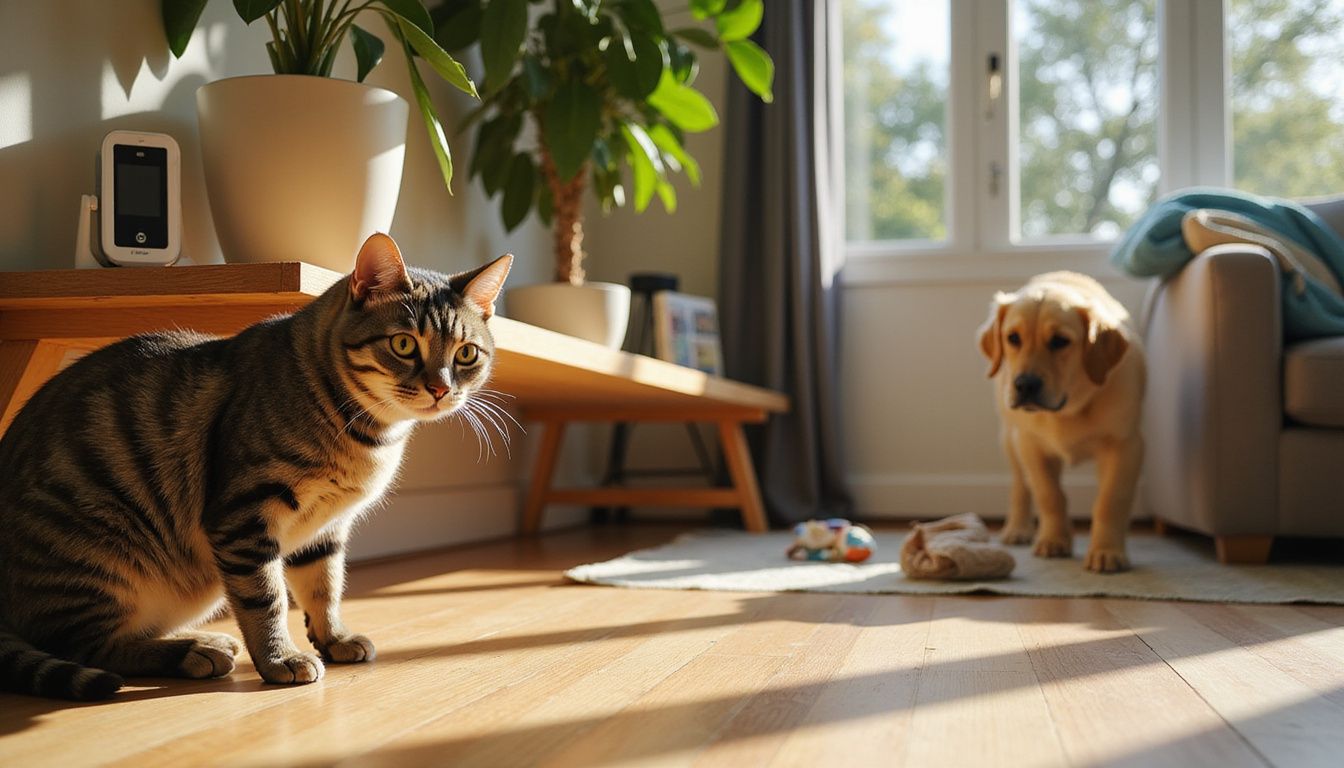
Your cat’s territory matters more than you might think. Dogs, in particular, can trigger serious anxiety in cats because their energy and size feel threatening. Cats aren’t naturally wired to cohabitate with other felines either, so adding a second cat takes careful planning.
If you’re adopting, consider bringing home sibling pairs instead. They already know each other and settle into new spaces faster. Unfamiliar cats wandering in from outside can also stress your resident cat out, so you may need to keep them away from your yard or home.
The key is moving slowly. Rushing introductions overwhelms your cat and damages trust before it even starts forming.
| Weeks | What Happens |
|---|---|
| 1 to 2 | Swap bedding daily so both animals get used to each other’s scent |
| 3 | Short visual exposure through a baby gate, five minutes twice a day |
| 4 to 5 | Supervised meetings on a leash, three to seven minutes, building up slowly |
| 6 to 8 | Free supervised time together, with clear escape routes for the cat |
One household followed this exact eight-week plan when adding a calm, medium-sized dog to a resident cat who’d been hiding a lot. By week eight, the cat spent time in the shared living room while the dog rested calmly nearby about 70% of the day, all without a single forced interaction.
New people and babies shake up your cat’s world in unexpected ways. Guests bring noise and chaos that can send her into hiding mode, so give her a quiet space to retreat to when visitors arrive.
Babies introduce new sounds, smells, and routines that confuse cats. Playing recordings of baby sounds weeks in advance, and letting her sniff baby blankets and gear early, helps her adjust without panic.
Watch her behavior during these transitions for clues about her stress levels, things like excessive grooming, appetite changes, or litter box issues. Understanding your cat’s phobias and limits helps you design introductions that feel safe rather than scary.
Effects of lack of socialization or past trauma on cats
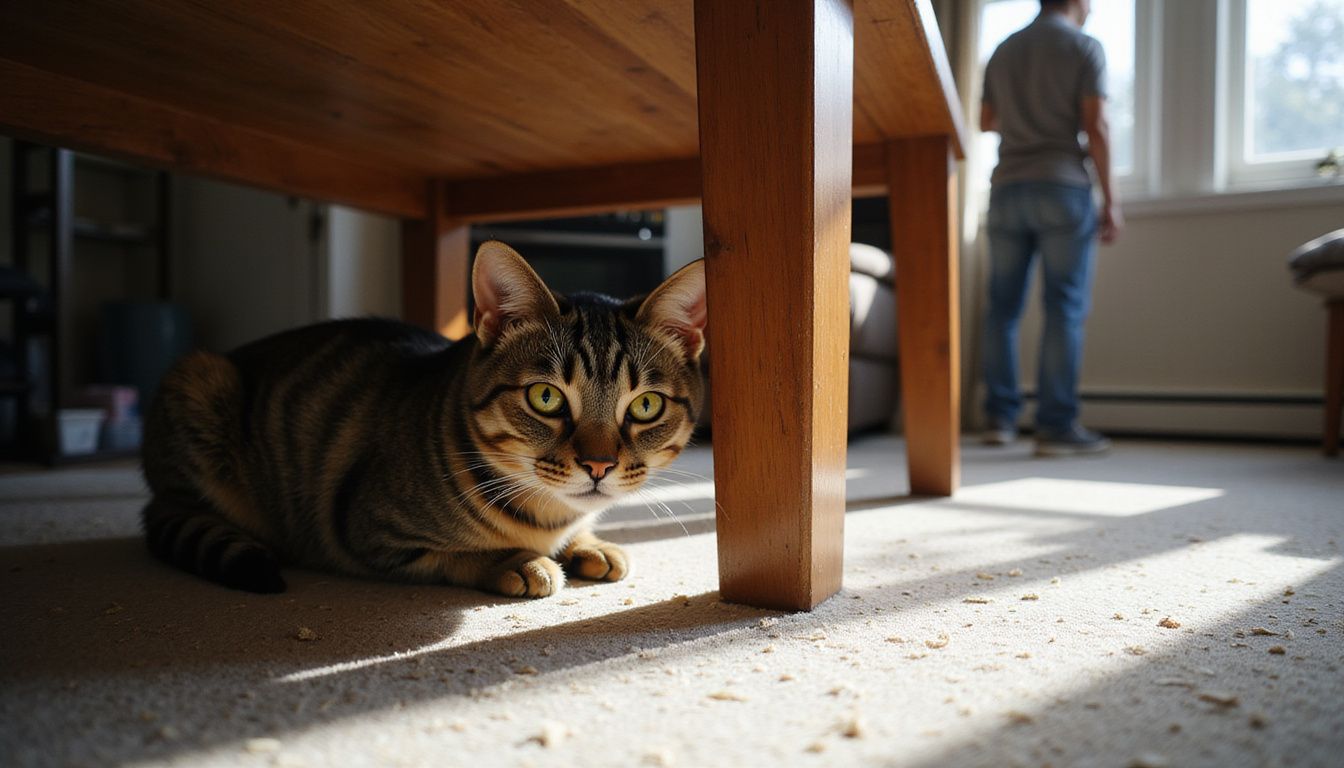
If you adopt a cat that missed positive social contact during the critical socialization window, roughly 7 to 14 weeks old, you’re likely to face real behavioral challenges. Kittens who miss this window often develop chronic fear or anxiety that follows them into adulthood.
A cat with this kind of background may hide constantly, avoid you altogether, or act aggressively toward strangers. Many shelter cats carry this baggage because of early trauma or neglect.
The ASPCA points out that trauma is personal for cats, so what frightens one cat might not bother another at all. A shelter cat might flinch at sudden movement, refuse to eat around people, or show fear aggression that makes handling tough.
Watch for these common signs in an undersocialized or traumatized cat:
- Hiding for hours, even from familiar people
- Flinching at sudden sounds or movement
- Refusing to eat when people are nearby
- Lashing out defensively when approached
These behaviors won’t disappear overnight, and they call for patience on your part. Long-term anxiety and separation anxiety often show up together in cats who missed early socialization.
Rehabilitation takes ongoing support, sometimes including a veterinary behaviorist or tools like a Feliway diffuser to ease the tension. Her past shapes how she interacts with you and the world, but you can reverse a lot of that damage through steady, gentle interaction and a stable routine.
Building trust takes time, but your patience with her cat behavior patterns makes all the difference in her recovery.
How to Calm an Anxious Cat
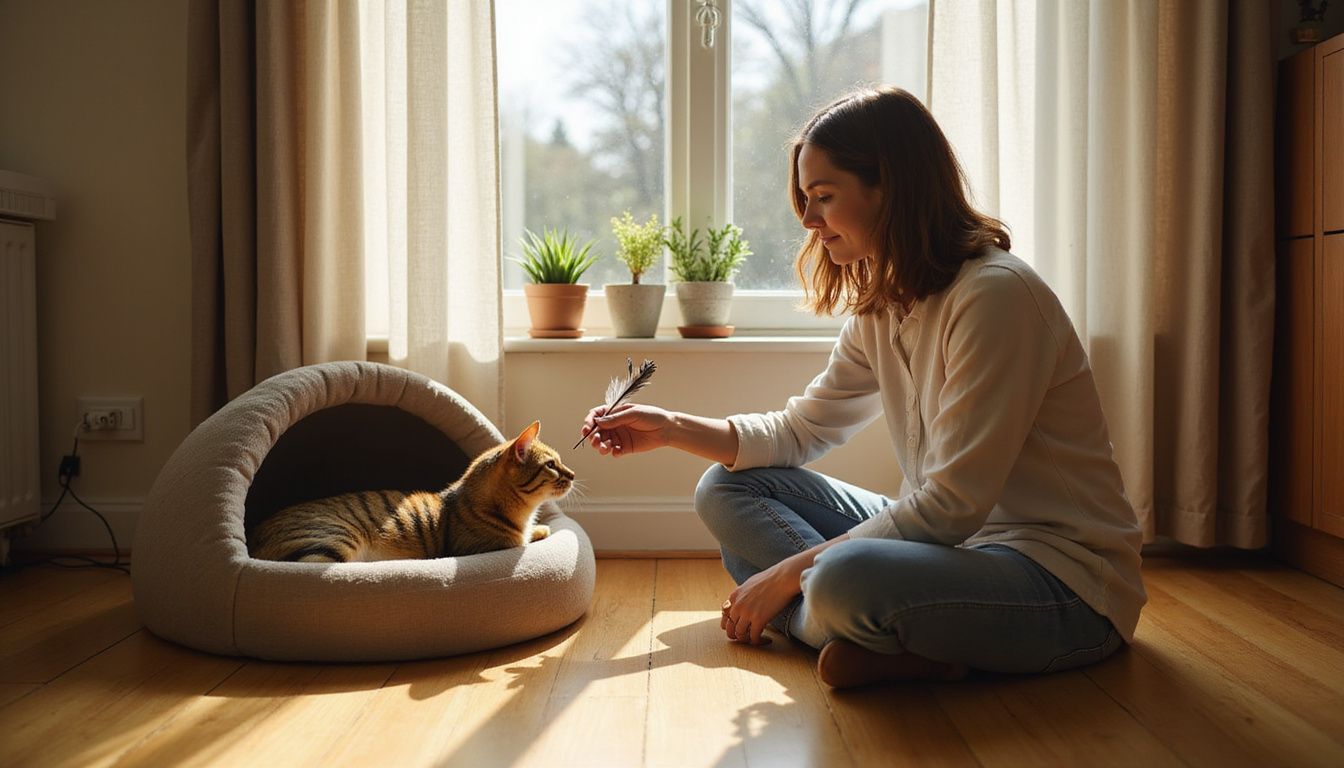
You can calm an anxious cat through proven methods like creating safe spaces, using pheromone diffusers, and adding interactive play. Here’s exactly how to turn a stressed cat into a relaxed, confident companion.
How can I create a safe and quiet space for my cat?

Your cat needs a calm retreat where stress can melt away. Building this sanctuary just takes a few simple steps.
Start with the physical setup:
- Install elevated perches in quiet corners, so she can watch the room without feeling exposed.
- Place food, water, and the litter box in separate, low-traffic spots away from household chaos.
- Add hiding spots with cat trees, boxes, or tunnels, so she can duck away when she needs a break.
- Use blackout curtains or soundproofing during fireworks, storms, or other loud events.
- Set up a window perch, which gives a bored or lonely cat mental stimulation without any pressure to interact.
Then focus on keeping things predictable:
- Keep room temperature and lighting steady throughout the day.
- Turn down loud noises from vacuums, construction, or the TV in nearby rooms.
- Add a timed feeder in her safe space, so meals happen on a reliable schedule.
- Keep this sanctuary away from guests and any new pets in the house.
- Let her leave the space whenever she wants, without restraint or forced contact.
Respecting these boundaries builds the lifeline of trust an anxious cat desperately needs.
What are pheromone diffusers and calming sprays, and do they work?
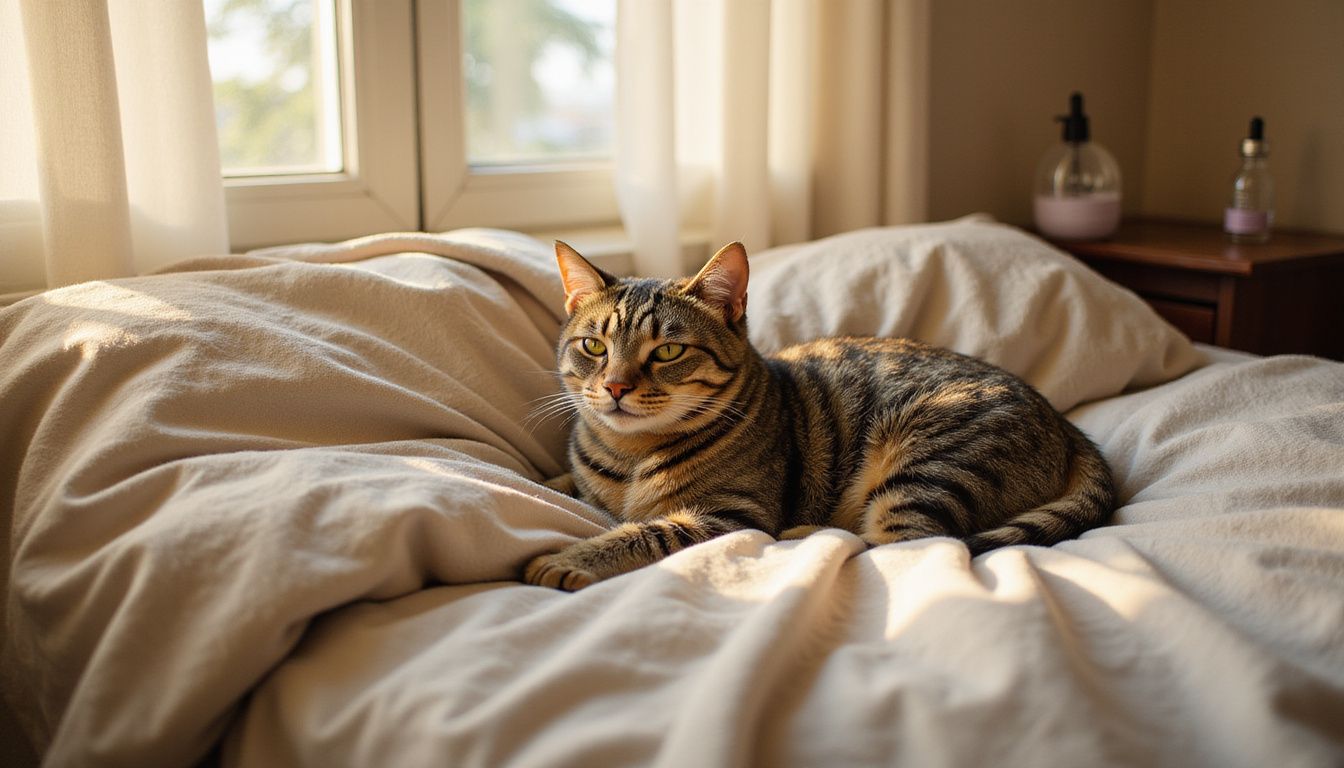
Pheromone diffusers like FELIWAY release synthetic versions of the calming scents cats naturally produce from glands on their faces. Plug one in wherever your cat spends the most time, like near her favorite sleeping spot or in the main living area.
A recent placebo-controlled study published in the journal PLOS One found that a FELIWAY Classic diffuser significantly cut stress-related scratching in 83.5% of cats over a 28-day period. That’s a solid track record for something you just plug in and leave running.
Calming sprays work in a similar way, but they’re better suited to specific moments, like a vet visit or a fireworks show. Treats with L-theanine or tryptophan offer another option for taking the edge off anxiety.
One cat guardian tried a FELIWAY plug-in for a newly adopted, shy adult cat who was hiding a lot and barely eating. Daily hiding episodes dropped from 5.6 to 4.1 in the first two weeks, then down to 2.3 by week six, while short meals increased from 1.2 to 1.9 per day, with no other changes made.
These products work best paired with your vet’s advice and some behavior strategies on your end. Always check with your veterinarian before starting anything new, since they can point you toward the right approach for your cat.
Pheromone diffusers and sprays alone won’t fix anxiety on their own, so treat them as one tool in a bigger toolkit. Shorter-acting anxiety medications can also work within one to three hours for predictable stressors, which is handy when you know a tough event is coming, like a move or a big storm.
Combining these calming tools with patience and a steady routine gives your cat the strongest foundation for feeling safe again.
How does interactive play help reduce cat anxiety?
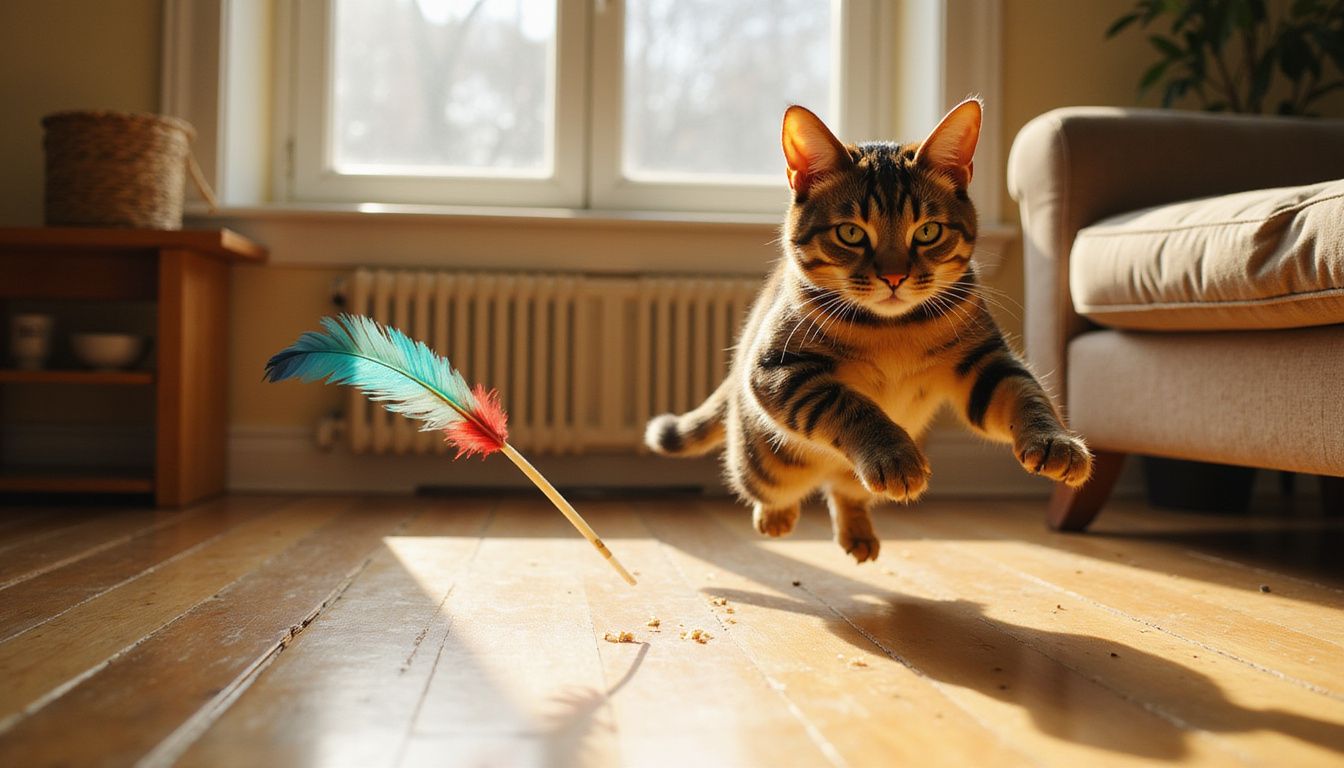
Interactive play stands as one of your most powerful tools against anxiety in a nervous cat. Play shifts her emotional response from fear toward something positive, so she starts linking playtime with happiness instead of stress.
Toys like feather wands, laser pointers, and balls tap into her natural hunting instincts. US veterinary behaviorists widely recommend two to three play sessions a day, lasting 10 to 15 minutes each. That timing mirrors a cat’s natural hunt-and-rest cycle, giving her enough activity to burn off nervous energy without tipping into overstimulation or frustration.
Good toy options include:
- Feather wands for supervised chase play
- Puzzle feeders that reward slow, focused effort
- Soft balls or crinkle toys for solo play
A small survey of 30 recent adopters tested this kind of structured, twice-daily play routine using feather wands and puzzle feeders for socially timid cats. After 12 weeks, 20 of the 30 reported less avoidance during play, and 15 saw fewer destructive behaviors. The median time before a cat’s first voluntary approach dropped from 19 days to just 9.
Interactive toys and climbing structures do more than entertain. They cut down on boredom, which is a real stressor for cats stuck indoors all day.
Puzzle feeders work especially well for cats dealing with separation anxiety, since they keep her mind busy on something rewarding while you’re away. Regular play also teaches new coping skills through counterconditioning, turning anxious behavior into confident behavior over time.
You’ll likely notice fewer destructive habits too, like scratching furniture or chewing cords, since these often stem from pent-up tension. A symptom checker might flag scratching or aggression as a problem, but targeted playtime tackles the root cause instead of the surface issue.
Building Trust with Your Cat
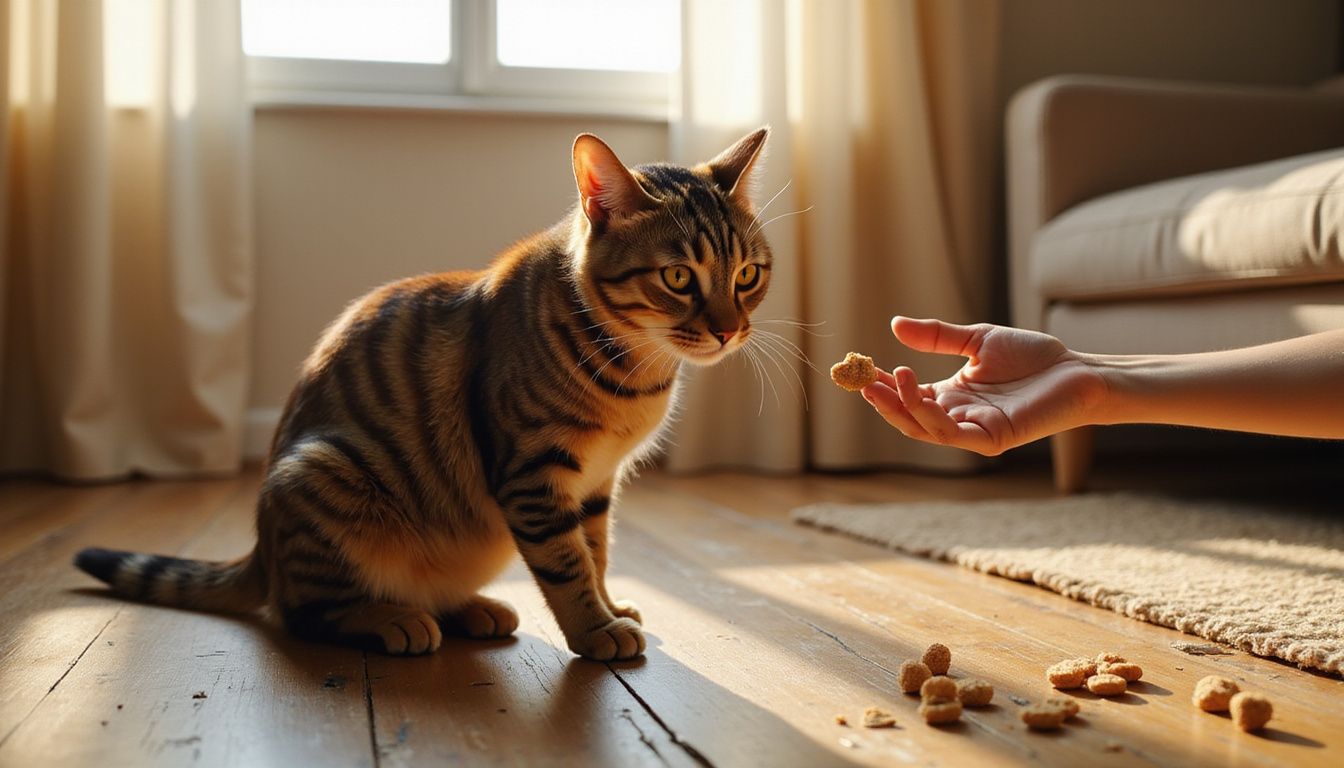
Your cat needs time, patience, and consistency to feel safe around you. Trust builds day after day, through treats, gentle words, and respect for her boundaries.
How can I be patient and avoid forcing interactions with my cat?
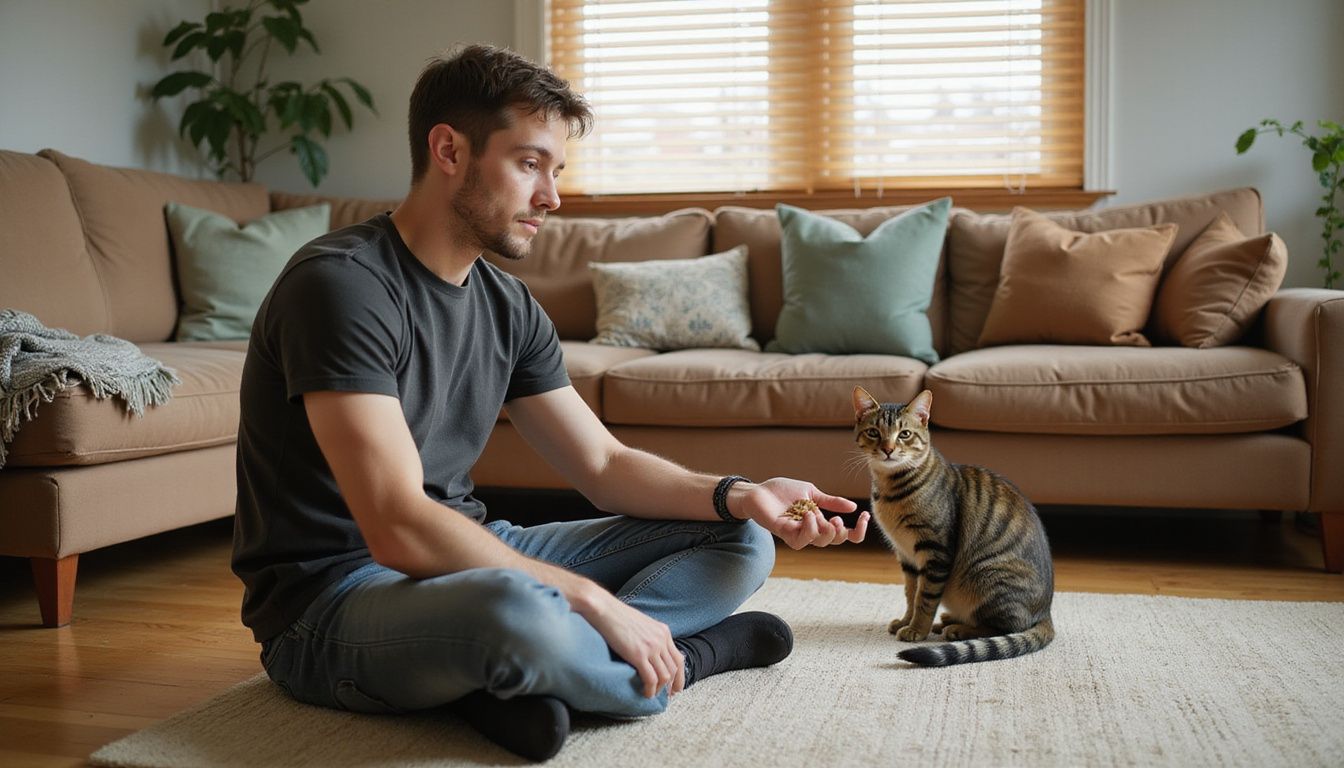
Patience is your greatest tool when building a bond with a stressed cat. Let her set the pace, and resist the urge to scoop her up or force cuddles when she pulls away.
Cats talk through body language. A tucked tail, flattened ears, or a turned head all mean she needs space right now.
Watch for these signals that tell you to back off:
- Tucked tail or tail flicking
- Flattened or backward ears
- Dilated pupils
- Turning her body away from you
Letting her remove herself from a stressful moment stops things from escalating, and shows her you respect her limits. This matters even more if you’re adopting a cat with a rough past or trauma history.
Forcing interactions can actually worsen her anxiety and chip away at trust, so watch what she needs before you act. Sit quietly nearby instead of chasing her around the house.
Offer treats from your hand, but let her come to you at her own speed. Some cats warm up faster with gentle play on a wand toy, since it gives them control over the interaction.
Skip punishment, yelling, or squirt bottles entirely. These tactics only increase fear and aggression instead of solving anything.
If your cat shows signs of extreme stress, talk to your veterinarian about options like antidepressants or neutering, which can sometimes ease anxiety-driven behavior. Comforting a fearful cat gives reassurance and doesn’t reward the anxious behavior, so don’t hold back on gentle support. The Cat Magazine and other resources agree that building trust takes time, especially with a previously traumatized or fearful cat, so let her set the rhythm.
Why is maintaining consistent routines and positive reinforcement important?

Skipping the pressure and letting trust build naturally sets a strong foundation. But here’s what really transforms your relationship: consistency and rewards working together.
A steady routine gives your cat something solid to count on. Cats feel calmer when their daily schedule stays the same, so keep feeding times, play sessions, and cuddle moments happening at predictable hours.
Sudden changes in routine can trigger anxiety or even behavior regression, so keep her world as stable as you can. This kind of consistency in daily care helps her feel secure, which means she relaxes and trusts you faster.
She learns you’re reliable. Good things happen on schedule, and her world won’t flip upside down without warning.
Positive reinforcement seals the deal. Try these simple habits:
- Offer a treat the moment she sits calmly near you
- Praise her warmly when she uses the litter box without issue
- Reward calm reactions to new sounds or visitors
- Keep sessions short and end on a positive note
This approach works because cats connect good feelings with specific actions. Gradual desensitization and counterconditioning are techniques vets use often, and you can apply the same methods at home.
Keep training and enrichment going for the long haul. New toys, puzzle feeders, and games keep her brain sharp, lower her anxiety, and deepen your bond through shared positive moments.
Conclusion
You now know the real signs of stress in cats, from hiding and appetite changes to excessive grooming and litter box troubles.
A calm space, a pheromone diffuser, and regular interactive play work together to soothe an anxious cat.
Trust grows through patience, steady routines, and positive reinforcement, not through forcing anything.
These changes take time, usually four to six months, but they genuinely lower anxiety and improve your cat’s quality of life.
Start today. Pick one trigger you’ve noticed, try one strategy from this guide, and know that every small effort builds the bond between you and your cat.
FAQs
1. What are the signs of stress in cats?
Watch for hiding more than usual, hissing, excessive grooming, or avoiding the litter box. According to veterinary behaviorists, over-grooming that creates bald patches is one of the clearest stress signals.
2. How can I calm an anxious cat?
Create a quiet retreat space for your cat, and try slow blinking at them (it signals trust in cat language). Feliway diffusers release calming pheromones that can help ease anxiety naturally.
3. What causes anxiety in cats?
Changes in routine or environment are the top triggers, like new pets, rearranged furniture, or even a different cleaning product scent. Veterinarians say moving to a new home and loud noises rank among the biggest stressors.
4. How do I build trust with a nervous cat?
Let your cat come to you first instead of approaching them. Offer treats from your hand and speak softly around them. Most cats need about two to four weeks to fully settle in and start trusting you.