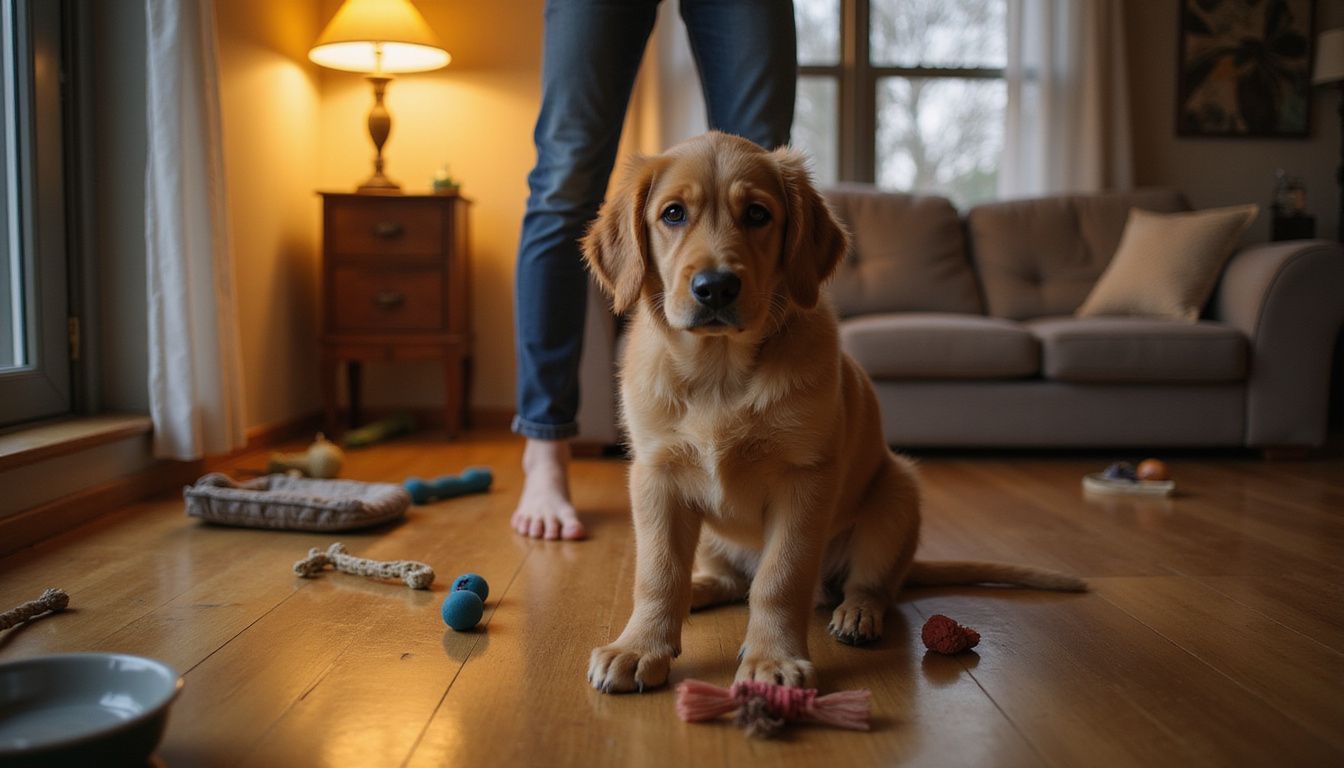
Did your heart do a little flip the moment your new puppy walked through the front door?
Then the panic set in, right? You suddenly realize you have no clue what happens next.
Here’s something worth knowing upfront: puppies need between 10 to 18 hours of sleep a day to grow up healthy and strong. That means your first night together will test every bit of your patience.
This new puppy checklist walks you through setting up a safe space, gathering the right supplies, and getting through those chaotic early hours. You’ll come out the other side feeling ready instead of overwhelmed.
Grab a coffee. Let’s get your home set up for that all-important first night.
Key Takeaways
- Puppies need 10 to 18 hours of sleep daily for proper development, so preparation and a calm environment matter for that first night home.
- Set up a designated puppy base camp in your most-used room. Install baby gates, and add a crate, bed, food bowls, and toys for safety and training.
- Puppy-proof your entire home by removing hazards, securing electrical cords, storing chemicals safely, and placing chew toys throughout accessible areas.
- Gather essential supplies before your puppy arrives: a crate, food and water bowls, high-quality puppy food, training treats, a heartbeat toy, collar, leash, ID tags, and enzymatic cleaner.
- Set a nighttime potty routine by feeding dinner three hours before bed, taking your puppy outside right before sleep, and expecting frequent bathroom breaks during the first few nights.
How to Prepare Your Home for a New Puppy: Your New Puppy Checklist
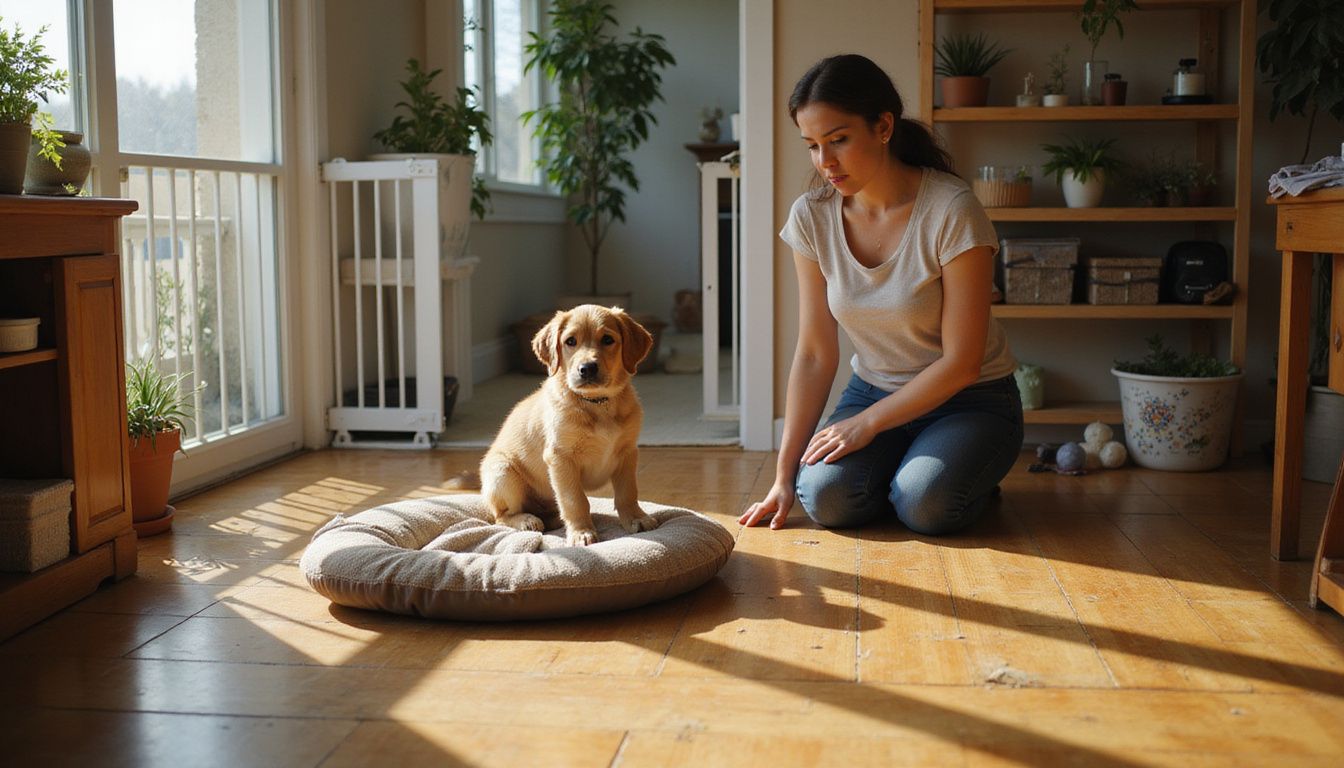
Your home needs some real changes before your puppy arrives. These changes keep your new friend safe and happy from day one.
You want spaces where your puppy can play, sleep, and learn without getting hurt or wrecking your favorite shoes. A little prep now saves you a lot of stress later.
How do I set up a designated puppy area?
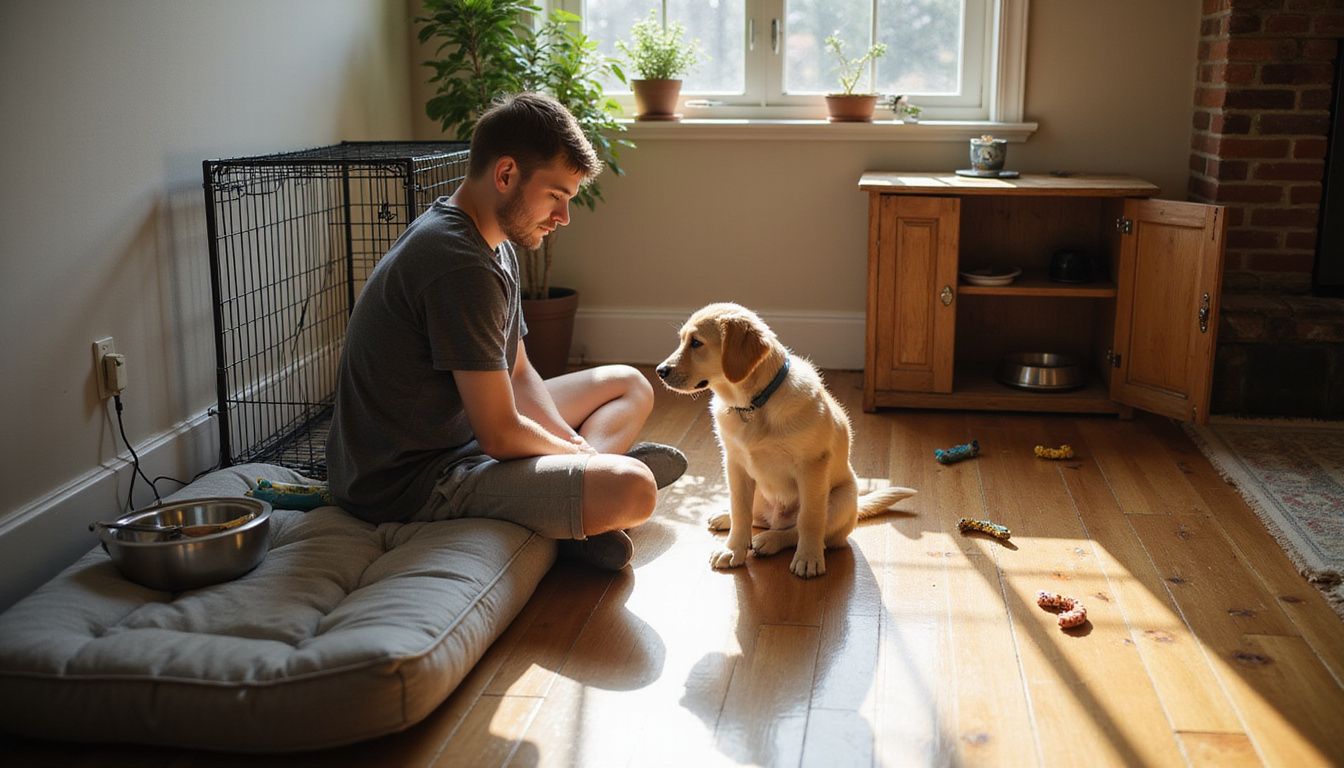
Setting up a designated puppy area gives you control over your pup’s environment and keeps them safe from household hazards. This “puppy base camp” becomes the heart of your early bonding and training success.
- Pick your living room or the space where you spend the most time. This location cuts down on constant supervision needs and helps you bond with your new puppy faster.
- Install baby gates or an open playpen to section off the area. Clear boundaries contain your pup while still giving you easy access.
- Place a comfortable dog bed inside the zone where your puppy can rest and feel secure throughout the day.
- Position a crate within the base camp for crate training and safe containment when you can’t watch your pup directly.
- Set up food and water bowls in a consistent spot. Feed your puppy in the crate to reinforce good crate training habits early.
- Remove hazards like electrical cords, toxic plants, and small objects your puppy might swallow.
- Add a few chew toys and training aids to keep your pup entertained and mentally busy while in the base camp.
- Make sure the area has good lighting and airflow so it feels comfortable and welcoming during house training and bonding.
Putting the crate in your main living area, not a back room or garage, makes a real difference in those early days. Your puppy feels included instead of isolated when the crate sits where your family already hangs out.
Pair the crate with baby gates, and you get a setup that keeps your pup safely contained while still in the mix. This cuts down on unsupervised roaming that leads to chewed furniture, accidents, and swallowed hazards.
Keeping the crate close means you respond fast when your puppy needs you. That quick response builds the bond between you both during these critical first weeks.
How can I puppy-proof my home?
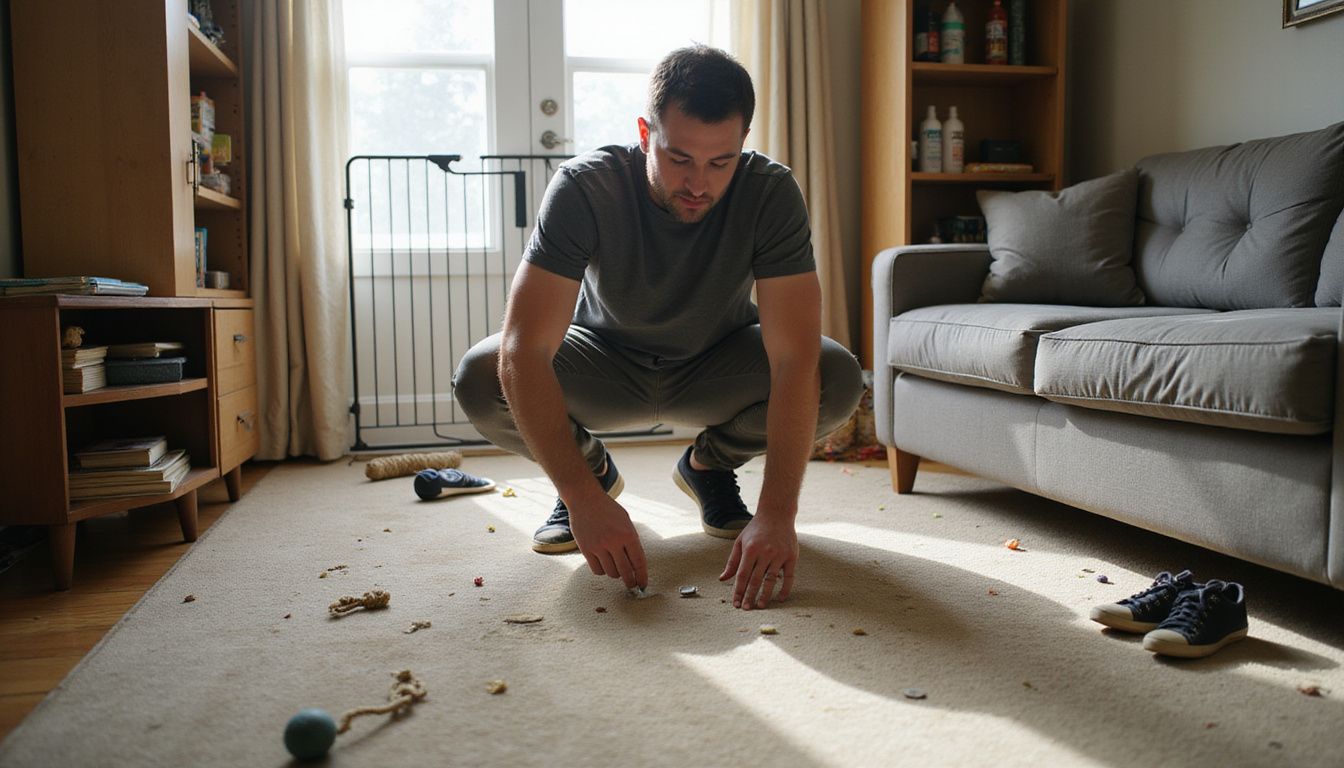
You’ve set up a cozy space for your new puppy. Now comes the real work: making your entire home safe.
According to a March 2026 report by the ASPCA Animal Poison Control Center, the center helped with more than 334,000 animal poisoning cases in 2025 alone. Human medications, household cleaners, and toxic houseplants topped the list of hazards.
That’s a solid reminder of where to start your puppy-proofing. Puppies explore everything with their mouth and teeth, so a little prevention goes a long way.
- Remove shoes, books, kids’ toys, and other chewable items from floors and low shelves your puppy can reach.
- Secure electrical cords behind furniture or use cord covers so your puppy can’t chew through live wires.
- Store cleaning supplies, medications, and chemicals in high cabinets or locked drawers, far from curious noses and paws.
- Apply a bitter-tasting deterrent spray like Bitter Apple to furniture or baseboards you can’t remove. Test it on a hidden spot first to check for staining.
- Install dog gates across doorways and stairways to limit your puppy’s access to certain rooms when you can’t watch them.
- Pick up small objects like coins, buttons, and rubber bands your puppy could swallow and choke on.
- Place dog toys around your home so your puppy has appropriate things to chew on instead of your belongings.
- Keep watch throughout the day so you can catch your puppy before they grab something dangerous or make a mess.
- Build a management plan that keeps your puppy from bothering other pets in your home while they adjust.
What essential supplies do I need to gather?
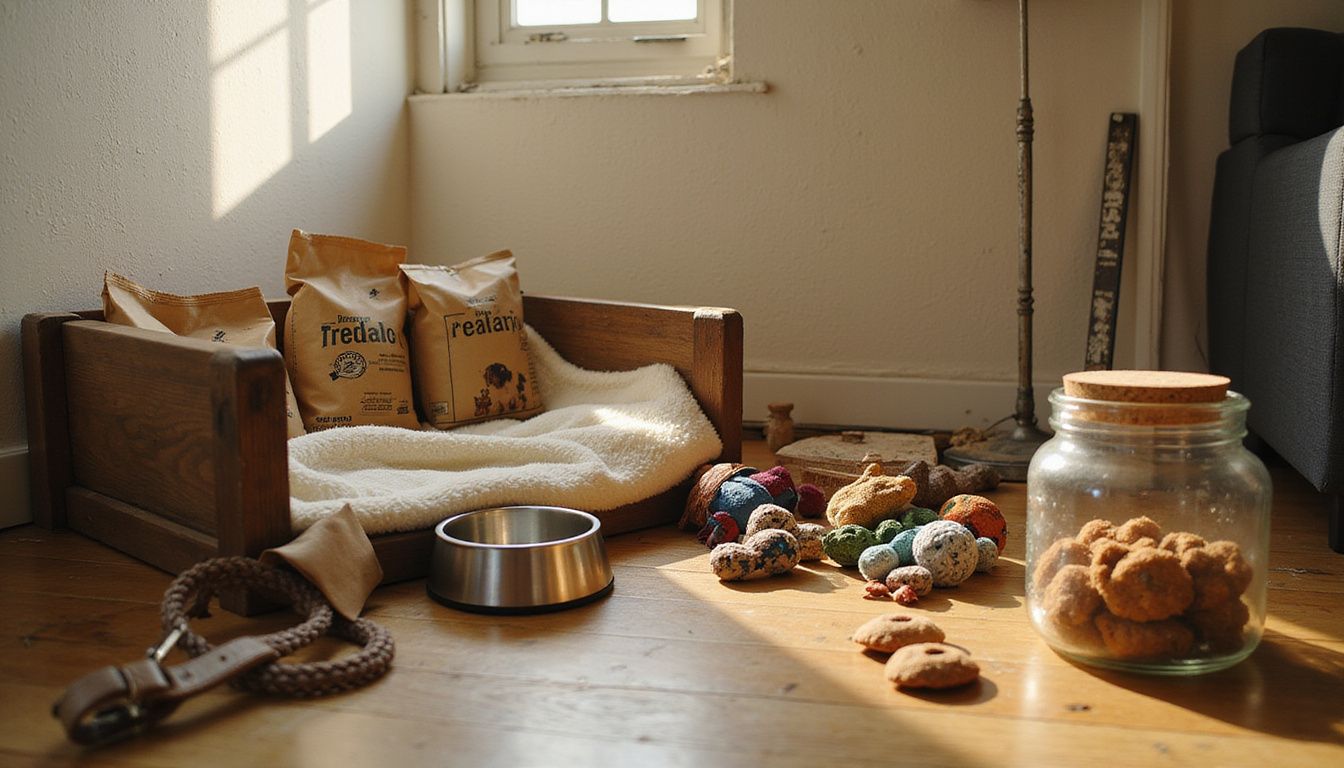
Now that your home is puppy-proof, gathering the right supplies before your puppy arrives makes the first 24 hours smoother and less stressful. Stock your space with these essentials so your puppy feels secure and supported from day one.
- Grab a crate or playpen as your foundation for safety and training. This boundary keeps your puppy contained while you build positive reinforcement routines and a feeding routine that fits your schedule.
- Stock food and water bowls made for puppies, preferably stainless steel or ceramic since these resist tipping. Size them right so your puppy can eat comfortably without straining.
- Buy high-quality puppy food that meets AAFCO standards and matches what your breeder or shelter fed before. Switching foods too fast causes stomach upset, so stay consistent for at least the first week.
- Collect soft, pea-sized training treats for positive reinforcement during puppy training sessions. These small rewards work well without overfeeding your growing pup.
- Pick up a heartbeat toy and plush chew toys for comfort and entertainment. These give your puppy company and a proper outlet for their natural urge to chew.
- Invest in Kong-style food puzzle toys and Nylabone-type chewables for mental stimulation. Rotating these keeps your puppy engaged and cuts down on destructive chewing.
- Buy an adjustable collar, leash, and ID tags with your contact info for safety. Puppies grow fast, so adjustable gear saves you from constant replacements.
- Prepare an enzymatic cleaner like Nature’s Miracle and paper towels for the accidents that are bound to happen. This cleaner breaks down urine fully, so your puppy won’t keep returning to the same spot.
Getting your feeding routine right from the start saves you hours of lost sleep. First, find out what food your breeder or shelter used, and stick with that brand for at least the first week.
Measure portions carefully. Small breed puppies around eight weeks old typically need about one and a half times the amount recommended for an adult dog of the same size.
Elevated stainless steel bowls work best here. They stay put and clean up easier than plastic ones.
Timing matters just as much as the bowl you pick. Finish your puppy’s last meal at least three hours before bedtime, so their digestive system has time to work before those midnight potty trips hit.
Follow this sequence and you can cut nighttime bathroom interruptions in half during that first week.
Essential Puppy Supplies Checklist
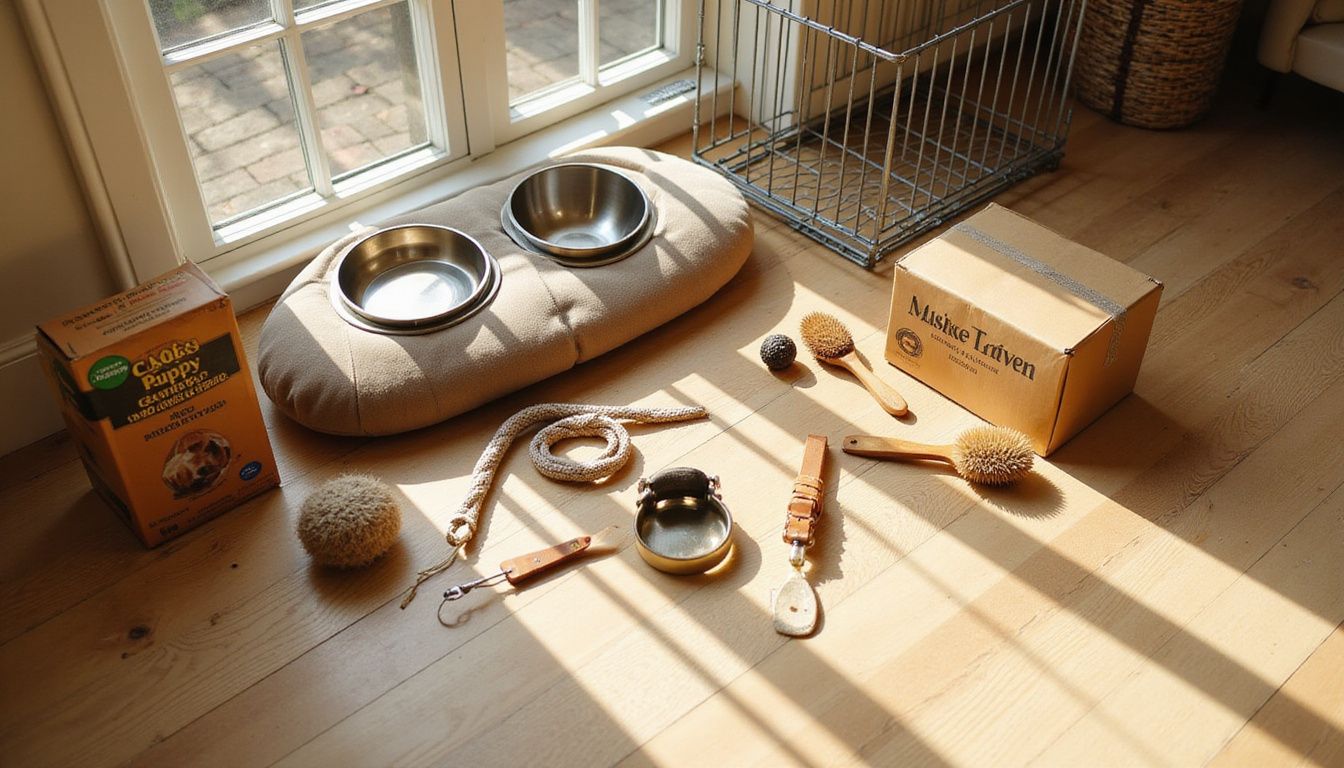
You need the right gear before your puppy walks through the door. Quality puppy supplies make those first weeks smoother and set your pup up for success.
What food and water bowls are best for puppies?
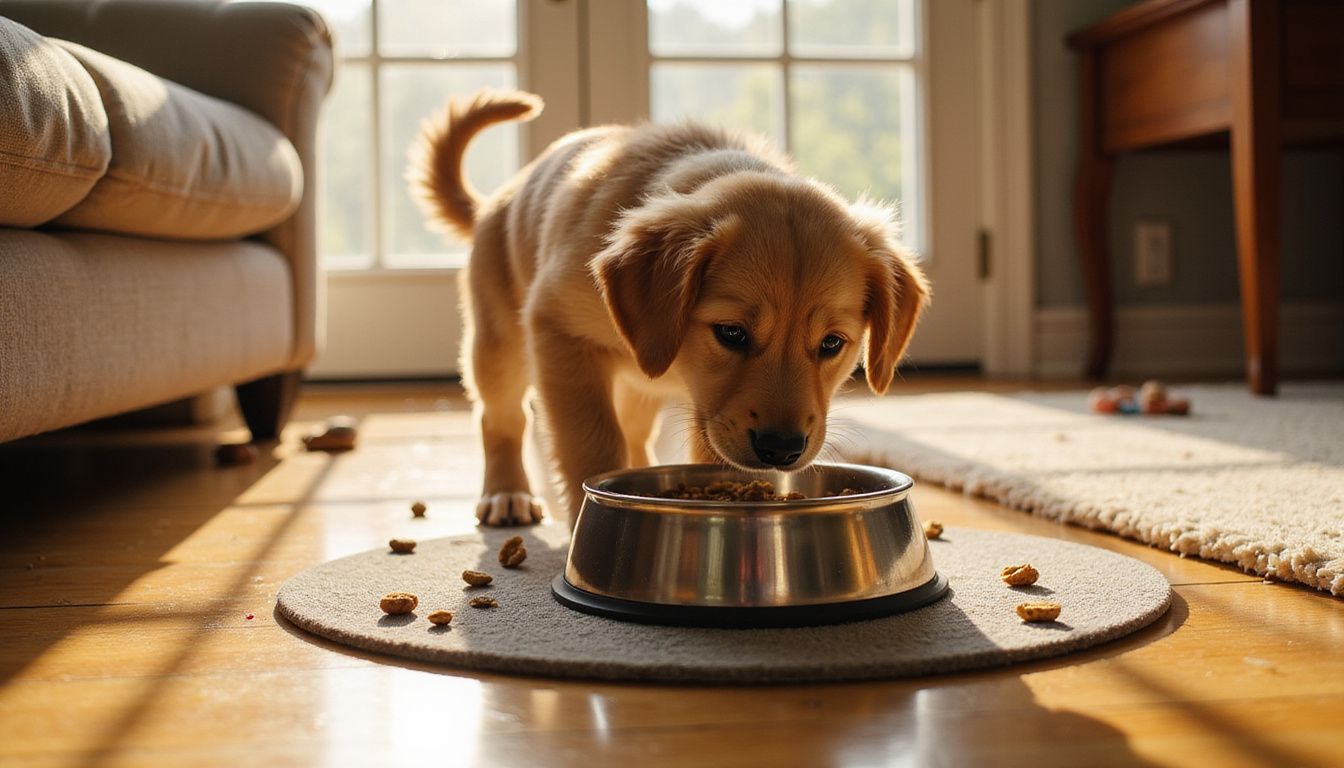
Pet Fusion Elevated Dog Bowls work great for your new puppy’s feeding routine. They sit up off the ground, which prevents spills and makes eating easier for your growing pup.
When you shop for bowls, look for a few key features:
- Stainless steel or ceramic material, since both stay clean and last a long time
- A size that matches your puppy’s breed and age
- A non-slip base to stop sliding during meals
- An easy-clean design, since you’ll wash these bowls every single day
Some bowls are built to slow down eating, which helps puppies who gobble their food too fast. Placing your food and water bowls in the designated puppy area keeps your pup’s routine steady and predictable.
This setup supports good potty training too, since your puppy learns exactly where to eat and where to go outside. The right bowls make puppy supplies management feel less overwhelming during those early weeks.
What type of puppy food and treats should I buy?
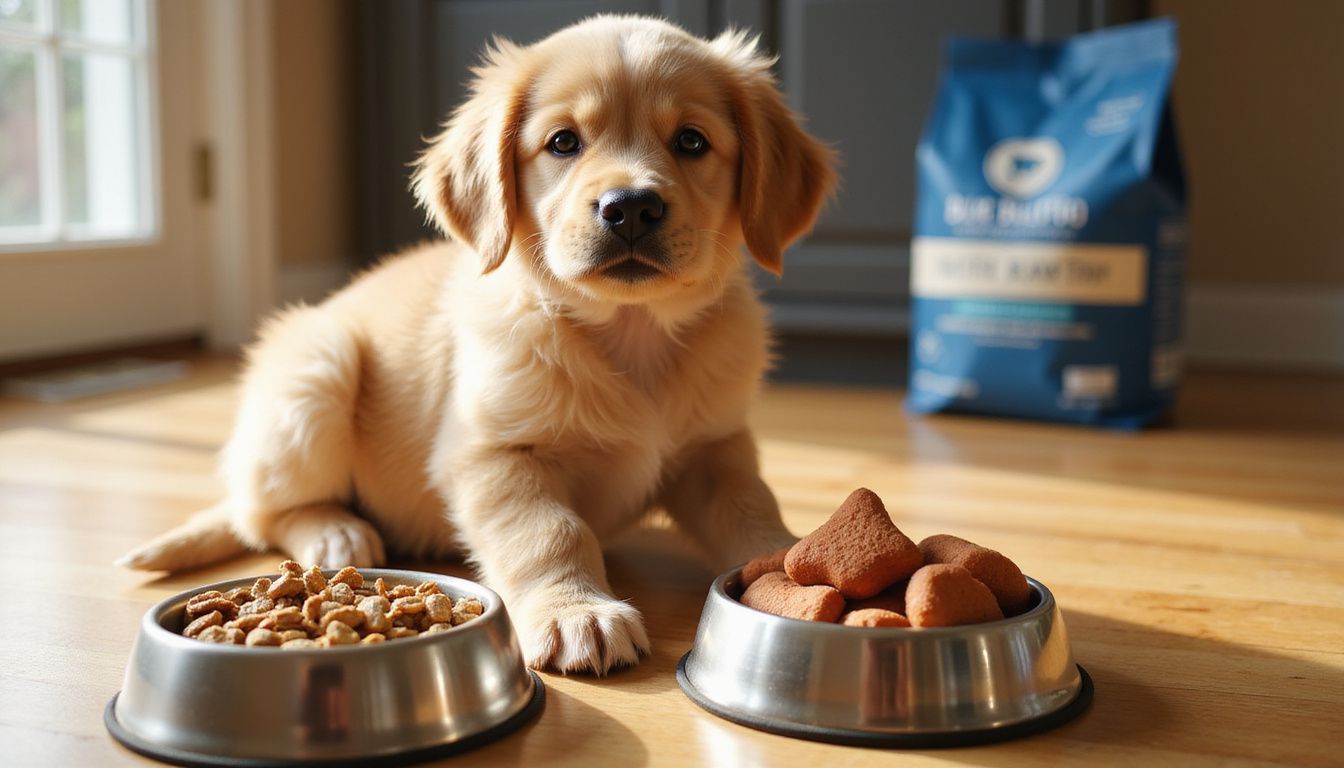
Now that your bowls are ready, filling them with the right nutrition matters most. High-quality puppy food supports healthy growth during those critical early months.
According to the Association of American Feed Control Officials (AAFCO), dry puppy food needs a minimum of 22.5% protein, compared to just 18% for adult maintenance diets. Check the label before you buy, and you’ll know right away if a food actually fits your growing pup’s needs.
Blue Buffalo Life Protection Puppy Dry Food offers solid nutrition without artificial additives, making it a good pick for your new companion. Introduce any new food slowly, mixing it with the previous food over several days so your puppy’s stomach can adjust.
Feeding dinner three hours before bedtime helps cut down on nighttime potty breaks, so your first night together goes smoother.
Training treats deserve just as much thought as main meals. Look for these features when picking treats:
- Pea-sized and soft, so your puppy swallows quickly and stays focused
- Free from artificial additives when possible
- Wellness Soft Puppy Bites, a solid choice for positive reinforcement sessions
One handy trick: leave a little water and food out overnight if your puppy tends to worry. It won’t hurt anything if your pup isn’t especially food motivated, and it can ease nighttime jitters for the ones who are.
How do I choose a leash, collar, and ID tags?
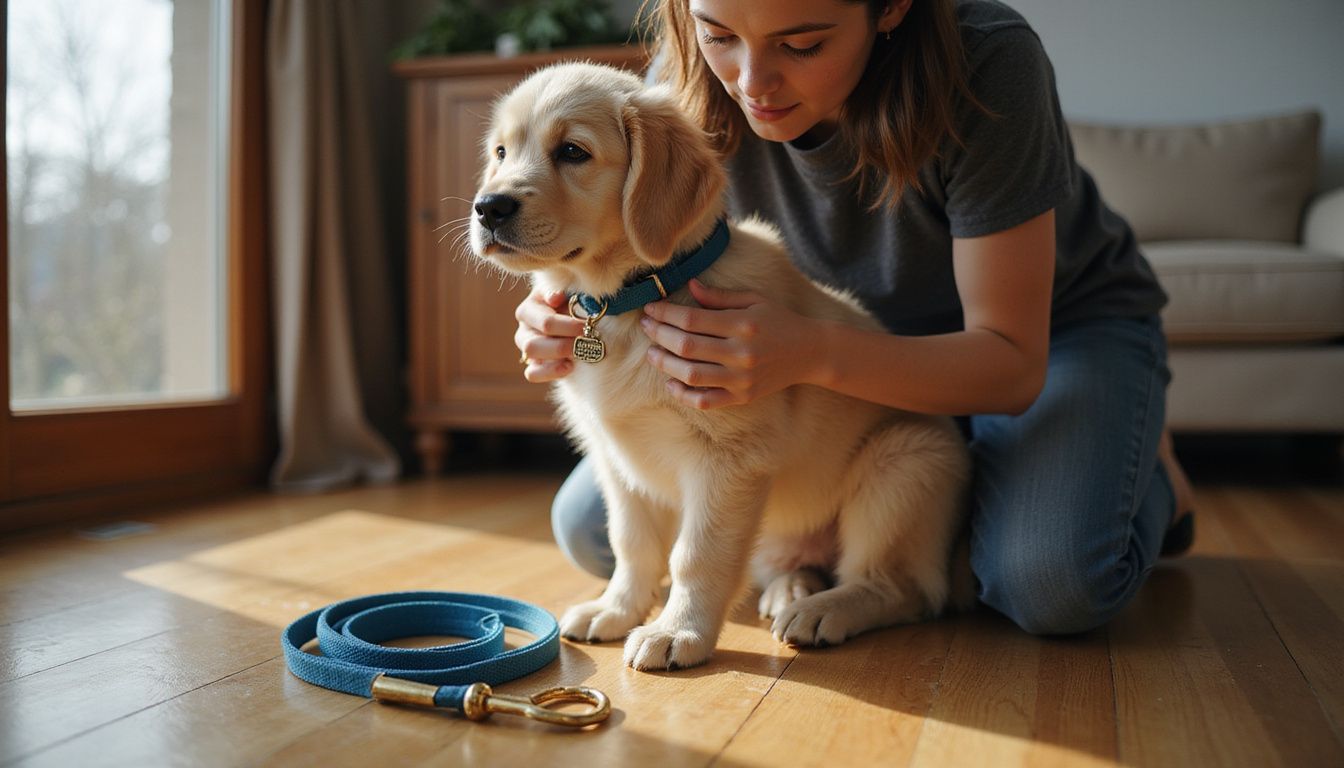
Your puppy’s leash, collar, and ID tags form the foundation of outdoor safety and identification. Here’s a quick breakdown of what to look for:
| Gear | What to Look For | Example Product |
|---|---|---|
| Leash | Sturdy and non-retractable for young puppies | ThunderLeash Nylon Dog Leash |
| Collar | Adjustable, snug enough for two fingers to slide underneath | Blueberry Pet Classic Solid Nylon Dog Collar |
| ID Tag | Clear, current contact info | GoTags Personalized ID Tag |
Skip the retractable leash for a young puppy. It creates safety risks during those critical early months.
An adjustable collar works best because your puppy grows fast, and you’ll need room to expand the fit as they develop. Pair it with a personalized ID tag, since that small tag becomes your puppy’s ticket home if they ever slip away.
Always use a collar and leash when your puppy heads outside for the first time. No dog has perfect recall, no matter how well-trained they seem, and an ID tag helps ensure a fast return if your pup wanders off during playtime.
Investing in quality gear now prevents headaches later. These three items, working together, create a safety net for all your outdoor adventures ahead.
What crate and bedding are comfortable for puppies?
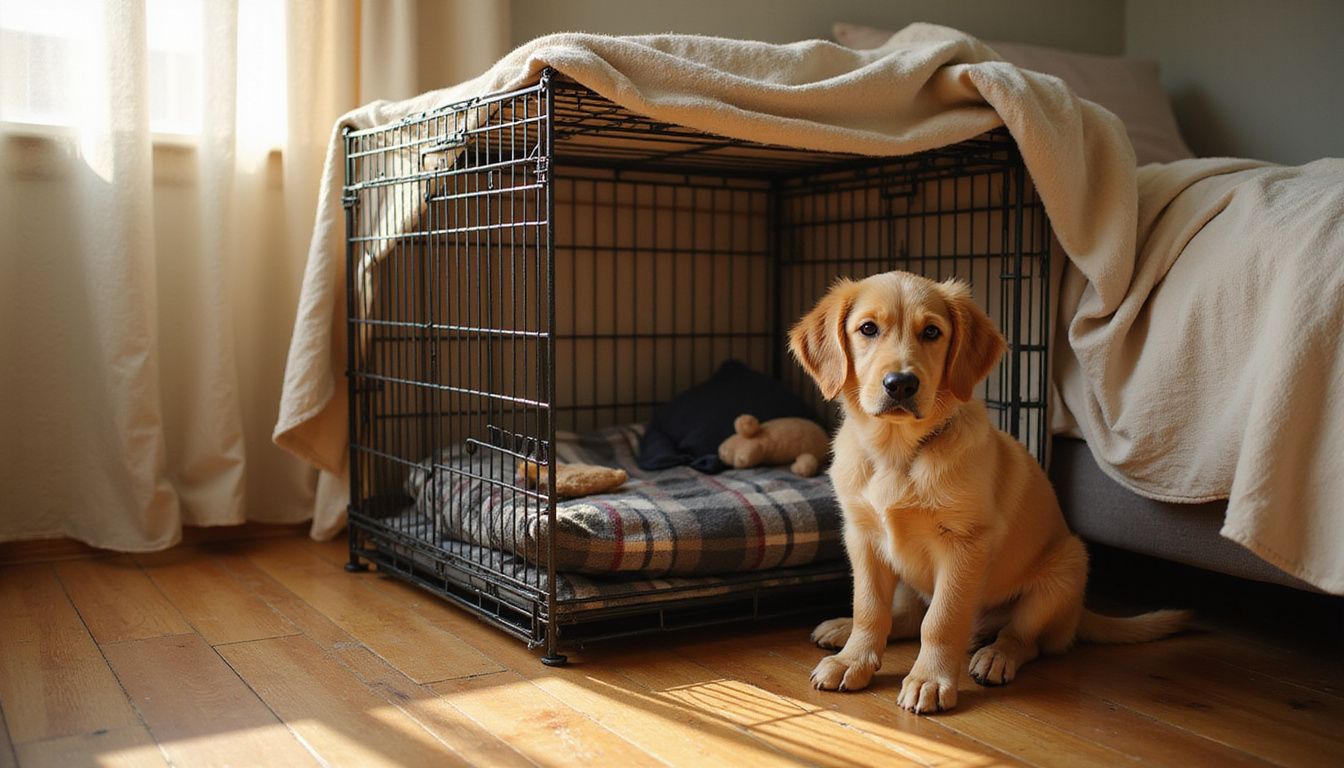
Your puppy needs a crate that feels like a safe den, not a prison cell. The MidWest LifeStages Double Door Collapsible Wire Dog Crate offers solid containment and training support for your new furry friend.
Size matters here. A properly sized crate lets your puppy:
- Stand up fully without ducking
- Turn around in a full circle
- Lie down flat and stretch out
- Stay without extra room for a “bathroom corner”
Too big, and your puppy might use one corner as a bathroom and another as a bed, which defeats the purpose of house training. Too small, and your puppy feels cramped and stressed.
Place the crate in your bedroom for the first few nights so your puppy feels secure with you nearby. Soft, washable bedding like the K9 Ballistics Tough Rectangle Dog Bed transforms that wire crate into a cozy retreat that holds up to accidents and chewing.
Drape a blanket over the crate to create a dark, quiet space that mimics the den-like environment puppies crave. A heartbeat toy paired with a blanket carrying your scent works wonders for calming techniques and cutting down anxiety during those early nights.
Adding a heartbeat toy alongside a scent-carrying blanket makes a real difference in how well your puppy sleeps. Crates with both items show noticeably fewer whimpering episodes than setups with bedding alone.
Your puppy’s average stretch of unbroken sleep can jump from around 45 minutes to two full hours when you add these comfort aids. The familiar scent calms your pup’s nerves, while the rhythmic heartbeat mimics littermates nearby, which lengthens sleep and cuts the noise that keeps you awake.
Which chew toys and training aids are recommended?
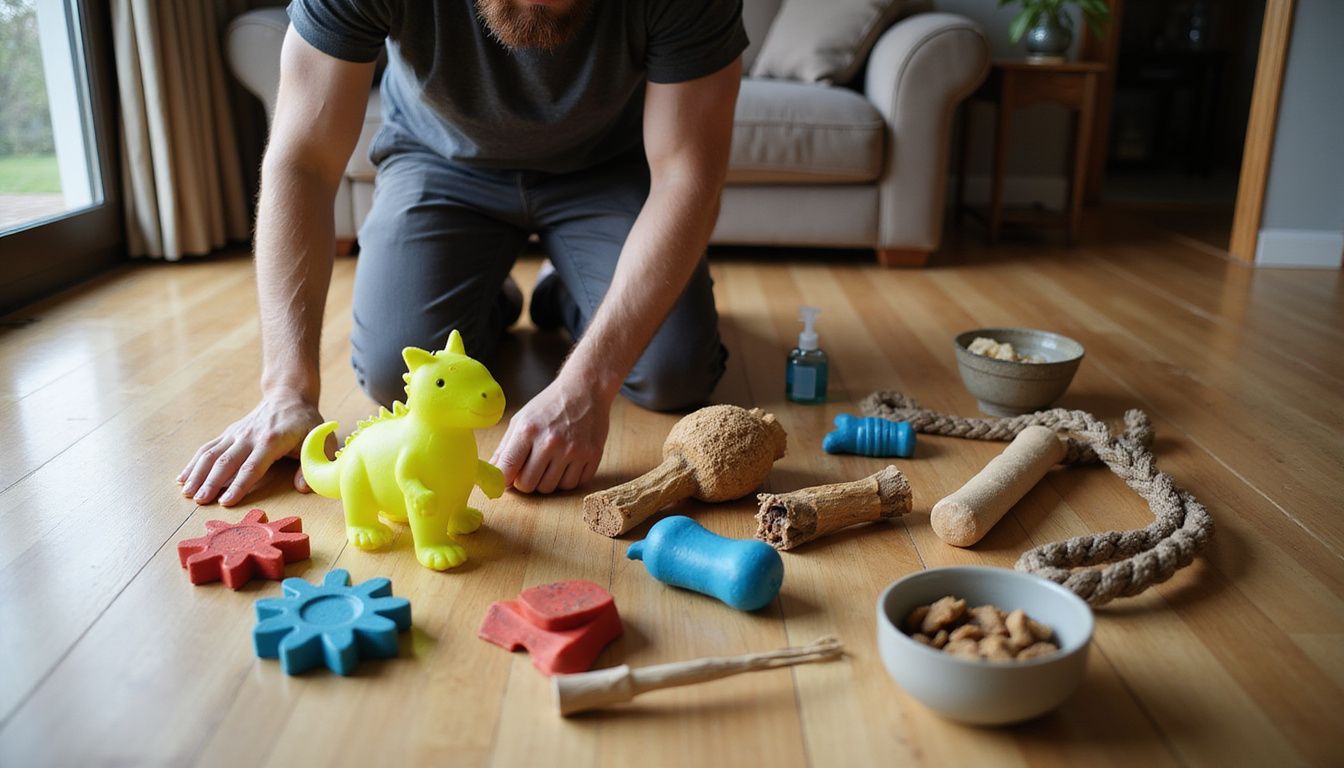
Now that your puppy has a cozy crate and soft bedding, stock up on chew toys and training aids that keep them happy and out of trouble. Your puppy’s mouth will feel sore during teething, so a few good options go a long way:
- Nylabone Puppy Teething Dinosaur Chew Toy for sore gums
- Kong-style food puzzle toys for hours of mental stimulation
- Squeaky and plush toys to satisfy different chewing textures
- Flirt poles, a toy on a rope, for play that builds your bond
Training aids go hand in hand with chew toys when you’re teaching right from wrong. Soft, pea-sized training treats work best for positive reinforcement, rewarding good behavior without filling that tiny belly too fast.
Bitter Apple spray and similar deterrents discourage chewing on furniture and shoes, redirecting that energy toward approved toys. Stock enzymatic cleaners like Nature’s Miracle for the inevitable potty accidents. They break down odors fully, so your puppy won’t keep returning to the same spot.
What to Expect on the First Night at Home
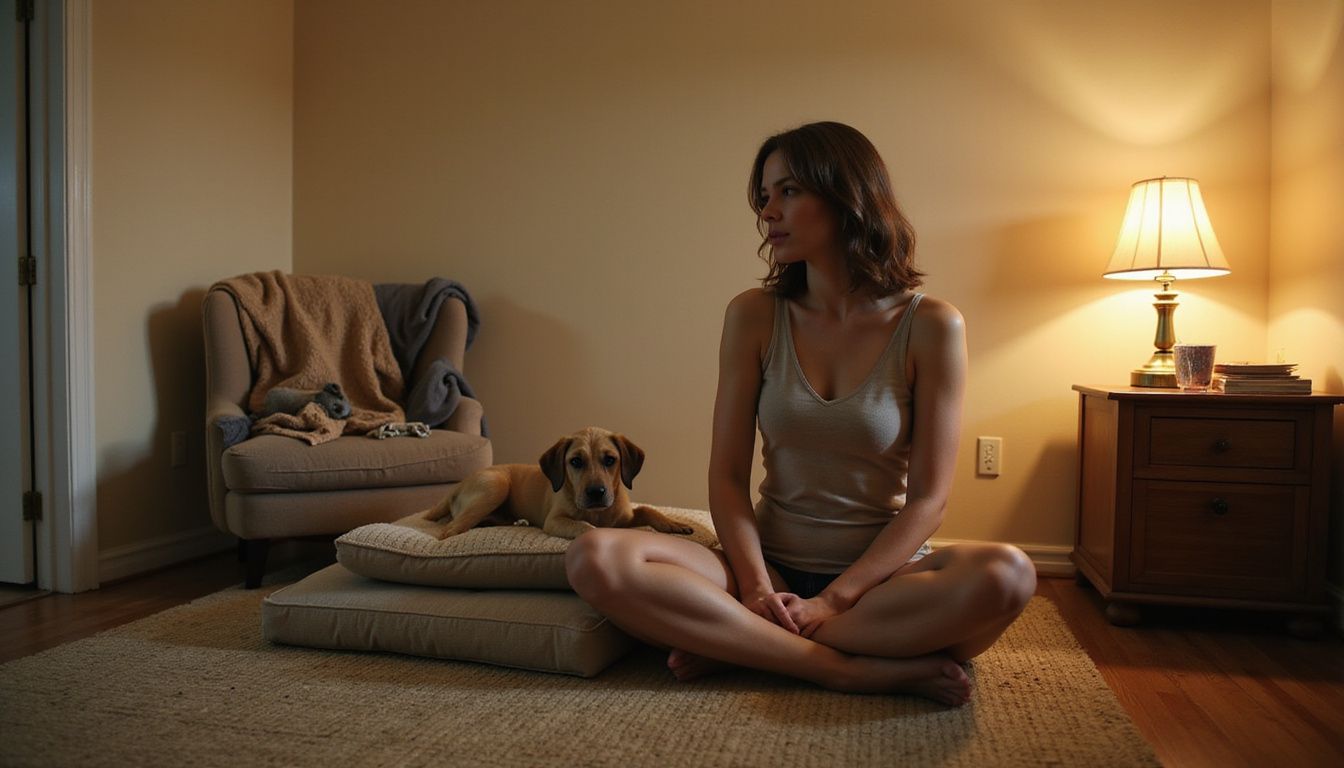
Your puppy will likely feel scared and confused on that first night. You’ll want a calm space where your new pup can rest and adjust to their surroundings.
How can I create a calm and quiet environment?
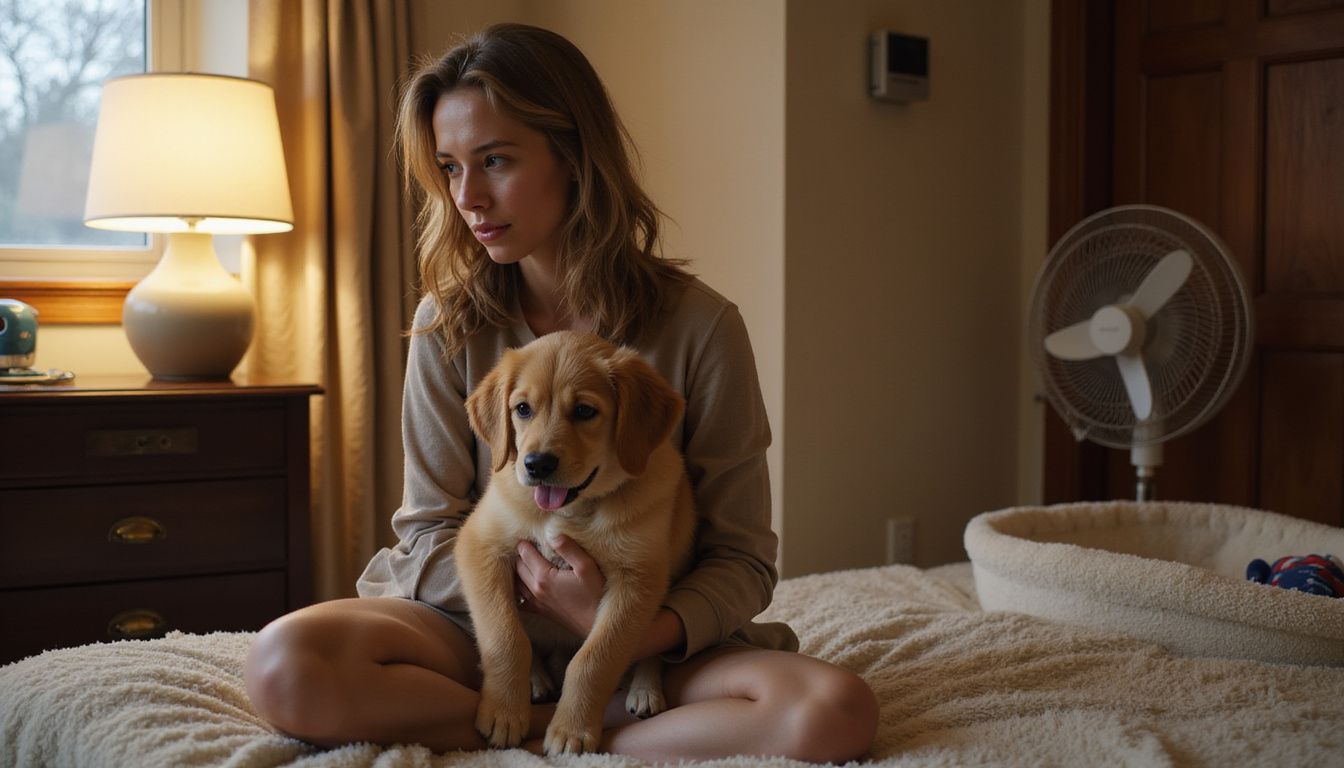
Creating a calm space helps your new puppy settle in without stress or fear. Puppies need peace during their first night to adjust to their new home and family.
Start by setting the mood in the room:
- Keep household activity low and skip loud noises that startle your puppy
- Dim the lights in the sleeping area to signal that it’s rest time
- Close doors to noisy rooms, away from TV, music, or conversation
- Set the temperature between 65 and 75 degrees Fahrenheit
- Play light white noise, like a low fan, to mask household sounds
A few more things to keep in mind:
- Limit visitors to immediate family only on night one
- Add a heartbeat toy and a blanket with your scent to the sleeping spot
- Clear toys and distractions from the crate so your puppy focuses on rest
- Expect exhaustion, since puppies sleep up to 20 hours after a big first day
Set up this designated puppy area away from high-traffic zones. That gives your new pet a safe retreat from household chaos.
How do I introduce my puppy to their sleeping area?
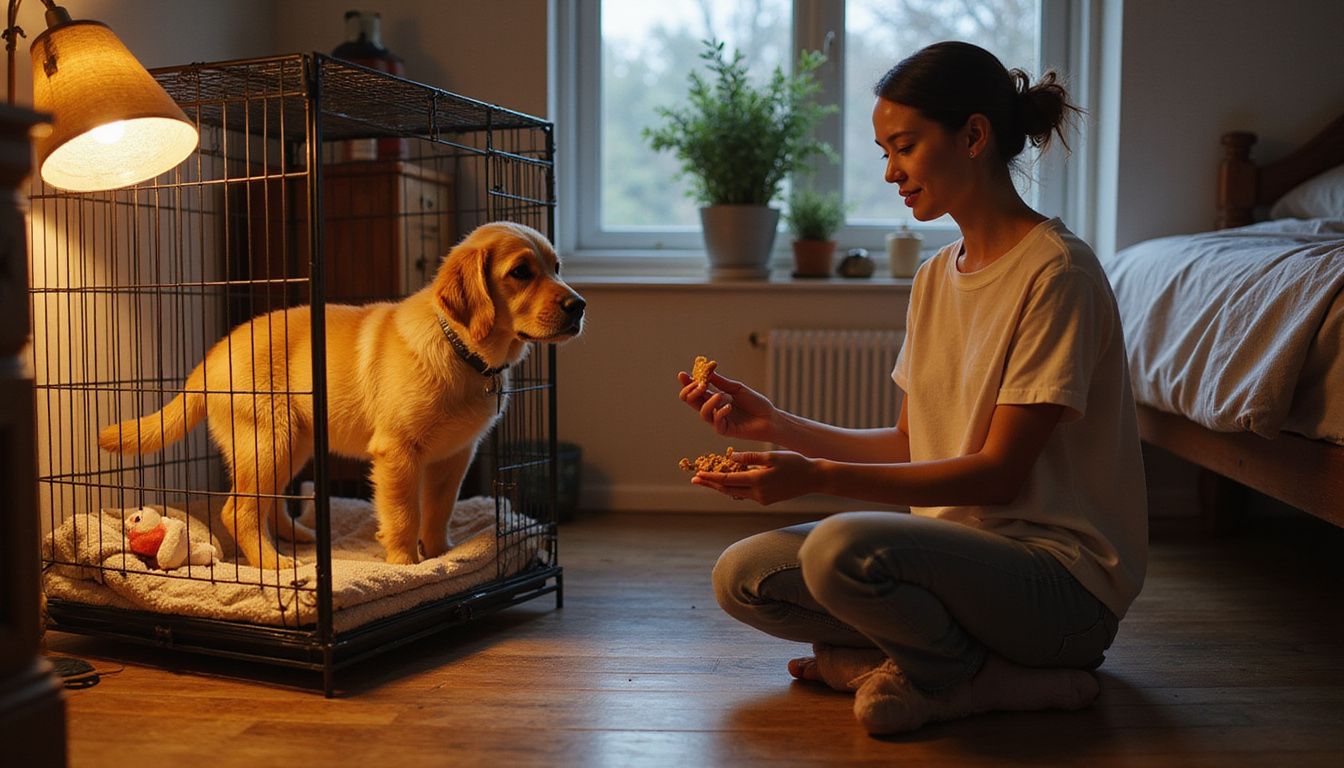
Your puppy needs a safe, calm place to sleep from day one. Introducing this space the right way sets the foundation for peaceful nights ahead.
- Pick one consistent sleeping area before your puppy arrives home. This spot becomes their sanctuary and helps them feel secure during the adjustment period.
- Set up the crate with soft bedding and comforting items in advance, so your puppy walks into a space that smells inviting and safe.
- Place a blanket or shirt with a familiar scent inside the sleeping area. Scent matters a lot to puppies, and this simple step calms their nerves.
- Include a heartbeat toy in their bed area for comfort during lonely nights. This mimics the warmth and rhythm they remember from their littermates.
- Keep the crate in your bedroom for the first few nights, since your presence nearby helps your puppy adjust faster and feel less anxious.
- Guide your puppy to their sleeping area before bedtime each night. Consistency builds the routine and security they crave.
- Encourage them inside with treats and a calm tone rather than forcing them in. Positive associations turn the crate into a reward, not a punishment.
- Gradually move the crate to another room as your puppy grows more comfortable. A slow transition protects the confidence you’ve built.
- Check out resources like the Purina Pet Expert Team for guidance on quality dog beds. Proper bedding supports healthy sleep and spinal development during growth stages.
How do I establish a nighttime potty routine?
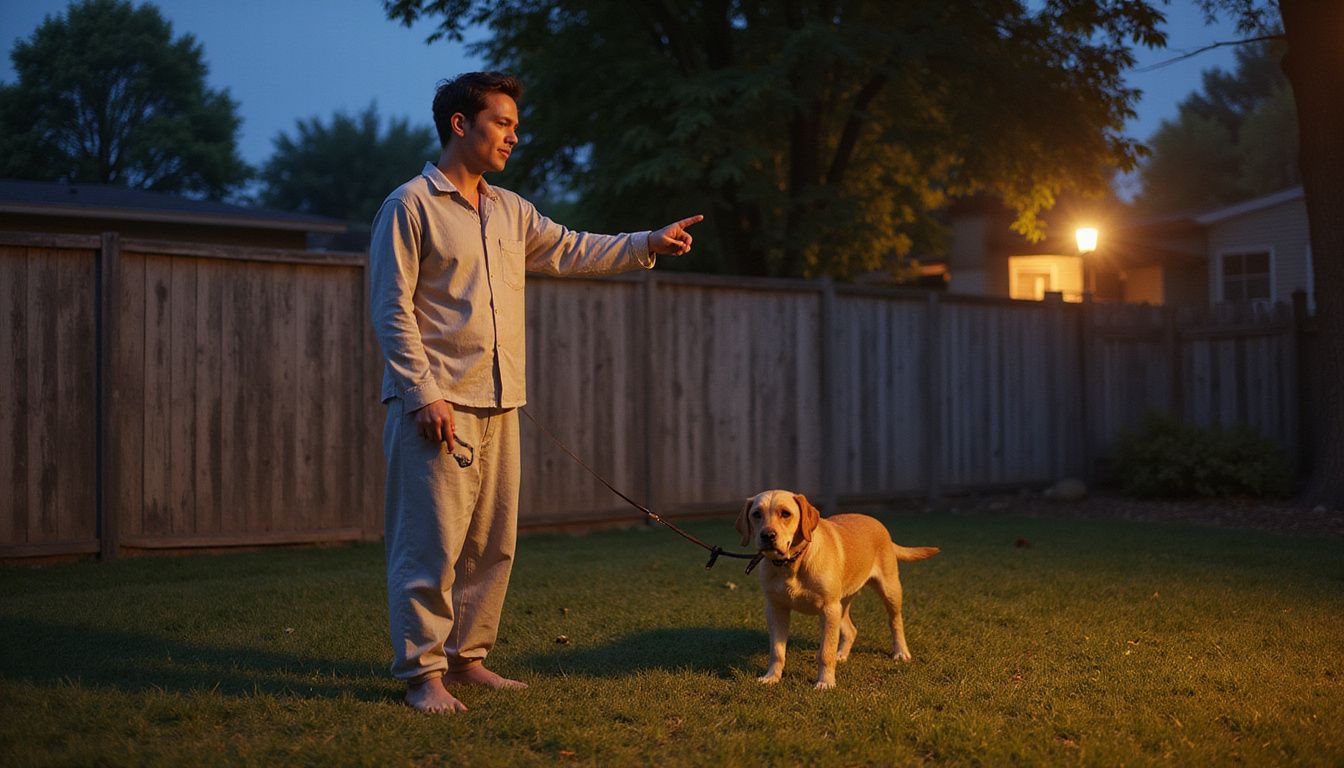
Setting a nighttime potty routine sets your puppy up for success and protects your home from accidents. A solid schedule makes those first nights manageable and builds good habits fast.
- Feed dinner three hours before bedtime to reduce nighttime potty breaks and give your puppy’s digestive system time to work.
- Take your puppy outside right before bed, once that final meal window closes, to empty their bladder completely.
- Schedule potty breaks every 15 to 20 minutes after eating, drinking, or playtime during the day to build predictable bathroom habits.
- Pick up waste right after your puppy goes outside. This saves you a surprise waiting in the morning.
- Praise and reward your puppy right after they go potty outside, so they learn that outdoor bathroom trips earn attention and treats.
- Keep nighttime potty breaks quiet and low-key to encourage quick trips and a faster return to sleep.
- Stay close during the first night to catch accidents early and redirect your puppy to the right spot.
- Know that puppies have limited bladder control and may need frequent bathroom trips overnight. Patience matters here.
According to guidelines from the American Kennel Club, a puppy can typically hold its bladder for about one hour per month of age, plus one. That means an eight-week-old pup tops out around three hours, so a middle-of-the-night wake-up isn’t a training failure. It’s just puppy biology.
Consult resources like pet help and advice guides, or reach out to Broomfield Veterinary Hospital for toilet training strategies matched to your puppy’s age. Consider microchip registration alongside your new puppy checklist too, so your pet can be identified if they escape during those hectic first nights.
Two common mistakes cause most first-night potty problems, and avoiding them makes a big difference. Skipping that final outdoor trip right before bed accounts for most of the accidents you discover in the morning.
Your puppy’s bladder fills while you sleep, and a few extra minutes outdoors before lights-out helps them stay dry longer. The second common error is feeding too late in the evening, since dinner less than three hours before bedtime keeps your puppy’s digestive system active through the night. Skip that last outdoor trip and feed too late together, and you’ve built the perfect setup for overnight messes.
How Can I Survive the First Night with a New Puppy?

Your first night with your new puppy will test your patience. A few smart moves can help you both get through it without losing your mind.
What comforting items can help my puppy sleep?
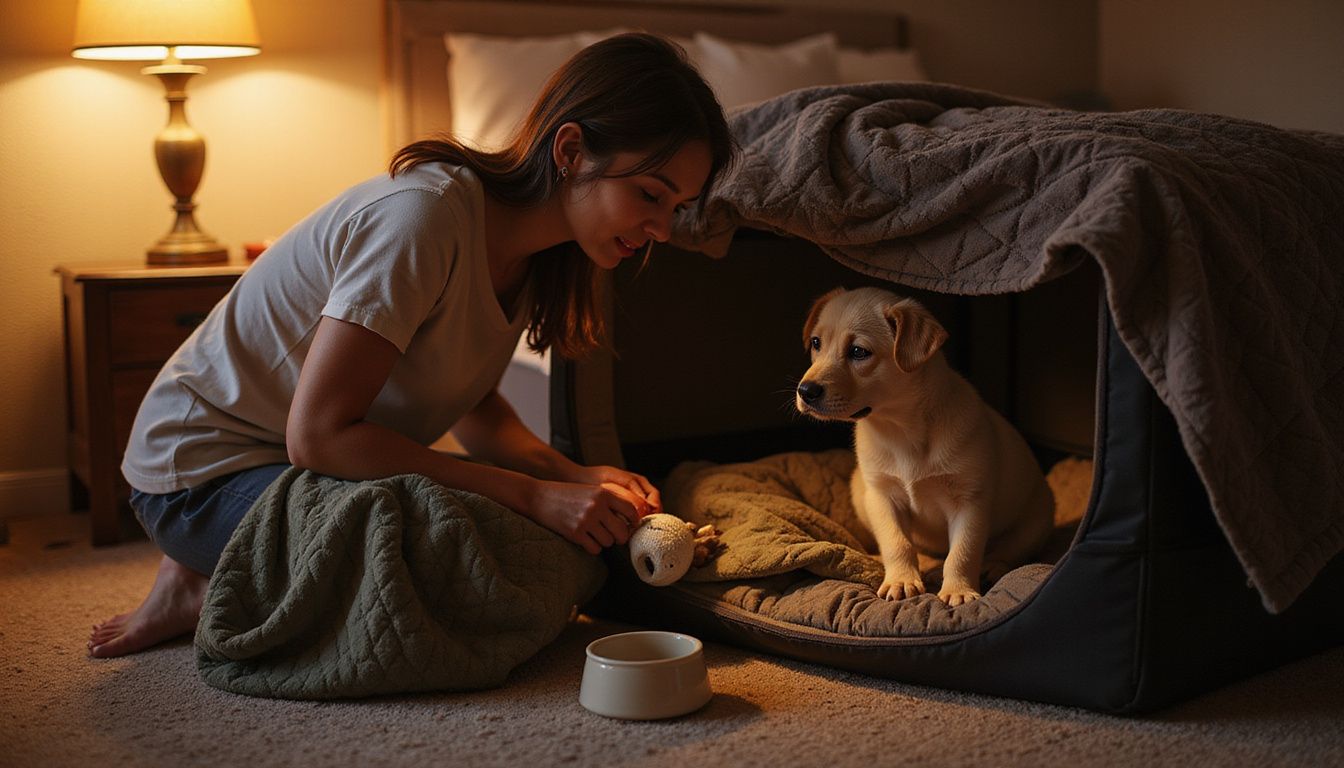
Heartbeat toys and scent-carrying blankets become your puppy’s best friends on that first night. These items mimic the comfort of littermates and mother dogs, which builds a sense of security fast.
A few comfort essentials worth having on hand:
- A heartbeat toy that mimics littermate warmth
- A blanket carrying your scent
- A soft, durable bed, like the K9 Ballistics Tough Rectangle Dog Bed
- A blanket draped over the crate for a den-like feel
- Light white noise to mask scary household sounds
Consider placing a small bowl of water and food near the sleeping area too, in case your puppy feels any food insecurity. Setting up the crate near your bed for those first few nights gives extra reassurance through your presence.
Keep it simple. Avoid overfilling the crate with toys, since too much stuff causes overstimulation at bedtime.
A calm, familiar-smelling environment cuts down fear and anxiety in a real way. These small touches turn a scary new space into a welcoming home, and pet help and advice from local pet stores can point you toward the right comfort items for your specific puppy.
Why should I avoid overwhelming my puppy with visitors?
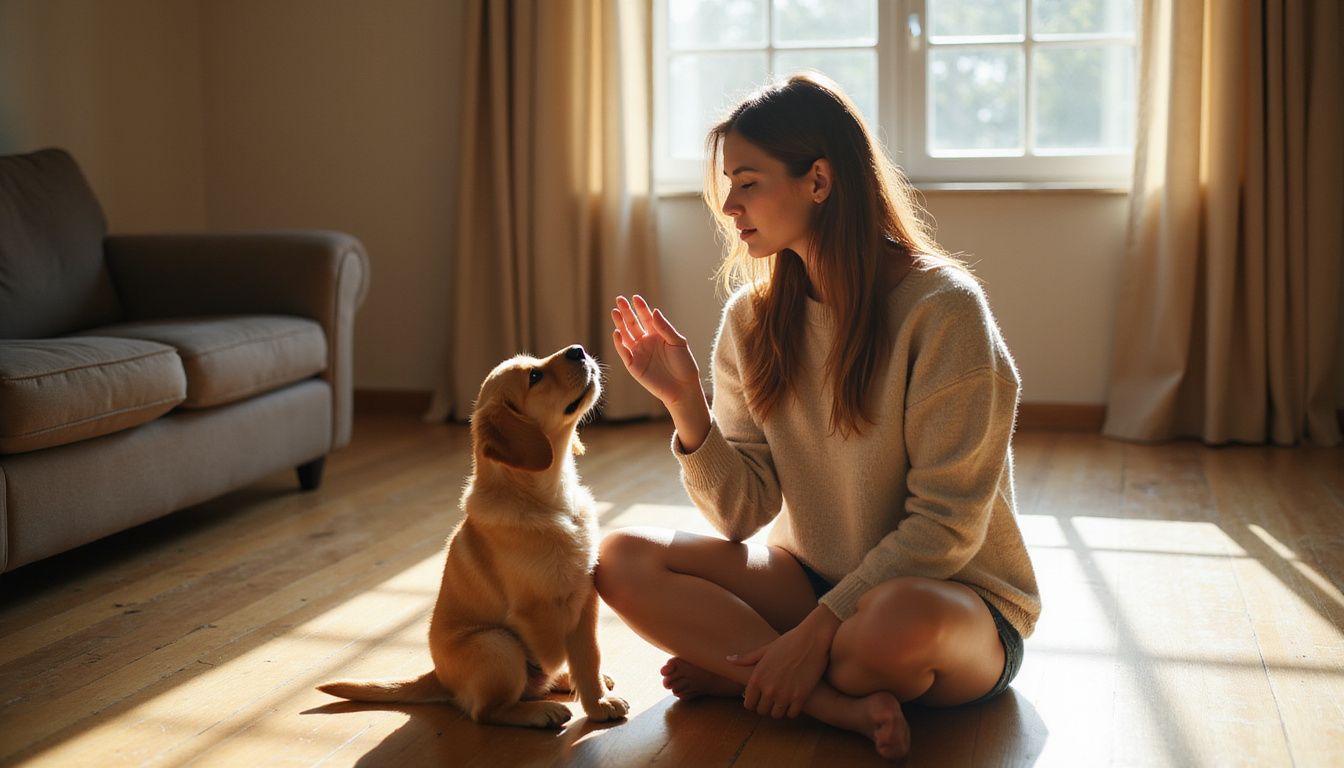
Your new puppy needs quiet time to settle into their home. Too many visitors in the first 24 hours will stress them out.
Puppies coming from shelters or breeders arrive in a fragile state. They need space to adjust to new surroundings without constant interruptions, and overwhelming social interactions spike fear and anxiety during this critical period.
The 3-3-3 rule, widely used by rescue groups and veterinarians, breaks down the adjustment timeline: 3 days to decompress, 3 weeks to learn your routine, and 3 months to feel fully at home.
Your puppy’s brain works overtime just processing the new sights, sounds, and smells in your home. A parade of excited friends and family will push your pup over the edge, so limit introductions to immediate household members during that initial period.
This calm approach lets your puppy bond with you first, which builds the trust they need to thrive. Gradual socialization works far better than throwing your puppy into the deep end right away.
Wait until after the first week to introduce new friends, and do it in small groups rather than large gatherings. Too many visitors can interfere with the bonding process between you and your puppy, and that connection matters more than anything right now.
Pet help and advice from local resources like those in Broomfield, CO, or your veterinarian will back up this approach. A stressed puppy struggles to learn house training, may develop behavior problems, and could miss out on early development that matters. Your patience now pays off with a confident, well-adjusted dog later.
How can I be patient and prepared for interruptions?
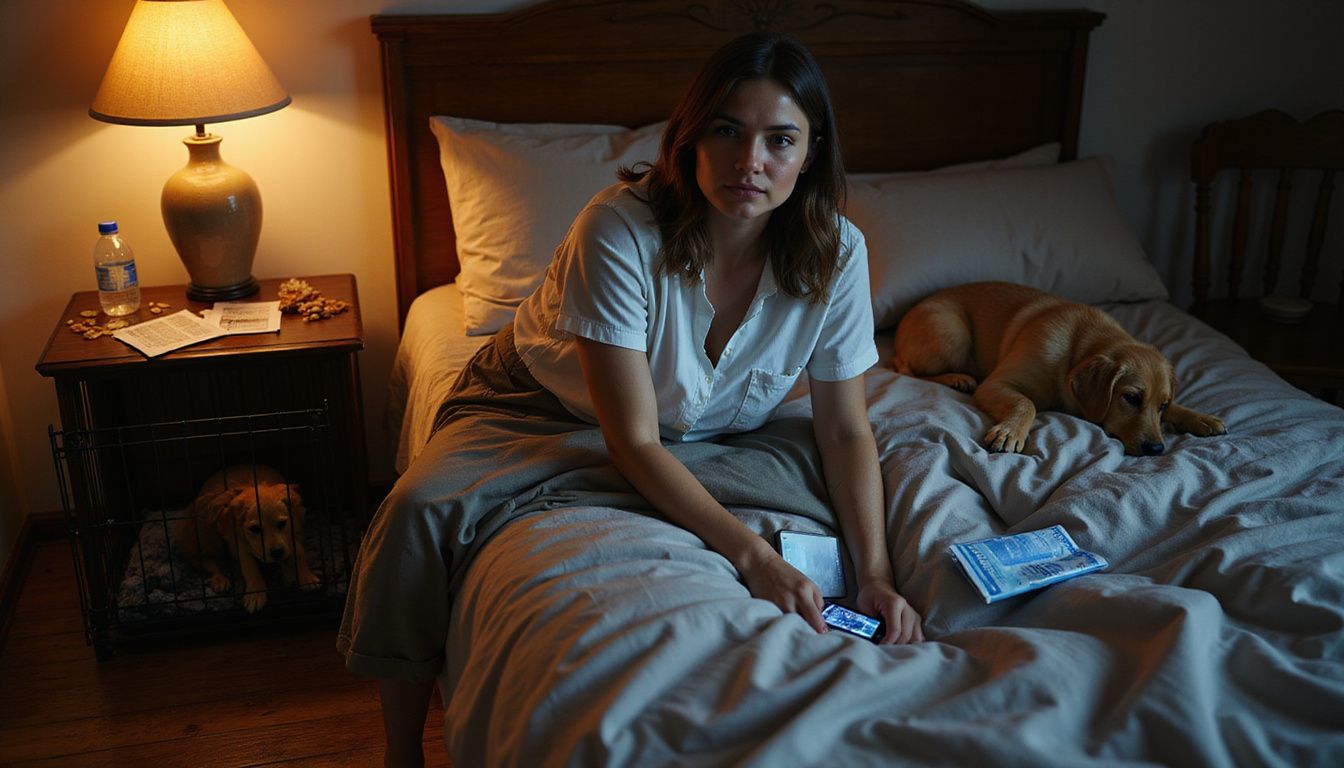
Your first night with a new puppy will test your patience in ways you never expected. Puppies cry, whimper, and need potty breaks every few hours, just like human babies do.
Many new puppy owners feel the “puppy blues,” a wave of anxiety and frustration that catches you off guard. According to a 2024 University of Helsinki study on new dog owners, almost half of new owners go through this exact feeling, and it fades fairly quickly as bonding grows.
Taking at least one day off work after bringing your puppy home makes a real difference. If you can’t swing that, hiring a dog sitter keeps your pup from feeling abandoned during those first few days.
A few things that help you get through the night:
- Take at least one day off work, or line up a dog sitter
- Stock your nightstand with water, snacks, and a pet health hub resource or two
- Keep puppy pads and treats within reach for middle-of-the-night trips
- Reach out to pet help and advice resources, or your local PDSA pet store staff, when you need guidance
Expect your puppy to pace, scratch at the crate, and call out for comfort. These behaviors are completely normal responses to a brand new environment, so prepare yourself for sleepless nights and a scattered routine.
Being kind to yourself matters more than sticking to a perfect plan. Guilt, occasional frustration, and tiredness will surface, and that’s okay. Your emotions will shift as your bond with your puppy grows, so give yourself grace when you feel worn out.
The adjustment period is temporary, and your patience now builds the foundation for a strong relationship with your new companion.
Conclusion
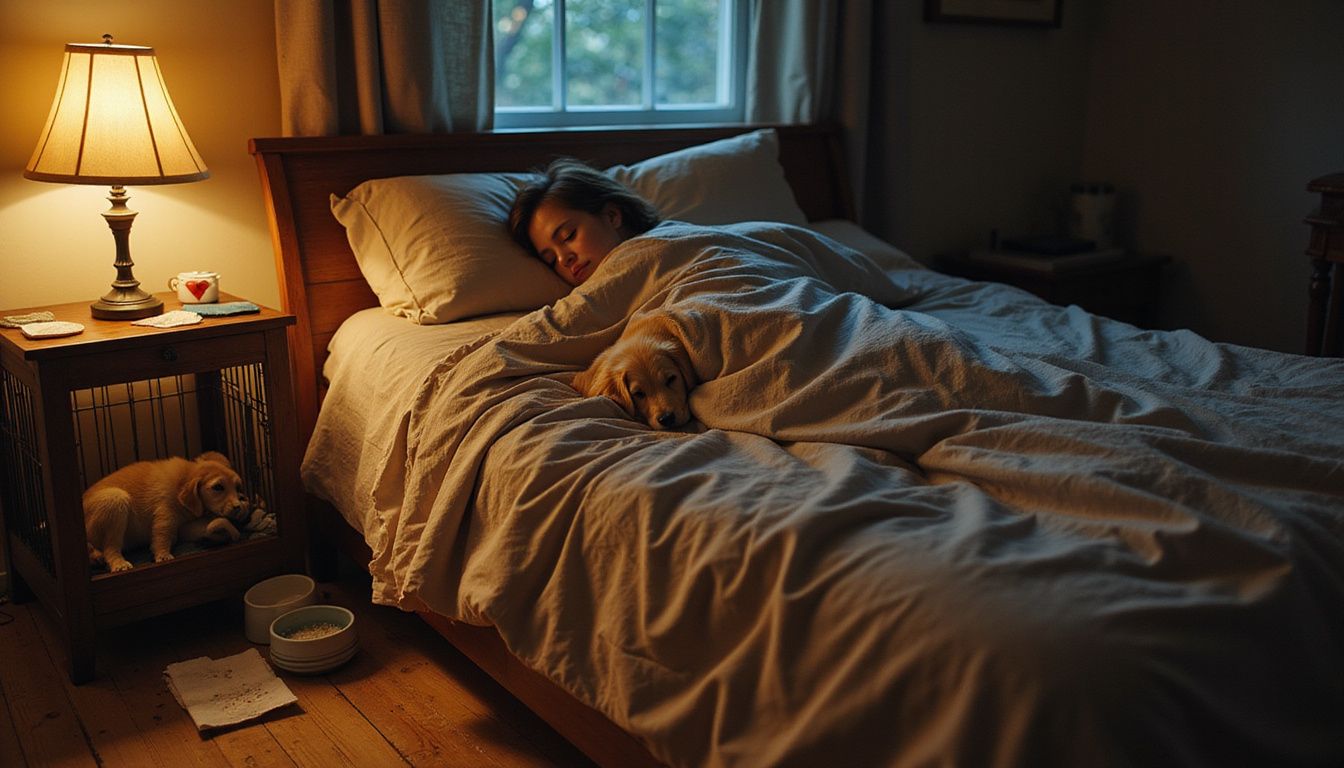
You now know how to turn your home into a safe haven for your new puppy.
Setting up a designated area, gathering the right supplies, and puppy-proofing every corner puts you miles ahead of most new dog owners.
A calm first night matters more than you might think. Puppies need 10 to 18 hours of sleep a day to grow strong and healthy.
Start that potty routine right away. Taking your puppy out every hour while awake on day one prevents most accidents and helps them adjust faster.
Comfort items like heartbeat toys work well here. They mimic a mother’s warmth and ease anxiety when your puppy feels alone in a strange new space.
Keeping the crate in your bedroom for those first nights lets your scent and presence do the heavy lifting. Stress turns into security faster than you’d expect.
Pet help and advice resources, including PDSA pet insurance options, stand ready to support you through this whole transition.
Start your happi 5-day challenge today. Stay patient as your puppy settles in, and watch those sleepless nights turn into a lifetime of tail-wagging joy.
FAQs
1. What is the most important thing to do before bringing my puppy home?
Puppy-proof your space by getting down on the floor and looking for anything chewable, like electrical cords or small objects. According to the American Kennel Club, most puppy injuries at home happen in the first week. Check trusted pet help & advice resources before your pup arrives.
2. How do I survive the first night with a new puppy?
Expect some crying, it’s totally normal. Keep a crate near your bed so your puppy feels close to you, and most will settle within 2 to 3 nights once they know they’re safe.
3. What is the happi 5-day challenge, and can it help my puppy adjust?
The happi 5-day challenge is a simple plan that walks you through feeding, sleeping, and potty routines to build good habits fast. Many new owners find it cuts down on first-week stress.
4. Should I get pet insurance right away?
Yes, sooner is better. Pet insurance can help cover surprise vet visits, and the average puppy vet bill for accidents or illness in the first year can run $800 to $1,500 in the US. Having coverage early gives you real peace of mind.