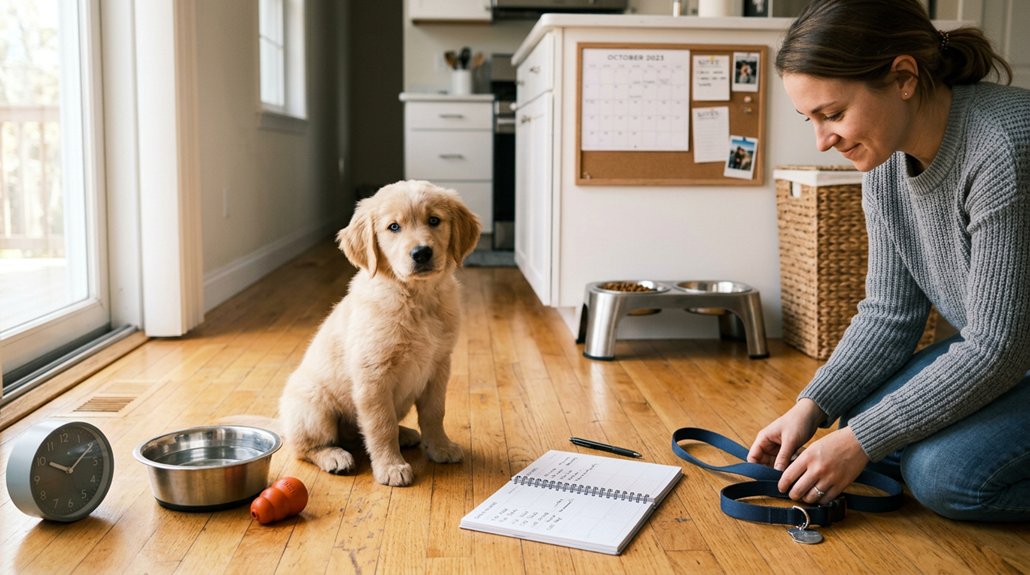
Managing a puppy with a busy schedule requires smart time management and a reliable support system. Establish consistent feeding and potty routines to minimize stress, and integrate short training sessions into daily activities. Balance physical and mental exercises; high-energy breeds need more activity. Use flexible work arrangements and lean on your network for help, like hiring a dog walker. Open communication guarantees your puppy’s well-being and fosters a strong bond. Discover strategies for seamless integration into your life.
Key Takeaways
- Implement flexible work arrangements or use daycare services to ensure consistent care for your puppy.
- Establish a structured schedule for feeding and potty breaks to reduce anxiety and promote security.
- Integrate short, frequent training sessions into daily routines to foster confidence and build trust.
- Schedule regular exercise and mental stimulation activities to keep your puppy healthy and engaged.
- Create a support network of family or neighbors to share puppy-care responsibilities effectively.
Balancing Your Busy Schedule With Puppy Care
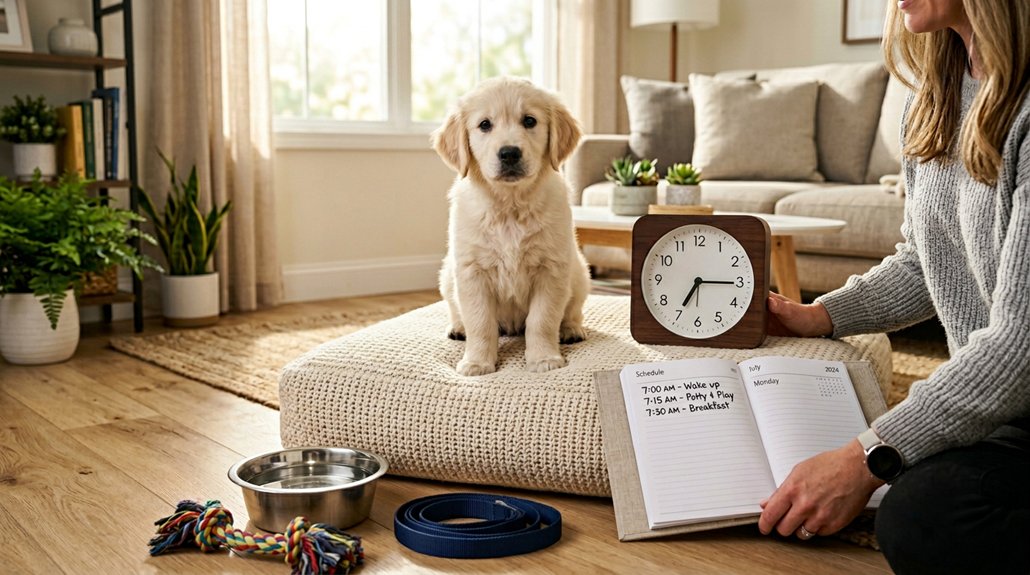
Finding harmony between your busy schedule and the needs of a new puppy might seem challenging, but a few strategic adjustments can make a world of difference. Smart time management is critical. You can utilize flexible work arrangements, like remote work or short breaks, to shower your puppy with attention. Hiring a dog walker or using daycare guarantees your furry friend enjoys proper puppy socialization while you’re occupied. Training sessions easily fit within your daily routine—practice commands before meals or during walks. You might also consider reaching out to neighbors or family for help, creating a support system that lets you juggle commitments without compromising care. These thoughtful decisions cultivate a nurturing environment for your puppy, enhancing both your lives.
Establish a Routine for Feeding and Potty Breaks
Establishing a routine with consistent meal times and regular bathroom breaks is essential for your puppy’s health and successful training. Feeding them at the same times each day aids digestion and aligns with their natural potty needs, reducing the likelihood of indoor accidents. Remember, an 8-week-old puppy typically needs a potty break every two hours, so being attentive to their schedule helps them learn where and when to go.
Consistent Meal Times
Setting consistent meal times for your puppy is an essential part of establishing a routine that minimizes accidents and supports successful potty training. Begin by planning your meal prep, considering your puppy’s age and size when portioning food. Employ reliable feeding tools like sturdy bowls and measuring cups to guarantee consistent servings. Puppies thrive on predictability, so aim to feed them at the same times each day. This structure helps them anticipate when their next potty break will occur, reducing stress and uncertainty. Remember, a puppy can hold their bladder for roughly one hour per month of age. By matching their meal schedule with their potty capabilities, you’ll foster both their physical well-being and your peace of mind as you manage a busy schedule.
Regular Bathroom Schedule
Creating a regular bathroom schedule is essential for successful potty training and helps your puppy feel secure in their new environment. Start by taking your puppy out immediately upon waking, after meals, and every hour to establish a pattern. Remember, puppies can only hold their bladders one hour per age in months, so plan accordingly for their needs. Pay attention to bathroom signals—sudden sniffing or circling often means it’s time to go out. Don’t ignore these signals; responding promptly prevents accidents and builds trust. At night, maintain a comfortable sleeping setup. Incorporate nighttime routines that include bathroom breaks if your puppy cries. Doing so reinforces communication skills and helps your puppy learn to wait until morning as they grow.
Implement Short, Frequent Training Sessions
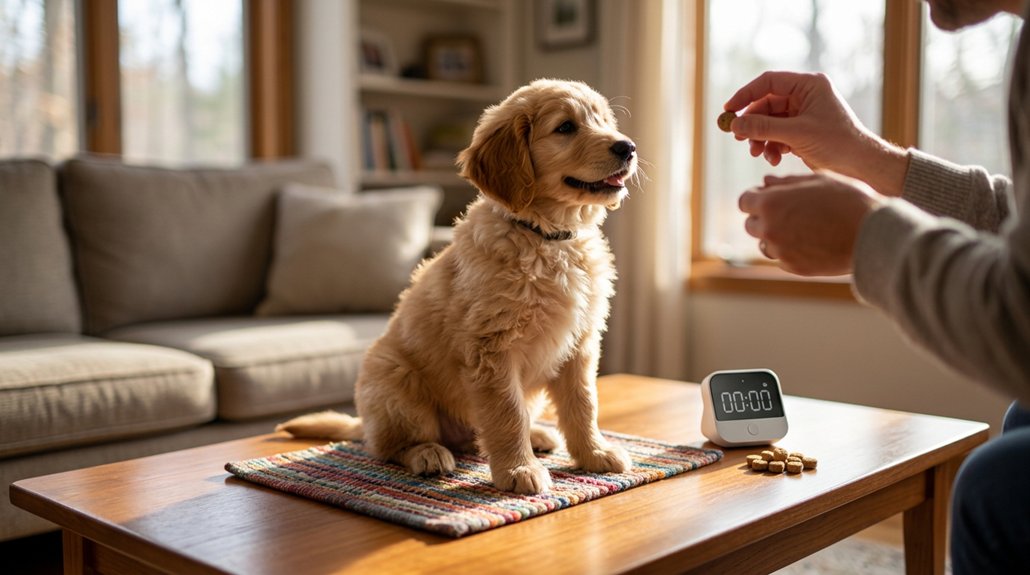
When it comes to training a puppy, implementing short, frequent sessions can make a world of difference. Using micro training techniques for just 5-10 minutes throughout your day is a practical approach that fits seamlessly into a busy schedule. These small, manageable bursts keep your puppy focused and enthusiastic, preventing frustration from longer sessions. With positive reinforcement, you can integrate training commands during mealtime or playtime, turning everyday activities into learning opportunities. This method not only builds consistent expectations but also nurtures your puppy’s confidence and comfort in various settings. This structure guarantees that discipline and positive behavior are reinforced consistently, promoting better long-term outcomes. Embrace these moments to bond with your puppy while fostering development and growth.
Plan Exercise and Mental Stimulation Activities
Ensuring your puppy gets a balanced mix of physical and mental activities is essential for their overall health and happiness. High-energy breeds typically need 1-2 hours of exercise daily, while lower-energy puppies benefit from at least 30-60 minutes, and these can easily be incorporated into a busy day with structured 5-minute increments. Scheduling activities like walks or training sessions before and after work not only keeps them fit but also strengthens your bond and keeps them mentally engaged.
Balancing Physical and Mental Activities
How do you strike a balance between physical and mental activities for your energetic puppy? Start by scheduling at least 1-2 hours of physical exercise daily, like walks or playing frisbee. These activities help manage their energy levels. After physical exertion, incorporate mental stimulation through socialization techniques and interactive games. Use puzzle toys or practice obedience training to engage their mind; this combination enhances tiredness more effectively than exercise alone.
Integrate short training sessions of 15-30 minutes into your day, making them manageable and engaging. Simple commands during regular activities, like waiting for food or practicing commands on walks, serve dual purposes: exercise and enrichment. This multitasking guarantees your puppy remains healthy, focused, and well-rounded without feeling overstimulated or tired.
Ideal Times for Puppy Exercise
While finding the perfect exercise routine for your puppy can be challenging, establishing suitable times for activity is essential in managing their energy levels effectively. Aim to engage your high-energy puppy in 1-2 hours of exercise daily, while low-energy pups thrive with 30-60 minutes. Ideal exercise times include after breakfast and before dinner; this helps prevent excess energy buildup. For structured exercise methods, consider tailoring five minutes of activity for each month of their age—this guarantees they aren’t overstimulated. After your puppy has exercised, incorporate mental stimulation such as training sessions or puzzle toys. Doing so not only enhances their focus and calmness but also prevents boredom and destructive behaviors, fostering a happier and well-adjusted pet.
Get Help From Your Network
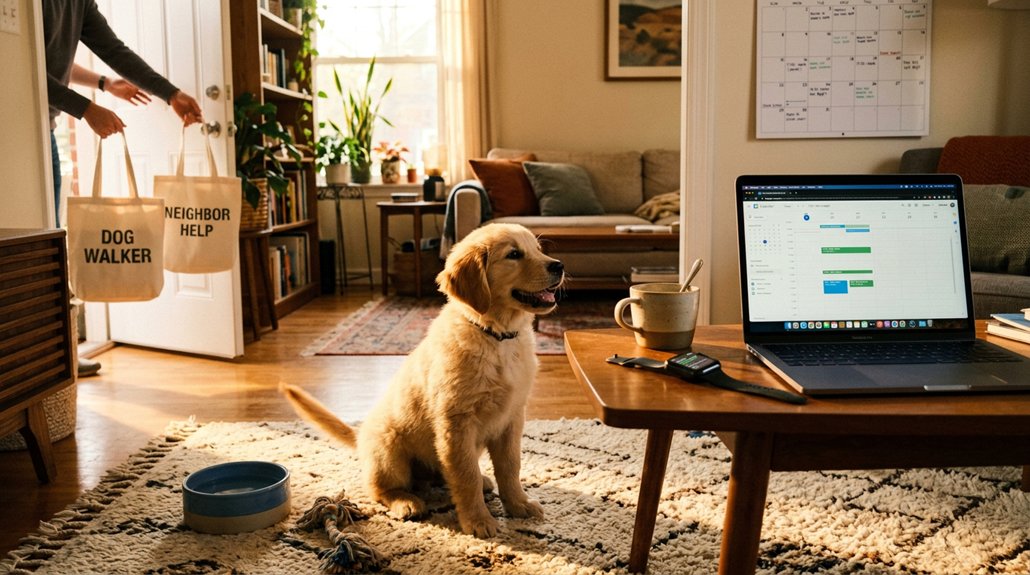
Although managing a puppy can be challenging alongside your busy schedule, tapping into your network can considerably ease this responsibility. Enlist neighbor support by establishing a rotation system for puppy care during work hours. This way, your puppy receives regular attention and community bonding, and no single neighbor feels overwhelmed. Regular visits not only provide essential potty breaks but also foster positive social interactions, enhancing your pet’s social skills. Open communication is key to ensuring your needs are clear, and expressing gratitude for their help strengthens these supportive relationships. A reliable network offers mid-day playtime and companionship, contributing to your puppy’s happiness and development, while you gain peace of mind during your daily commitments.
Adopt Flexible Work Arrangements for Puppy Care
When managing a new puppy alongside your professional obligations, flexible work arrangements can make all the difference. Telecommuting benefits, like remote work or adjusted hours, give you more opportunities to check on your puppy, ensuring their needs are met. Short breaks can be used for potty training, helping to prevent accidents and reinforcing good habits. By incorporating puppy care into your daily routine, such as returning home for lunch or scheduling breaks, you’ll support your puppy’s well-being while maintaining your professional commitments.
Consider negotiating a more flexible schedule with your employer. This adjustment can lead to a productivity boost, reducing both your stress and your puppy’s. Additionally, technology like pet cameras can offer peace of mind, allowing you to check in from afar.
Build a Strong Bond
Forming a strong bond with your puppy starts with consistency and shared experiences. Begin trust building with regular training sessions. Use simple commands to foster an emotional connection while teaching them to rely on your guidance. Consistency in your interactions, including positive reinforcement, helps your puppy feel secure and deepen that emotional connection. As you engage in activities together, like playing or exercising, you’re not just ensuring physical stimulation but also enhancing your bond. These shared moments are essential for creating a trusting relationship. Incorporate quality time into daily routines such as feeding and potty breaks, establishing a sense of security. Building mutual respect and understanding not only improves behavior but also leads to a harmonious environment as they mature.
Frequently Asked Questions
What Is the 7 7 7 Rule for Puppies?
The 7 7 7 rule guides puppy care by allocating seven hours each for sleep, play, and training. It’s essential for balanced development, offering schedule flexibility while enhancing puppy training effectiveness through structured yet compassionate routines.
What Is the 10 10 10 Rule for Puppies?
Ever wondered how to balance puppy training and socialization techniques daily? The 10 10 10 rule is your answer. Spend 10 minutes on exercise, 10 on training, and another 10 on bonding—it’s efficient and compassionate.
What Is the 3-3-3 Rule for Puppies?
The 3-3-3 rule helps guide a puppy’s adjustment to a new home. Focus on socialization tips, consistent training, and exercise routines. Monitor health for stress signs to guarantee you nurture your puppy’s emotional and physical well-being compassionately.
What Is the Hardest Month of a Puppy?
The “challenging month” is around 4 to 5 months. You’ll navigate puppy challenges as they test limits, hit socialization milestones, and face behavioral issues. Prioritize training tips, exercise needs, bonding activities, and time management to address health concerns.
Conclusion
In the whirlwind of daily life, managing a puppy can feel like juggling stars, but with a little planning, it’s within reach. Establish routines, sprinkle in brief training sessions, and keep their minds buzzing with activity. Lean on your support network and explore work flexibility, creating a tapestry where work and puppy care weave together seamlessly. With patience and love, you’ll build a bond as unbreakable as diamond, enriching both your lives beyond measure.