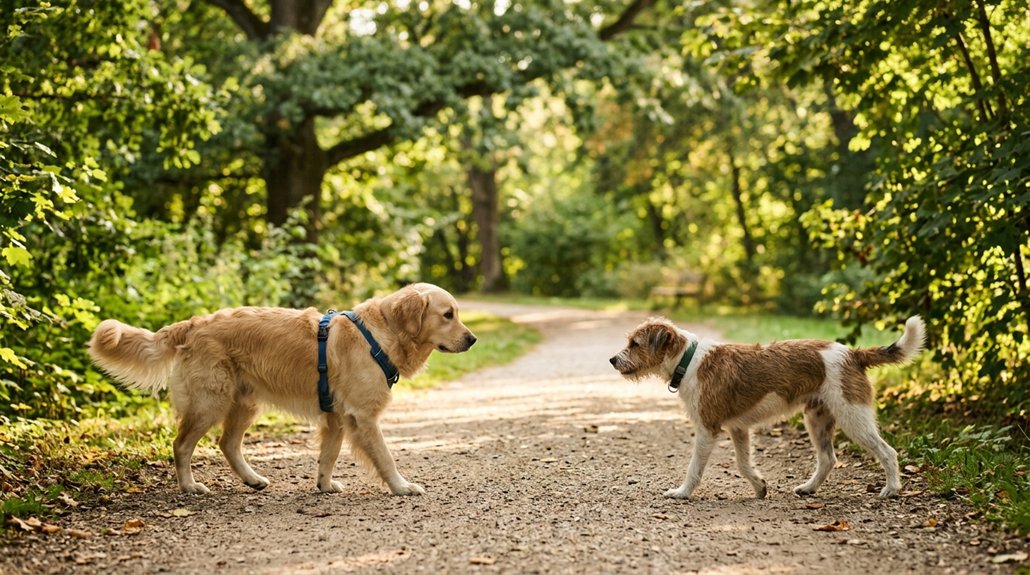
To introduce your dog to others smoothly, start with calm outdoor walks, keeping a 20-foot distance and rewarding positive behavior. Understand body language—relaxed tails and soft expressions are good, while tucked tails and yawning mean stress. Use gates or crates for controlled introductions indoors, and always supervise closely. Reward calm sniffing and encourage gentle interactions. Address fear or aggression with positive reinforcement and stay prepared to intervene if needed. Reveal strategies that guarantee peace and confidence.
Key Takeaways
- Start introductions in a neutral location to prevent territorial behavior and ensure both dogs are on leashes for safety control.
- Gradually decrease initial distance between dogs using treats while monitoring body language to avoid stress and tension.
- Utilize crates and gates to manage interactions, allowing dogs to safely establish personal space and adjust to each other’s presence.
- Reward calm behavior and natural interactions like sniffing or circling to reinforce positive experiences, promoting bonding without competition.
- Recognize and address signs of fear or aggression promptly using calming techniques and separation if necessary for a positive environment.
Start With Calm Walks for Dog Introductions
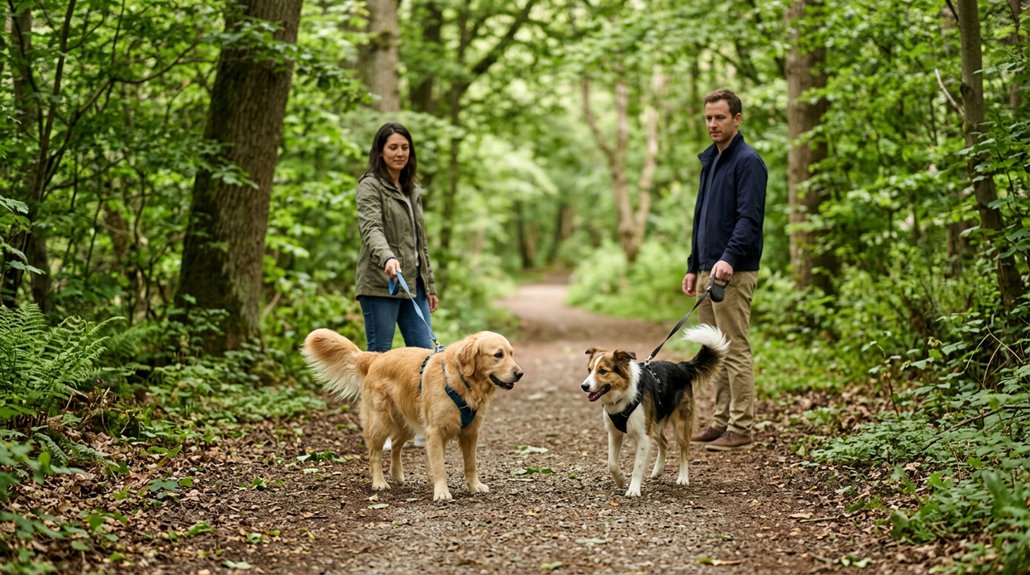
When introducing your dog to other dogs, starting with calm walks can help guarantee a positive experience. Begin in a neutral location with a calm environment, maintaining a distance of at least 20 feet to manage territorial instincts and minimize anxiety. Keep leashes loose and reward your dogs for calmly noticing each other. This gradual approach not only reduces tension but builds confidence. Slowly decrease the space by 3-5 feet increments, reinforcing their relaxed behaviors with treats. Allow for brief moments of sniffing and circling after successful walks. This familiarizes them before any off-leash interaction. Keep initial introductions short, fostering comfort without overwhelming them. By doing so, you’re setting the stage for positive future interactions between the dogs.
Reading Dog Body Language for Successful First Meetings
Understanding your dog’s body language is essential for ensuring successful first meetings with other dogs. Observing tail communication and posture signals will guide you in evaluating their comfort level. Here’s what to look for:
- Relaxed Indicators: A neutral, wagging tail and soft facial expressions mean your dog is content and ready for friendly interaction.
- Stress Signals: Watch for a tucked tail, yawning, or avoidance behaviors like turning away or lip licking, as these show discomfort.
- Submission Cues: A dog lowering its body or rolling onto its back with a gentle tail wag can smooth over any tensions.
- Greeting Approach: Dogs greeting with sniffing and a loose stance, rather than stiff postures, signal a positive start to their meeting.
Manage Initial Home Introductions for Safety
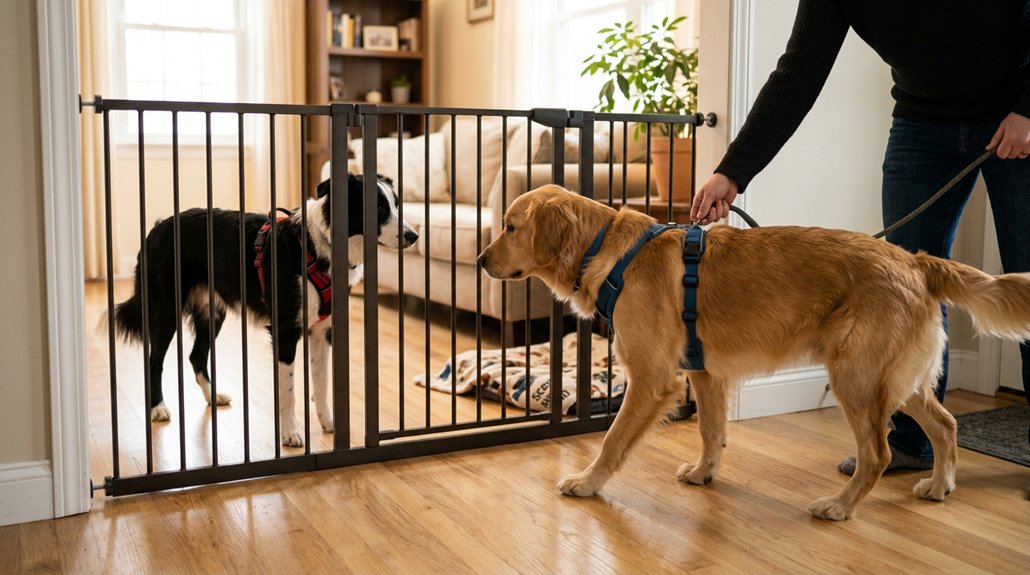
Before bringing your dogs into the home for introductions, verify you’ve already had successful outdoor meetings to prevent territorial disputes. When moving indoors, keep both dogs on leashes to maintain control and provide a sense of security, removing high-value items that might provoke resource guarding. Supervise all interactions closely, and if tensions rise, separate them for a bit and reintroduce them gradually.
Secure Leash Control
While introducing your dog to another for the first time at home, maintaining secure leash control is essential for a safe experience. Balancing leash length and grip tension can help guarantee that introductions proceed smoothly and minimize stress for both dogs. Here are a few key points to keep in mind:
- Leash Length: Opt for a leash that provides just enough freedom for movement without allowing for sudden lunges or overreaching.
- Grip Tension: Maintain a loose grip but stay vigilant, ready to intervene swiftly if signs of discomfort or aggression appear.
- Remove Triggers: Clear away toys, food bowls, or other items that might prompt territorial behavior.
- Observe: Monitor their body language carefully; be prepared to separate the dogs if they show signs of distress or anxiety.
Neutral Meeting Grounds
To guarantee a positive and stress-free initial meeting between your dog and another, it’s important to choose neutral grounds where neither dog feels the need to protect their territory. Parks and open spaces are perfect, as they reduce territorial instincts. Remember, park etiquette means keeping both dogs on leashes during the introduction. This assures you have control while allowing them to exhibit natural behaviors like sniffing.
Start by keeping the dogs about 20 feet apart, gradually bringing them closer as they remain calm. A calm environment is essential, so opt for a quiet spot with minimal distractions to let your dogs focus. Make certain water bowls and safe resting spots are available to avoid resource guarding and encourage relaxation during their interaction.
Encourage Positive Interactions Using Rewards
Introducing your dog to another dog can be a rewarding experience when you use positive reinforcement techniques. Treat timing is essential; give a treat the moment your dog exhibits calm behavior as another dog approaches to create a positive association. Here’s how to encourage positive interactions:
- Reward Calmness: Use treats to reinforce calm behavior, making your dog associate these moments with the presence of another dog.
- Praise Natural Behaviors: Encourage and reward brief sniffing or circling, helping both dogs feel comfortable and relaxed.
- Gradual Interaction: Slowly increase interaction length, rewarding positive behaviors to build trust in a relaxed atmosphere.
- Shared Activities: On walks, distribute treats to promote bonding but make sure no competition arises over treats.
Consistency in positive reinforcement paves the way for successful dog introductions.
Handle Fear and Aggression in Dog Introductions
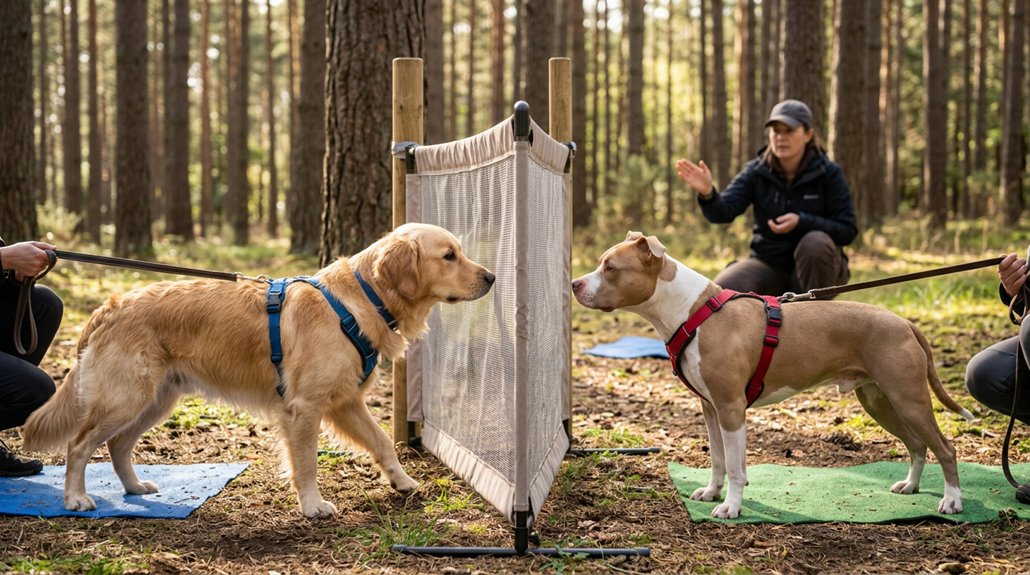
When introducing your dog to others, it’s important to recognize signs of fear and aggression, such as growling or posturing, to guarantee a safe interaction. You’ll want to use calming techniques, like offering treats and using positive reinforcement, to help manage these reactions and redirect their focus. Keeping a safe distance initially and using management tools like gates can prevent overwhelming stress, allowing both dogs to gradually become comfortable with the presence of each other.
Recognize Fearful Behaviors
As you navigate the process of introducing your dog to new canine friends, recognizing signs of fear and aggression becomes essential to fostering a safe environment. Understanding fear signals like cowering or avoiding eye contact, along with observing their body posture, helps prevent stressful situations. A stiff posture often signals tension, while a tucked tail can indicate fear. Here’s how you can better recognize these behaviors:
- Cowering or Retreating: Your dog might shrink back or hide, showing discomfort.
- Avoiding Eye Contact: This suggests insecurity or fear.
- Tucked Tail: A classic stress indicator; your dog might seem smaller.
- Stiff Body Posture: Indicates readiness to defend if feeling threatened.
Prevent Aggressive Reactions
Having understood the importance of recognizing fearful behaviors, let’s now focus on preventing aggressive reactions in dog introductions. Anxiety triggers often lead to aggression, so utilize socialization strategies that create a calm environment. Introduce dogs in neutral, low-stress settings to minimize any anxiety. Use positive reinforcement like treats or praise to reward calm behavior, building a positive association with meeting other dogs.
Watch closely for body language signals—stiff posture, growling, or excessive barking can indicate discomfort. Intervene early to prevent escalation. Gradually decrease the distance between dogs in increments of 3-5 feet, only if both dogs remain comfortable. Consider management tools like muzzles or barriers for added safety, particularly for dogs with known aggressive responses. Your patience and careful observation will foster a peaceful introduction.
Manage Stressful Situations
Dealing with stressful situations requires keen observation and understanding of canine signals to handle fear and aggression effectively during introductions. Pay close attention to your dog’s body language; signs like growling or raised hackles need immediate action for effective anxiety management. Here are important steps for stress reduction during dog introductions:
- Neutral spaces: Choose a non-territorial environment to allow both dogs to meet without added pressure.
- Use positive reinforcement: Reward calm behavior with treats and praise, fostering a positive association with the new dog.
- Remove if necessary: If stress levels escalate, separate the dogs and try another day when they’re calmer.
- Safety measures: Employ muzzles cautiously, focusing on maintaining a controlled and positive interaction.
Use Crates and Gates to Keep the Peace
When introducing your dog to other dogs, using crates and gates can be invaluable tools to keep the peace. Crate training offers a safe refuge for your dog if they feel overwhelmed, while gate placement serves as a controlled barrier. This strategy prevents direct interaction, minimizing the risk of aggressive encounters or overexcitement. By implementing a “crate and rotate” approach, you allow each dog to explore communal areas solo, gradually adjusting to each other’s presence. Gates let them see, smell, and hear each other, fostering familiarity at their pace. Make certain high-value items like toys and food bowls are out of reach to prevent resource guarding. With patience and planning, you’ll create a calm, harmonious environment for all dogs involved.
Frequently Asked Questions
What Is the 3 3 3 Rule for Introducing Dogs?
The 3 3 3 rule helps manage your dog’s change. Initially, use safe meeting environments, and watch dog body language over three days, weeks, and months. It guarantees comfort and fosters a positive relationship with other dogs.
What Not to Do With Dog Separation Anxiety?
Don’t punish or force your dog in anxiety-inducing situations, as this worsens it. Avoid sudden routine changes; gradually shift time alone. Watch for common triggers and dog body language, minimizing anxious departures and arrivals calmly and consistently.
What Not to Do When Introducing Two Dogs?
Don’t ignore their body language or rush the introduction process. Avoid forcing them together or using high-value items, as these can cause stress. Employ patient introduction techniques, ensuring both dogs feel comfortable and secure.
What Is the 7 Second Rule for Dogs?
The 7 Second Rule helps manage introductions by observing dog body language. For example, you’ve got two curious pups meeting: allow a brief nose sniff, then reward with positive reinforcement and separate. Gradually increase duration over time.
Conclusion
Introducing dogs can feel like steering through a social maze, but with patience, your efforts will pay off. Remember, every bark tells a story—watch and listen closely to your dog’s needs. Encourage positivity with praise and treats, and don’t shy away from using crates and gates to maintain calm. Fear and aggression may arise, but your guidance will light the way. Trust the process, and you’ll soon see wagging tails and peaceful coexistence blossom.