To choose the best cat breed for your routine, evaluate lifestyle aspects such as energy levels, grooming demands, and available space. Independent breeds like British Shorthairs suit busy schedules, while Ragdolls are gentle and family-friendly. High-energy Bengals need active engagement, unlike low-energy Persians. Grooming varies widely; long-haired cats need more maintenance. Adapt spaces with climbing areas and quiet zones. Learn about breed-specific health and diet for excellent care. Explore further to align your preferences with the ideal feline companion.
Key Takeaways
- Match breed temperament and energy levels with your lifestyle to ensure complementary companionship.
- Consider grooming needs and time commitment when choosing between long-haired and short-haired breeds.
- Choose breeds that thrive in similar living spaces, like independent breeds for busy professionals or family-friendly breeds for households with kids.
- Provide necessary socialization and exercise based on the cat’s energy level and interaction preference.
- Ensure your chosen breed aligns with health considerations and regular veterinary maintenance needs.
Identify Lifestyle Factors Affecting Cat Compatibility
When selecting a cat breed, it’s essential to analyze your lifestyle to guarantee compatibility and harmonious coexistence. If you’re a busy professional with limited time at home, independent breeds like British Shorthairs are ideal, as they manage solitude efficiently. Conversely, if your household includes children, selecting family pets such as Ragdolls or Maine Coons is prudent given their gentle, sociable nature. Assess the size of your living space, as low-energy breeds like Persians are well-suited for compact apartments, ensuring their contentment without excessive stimulation. Additionally, evaluate your grooming schedule; long-haired breeds such as Persians necessitate daily attention, while short-haired varieties like the American Shorthair require less frequent maintenance. These considerations will facilitate a rewarding symbiosis between you and your feline companion.
What’s the Right Energy Level for Your Cat?
How do you determine the right energy level for your cat? Begin by evaluating your lifestyle. High energy breeds like Bengals and Abyssinians demand daily exercise and interactive play, suitable for active owners who can invest time in their physical and mental stimulation. Conversely, low energy breeds such as Persians and British Shorthairs are better tailored for individuals preferring a calm, relaxed pet that requires less daily interaction.
Consider the age of the cat as well; kittens and young cats naturally exhibit higher energy, needing consistent stimulation, unlike older cats who often favor lounging. A breed like the Ragdoll offers a balanced solution for those seeking a gentle, low-energy companion. Ensuring your cat’s energy level aligns with your routine is essential for a harmonious relationship.
Weigh Your Cat’s Grooming Needs
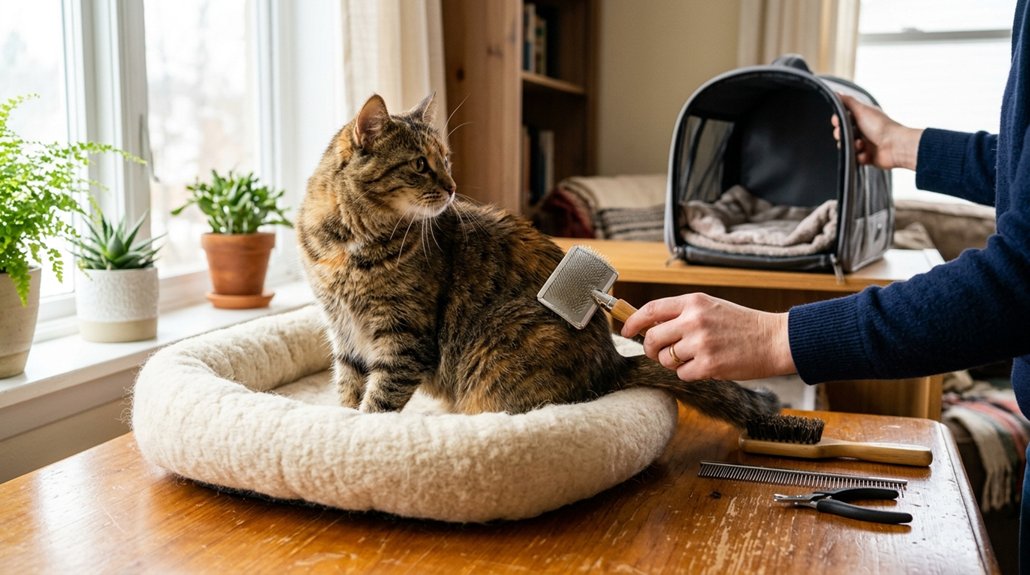
When choosing a cat breed, it’s essential to evaluate the grooming requirements that fit your lifestyle. Long-haired breeds require daily brushing to prevent matting, whereas short-haired breeds generally require less frequent grooming. Aligning your cat’s grooming needs with your schedule will help maintain a cleaner home and nurture a strong bond with your pet.
Daily Brushing Essentials
To guarantee your feline companion looks and feels their best, you must understand the intricacies of their grooming needs. Long-haired breeds such as Persians require daily attention using specialized grooming tools, like slicker brushes, to prevent matting and hairballs. These tools, combined with effective brushing techniques, make certain that your cat’s coat remains free of tangles. For cats with particularly dense undercoats, such as Maine Coons, frequent brushing sessions are essential to manage fluffiness and reduce shedding. Veterinary experts recommend introducing grooming from a young age to establish a stress-free routine. Daily grooming doesn’t just improve coat health; it reduces dander, minimizing allergens in your home. Consequently, selecting the right breed hinges on aligning your schedule with their grooming requirements.
Short-Haired Breed Upkeep
Focusing on grooming needs specific to short-haired breeds offers a streamlined approach for cat owners, especially those with busy schedules. Breeds like the American Shorthair and British Shorthair require just weekly grooming. Utilize appropriate grooming tools to minimize shedding and distribute natural oils, promoting a healthy coat. Maintenance tips for breeds such as the Russian Blue or Devon Rex emphasize occasional brushing to remove loose hair, crucial for allergen control. Short-haired cats typically face fewer matting issues compared to their long-haired counterparts, simplifying upkeep.
| Breed | Grooming Frequency | Key Tools |
|---|---|---|
| American Shorthair | Weekly | Bristle brush |
| British Shorthair | Weekly | Rubber grooming mitt |
| Russian Blue | Occasional | Slicker brush |
Routine nail trimming and dental care remain essential for thorough health management.
Align Grooming With Lifestyle
Aligning grooming needs with your lifestyle is essential when selecting a cat breed that complements your daily routine. Long-haired breeds, such as Persians, demand daily grooming schedules due to their breed characteristics, preventing matting and keeping coats healthy. In contrast, short-haired breeds like American Shorthairs require weekly brushing. If your schedule doesn’t accommodate frequent grooming appointments, consider low-maintenance breeds like British Shorthairs or Scottish Folds, known for their minimal grooming needs. It’s critical to weigh grooming schedules against your availability, ensuring both your and your cat’s satisfaction. Importantly, grooming sessions contribute to bonding, enhancing the pet-owner relationship. Choosing a breed compatible with your time constraints effectively integrates cat care into your daily activities without overwhelming your routine.
Choose Cat-Friendly Spaces
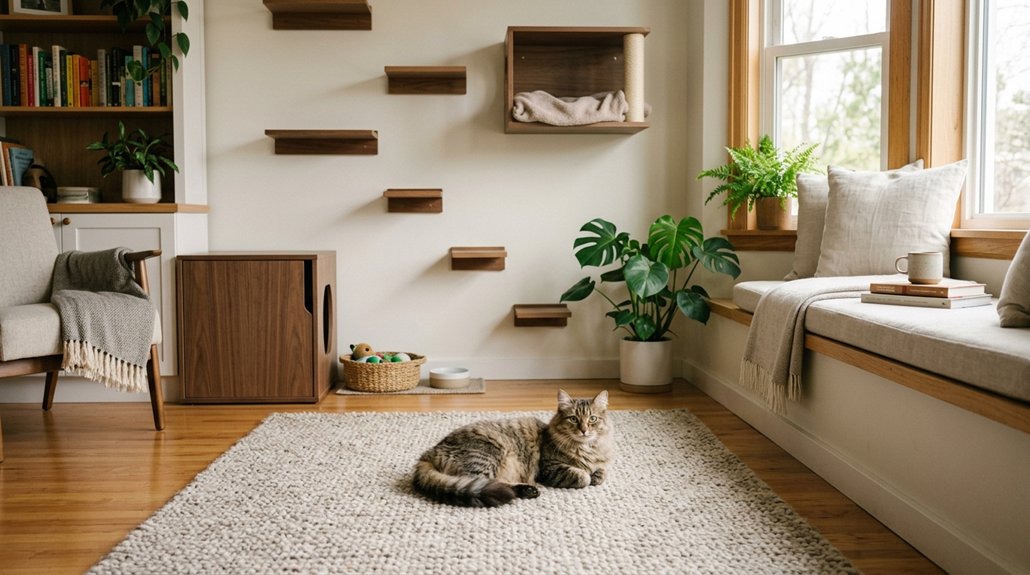
Designing cat-friendly spaces demands consideration of both practical and behavioral needs. Vertical climbing is essential for active feline breeds; installing shelves or cat trees efficiently utilizes limited space while providing entertainment and mental stimulation. Simultaneously, enriching environments are non-negotiable to foster healthy development. Scratch posts and interactive toys should be strategically placed to encourage engagement and deter destructive tendencies. Prioritize the creation of quiet, comfortable sleeping areas away from high-traffic zones to accommodate your cat’s temperament and need for retreat. For those that explore outdoors, guarantee any outdoor areas are meticulously cat-proofed against hazards, offering safe exploration. Finally, optimize all spaces to sustain tranquility, minimizing exposure to stressors like loud noises and sudden movements, allowing your cat to thrive.
Finding the Perfect Breed Match for Your Preferences
How can you determine the perfect feline companion for your lifestyle? Conduct a thorough breed compatibility assessment. Begin by examining your daily routine. High-energy breeds like Bengals and Abyssinians might not suit if you’re pressed for time, given their need for exercise and mental stimulation. Evaluate grooming responsibilities; long-haired breeds like Persians require daily maintenance. Consider short-haired breeds like American Shorthairs for less frequent grooming. Assess your living environment; breeds such as Scottish Folds adapt well to apartment living due to lower energy needs. Align cat personality traits with your social needs; Siamese and Ragdolls are engaging companions. For family-friendly settings, Maine Coons and Ragdolls are sociable, thriving with children and other pets. Precision in choice guarantees harmonious coexistence.
Choosing Between Adoption and Breeders
When faced with choosing between adoption and breeders, where should you start your evaluation process? Begin by understanding both adoption benefits and breeder responsibilities. Adopting gives you an opportunity to assess a cat’s established personality and behavior, which aids in alignment with your routine. Inquire about the cat’s history, temperament, and habits from the shelter or rescue organization. This information guarantees compatibility with your daily life. Additionally, meeting the cat in a calm environment provides a clearer behavior assessment.
On the other hand, if opting for a breeder, rigorously evaluate their ethics and transparency. They should maintain a clean environment and be forthcoming about the cat’s care. Confirming they meet professional standards protects against unethical practices and supports species health.
Frequently Asked Questions
What Is the 3-3-3 Rule for Cats?
The 3-3-3 Rule indicates newly adopted cats adjust over three days, three weeks, and three months. You’ll observe cat behavior gradually change as feline adjustment occurs, adapting to the environment and showcasing true personality traits.
How Do I Know What Cat Breed Is Right for Me?
Oh sure, just pick a cat like you’d pick a sandwich. Consider the breed’s personality traits and energy levels. But remember, cats don’t read guidebooks, so expect surprises and endless cat-induced chaos regardless. Good luck!
What Is “I Love You” in Cat Language?
“I love you” in cat language translates into feline communication through love expressions like slow blinking, head bunting, purring, kneading, and grooming. These behaviors technically indicate trust, comfort, and a strong bond between you and your cat.
What Should a Cat’s Daily Routine Be?
A cat’s daily routine should include a structured feeding schedule, balanced playtime for mental stimulation, personalized exercise preferences, and grooming needs addressed regularly, especially for long-haired breeds, ensuring they maintain ideal health and behavioral well-being.
Conclusion
In the tapestry of companionship between you and a feline friend, selecting the right cat breed is essential. Consider the cadence of your life, from morning commutes to evening relaxation, to align with your cat’s energy levels. Don’t forget grooming requirements and the adequacy of your home’s spaces. Whether weaving through adoption pathways or exploring breeders, remember that the perfect cat isn’t just a pet—it’s a harmonious blend into the fabric of your daily routine.