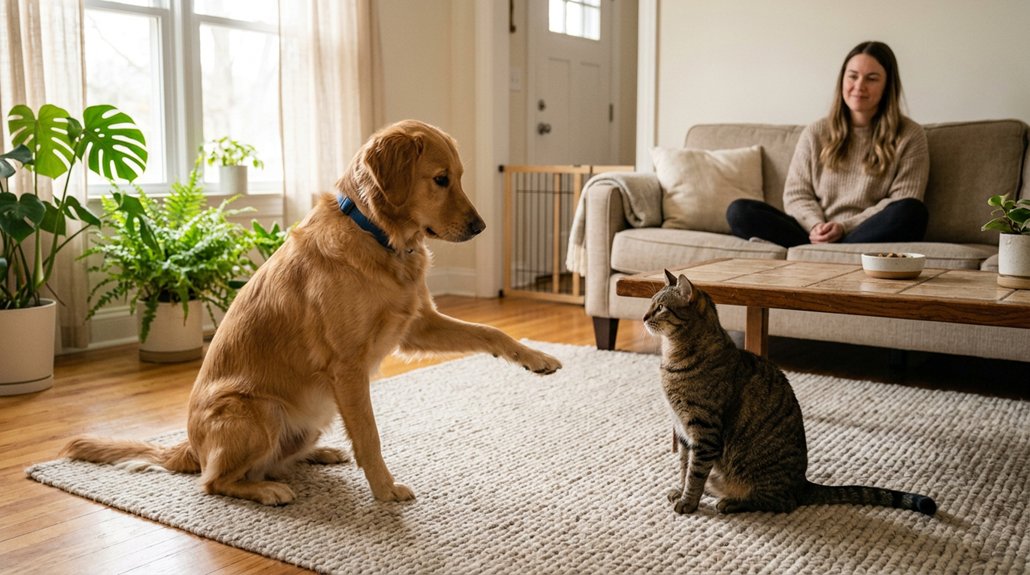
To introduce a dog to other pets at home, start in neutral territory to avoid territorial instincts. Stay calm, use leashes for control, and watch for body language cues signaling emotions like anxiety or comfort. Gradually extend interaction times and reduce potential conflicts by separating feeding areas and personal items. Consider professional help if needed to guarantee a smooth change. Explore further to discover detailed strategies for positive pet integration and preventing common behavioral issues.
Key Takeaways
- Conduct introductions in neutral territory to minimize territorial behavior and promote positive interactions.
- Maintain calmness and control during meetings, using leashes and monitoring for stress signs or aggression cues.
- Observe and interpret dog body language to ensure comfort and encourage positive interactions with treats and praise.
- Prevent resource guarding by initially removing toys and food items, reintroducing them gradually in separate spaces.
- Consult professionals for behavior assessments and tailored strategies to address complex issues and ensure peaceful coexistence.
Start Introductions on Neutral Territory
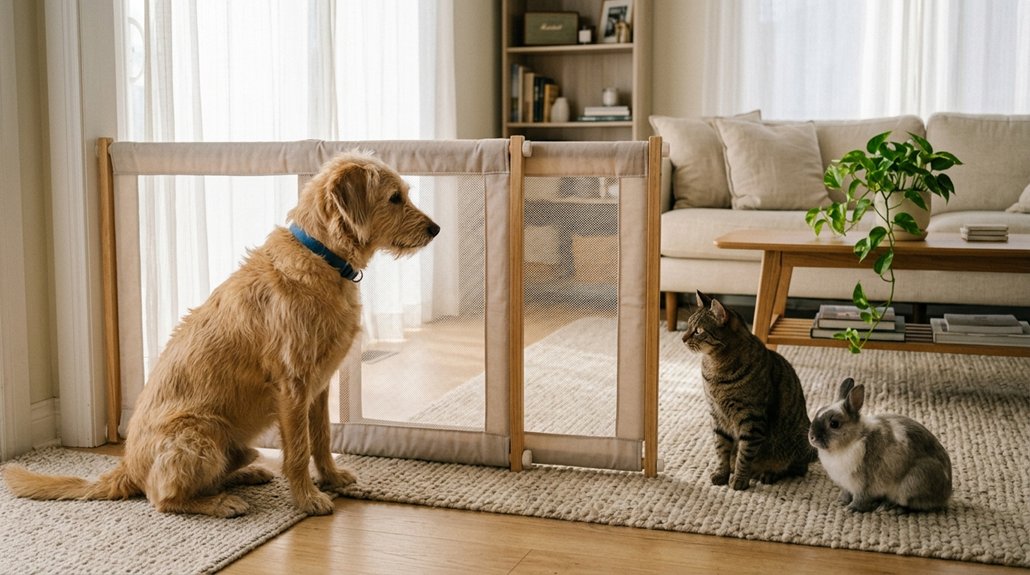
When introducing a new dog to other pets, starting in a neutral territory can make all the difference. Opting for a location like a park or a friend’s yard helps minimize territorial behavior from your resident pet. In these settings, territory management becomes paramount to guarantee peaceful and positive engagements. Keep both dogs leashed to maintain control and ensure safety. This controlled environment allows each pet to approach the introductory interaction without a sense of ownership over the space.
Reward calm interactions and gradually decrease the distance between the dogs as they grow comfortable. Small achievements in these neutral meetings pave the way for positive future relationships. Briefly allow the dogs to sniff and circle each other, further promoting friendly interactions before proceeding home.
Tips for Staying Calm During Initial Meetings
It’s important to remain calm and composed once you’ve created a neutral environment for introductions. Use a calm voice and steady movements to set the tone, ensuring both pets feel secure. Your happy, soothing voice can help minimize anxiety and foster a peaceful atmosphere. Sudden movements and loud noises can trigger stress, so stay mindful and avoid them during initial meetings. Prepare the entire family to maintain a unified approach, reducing tension among your pets. Gradual, short interactions rather than prolonged meetings enable the pets to adjust without overwhelm. While you’re monitoring their interactions, be prepared to intervene if necessary. Picking up on any distress can help prevent escalation. Empathy and patience are essential as you facilitate these early connections.
How to Read Body Language for Pet Comfort
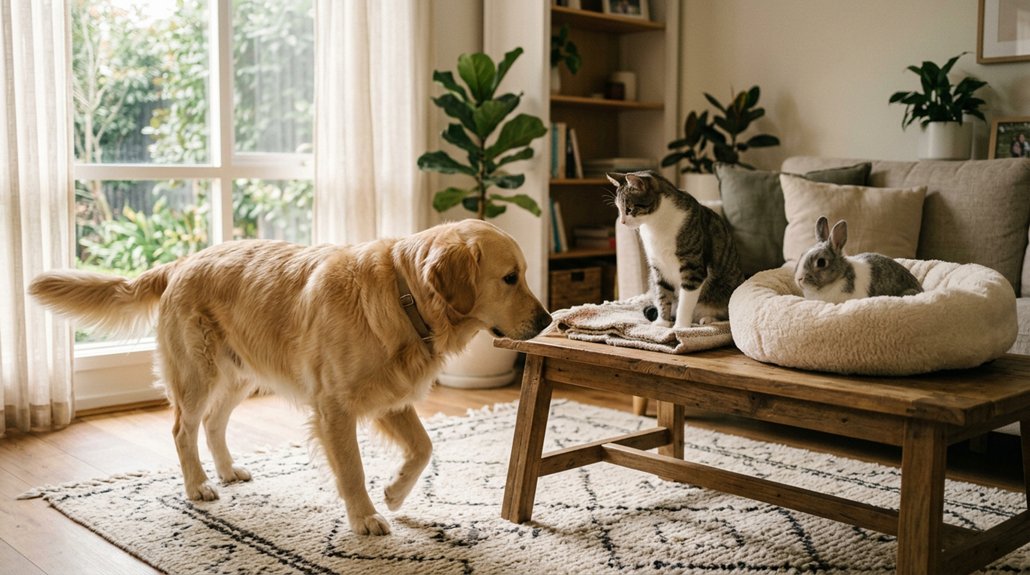
Understanding your dog’s body language is essential to guarantee their comfort and well-being during introductions with other pets. Observing dog behavior helps you interpret their body signals accurately. A relaxed posture, soft eyes, and wagging tail often indicate your dog feels at ease and approachable. Alternately, signs of submission like laying on their back or avoiding eye contact suggest they’re trying to diffuse tension. Pay attention to a raised tail in a stiff position; it can signal discomfort or defensiveness. In addition, quick, shallow barking or growling may reflect anxiety; monitor it closely to prevent escalation. Frequent sniffing is positive, showcasing curiosity and paving the path for a calm interaction. Understanding these signals helps you promote a harmonious environment during pet introductions.
Techniques for Encouraging Good Pet Behavior
Although introducing your dog to other pets can be challenging, employing effective techniques can encourage good behavior and foster harmonious interactions. Start by using positive reinforcement, like treats and praise, to create positive associations between pets. This helps them understand that calm behavior leads to rewards. Monitor their body language; relaxed postures signal comfort, while tension or growling means they need a break. Keep initial interactions brief, closely supervised, and gradually lengthen them. To minimize competition, guarantee separate feeding areas and distinct toys for each pet. Regular social playdates are crucial, as they steadily reinforce positive behaviors and strengthen bonds over time. Adopting these strategies will help your pets interact peacefully, encouraging a loving and thriving household.
Step-by-Step Guide to Reducing Pet Distance
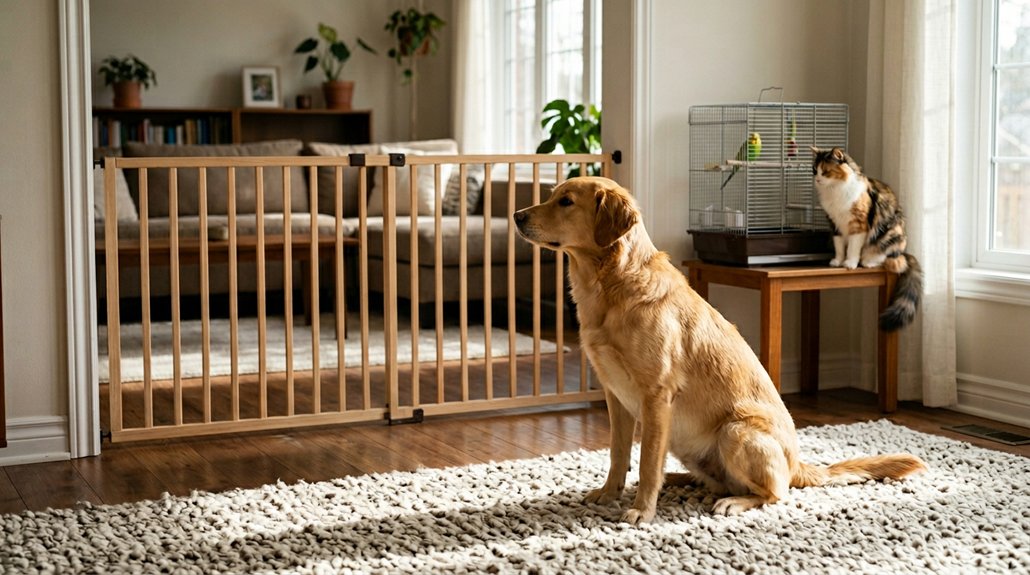
Introducing a new dog to other pets can be a rewarding process when done with care and patience. Start by arranging a leashed meet-and-greet in a neutral space, allowing your pets to feel secure while you control the environment. Use positive reinforcement to encourage calm and friendly interactions, and gradually decrease the distance between pets over multiple sessions, monitoring their body language to guarantee everyone is comfortable.
Gradual Distance Reduction
Even though it’s exciting to bring your dog and another pet closer, patience and precision are your best allies during the gradual distance reduction process. Begin by practicing distance management; take both pets for walks in a neutral area, maintaining about 20 feet apart. Reward calm behavior with treats and praise. Gradual exposure is essential—slowly decrease the distance by 3-5 feet in subsequent walks, making sure both pets remain relaxed and comfortable. When they’re ready, allow brief, supervised interactions like sniffing or circling while still on leashes. Watch for positive signals, then shift to an enclosed off-leash setting for further exploration, but remain vigilant for stress signs. Always provide each pet a separate retreat to guarantee their comfort and safety.
Leashed Meet-And-Greet
When introducing your dog to other pets for a leashed meet-and-greet, it’s important to create a controlled and stress-free environment. Start in a neutral area to minimize territorial instincts, ensuring both pets remain leashed for safety. Practicing proper leash etiquette, walk them on opposite sides of the space. Keep a distance of 3-5 feet, rewarding calm behavior. This not only maintains a calm environment but also builds positive associations.
Gradually decrease the distance while employing calming techniques to reduce anxiety. Watch for signs of comfort—like curiosity and relaxed postures—before allowing brief moments of sniffing and circling. These moments signal mutual interest and reassurance. As the pets grow more comfortable, you can plan to shift to a fenced area for further interaction.
Positive Reinforcement Techniques
Start the process of bringing pets closer together by embracing positive reinforcement techniques. Use treats and frequent praise to reward calm behavior during initial interactions. Ascertain your tone is calm and happy, as this verbal reinforcement boosts pets’ comfort levels. Gradually reduce the pet distance by 3-5 feet, reinforcing positive associations each time your dogs maintain a relaxed posture and show interest without stress. Timing praise alongside rewards is essential; it strengthens the positive experiences linked to each other’s presence. Closely supervise interactions, separating dogs at the first sign of discomfort. Reintroduce later, using treats to reset a positive atmosphere. Consistent, timed rewards for successful interactions will gradually increase comfort and the duration they can comfortably spend together.
Safely Integrate Pets at Home
Successfully integrating pets at home requires thoughtful planning and a keen understanding of each animal’s needs and behaviors. Begin by introducing the pets in a neutral setting outside your home. This helps diminish territorial instincts and eases anxiety, fostering a healthy interpet dynamic. During initial in-home interactions, make certain pets are leashed to prevent aggressive reactions. Maintain separate resources, like food and water bowls, to circumvent territorial disputes.
Follow these steps:
- Allow brief interactions, carefully monitoring body language.
- Gradually increase playtime routines while observing pet behavior.
- Reward calm interactions with positive reinforcement.
- Supervise consistently for several weeks.
This detailed approach guarantees a safe, welcoming environment, paving the way for your pets to cohabit peacefully and adapt comfortably to their shared space.
Monitor Early Home Interactions Closely
Although bringing a new dog into a home with existing pets can be exciting, it’s essential to closely monitor their early interactions to guarantee everyone’s safety and comfort. Start by keeping both dogs leashed to maintain control and prevent unanticipated aggression. Watch closely for early signs of discomfort or aggression cues such as growling, raised hackles, or stiff body posture. These are indicators that immediate intervention might be necessary to prevent conflict escalation. Supervise all interactions, ensuring pets can retreat to a separate space if stress or fear arises. Gradual and short supervised sessions will help pets acclimate to each other, building a foundation of trust and easing anxiety. Be patient, attentive, and responsive to their individual needs, fostering a peaceful coexistence.
Prevent Resource Guarding With Toys and Treats
Once you’re confident in the pets’ initial interactions, it’s important to address potential sources of conflict that may arise from resource guarding. Effective toys management and treats distribution are essential in promoting harmony at home. Follow these important steps:
- Remove all toys, treats, and food bowls initially to prevent possessive behavior.
- Monitor interactions for warning signs like growling or tense postures during play.
- Reintroduce toys and treats gradually once comfort and tolerance are evident between pets.
- Provide separate spaces with individual belongings to reduce competition, fostering a sense of ownership.
Manage Separate Feeding Times for Pets
Feeding time can become harmonious rather than contentious if managed thoughtfully from the start. Begin by observing each pet’s feeding habits and meal preferences to guarantee a peaceful dining experience. Initially, serve meals in separate locations—this reduces territorial disputes and helps each pet feel secure. Utilize barriers like baby gates to create physical separation, maintaining a safe distance while they eat. Keep a close eye on both pets’ behavior during feeding times to quickly identify any signs of aggression or discomfort. Establish a routine that aligns with their natural rhythms and provides consistency, minimizing anxiety. Over time, as calmness emerges and your pets grow comfortable with one another, you can gradually shift to a shared feeding space.
Consult Experts for Complicated Issues
When you’re facing challenges in introducing a new dog to your existing pets, consulting experts can be invaluable. Their expert advice can help you navigate complicated situations with ease. Here’s how they can assist:
- Behavior Assessment: A pet behavior expert analyzes the individual personalities and dynamics involved, tailoring strategies for seamless integration.
- Health Evaluation: Veterinarians can assess any health-related issues to guarantee that all pets are physically ready for introductions, minimizing the risk of stress or harm.
- Training Sessions: Professional trainers offer workshops or one-on-one sessions highlighting effective positive reinforcement techniques for introductions.
- Behavioral Concerns: Behaviorists address specific issues like aggression or anxiety, which could complicate the process, guaranteeing a peaceful coexistence.
This approach reduces conflicts, fostering a harmonious household.
Frequently Asked Questions
What Is the 3-3-3 Rule With Dogs?
The 3-3-3 rule offers guidance on a dog’s adjustment: three days for initial stress, three weeks for confidence-building with leash training, and three months for full integration. Make certain they have safe spaces during this change.
What Should You Never Do When Introducing a New Dog to Other Animals in the Household?
You might think initial excitement’s harmless, but never avoid supervising initial meetings. It’s vital to prevent aggressive interactions. Supervise closely to guarantee safety and harmony, allowing for a relaxed environment where your pets can bond naturally.
What Are the 4 Signs Your Dog Thinks of You as a Parent?
Your dog sees you as a parent if they constantly seek your approval, display protective instincts, exhibit close physical affection in bonding moments, and rely on parental behaviors such as looking to you for guidance and reassurance.
What Annoys Dogs the Most?
Your dog feels as if a thousand storms are brewing when loud noises attack their senses. Annoyances include intrusive pet interactions, unfamiliar odors, and interruptions. These disrupt their dog behavior, fostering anxiety and stress in the home environment.
Conclusion
Incorporating a new dog into your home with other pets requires patience, understanding, and careful planning. By following these steps, you’re fostering a harmonious environment where every pet feels secure and valued. Recognize and respect each animal’s unique personality and needs, ensuring you’re attentive to their body language and potential stress signals. If issues persist, don’t hesitate to consult a professional; expertise can make a significant difference in achieving lasting peace among your furry family members.