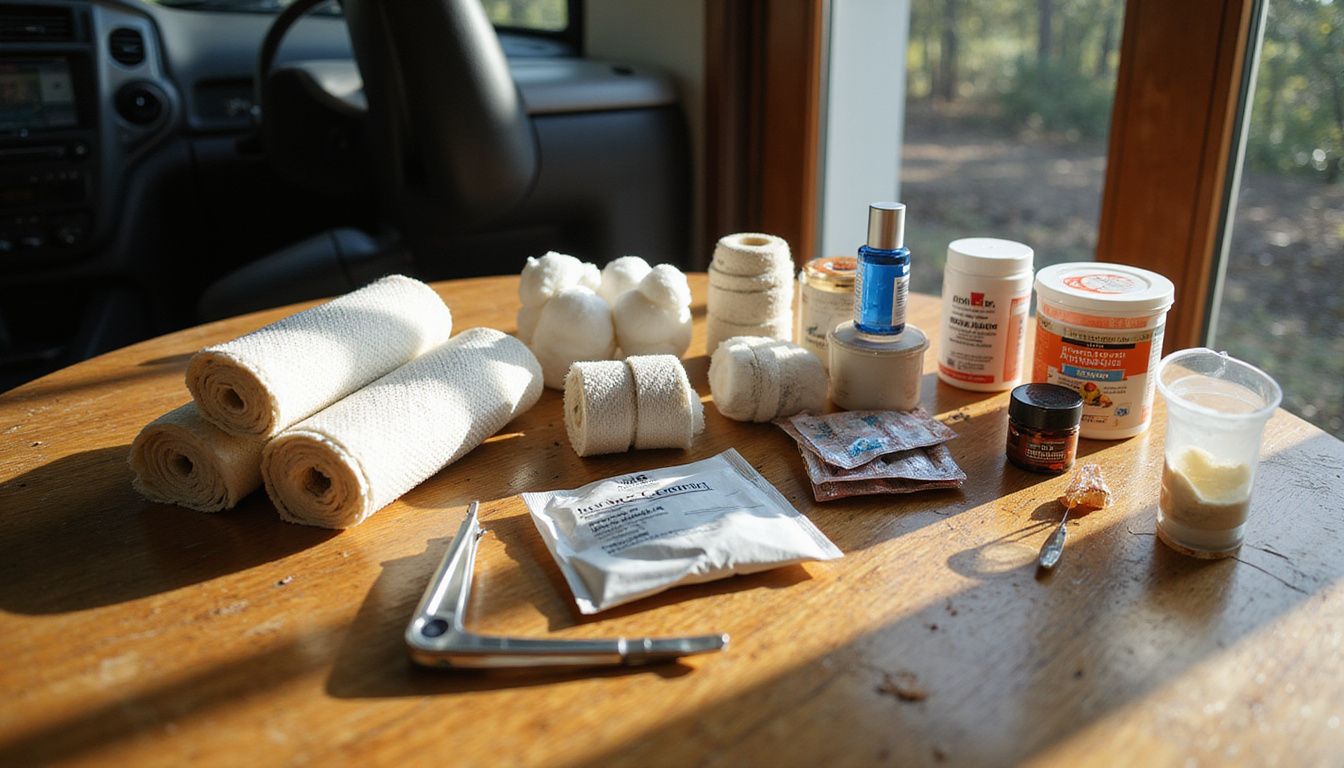
Your dog’s first aid kit acts as a safety net for those “uh-oh” moments. It’s stocked with supplies that handle everything from tiny scrapes to sudden emergencies, and you can find most of it at your local pharmacy or pet store.
Here’s a number that might surprise you. According to 2026 veterinary pricing data, an initial emergency vet exam can run $180 to $500 just to walk through the door after hours, before a single test or treatment even starts.
A well-stocked kit that lets you handle a minor scrape at home isn’t just handy. It’s a real money saver too. Keep your supplies in a small container you can grab fast, whether you’re home or on the road.
What bandages and wound care supplies do I need for my dog?
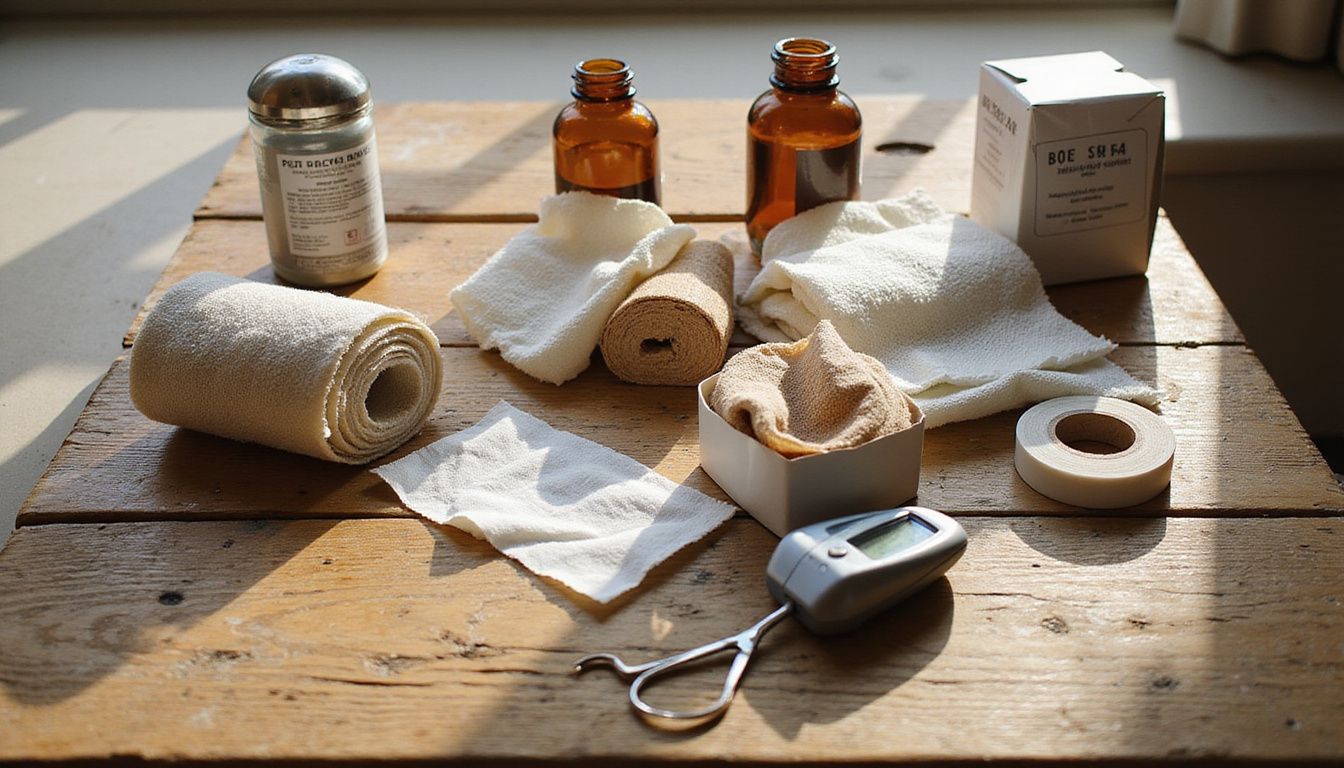
Building a solid wound care collection protects your dog when small injuries happen, whether that’s a scrape from the yard or a cut from a scuffle at the dog park. Here are the essentials to keep on hand.
- Gauze pads absorb blood and apply pressure to minor cuts, slowing mild bleeding while you check the injury. Stock a few sizes for flexibility.
- Self-adhering bandage wrap holds gauze in place without sticking to fur, but keep it loose enough that circulation stays normal.
- Non-stick sterile pads protect wounds without sticking to them, so bandage changes stay comfortable for your dog. Swap them out daily or when soiled.
- Antiseptic solution cleans minor wounds and cuts down on bacteria. Diluted chlorhexidine or povidone-iodine solutions work best and stay safe for dogs.
A few more items round out your wound care stash.
- Antibiotic ointment, applied in a thin layer, helps protect cuts from infection. Original formula Neosporin is generally safe, but always check labels for added ingredients.
- Styptic powder controls minor bleeding from broken nails and small cuts fast. Use a pet-specific product rather than a human version.
- Sterile saline wash flushes debris from eyes and rinses minor wounds gently. Stick to plain saline with no added ingredients.
- Adhesive tape reinforces dressings and keeps bandages from slipping. Apply it over padding, never straight onto fur or skin.
Which tools like scissors, tweezers, and thermometers are essential?
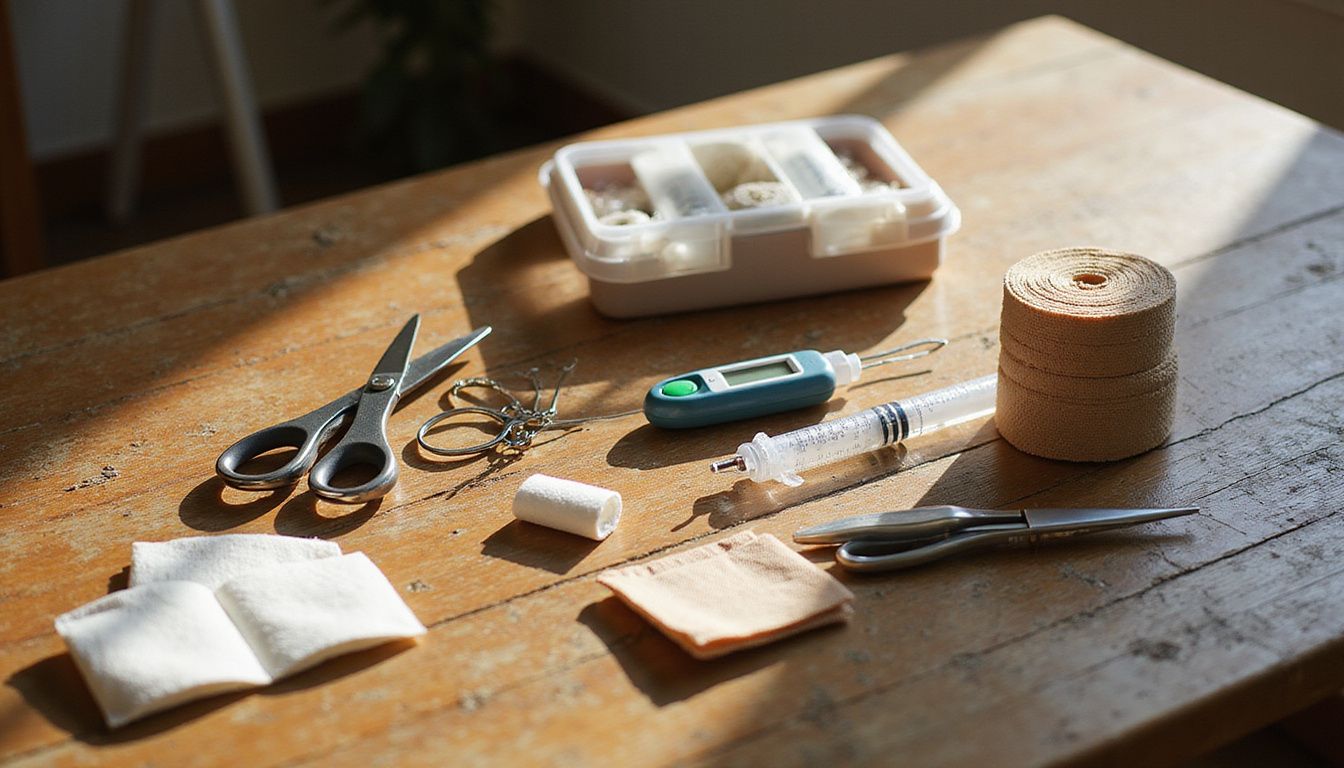
Every dog owner needs a few core tools ready to go, no matter your dog’s breed or size. These keep you prepared when your furry friend faces an injury or health scare.
- Blunt-tip scissors cut safely around wounds without piercing skin or tissue. Use them to trim bandage material and remove matted fur near an injury.
- Tweezers remove small splinters, debris, or foreign objects from surface wounds. Don’t try to pull out anything embedded deep, that’s a job for your vet.
- A digital thermometer gives you accurate vital signs when used rectally. Keep one thermometer just for your dog, and clean it well after each use.
- Needleless syringes flush wounds with sterile saline. You can also use them to give any liquid medication your vet has prescribed.
- A tick remover tool pulls ticks out without squeezing their bodies, so no parts stay embedded in the skin. This protects your dog from infection and disease.
- A muzzle protects you and your injured dog during first aid. Even the gentlest dog may bite when scared or in pain.
What medications should I include, such as antiseptics and antihistamines?

Talk with your veterinarian before adding any medication to your dog’s kit. Only stock products your vet has specifically cleared for your dog’s health profile.
- Antiseptics for wound care matter a lot. Diluted chlorhexidine or povidone-iodine work well for cleaning minor cuts, but confirm the choice with your vet first.
- Antihistamines like diphenhydramine may help with an allergic reaction, but dosage must come from your vet. Never guess on amounts.
- Antibiotic ointments need a careful check for additives that could bother your dog’s skin. Ask your vet which brands work best.
- Probiotics made for dogs can help with mild stomach upset. Human strains or the wrong formula may not work the same way.
- Glucose syrup may help with low blood sugar in small breeds, though not every product is safe for this use. Get clear instructions from your vet before adding it to your kit.
- Hydrogen peroxide should stay out of your kit unless your vet gives direct approval. This common disinfectant can damage healthy tissue and cause more harm than good.
How do I organize emergency contact info and medical records?

Organizing your dog’s emergency info keeps you calm when a crisis hits. Quick access to the right details can save your pet’s life in those first critical minutes.
One approach I really like uses three backup formats, so you’re covered no matter what goes wrong.
| Backup Format | What It Holds | Best For |
|---|---|---|
| Digital folder | Scanned vaccine records, microchip details, current medications | Quick access from your phone, anywhere |
| Waterproof packet | A two-sided printed summary of key records | Backup when your phone dies or loses signal |
| Wallet card | Vet number, poison control, allergies, microchip ID | Grab-and-go during evacuations or travel |
Setting this up takes about 35 minutes, but it gives you a safety net for a safety net when seconds count.
- Create a digital folder on your phone or computer that holds all medical records, vaccination history, and past vet reports.
- Write your primary vet’s phone number, address, and after-hours contact on a card you carry in your wallet.
- List the nearest 24-hour emergency veterinary clinic’s location and number, and post it on the fridge where family can spot it fast.
- Add the ASPCA Poison Control Center number (888-426-4435) to your contacts for immediate guidance during a toxin exposure.
- Register your dog’s microchip with current contact details. According to the American Veterinary Medical Association, microchipped dogs get reunited with their owners 52.2% of the time, more than double the 21.9% rate for dogs without one. Outdated registry info is the single biggest reason that system fails, so check yours every year.
- Keep a short medical history summary listing allergies, current medications, and any behavior notes that help emergency staff treat your dog fast.
How Do I Handle Common Dog First Aid Situations?
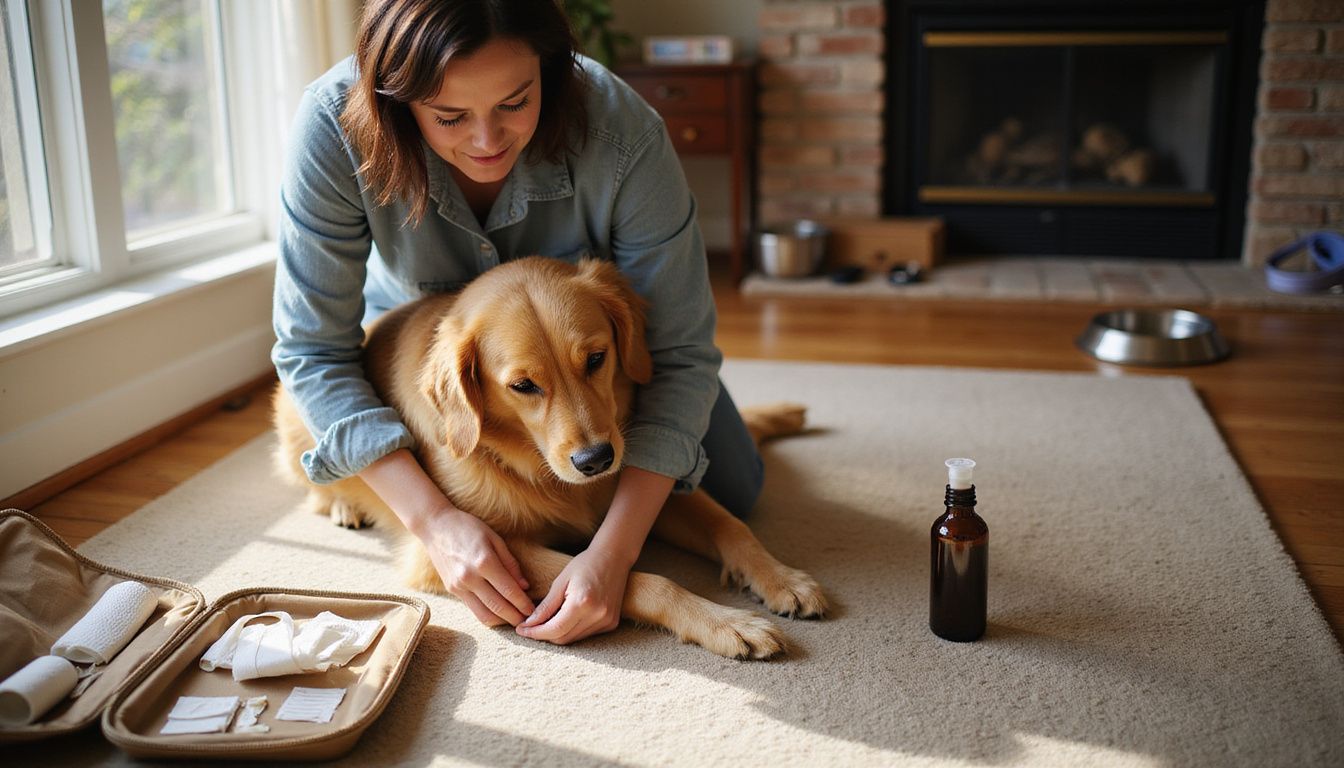
You’ll face real emergencies that call for quick thinking and steady hands. Here’s how to handle the situations that separate calm pet parents from panicked ones.
How should I treat minor cuts, scrapes, or bruises on my dog?
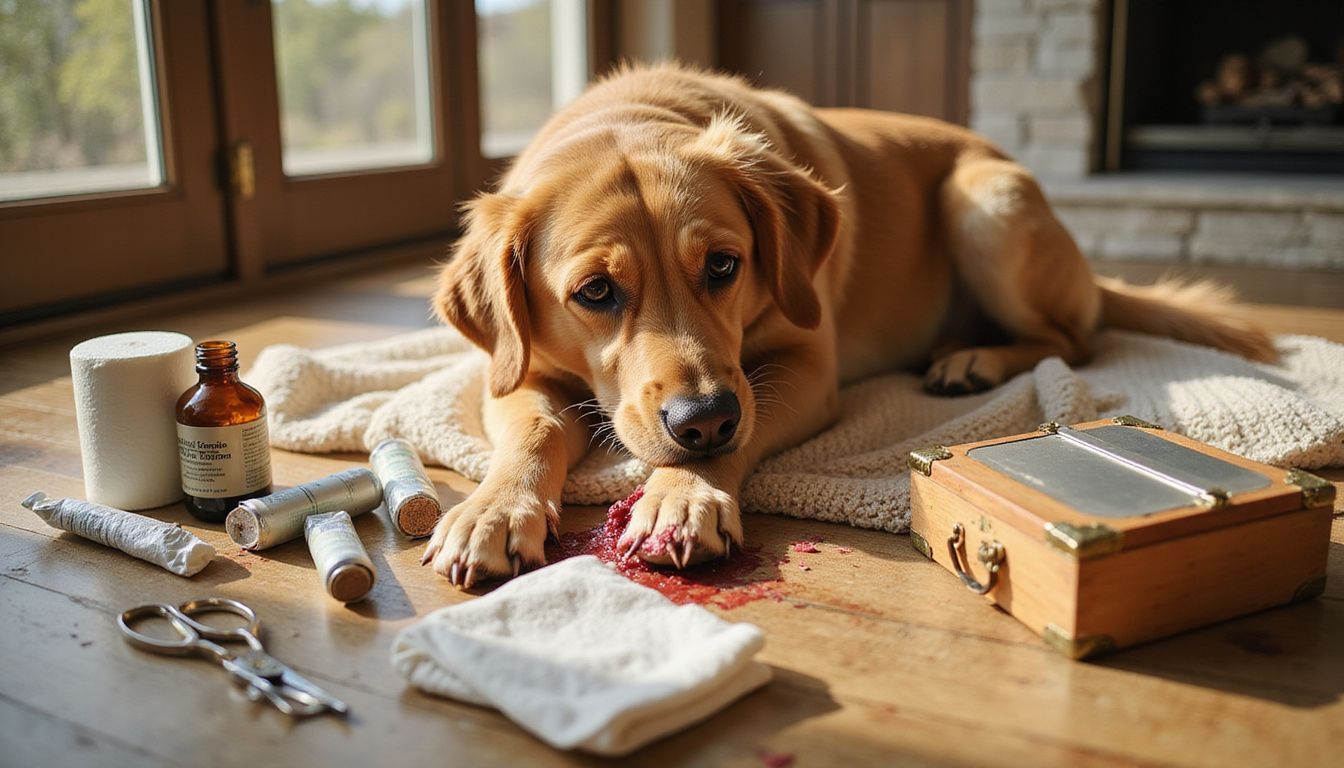
Your dog’s skin needs quick care when a cut or scrape happens, whether it came from a fence, broken glass, or a scuffle with another dog. Acting fast keeps infection away and your pup comfortable while healing.
- Apply firm pressure with clean gauze for several minutes until the bleeding slows.
- Clean the area with mild soap and cool water, then pat dry with a fresh cloth.
- Spread a thin layer of antibiotic ointment using a cotton swab.
- Cover the wound with non-stick sterile pads and change the dressing daily, or sooner if it gets wet or dirty.
- Use styptic powder on broken nails, and try a cold compress on bruises for 10 minutes to bring down swelling.
- Watch for redness, swelling, or discharge that signals infection, and call your vet if any of those show up.
What to do if my dog gets insect bites or stings?

Insect bites and stings happen fast, but you can handle most of them with quick action. Knowing what to do keeps your dog comfortable and stops small problems from turning serious.
- Remove any visible stinger with tweezers or by gently scraping it off with a credit card.
- Make a baking soda and water paste and apply it to the sting site to ease the itching.
- Ice the area for 10 to 15 minutes to bring down swelling right away.
- Watch closely for signs of an allergic reaction, like hives, facial swelling, or trouble breathing.
- Call your vet about giving Benadryl. According to the Merck Veterinary Manual and the American Kennel Club, the standard dose is about 1 milligram per pound of body weight, but liquid children’s formulas often contain xylitol or alcohol, which are dangerous for dogs. Stick to plain tablets your vet approves.
- Get to an emergency vet right away if your dog shows a severe reaction or has trouble breathing.
How can I recognize and respond to dog poisoning or toxin exposure?
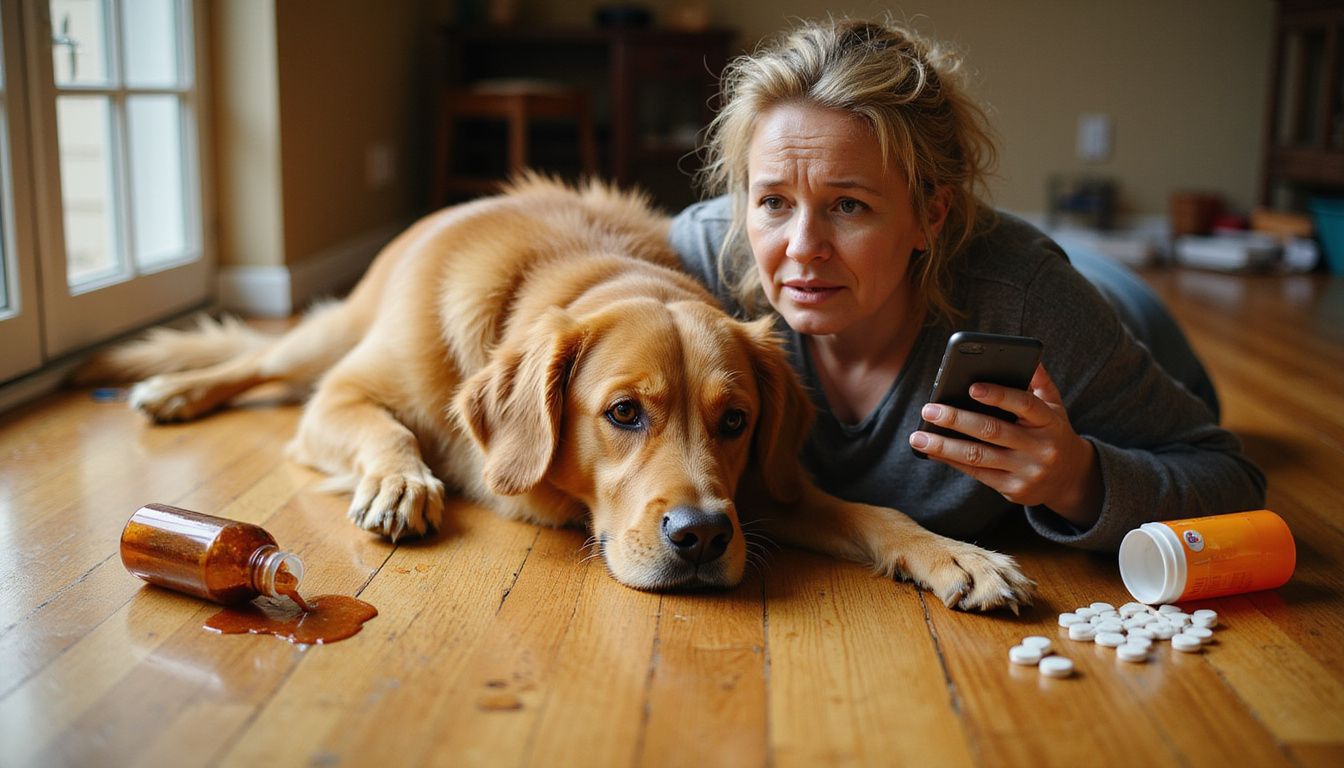
Poisoning looks different from a sting, and it demands faster action from you. Your dog might drool a lot, vomit, shake, or act confused after swallowing something toxic.
- Excessive drooling, vomiting, or diarrhea
- Seizures or a sudden collapse
- Dilated pupils or unusual, disoriented behavior
- Pale or blue gums
Common toxic culprits hide in plain sight: cleaning products, medications, certain foods, antifreeze, and houseplants. According to 2026 data released by the ASPCA, the ASPCA Animal Poison Control Center handled over 376,000 toxic exposure cases in 2025 alone, and everyday items like ibuprofen, chocolate, grapes, and xylitol topped the list of hazards. The danger is often sitting in your kitchen, not some rare chemical.
If your dog’s coat gets contaminated with a chemical, wash it off right away with mild soap and water to stop further exposure. Then act fast on the rest.
- Call poison control immediately with your dog’s weight, the product’s ingredients, and how long ago it happened.
- Do not induce vomiting unless a vet tells you to; some substances cause more damage coming back up.
- Keep the poison control number in your kit and your records for quick reference.
- Transport your dog to the ER right away, bringing the substance, its container, or a photo of it.
- Keep your dog’s head elevated during the ride to help prevent aspiration.
Time matters a lot in poisoning cases. The faster you act, the better your dog’s odds of a full recovery.
What steps should I take if my dog is choking or has an airway blockage?
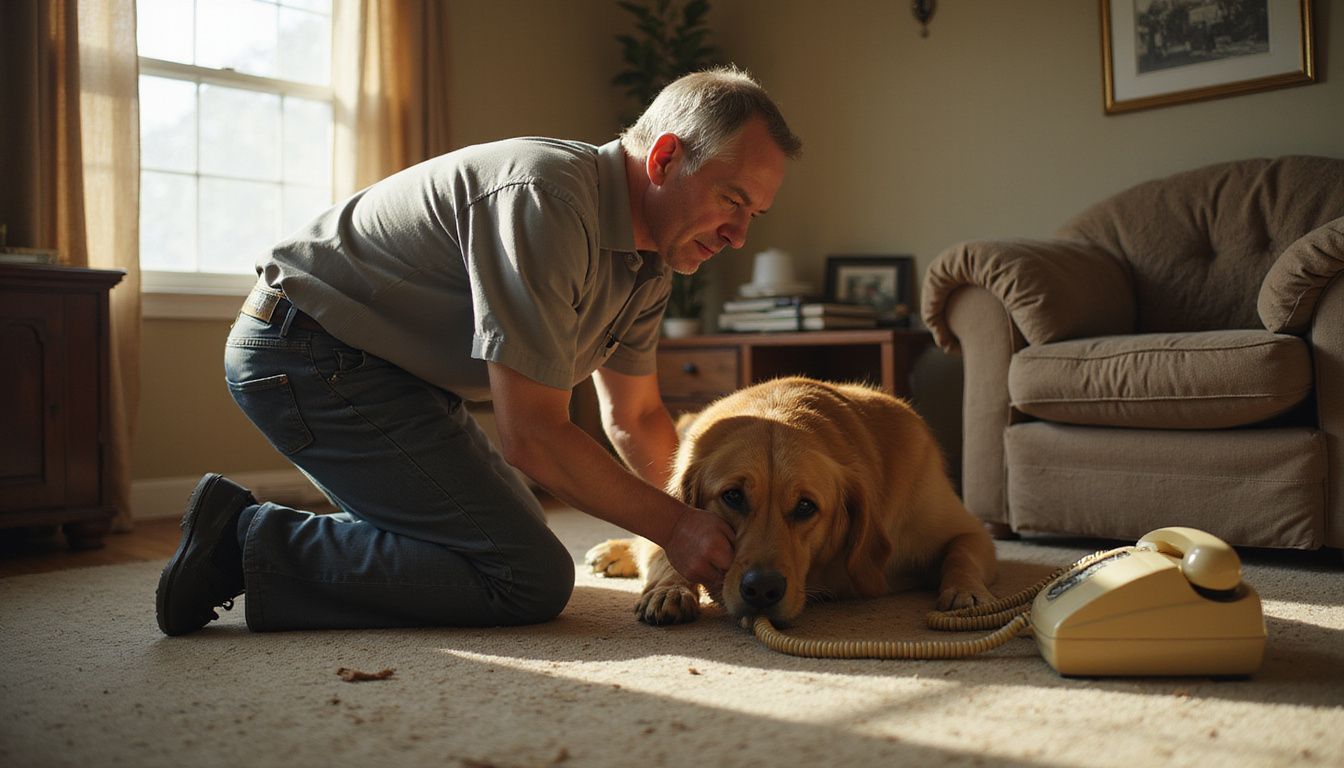
Choking is an even more urgent threat than poisoning. Airway blockages can turn deadly within minutes, so knowing what to do makes all the difference.
- Stay calm and check if your dog is conscious. A responsive dog gives you safer options than an unconscious one.
- Look inside the mouth for a visible object, and gently sweep it out only if it’s easy to reach. Don’t force anything stuck deep in the throat.
- Perform the Heimlich maneuver if your dog stays conscious and you can’t clear the blockage by hand.
- Apply quick, firm thrusts just behind the rib cage to push air up and dislodge the object.
- If your dog loses consciousness, try rescue breathing with gentle breaths into the nose, keeping the mouth closed.
- Call your vet immediately, even if you clear the blockage yourself, since internal injuries can still exist, and head to the nearest clinic for evaluation.
When Does My Dog Need Immediate ER Attention?
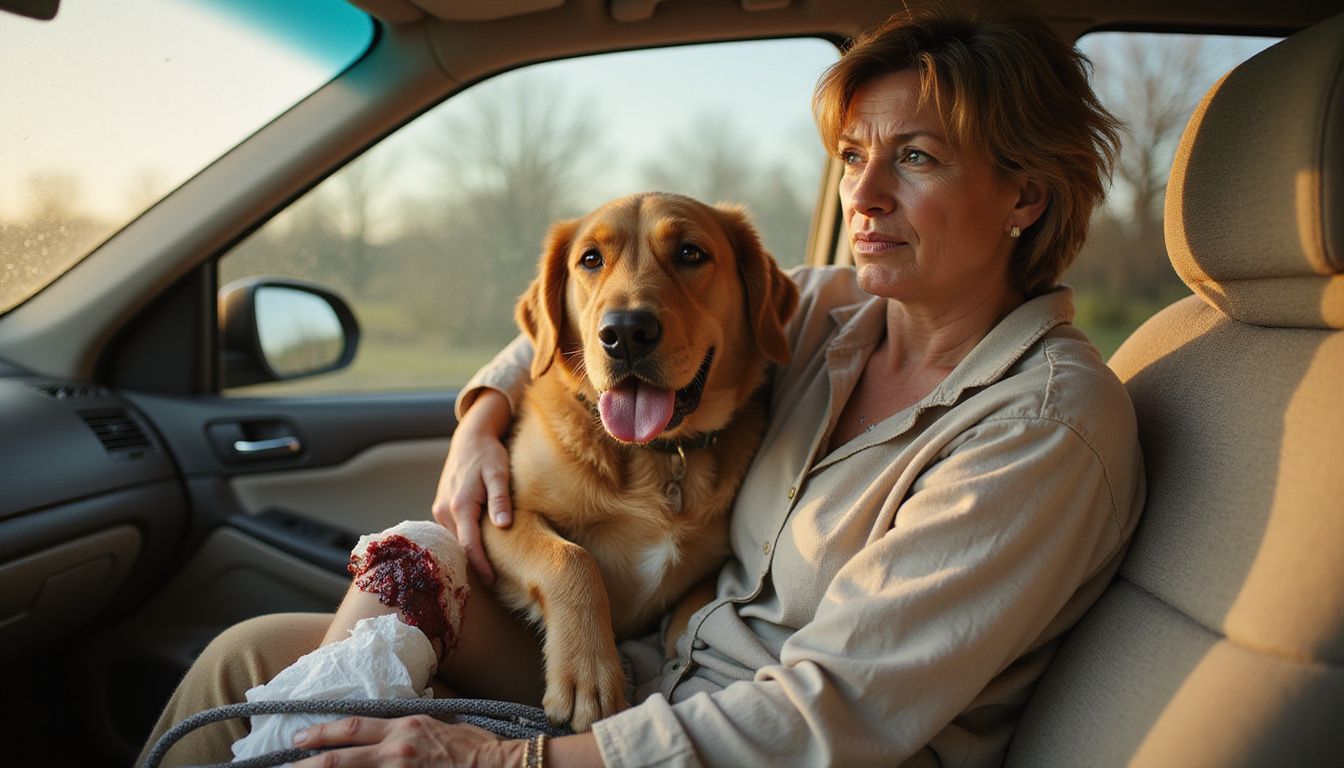
Your dog needs immediate ER attention when you spot severe bleeding, broken bones, signs of heatstroke, or sudden seizures. Shock, unresponsiveness, and road accidents all call for fast action at an emergency hospital, right now.
How to identify and respond to severe bleeding or fractures?

Severe bleeding demands fast action. Look for blood that won’t stop after several minutes, blood spurting from a wound, or blood soaking through bandages quickly.
- Apply direct pressure with a thick gauze pad and hold it firmly for several minutes without peeking.
- Wait three minutes before checking for a clot, then leave the clot alone once it forms.
- Elevate the wound above heart level if it’s on a limb or tail.
- Head to the ER right away if bleeding won’t stop or you can see bone.
Fractures show up as limping, swelling, or an inability to put weight on a leg. If your dog is in pain, muzzle them gently to prevent bites during a check.
- Never try to splint the injury yourself, this often causes more harm than good.
- Immobilize the area using a carrier or flat board to keep your dog still.
- Get to the emergency clinic immediately for a severe fracture.
Knowing these signs and acting fast puts you in the best position to help before shock sets in.
What are the signs of heatstroke or seizures in dogs?
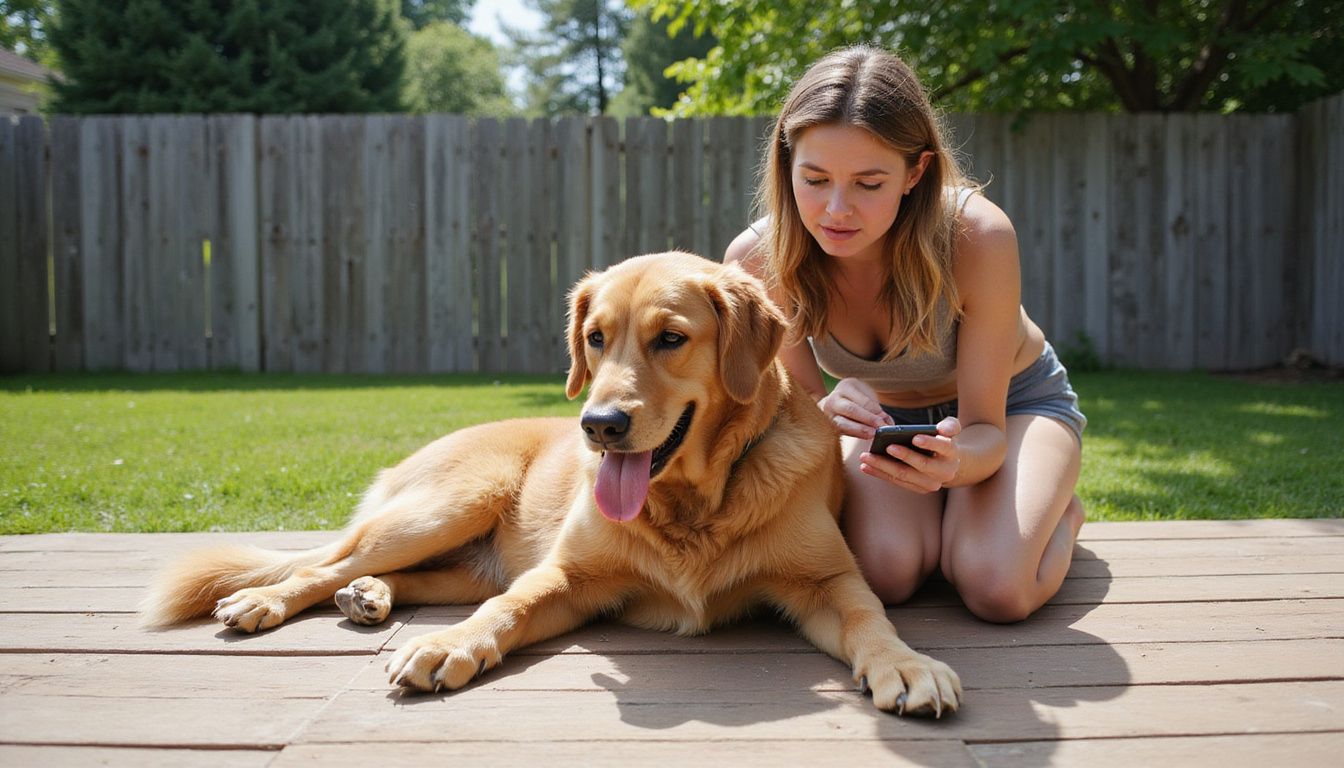
Your dog’s body temperature can spike dangerously fast on hot days. According to the American Kennel Club, a normal temp runs between 101 and 102.5 degrees, but heatstroke becomes a critical emergency once your dog passes 105.8 degrees Fahrenheit. At that point, organ and brain damage can happen in just minutes.
- Excessive panting and thick drooling
- Bright red or purple gums
- Vomiting, diarrhea, or disorientation
- Loss of coordination or hot skin that’s uncomfortable to touch
These symptoms can appear suddenly, so staying alert during warm weather keeps your dog safer and helps you catch trouble early.
Seizures look frightening, but how you respond makes all the difference. During a seizure, your dog loses control of their muscles and may thrash or lose consciousness.
- Don’t restrain your dog or put anything in their mouth, this causes more harm than help.
- Keep them away from hard furniture or stairs where they could get hurt.
- Time the seizure with your phone or watch.
- Get to the vet right after it stops. Seizures lasting more than a few minutes, or happening in clusters, need emergency care.
How can I recognize shock or unresponsiveness in my dog?
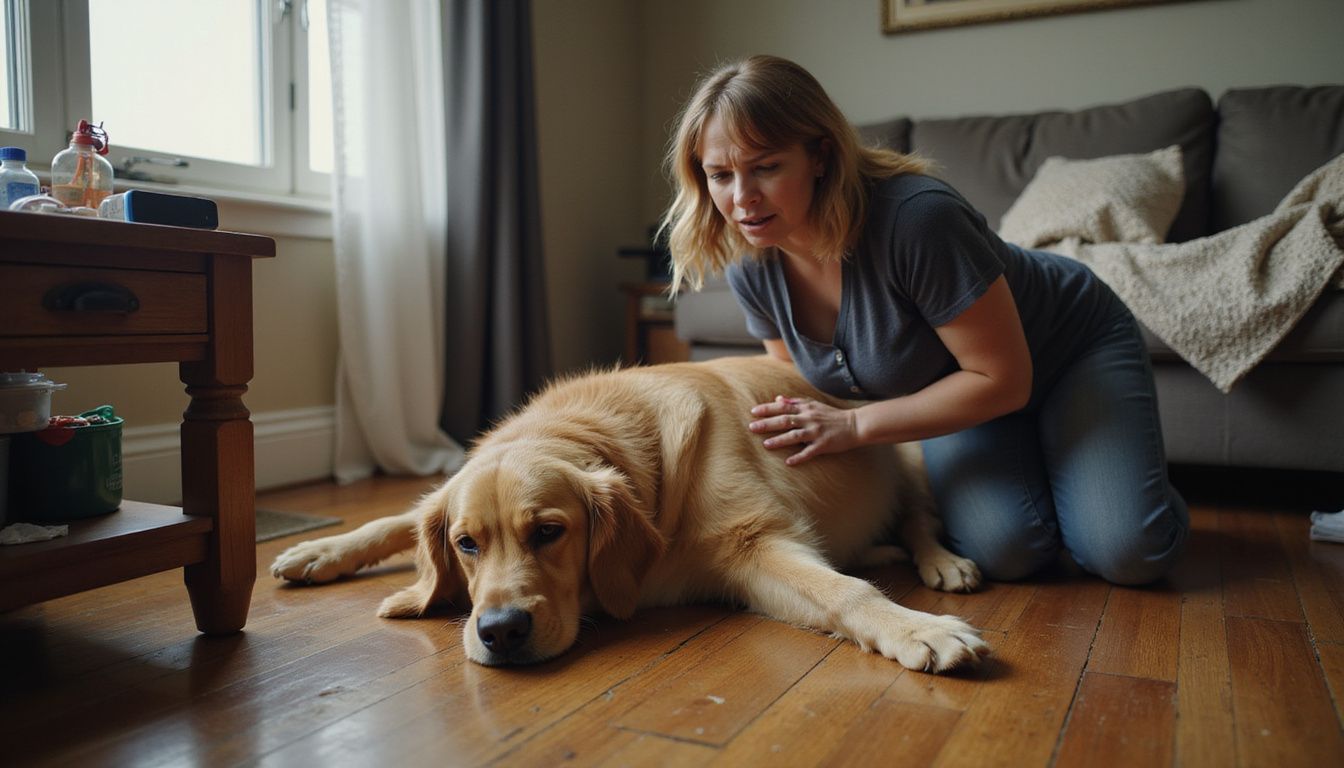
Shock shows up fast and demands your attention right now. Your dog’s heart rate climbs, and the pulse feels weak when you check the inner thigh or neck.
- Gums shift from pink to pale or white
- Your dog seems confused, anxious, or glassy-eyed
- Collapse or trouble standing up
These signs usually follow a severe injury, blood loss, or serious trauma. Get your dog to the vet immediately, every minute counts here.
Keep your dog warm and quiet during the ride, and skip food or water since that can make things worse. Watching gum color and pulse at home helps you catch shock early, before organ failure sets in.
Unresponsiveness means your dog won’t react to your voice, touch, or surroundings, and it signals a medical emergency. Call your vet or the nearest emergency clinic right away, don’t wait to see if things improve on their own. Shock and unresponsiveness often show up together, so treat both as urgent.
How Can I Manage Dog Emergencies While Traveling?
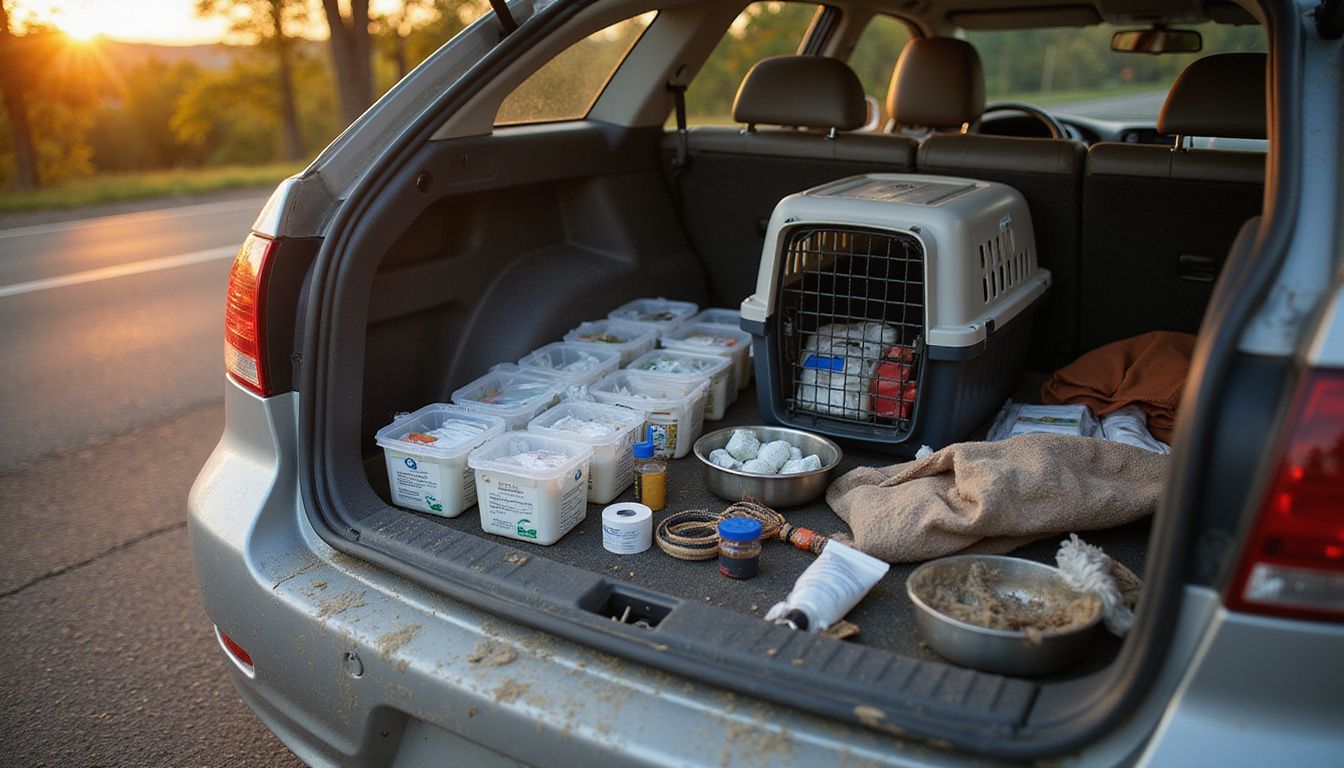
Traveling with your dog means you need a solid emergency plan that keeps your pup safe no matter where the road takes you. Here’s how to pack smart and find help fast.
What portable first aid kit essentials should I bring on trips?
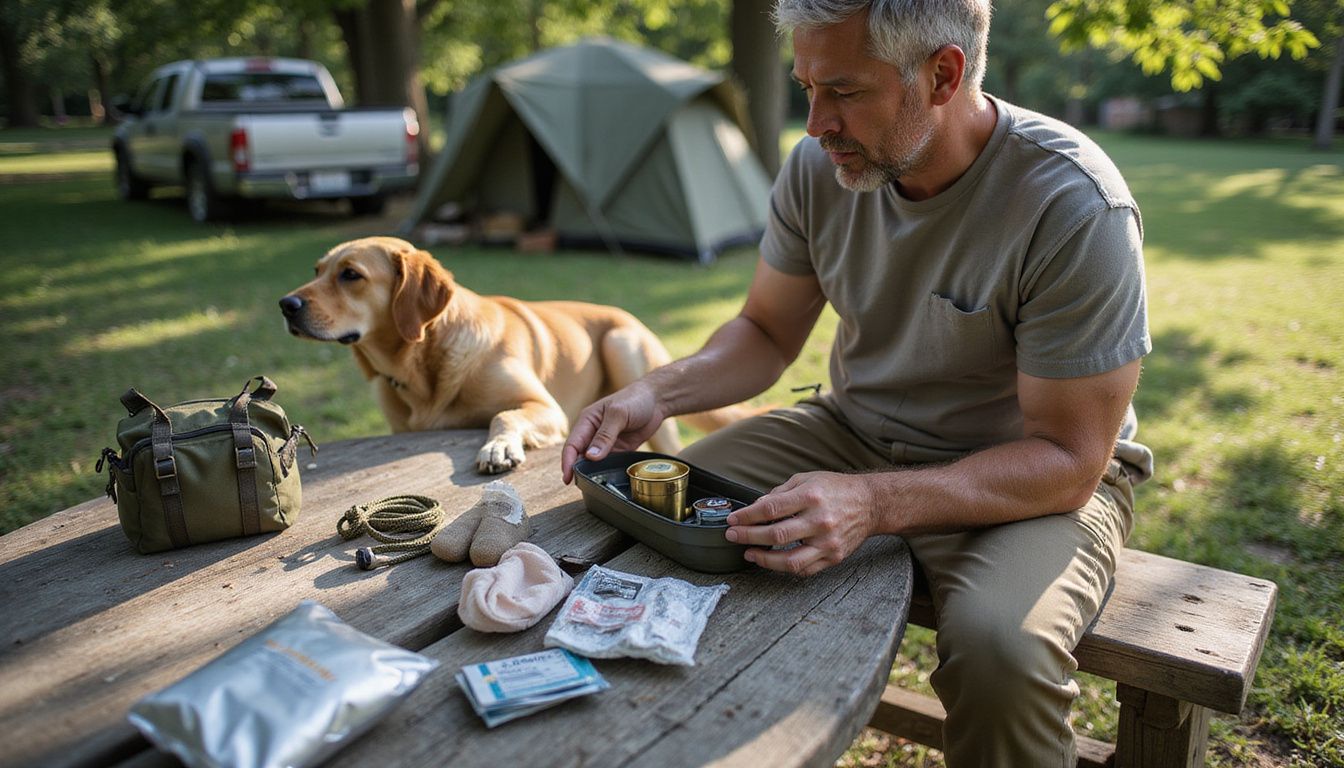
Packing smart for travel makes all the difference between a minor mishap and a major headache on the road. I like to field test my kit before I actually need it, since that’s the only way to know how fast I can grab what matters under pressure.
| Item | Average Grab Time |
|---|---|
| Tick remover | About 8 seconds |
| Portable thermometer | About 12 seconds |
| Emergency blanket | About 15 seconds |
For something like a paw pad scrape, the full treatment (styptic powder plus gauze) usually takes 90 to 140 seconds, depending on how your kit is packed. One trick that saves real time: store your adhesive tape separately from the gauze. Untangling the two can cost you almost a full minute when it counts.
- A tick remover tool, since outdoor trips expose your dog to parasites that need quick removal.
- Extra water or a collapsible bowl to prevent dehydration in any climate.
- Paw protection booties or wax balm to guard against hot pavement or rough terrain.
- An emergency blanket to keep your dog’s body temperature steady in cold or wet weather.
- A slip lead for quick restraint without fumbling with a regular collar.
- The American Red Cross’s free Pet First Aid app, which stores offline step-by-step instructions and helps you locate nearby vet hospitals even without cell service.
How do I find emergency vets when I’m on the go?

Finding an emergency vet while traveling keeps your dog safe and healthy. Quick action during a crisis can mean the difference between a minor scare and a serious outcome.
- Download pet health resources and hospital locator apps before your trip starts, so you have nearby options ready even without internet.
- Call your regular vet and ask for emergency referrals in your destination area.
- Search online for 24-hour emergency veterinary hospitals near where you’re headed.
- Keep a printed list of contacts in your travel kit alongside your dog’s medical records, since phones die or lose signal at the worst times.
- Ask your hotel, rental host, or local friends for emergency vet recommendations.
- Locate the nearest 24-hour clinic as soon as you arrive, so you’re not scrambling if something goes wrong.
Conclusion

You now have what you need to build a solid dog first aid kit, handle common injuries at home, and spot the moment your pup needs emergency care.
Your kit should hold bandages, wound care supplies, basic tools, and vet-approved medications, all organized in one place you can reach fast.
Knowing the difference between a minor cut and serious bleeding, a fracture, or poisoning can save your dog’s life. It also keeps you calm when seconds count.
Keep emergency contact numbers handy, including your local vet and the nearest 24-hour animal hospital, so you’re never caught off guard. Taking these steps now means you’ll respond with confidence, whether you’re at home or out enjoying dog sports and travel with your best friend.
FAQs
1. What should be in my pet’s first aid kit?
Pack gauze, tape, saline, and tweezers. Add a muzzle, gloves, and your vet’s number too. The American Red Cross recommends including hydrogen peroxide to induce vomiting if your vet advises it, plus a tick key if your dog loves dog sports or hiking.
2. What counts as a real emergency versus something I can watch at home?
A broken leg, dog fights, seizures, or fits mean you head straight to the ER. Scalds, coat contamination from chemicals, or sudden collapse also need fast care. According to VCA Animal Hospitals, if your dog shows difficulty breathing or collapses, you should get to an emergency vet within 30 minutes.
3. How do I puppy-proof my house to avoid emergencies?
Block off stairs and swap a small door for a baby gate if needed. Keep chemicals locked away and check your invisible fence brand system works right. The ASPCA reports that over 232,000 cases of pet poisoning happen yearly in the US, with many involving curious puppies getting into household cleaners.
4. Can nutrition and dental care prevent emergency vet visits?
Yes, good nutrition, including therapeutic diets for dogs with health issues, keeps many problems away. The American Veterinary Dental College found that 80% of dogs show signs of dental disease by age three, and regular dental care stops infections before they turn serious.
5. Does breed or training affect emergency risk?
Some pedigrees carry higher risks for arthritis and pain, joint issues, or breathing trouble. Breeders should share health history and any dna program results with new owners. Solid dog training, including the AKC’s Canine Good Citizen program, helps dogs stay calm and safe in stressful moments, and spay and neuter procedures can lower certain health risks too.