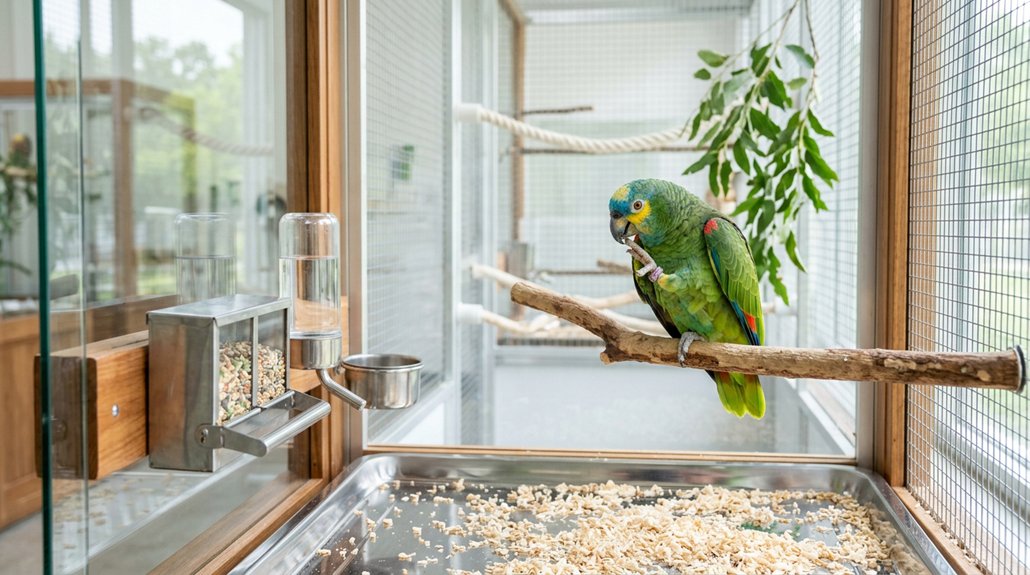
Keep your bird’s environment clean by moving the bird to a safe perch first, then changing water daily, washing bowls with hot soapy water, and wiping bars, perches, and sticky spots with a damp cloth. Use layered plain paper so you can remove one sheet each day and inspect droppings for color, urine, seeds, or blood. Deep-clean weekly, dry items fully, and log any changes. A few extra details can make this routine even more effective.
Key Takeaways
- Move your bird to a safe perch before cleaning to prevent stress and avoid accidental injury.
- Replace water daily and wash food and water dishes with hot, soapy water, rinsing thoroughly.
- Spot-clean droppings and sticky food from bars, perches, and trays every day.
- Use layered plain paper in the tray and check droppings daily for changes in color, volume, or consistency.
- Deep-clean weekly by removing toys, perches, and dishes, then washing, rinsing, and drying everything completely.
Daily Bird Cage Cleaning Routine
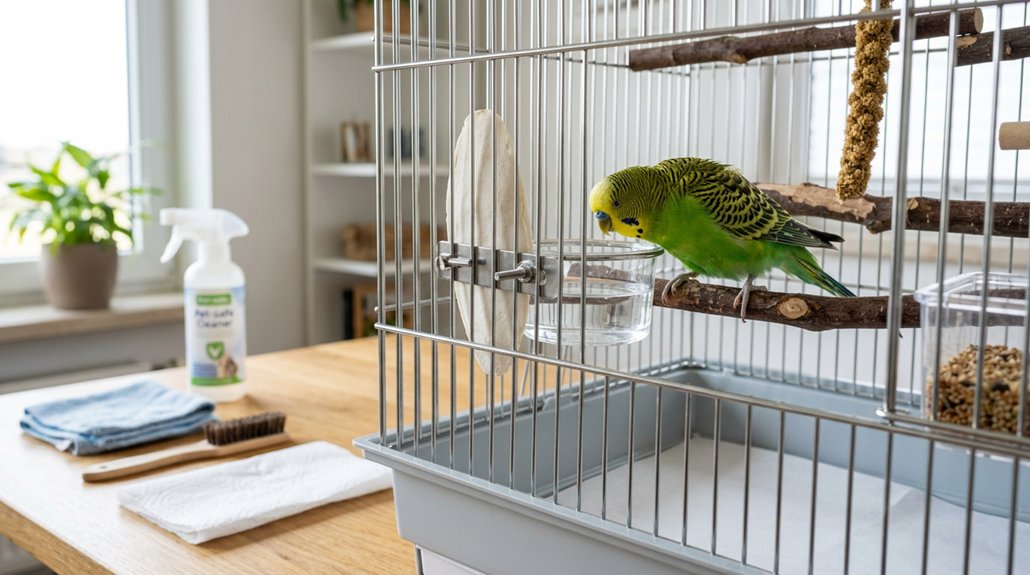
Daily, you should move your bird to a separate perch or play stand before cleaning begins so it stays safe and does not shred paper or toys while you work. Change and refill water dishes every day, then wash food and water bowls with soap, a thorough brush, and a fresh rinse. Spot-clean bars, perches, and any area with sticky fruit or fresh droppings by wetting residue with hot water, then wiping it away with a paper towel or cloth. Replace the top paper or substrate layer daily; a seven-sheet bird rotation helps you inspect droppings for changes and keep trays clean. Before lights-out, perform a quick wipe-down of cage surfaces, food areas, and toys with hot water, or mild soap and water if needed, then dry thoroughly to match the lighting schedule.
Tools for Bird Cage Cleaning
For efficient cage maintenance, keep the right tools assembled before you start: a stiff-bristled brush or dish brush, hot water, mild soap, and separate sets of disposable paper towels or microfiber cloths for routine wiping and deep cleaning. You’ll also need cleaning gloves and protective eyewear when splashes or debris are likely. Use one cloth set for quick daily wipe-downs and another for heavier work to prevent cross-contamination. Keep a spray bottle of plain hot water or a bird-safe cleaner for spot-cleaning, following the label exactly. A small hand tool or perch transfer stick helps you move birds safely to a secure temporary perch while you work. For deep cleans, use a tub or shower to soak parts, then dry them completely outdoors or with towels to limit moisture and microbes.
Wash Dishes, Perches, and Toys
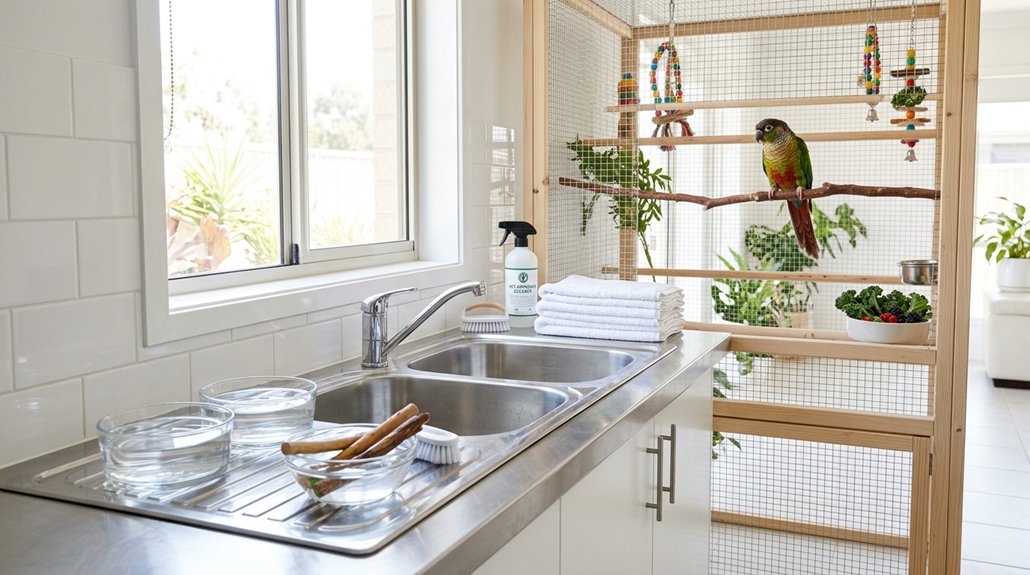
You should wash food and water dishes daily with hot, soapy water, then rinse them thoroughly to remove residue and any cleaning agents. Take perches and toys out before scrubbing them with soap and hot water, and let them dry completely before returning them to the cage. For routine care, you can wipe perches and bars daily with hot water or a damp paper towel, and use disinfectants only when needed, with full rinsing afterward to prevent chemical exposure.
Daily Dish Washing
Wash food and water dishes every day with hot, soapy water, scrub them thoroughly, and rinse with fresh water to remove all soap residue. You should use a consistent water temperature and avoid soap alternatives unless they’re bird-safe and fully rinsed. Replace drinking water daily to limit bacterial growth and biofilm.
| Task | Frequency |
|---|---|
| Wash dishes | Daily |
| Scrub surfaces | Every wash |
| Rinse well | Every wash |
| Refill water | Daily |
| Inspect for residue | Daily |
If you use a disinfectant, follow the label’s dilution and dwell time exactly, then rinse thoroughly and air-dry before returning items. Keep cleaning steps controlled and repeatable so your bird’s dishes stay sanitary and ready for use.
Perch And Toy Care
Perches and toys should be cleaned regularly, with food and water dishes washed daily in hot, soapy water and rinsed thoroughly; during major cleanings, use paper towels for scrubbing to reduce cross-contamination. Remove perches and toys before you use the tub, shower, or power washer. For stainless steel, soften dried droppings with hot water, then scrub. Use mild soap, or diluted vinegar if you prefer, with hot water for most items, and rinse completely. Let everything dry fully before you return it. Porous wooden replacements and rope toys may need steam cleaning or a safe product such as grapefruit seed extract; some disinfectants won’t penetrate, so heavily soiled pieces may need replacement. Consider nonporous innovations when you can.
Safe Soap And Rinse
Use hot, soapy water and a brush to clean food and water dishes daily, then rinse them thoroughly with fresh water to remove every trace of soap. Your soap choices should stay mild; avoid scented or abrasive products that can leave residue. Use these rinse techniques:
| Item | Method |
|---|---|
| Dishes | Daily wash |
| Perches | Weekly scrub |
| Non-porous toys | Soak, then brush |
| All items | Fresh-water rinse |
| Final step | Dry completely |
For perches and non-porous toys, let grime soften in hot water, then scrub and rinse well. Remove fabric, rope, and porous toys before soaking; clean or replace them separately. After vinegar or specialty sprays, rinse again, even if labels don’t require it. Dry items fully, preferably in direct sunlight, before returning them to the cage.
How to Deep Clean a Bird Cage Weekly
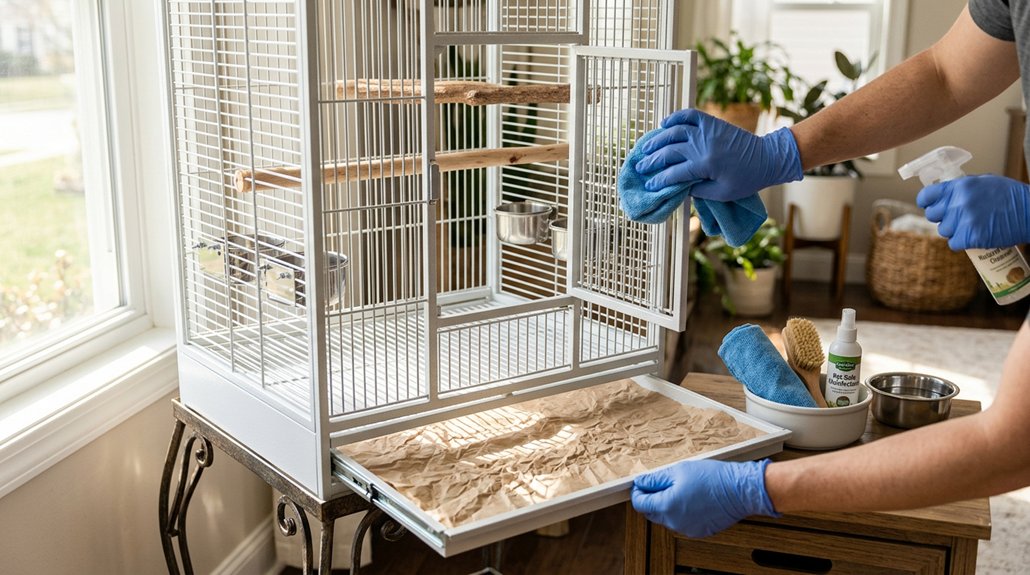
Once a week, remove your bird from the cage and take out all toys, perches, dishes, and liners, then disassemble the cage enough to reach the grates, tray, and corners. Soak removable parts in hot soapy water or a vinegar-enhanced solution to loosen dried feces and food, then scrub and rinse well. Wipe bars, corners, and the exterior with hot water and paper towels or microfiber cloths, removing sticky fruit residue and droppings. If you use a home disinfectant or steam, follow the full contact time, then rinse and air-dry completely before reassembly. Keep battery sterilization and ultraviolet sanitation separate from routine cage cleaning.
- Replace the liner with a fresh one.
- Clean food and water dishes daily.
- Inspect toys and perches for wear.
Which Bird Cage Cleaners Are Safe?
After you’ve finished the weekly deep clean, the next question is which products are safe to use around birds. For routine use, plain soap and hot water, such as dish soap or mild ivory, is the safest choice for cages, perches, and dishes. Rinse thoroughly so no residue remains. If you need disease control, use a veterinary-recommended disinfectant, such as properly diluted F10, exactly as directed: correct dilution, 15-minute dwell time, then complete rinsing. Avoid heavy-duty clinical disinfectants and undiluted bleach unless your veterinarian says otherwise; fumes and residues can irritate respiratory systems. Vinegar, grapefruit seed extract, citrus cleaners, and a natural enzyme cleaner can help with spot cleaning on non-porous surfaces, but they’re not broad-spectrum agents. Steam cleaning and sunlight drying are useful adjuncts.
Monitor Droppings for Health Problems
You should check your bird’s droppings every day when you remove the top paper layer, because changes in color, consistency, or undigested seeds can be early signs of illness. A healthy dropping has clear urates, white urates, and a formed fecal portion; watery, dark tarry, green, or black droppings need veterinary attention. Using a layered plain-paper system helps you track recent changes over several days and spot trends like diarrhea or blood more easily.
Daily Dropping Checks
Check your bird’s droppings daily when you remove the top sheet of paper from the cage tray, so changes in color, consistency, or undigested seed can be spotted quickly. You’ll see three components: feces, white urates, and clear urine. Compare each sample with your bird’s normal pattern, since behavioral cues and seasonal variation can affect output.
- Use unprinted newspaper or plain packing paper as a liner.
- Keep a seven-sheet rotation, removing one layer each day.
- Place paper under the bird’s usual perch for consistent samples.
Document unusual findings with the date, bird ID, and a photo if possible. If runny feces, blood, or very dark urates persist beyond 24 hours, contact your avian vet promptly. Regular checks support early detection and cleaner housing.
Spot Digestive Changes
Subtle changes in droppings can signal digestive trouble before other symptoms appear, so inspect the top paper layer daily for shifts in color, consistency, mucus, or undigested seeds. Compare each sample with your bird’s baseline during digestive monitoring, noting watery urates, green or black feces, or a drop in fecal volume. Layered paper lets you review several days of output without disrupting routine. Keep stool documentation precise: record the date, describe the abnormality, and add a photo plus any diet or behavior changes. Persistent undigested seeds, diarrhea, blood, or marked volume loss aren’t normal and need prompt veterinary attention. If these signs continue, isolate your bird and contact your avian veterinarian. Early recognition improves treatment and helps you identify patterns before illness worsens.
Track Paper Layer Changes
A layered paper tray makes daily droppings monitoring much easier: place 5–7 sheets of unprinted newsprint or plain packing paper in the tray, then remove one sheet each day so you can compare fresh droppings and spot changes quickly. Use replaceable sheets to preserve contrast, and avoid scented or absorbent bedding that can hide findings.
- Check each sheet for undigested seeds, blood, mucous, watery stools, discoloration, or excess urine.
- Record abnormal findings with the date, bird’s name, and a photo or brief description.
- If changes persist 24–48 hours, follow your isolation protocol and contact your veterinarian with your notes.
Frequently Asked Questions
What Is the 3 3 3 Rule for Birds?
It’s a quarantine and acclimation guideline: 3 days for recovery, 3 weeks to monitor health and bird socialization, and 3 months to confirm bonding. Watch for stress signals, and contact your avian vet if concerns arise.
How to Keep a Bird Area Clean?
You keep your bird area clean, because evidently grime’s a hobby. Do daily cage maintenance: wash dishes, spot-clean bars, rotate substrate, and remove soiled layers. Use hot soapy water, rinse well, and dry everything completely.
Why Put Pennies in a Bird Bath?
You might put pennies in a bird bath because of copper myths about reducing algae, but water sanitation won’t improve reliably; modern pennies release too little copper, so you’ll still need regular cleaning and fresh water.
How Do You Say “Hi” in Bird Language?
You’d say hi with a soft whistle or brief call, like sunlight flickering across feathers. Use vocal mimicry and watch greeting behaviors—head bobs, wing flicks, or eye pinning—to match your bird’s natural, friendly response.
Conclusion
By keeping your bird’s environment clean every day, you reduce harmful bacteria, odor, and stress. Wash dishes, perches, and toys routinely, and deep clean the cage weekly with bird-safe products only. Monitor droppings closely, because changes can signal illness early. Use proper tools and stay consistent; an ounce of prevention is worth a pound of cure. When you maintain cleanliness carefully, you help your bird stay healthier, safer, and more comfortable overall.