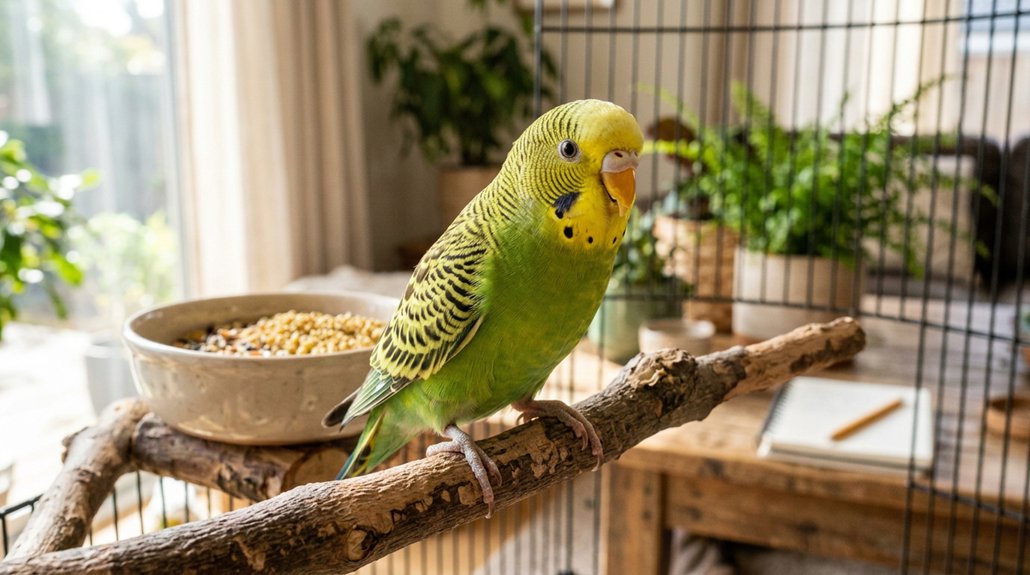
Before you get a pet bird, ask whether you have enough space, time, and long-term commitment for years of care. Can you provide 2–4+ hours of supervised interaction daily, plus training, cleanup, and enrichment? Is your home bird-proofed for PTFE, fumes, toxins, and open hazards? Can you afford a pellet-based diet, fresh produce, noise, and avian vet visits? If the answer isn’t yes, your next steps matter.
Key Takeaways
- Do you have enough space, bird-proofing, and safe housing for decades of care?
- Can you commit 2–4+ hours daily for supervised time, training, and enrichment?
- Are you prepared to remove household hazards like PTFE cookware, smoke, toxins, and unsafe foods?
- Can you provide a proper pellet-based diet with daily fresh produce and avoid seed-only feeding?
- Have you found an avian veterinarian and budgeted for ongoing cleaning, grooming, and medical care?
Is a Pet Bird the Right Fit?
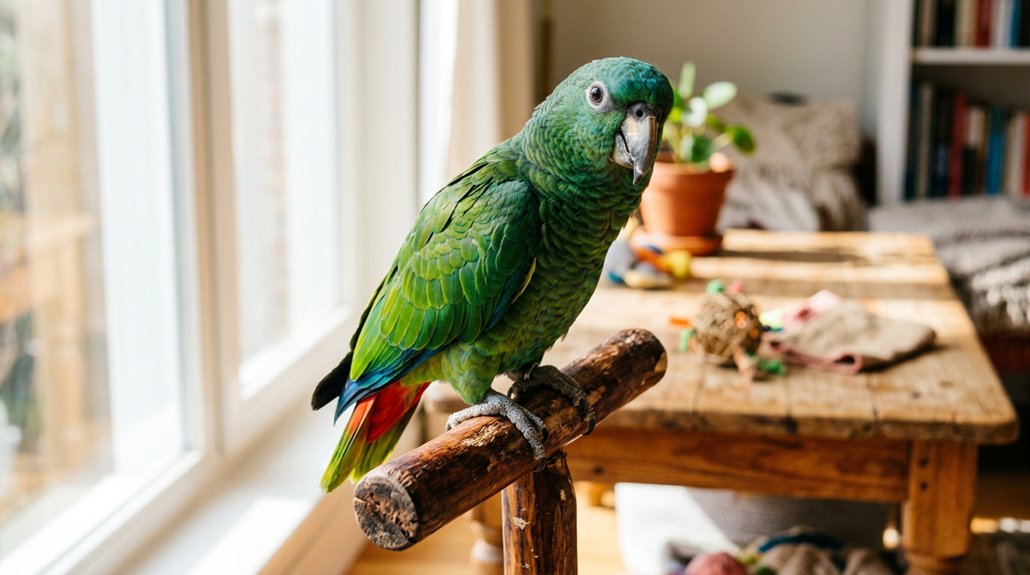
Before bringing a bird home, assess whether your household can support its needs long term. You’ll need adequate space requirements for safe housing, out-of-cage movement, and environmental control. Verify legal considerations first; some species are restricted, require permits, or are prohibited by lease rules and local ordinances. Confirm that everyone in your home can tolerate zoonotic risk, including infants, older adults, and immunocompromised people. Evaluate whether you can handle daily noise, including dawn and dusk calling, and whether neighbors will accept it. You’re also committing to years, sometimes decades, of care, with ongoing veterinary, diet, grooming, and cage costs. Your home must be modified for safety and air quality: remove PTFE cookware, scented products, smoke, vaping, aerosols, and provide a species-appropriate diet, not seed alone.
How Much Time and Training Do Pet Birds Need?
A bird that fits your home still has to fit your schedule. Most companion parrots need 2–4+ hours of supervised out-of-cage interaction daily to prevent boredom and behavioral problems and to preserve social bonds. You also need time for essential training: accepting medication or fluids, stepping onto a scale, entering a travel cage, and tolerating towel-wrapping. Plan on short sessions of 5–20 minutes, repeated several times a day; positive reinforcement training is more effective than long drills and builds trust. You should budget for formal training or professional help when needed, because restraint, wing trims, and chronic medication can require skilled handling. Young, weaned birds are usually easier, but all birds need consistent training and daily enrichment for life, often for decades.
How Do You Bird-Proof Your Home?
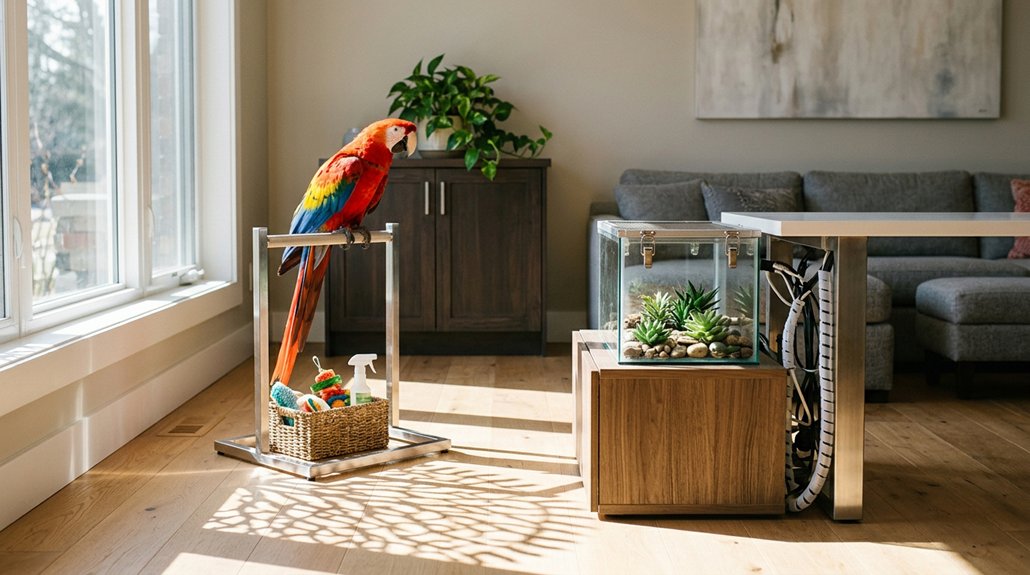
Bird-proofing starts with removing airborne and physical hazards, because birds have extremely sensitive respiratory systems and are prone to escape and injury. You should remove cookware with PTFE coatings, avoid non-stick pans, scented candles, air fresheners, aerosols, smoking, and vaping indoors. Secure windows, doors, ceiling fans, stovetops, heaters, and open water before out-of-cage time. Keep toxic foods, avocado, plants, solvents, nail polish, and scented products out of reach, and never heat plastics or microwave popcorn nearby. Use soap and water instead of aerosols, and ventilate only when the bird’s away. Place the cage at eye level, away from drafts and direct windows, with replaceable liners, proper perches, and safe toys. Monitor every free-flight period to prevent burns, drowning, and escape.
What Should a Pet Bird Eat?
Feeding a pet bird starts with a high-quality, species-appropriate pellet diet, which should make up most of the daily intake because pellets provide balanced nutrition that seeds alone cannot. You should use balanced pellets as the dietary foundation, then add fresh produce daily, including leafy greens, carrots, berries, and seedless apple. In most species, fresh produce should supply about 20–30% of the diet. Seeds shouldn’t be the main food; offer them only as occasional treats because seed-only diets are calorie-dense and nutrient-poor. You must avoid avocado, chocolate, caffeine, alcohol, high-salt or high-fat foods, and never give bones or pits from stone fruits. For species-specific portioning or special needs, consult an avian veterinarian.
How Much Noise and Cleanup Do Pet Birds Create?
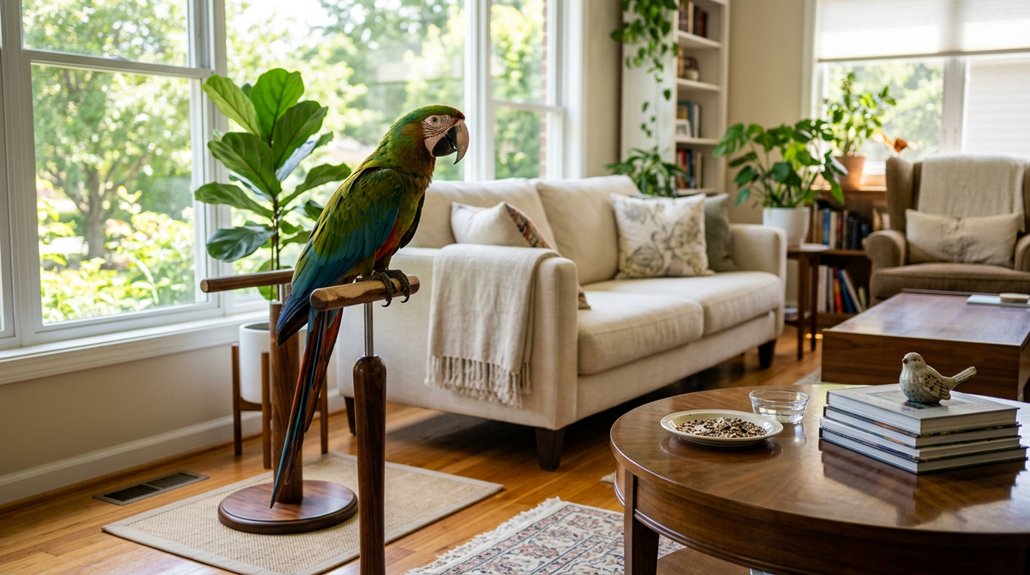
You should expect significant vocalization from many pet birds, with parrots and budgies often calling loudly at dawn and dusk. You’ll also need to manage daily cage cleanup, including droppings, spilled food, feathers, and liner replacement. Before adopting, assess whether your household and neighbors can tolerate this level of noise and debris.
Noise at Dawn and Dusk
Most pet birds are not quiet at dawn and dusk; many parrots and budgies routinely call or scream during these periods, and the noise can be disruptive in apartments or close-neighbor settings. You should expect a dawn chorus, and neighbor complaints aren’t unusual when sound travels through walls. Larger flocks are louder than single birds, and species matters: cockatiels and budgies are chatty, while conures and macaws can be markedly louder. Training and enrichment may reduce attention-seeking calls, but they won’t erase natural vocalization.
| Species | Typical sound |
|---|---|
| Budgie | Chatty, frequent calls |
| Cockatiel | Persistent whistling/calling |
| Conure | Very loud vocal bursts |
| Macaw | Extreme volume |
| Multiple birds | Amplified noise |
Daily Cage Cleanup Duties
Daily cleanup is usually a routine part of bird ownership: expect to replace cage liners, remove droppings and dropped food every day, and sweep around the cage because parrots and budgies scatter seed hulls, feather dust, and shredded toy debris.
- Change water dishes daily.
- Refresh food bowls daily.
- Spot-clean perches and toys.
- Do daily sweeping around the cage.
- Plan weekly deep-cleaning and perch rotation.
You’ll also need to manage persistent mess from feather dust, saliva, and shredded materials. Weekly soap-and-water washing of trays, bars, perches, and toys reduces buildup and bacterial risk. If you skip routine cleaning, spoilage and odor increase quickly. This level of maintenance is manageable, but it isn’t optional; you should assess whether you can sustain it before you adopt.
Why Do You Need an Avian Vet?
Because birds have highly specialized anatomy and metabolism, an avian veterinarian should be part of your care plan before you bring one home. You’ll need species exams, baseline weight and blood values, and screening for avian diseases that general practitioners may miss. Find an avian vet now, ideally through the Association of Avian Veterinarians directory, so initial wellness checks and emergencies aren’t delayed. Annual visits, or twice-yearly for seniors, help track weight, nutrition, droppings, and lethargy. Expect costs of about $200–$500 per visit, including diagnostics, so budget accordingly. Your avian vet also gives precise guidance on species-specific nutrition, air quality, toxic hazards, training for wrapping or syringe fluids, wing trims, grooming, and other preventive care.
Frequently Asked Questions
What Is the 3 3 3 Rule for Birds?
The 3-3-3 rule means you’ll expect 3 days of stress recovery, 3 weeks of settling and tentative avian bonding, and 3 months for stable behavior. Use cage enrichment and schedule vet checks during each phase.
Is It Hard to Take Care of a Pet Bird?
Yes, you’ll find pet bird care demanding: you need daily social time, behavior training, dietary variety, cleaning, and veterinary planning. Birds’re noisy, messy, and long-lived, so consistent, expert care matters.
Can a Bird Be Left Alone for a Week?
No, you shouldn’t leave a bird alone for a week. You’ll need an avian sitter or avian boarding, not timed feeders alone, because birds require daily cleaning, monitoring, fresh water, food, and interaction.
What Is the Friendliest Pet Bird to Own?
A budgie’s friendliness fits you like a well-tuned instrument. You’ll usually find budgerigars the friendliest starter bird; hand-raised birds tame well, learn talk training, and, with proper feather care, stay affectionate, social, and manageable.
Conclusion
Before you bring a bird home, weigh the bright flash of companionship against the hard edges of daily care. A pet bird can offer color, sound, and intelligence, yet it also demands time, training, a bird-proofed space, proper nutrition, and tolerance for noise and mess. You’ll need an avian vet, not just good intentions. If you can meet those exacting needs, you’re not just choosing a pet—you’re choosing a disciplined, long-term responsibility.