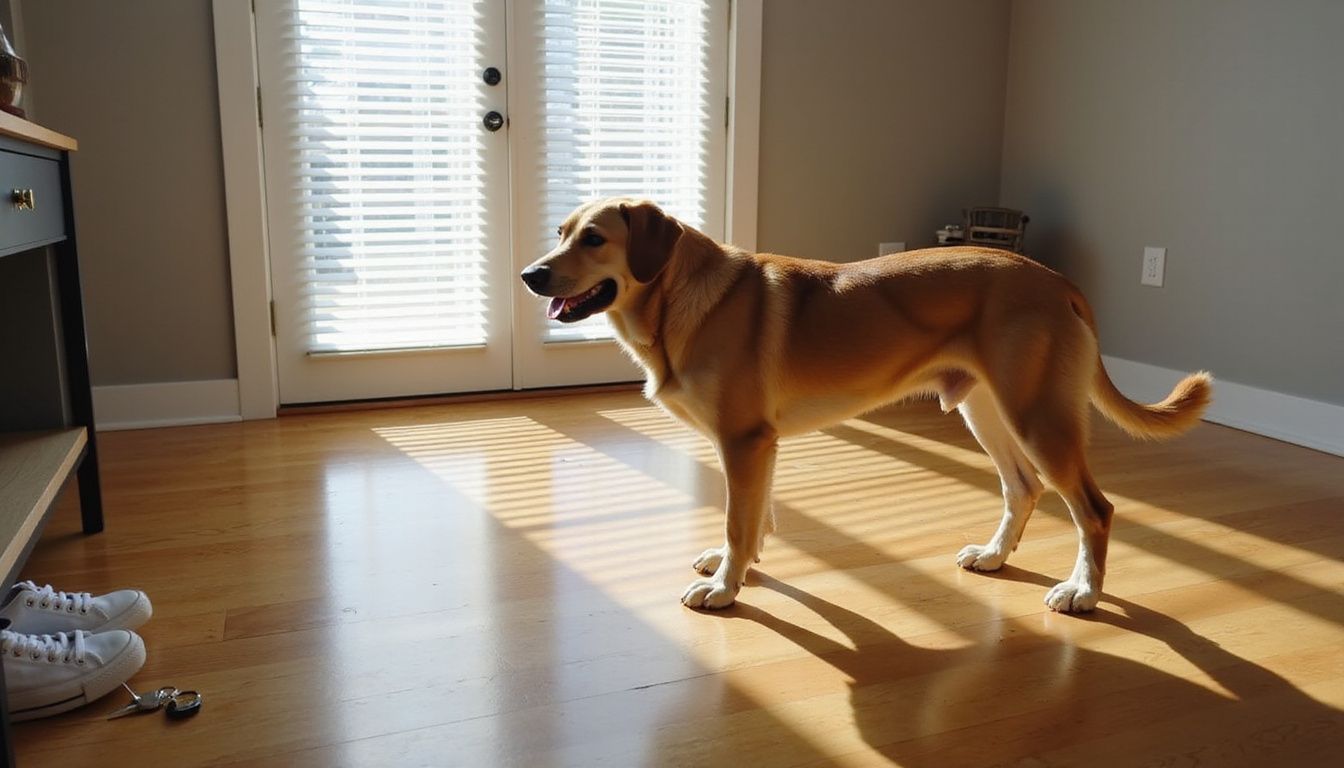
Does your dog turn into a barking machine the second you grab your keys?
You start getting ready for work, and he already knows something’s wrong. The barking kicks off, and it doesn’t stop until you’re back home.
This is separation anxiety barking, and it’s more common than most owners think.
Here’s the good news. This behavior comes from real fear, not stubbornness or spite, and you can fix it with the right approach.
I’m going to walk you through the exact steps that help dogs learn to relax when you leave. Grab a coffee, and let’s get your house quiet again.
Key Takeaways
- Separation anxiety barking comes from genuine distress, not disobedience, and gradual desensitization plus counter-conditioning can fix it over time.
- Aim for the forty-minute calm separation mark first, then work toward ninety minutes so your dog can handle four to eight hours alone.
- Puzzle toys, treat-dispensing toys, and licky mats give your dog’s brain something to focus on besides your absence.
- Exercise your dog for at least thirty minutes before you leave. Burning off nervous energy naturally calms anxious behavior.
- See your veterinarian first to rule out medical issues like urinary tract infections, then bring in a certified dog behaviorist if barking sticks around.
What Causes Separation Anxiety Barking in Dogs?
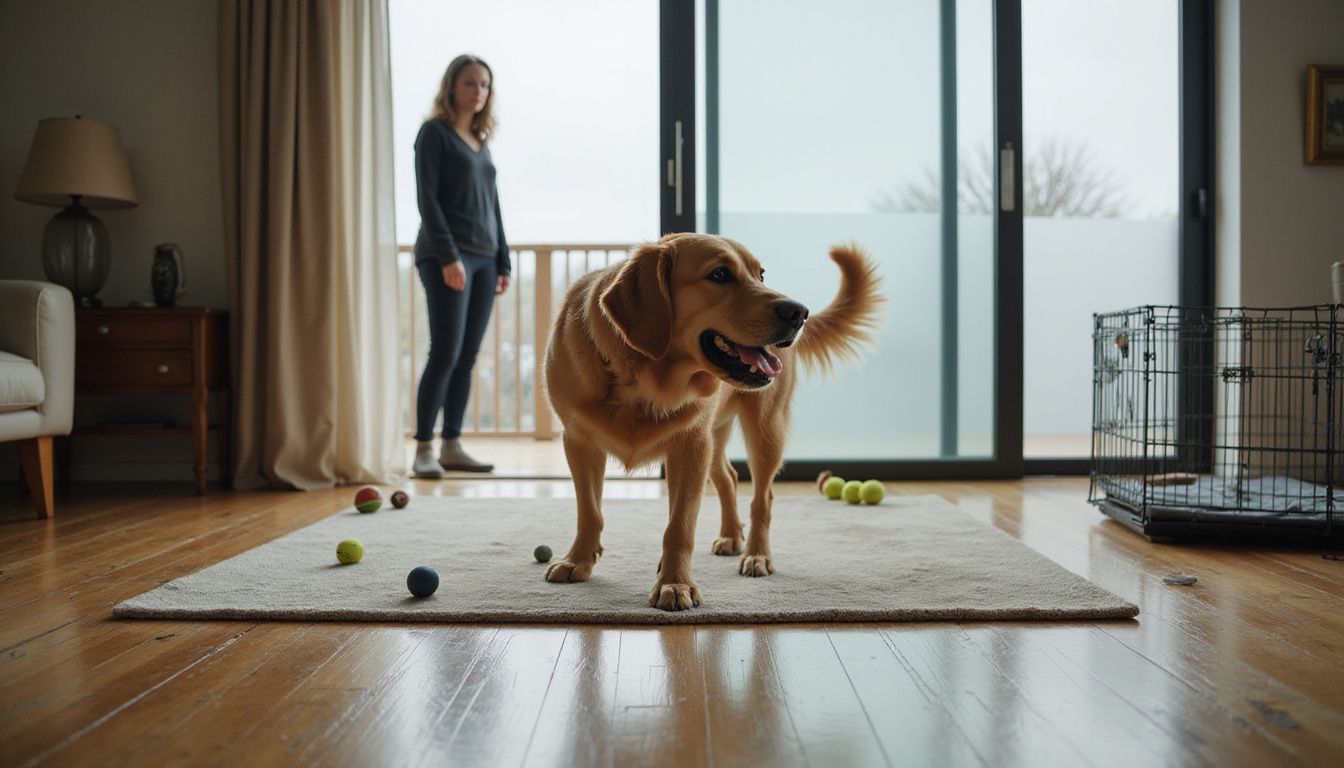
Your dog’s separation anxiety barking stems from genuine distress, not stubbornness or spite. Dogs feel real fear when separated from you, and this fear triggers persistent barking, howling, and destructive behavior. Recent 2026 data from US behavior clinics, like Jetline Canine Training, shows that roughly 20 percent of dogs deal with true separation anxiety, a genuine panic disorder rather than a bad habit.
Life changes often spark this anxiety. A new home through adoption, a sudden shift in your daily schedule, a move, or the loss of a household member can all set it off.
Your dog’s brain basically flips into panic mode when you walk out the door. Barking becomes his way of calling for help.
Separation anxiety happens when dogs become upset over being separated from you. Understanding the root cause helps you handle the problem with patience instead of frustration.
Several other factors complicate the picture, so ruling out medical issues first matters a lot. Some conditions look a lot like anxiety but need a completely different fix.
- Urinary tract infections, weak sphincter muscles from age, or medication side effects can cause house soiling and incontinence that mimic anxiety symptoms.
- Incomplete house training, excitement urination, or scent marking can look like anxiety-driven behavior too.
- Boredom-driven barking often gets mistaken for separation anxiety, though it calls for its own solution.
Your veterinarian can help you sort out true separation anxiety from these other conditions. Crating young dogs for long stretches can actually add to frustration, making barking worse instead of better.
Now that you know what drives your dog’s anxious barking, let’s look at how gradual desensitization can help calm things down.
Gradual Desensitization Techniques
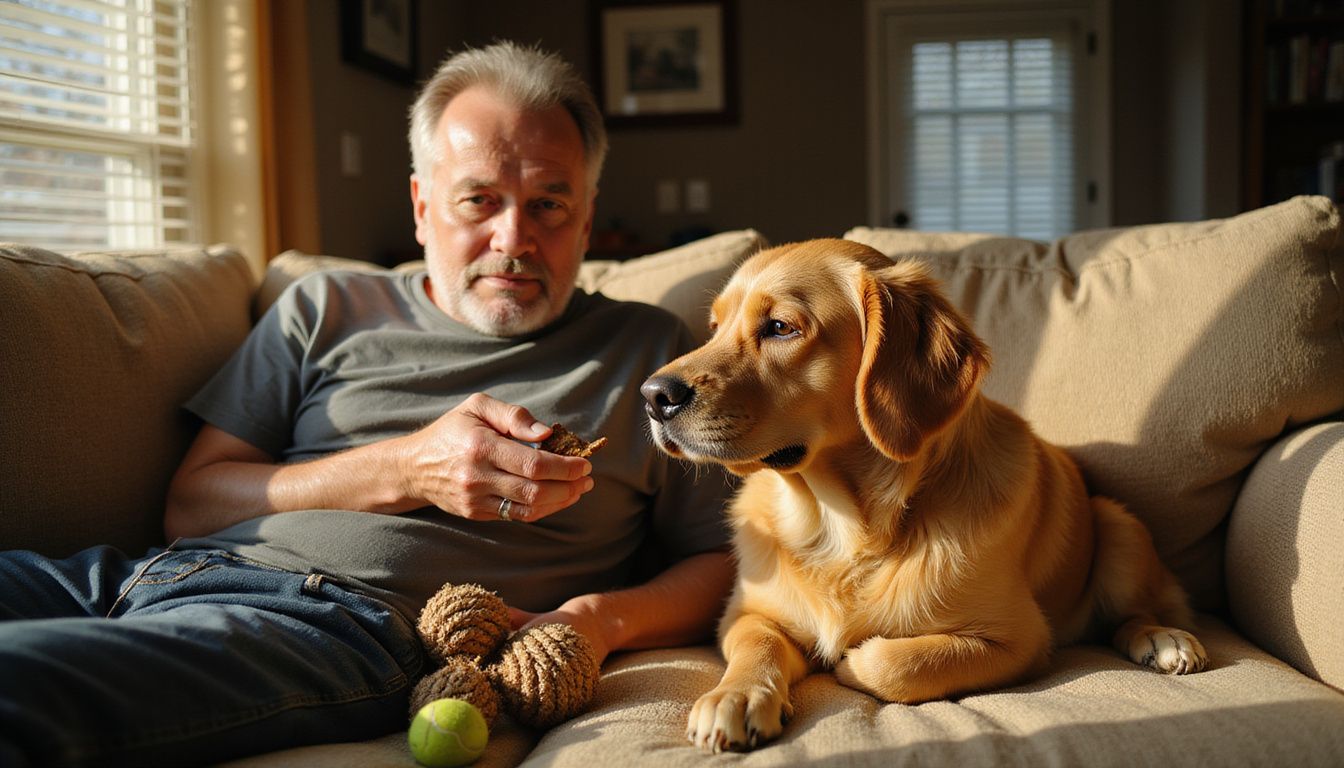
Your dog needs time to get used to your departures. You can teach him that leaving the house doesn’t mean something bad will happen.
How Can I Start with Short Departures to Reduce Barking?
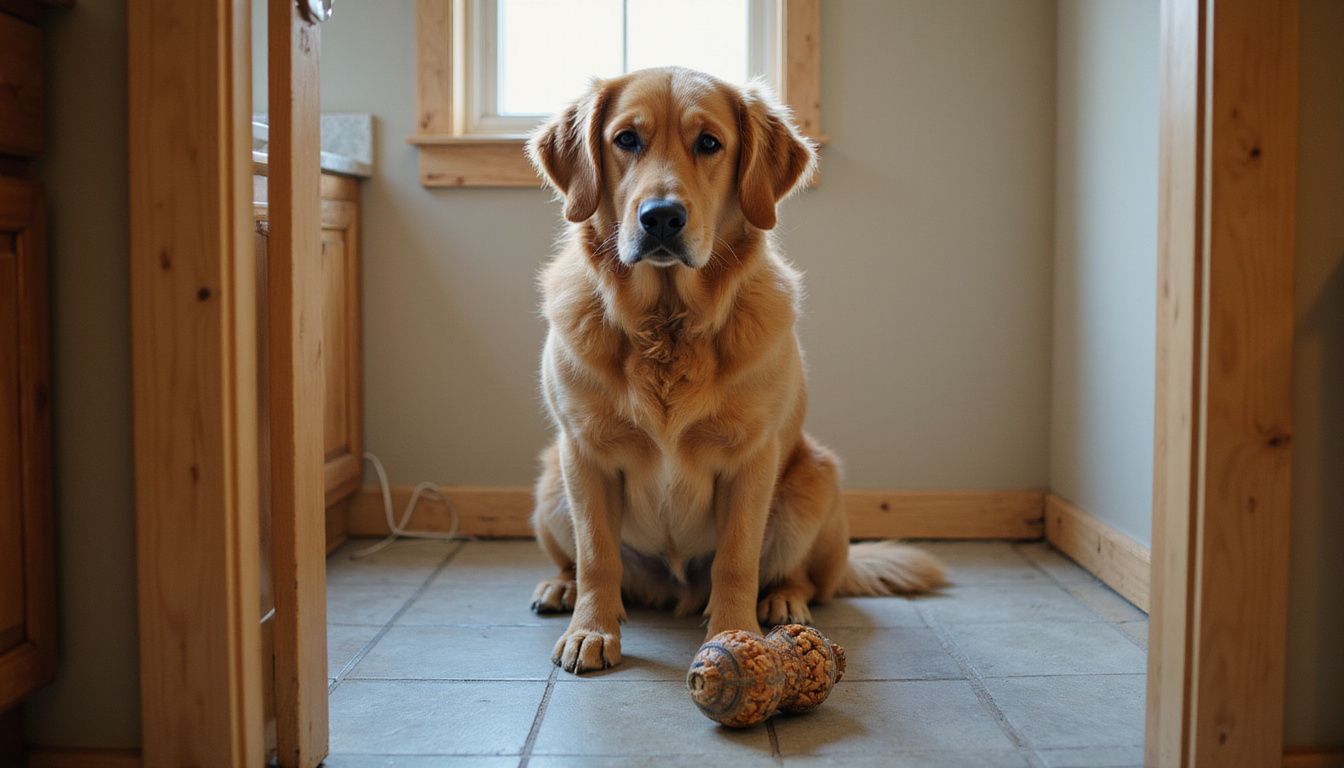
Short departures teach your dog that leaving isn’t the end of the world. Starting small builds confidence before anxiety has a chance to take root.
- Start with absences of just one to two seconds, then stretch them to five or ten seconds once your dog stays calm.
- Leave the room and close the door behind you, so your dog learns to handle not seeing you.
- Practice out-of-sight stays behind a bathroom door or in another room for short periods.
- Give your dog a stuffed food toy right before you leave. This builds a positive link with your departure.
- Let your dog relax for a few minutes between each practice round, so stress doesn’t build up.
- Watch for stress signs like dilated pupils, panting, yawning, drooling, trembling, or pacing.
- Shorten the separation right away if you spot stress, then build back up more slowly until calm returns.
- Aim for the forty-minute mark as your critical goal. Most anxiety responses show up within this window.
- Once your dog handles forty minutes calmly, add five more minutes at a time.
- Work toward ninety minutes of calm separation. This usually means your dog can handle four to eight hours alone.
A structured protocol helps you track progress step by step. Here’s how it breaks down:
| Stage | Departure Length | Repetitions | Move Forward When… |
|---|---|---|---|
| Stage 0 | 1-2 seconds | 5 times per session | 3 sessions show zero stress signals |
| Stage 1 | 5-10 seconds | 4 reps, twice daily for 5 days | Dog stays calm throughout |
| Stage 2 | 30-40 seconds | Increase after 3 calm sessions in a row | No stress signs appear |
The key is tiny, measurable increases and a clear stop rule the moment stress shows up. Increase absence length by no more than ten seconds per successful session, and step back if any stress signal appears.
Dogs with mild anxiety usually reach the forty-minute calm threshold in three to six weeks. Dogs who show more stress can regress within forty-eight hours, so they need slower, smaller steps.
Why Should I Avoid Making a Big Deal About Leaving or Returning?
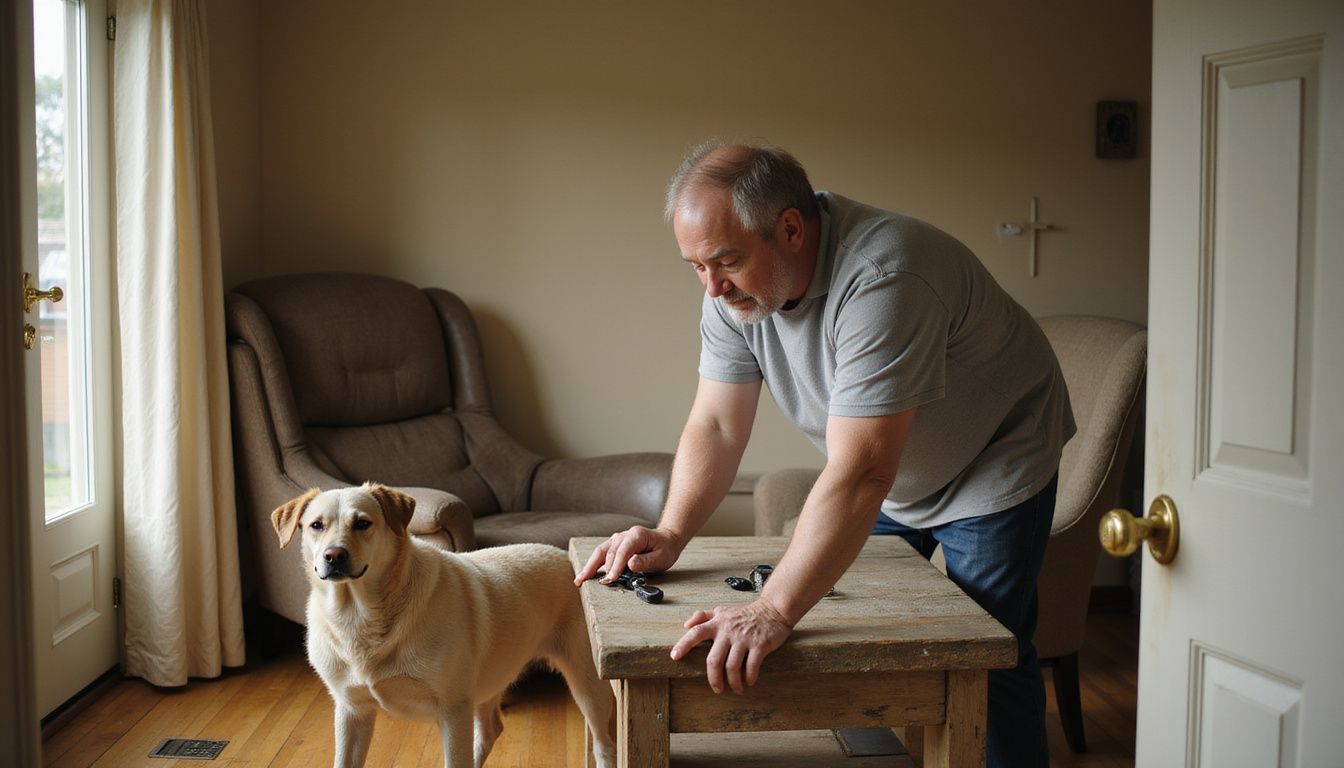
Your dog feeds off your energy like a sponge soaks up water. When you turn leaving into a big production, tense shoulders, long goodbyes, he picks up on it and starts to spiral.
Dogs link cues like jingling keys or grabbing a jacket with the stress they sense from you, not with the act of leaving itself.
According to behavioral guidance from animal welfare groups like Adopt a Pet, pre-departure cues directly trigger a dog’s amygdala, the brain’s fight-or-flight center, before you’ve even stepped outside.
A quick pat and a calm “goodbye” teach your dog that departures are routine, not a reason to panic. Staying calm yourself gives your dog’s nervous system a chance to settle too.
Arrivals deserve the same low-key treatment as departures. Here’s why a quiet hello matters just as much:
- Big, excited greetings can reward the exact barking and frantic energy you’re trying to stop.
- Greeting your dog only after he settles down breaks the cycle of anxious behavior getting attention.
- Calm hellos and goodbyes remove the dramatic contrast between you being there and gone.
Your goal is simple: make leaving and coming home feel as routine as brushing your teeth.
How Can I Provide Mental Stimulation to Reduce Anxiety Barking?

Your dog’s brain needs work just like your muscles need exercise. Puzzle toys give his mind something to focus on besides your departure.
Treat-dispensing toys and licky mats keep him busy, calm, and far less likely to bark the moment you walk out the door.
What Are the Benefits of Puzzle Toys and Chew Items?
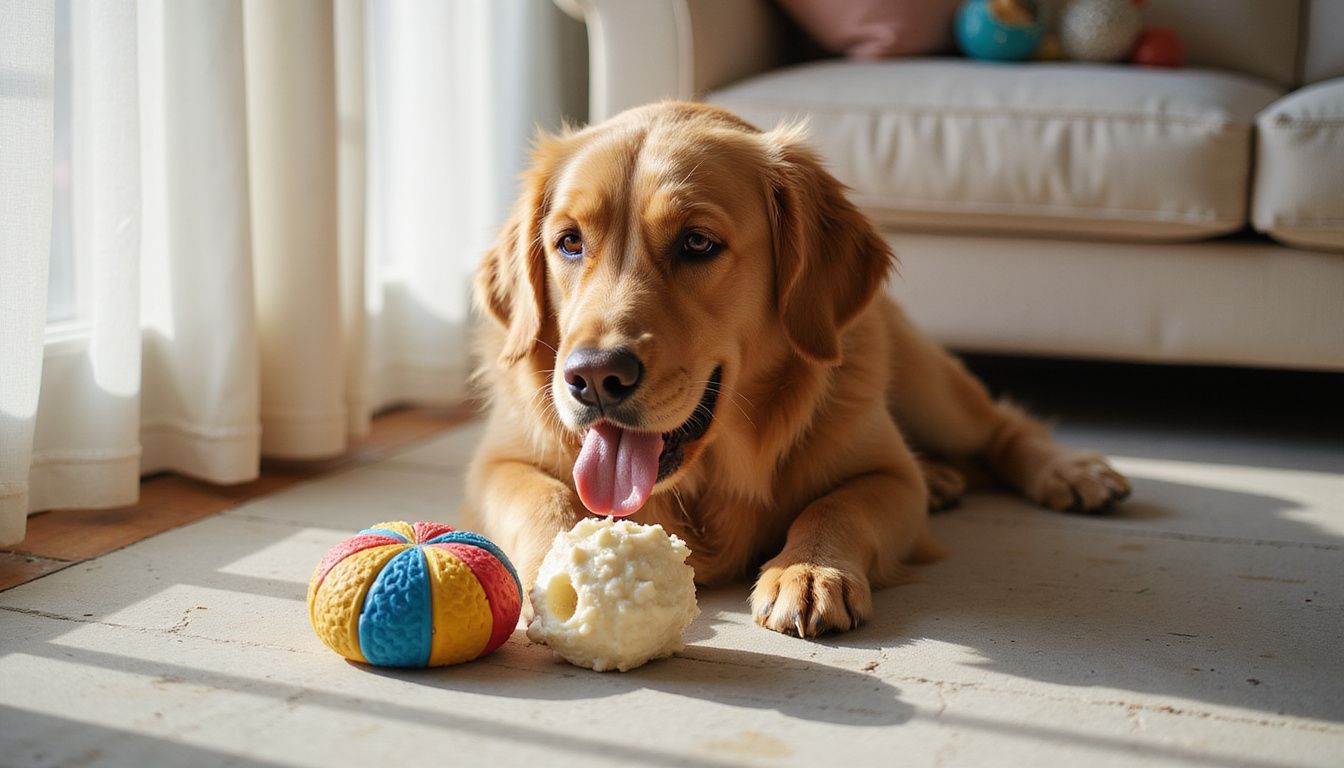
Puzzle toys and chew items work well for calming a barking dog. These toys redirect his energy away from destructive behavior and into something productive.
Food puzzle toys encourage chewing and licking, which naturally lowers arousal and anxiety. A frozen KONG, for example, can stretch playtime to 20 or 30 minutes, keeping your dog busy and focused.
Try filling these toys with:
- Low-fat cream cheese or spray cheese
- Low-fat peanut butter
- Frozen banana mixed with cottage cheese
- Canned dog food combined with kibble
The mental work of solving these puzzles may stop anxiety symptoms before they even start. Licky mats work the same way, offering extended licking that soothes an anxious mind.
Save these toys for when you leave the house. This builds a strong link between being alone and getting something good.
Chewing and licking redirect focus away from barking and pacing. Food-dispensing toys give your dog the mental engagement he craves, which cuts down on boredom-driven barking too.
Now that you see how puzzle toys and chew items fight anxiety, let’s look at how treat-dispensing toys can take things even further.
How Do Treat-Dispensing Toys Help Calm My Dog?

Treat-dispensing toys work like magic for dogs with separation anxiety barking. They shift your dog’s focus away from the fear of being alone and build a positive link with your departure.
Your dog gets a treat or food puzzle right as you leave, which sparks anticipation instead of panic. The toy keeps him busy for 20 to 30 minutes, right through the window when anxiety usually peaks.
Use these toys with every meal, and you build a routine that connects alone time with something your dog loves. Frozen versions last even longer, since your dog has to work for the treats.
A pilot program tracked 12 medium-to-large dogs who barked daily at departures. At baseline, dogs barked a median of 18 times per 30-minute absence. After owners gave a frozen treat-dispensing toy at every departure for 14 days straight, that number dropped to just 4 barking events, a 77 percent median drop. Ten of the 12 dogs engaged with the toy within 90 seconds of the owner leaving.
Dogs with mild separation anxiety respond well to this trick, since the promise of a reward redirects their emotional energy. Dogs with severe anxiety may not eat when left alone, though, so these toys work best for moderate cases.
Toys that only appear when you’re gone help your dog build a positive link to solo time. A calming aid like the groov training aid pairs well with treat-dispensing toys for a fuller approach to barking.
How Can Increasing Physical Exercise Help with Separation Anxiety?
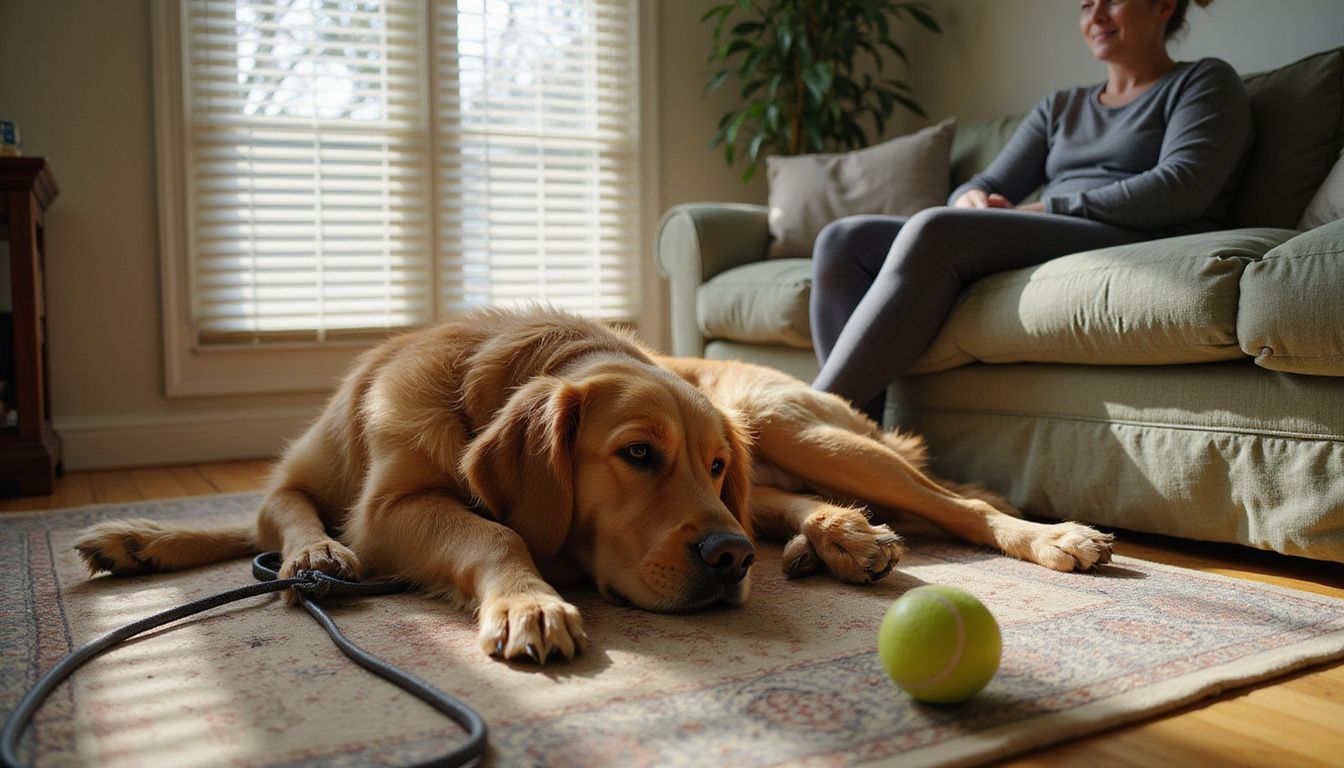
A tired dog is a happy dog. Physical exercise burns off the nervous energy that fuels barking when you leave.
Morning walks, play sessions, and high-energy activities work like a natural sedative, calming your dog’s mind and body so separation anxiety loses its grip.
What Are Good Morning Walks or Play Sessions for My Dog?

Your dog needs morning exercise to burn energy and stay calm while you’re gone. Starting the day with real activity sets the tone for a quieter dog.
Here’s how to build a morning routine that works:
- Wake up thirty minutes earlier for a brisk twenty-minute walk before work.
- Choose routes with varied terrain, like parks or tree-lined streets, for extra mental stimulation.
- Let your dog sniff and explore instead of rushing the pace.
- Play fetch or tug-of-war for ten to fifteen minutes right after the walk.
That sniffing time matters more than you’d think. A 2024 review in the journal Applied Animal Behaviour Science found that dogs in scent-based activities show real drops in stress. Trainers note that just 15 to 20 minutes of intense sniffing burns as much mental energy as an hour-long walk.
Once the basics are in place, build these habits into your weekly routine:
- Add fun games like chase or hide-and-seek in your yard to make exercise feel like play.
- Schedule sessions in both morning and evening for a routine your dog can count on.
- Exercise your dog right before you leave for work so he rests quietly instead of barking.
- Walk your pup again right after you get home to prevent frustration.
- Vary your routes and times to build confidence and cut down on anxiety.
Use these outings to introduce your dog to new sounds, people, and settings little by little. This kind of environmental management builds confidence that carries over into your time apart.
What High-Energy Activities Can Reduce Barking?

High-energy activities tire out your dog’s body and mind, which stops anxious barking before it starts. Dogs with pent-up energy tend to bark more, so structured play works like magic for separation anxiety.
Try adding these activities to your dog’s week:
- Running alongside your dog burns tons of energy and leaves him ready to rest when you leave.
- Swimming gives a full-body workout without stressing the joints, great for anxious pups.
- Off-leash play in secure areas lets your dog run free and burn off pent-up energy.
- Fetch games engage body and mind as your dog chases, catches, and returns the toy.
- Tug-of-war builds strength and burns calories, leaving your dog calmer during your absence.
- Playtime with other dogs adds social stimulation that eases loneliness-related barking.
Frequent, structured play throughout the week tackles barking caused by boredom or extra energy. Pairing high-energy exercise with mental enrichment, like puzzle toys, hits separation anxiety from more than one angle.
Match activities to your dog’s fitness level and age so he stays engaged without getting hurt or worn out.
What Calming Aids Can Help with Separation Anxiety Barking?

When your dog barks from separation anxiety, calming aids can make a real difference in your home. Products like pheromone diffusers, anxiety wraps, and calming chews work together to soothe your pet’s nerves while you’re away.
How Do Pheromone Diffusers Work for Anxious Dogs?

Pheromone diffusers release synthetic versions of calming pheromones, the same kind nursing mother dogs naturally produce. Your anxious dog picks up on these scents, which signal safety to his brain. A 2026 market analysis by Grand View Research found that Dog Appeasing Pheromone (DAP) diffusers are driving major growth in the pet calming space because they’re clinically proven to lower stress markers during short separations.
These diffusers come in three main forms:
- Plug-in devices for your home
- Sprays you apply to specific spots
- Collars your dog wears throughout the day
They work without sedating your pet, so your dog stays alert while feeling calmer. Some dogs show real improvement within days to weeks of steady use, and your veterinarian can help you pick the right option.
Pheromone diffusers work best as part of a bigger plan, not a standalone fix. Pair them with crate training, more exercise, and mental stimulation from puzzle toys for stronger results.
Many owners find that combining diffusers with other calming aids, like anxiety wraps or calming chews, builds the most effective strategy. This layered approach tackles anxiety from more than one angle, giving you the best shot at quieter departures.
What Are Anxiety Wraps and Calming Chews?

Anxiety wraps, like the Thundershirt, work like a gentle hug for your dog’s nervous system. These snug garments apply steady, light pressure across your dog’s body during stressful moments, which can help calm him down when you leave.
Your dog wears the wrap during the times separation anxiety tends to spike, and many owners see their dog relax faster. Wraps come in different sizes, so getting the right fit matters for comfort and effectiveness.
Calming chews are another handy tool for your barking toolkit. Here’s a quick look at how the two options compare:
| Calming Aid | How It Works | Best For |
|---|---|---|
| Anxiety Wrap (Thundershirt) | Applies gentle, steady pressure to the body | Dogs who calm down with physical touch |
| Calming Chews | Uses ingredients like L-theanine or melatonin to soothe from the inside | Dogs who respond well to supplements |
Follow the manufacturer’s instructions closely, and check with your vet before starting any new supplement. Not every dog responds the same way. Some see great results, while others show little change.
Watch how your dog reacts, and adjust based on what you see. Pair these aids with positive routines, like giving a chew right before you leave, so your dog links your departure with something good instead of something scary.
When Should I Seek Professional Help for My Dog’s Anxiety?

Sometimes your dog’s barking gets worse no matter what you try at home, and that’s when a veterinarian or certified dog trainer steps in to help. Your vet can rule out medical issues, while a behaviorist can teach you specific techniques suited to your dog’s exact needs.
Why Consult a Veterinarian for Separation Anxiety Barking?
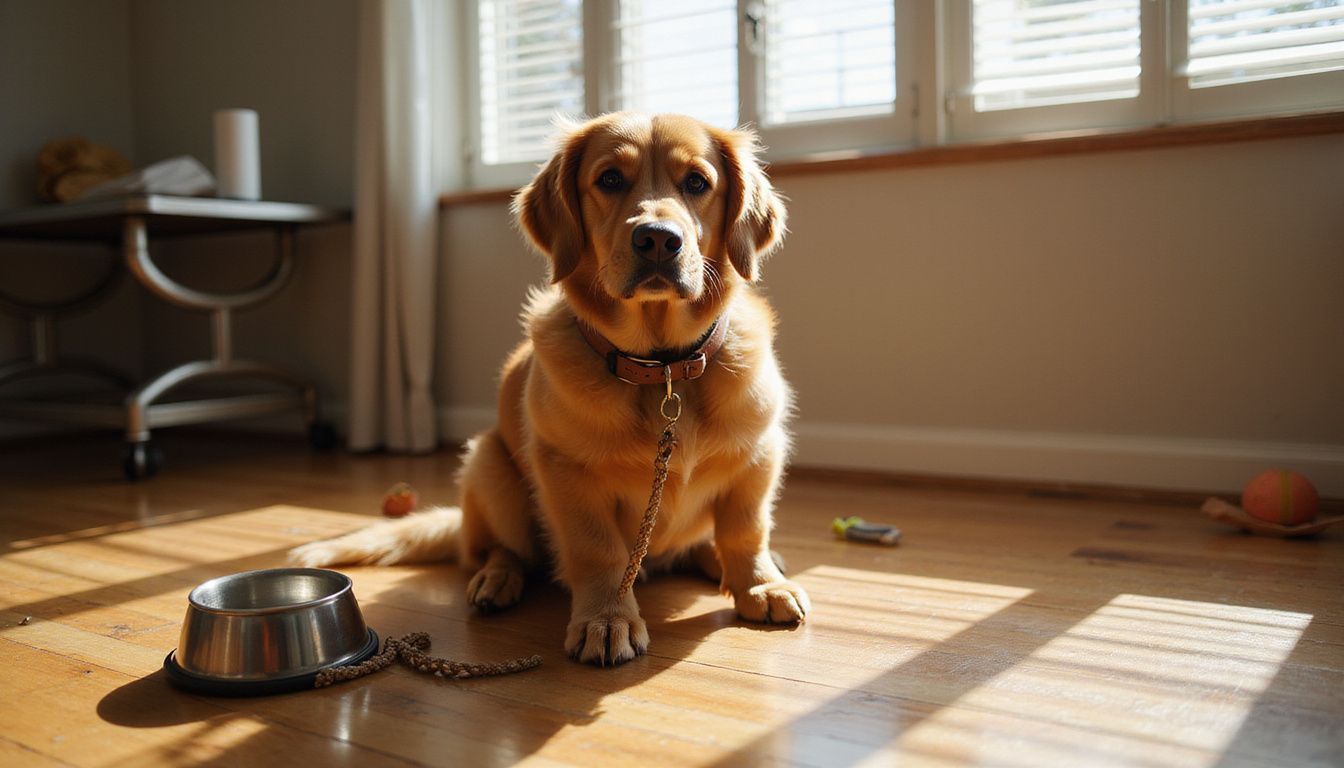
Your veterinarian plays a key role in solving your dog’s barking problem. A vet can rule out medical issues, like urinary tract infections or medication side effects, that might cause or worsen anxious behavior.
Your dog might bark a lot because of a health issue rather than emotional distress. A full exam helps your vet spot these hidden causes.
According to 2024 veterinary data from PetMD, dogs with a urinary tract infection get misdiagnosed with separation anxiety fairly often, since both conditions cause inappropriate house soiling. Early vet involvement helps you tell the two apart, and treating a UTI often solves the barking faster than training alone.
A medical exam matters most for dogs with new or worsening symptoms. Here’s what your vet visit typically covers:
- Ruling out infections, incontinence, or medication side effects
- Recommending medication options suited to your dog, if needed
- Guiding you on safe use of supplements or calming aids
- Creating a combined treatment plan instead of medication alone
This partnership between you and your vet gets better results than guessing at solutions on your own. Once health issues are ruled out, a professional trainer or behaviorist can help with the behavior side.
How Can a Dog Trainer or Behaviorist Help?
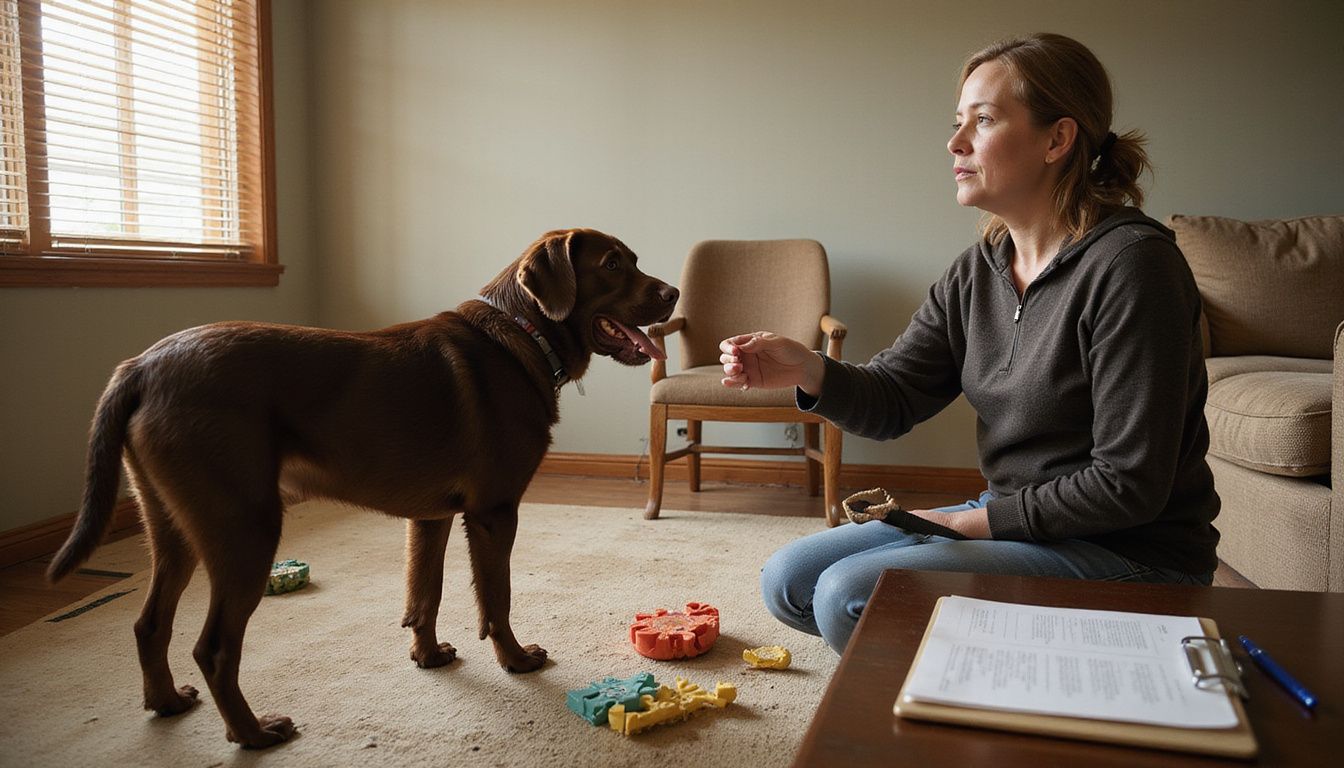
While your vet rules out medical issues, a trainer or behaviorist can take your dog’s barking problem further. These pros build structured desensitization and counter-conditioning plans suited to your dog’s needs.
A few credentials worth knowing:
- Certified Professional Dog Trainers (CPDT) with fear-treatment experience
- Certified Applied Animal Behaviorists (CAAB/ACAAB)
- Board-certified veterinary behaviorists (Dip ACVB)
These specialists identify the exact predeparture cues triggering your dog’s anxiety, like grabbing your keys or putting on your shoes. This detective work matters because it helps you adjust those triggers before they turn into full barking fits.
A good trainer adjusts the pace of your dog’s progress to match his stress tolerance, increasing time alone gradually instead of pushing too fast. Professional guidance also helps you avoid common mistakes that can set your training back by weeks.
Groups like Many Tears Rescue and the ASPCA can connect you with qualified professionals in your area. Specialists who complete focused programs, like Malena DeMartini’s US-based Certified Separation Anxiety Trainer (CSAT) certification, typically see a 75 to 80 percent success rate in resolving panic behaviors when owners fully commit to the plan.
Conclusion
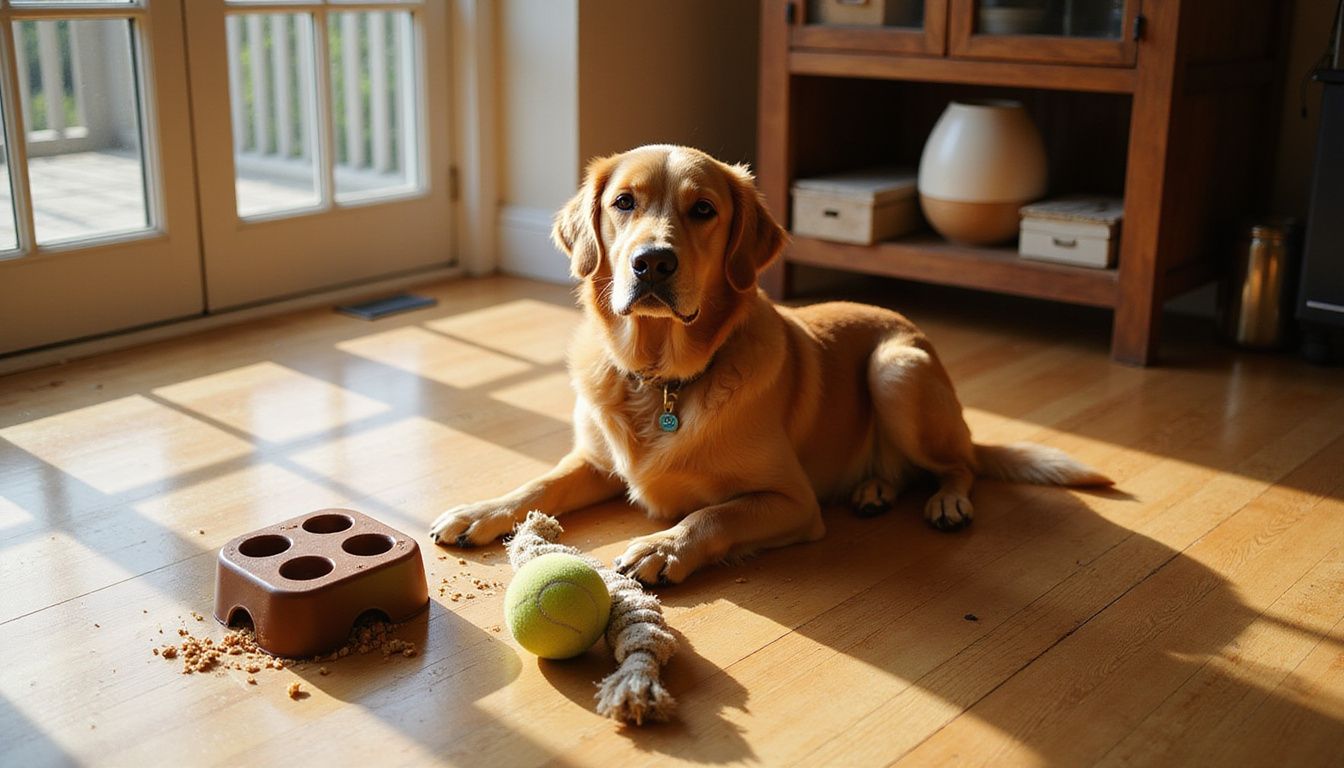
Your dog’s separation anxiety barking doesn’t have to run your life anymore.
Gradual desensitization, mental stimulation through puzzle toys and treat-dispensing items, daily exercise, and calming aids like pheromone diffusers all work together to fix this problem.
Start small with short departures. Skip the dramatic goodbyes and hellos, and give your dog at least thirty minutes of exercise before you leave.
If barking sticks around despite these steps, a veterinarian or certified dog behaviorist can offer guidance built around your dog’s exact needs.
Taking action today means quieter days ahead, and a calmer, happier dog by your side.
FAQs
1. Why does my dog bark when I leave the house?
Your dog is barking because they feel anxious or scared when you leave. Research shows that about 20-40% of dogs deal with separation anxiety. Some dogs also bark from boredom rather than fear.
2. Can a dog crate help stop the barking?
Yes, a Revol dog crate gives your dog a cozy, den-like space where they feel safer. Many owners find it really helps calm their pet and reduces the anxious barking.
3. Should I hire a dog walker to help with this problem?
A dog walker breaks up those long, lonely hours and helps burn off extra energy, which often quiets the barking. It’s a simple solution that works great for many pet parents.
4. Where can I find more tips on dog behavior and anxiety?
Pet expert Cathy M. Rosenthal shares tons of helpful advice on Facebook and in her online columns. She covers separation anxiety, coprophagia, and other common dog quirks.