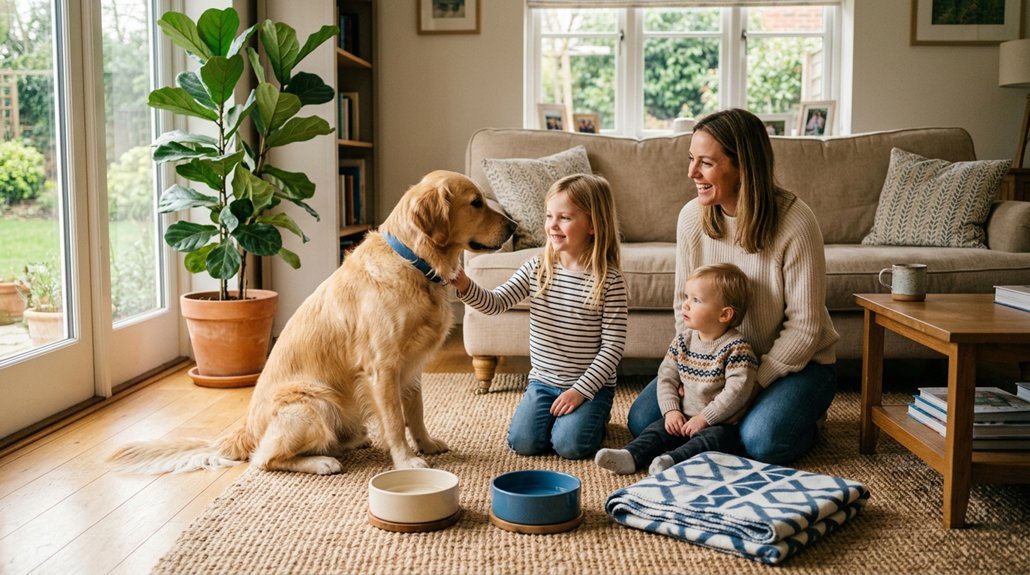
To choose a family-friendly dog, assess your household’s energy levels and living environment. High-energy families may suit active breeds like Labrador Retrievers, while low-energy homes could consider Basset Hounds. Evaluate breed traits such as temperament and size, ensuring compatibility with children and space available. Consider your time for exercise, training, and grooming needs. Creating a safe home environment and establishing routines will ease the shift for your new pet. Learn how these factors contribute to joyful pet ownership.
Key Takeaways
- Assess family energy levels to match with a suitable breed’s activity needs.
- Consider breed temperament and patience with children for family harmony.
- Evaluate living space size to ensure it accommodates the dog’s breed.
- Factor in grooming and exercise requirements for proper dog care.
- Ensure the breed’s traits align with the family’s lifestyle and environment.
Understanding Your Family’s Lifestyle Needs
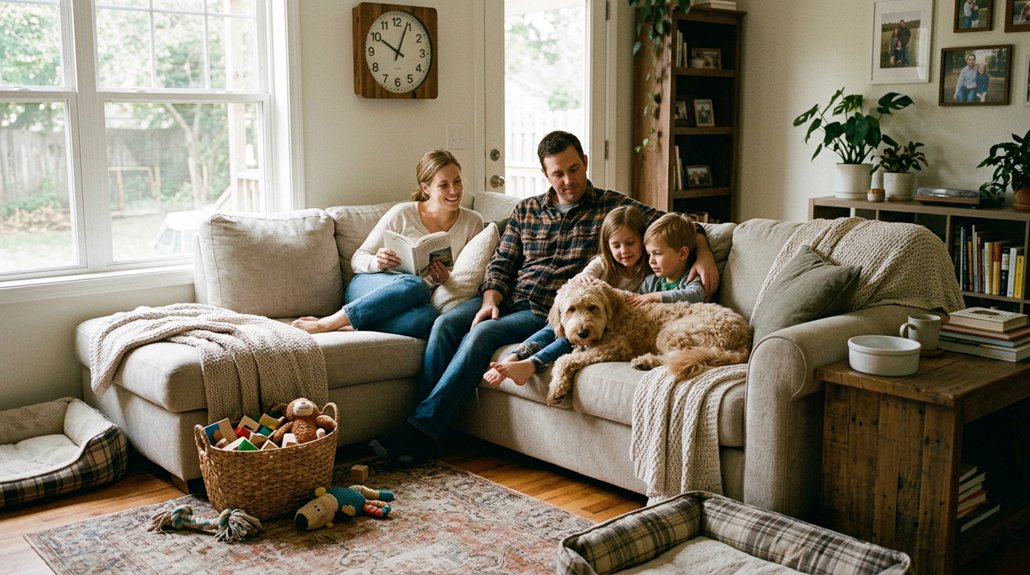
Before choosing a family-friendly dog, it’s crucial to assess your family’s lifestyle needs to guarantee a harmonious relationship with your new pet. Examine your household’s energy levels first. If your family enjoys outdoor activities and has high stamina, choose a breed like a Labrador Retriever to match that dynamism. Conversely, if tranquility is more your style, a low-energy breed like a Basset Hound might be better suited. Next, evaluate your living environment. Larger breeds typically require spacious homes with outdoor areas, while smaller breeds adapt well to apartment living. These considerations make sure your home can accommodate your new furry friend comfortably. Finally, assess the time you can dedicate to exercise and care, aligning those commitments with your lifestyle.
Identifying Dog Breeds and Their Traits
Understanding your family’s needs provides a foundation to explore different dog breeds and their traits. Consider distinct traits like temperament, energy levels, and size as you identify potential companions. Labrador Retrievers, with their outgoing personalities and friendly Labrador traits, are superb with children, offering an energetic presence that’s also remarkably gentle. Meanwhile, hypoallergenic breeds, like Poodles, reduce the risk of allergies, offering companionship without the excessive shedding. For urban living or smaller spaces, you might explore smaller breeds like Bichon Frises or Cavalier King Charles Spaniels, which excel in apartment settings.
Identifying the right dog breeds involves assessing traits like temperament, energy, and size, ensuring a perfect match for your family.
- High-energy needs: Opt for breeds like Border Collies or Vizslas.
- Relaxed, low-energy preferences: Consider Basset Hounds.
- Hypoallergenic consideration: Explore breeds like Poodles.
Tailor these traits to match your home environment for harmonious living.
Choosing the Right Dog Breed for Your Family
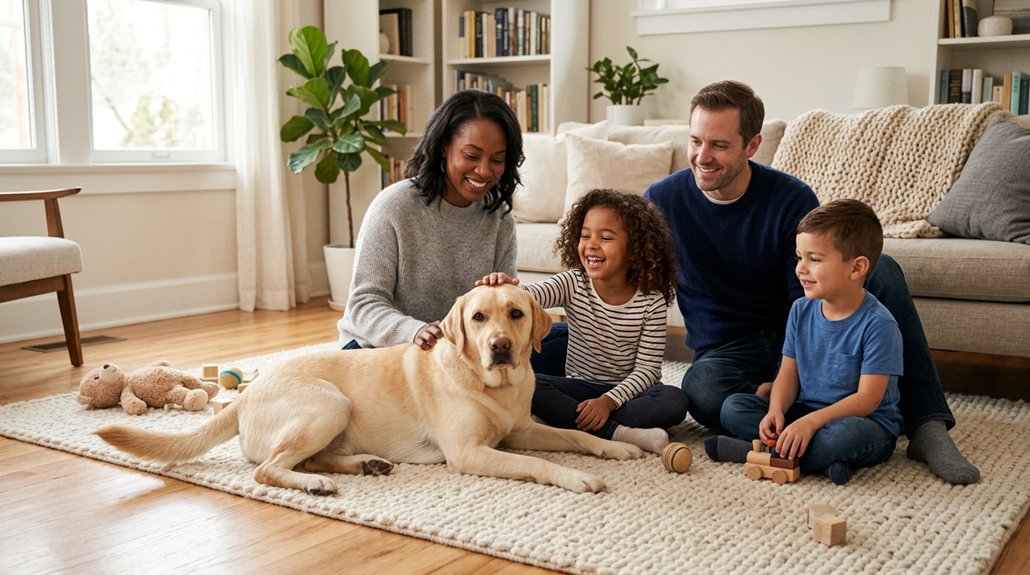
How do you guarantee your chosen dog breed fits seamlessly with your family’s lifestyle and environment? To begin with, consider breed temperament: certain breeds are gentler around young children. For instance, Bichon Frises and Cavalier King Charles Spaniels are more patient, while active families might prefer a Golden Retriever’s zest. Next, assess the breed’s training considerations. Energetic breeds like Labrador Retrievers thrive with regular exercise, while Bulldogs, with lower energy, fit busier lifestyles. Compatibility is also key if allergies are a concern; hypoallergenic Poodles are an ideal choice. Additionally, think about grooming needs—Samoyeds require frequent attention compared to breeds with less demand. Finally, prioritize early socialization, especially for Beagles and Boxers, to guarantee well-rounded interactions with children and other pets.
Preparing Your Home for Your New Dog
As you prepare your home for your new canine companion, it’s important to guarantee their living space is both safe and welcoming. Conduct a thorough hazard assessment to address potential dangers like exposed wires or toxic plants that could harm your dog. Designate and prepare a specific area for their bed, toys, and feeding stations to instill a sense of security and belonging. Adhering to a supply checklist ensures you’re ready with essential items such as:
- Dog food, water bowls, and leashes
- A variety of appropriate toys for stimulation
- House rules to define boundaries and furniture access
If you have children, set clear guidelines on interacting with the dog. This preparation creates a harmonious environment, facilitating a smooth shift for your new pet.
Helping Your New Dog Feel at Home
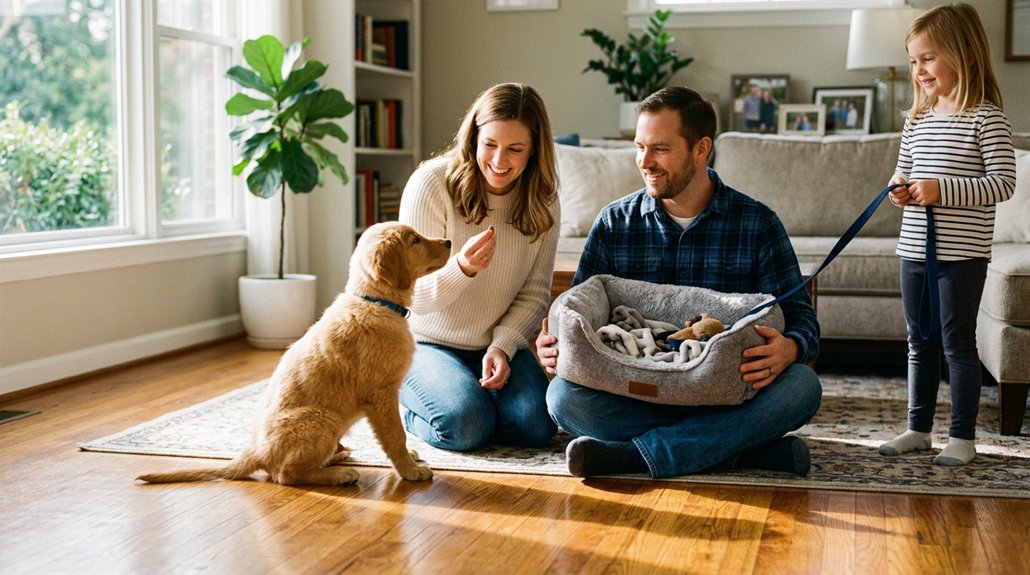
After preparing your home for your furry friend, focus on helping them feel comfortable and secure in their new surroundings. Creating a safe space with a comfortable bed, toys, and easily accessible food and water fosters security. Gradually introduce them to family members, guaranteeing calm and positive interactions.
| Key Actions | Benefits |
|---|---|
| Create a safe space | Provides security and comfort |
| Gradual introduction | Builds trust and familiarity |
| Consistent routine | Aids adaptation and expectation |
Keep a consistent routine for feeding, potty breaks, and exercise to help your dog adapt smoothly. Supervise initial interactions with children to guarantee safety and teach gentleness. Additional socialization opportunities enhance your dog’s confidence and comfort, allowing them to feel at home in different environments.
Frequently Asked Questions
What Is the 3-3-3 Rule With Dogs?
The 3-3-3 rule outlines dog adjustment phases for new pet integration: three days to decompress, three weeks to settle, and three months to acclimate. Understand this process to better support your dog during their adjustment.
What Is the Friendliest Dog for a Family?
You’ll find a perfect furry diplomat in Labs, with gentle breeds like Goldens and Beagles bringing joy too. Evaluate energy levels when choosing, as Poodles and Cavaliers offer hypoallergenic or love-laced companionship for family harmony.
What Annoys Dogs the Most?
Dogs are most annoyed by noise sensitivity, sudden movements, lack of personal space, inconsistent training, and unfamiliar interactions. Understanding dog behavior medically, you’ll prioritize predictability and calm environments to alleviate these stressors practically in your home.
How Do You Know What Dog Is Best for Your Family?
A heartwarming 74% of dog owners feel happier daily. Consider dog breed characteristics and family lifestyle considerations. Choose a calm, kid-friendly breed if you’ve young kids. Energetic families might suit active dogs, ensuring harmony and increased joy.
Conclusion
In choosing a family-friendly dog, it’s essential to understand your family’s lifestyle and identify breeds that align with it. Remember, dog breeds aren’t one-size-fits-all; each has unique traits and needs. Once you’ve selected the right breed, prepare your home to guarantee a smooth changeover. Think of it like a new chapter in a timeless novel, one where patience and love are central. By prioritizing these considerations, you’ll cultivate a bond that benefits both your dog and family.