
When your dog won’t stop whining, first identify the cause, whether it’s anxiety, unmet needs, or medical issues. Address attention-seeking behavior by ignoring it and rewarding quiet moments. Use a “quiet” command during training and guarantee ample physical and mental stimulation to reduce boredom. Create a calming environment with familiar items, and consider desensitization for stress triggers. If whining persists, consult a professional. Discover more ways to effectively assist your furry friend.
Key Takeaways
- Identify and address potential environmental triggers to reduce stress-induced whining.
- Use consistent training techniques like ignoring attention-seeking whining and rewarding quiet behavior.
- Provide mental and physical stimulation to meet unmet needs and reduce boredom.
- Establish a structured routine with regular exercise and enrichment activities.
- Consult a veterinarian or professional trainer for persistent whining concerns.
Uncover the Reasons Behind Your Dog’s Whining
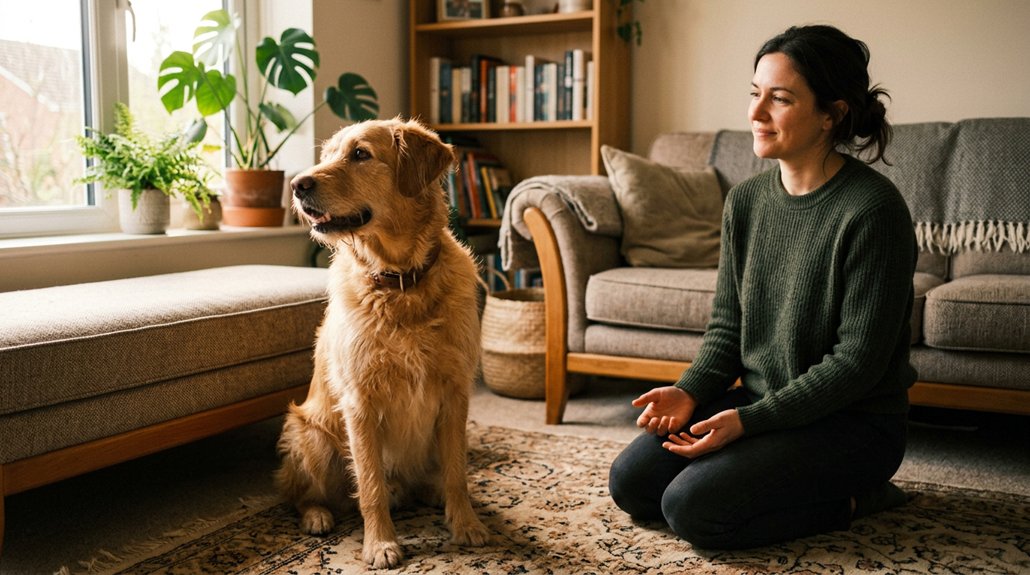
While it might seem frustrating when your dog won’t stop whining, it’s important to realize that this behavior often serves as a form of communication. Recognizing whining triggers is essential; dogs may whine due to anxiety, separation, or medical issues. Unmet physical or mental needs also heighten this response. These communication signals are dogs’ way of expressing discomfort or a desire for attention or excitement. Environmental factors like unfamiliar situations or loud noises can intensify whining. By paying close attention to these triggers, you can better understand your dog’s unique behavior patterns. This insight allows you to differentiate between attention-seeking whining and whining resulting from stress or pain, paving the way for more effective management strategies tailored to your pet’s needs.
Train Your Dog to Reduce Whining Effectively
Understanding the reasons behind your dog’s whining is just the starting point. To effectively curb this behavior, recognize whining triggers and employ consistent training techniques. Begin by ignoring attention-seeking whining—respond instead to quiet behavior with positive reinforcement, such as treats or praise. Introduce a “quiet” command during training sessions to help redirect your dog’s focus away from whining and gradually extend the time they are expected to remain silent. Regular physical and mental stimulation activities can diminish boredom-induced whining, essential for high-energy breeds. Don’t overlook the value of obedience classes, which can enhance overall behavior and boost confidence, thereby mitigating anxiety-related whining. Adopting these methods guarantees your dog not only reduces whining but also becomes a more well-adjusted companion.
Enrich Your Dog’s Environment to Minimize Whining
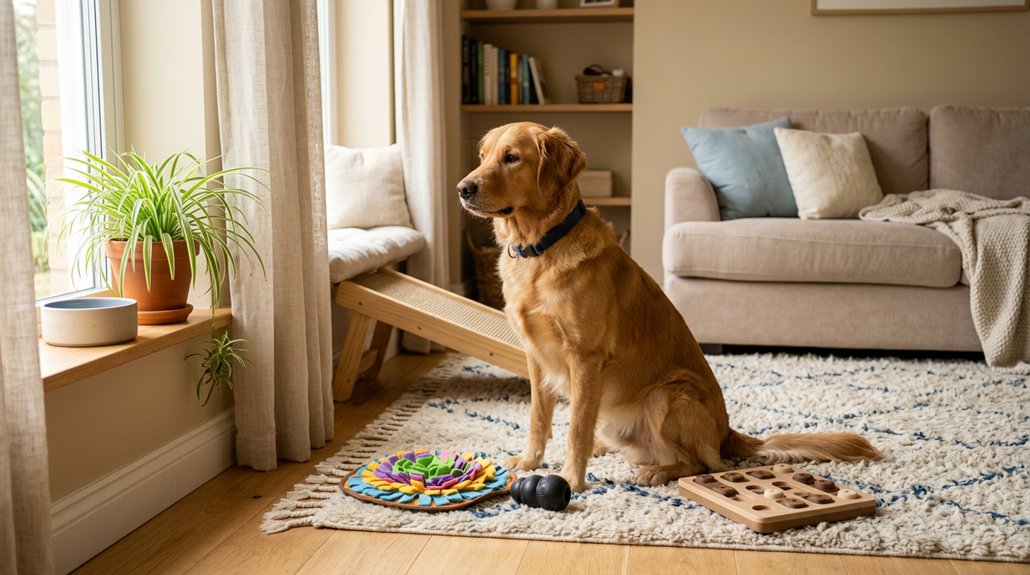
A well-enriched environment plays a crucial role in minimizing your dog’s whining. Providing a variety of toys can greatly engage your dog’s mind and reduce boredom. Consider incorporating interactive and puzzle toys that offer mental stimulation; they can keep your dog occupied and decrease whining for attention. Additionally, a structured exercise routine is essential, especially for high-energy dogs. Regular physical activities help release pent-up energy, mitigating excessive vocalization. Maintaining a structured daily schedule with playtime, training, and quiet time can also lead to a more relaxed and secure dog. Finally, creating a calm and cozy space with comfortable bedding and chew toys offers a safe retreat, reducing anxiety and its associated whining. Investing in these changes fosters a happier, quieter pet.
Effective Ways to Address Anxiety and Stress-Induced Whining
Addressing anxiety and stress-induced whining in dogs begins with identifying potential triggers in your pet’s environment, such as loud noises or unfamiliar situations. Implement desensitization techniques by gradually exposing your dog to these scenarios, paired with positive experiences, like treats. Ensuring your dog receives ample mental and physical stimulation through exercise and interactive toys can also mitigate further anxiety.
Consider creating a secure environment using familiar items, like blankets or toys. Additionally, exploring calming products, such as pheromone diffusers, may provide added comfort.
Here’s a quick guide:
| Strategy | Description | Benefit |
|---|---|---|
| Desensitization techniques | Gradual exposure with rewards | Decreases anxiety |
| Calming products | Pheromones or supplements | Provides reassurance |
| Safe space | Familiar, comforting items | Security during stress |
| Mental stimulation | Interactive toys | Reduces boredom |
| Physical exercise | Daily activities | Relieves anxiety |
When Should You Call in the Experts for Persistent Whining?

While strategies like desensitization and creating a safe space can be effective, there are times when persistent whining may signal the need for professional intervention. Knowing when to consult an expert can make all the difference in addressing your dog’s behavior. Recognize symptoms such as:
- Medical Concerns: If whining persists despite behavioral efforts, consult a veterinarian to rule out health issues.
- Additional Symptoms: Pacing, excessive drooling, or destructive behavior might indicate anxiety or distress. A Certified Professional Dog Trainer (CPDT) can offer specialized guidance.
- Socialization Challenges: Excessive vocalization in unfamiliar settings may suggest social anxiety. A behaviorist can develop tailored training techniques to improve social skills and reduce anxiety.
Frequently Asked Questions
How to Deal With a Dog That Constantly Whines?
To handle constant whining, identify whining triggers such as attention-seeking, anxiety, or pain, and observe behavioral signals. Practice ignoring attention-seeking whining, use positive reinforcement for quiet moments, and guarantee your dog gets mental and physical stimulation.
What Is the 3-3-3 Rule for Dog Anxiety?
The 3-3-3 Rule for dog anxiety involves a three-step adjustment: three days to destress, three weeks to embrace routines, three months for full adaptation. Address anxiety triggers and incorporate relaxation techniques to ease this adjustment.
How Do I Get My Dog to Shut up Whining?
Did you know over 70% of dogs exhibit whining due to anxiety? Identify the triggers, then use positive reinforcement to encourage silence. Reward moments of quiet patiently, and reinforce commands like “quiet” to alter behavior effectively.
What Calms a Dog Down Immediately?
To calm your dog down immediately, engage in calming techniques like deep breathing and gentle petting. Incorporate anxiety reduction tools like pheromone diffusers. These methods, backed by research, effectively decrease stress levels, promoting immediate relaxation.
Conclusion
Understanding and addressing your dog’s whining can greatly enhance your pet’s well-being. Did you know that, according to the American Pet Products Association, 68% of U.S. households own a pet, reflecting a widespread need for effective communication strategies? By identifying the reasons behind your dog’s behavior, using training techniques, enriching their environment, and managing anxiety, you’re equipped to reduce whining effectively. If the issue persists, consulting a professional may provide tailored solutions to guarantee a happier, more peaceful home.