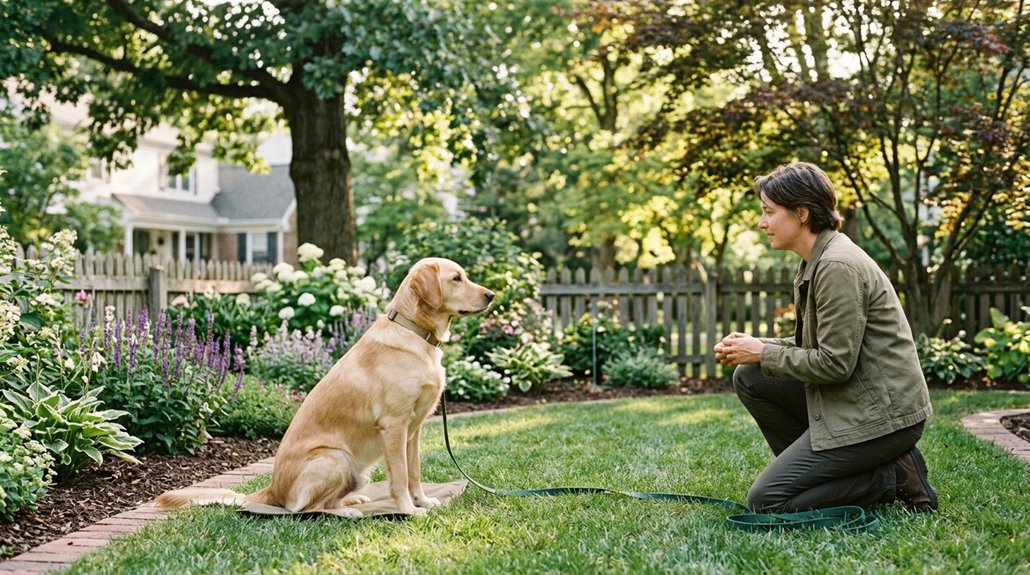
To stop attention-seeking behavior in dogs, consistently reward calm actions with treats or praise, and employ brief timeouts for unwanted behaviors like jumping or barking. Teach commands such as “sit” to promote alternative actions, and use the “Enough” technique to signal when attention ends. Make certain all family members respond uniformly to prevent mixed signals. By promoting a secure environment with clear expectations, you’ll foster positive behavior changes and discover deeper insights.
Key Takeaways
- Use brief timeouts for unwanted attention-seeking behaviors like jumping or pawing to discourage the behavior.
- Reward calm behaviors immediately with treats or praise to reinforce tranquility.
- Teach and encourage alternative commands like “sit” or “lie down” for better communication.
- Ensure consistent responses from all family members to avoid reinforcing unwanted behaviors.
- Provide sufficient exercise, mental stimulation, and social interaction to reduce attention-seeking tendencies.
Immediate Solutions for Attention-Seeking Dogs
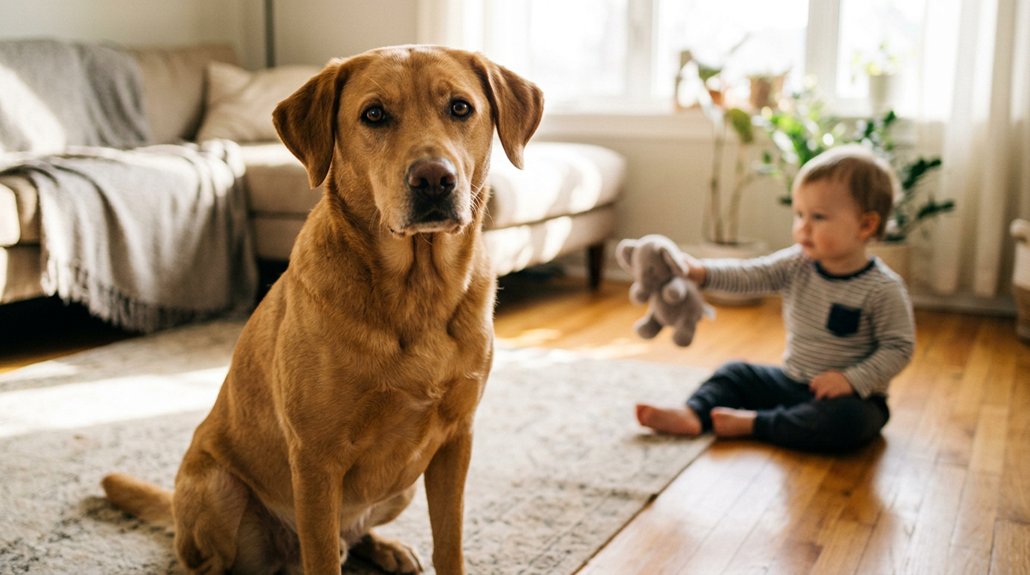
When you’re dealing with an attention-seeking dog, the key is to consistently apply immediate solutions that reinforce positive behavior and diminish unwanted actions. Recognize behavioral cues; they’re your signal to implement timeout strategies swiftly. The moment your dog engages in behaviors like jumping or pawing, ignore them to avoid unintentional reinforcement. Instead, use a brief timeout by removing the dog or placing them in a calm space for 15-30 seconds. Keep this discipline consistent, ensuring that attention is a direct consequence of calm behavior. Additionally, guide them to adopt acceptable alternatives, such as sitting, and reward compliance to encourage desirable actions. This vigilant approach helps break the cycle, promoting a more balanced interaction with your furry friend.
Practical Techniques to Reduce Attention-Seeking Behaviors
Addressing attention-seeking behaviors in dogs requires a few strategic interventions to foster a more peaceful coexistence. Begin by implementing the “Enough” technique, using a specific cue to help your dog understand when attention stops. Consistently ignore unwanted behaviors like jumping or whining; instead, reward calm signals such as sitting or lying down. Set attention boundaries by teaching alternative behaviors and reinforcing them with praise or treats. Use timeouts effectively by establishing a designated spot to help your dog recognize acceptable conduct. Guarantee family members respond consistently to avoid accidental reinforcement of negative behaviors. By setting clear boundaries and promoting calm behavior, you’ll support your dog in understanding the structure within your home, which ultimately strengthens your bond.
Why Do Dogs Really Seek Your Attention?
Ever wondered why your dog seems to crave your attention so persistently? It’s all part of their social communication. Dogs use behavioral cues like barking, pawing, or jumping to express their needs or desires to you. It’s not about aggression; it’s trial-and-error learning. They experiment with actions and quickly learn which ones elicit your response, reinforcing the habit. If ignored, these behaviors can intensify, creating a feedback loop that strengthens their persistence. Recognizing this as a learned response is essential for managing and training them effectively. Being mindful of these cues helps you address their needs while preventing reinforcement of unwanted habits. Remember, their attention-seeking behaviors stem from interactions with you, not an inherent aggression or defiance.
Consistency Within the Family
Recognizing that your dog’s attention-seeking behaviors arise from learned interactions opens the door to addressing these habits. Instituting family rules with consistent behavior expectations is vital. When everyone in the household maintains the same approach, your dog will experience clear, predictable patterns. This prevents confusion and reinforces the desired behaviors you’re aiming for. By establishing a clear routine, your dog learns when to expect attention, reducing their reliance on attention-seeking strategies.
Require that all family members ignore unwanted behaviors consistently. Communication among family members about your dog’s training progress and techniques is essential, ensuring unity in behavior management. Rewarding calm and positive actions helps foster a deeper bond with your dog, emphasizing positive reinforcement. Together, these strategies shape a more harmonious living environment.
Environmental Enrichment to Improve Dog Behavior
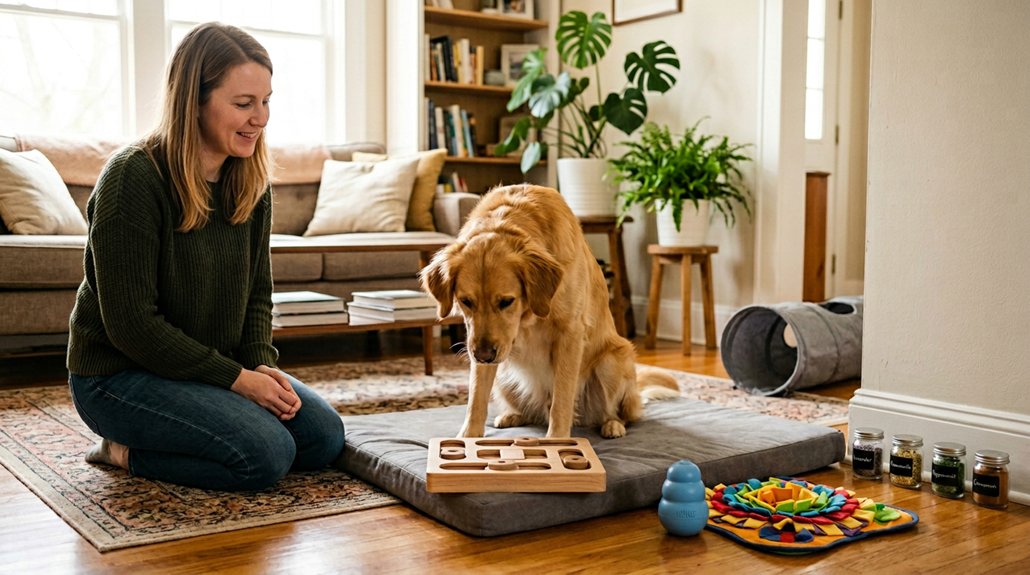
Incorporating environmental enrichment into your dog’s routine can greatly curb attention-seeking behaviors by keeping them mentally stimulated and engaged. Activities like food puzzles, interactive toys, and virtual training classes provide the necessary challenge and variety that fulfill their need for exploration and problem-solving. By offering diverse activities and opportunities for learning, you’re not only keeping your dog occupied but also strengthening your bond, which is essential for reducing anxiety-driven behaviors.
Diverse Activities for Engagement
Engaging your dog in a variety of diverse activities isn’t just fun—it’s essential for their mental well-being and can considerably curb attention-seeking behaviors. Outdoor adventures and canine sports like fetch optimize physical and mental exertion, while teamwork activities include agility and Nose Works that bond you both. Incorporate training variations and interactive play during walks, or use creative puzzles and sensory games at home. These mental challenges lower boredom-induced behaviors. Switch play items to maintain novelty and reduce idle time. By diversifying activities, you promote a balanced focus, curbing unnecessary attention-seeking.
| Activity Category | Example Task | Benefit |
|---|---|---|
| Outdoor Adventures | Fetch games | Physical exercise, bonding |
| Sensory Games | Nose Works | Stimulate senses, focus |
| Creative Puzzles | Food puzzles | Mental stimulation, engagement |
Virtual Classes and Training
Virtual classes and training sessions offer an innovative way to enhance your dog’s behavior and minimize attention-seeking tendencies. By utilizing virtual training, you’re providing a structured learning experience to develop new skills and commands. Here’s why it’s effective:
- Interactive Learning: Online resources, including live sessions and recorded materials, allow you to engage in enriching activities at home, keeping your dog consistently engaged.
- Mental and Physical Stimulation: Virtual dog sports and puzzles promote well-being, reducing the urge to seek attention constantly.
- Community Interaction: Joining online training communities fosters social connections for you and your dog, enhancing bonding and shared learning.
Virtual training classes often target specific behavioral issues, offering tailored strategies to address and modify undesired attention-seeking habits effectively.
Stimulating Interactive Toys
A myriad of interactive toys can transform your dog’s everyday environment into a stimulating playground that curtails attention-seeking behaviors. By engaging with interactive feeding puzzles, you not only slow down their eating but also tap into their problem-solving abilities. This approach nurtures healthier eating habits and keeps your dog mentally occupied. Puzzle games and toys that require manipulation, like ball rollers or squeaky toys, cater to natural instincts, allowing dogs to chase and explore independently. Regularly rotating these toys maintains their interest and reduces boredom-related anxiety. Including interactive play sessions in your daily routine fortifies your bond with your dog, offering a constructive channel for energy, and curbing needless attention-seeking impulses, ensuring a happier, more enriched life together.
Rewarding Positive Actions for Lasting Change
To create lasting change in your dog’s behavior, it is crucial to reinforce calm actions consistently with praise or treats. By guiding them with commands like “sit” or “stay,” you encourage alternative behaviors that divert attention-seeking habits while ensuring rewards follow each successful attempt. Regularly adapting your approach and emphasizing positive reinforcement helps your dog understand that their calm and appropriate actions are the true path to gaining your attention.
Reinforce Calm Behavior
Rewarding calm behavior in dogs is a powerful tool for promoting lasting change. By integrating calm commands, like “sit” before offering affection, you encourage your dog to associate tranquility with positive outcomes. Offering behavior rewards, such as treats or praise, immediately strengthens this connection. Here’s how you can foster a more serene furry friend:
- Automatic Sitting: Teach your dog to sit automatically by rewarding when they do so upon approaching. This reinforces impulse control.
- Immediate Reward: Consistently provide rewards right after calm behaviors. Timely positive reinforcement fortifies the association between calmness and rewards.
- Gradual Duration: Extend the time your dog must remain calm before offering a reward. This helps build their capacity for sustaining calmness and lessens attention-seeking tendencies.
Consistent Positive Reinforcement
Consistency is the cornerstone of effective dog training, particularly when leveraging positive reinforcement strategies for behavioral change. Immediate reward timing reinforces the association between a desired behavior and its positive consequence. When your dog sits quietly or lies down, reward them promptly with treats, praise, or playtime. This strategy cultivates behavior clarity, guiding your dog to understand which actions are favored. Be mindful not to inadvertently reinforce unwanted behaviors; the rewards should coincide strictly with the actions you wish to encourage. Gradually, increase the time your dog must exhibit the behavior before rewarding. This enhances their impulse control and patience. Make sure all family members uphold uniform reinforcement practices, fostering a cohesive environment where your dog learns precisely what behaviors are valued.
Encourage Alternative Actions
When addressing attention-seeking behavior in dogs, it’s crucial to guide them towards positive alternatives. Teaching alternative commands like “sit” or “lie down” can transform their actions and promote better communication. Here’s how you can effectively engage with your dog:
- Reinforce Positive Behaviors: Use praise, treats, or playtime to create positive interactions, helping your dog associate good behavior with attention.
- Engage with Tasks: Redirect energy through fetching toys or solving food puzzles, keeping them occupied and minimizing unwanted behaviors.
- Teach Self-Regulation: Exercises like “relaxation” or “settling” can aid dogs in managing their impulses.
Consistently rewarding these alternative behaviors strengthens learning patterns. By focusing on positive interactions, you guide your dog towards alternative responses that yield desirable outcomes, benefiting both you and your pet.
Avoiding Common Attention-Seeking Mistakes
Understanding how to effectively manage attention-seeking behaviors in dogs requires an empathetic and scientific approach. Recognize the common triggers that set off these behaviors. Often, they’re tied to a dog’s attention span, requiring owners to be diligent in recognizing these patterns. Avoid punishing your dog—this can mistakenly be perceived as a reward due to the attention it provides. Instead, resist providing any form of acknowledgment, including reprimands or even eye contact. Ascertain the whole family is consistent to prevent mixed signals that confuse your pup. Meeting your dog’s basic needs for exercise, mental stimulation, and social interaction helps reduce the frequency of these behaviors. Stay vigilant in your responses, steering clear of inadvertently strengthening unwanted habits through accidental praise.
Frequently Asked Questions
How to Break Attention-Seeking Behavior in Dogs?
To break attention-seeking behavior, ignore negative actions and focus on positive reinforcement. Redirect your dog’s energy into alternative activities like “sit” or “lie down,” rewarding these behaviors. Structured routines and consistency across family members enhance success.
Why Does My Dog Keep Seeking Attention?
Your dog keeps seeking attention because 74% of dogs use innate behaviors to engage owners. Driven by motivation to connect and fulfill emotional needs, they’re responding to reinforced patterns, driven by complex canine emotions. Understanding them helps.
Should I Ignore My Dog When He Wants Attention?
Yes, ignore your dog when seeking attention to break the cycle. Use positive reinforcement for alternative actions. Identify behavioral triggers and guarantee consistent responses, as mixed signals can confuse and inadvertently support attention-seeking behavior.
What Is a Red Flag Puppy’s Behavior?
You’ll spot red flag signs like excessive barking, nipping, and jumping in puppies. These behaviors often indicate an inability to self-soothe or seek appropriate attention. Address them with consistent training to foster impulse control early on.
Conclusion
In addressing your dog’s attention-seeking antics, consistency is key to fostering lasting change. Just like a ship needs a steady hand on the helm, your guidance shapes behavior with scientific precision and heartfelt empathy. Enrich their environment, reward positive actions, and always remain consistent. By understanding why they seek attention, you’re not only mending the behavior but strengthening your bond. Remember, patience and understanding will guide the way to a harmonious relationship with your furry friend.