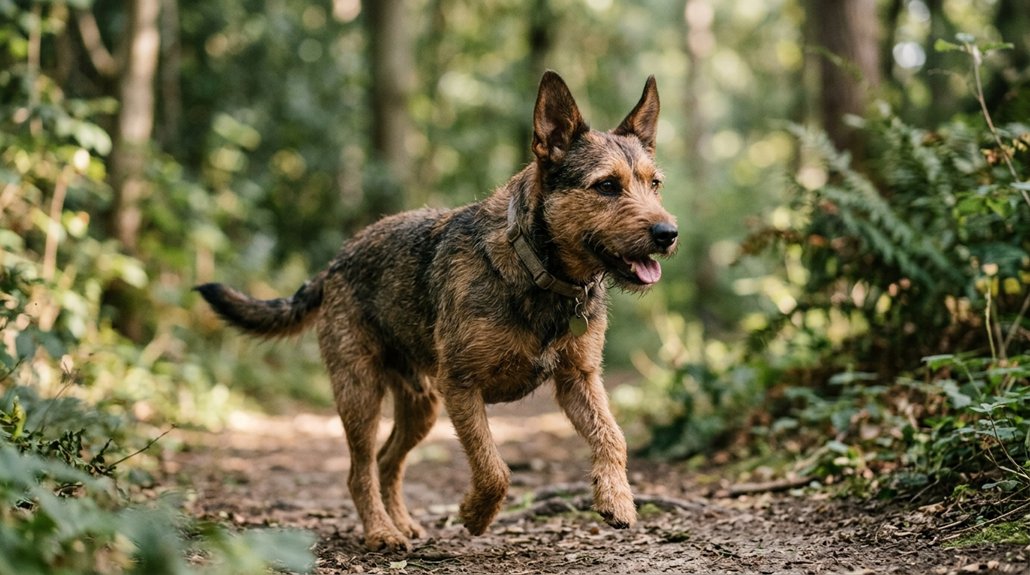
To read your dog’s body language, pay attention to tail movements, ear positions, and facial expressions. Relaxation signals, like flexible ears and soft gazes, show comfort, while stress indicators, including pinned-back ears and “whale eye,” suggest anxiety. Notice tail wag direction for emotional cues—right-side wags imply positivity, left-side may indicate discomfort. Context is essential, as environments can alter behaviors. By understanding these signals, you’ll reveal deeper insights into their emotions and strengthen your bond.
Key Takeaways
- Notice tail movements; high stiff wags indicate agitation, while slow wide sweeps suggest relaxation.
- Observe ear positions; flexible movement from forward to back signals comfort and security.
- Identify stress signs like yawning and lip licking, which indicate anxiety.
- Recognize facial expressions; a soft gaze and relaxed mouth show contentment and well-being.
- Consider context; recent experiences and environment can influence a dog’s body language signals.
Why Canine Body Language Matters
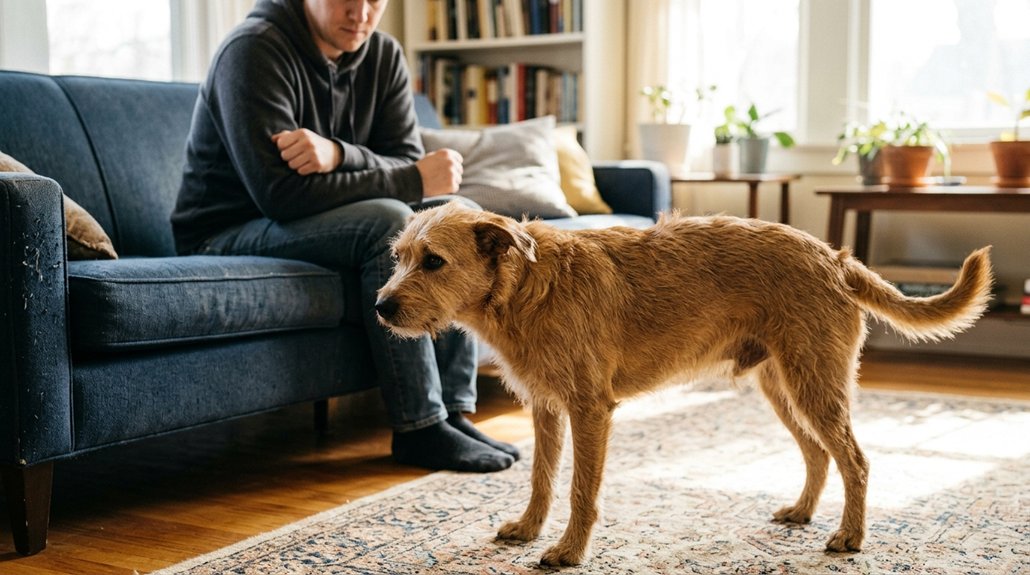
Understanding why canine body language matters is essential to enhancing your relationship with your pet. By grasping the nuances of canine communication, you not only foster effective interaction but also strengthen trust and emotional intelligence between you and your dog. Recognizing subtle cues like body posture or tail movements can help you predict and respond to your dog’s emotional states and behaviors, which is crucial for ensuring their well-being. With your enhanced awareness, you’ll prevent potential conflicts or stress, creating a safer environment for both parties. When you, as an educated owner, interpret these signals accurately, you advocate for your pet’s comfort and security in various situations. This keen understanding ultimately improves the quality of communication and interactions with your furry friend.
Spot Flexible Ears and Soft Gazes
Observing your dog’s body language is a skill that can deepen the bond between you and your pet. Start by noting ear flexibility. When your dog’s ears move from forward to pointed back or folded, it typically signifies relaxation and comfort. This fluidity in ear positions reflects trust and ease in their environment. Alongside this, gaze softness plays an essential role. A soft gaze includes squinting eyes and a relaxed forehead, suggesting contentment and calmness. These soft eyes often accompany a relaxed mouth, whether slightly open or closed without tension, indicating emotional well-being. By recognizing both flexible ears and soft gazes simultaneously, you can more accurately interpret when your dog feels safe and secure, enhancing your understanding of their relaxed state.
How to Spot Stress and Anxiety in Your Dog
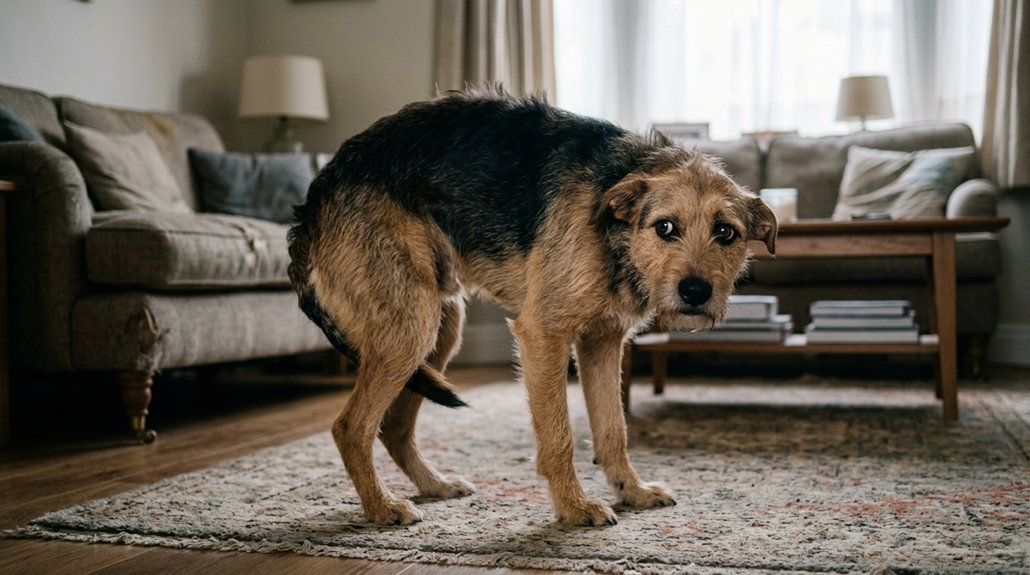
Spotting stress and anxiety in your dog is essential for their overall well-being. By familiarizing yourself with stress signals, you can help them feel secure and comfortable. Anxiety behaviors such as yawning, lip licking, and turning away indicate discomfort or unease in your dog. A tucked tail and pinned-back ears are clear signs of fear or anxiety, signaling that a reassuring approach is needed. Additionally, a dog exhibiting “whale eye,” where the whites of their eyes are visible, often maintains a rigid posture due to nervousness. Excessive self-grooming, frozen posture, or shaking off can reveal their attempts to self-soothe. Observing these behaviors allows you to intervene and provide support, ensuring they feel safe and can thrive in their environment.
Decoding Tail Movements in Dogs
Tail movements in dogs are a fascinating and complex form of communication that reveal much about their emotional state. Understanding tail positioning and wagging patterns is essential in interpreting their messages. A high, stiff wag often reflects agitation or arousal, suggesting heightened emotions. In contrast, a low, fast-wagging tail might indicate fear or uncertainty, pointing to underlying anxiety. Observe slow, wide sweeps of the tail; they generally signal relaxation and contentment. Also, take note of the direction—right-side wags typically correspond with positive feelings, while left-side wags may hint at negative emotions or discomfort. Finally, if you see a circular “helicopter tail,” expect a joyful greeting and enthusiasm to interact. By analyzing these nuances, you’ll better understand your dog’s complex language.
Understand Posture in Dog Body Language
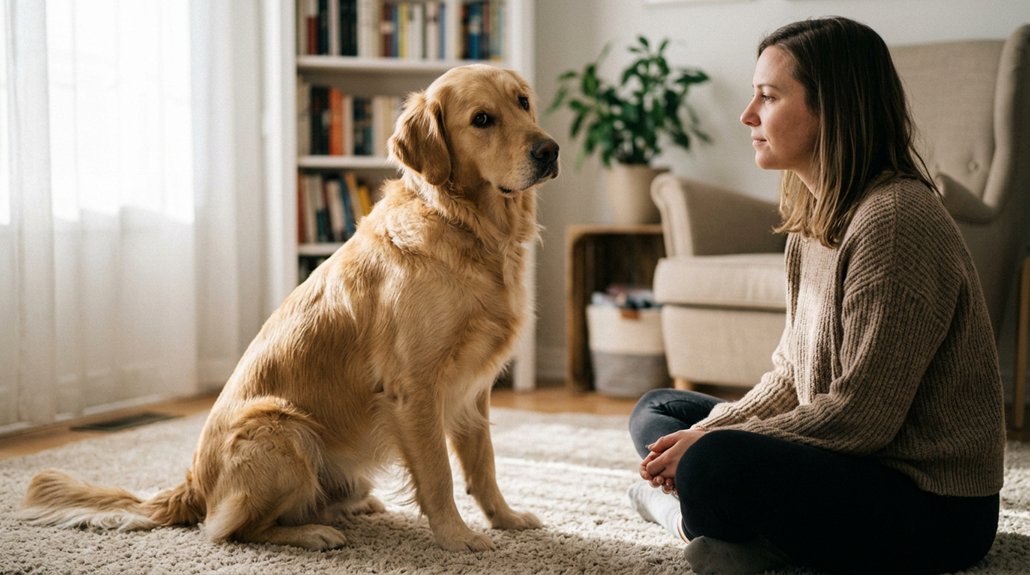
When deciphering your dog’s body language, one critical component is their posture. Analyze how your dog distributes its weight; if they’re retreating or have cowering signals, fear or submission might be at play. Conversely, a forward shift can suggest interest or even aggression. A play bow is easily recognizable with front legs extended and the rear end high, signaling an invitation for fun and games. It’s essential to evaluate these postures contextually. Rolling onto their back can alternatively reflect stress or submission, not just an invitation to belly rubs. Observe for a relaxed, loose posture, which typically indicates friendliness. A rigid stance often implies tension. Tail positions should be noted but aren’t the sole indicator of emotional state.
Facial Expressions From Calm to Aggressive
A dog’s face can be a clear window into their emotions when assessed correctly. Calm expressions are shown through relaxed features like soft eyes and a neutral forehead, signaling contentment. Yet, don’t misinterpret yawning or lip-licking as calm; these often hint at stress or discomfort. Notice a submissive grin—lips retracted, mouth slightly open—this indicates peaceful intentions. In contrast, aggressive signals emerge through an aggressive snarl where teeth are bared, and hard eyes display an unwavering, tense stare. These denote potential aggression. Also, the “whale eye,” where whites of the eyes are visible, suggests stress or fear. Recognizing these expressions allows you to understand your dog’s emotional shift from calm to aggressive, aiding in more informed interactions.
How to React Appropriately to Dog Cues
Understanding your dog’s tail cues, facial expressions, and posture can greatly enhance communication and response strategies. You’ll find that a wagging tail isn’t always a sign of happiness, and recognizing when a relaxed expression shifts can clue you into your dog’s emotional changes. By observing a combination of these signals, you can tailor your reactions to maintain a safe and trusting environment for your dog.
Tail Cues Interpretation
Interpreting your dog’s tail cues requires keen observation and analysis of their movements and positions to effectively gauge their emotional state. Start with a tail speed analysis: faster wags can signal heightened excitement or distress, while slower, wide sweeps usually imply calmness. Observing the wagging direction is also essential—rightward wags often suggest positive emotions, such as happiness or interest, whereas leftward wags may indicate unease or even anxiety.
Additionally, note the tail’s position: a high tail typically signifies confidence, while a low or tucked tail can be a sign of fear or stress. A circular wag implies joy, especially when interacting with you during greetings or play. By combining these cues, you’ll better understand and react to your dog’s needs.
Facial Expressions Recognition
When deciphering your dog’s facial expressions, context is everything. A submissive grin, with its relaxed mouth and slight upward curve, signals peace and friendliness, starkly different from an aggressive snarl. Observe whether your dog is yawning—not from fatigue but indicating stress or discomfort. Soft eyes are your best indicator of serenity, showing a gentle gaze and relaxed eyelids, whereas hard eyes might reflect aggression or unease. Pay special attention to the “whale eye,” where the whites of the eyes are visible, as this often means your dog is nervous or uncomfortable. In such cases, offer them space or calm reassurance. Understanding these nuances and the environment helps you respond appropriately, enhancing your bond with your canine companion.
Posture Awareness Strategies
Decoding your dog’s posture can greatly enhance your ability to communicate and respond effectively. By understanding body signals, you’ll know when to engage in playful interactions or provide comfort. Here are some strategies:
- Play Bow Recognition: A lowered front with a raised rear is your dog’s way of inviting playful interactions. It’s a clear body signal indicating friendliness.
- Interest vs. Aggression: When your dog shifts its weight forward, assess its stance. This could mean excitement, but might also signal aggression.
- Fear Assessment: Cowering or leaning back shows fear. Approach gently to reassure and calm your pet.
- Submission vs. Stress: If your dog rolls onto its back, consider the context. It may signal submission but could also indicate stress.
Frequently Asked Questions
How Can I Interpret My Dog’s Body Language?
Observe your dog’s tail wagging signals: high and fast suggests confidence, while low wagging shows uncertainty. Relaxed ears indicate contentment. Also, be mindful of context and breed-specific traits to accurately interpret their emotions.
How Do I Say “I Love You” in Dog Language?
To say “I love you” in dog language, adopt relaxed, friendly body language, mirroring your dog’s tail wagging and attentive ear position. Build trust and affection through gentle touch, play, and consistent, positive interaction.
How Long Does 1 Hour Feel to a Dog?
Imagine a dog’s day waiting for dinner after playtime. Their time perception isn’t linear like ours; canine senses focus on routines and smells. That hour may feel longer due to anticipation, impacted by daily activities and stimuli.
What Are the 7 Words Dogs Can Understand?
You’re wondering about the seven words dogs frequently comprehend: “sit,” “stay,” “come,” “down,” “no,” “fetch,” and “heel.” These form the basis of canine vocabulary, essential for efficient dog communication through consistent training and practice.
Conclusion
So, you think you’ve cracked the canine code, eh? Those floppy ears and tail wags aren’t just accessories—no, they’re secret signals of a domain more complicated than the stock market. When your dog’s gaze softens, don’t rush for the Nobel Prize; just know you haven’t stepped on its tail. Misread the posture? Congratulations, you’ve just invited chaos. Embrace your new PhD in Doggy Dynamics—where every tail wag is a cryptic crossword puzzle in a fur coat.