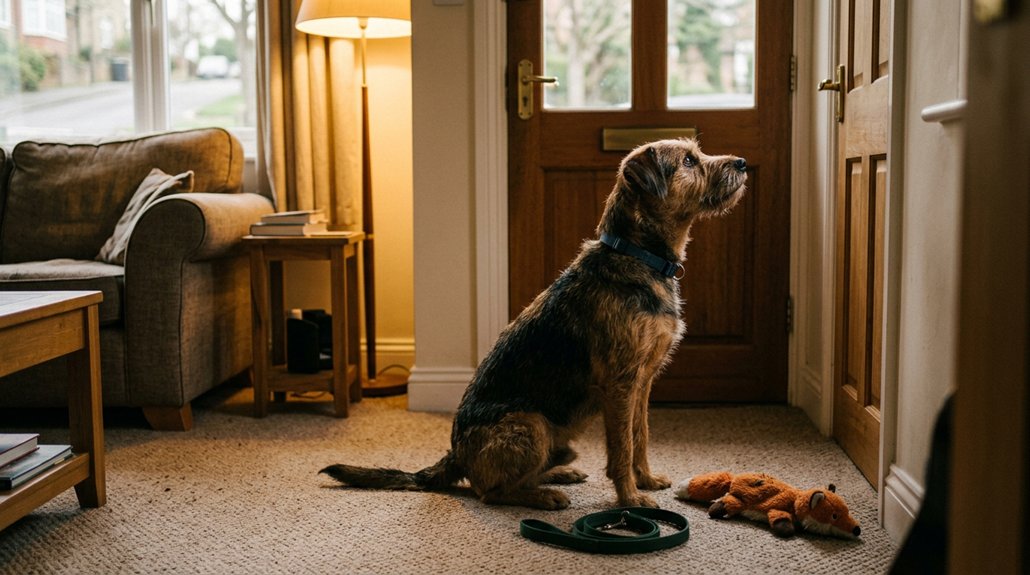
If your dog gets anxious when you leave, establish a calming environment with a designated safe space offering familiar comfort items and soothing scents like lavender. Maintain a consistent daily routine including feeding and exercise to reduce anxiety. Use engaging toys or puzzle feeders for mental stimulation. Practice low-key departures to prevent spikes in anxiety, and consider calming supplements. For severe cases, consult a vet or certified behaviorist. Discover additional strategies to foster your dog’s sense of security.
Key Takeaways
- Create a calming environment with a designated safe space, including comfortable bedding and familiar items.
- Use food puzzles or engaging toys to provide mental stimulation during your absence.
- Practice low-key departures and arrivals to minimize spikes in your dog’s anxiety.
- Incorporate calming scents and background noise to reduce feelings of loneliness in your dog.
- Consult a veterinarian or certified behaviorist for severe cases or if anxiety management is ineffective.
Immediate Steps to Soothe Your Anxious Dog
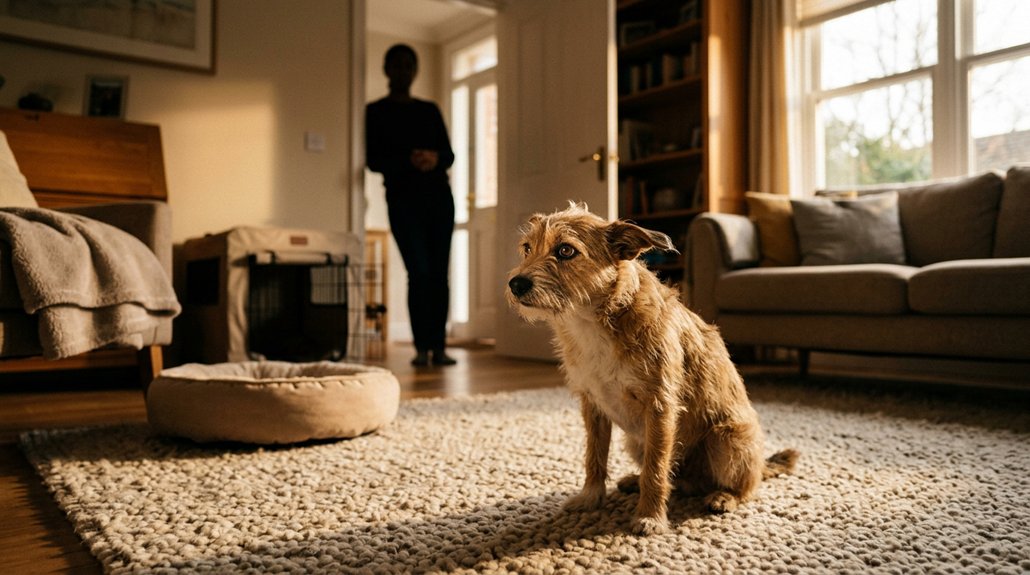
Anxious dogs often require immediate attention, and it’s essential to establish a calming environment to alleviate their stress. To provide dog comfort, create a safe space filled with familiar comfort items like blankets and toys. This space can serve as a sanctuary when anxiety signals arise. Incorporate engaging toys or food puzzles filled with high-value treats to divert attention from stressors and foster a positive association with solitude. Practice low-key departures and arrivals to prevent anxiety spikes associated with leaving. Additionally, gradually adjust your dog’s tolerance for alone time through short, stress-free absences. Consider using calming supplements or anxiety-reducing products like collars or sprays. These tools can effectively soothe your dog while you’re away, maintaining their emotional well-being.
Signs Your Dog Might Be Anxious
Although dogs often communicate their emotions through behavior, identifying signs of anxiety can be nuanced yet critical for a pet owner. One of the primary behavioral signs is excessive vocalization patterns. If your dog starts howling, barking, or whining soon after you leave, it may indicate separation anxiety. Destructive behaviors such as chewing on furniture or scratching at doors are also common indicators. Even if your dog is house trained, indoor accidents can occur as a stress response. Look for subtle signs like pacing, trembling, or excessive salivation, which often manifest when a dog feels anxious. Additionally, if your dog greets you with unusual excitement or hyperactivity upon your return, it could be a sign of significant separation-related stress.
Is Your Dog’s Anxiety a Health Issue?
Recognizing the potential symptoms of anxiety in your dog is just the beginning of effective management. It’s critical to determine if your dog’s anxiety is a health issue or merely a response to being alone. Begin with a vet consultation to rule out medical conditions, such as urinary tract infections or kidney disease, which can mimic anxiety symptoms like indoor toileting. Monitoring your dog with a camera while you’re away may disclose anxiety triggers not visible when you’re home. Consider that many dogs display no signs of distress in their owner’s presence, indicating separation anxiety as a possible issue. Differentiating these behaviors through professional evaluation is essential, ensuring medical concerns aren’t exacerbating your dog’s anxiety and guiding appropriate interventions.
Crafting a Calm Environment for Your Dog
Creating a calm environment for your dog begins with providing a designated safe space filled with comfortable bedding and personal items that offer a sense of security when you’re not around. Here are steps to reduce your dog’s anxiety:
Establish a cozy, secure space with familiar items to soothe your dog when you’re away.
- Calming Scents: Introduce calming scents such as lavender or specially-formulated pheromone products to soothe your dog’s nerves.
- Engaging Toys: Utilize engaging toys or puzzle feeders to keep your dog mentally occupied, providing distraction and mental stimulation.
- Consistent Routine: Establish a predictable schedule for feeding, walks, and playtime, which helps your dog understand what to expect daily.
- Background Noise: Leaving the radio or TV on at a low volume can create a comforting atmosphere, reducing feelings of loneliness.
Implementing these strategies can greatly enhance your dog’s relaxation in your absence.
How to Gradually Leave Your Dog Alone
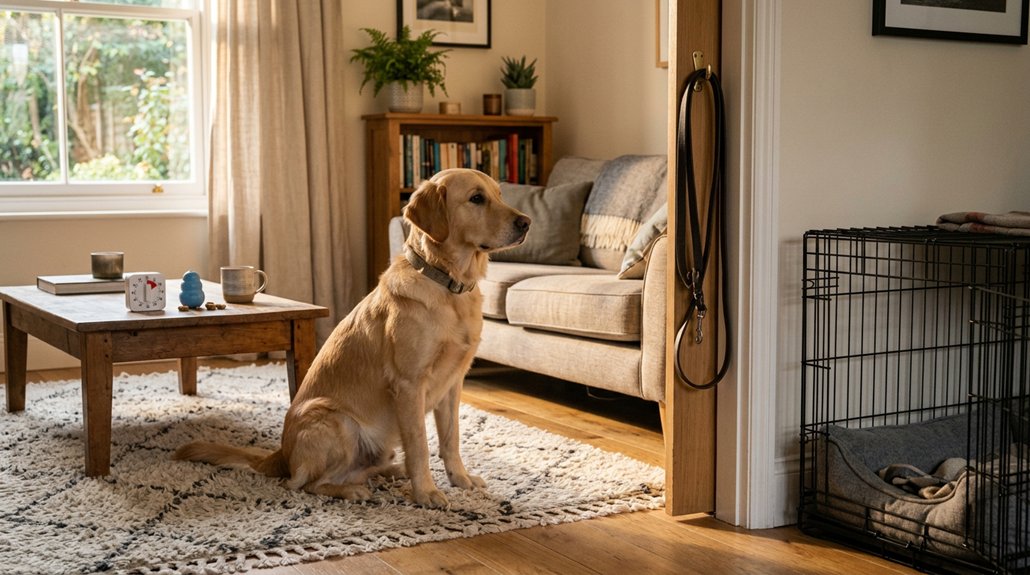
One effective strategy to help your dog adjust to being alone gradually involves practicing short separations. Start with brief intervals and slowly increase the duration over time. This separation training helps your dog become acclimated without triggering anxiety. Enhance this experience with calming techniques like positive reinforcement, offering treats or quiet toys on departure to foster a positive atmosphere. Maintain a consistent routine for your leaving and return, minimizing the emphasis on arrivals and departures to manage anxiety levels. Implement counterconditioning by providing a food puzzle or stuffed KONG to keep your dog engaged in your absence. It’s wise to monitor your dog’s reactions through a camera, allowing you to tailor your approach and enhance your dog’s comfort.
Toys to Ease Dog Anxiety
After establishing a routine to help your dog adjust to being alone, selecting the right toys can further ease their anxiety. Here’s how you can effectively use toys to support your dog’s mental health:
- Interactive toys: These, like puzzles or treat-dispensing toys, engage your dog’s mind and keep them occupied, reducing feelings of loneliness.
- Chew toys: Designed for heavy chewing, these provide both a comforting outlet and help prevent destructive behaviors.
- Scented toys: Toys infused with soothing scents offer relaxation and promote a sense of security while you’re away.
- Variety of toys: Having a diverse selection prevents boredom and encourages independent play, contributing to anxiety management during separation.
Choose the right combination to maintain your dog’s calm and contentment.
When to Seek Professional Help for Your Anxious Dog
When exactly should you seek professional help for your anxious dog? If your dog displays severe separation anxiety symptoms, such as destructive behavior or vocalizations lasting over 30 minutes post-departure, it’s important to obtain a behavioral assessment. This enables a professional to evaluate and design effective training options tailored to your dog’s needs. Persistent anxiety despite management efforts necessitates a veterinary consult to rule out medical issues exacerbating anxiety.
Look for signs of extreme stress, like excessive drooling or panting, or self-injury—these require immediate professional intervention. If your dog’s anxiety triggers remain unclear or response to desensitization is ineffective, guidance from a certified behaviorist or trainer is vital. Timely, professional assistance can greatly enhance both your dog’s and your quality of life.
Considering Medication for Severe Anxiety
If your dog struggles with severe anxiety, exploring medication as a treatment option may provide considerable relief. Prescription drugs such as Fluoxetine, Clomipramine, and Trazodone are available as medication options to help stabilize mood, making it easier to implement behavioral modifications.
- Consult a Veterinarian: Essential for selecting appropriate medication and evaluating your dog’s specific needs.
- Complement, Don’t Replace: Medications should enhance—not substitute—ongoing behavioral training efforts.
- Monitor Effectiveness: Regular evaluations may be necessary to adjust dosages or prescriptions, as effectiveness varies among dogs.
- Improve Quality of Life: Combining medication with therapy can considerably ease severe separation anxiety, contributing to a more manageable lifestyle.
Through careful consideration, you can help your dog manage anxiety more effectively.
Preventing Future Anxiety in Dogs
To prevent future anxiety in your dog, establish a consistent daily routine to provide structure and predictability, which is essential in reducing stress. Utilize positive reinforcement techniques to encourage desired behaviors, helping your dog associate alone time with positive outcomes. Additionally, create safe spaces for your dog to feel secure when left alone, thereby fostering a calming environment that reduces anxiety levels.
Establish Consistent Daily Routine
Establishing a consistent daily routine for your dog, though not a panacea, greatly aids in mitigating anxiety issues. Regular meal schedules and exercise routines foster predictability, thereby easing stress. With clear expectations, your dog understands the day’s flow, which can lower anxiety levels. Structured daily activities signal your return and prevent boredom, contributing positively to their emotional health. To effectively incorporate a routine:
- Meal schedules: Provide meals at the same time, creating consistency.
- Exercise routines: Engage in walks or play before departures, reinforcing your return.
- Mental stimulation: Include puzzle toys or challenges to keep them occupied.
- Gradual solo time: Increase alone time durations progressively to build resilience.
Implementing these strategies provides a foundation for a calm, confident dog.
Utilize Positive Reinforcement Techniques
While a consistent routine lays groundwork for your dog’s emotional stability, integrating positive reinforcement techniques further prevents anxiety. You can shape behavior by offering high-value treats or engaging toys as you depart, helping to offset anxiety triggers associated with being alone. This approach creates positive associations with solitude, gradually conditioning your dog’s response to your absence.
Implement a strategy of calm, low-key departures and returns to minimize excitement and potential anxiety. Through gradual desensitization exercises, practice short separations and reward your dog for remaining composed during these moments. This progressive exposure builds tolerance over time. Additionally, reinforcing calm behavior with positive rewards reassures your dog that solitude isn’t threatening, but rather an opportunity for comfort, aiding in reducing anxiety.
Create Safe Alone Spaces
A strategically crafted safe space can markedly alleviate your dog’s anxiety when alone. Designate a specific area of your home as this refuge. Here are some essential tips:
- Comfortable Essentials: Equip the space with your dog’s bed and toys. Use familiar scents to promote comfort when you’re not home.
- Calming Scents: Incorporate calming pheromone diffusers or sprays to create a tranquil environment, reducing potential stress.
- Gradual Introduction: Introduce your dog to this space through short and gradually increasing absences to foster security.
- Mental Stimulation: Include engaging toys or puzzle feeders to keep your dog occupied.
Ensure the area is devoid of excessive stimuli—visual or auditory. Curtains, white noise, or soft music can augment the calming atmosphere for your pet.
Frequently Asked Questions
How Do I Stop My Dog From Panicking When I Leave?
To stop your dog from panicking, use desensitization techniques by gradually increasing alone time. Introduce comfort items like favorite toys or blankets during absences. This professional approach can alleviate anxiety, promoting a calm environment for both you and your dog.
What Is the 3-3-3 Rule for Dog Anxiety?
The 3-3-3 rule helps you understand dog behavior and manage anxiety triggers in new environments. Dogs may initially show stress, but they gradually adapt, becoming more comfortable and confident over three days, three weeks, and three months.
How to Get Your Dog to Calm Down When You Leave?
“A stitch in time saves nine.” Use calming techniques like providing a safe space. Distract your dog with puzzle toys filled with treats before leaving. Gradually increase alone time to help them adjust and minimize anxiety.
Is It Cruel to Leave a Dog With Separation Anxiety?
Leaving a dog with separation anxiety can be seen as neglectful and stressful if not managed properly. Addressing dog behavior through desensitization and professional guidance guarantees emotional well-being, reducing perceptions of cruelty. Consult experts for tailored solutions.
Conclusion
Think of your dog’s anxiety like a cracked foundation—it needs attention before it worsens. Studies show that 20-40% of dogs experience anxiety when left alone, much like how a child might fear the dark. Address this need with patience and the right tools, as discussed, tailoring your approach to your dog’s unique needs. Consider professional guidance if needed. By doing so, you’re not just mending cracks; you’re building a stronger, happier bond.