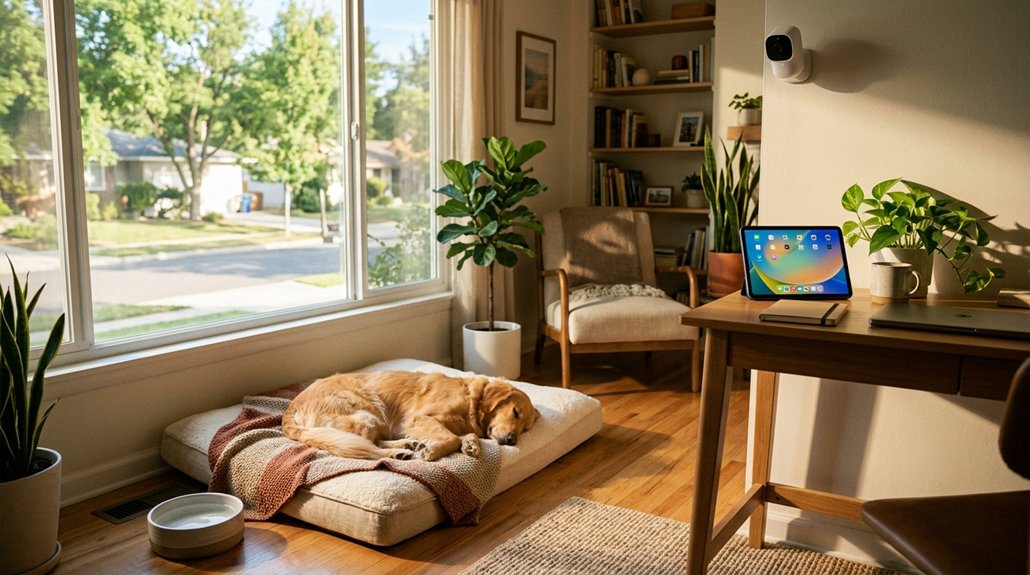
To guarantee your dog feels safe when home alone, understand their breed-specific energy and socialization needs. Create a secure space by removing hazards and providing familiar comforts like bedding and toys. A consistent routine with enriching activities can ease anxiety. Use interactive toys and food puzzles to keep them entertained. Watch for behavioral changes indicating distress and adjust the environment as needed. Explore further to discover how to effectively support your furry friend’s well-being.
Key Takeaways
- Provide interactive and food-stuffed toys to engage your dog’s mind and prevent boredom.
- Create a safe and familiar environment, removing hazards and ensuring access to water.
- Establish a consistent routine for feeding, walking, and alone time to reduce anxiety.
- Gradually increase alone time with positive reinforcement to help ease separation anxiety.
- Monitor your dog with cameras for distress signals to adapt strategies and ensure well-being.
Understand Your Dog’s Needs
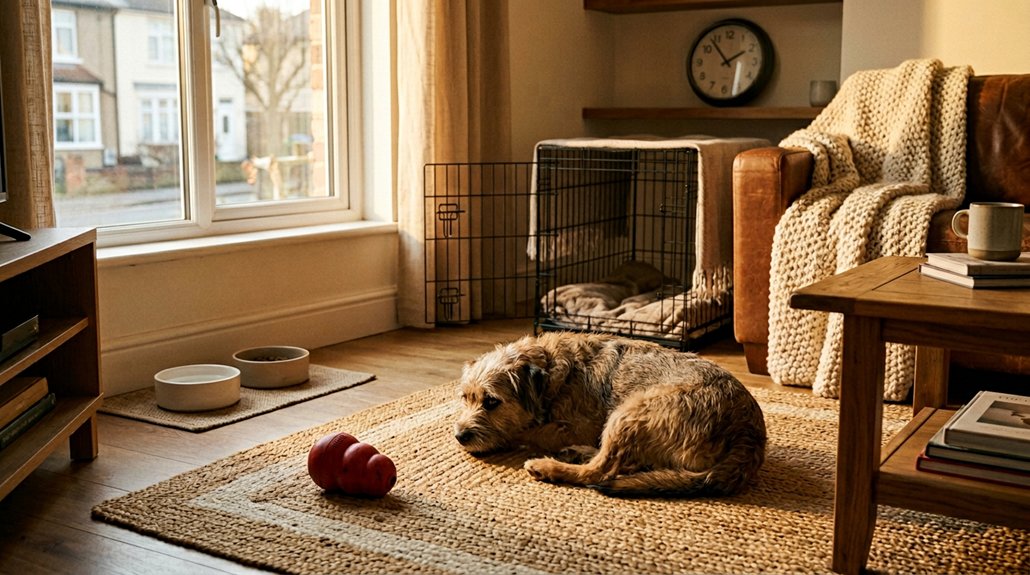
Grasping your dog’s unique needs is vital when they spend time home alone. Different dog breeds have distinct energy levels and socialization needs. You’ll want to take into account your specific dog’s requirements. High-energy breeds, like Border Collies, need more physical activity, while others, like Bulldogs, are content with less. Understanding these differences helps in ensuring your dog’s overall well-being and happiness. Regular bathroom breaks are important, especially if your dog is young or elderly. Watch for changes in behavior, such as lethargy or destructive tendencies, which may signal distress from isolation. Prioritize exercise before leaving, as it promotes calmness. Additionally, mentally stimulating toys can keep their minds engaged, preventing boredom and reducing the likelihood of destructive behavior.
Set Up a Safe and Predictable Environment
When preparing to leave your dog home alone, it’s crucial to set up a safe and predictable environment to guarantee their well-being and comfort. Start by creating a safe space, such as confining them to a single dog-friendly room. This helps prevent destructive behavior and guarantees their safety. Remove any hazardous objects and keep toxic substances, including harmful foods and plants, out of reach. Provide environmental enrichment with comforting items like familiar bedding and toys. Confirm they have access to fresh water. Background noise, like a radio or calming music, can create a soothing atmosphere to ease loneliness. Establishing a consistent routine for feeding, walking, and alone time offers predictability that lessens anxiety and enhances your dog’s overall security.
Help Your Dog With Separation Anxiety
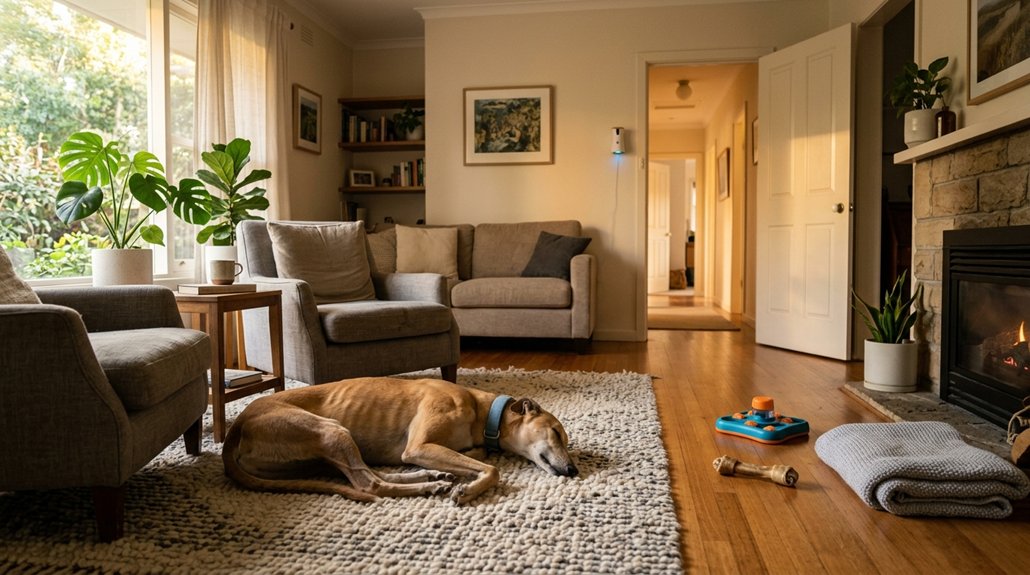
Setting up a safe and predictable environment is just one piece of the puzzle in ensuring your dog’s comfort while you’re away. To address separation anxiety, it’s essential to focus on targeted training techniques. Start by gradually exposing your dog to short absences, rewarding them with treats and praise for calm behavior. Positive reinforcement helps reframe their experience of being alone. Consider introducing food-stuffed toys, which provide a rewarding distraction during your time apart. Additionally, calming products such as anxiety wraps or pheromone diffusers can offer extra reassurance. Monitoring your dog with cameras allows you to spot signs of distress, making it easier to adjust your approach as needed. This thorough strategy will help mitigate anxiety and improve your dog’s well-being.
Solo Play Ideas to Keep Your Dog Busy
While ensuring your dog’s mental engagement, you’ll find that incorporating solo play activities can make their alone time far more enjoyable. Start with interactive toys, such as those that dispense treats, to motivate your dog to work for their snacks. This not only staves off boredom but also encourages healthy play habits. Food-stuffed toys, like KONGs filled with high-value treats, can keep your dog engaged and mentally stimulated. Offering food puzzles that require problem-solving presents additional challenges, keeping your pet occupied for longer periods. Rotate a selection of special toys that are only available during alone time to maintain excitement. Additionally, leaving the TV or radio on provides comforting background noise, helping to alleviate any feelings of loneliness your furry friend might experience.
Hire Pet Care Services for Support
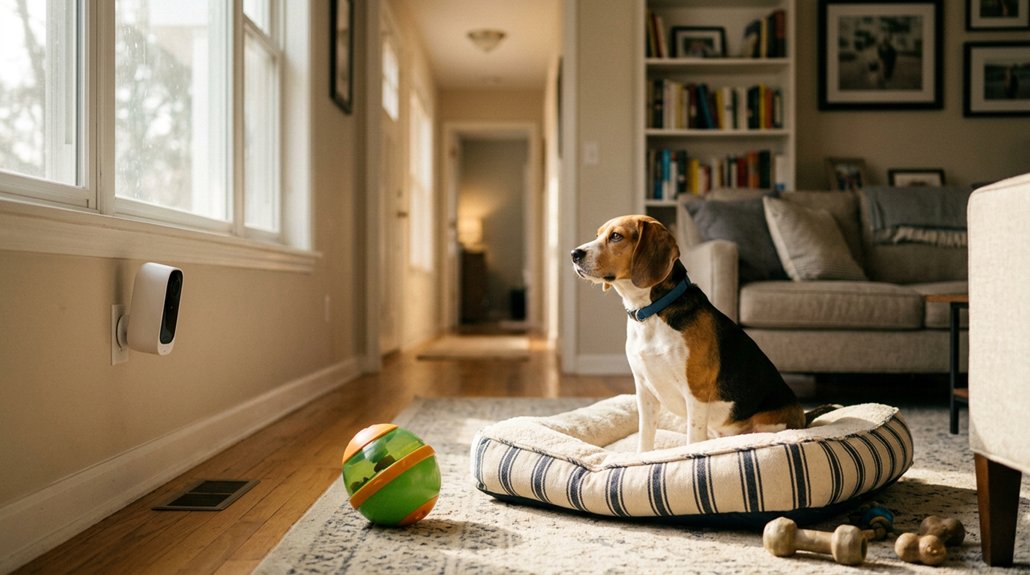
Beyond enriching solo play activities, you might consider enlisting the help of professional pet care services to further support your dog’s well-being when left alone. A dog walker provides scheduled outdoor exercise, reducing loneliness and anxiety by offering companionship and interaction. Pet sitters provide consistent supervision, maintaining your dog’s routine and lessening stress from any changes.
- Dog Walkers: Guarantee your dog gets regular outdoor exercise and interaction.
- Doggy Daycare: Provides mental stimulation and socialization with other pups.
- Pet Sitters: Keep your dog’s routine consistent with personalized care.
- Interactive Pet Cameras: Offer real-time monitoring and communication to ease separation.
These services not only enhance happiness but can address behavioral issues, fostering a stable environment for a happier, healthier dog.
Monitor and Adapt to Your Dog’s Needs
When your dog is home alone, it’s crucial to keep an eye out for any behavioral changes, like excessive barking or destructiveness, as these can indicate stress. Tailor your pet’s daily routine by gradually adjusting the length of alone time and making certain their environment is comforting and stimulating. Regularly reassess and adapt their surroundings, using tools like video monitoring and interactive toys, to guarantee they’re happy and well-adjusted.
Observe Behavioral Changes
As you navigate the challenges of leaving your dog home alone, it’s vital to observe behavioral changes that could indicate stress or anxiety. Monitoring for stress signals such as excessive barking or destructive behaviors is fundamental in understanding your dog’s behavioral patterns. Tools like video monitoring can help identify subtle signs of anxiety when you’re not around.
- Excessive barking or whining: Common indicators of stress.
- Destructive behaviors: Chewing or scratching at furniture may suggest anxiety.
- Lethargy or disinterest: A sudden lack of interest in play can indicate emotional distress.
- Unusual pacing: Often a sign of discomfort or unease.
Consult with a veterinarian if you notice significant changes, as they may necessitate expert care or adjustments to your dog’s routine.
Tailor Routine Accordingly
Recognize that understanding your dog’s individual needs is essential in creating a tailored routine for when they’re home alone. Monitor their behavior for signs of distress, such as excessive barking or destructive actions, to guide necessary adjustments. Guarantee schedule flexibility to balance your dog’s age and physical capabilities by varying alone time and incorporating more frequent breaks for the young and elderly. Establish a routine that includes exercise, feeding, and enrichment activities like engaging toys or soothing background noise, promoting comfort and security. Start with short periods alone, gradually extending them to build resilience. With consistent attention, you’ll foster an environment that minimizes anxiety and nurtures well-being, guaranteeing your dog remains content and reassured during your absences.
Adjust Environment Regularly
Crafting a routine tailored to your dog’s needs is just the beginning; you must also remain vigilant and adaptable to their environment to guarantee ongoing comfort and security. Regularly assess the living space for cleanliness and safety, ensuring your dog isn’t tempted by items that promote destructive behavior. Environmental enrichment is key; if signs of boredom or stress arise, adjust their space by rotating toys and introducing new mental stimulation. Designate areas for comfort, utilizing spatial organization to cluster familiar items like their bed and toys. Observe your dog’s behavior closely and modify their environment to soothe anxiety effectively.
- Rotate toys to keep your dog engaged.
- Create safe zones with cozy, familiar items.
- Monitor stress signs like pacing or trembling.
- Maintain consistent routines for feeding and play.
Frequently Asked Questions
What Is the 3-3-3 Rule With Dogs?
The 3-3-3 rule helps you understand a dog’s adjustment: three days for relaxation, three weeks to feel at home, and three months to fully acclimate. Focus on separation anxiety and training techniques to ease this change.
How Do I Help My Dog Cope With Being Home Alone?
You’re worried separation anxiety might persist, but establishing comforting routines can make all the difference. Gradually increase alone time, provide engaging toys, and use soothing background noise to create a calming environment for your dog.
How Do I Make My Dog Stay Home Alone?
To make your dog stay home alone, focus on dog training techniques that gradually build their comfort with solitude. Use separation anxiety solutions, like providing engaging toys and comforting spaces, ensuring your dog feels safe and relaxed during your absence.
Is It Okay if I Leave My Dog Home Alone for 8 Hours and 5 Days a Week?
It’s usually not ideal to leave your dog alone for 8 hours, 5 days a week. A neighbor’s dog developed separation anxiety after such routine, highlighting the importance of recognizing appropriate alone time and ensuring proper care.
Conclusion
Leaving your dog home alone doesn’t have to be a stress-filled experience. Did you know that nearly 20% of dogs suffer from some form of separation anxiety? Understanding your pup’s needs and setting up a safe environment can greatly ease their stress. Engaging them with solo play activities, or enlisting help from pet care services, can keep them entertained. Always monitor your dog’s behavior and adapt your strategies. With time and patience, both you and your dog can thrive.