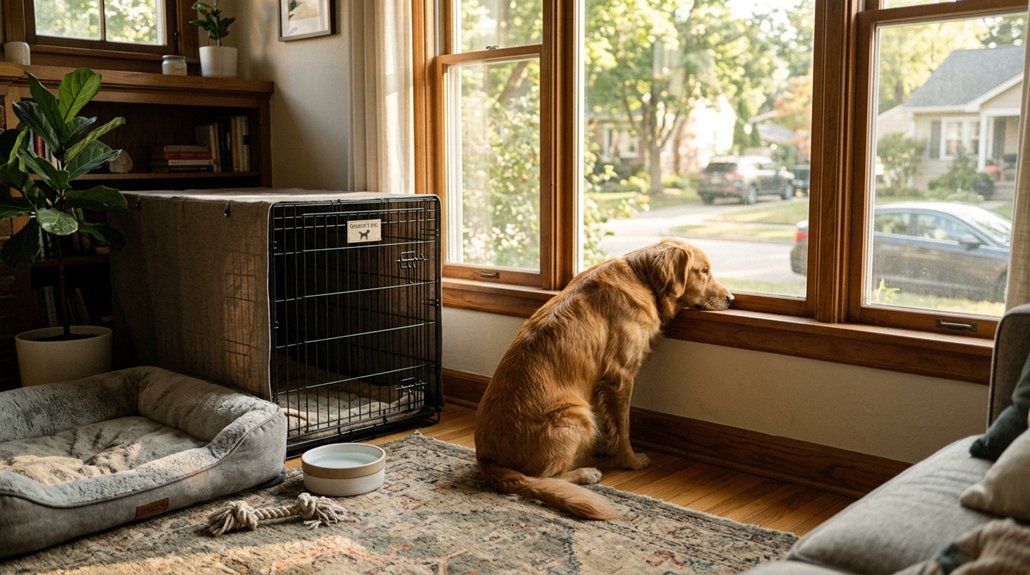
To leave your dog home alone without stress, establish a consistent routine and identify anxiety triggers. Create a safe, cozy space with a comfy bed, toys, and familiar scents. Engage them with interactive toys and play calming sounds like classical music. Make sure they’ve exercised, had a potty break, and have fresh water. Gradually extend your time away, rewarding calm behavior. Implement these strategies and discover how to transform alone time into a positive experience.
Key Takeaways
- Establish a consistent routine for departing and returning to reduce anxiety.
- Create a safe, comfortable environment with familiar items and hazard-free spaces.
- Engage your dog with interactive toys and activities during alone time.
- Implement calming techniques using soothing audio and positive reinforcement.
- Ensure exercise, a potty break, and fresh water access before leaving.
Setting Up a Comfortable Leave Alone Strategy
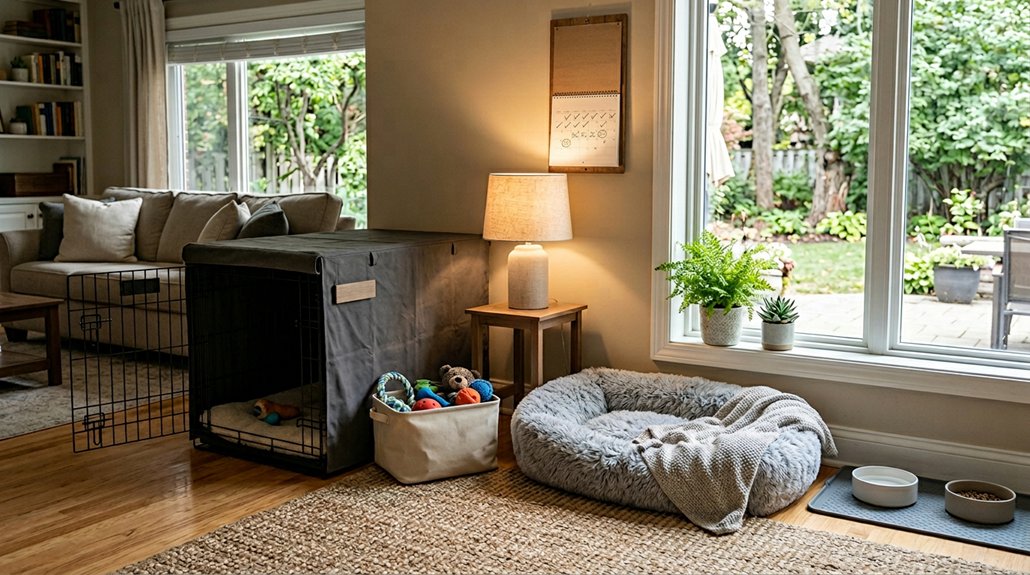
When preparing to leave your dog home alone, it’s vital to establish a comfortable leave-alone strategy that prioritizes their well-being and peace of mind. Dog anxiety can be minimized by creating a safe environment tailored to your pet’s needs. Start by implementing a consistent routine for departures and returns, which provides stability and reduces stress. Gradually increase the duration of solitude, beginning with short periods, so your dog associates being alone with positive experiences. Engage them with mentally stimulating toys like treat puzzles that occupy their mind and alleviate boredom. Additionally, using background noise from a TV or radio can foster a soothing atmosphere, providing auditory comfort. These steps are important for ensuring your furry friend feels secure and relaxed during your absence.
Creating a Safe and Cozy Space
In ensuring your dog feels secure during their alone time, creating a safe and cozy space at home is key. Designate a safe haven that offers familiar surroundings to comfort your furry friend. Here’s how:
- Comfort and Familiarity: Use a comfortable dog bed, familiar toys, and your personal clothing items to provide reassurance and a sense of connection.
- Hazard-Free Zone: Remove any toxic substances or chewable items to prevent potential harm. Your dog should explore its area without risk.
- Stimulation and Comfort: Position the safe space near a window for natural light and outdoor views. Add background noises like a TV or radio to create a soothing ambiance.
Keep Your Dog Engaged With Toys
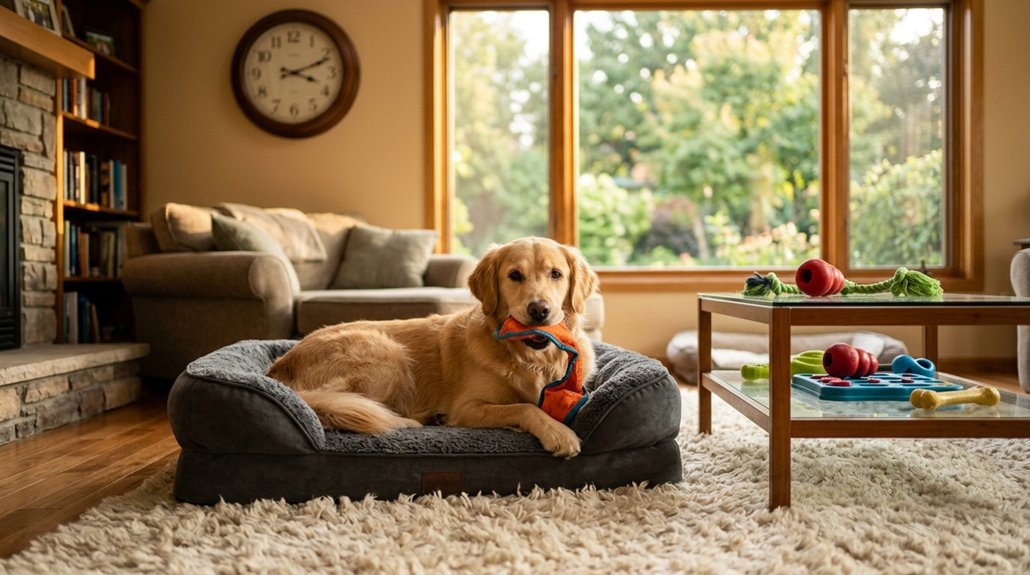
Keeping your dog engaged with toys is an excellent way to alleviate boredom and stimulate their mind while you’re away. Interactive toys like food-stuffed Kongs and treat puzzles can keep your dog’s attention by offering a rewarding challenge. These toys require effort and strategy, making your dog work for the treats inside. Implement a game of hide and seek by stashing favorite toys around the house. This taps into your dog’s natural instincts and keeps them busy. To maintain interest, practice toy rotation; swapping toys regularly guarantees they remain novel and exciting. Consider providing a ‘special’ toy that’s only available during alone time. This creates positive associations and excitement, reducing anxiety and preventing monotony in your absence.
Using Calming Sounds
Beyond engaging toys, calming sounds can also play an essential role in ensuring your dog remains relaxed while home alone. The right music selection is key; classical tunes are well-known for soothing anxious pups. Here’s how you can make the most of calming sounds:
Calming sounds, like classical music, help soothe anxious dogs when they’re home alone.
- Experiment: Try various audio types—classical music, white noise, or nature sounds—to discover what your dog finds most comforting.
- Simulate Presence: Playing a TV or radio softly mimics human company, reducing anxiety-induced behaviors like barking or chewing.
- Consistency Matters: For maximum benefits, play these sounds during both departures and returns to maintain a reassuring routine.
Establishing a Consistent Routine
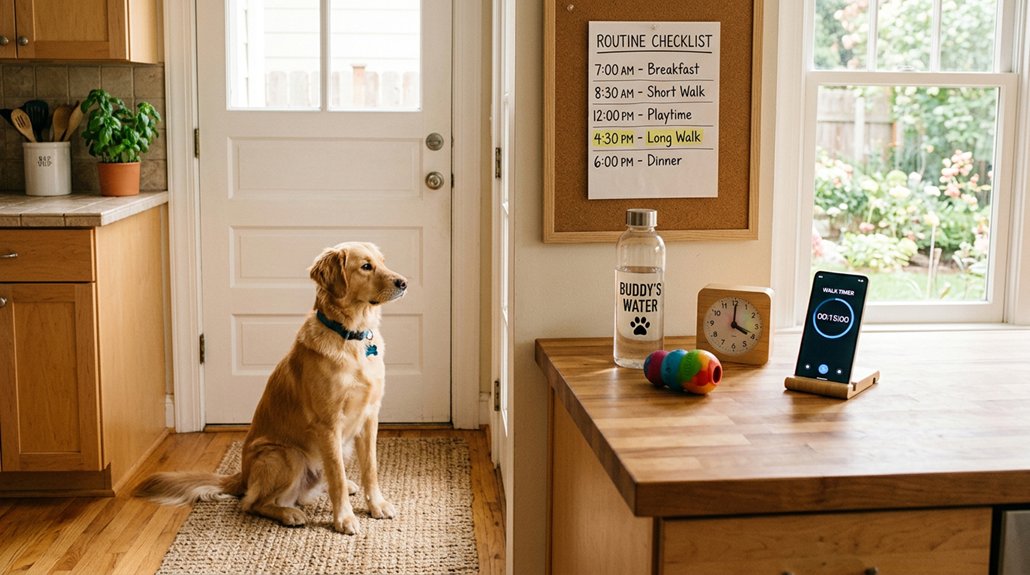
While leaving your dog home alone, establishing a consistent routine can greatly enhance their sense of security and reduce anxiety. The routine benefits your dog by creating predictable patterns that reassure them. Always follow a consistent schedule for leaving and returning home, so your dog knows when to expect you. Start with a low-key farewell routine to prevent departure anxiety. Incorporate pre-departure activities like exercise or feeding, which help relax them before you leave. Make certain your dog’s potty break schedule is regular, allowing them to relieve themselves before and after your absence. Schedule consistency in these activities provides emotional stability and reduces stress-related behaviors, making your absences less distressing for your furry friend. Establishing these habits is vital for your dog’s well-being.
Gradually Extend Alone Time
- Monitor your dog’s behavior during each short absence to detect any signs of anxiety.
- Adjust your times based on their reactions, ensuring they’re settling well.
- Reward and praise your dog upon your return to create positive associations.
This method builds confidence and can typically be implemented within a few days, setting a solid foundation for longer solo adventures.
Effectively Manage Separation Anxiety
Given the prevalence of separation anxiety in dogs, characterized by behaviors like pacing or destructive actions, it’s crucial to approach this issue with well-informed strategies. Begin with separation training by gradually extending your dog’s alone time. Start with five-minute intervals, progressively increasing as they show comfort. This slow build fosters confidence in solitude. In anxiety management, consistency is key. Develop a predictable routine with regular departure and arrival times to mitigate fear. Employ positive reinforcement; reward calm behavior when you leave or return, reinforcing their capacity to be alone without stress. Leverage online resources like training videos and supportive pet owner communities to refine your strategies. These steps will notably ease your dog’s adjustment, ensuring a peaceful home environment.
Identifying Your Dog’s Alone Time Triggers
To effectively identify your dog’s alone time triggers, start by recognizing signs of anxiety such as destructive behavior or excessive barking. Pay attention to more subtle cues like pacing or whining, which can indicate your dog’s discomfort when separated from you. Understanding your dog’s emotional needs allows you to tailor a plan that gradually builds their comfort with being alone, fostering a secure and predictable environment.
Recognizing Anxiety Indicators
Many dogs exhibit anxiety-related behaviors when left alone, making it critical for owners to recognize the signs of distress and understand their pet’s alone time triggers. Pay attention to:
- Body Language: Subtle stress signals like pacing, trembling, or excessive yawning can indicate anxiety. Look for behavioral changes even when your dog seems outwardly calm.
- Destructive Behavior: Chewing furniture, unwanted toileting, or excessive howling might signal separation anxiety. Video monitoring can help catch these actions when you’re not home.
- Coping Mechanisms: Provide comfort objects or visual distractions to help ease anxiety. Relaxation techniques can also include creating a soothing environment, perhaps with calming music.
Identifying these anxiety triggers allows you to implement effective coping strategies and guarantee a stress-free alone time for your dog.
Understanding Emotional Needs
While every dog has unique emotional needs, understanding their alone time triggers is essential for ensuring their well-being. Dogs show behavioral cues like destruction, excessive barking, or attempting to escape, signaling potential separation anxiety. Recognize these as cries for emotional support. It’s important to evaluate your dog’s energy level and breed-specific requirements, as highly active breeds might handle solitude poorly.
To build resilience, gradually extend periods of alone time paired with positive experiences. Monitor initial alone sessions to pinpoint specific triggers, adjusting your approach based on observed comfort levels. Create a calming environment with familiar items and stick to routines. This comforting structure not only offers security but alleviates stress, fostering confidence for your dog when home alone.
Plan Exercise and Pit Stops Before Leaving
Before you leave your dog home alone, it’s crucial to plan a routine that integrates both exercise and necessary pit stops. Establishing a consistent potty schedule not only meets their physical needs but also fosters security, reducing anxiety during your absence. An effective exercise plan should include a 30-minute walk to expend energy and calm nerves. Keep in mind:
- Tailored Routine: Consider your dog’s age, breed, and build when determining exercise intensity and frequency of breaks.
- Pre-Departure Pit Stops: Schedule a potty break immediately before you leave to prevent accidents and discomfort.
- Hydration Essentials: Make certain your dog has access to fresh water, especially if gone for several hours.
Rewarding Calm Behavior to Combat Stress
When leaving your dog home alone, employing positive reinforcement techniques can markedly ease their stress. Start by rewarding calm behavior with treats and praise during your departures and arrivals, gradually increasing your absences as your dog becomes more comfortable. Incorporate long-lasting treats or food-stuffed toys to create a positive association with being alone, ensuring you return to a relaxed and happy pet.
Positive Reinforcement Techniques
One effective way to ease your dog’s anxiety when they are home alone is through positive reinforcement techniques. Build a robust reward system to forge positive associations with your absence. Consider these steps:
- Incremental Absences: Begin with short departures, gradually extending the time you’re gone. As your dog remains calm, reward them with treats or praise upon your return; this strengthens their confidence being alone.
- Engaging Distractions: Before leaving, offer long-lasting treats or food-stuffed toys. These distractions keep them engaged and develop calm associations with your absence.
- Immediate Acknowledgment: Upon your return, promptly reward your dog’s relaxed demeanor. This reinforces the notion that alone time leads to positive outcomes.
Regularly observe your dog’s comfort level, ensuring progression only when they appear at ease.
Calmness-Encouraging Rewards
Encouraging calmness in your dog through rewards is a strategic way to combat stress during your absences. Utilize calm rewards like treats or praise when your dog remains relaxed at your departures and arrivals. This approach relies on building positive associations, making solitude a rewarding experience. Gradually increase their alone time while providing a long-lasting treat if they stay composed. Use interactive toys or food puzzles as rewards, offering mental stimulation that fills their time alone with engaging activities. Make certain your departures and arrivals are low-key to minimize anxiety. A video monitor can help you track their behavior and offer calm rewards for maintaining composure during your absence. This promotes a secure environment and encourages future calm behavior.
Stress-Reduction Training Methods
Building a stress-free environment for your dog hinges on implementing effective stress-reduction training methods. These methods utilize desensitization techniques to help your pet manage being alone. Gradually increase the time your dog spends by themselves, starting with short periods and rewarding their calm behavior with high-value treats. This approach fosters emotional reassurance and reduces anxiety.
Here’s how to proceed:
- Use Rewards: Offer favorite toys or treats when your dog stays relaxed in your absence, building a positive link to solitude.
- Maintain Consistency: Consistently reinforce calmness every time you leave or return, so your dog understands departures are temporary.
- Monitor Progress: Adjust durations based on your dog’s comfort level, steadily increasing alone time only when they show consistent calmness.
This strategy guarantees a confident, stress-reduced environment.
Frequently Asked Questions
How to Ease Separation Anxiety in Dogs?
Ease your dog’s separation anxiety by using desensitization techniques. Gradually increase their alone time, offering comfort items like favorite toys and a cozy bed. Implement positive reinforcement strategies, and guarantee their environment provides mental stimulation through food-stuffed toys.
What Is the 3-3-3 Rule With Dogs?
The 3-3-3 method outlines three adjustment phases for dogs: the first three days of stress, the next three weeks of settling in, and three months for full puppy adjustment, emphasizing patience and support for successful acclimation.
How to Calm a Dog’s Nervous System?
Imagine your dog’s anxiety melting away. To calm their nervous system, employ calming techniques and relaxation exercises. Create safe spaces, use soothing sounds, engage their minds with puzzles, and consult a vet for expert guidance.
How to Leave a Dog Home Alone While at Work?
Make certain you’ve dog-proofed your home thoroughly. Provide engaging toys like treat-dispensing puzzles. Gradually increase their alone time and schedule a midday dog walker visit. Create a comforting space for them to feel secure during your absence.
Conclusion
So, you’ve crafted the ultimate canine relaxation zen den, equipped with toys, calming sounds, and even a last-minute belly rub ritual. And yet, Fido just won’t stop composing sonnets of despair while you’re away. Perhaps your pooch’s truly talented, or maybe it’s time for a bit more training. Remember, in the epic saga of leaving your dog alone, consistency is king, and you’re merely the humble royal emissary armed with treats and a schedule.