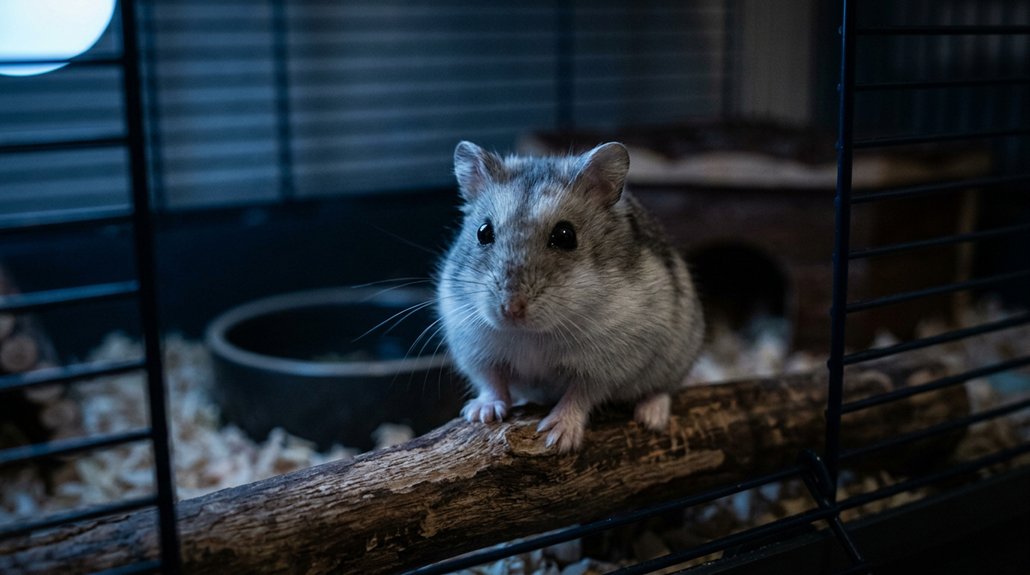
Your hamster’s nighttime activity stems from its natural crepuscular habits, making it most active during twilight hours and occasionally displaying nocturnal tendencies. This behavior aligns with their survival instincts to forage and play safely. Ensuring a dark, quiet environment supports their health and well-being. Respecting your hamster’s sleep and activity patterns strengthens the bond you share. Continue to unpack these insights to create a supportive environment that caters to their natural rhythms, promoting happiness and vigor.
Key Takeaways
- Hamsters are crepuscular, meaning they’re naturally active during twilight hours to evade predators and fulfill instinctual behaviors.
- Nighttime activity allows hamsters to engage in essential behaviors like foraging, exploration, and playful interactions, vital for their health.
- Maintaining a dark, quiet environment during nighttime hours supports their active periods and reduces stress from sleep disturbances.
- Monitoring your hamster’s nocturnal activities can provide insights into their health and wellness, ensuring they’re alert and participating in natural behaviors.
- Understanding and respecting your hamster’s night patterns strengthens the bond and aligns with their instinctual need for active exploration.
Why Hamsters Are Active at Night
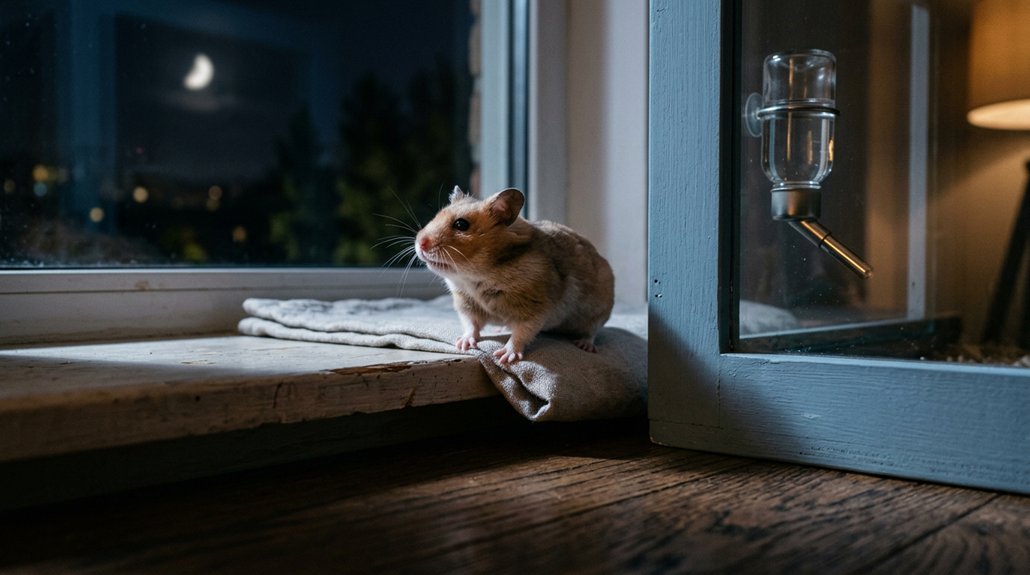
While it may seem mysterious why your hamster is most active during the night, it’s actually rooted in their natural crepuscular habits. Unlike typical nocturnal animals, hamsters thrive during the twilight hours of dawn and dusk. You’ll notice their crepuscular activity peaks between 7 PM and 2 AM. This guarantees they evade predators in the wild while optimizing their energy use. During the day, hamsters’ nocturnal instincts guide them to enter deep sleep, often lasting 12 to 14 hours. Short awakenings are common for urgent needs like eating and drinking—they recharge for evening adventures. Recognizing these rhythms helps you design a supportive environment that aligns with their biological clock, guiding your interaction and care for vibrant, healthy companionship.
Understanding Crepuscular vs. Nocturnal Behavior
When caring for your hamster, it’s important to understand the difference between crepuscular and nocturnal behaviors. Most hamsters are crepuscular, tending to be most active during twilight, but they may also exhibit nocturnal tendencies, staying awake well into the night. Recognizing these patterns can help you provide a suitable environment that aligns with their natural rhythms, fostering better health and bonding opportunities.
Crepuscular Activity Explained
Crepuscular activity is an integral part of a hamster’s life, distinguishing it from the nocturnal patterns often attributed to these small creatures. Your hamster’s crepuscular behavior means it’s most active during twilight hours, particularly between 7 PM and 2 AM, aligning with its natural activity patterns. This understanding helps explain why your hamster seems to wake up as you wind down for the evening. In quiet environments, some hamsters might extend their activity into the night, appearing to adopt more nocturnal tendencies. However, their routine of polyphasic sleep—with intermittent napping throughout day and night—remains consistent. Supporting your hamster’s crepuscular lifestyle by observing its schedule guarantees a harmonious environment, contributing to its overall well-being and contentment.
Nocturnal Behavior Insights
Ever wondered why your hamster doesn’t fit neatly into the nocturnal category as often presumed? Your furry friend’s most active moments transpire during twilight activity. Understanding this crepuscular nature reveals that your hamster’s instincts drive them to be active from 7 PM to 2 AM, times aligning more with dawn and dusk rather than midnight escapades. This twilight activity fulfills their natural propensity to forage and play when predators are less likely to threaten.
While you might notice brief daytime actions like snacking or drinking, these aren’t indicative of full wakefulness. Individual hamsters exhibit unique activity rhythms, with some responding to quieter night hours as a safe base for their explorations. Recognizing these patterns is essential for attending to their well-being and comfort.
Setting Up a Nighttime Hamster Environment
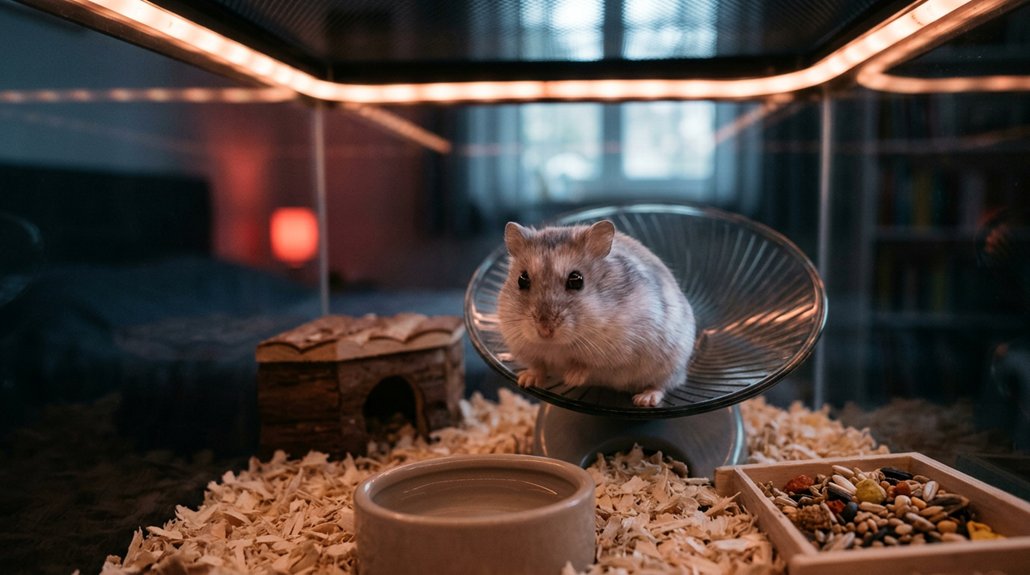
To guarantee your hamster thrives during its nocturnal activity, it is crucial to establish an ideal nighttime ambiance. Providing cozy nesting materials simulates their natural habitat and supports their instinctual nesting behaviors. Additionally, controlling light and noise in their environment helps align with their crepuscular nature, enhancing their health and comfort.
Ideal Nighttime Ambiance
How can you guarantee your hamster enjoys a peaceful and suitable environment at night? Begin by crafting an ideal ambiance within their hamster habitats. Focus on establishing nighttime routines that consider your hamster’s natural crepuscular behavior. Ensuring the space remains dark and quiet during their active hours supports their comfort and encourages exploration.
Incorporate cozy nesting materials to enhance both comfort and instinctual activities such as burrowing. This arrangement enriches their natural behavior and creates a secure environment. Providing natural light during the day is essential to regulate their circadian rhythm, but maintain low light levels at night to promote a restful atmosphere.
Lastly, keep the temperature stable between 20-22°C (68-72°F) to support your hamster’s comfort and sleep quality.
Light and Noise Control
Achieving the perfect nighttime ambiance involves fine-tuning light and noise control within your hamster’s environment. Employing light adjustment techniques is crucial to align with your hamster’s natural circadian rhythm. Keep light levels low or entirely off during nighttime to prevent stress-inducing startles. Daylight exposure should mimic natural patterns, promoting active phases around twilight. Equally important are noise reduction methods. A serene, quiet environment guarantees your hamster’s daytime rest isn’t disrupted, facilitating healthy 12 to 14-hour sleep cycles. Simple actions like guaranteeing doors are gently closed and keeping loud devices away can foster a peaceful habitat. Remember, a stable temperature between 20-22°C complements these practices, enriching your hamster’s well-being by enhancing their overall comfort and rest quality.
Cozy Nesting Materials
Creating a harmonious nighttime environment for your hamster involves providing cozy nesting materials that mimic its natural habitat. Understanding your hamster’s nesting preferences is vital. Offer material types like shredded paper, hay, and soft fabrics to create a comfortable and secure sleeping area. Choose unscented, non-toxic bedding to prevent respiratory issues, ensuring that the nesting area remains safe and healthy. Regularly refresh these materials to maintain hygiene and encourage your hamster to engage in natural behaviors. Enclosed spaces made from natural materials enhance their sense of security at night. Providing an appropriately sized nest not only reduces stress but also encourages instinctive nesting behaviors. This careful setup will enhance your hamster’s overall well-being and help them feel content.
Why Being Active at Night Is Healthy for Your Hamster
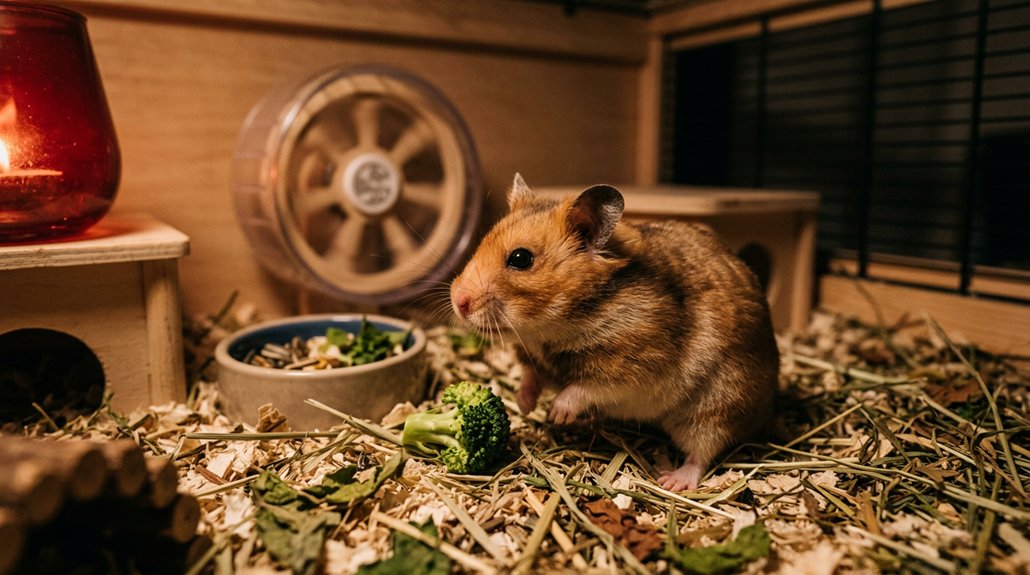
Understanding your hamster’s nocturnal activity is vital, as being active at night is fundamental to their health and well-being. Hamsters are naturally crepuscular, so their nighttime enrichment through playful interactions mirrors their instinctual behaviors. These activities allow them to forage and explore during twilight hours, important for their physical and mental health. Their sleep patterns, consisting of 12 to 14 hours of polyphasic sleep, guarantee they have the energy for active nights. By supporting their natural routines, your hamster will awake alert and groom themselves, which signals good health and well-being. Respecting these active hours not only enhances your pet’s life but also strengthens your bond, fostering a stress-free environment and improving their overall quality of life.
Should You Worry About Daytime Sleep?
Should you be concerned if your hamster snoozes away during the daylight hours? Generally, there’s no need to worry. Hamsters naturally follow a polyphasic sleep pattern, catching multiple short naps totaling 12 to 14 hours daily. Daytime behavior shows normal health indicators, such as:
Hamsters’ polyphasic sleeping includes multiple daytime naps, which is normal and typically no cause for concern.
- Periodic Daytime Activity: Brief acts like eating or nest rearrangement are normal and healthy.
- Regular Sleep Patterns: Consistency in sleeping through the day highlights typical behavior and suggests good health.
- Alertness During Waking Hours: A hamster that’s alert and active during its waking times is a positive sign.
- Changes in Sleep Patterns: Sudden shifts in daytime sleep could signal stress or illness, so observe any significant changes closely.
Monitoring these patterns helps guarantee your hamster’s wellness.
How to Respect Their Sleep Cycle
Many people may not realize that respecting a hamster’s sleep cycle is essential for its overall well-being. Hamsters are crepuscular, aligning their activity with twilight hours when natural instincts guide them. Sleep disturbances, like loud noises or bright lights, disrupt their rest and lead to stress or health problems. Create a serene environment during the day by keeping their habitat quiet and maintaining a stable temperature of 20-22°C.
During their active hours, between 7 PM and 2 AM, engage with your hamster, fostering a stronger bond without intruding on their rest. Spend this time using treats to establish a positive connection without interfering with their sleep cycles. This approach supports their natural instincts and contributes to their overall health and happiness.
Recognizing Normal Hamster Sleep Patterns
How can you tell if your hamster’s sleep patterns are normal? First, consider their sleep duration; domestic hamsters generally sleep for 12 to 14 hours daily in polyphasic bursts. This means they take multiple naps throughout the day and night. Next, observe their activity levels. Hamsters are crepuscular, so they’re most active during dawn and dusk. Healthy hamsters typically wake up alert, groom themselves, and return to sleep calmly. Look out for signs of disturbances, as stress from irregular sleep can impact their health. Here’s how you can recognize normal patterns:
- Sleep Duration: Consistent 12-14 hours total.
- Activity Levels: Peaks during dawn and dusk.
- Grooming: Post-waking activity maintains health.
- Calmness: Peaceful returns to sleep indicate normalcy.
How to Bond Without Interrupting Sleep
Having understood normal sleep patterns, it’s important to engage with your hamster without disturbing their rest. Focus on bonding activities during their active hours, usually 7 PM to 10 PM. This aligns with their natural behavior, fostering positive interactions. Treat interactions can be particularly effective—offering small treats when they’re awake helps associate you with pleasant experiences. Observe their individual routines to tailor an approach that respects their preferences. It’s essential to maintain a quiet environment during the day, supporting their need for uninterrupted rest, which is vital for their well-being. Consider tweaking your own schedule, if possible, to coincide with their active times. This effort promotes a stronger bond, enhancing your relationship while ensuring they thrive stress-free.
Handling Challenges With Hamster Sleep
Addressing challenges with hamster sleep can be essential for maintaining their health and well-being. Sleep disturbances may lead to stress and contribute to aggression or mood swings. To minimize these challenges, follow these guidelines:
- Respect their crepuscular nature: Encourage bonding techniques during their active twilight hours, usually from 7 PM to 2 AM.
- Avoid waking them up: Disturbing their rest can result in behavioral issues such as anxiety; interaction should align with their natural cycles.
- Create a suitable environment: Confirm their habitat is quiet and comfortable during daylight for uninterrupted napping.
- Monitor health: Chronic sleep disturbances can impair their immune system, so visit a vet if you notice signs of illness or stress.
Properly managing their sleep enhances your bond while nurturing their well-being.
Frequently Asked Questions
Why Are Hamsters Always Awake at Night?
Hamsters exhibit nocturnal behavior due to their adaptations for survival and foraging. Their sleep patterns align with dawn and dusk activity, staying awake at night to avoid predators, explore, and fulfill natural needs. You’re respecting their cycle by understanding this.
What Are End of Life Signs in Hamsters?
In life’s twilight, your hamster’s behavior whispers health indicators. Imagine a tiny lantern dimming: it might sleep more, eat less, or breathe heavily. These signs, much like autumn leaves falling, signal a gentle farewell approaching.
Does a Hamster Know Its Owner?
Yes, your hamster can recognize you through scents and sounds, strengthening the owner bond over time. Patient interaction and understanding its behavior are key to fostering trust, ensuring a happy and well-adjusted pet relationship.
How Long Do Hamsters Stay Awake at Night?
Hamsters usually stay awake for several hours each night, displaying nocturnal behavior with peaks during dawn and dusk. They alternate between short, frequent sleep cycles, allowing them to engage in foraging, exercising, and social interaction activities.
Conclusion
Just as the moon guides a sailor through the darkened seas, your hamster’s nocturnal dance is its natural compass, steering it through the rhythms of life. Embrace their nighttime world, crafting an oasis that’s both a sanctuary and a stage for their instinctive behaviors. By respecting their sleep patterns, you nurture not only their health but also your bond. Let their nightly escapades remind you of nature’s wisdom, gently urging us to align with life’s inherent cycles.