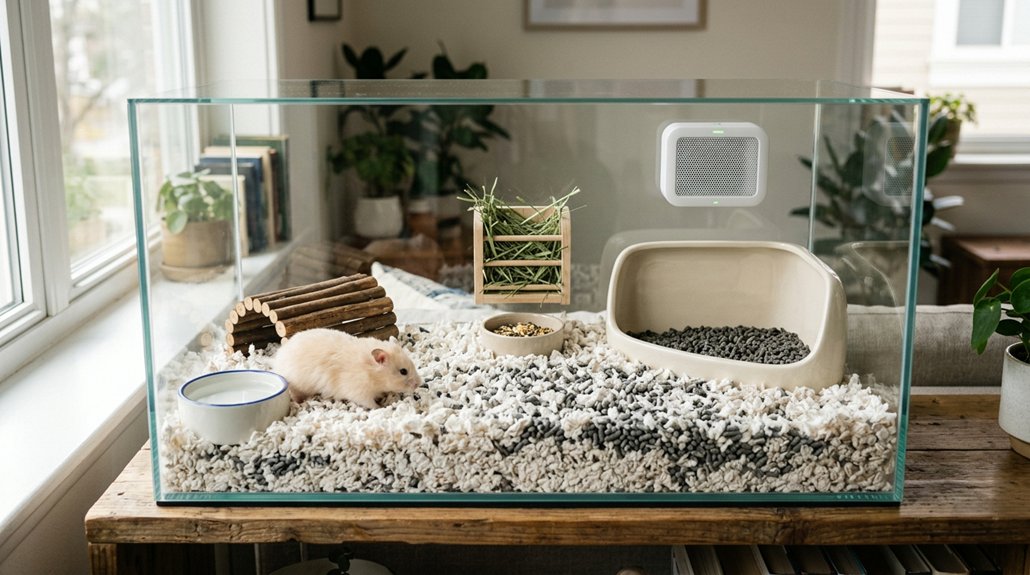
To control odor in a hamster cage, focus on hygiene and appropriate materials. Clean the cage weekly with an antibacterial cleaner made for small animals, and guarantee thorough rinsing. Use unscented, natural bedding like aspen shavings, changing it at least twice a week. Maintain a balanced diet, avoiding moist foods that spoil. Ensure good ventilation and check humidity levels to prevent moisture buildup. By optimizing these strategies, you’ll discover insightful methods for maintaining a fresh habitat.
Key Takeaways
- Clean the hamster cage weekly and perform daily spot checks to maintain hygiene and reduce odors.
- Use unscented, natural bedding and change it once or twice weekly to prevent odor accumulation.
- Ensure proper ventilation and airflow around the cage to minimize persistent odors.
- Control portion sizes and promptly remove uneaten food to prevent decay and reduce smells.
- Incorporate an air purifier and non-toxic odor control products for enhanced freshness.
Why Does My Hamster Cage Smell?
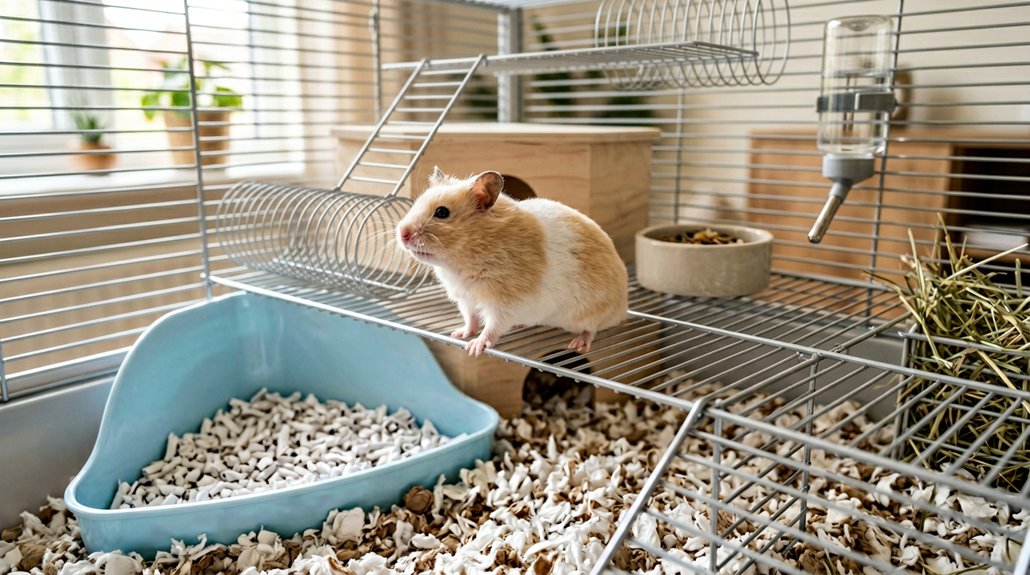
While it may not always be obvious at first, a persistent odor in your hamster’s cage typically stems from urine and waste materials. Effective hamster hygiene is crucial in mitigating these odor sources. Urine can seep into the cage materials, allowing smells to linger. Regular cleaning is critical, as lingering waste and uneaten food can decompose, markedly contributing to the odor. Overfeeding your hamster can exacerbate this, as food remnants rot and emit an unpleasant smell. Guarantee proper ventilation in the cage to further minimize odor. Utilizing odor-neutralizing products can aid in combating residual smells. These practices won’t just enhance the environment for your hamster but will also make your home more pleasant for everyone.
Choosing the Best Bedding for Odor Prevention
To prevent odors effectively, you should select aspen shavings or alternative bedding products like Cell-sorb or Yesterday’s News, steering clear of cedar and pine due to their harmful chemicals. Look for unscented, natural bedding materials that incorporate odor-neutralizing technology to guarantee continuous freshness. Regularly rotating bedding and spot cleaning will enhance its longevity and maintain a healthier habitat for your hamster.
Safe Bedding Materials
Selecting appropriate bedding materials is essential for controlling odors in a hamster cage. Avoid cedar and pine beddings, as their phenols pose respiratory risks to hamsters. For best odor control, choose bedding types that are non-toxic and safeguard your pet’s health. Consider Aspen Fresh or aspen shavings, renowned for their safe, effective odor management. Alternatively, Cell-sorb or Yesterday’s News bedding offers superior odor retention.
Unscented, natural bedding materials minimize chemical additives, ensuring a healthier environment. Bedding storage should be managed smartly; store it in a cool, dry place to maintain efficacy. Change bedding regularly—once or twice weekly—to prevent odors from accumulating.
- Aspen Fresh: Safe and effective
- Aspen Shavings: Non-toxic choice
- Cell-sorb: Superior odor control
- Yesterday’s News: Proven retention
Odor Control Options
After selecting safe bedding materials, focus on practical odor control strategies to guarantee a fresh habitat for your hamster. Engage in a bedding comparison to identify the best odor solutions. Avoid cedar or pine bedding due to harmful emissions. Alternatives like Aspen shavings or Cell-sorb provide superior odor control and safety. Use natural, unscented materials to reduce smell retention. For additional effectiveness, sprinkle baking soda under the bedding to neutralize odors, ensuring it doesn’t directly contact your pet. Regularly replace the bedding at least once or twice weekly to prevent odor buildup from waste. Consider products like Hamster Odor Blaster, which utilize essential oils and slow-release technology to mask odors, enhancing the cage’s freshness while extending bedding life.
Bedding Longevity Tips
When selecting bedding for prolonging its effectiveness against odors, natural materials like aspen shavings or Yesterdays News are prime choices. They’re less likely to release harmful chemicals and more capable of controlling odors. To optimize bedding longevity, consider these guidelines:
- Bedding Thickness: Confirm the layer is substantial enough to absorb moisture effectively, yet manageable for routine cleaning.
- Bedding Alternatives: Explore options, avoiding cedar or pine due to their harmful phenols.
- Maintenance: Change bedding every 5 to 7 days, with daily spot cleaning to prevent waste buildup.
- Odor Control Products: Use products like Hamster Odor Blaster. Its slow-release formula with essential oils extends bedding life and mitigates odors.
Adhering to these practices will create a fresh cage environment.
Dietary Tips to Keep Your Hamster’s Habitat Fresh
To maintain a fresh environment in your hamster’s habitat, prioritize a balanced diet with high-quality pellets while carefully managing portion sizes. Limit treats and avoid overly moist foods like fruits and vegetables to reduce odor risks. Adjust the diet regularly to cater to your hamster’s needs, preventing digestive issues that can cause unpleasant smells.
Balanced Diet Choices
Although it might not be immediately obvious, a balanced diet is fundamental in controlling odor within your hamster’s habitat. You need to focus on fiber sources and food timing to prevent digestive issues and subsequent unpleasant odors. Implement the following strategies:
- Fiber Sources: Prioritize high-quality hamster pellets and leafy greens to enhance digestive health and minimize odoriferous waste production.
- Avoid Moist Foods: Limit fruits and vegetables that add excess moisture, which can lead to undesirable smells.
- Food Timing: Schedule meals consistently, ensuring that remnants are removed promptly to prevent decay.
- Moderation in Treats: Minimize treats to reduce waste buildup and maintain a cleaner cage environment.
These practices will help keep your hamster’s space fresh and pleasant.
Portion Size Management
Effective portion size management is essential in maintaining a fresh hamster habitat. By practicing portion control, you guarantee your hamster eats all its food, reducing leftover bits that cause odors. A balanced diet—comprising dry pellets and limited fresh produce—prevents digestive issues that could result in foul-smelling waste. Adjust portions to suit your hamster’s specific needs, minimizing uneaten food and enhancing waste management. Avoid overly moist foods, as they spoil rapidly and create unpleasant smells. Regularly check the cage to remove any uneaten food promptly, thereby preventing odor accumulation. You’ll safeguard your hamster’s environment by sticking to these guidelines, promoting a cleaner, odor-free habitat. This precise approach guarantees the best care and habitat freshness.
Essential Cleaning Practices for a Fresher Cage
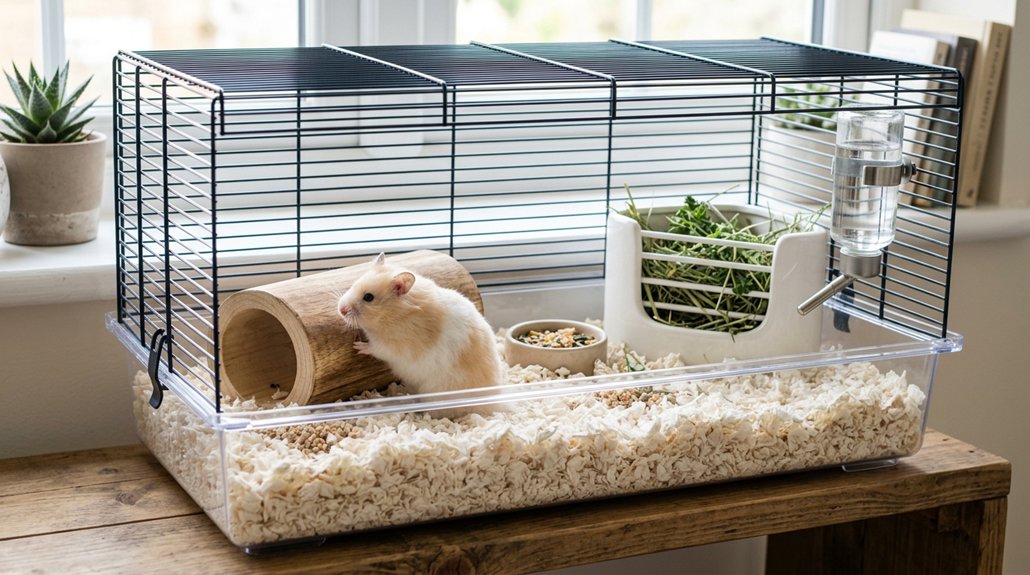
Maintaining a fresh and odor-free hamster cage hinges on adhering to essential cleaning practices with regularity and precision. Start with a meticulous cleaning schedule, ensuring a full cage clean at least once weekly. Perform daily odor assessments and spot cleaning to remove soiled bedding and uneaten food, preventing odor accumulation and ensuring a hygienic environment. Utilize an antibacterial cleaner specifically made for small animals, confidently disinfecting all surfaces while meticulously rinsing to avoid chemical remnants. Implement ventilation strategies, facilitating airflow throughout the cage and room to aid in dispersing odors efficiently. These practices are pivotal in effectively minimizing offensive odors and maintaining a clean, pleasant habitat.
Adhere to a meticulous cleaning schedule to ensure a fresh, odor-free, and pleasant hamster habitat.
- Weekly full cleans
- Daily spot checks
- Regular rinsing after disinfecting
- Enhanced ventilation
Natural Solutions for Neutralizing Odors
Incorporating natural solutions into your cleaning routine can further enhance odor control in your hamster’s habitat. Start by utilizing baking soda, an effective odor absorber. Sprinkle it under the bedding to tackle odors effectively. For cage cleaning, mix baking soda with water for a solution that neutralizes unwanted scents. Be sure to combine these practices with regular bedding changes and weekly deep cleans. Natural plants, specifically non-toxic options placed around the room, can also improve air quality and contribute to a fresher environment. Avoid air fresheners and scented beddings, as they’re harmful to your hamster. Finally, spot clean daily by removing soiled bedding and uneaten food. These measures will collectively maintain a cleaner, healthier cage consistently.
Boosting Air Circulation for a Healthier Environment
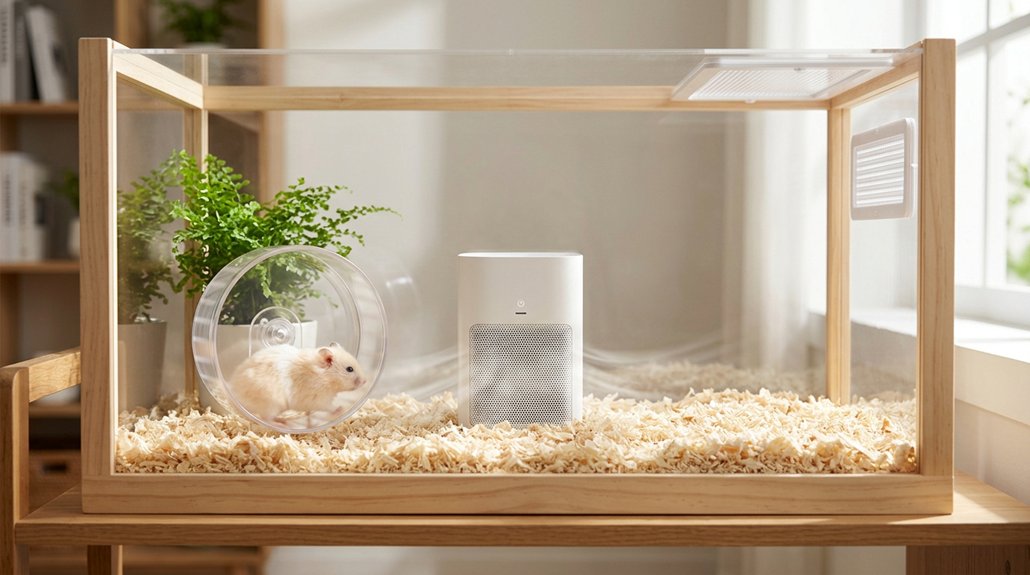
A strategic approach to odor control involves optimizing air circulation within your hamster’s environment. Proper ventilation techniques are crucial for minimizing unpleasant odors. Place the cage in a well-ventilated area to support healthy airflow dynamics. Here are four essential steps to take into account:
- Open windows and use fans: Enhance airflow around the cage to reduce stagnant air that causes odors.
- Incorporate an air purifier: Equip your space with an air purifier designed for pet environments, filtering out odors and maintaining air quality.
- Keep the area clutter-free: Avoid overcrowding around the cage, as clutter can restrict airflow and exacerbate odor issues.
- Monitor humidity levels: Regularly check the room’s humidity to prevent moisture buildup, a contributor to odors.
Implement these strategies for a fresher, healthier cage environment.
Best Product Picks for Long-lasting Odor Control
An array of products exists for those seeking long-lasting odor control in their hamster cages. The Hamster Odor Blaster stands out, featuring a slow-release formula effective for up to 15 weeks, with each inner bag covering approximately five weeks. Its distinct technology utilizes powerful essential oils, leaving a pleasing lavender and chamomile scent while masking strong bedding odors. Made with non-toxic vermiculite and a hydrophobic coating, this product guarantees safety for pets and humans alike.
The dry, non-clumping formulation promotes a worry-free environment, gradually releasing essential oils without direct pet contact. Compact packaging offers a substantial supply, making it a cost-effective choice for freshness and bedding life extension. User testimonials confirm its efficacy, consistently reporting satisfaction with the enduring fragrance and ease of use.
Learn From the Community: Tips for Managing Smells
Connecting with a community of fellow hamster enthusiasts can considerably enhance your knowledge on odor management in hamster cages. By exchanging community insights and exploring homemade remedies, you can optimize your hamster’s living environment. Here are critical tips:
- Forums & Social Media: Engage with owners to share homemade odor control remedies and successful experiences with cleaning products.
- Bedding Material Advice: Ask for recommendations on materials like Aspen Fresh or Cell-sorb, renowned for effective odor retention.
- Cage Style Discussions: Participate in discussions about cage designs that enhance airflow, promoting fresher environments.
- Cleaning Routine Sharing: Exchange routines for cleaning frequency and product effectiveness, such as enzymatic cleaners like Bio One or Purodora.
Leverage these insights to better manage hamster cage odor efficiently.
Frequently Asked Questions
How to Make a Hamster Cage Not Smell?
To make a hamster cage not smell, use cage materials that allow proper ventilation. Choose bedding types like aspen shavings or cellulose-based options. Perform regular cleanings, remove waste daily, and apply natural odour neutralizers for effective odour control.
Why Is My Hamster Always Stinky Even When I Clean Her Cage?
Imagine a book covered in dust despite regular cleaning—it’s about thoroughness. Your hamster’s stinky due to inadequate hamster hygiene or cage maintenance. Guarantee deep cleaning: remove waste, use specialized pet cleaners, and replace bedding frequently.
What to Do if Your Hamster Smells Bad?
If your hamster smells bad, guarantee proper grooming and ideal bedding selection. Spot clean daily, choose absorbent materials, and use enzyme-based cleaners weekly. If odors persist, check your pet’s health and consult a veterinarian for guidance.
What’s the Best Way to Deodorize a Cage?
Imagine your friend’s hamster cage, odorless thanks to weekly natural deodorizing methods. Use fragrance-free options like baking soda beneath bedding. Replace it regularly with unscented materials such as aspen shavings, ensuring a fresh environment without compromising safety.
Conclusion
By understanding why your hamster cage smells, by selecting the best bedding, by incorporating dietary tips, by adhering to essential cleaning practices, by utilizing natural odor neutralizers, by enhancing air circulation, and by choosing top-quality products, you’ll effectively manage odors. Consistency in these practices guarantees a fresher habitat. Learning from the community adds valuable insights. Employ all strategies; guarantee your hamster’s environment remains healthy, guarantee odors remain controlled, and guarantee your peace of mind remains intact.