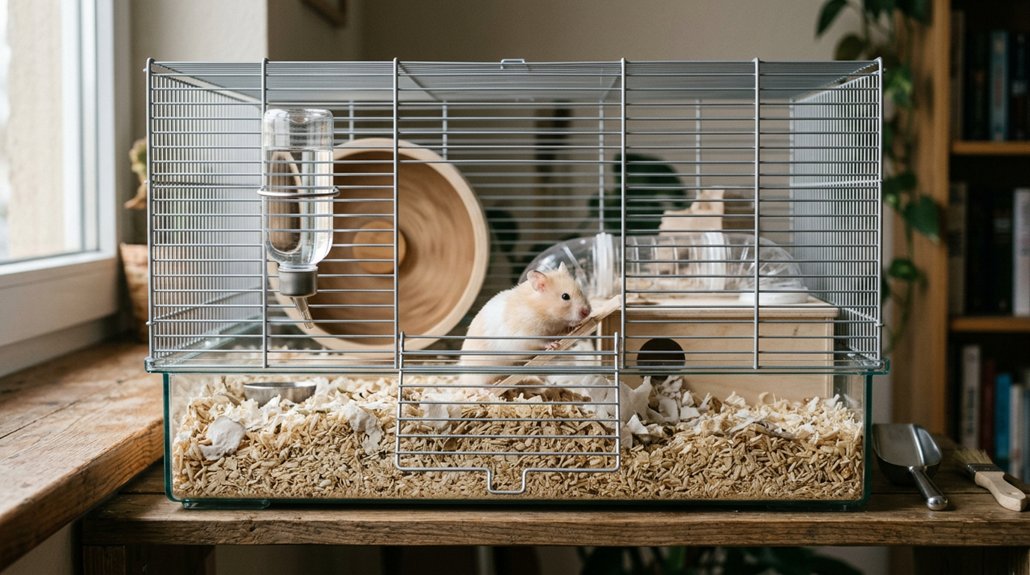
You should clean your hamster’s cage with a structured routine: daily spot cleaning, weekly maintenance, and monthly deep cleaning. Daily, remove soiled bedding and uneaten food to monitor health and maintain hygiene. Weekly, replace bedding and clean containers to prevent contamination. Every 4-6 weeks, a deep clean sanitizes thoroughly while reducing hamster stress. Factors like diet and species can affect cleaning frequency. Explore further to enhance your hamster’s living environment with tailored strategies.
Key Takeaways
- Perform daily spot cleaning to remove waste and uneaten food, maintaining overall cage hygiene.
- Conduct weekly maintenance to replace bedding and clean food/water containers thoroughly.
- Schedule monthly deep cleaning every 4-6 weeks, removing a portion of bedding to reduce stress.
- Adjust cleaning frequency based on hamster’s diet, habits, and type to maintain cleanliness.
- Retain some old bedding during cleaning to keep familiar scents and minimize hamster’s anxiety.
Daily Spot and Weekly Hamster Cage Cleaning
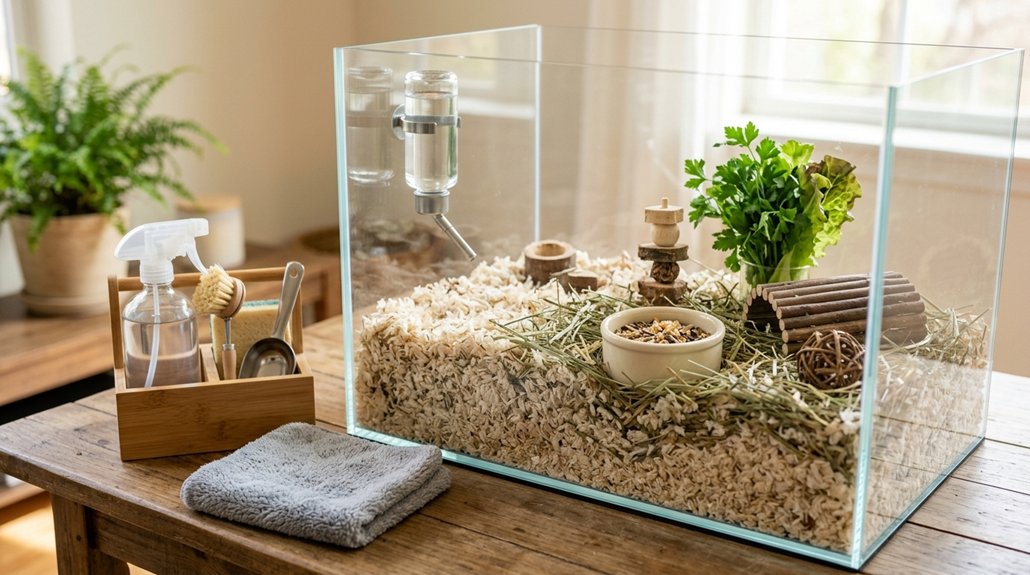
Maintaining cleanliness in a hamster’s habitat is essential for your pet’s health. Daily spot cleaning is crucial; it involves removing soiled bedding, waste, and uneaten food using appropriate cleaning supplies. This daily routine helps in monitoring your hamster’s health and detecting any changes in waste, which might indicate health issues. Employ precise cleaning techniques to guarantee you don’t disturb your hamster too much during the process.
On a weekly basis, it’s imperative to replace all bedding and thoroughly clean food and water containers. This prevents contamination and guarantees a hygienic environment. Using safe, hamster-friendly cleaning supplies will maintain a clean and healthy living space. Consistent cleaning techniques help in fostering an environment conducive to your hamster’s wellbeing.
Monthly Deep Cleaning Process for Optimal Hygiene
Beyond the daily and weekly routines, a thorough monthly deep cleaning of your hamster’s cage guarantees perfect hygiene. Start with effective bedding management—remove only about one-third of it during each cleaning session. This gradual approach minimizes stress, making sure your pet feels secure. Apply rigorous cleaning techniques to every corner: scrub food bowls, sanitize water bottles, and clean all toys and structures to thwart bacterial growth. Here’s a suggested process for top results:
| Step | Action | Tools Needed |
|---|---|---|
| 1. Remove | One-third of old bedding | Gloves, trash bag |
| 2. Clean | Cage accessories thoroughly | Mild soap, warm water |
| 3. Sanitize | Water bottle and food bowls | Vinegar solution |
| 4. Reintroduce | Old bedding on top of new | Fresh bedding |
Implementing these methods every 4-6 weeks guarantees a healthier, odorless environment.
Factors Affecting Your Hamster’s Cage Cleaning Frequency
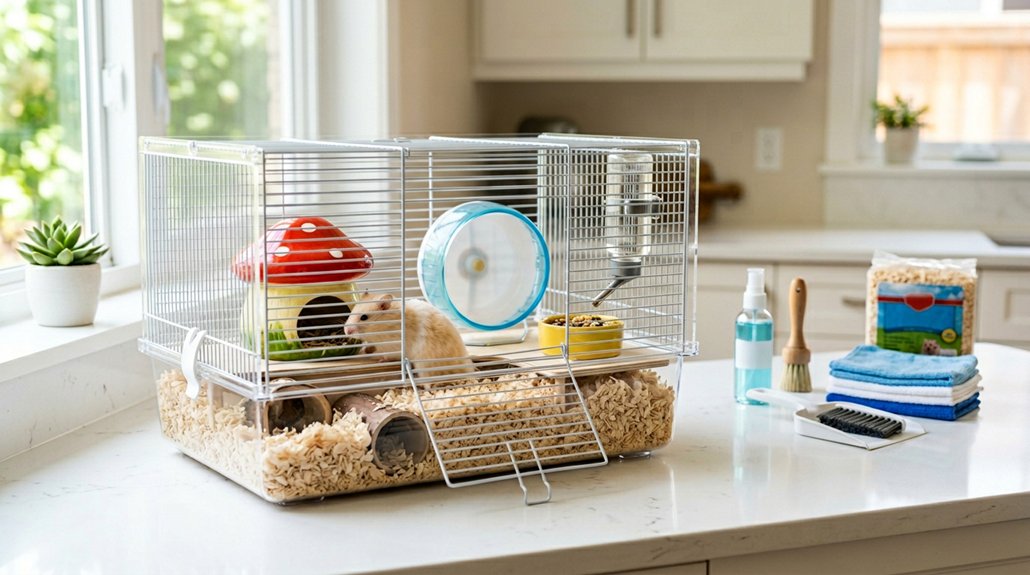
Although routine cleaning is essential to your hamster’s well-being, several factors will dictate how often you need to perform this task. Consider your hamster’s diet; a messy eater creates more food debris and waste, necessitating frequent cleanings. Dietary impacts aren’t the only concern—bedding choices are critical. Some materials absorb odors and moisture effectively, reducing the need for frequent maintenance. Pay attention to your hamster’s habits. Increased urination or diarrhea signifies health issues, demanding prompt, consistent cleaning to maintain hygiene. Additionally, the type and size of your hamster—whether a dwarf or Syrian—affect how much waste is produced. Each of these aspects tailors your cleaning routine, ensuring your hamster’s living space remains fresh and healthy.
Keeping Your Hamster Calm During Cleanings
As you adapt your cleaning routine to your hamster’s habits, it’s equally important to guarantee a calming environment during these sessions. To minimize hamster stress, focus on gentle practices. Limit deep cleaning to every 4-6 weeks, ensuring the environment isn’t altered dramatically. Regular spot cleaning every few days maintains cleanliness without causing upheaval. Retain some old bedding during deep cleans; familiar scents offer comfort and stability. Avoid disturbing your hamster’s nest and hoarding areas, as disruption in these areas can considerably raise anxiety. Allow your hamster to explore newly cleaned sections before reintroducing them to their full habitat. Gradual changes permit acclimatization and lessen stress, promoting a peaceful and comfortable space for your pet.
Tailor Your Cleaning Routine to Your Hamster
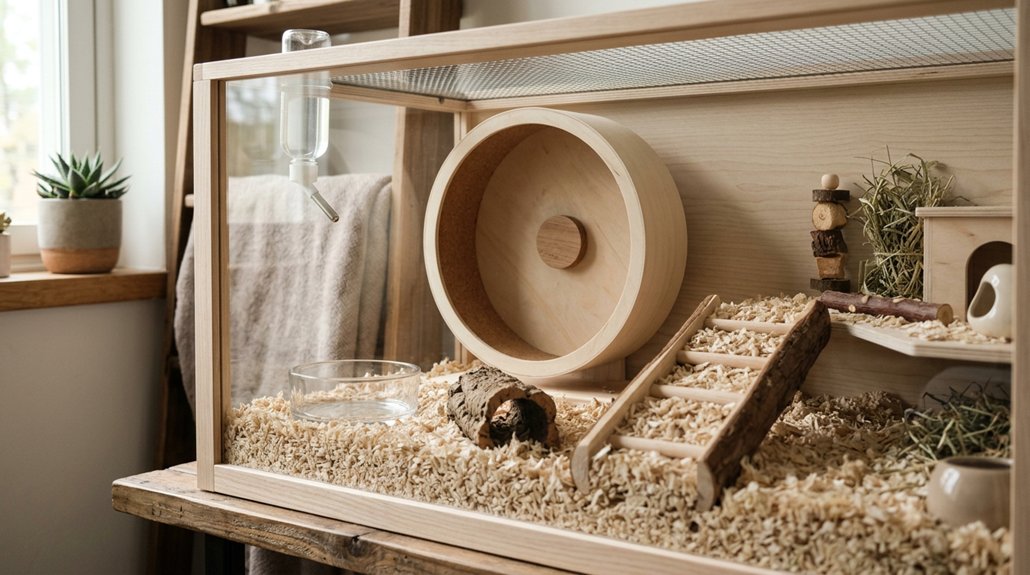
Understanding your hamster’s specific needs is crucial when tailoring your cleaning routine. Observing their peeing habits guides your cleaning practices to maintain ideal hygiene while minimizing stress. Some hamsters might demand more frequent spot cleaning, while others are less messy. A precise approach to cleaning habits enhances your pet’s stress reduction and well-being.
- Perform weekly spot cleaning, focusing on waste and wet bedding. This keeps most of their familiar environment unchanged, minimizing stress.
- Deep clean every 4-6 weeks but retain some old bedding. This helps your hamster feel secure post-cleaning.
- Adjust cleaning frequency based on cage cleanliness; if the cage seems overly soiled, increase cleaning intervals.
Monitor your hamster’s post-cleaning behavior for signs requiring routine tweaks. Regular observations maintain their comfort and health.
Frequently Asked Questions
How Often Do You Fully Clean a Hamster Cage?
You should fully clean a hamster’s cage every 4 to 6 weeks. This cleaning schedule guarantees proper cage maintenance, keeping your pet healthy by reducing odors and bacteria. Don’t forget to replace some bedding to reduce stress.
What Are the Signs of an Unhappy Hamster?
When you notice signs like excessive bar chewing, corner digging, hiding, decreased activity, eating habit changes, or aggression, these are stress indicators. Your hamster’s behavior reflects its unhappiness with its surroundings. Proper care is essential.
How Long Can You Go Without Cleaning a Hamster Cage?
You shouldn’t go over two or three days without addressing cage hygiene to guarantee odor control and your hamster’s well-being. Neglecting this task too long might lead to discomfort and potential health challenges for your little friend.
Do Hamsters Need Light at Night?
Hamsters don’t need light at night due to their nocturnal habits. A bright environment can disrupt their sleep and cause stress. Maintain a natural light cycle, using low-intensity or red lights if necessary for minimal disturbance.
Conclusion
Ultimately, a clean cage is essential to your hamster’s wellbeing. Remember, “an ounce of prevention is worth a pound of cure.” By tailoring your cleaning routine based on your hamster’s needs and lifestyle, you’ll guarantee a comfortable and hygienic environment. Keep an eye on factors affecting cleanliness, from bedding type to your hamster’s habits. Regular cleaning not only prevents health issues but also keeps your pet calm and stress-free during necessary upkeep. Stay diligent, and your hamster will thrive.