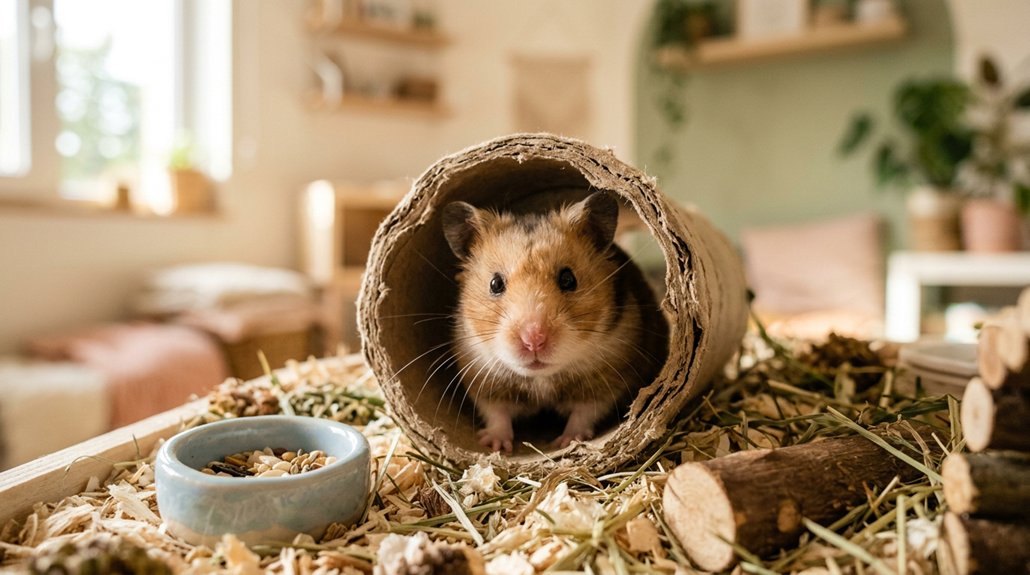
Are you ready for a hamster? First, confirm your home is a safe haven by hamster-proofing and choosing the right cage. Can you meet their daily needs, like providing fresh food, ample exercise, and regular interaction? Be aware of health risks and potential vet visits. Pick the right breed for your living situation, balancing space and social needs. Finally, consider how you’ll handle their brief lifespan with love and preparation. More insights await for a well-prepared journey.
Key Takeaways
- Have you evaluated your home for hazards and ensured it’s hamster-proofed, including securing wires and removing small objects?
- Are you prepared to provide daily care, including balanced nutrition, fresh water, and regular cage cleaning?
- Do you understand the potential health risks and commit to monitoring your hamster’s health with access to veterinary care?
- Have you researched the different breeds to determine which hamster suits your living situation and space?
- Are you emotionally prepared for the short lifespan of a hamster and planned for end-of-life care?
Have You Prepared Your Home for Hamster Safety?
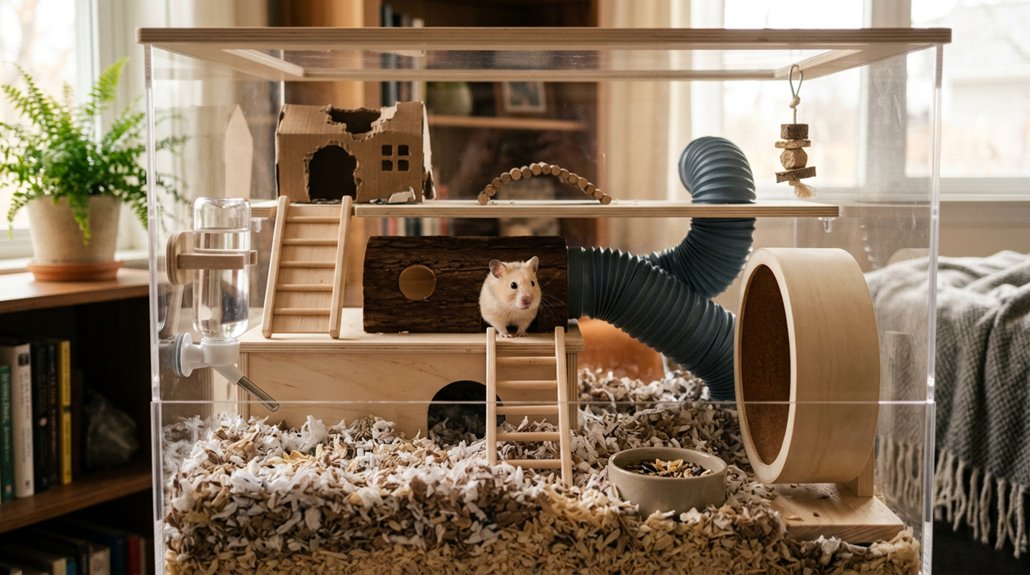
How prepared is your home for your new furball? Begin with effective hamster proofing strategies to guarantee your pet’s safety. Hamsters are nimble escape artists, squeezing through tiny openings. Scrutinize your environment for potential hazards, securing wires, small objects, and removing toxic plants. This is essential to create a safe habitat design where your hamster thrives. Choose a sturdy cage with a solid bottom and ample ventilation, avoiding bedding of pine or cedar shavings, which are harmful. Regularly inspect the enclosure for wear and tear to avert escapes or injuries. Make sure it’s spacious enough for their needs. Don’t forget to monitor interactions with other pets—hamsters are defenseless against larger animals. Being proactive will keep your hamster safe and secure.
What Is Involved in Meeting a Hamster’s Daily Care Needs?
Meeting a hamster’s daily care needs involves more than just providing the basics; it’s about fostering a nurturing environment where your pet feels safe and loved. Start by ensuring constant access to fresh food and water. A balanced diet includes rodent chow, hamster pellets, and occasional fresh fruits and veggies. Regularly clean their habitat, conducting spot cleaning and bedding changes to maintain hygiene. Exercise and play are vital; provide a sturdy wheel and engaging toys to keep your hamster active and prevent boredom. They’re more social during nighttime, so dedicate moments for gentle handling and play as part of your routine. This not only strengthens your bond but also enriches their life, making your hamster feel truly at home.
Recognizing Health Risks and Veterinary Needs

Recognizing potential health risks and addressing veterinary needs are critical components of responsible hamster ownership. It’s essential to understand the importance of disease prevention and having access to veterinary resources. Hamsters can carry zoonotic diseases like salmonella, which require strict hygiene practices, especially around pregnant women and young children. Keep an eye on your pet’s health by noting any of these signs:
- Dull eyes or matted fur
- Sudden weight loss
- Respiratory issues
Finding vets with hamster expertise may be tough since they’re considered exotic animals, potentially leading to higher care costs. While some conditions are treatable, other issues, often from overbreeding, can incur significant expenses and might be incurable. Rapid veterinary care can prevent deterioration if symptoms appear.
Which Hamster Breed Fits Your Living Situation?
While attending to your hamster’s health is vital, equally important is selecting the right breed to suit your living situation. Syrian hamsters, with their territorial nature and need for solitude, are perfect if you’ve got space for a single pet. They average around 6 inches in length, so a roomy cage is essential. On the other hand, Dwarf hamsters, including Siberian and Roborovski’s, thrive in social settings and can live in pairs if you introduce them early. Their smaller size, ranging from 2 to 3 inches, means they require less space in each cage. Understanding these breeds’ personalities and social habits will make a significant difference in crafting an environment that fosters happiness and reduces stress for your new furry friend.
How Will You Handle a Hamster’s Short Life?
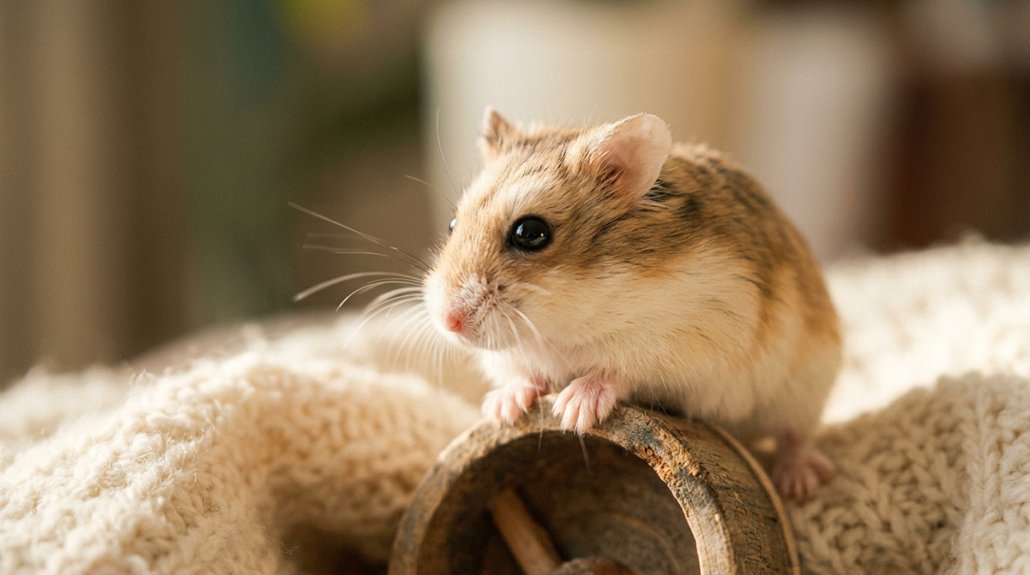
How do you prepare for the emotional challenges associated with a hamster’s short lifespan? Acknowledging their 2-3 year lifespan is important for you and your family, especially children. It’s vital to discuss grief management and be prepared for end-of-life planning. Here’s how to handle everything with love and care:
Facing a hamster’s short lifespan requires open discussions on grief and early end-of-life preparations.
- Educate family members: Explain the hamster’s lifecycle, highlighting how to appreciate their time with you.
- Enhance the bond: Make the most of every moment, ensuring your hamster feels loved.
- Plan ahead: Decide on end-of-life care early to avoid last-minute stress.
- Create a memorial: Help with closure by honoring your pet’s memory.
- Seek support: Find community resources if you need support during the grieving process.
Frequently Asked Questions
What Color Calms Hamsters?
Your hamster color preferences include shades of blue and green. Soft, pastel colors like light blue or pale green create calming habitat colors, helping your hamster feel relaxed and secure. Avoid dark or overly bright colors for their comfort.
What I Wish I Knew Before Getting a Hamster?
You’d wish hamster care was just giving them a wheel. But no, it’s about diet essentials, a spacious housing setup, and constant social interaction. It’s a nightly party when you’re asleep. Welcome to nocturnal pet ownership reality!
Can I Leave a Hamster Alone for 4 Days?
No, you really shouldn’t leave a hamster alone for four days. Their hamster care and social needs demand daily interaction. Arrange for someone to provide fresh food, water, and a clean environment to guarantee their well-being.
How Do You Say “Hi” in Hamster Language?
In hamster language, saying “hi” is akin to nature’s whispers—soft squeaks or chirps that symbolize excitement. You’ll notice these subtle communication cues, often expressing happiness, much like a cheerful nod shared among tiny friends.
Conclusion
Bringing a hamster into your home is a rewarding journey, yet it’s crucial to contemplate their brief lifespan—typically two to three years. Imagine filling a space the size of a shoebox with moments of joy and companionship. Are you ready to provide the love and care these tiny creatures deserve? By asking yourself these critical questions, you’ve taken the first step toward enriching your life with a fascinating, delicate pet that comes with its own set of unique needs.