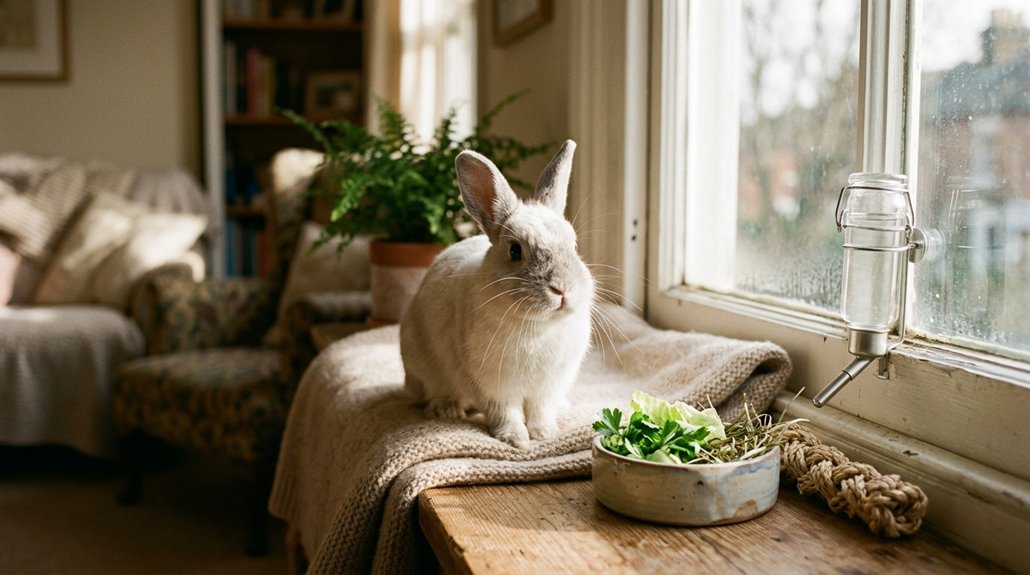
Are you ready for the commitment of a pet rabbit? Consider their 10-15 year lifespan and daily care needs, including social interaction and dietary requirements like constant hay supply. Do you have ample space and a bunny-proofed area for exploration? Rabbits benefit from companionship and regular vet check-ups, so make sure you’re prepared for those responsibilities. Indoor living is preferred for safety and health benefits. If you’re enthusiastic for more insights, there’s plenty to discover.
Key Takeaways
- Are you prepared for the 10-15 year commitment required to care for a rabbit throughout its lifespan?
- Do you have the space for an appropriate enclosure and a safe, bunny-proofed area for exploration and play?
- Can you provide the daily social interaction and companionship necessary for a rabbit’s emotional well-being?
- Are you able to maintain regular health check-ups and grooming routines to ensure your rabbit’s well-being?
- Can you commit time daily for supervised playtime and activities that encourage natural rabbit behaviors?
Understanding Rabbit Lifespan: Are You Ready for the Long Haul?
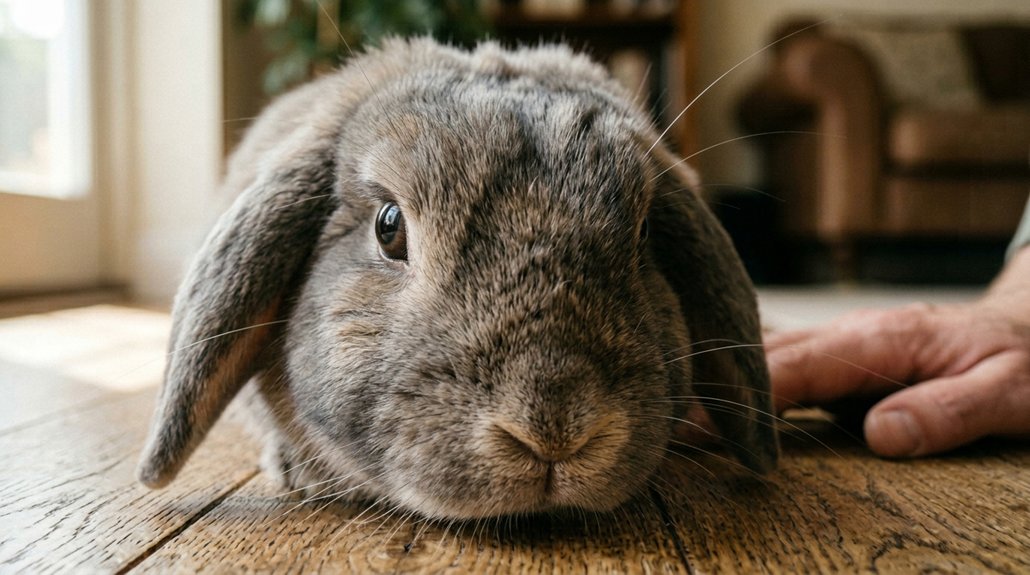
Have you ever wondered what it takes to care for a pet rabbit over its entire lifespan? As a potential owner, understanding that domestic rabbits can live between 10-15 years is significant. You’re starting a lifetime commitment, much longer than pets like hamsters. It’s critical to guarantee you’re ready for possible lifestyle changes with these delightful companions.
Their longevity relies heavily on responsible health monitoring and care. Regular vet check-ups are not just advisable—they’re indispensable. These visits allow for early detection of health issues, which can greatly influence their lifespan. A balanced diet and proper living conditions also play important roles. By committing to these needs, you’ll provide your rabbit a fulfilling and healthy life throughout those wonderful years together.
How Much Space Do Rabbits Really Need?
With a commitment spanning over a decade, it’s important to guarantee your pet rabbit has the best possible living conditions. Space requirements are significant; your furry friend needs more than just a cozy hutch. An ideal environment for a rabbit includes at least 24 square feet in an indoor setup, ensuring they have ample room to thrive. Hutch size should be sufficient for resting but remember it’s not for long-term confinement. Rabbits need to free roam or enjoy bunny-proofed areas for exploration and exercise needs—a critical four hours daily. Indoor enclosures must accommodate hopping and stretching, promoting their well-being. Your bunny’s living conditions should encourage social interactions, blending rest and activity harmoniously for a satisfied and healthy rabbit.
Daily Care Requirements: Are You Prepared for the Commitment?
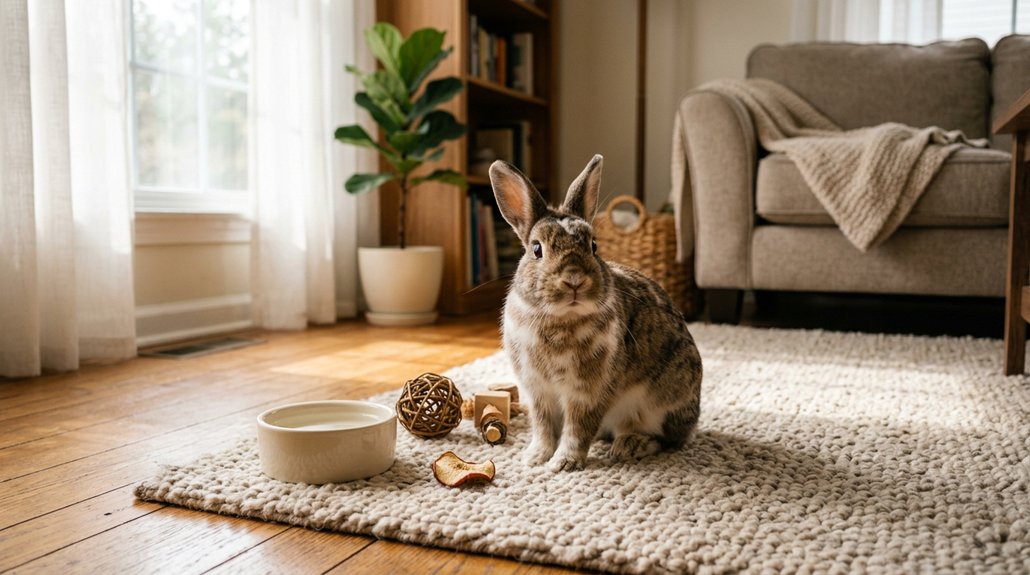
Are you truly ready for the daily responsibilities of caring for a pet rabbit? These adorable companions require more than just admiration; you’ll need to engage in daily interaction and socialization to meet their emotional needs. Maintaining their living environment is also a must. Are you prepared for a regular cleaning routine? It’s important to keep their space clean to guarantee their health and hygiene. Don’t forget about providing unlimited access to fresh water and hay, which are key components of a rabbit’s diet. Remember, owning a rabbit means committing to their care for their average 10-12 year lifespan. Finding a knowledgeable veterinarian for those annual health check-ups is crucial. Are you ready for this long-term dedication?
Do Rabbits Need a Bunny Buddy? Exploring Social Dynamics
As social creatures, rabbits often need companions to thrive, making it important for you to contemplate pairing or grouping them to fulfill their social needs. Successfully bonding rabbits can lead to mutual grooming and play, promoting their emotional well-being and alleviating stress. However, introducing new buddies requires patience and care, as ensuring compatibility is key to avoiding solitude-induced behavioral issues.
Importance of Rabbit Companions
Why do rabbits often thrive when they have a bunny buddy? Rabbits are inherently social animals that flourish through friendship benefits and social bonding. In their natural habitat, rabbits live in large communities, supporting their social nature. A compatible companion can provide your rabbit with emotional and mental stimulation, reducing loneliness and stress, especially during your absences. Rabbits in pairs often groom and play together, which is essential for their health and well-being.
Introducing a new bunny shouldn’t be rushed; gradual introductions are key for successful bonding. Patience and observation during this period are essential as not all rabbits will click instantly. Spaying or neutering your rabbits before they meet can greatly ease territorial tensions and pave the way for a harmonious relationship.
Bonding Process Outcomes
Understanding the bonding process between rabbits reveals much about their need for companionship and social interaction. Rabbits thrive when they have a partner, with bonding behaviors like grooming enhancing their emotional well-being and reducing loneliness. When introducing new rabbits, thoughtful introduction strategies are essential. Some rabbits bond instantly, while others may take weeks to form a connection, requiring your patience and understanding.
Sterilization can positively influence the bonding experience, minimizing territorial behaviors and supporting healthier interactions. If you’re considering adopting rabbits, opting for a bonded pair can spare you the stress of handling introductions and guarantees that both rabbits’ social needs are met simultaneously. A well-bonded pair can mean a happier, more harmonious household for you and your furry friends.
Effect of Solitude
Shifting focus from the bonding outcomes, it’s evident that solitude isn’t ideal for rabbits, given their highly social nature. Rabbit loneliness can lead to stress and undesirable behaviors, as these creatures need companionship to thrive. When paired with a bunny buddy, rabbits experience an enriched life, marked by less anxiety and healthier behaviors. They engage in playful activities and grooming, which are essential for both mental and physical health.
To combat rabbit loneliness, adopting a bonded pair offers an immediate solution and spares the stress of introductions. If that’s not feasible, gradual bonding strategies can facilitate a harmonious relationship. It’s important to note that building rabbit friendships requires patience, as some rabbits bond immediately, while others necessitate a gradual approach to compatibility.
Why Are Indoor Rabbits Happier? Exploring the Benefits
Ever wonder why indoor rabbits seem to thrive more than their outdoor counterparts? Bringing your bunny indoors offers a stable environment, providing essential indoor safety. Sheltered from predators and harsh weather, indoor rabbits experience reduced stress. This serene setting promotes emotional bonding; you’ll find more time to interact and form deeper connections, enhancing their emotional well-being. Indoors, rabbits can indulge in natural behaviors like hopping and exploring, invigorating their physical health and easing boredom. Significantly, health benefits include avoiding outdoor parasites and diseases, ensuring a longer, healthier life. Additionally, maintaining a clean habitat is simpler indoors, keeping your rabbit’s space hygienic and comfortable. Altogether, indoor living provides a happier, healthier experience for both you and your furry companion.
Can You Provide a Healthy Rabbit Diet? Understanding Dietary Needs
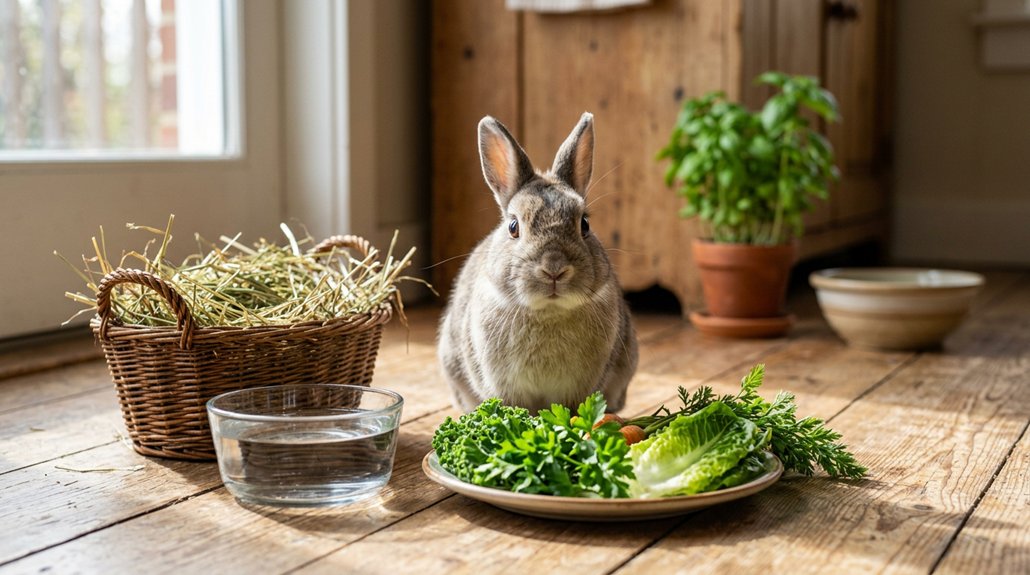
Keeping your rabbit happy and safe indoors is a great start, but ensuring its diet is nutritious and balanced is equally important. A rabbit’s diet requires careful planning. The backbone is hay varieties like Timothy or orchard grass, making up 80-85% of their intake, essential for digestion and dental health. Complement this with a greens selection, introducing fresh options like romaine lettuce daily. Pellet limitations should be observed; choose high-fiber, low-calcium pellets to avoid obesity.
Here’s a snapshot:
| Component | Details |
|---|---|
| Hay | 80-85% (Timothy, Orchard Grass) |
| Greens | Daily (Romaine Lettuce, Cilantro, Parsley) |
| Pellets | Limited (High-fiber, Low-calcium) |
| Water | Always Fresh |
Keeping Your Rabbit Active: Exercise and Exploration Tips
When it comes to your rabbit’s well-being, regular exercise is essential for their physical and mental health. They need at least four hours outside their enclosure to keep fit and entertained. Begin by bunny proofing your home—remove hazards and secure spots where your furry friend could get hurt. This guarantees a safe exploration space. Next, incorporate interactive toys and foraging games to stimulate their curious mind. Such activities encourage natural behaviors and keep boredom at bay. A spacious run or designated play area allows your rabbit to hop freely, boosting their confidence and spirit. Social playtime with fellow rabbits can further enhance exercise, providing both physical workout and mental engagement. Keep it diverse and exciting for a happy, healthy bunny!
How to Choose the Best Vet for Your Rabbit?
Selecting the appropriate veterinarian for your rabbit can be challenging, yet it’s vital for their well-being. Not all vets have the expertise for rabbit care, so finding veterinary specialists in exotic animals is essential. These professionals provide thorough care, from routine check-ups to handling rabbit emergencies.
- Experience with Rabbits: Verify the vet regularly treats rabbits and understands their unique needs.
- Proactive Health Management: Look for a vet who advocates for regular check-ups and vaccinations, vital for your rabbit’s longevity.
- Cost of Care: Be prepared for expenses, as rabbit care can be costlier than for other pets.
- Personal Connection: Establishing a good rapport helps in addressing health, diet, and behavioral concerns specific to rabbits.
Grooming Your Rabbit: Are You Ready for Regular Upkeep?
Curious about whether you’re ready for the grooming responsibilities that come with owning a pet rabbit? First, know that regular grooming is essential, especially if you’ve got a long-haired breed. Using the right grooming tools, like a rabbit-safe brush and nail clippers, guarantees effective care. Rabbits do their own grooming, but your brushing techniques can help reduce shedding and enhance bonding. Aim to trim their nails every four to six weeks to prevent overgrowth and health complications. Here’s a tip: having a helper can make the grooming process less stressful for you both, transforming it into a smoother, more enjoyable experience. By staying informed and prepared, you’ll keep your bunny’s coat healthy and maintain a strong connection with your furry friend.
Frequently Asked Questions
What Is the 3-3-3 Rule for Bunnies?
The 3-3-3 rule for bunnies is about understanding bunny behavior and rabbit care. It takes roughly three days for initial settling, three weeks for comfort, and three months for full adaptation in their new environment. Be patient.
What Is the Downside of Owning a Rabbit?
Owning a rabbit means embracing shedding, committing to rabbit care, managing time for exercise and interaction, and handling behavioral traits. It’s demanding, yet rewarding, requiring compassion and dedication to nurture your rabbit’s well-being and happiness.
What’s Faster, a Cat or a Rabbit?
You’d find rabbits generally outrunning cats in short bursts, thanks to their impressive agility. Cats, on the other hand, are slower but maintain quick acceleration. Rabbits’ strong hind legs assist with nimble direction changes, enhancing their speed advantage.
How Do Rabbits Say “I’m Sorry”?
Rabbits express “I’m sorry” through rabbit body language and gentle bunny vocalizations. They’ll often groom or lick you, make soft clucking sounds, or nuzzle playfully. Offering a treat or toy can reinforce positive bonding after an incident.
Conclusion
Bringing a rabbit into your home is a long-term commitment, much like adopting a child named Oliver who needs attention, companionship, and care. Are you equipped to enrich his life with a safe indoor space and a nutritious diet? Picture yourself ensuring he gets plenty of exercise and social interaction while maintaining his grooming and vet visits. If you’re ready for these responsibilities, you’ll find your relationship with your rabbit rewarding and full of joy.