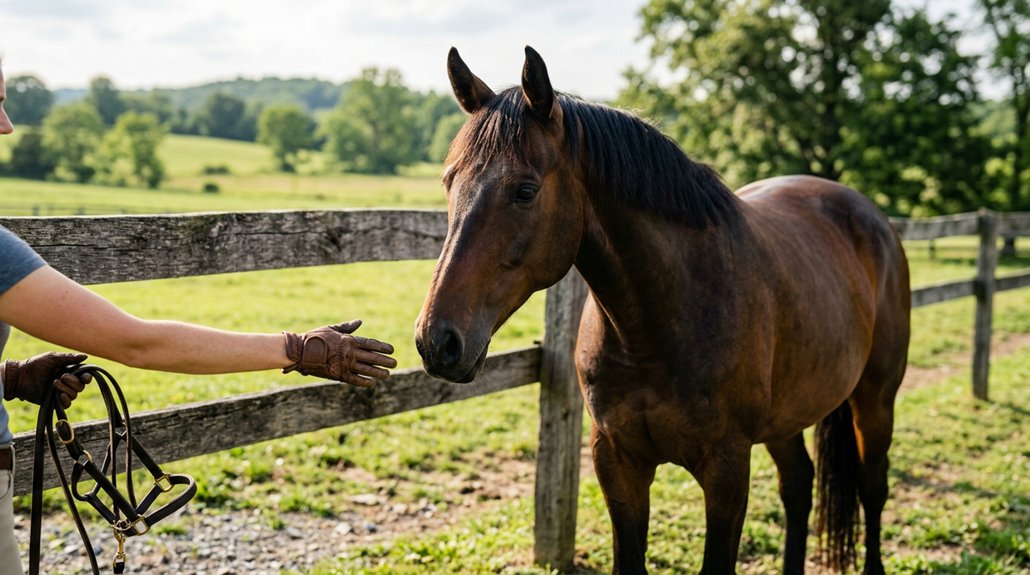
To set boundaries with a horse, balance empathy and technique. Use consistent body language to signal personal space, reinforcing this without aggression. Gentle pressure and non-verbal cues help illustrate consequences effectively. Always reassess and adapt based on your horse’s responses, rewarding respectful behavior to build trust. Clear gestures and a firm stance communicate expectations, fostering cooperation. By understanding these approaches, you’ll enhance communication, ensuring a respectful and safe environment while discovering more about effective boundary setting.
Key Takeaways
- Use consistent body language to define personal space and acceptable behavior clearly.
- Employ gentle pressure and non-verbal cues to communicate and reinforce boundaries.
- Reward respectful behavior to encourage positive associations and cooperation.
- Adapt techniques based on horse responses to ensure effective boundary setting.
- Maintain a calm demeanor and avoid aggression when boundaries are tested.
Practical Steps to Establish Horse Training Boundaries
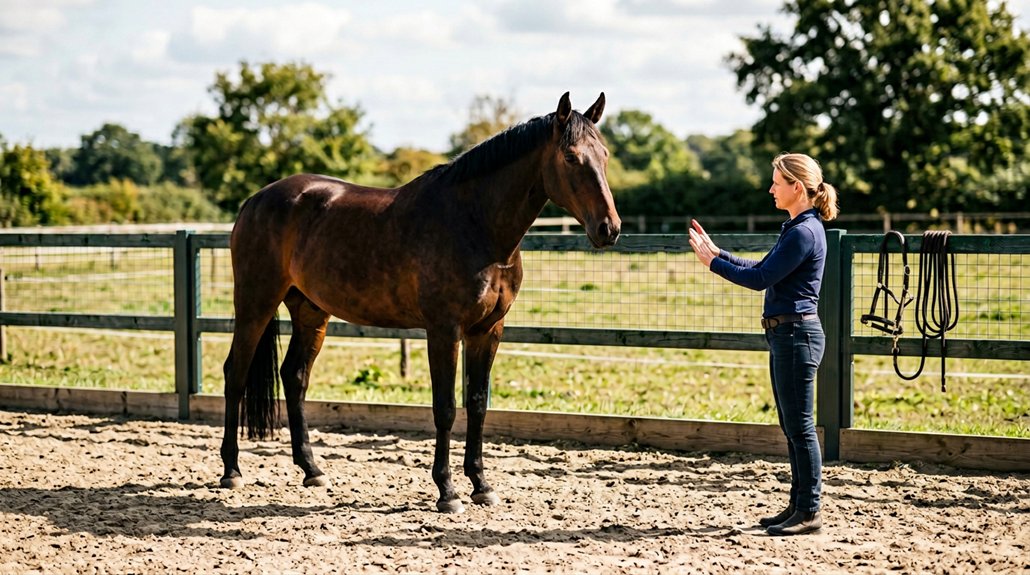
Establishing effective training boundaries with your horse requires a balance of empathy and technique. Begin with consistent body language to signal your personal space; moving your hands subtly can assert boundaries without force. Embrace training techniques like gentle pressure or non-verbal cues, similar to an electric fence concept, to illustrate the consequences of crossing boundaries. Always assess and adjust based on your horse’s responses, ensuring clarity in your relationship. Practice boundary setting across various situations—whether grooming or leading—to cement understanding of expectations. Desensitize your horse to different environments, reinforcing appropriate behavior through positive reinforcement. This approach fosters respect, enabling your horse to maintain a respectful distance, and strengthens the horse-human bond grounded in mutual understanding.
Why Horse Training Boundaries Matter
Once you’ve grasped the techniques for setting training boundaries with your horse, it’s essential to understand why these boundaries are so important. Establishing clear boundaries in training plays a significant role in shaping horse behavior. They create a safe environment that fosters mutual respect and understanding, allowing both you and your horse to work harmoniously. By preventing your horse from dominating personal space, these boundaries safeguard you and build a trusting relationship. Consistently reinforcing boundaries reduces unwanted behaviors with clear cues, making it easier for your horse to grasp expectations. This not only boosts their confidence but also helps them navigate human environments more safely. Ultimately, setting these boundaries enhances communication, cooperation, and strengthens the bond between you and your horse.
Communicate Boundaries Effectively With Horses
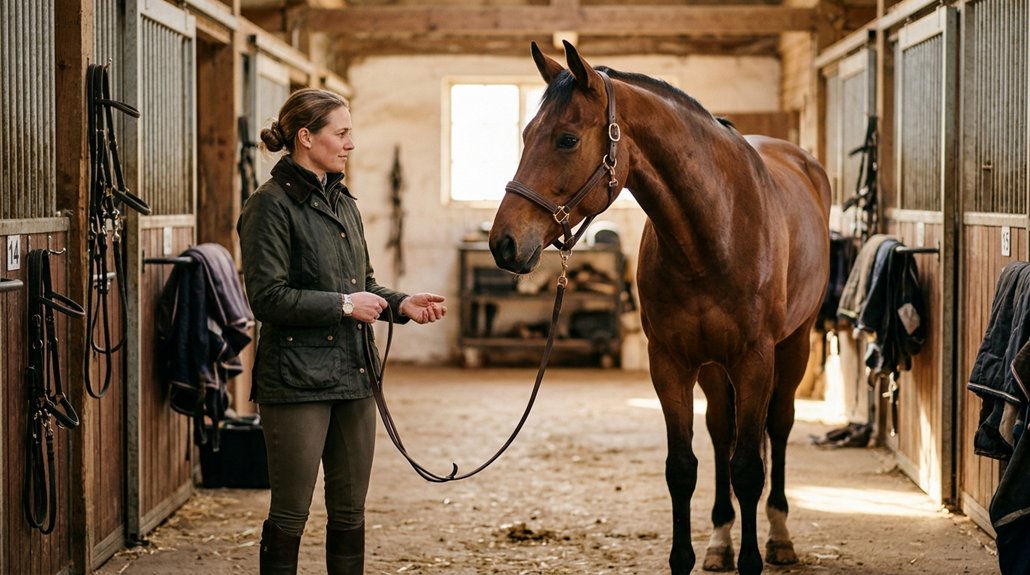
To effectively communicate boundaries with your horse, employ clear body language as a primary tool. Horses keenly interpret non-verbal cues, so standing firm and using consistent gestures can help define personal space and acceptable behavior. It’s important that your cues remain consistent; this reinforces understanding and cultivates respect. Mindfulness is essential—avoiding distractions guarantees you won’t send mixed signals, fostering trust and clarity. Be assertive yet gentle, as excessive force undermines the horse-human connection and breeds fear. When your horse respects your space, reward this cooperation to encourage positive association.
| Gesture | Purpose |
|---|---|
| Firm Stance | Establish presence and authority |
| Consistent Gestures | Indicate boundaries |
| Gentle Reminders | Reinforce boundaries positively |
How to Reinforce Boundaries When Tested
When your horse tests the boundaries you’ve set, it’s vital to maintain a firm yet calm approach to reaffirm these limits. Demonstrating effective reinforcement involves consistently using body language cues to signal when they’ve crossed into undesirable territory. Remember, assertiveness shouldn’t escalate into aggression. Instead, incorporate gentle physical reminders, like light bumps or subtle hand waves, to guide them back within established limits without inducing fear or anxiety.
Regularly assess and adapt your techniques based on the horse’s responses to guarantee they continue feeling safe and respected. Consistency is important; practice reinforcing boundaries across various situations, such as grooming or training, to help your horse learn to respect personal space consistently. This methodical approach reinforces trust while teaching your horse acceptable behavior.
Balancing Trust and Boundaries in Training
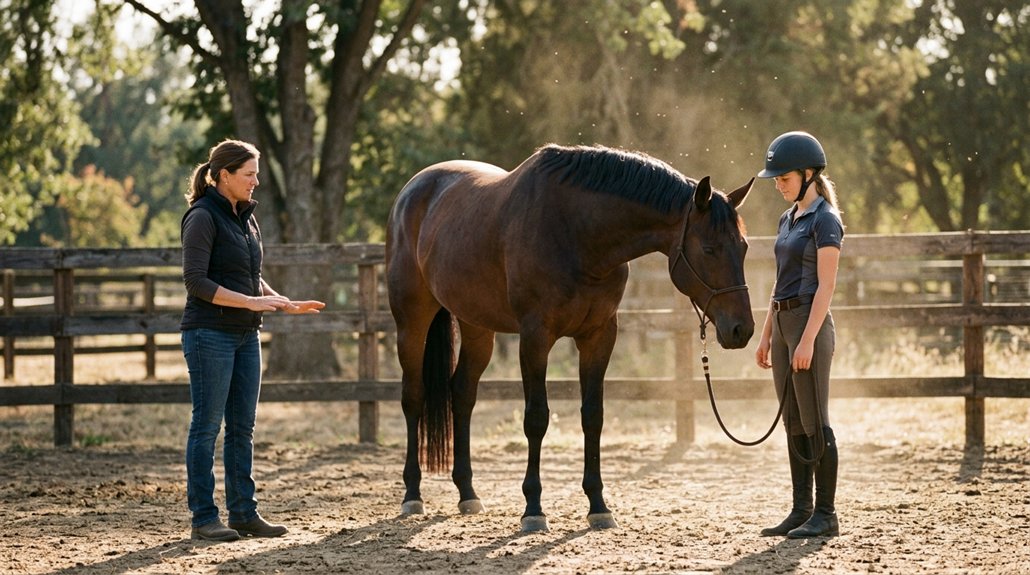
After reinforcing boundaries effectively, the next step is understanding how to balance trust with those boundaries in your training routine. Trust building hinges on recognizing your horse’s feelings and needs, which are essential for fostering a genuine bond. It’s important to maintain boundary awareness by using clear body language, not force, echoing the horse’s natural communication. This promotes mutual respect and enhances cooperation without eliciting fear.
As your horse learns to trust you more, consistently reevaluate the boundaries you’ve set. Consider their comfort and ease, which contributes to safety and strengthens your partnership. Clear, compassionate communication encourages behaved responses while allowing for emotional connection. A scientific approach, consistently applied, guarantees boundaries are both respected and an avenue for trust.
Frequently Asked Questions
What Is the 1/2/3 Rule for Horses?
The 1/2/3 Rule for horses involves teaching ground manners by defining zones to respect personal space. You’re cultivating mutual respect through understanding comfort, cautious engagement, and assertive spaces, promoting confident respect training and effective communication.
How to Get a Horse to Like and Trust You?
To get a horse to like and trust you, focus on clear horse communication and building rapport. Observe body language, offer rewards for positive behaviors, respect its needs, and engage in consistent, mindful interactions for a deep connection.
What Are the 3 F’s for Horses?
The 3 F’s—Fight, Flight, Freeze—are essential for understanding a horse’s reactions. By recognizing behavioral signals and incorporating consistent feeding routines, you’ll promote trust and create a secure environment for your horse’s emotional well-being.
How Do Horses Say “I Love You”?
Did you know that horses can express affection through more than 70% of their equine communication behaviors? They say “I love you” with softened eyes, gentle nuzzles, and playful gestures, showing their trust and affection.
Conclusion
Remember, setting boundaries with your horse fosters trust and respect. Imagine you’re working with Bella, a spirited mare who frequently nudges you for treats. By consistently establishing that treats only come after completing a task, you reinforce boundaries without harshness. This clarity helps Bella understand her limits while enhancing your relationship. Effective communication and reinforcement guarantee her behavior aligns with your expectations, creating a harmonious bond that respects both your needs and Bella’s spirited nature.